




Description
ITEM DESCRIPTION:
Comes with kimono or cotton bag. Comes with certificate of supein Nihonto. Comes with copy of Tokorusho.
Documentation
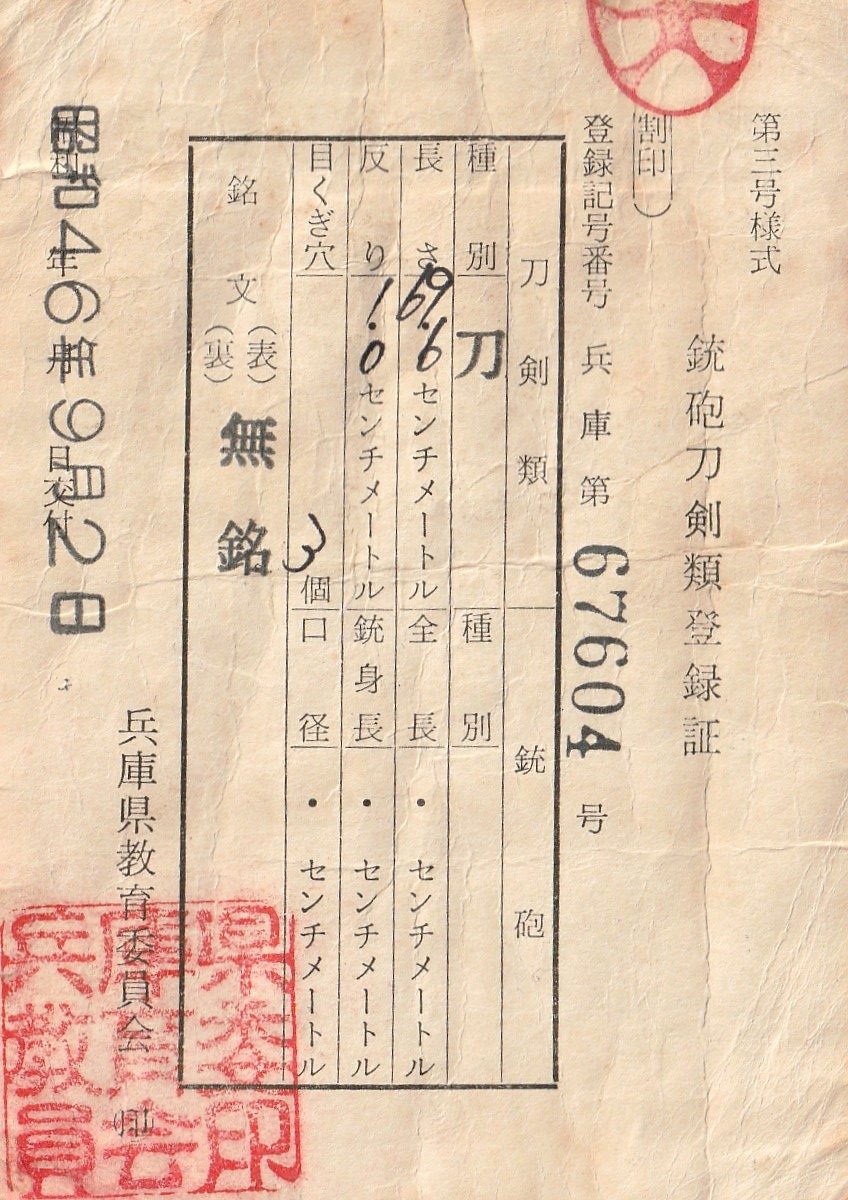
The sword retains its original Japanese torokusho registration paper.
Reading and translation of the document:
Firearms and swords registration certificate
Registration number: Hyōgo 第67604号
Date: Heisei 4, June 2, 1992
Type: Katana
Blade length: 69.6 cm
Curvature (sori): 1.0 cm
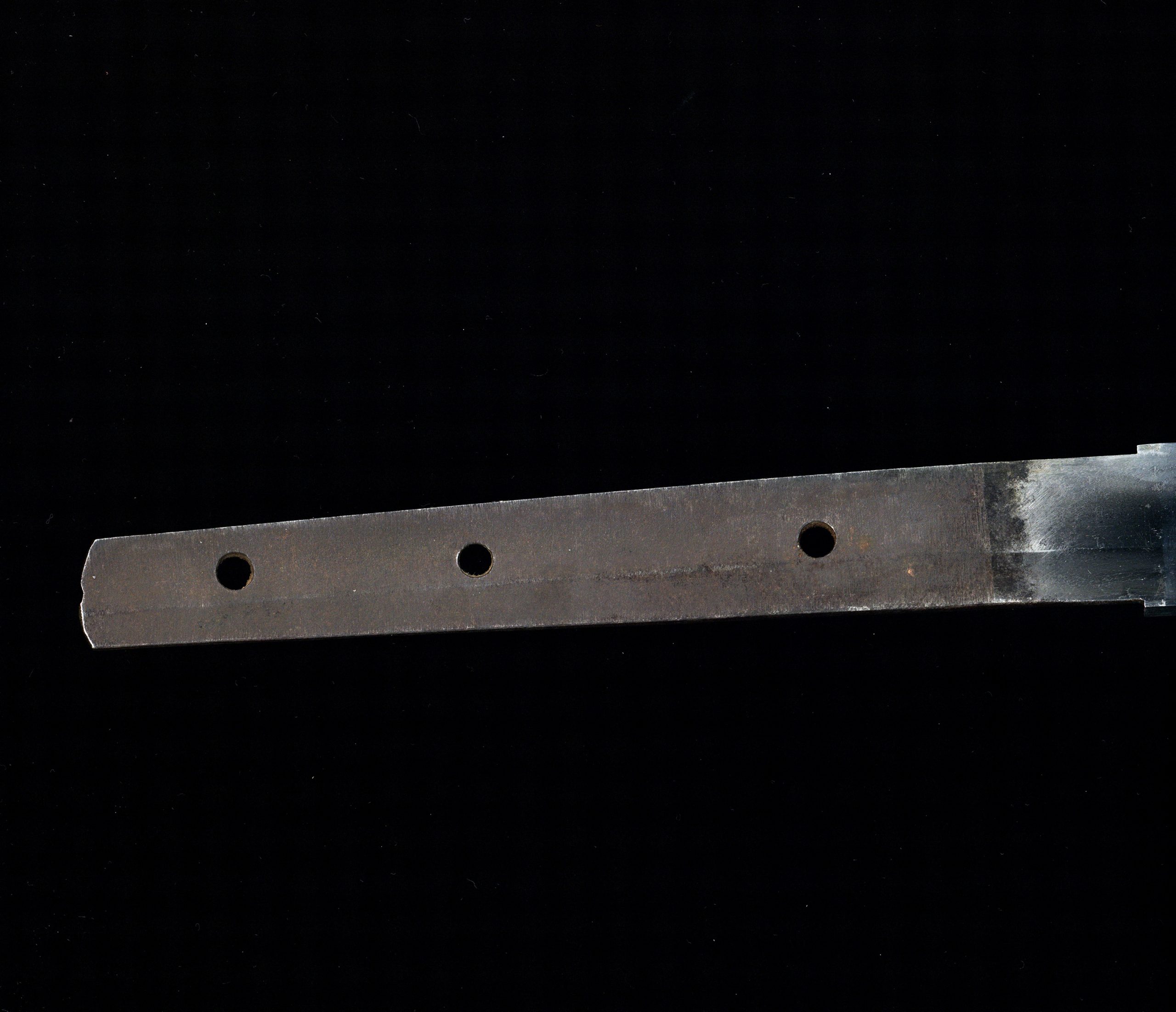
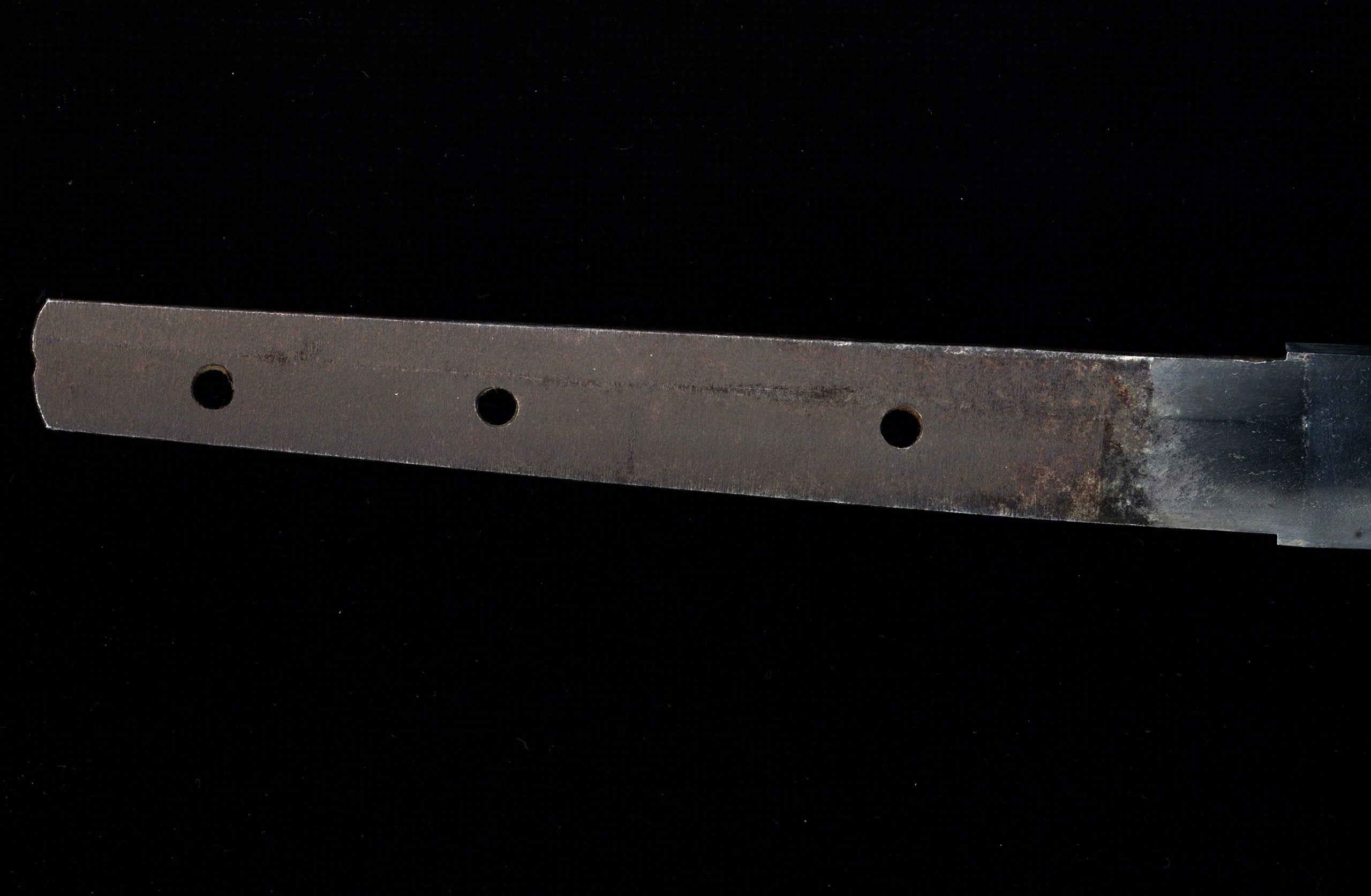
Mekugi-ana: 3
Signature: 無銘 — mumei
Period
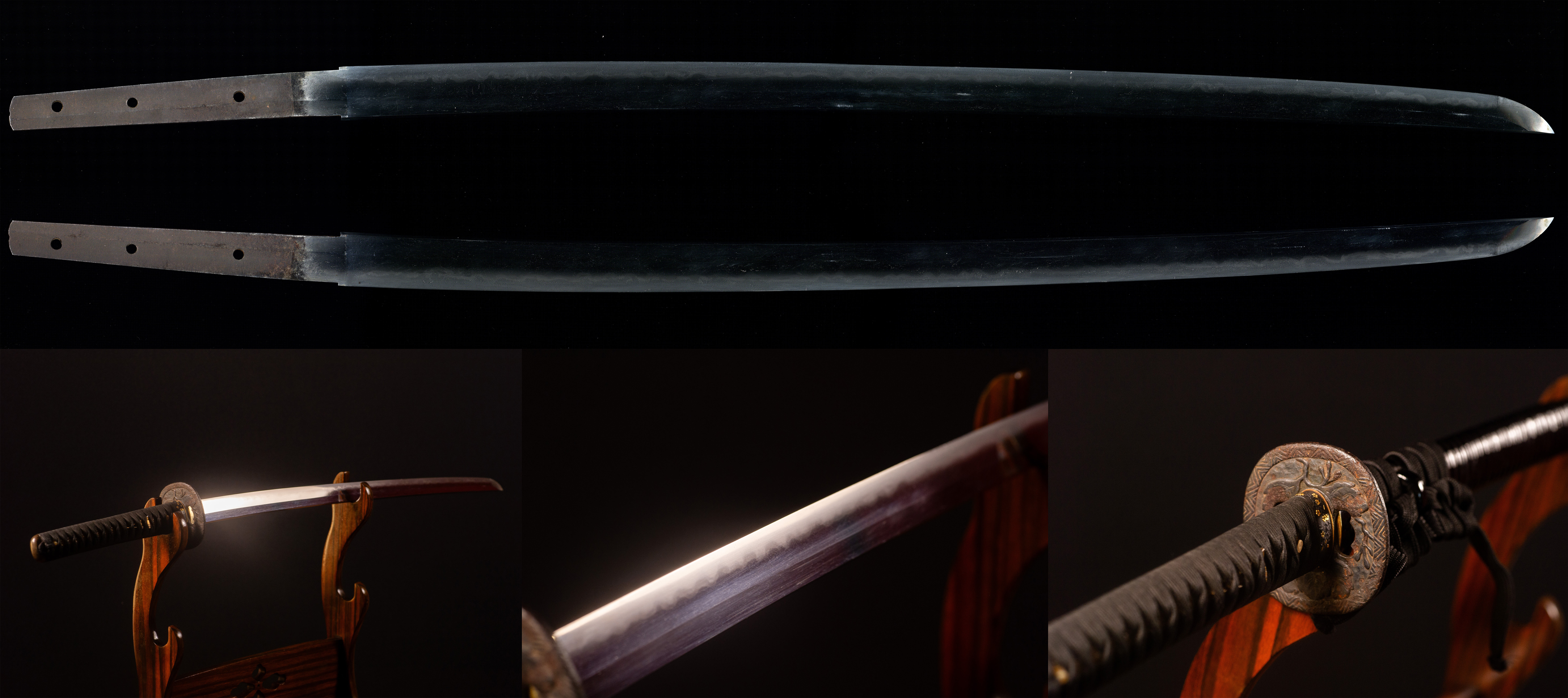
Japanese mumei katana, cataloguable as late Muromachi or early Edo period, 16th–17th century. The blade displays a highly sober silhouette, with restrained curvature and a balanced, functional and martial presence fully in keeping with late Muromachi workmanship and the transition into the early Edo period.
Blade
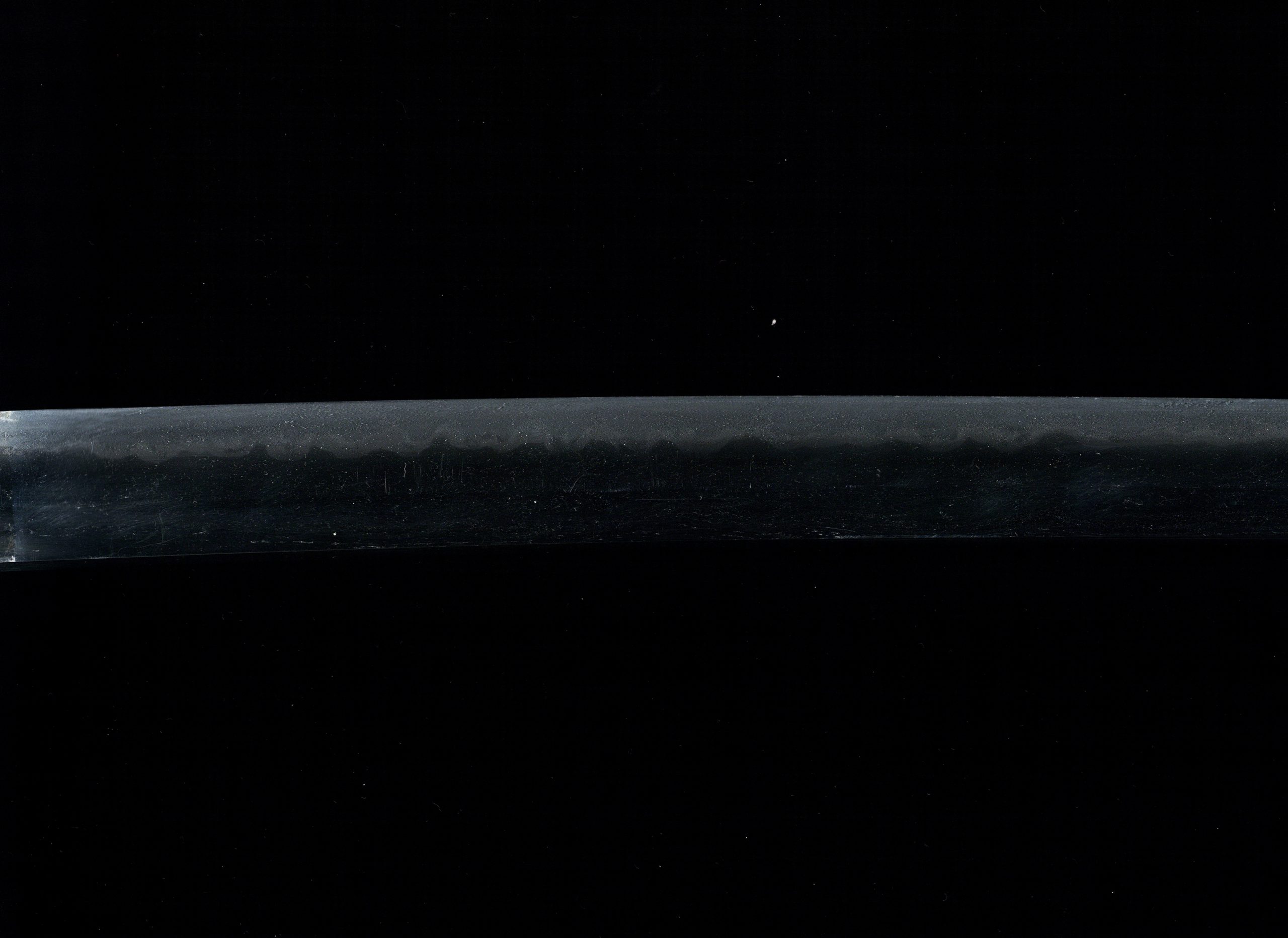
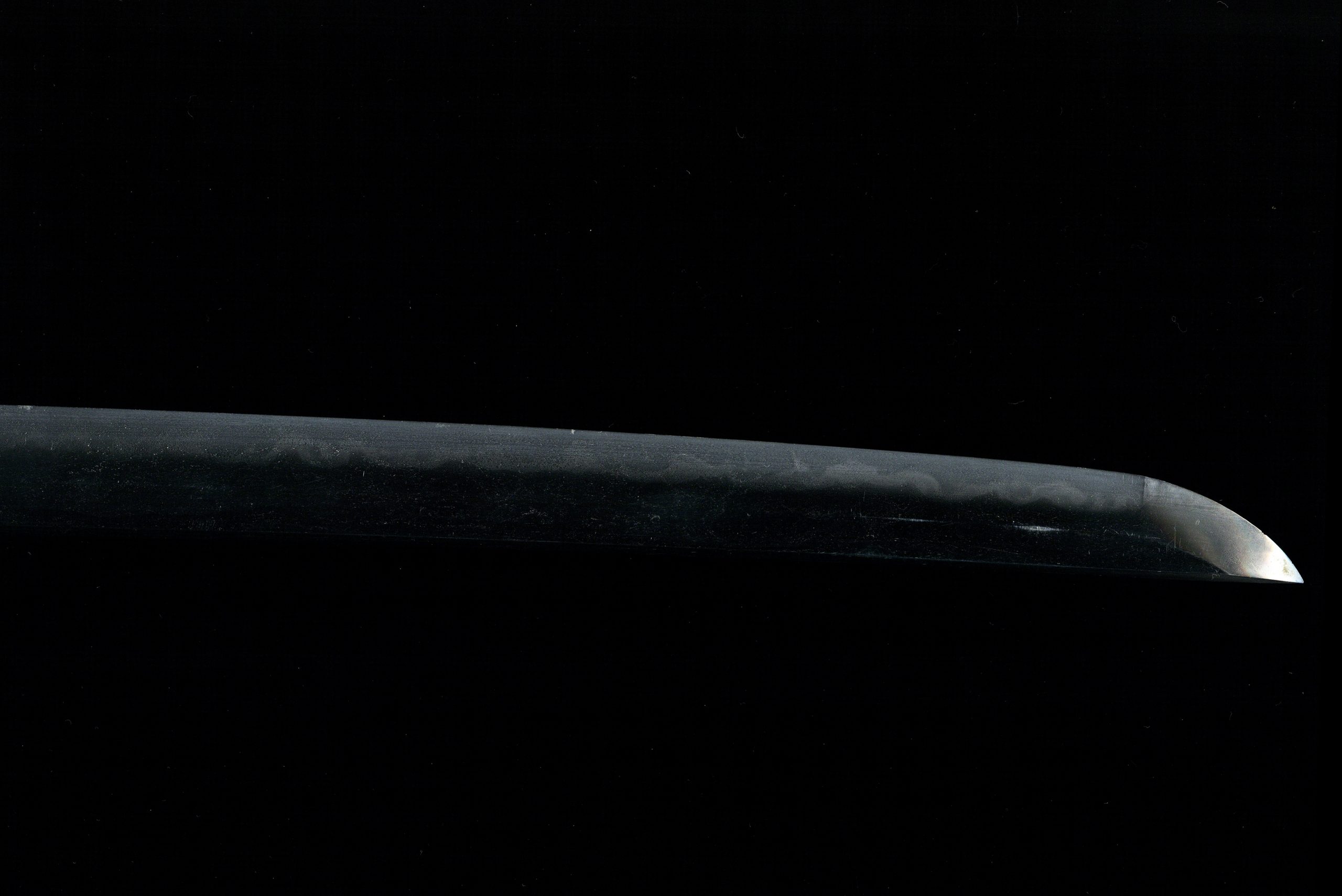
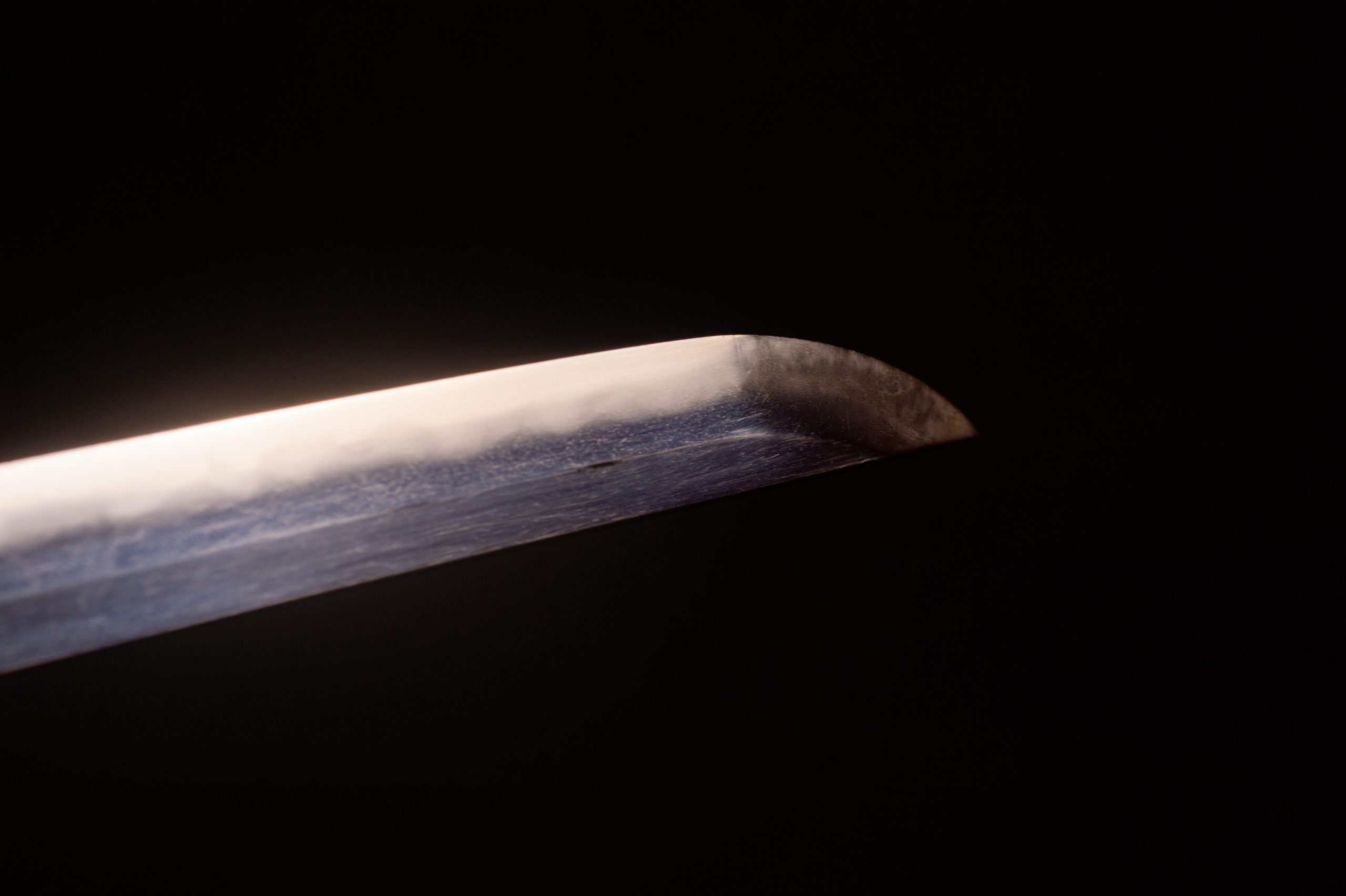
The sword shows a clean and elegant sugata, with good length and very attractive overall proportions. The curvature is moderate, producing a sober, practical and well-resolved line. The kissaki is properly shaped and visually strong.
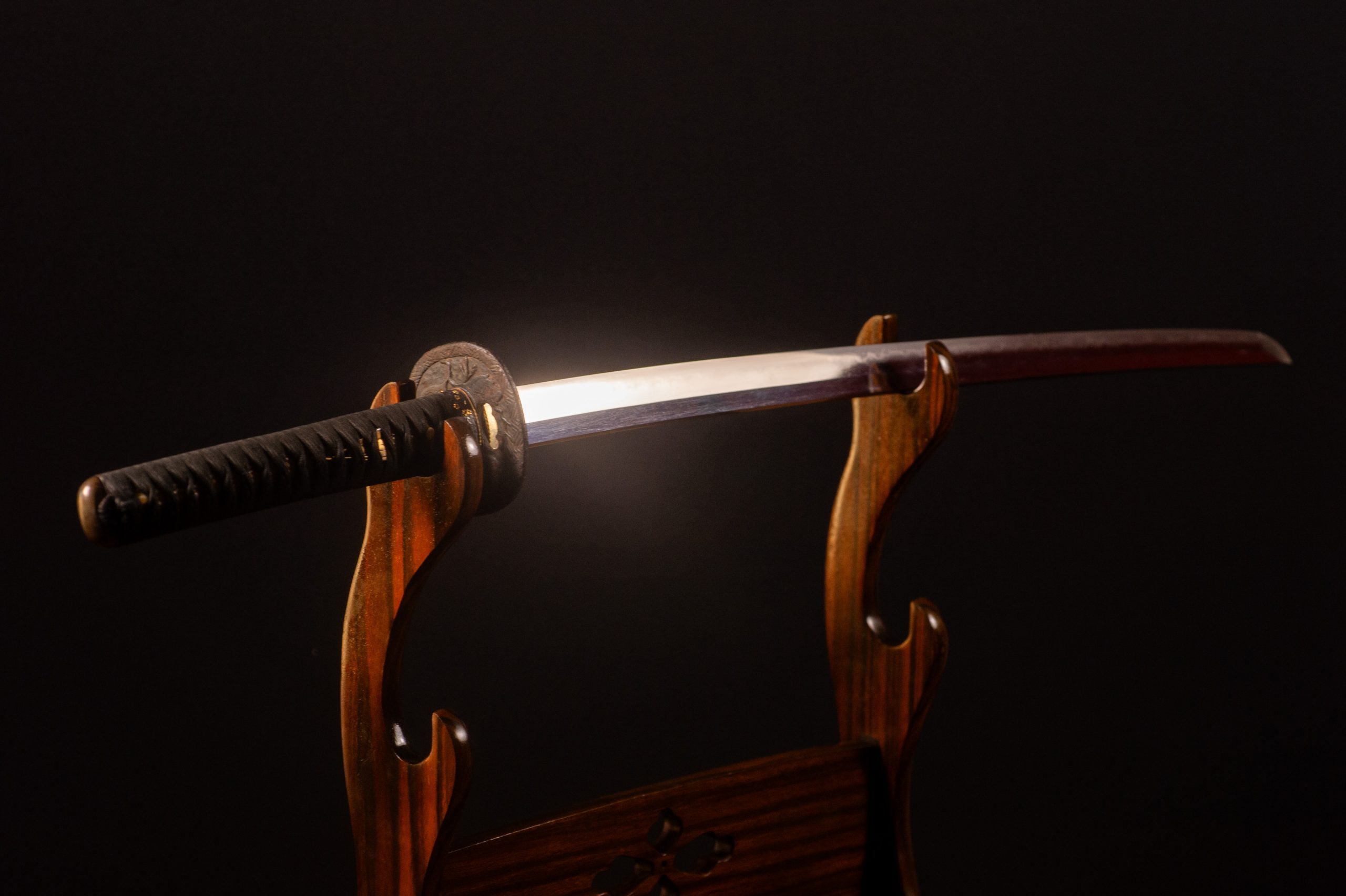
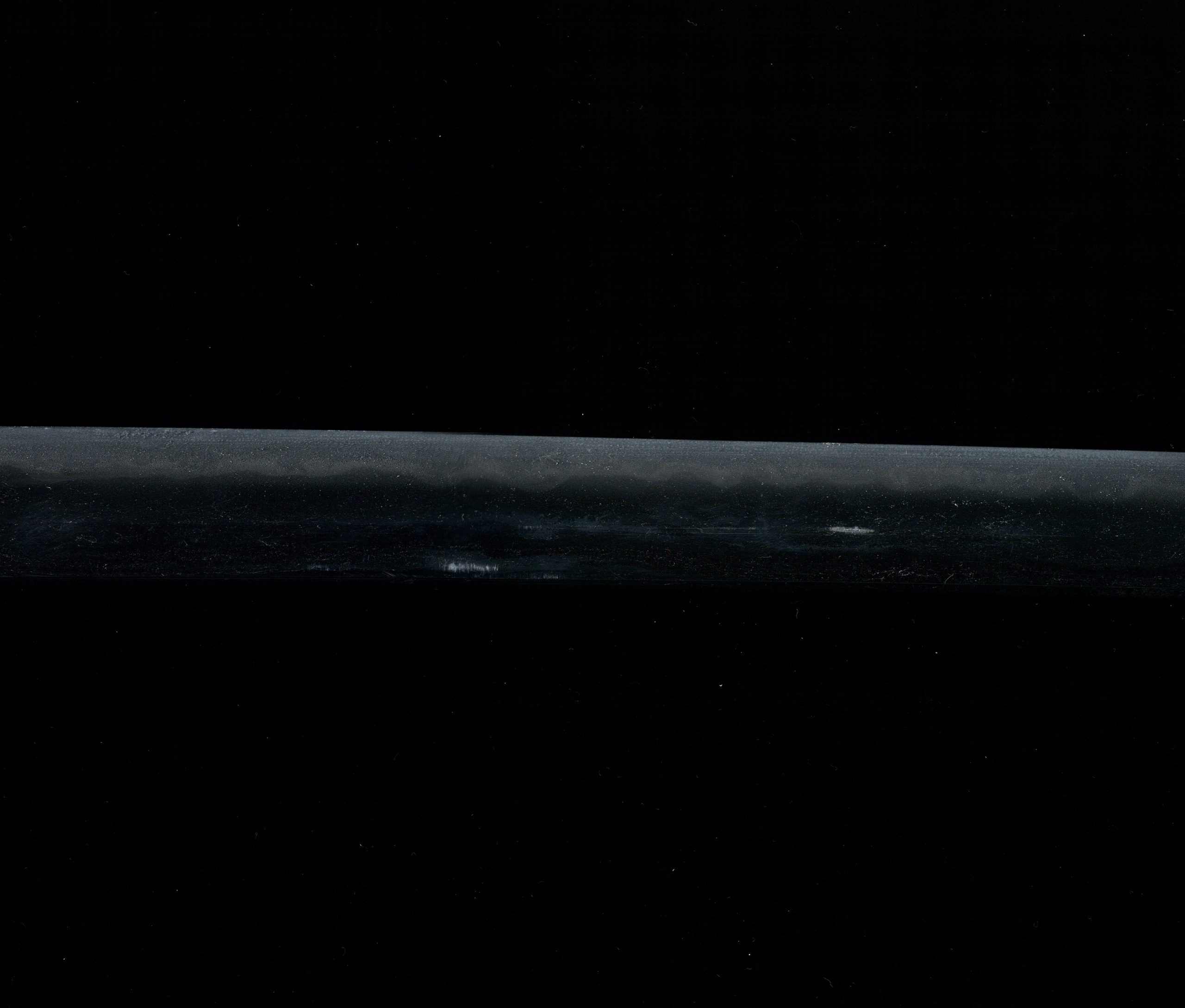
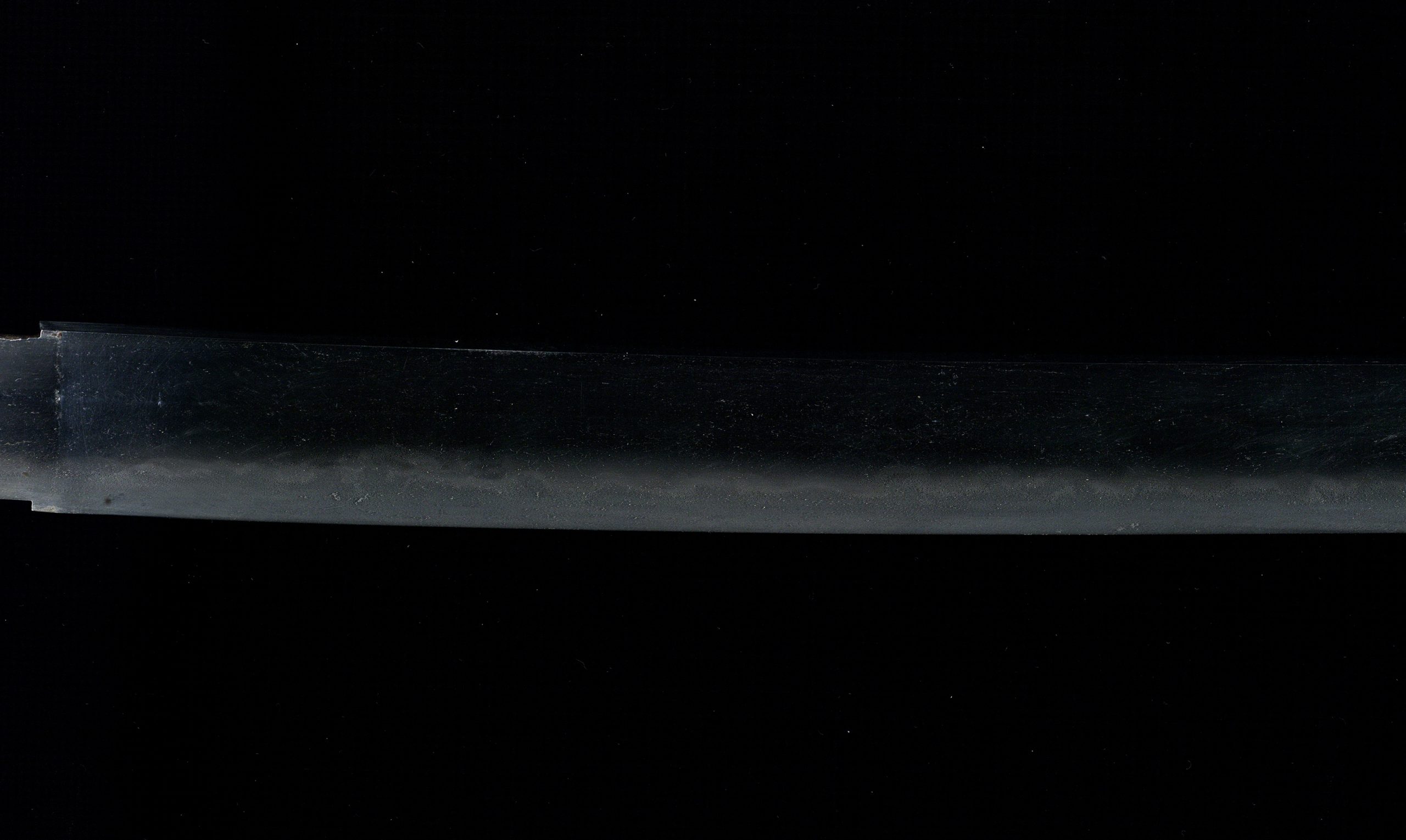
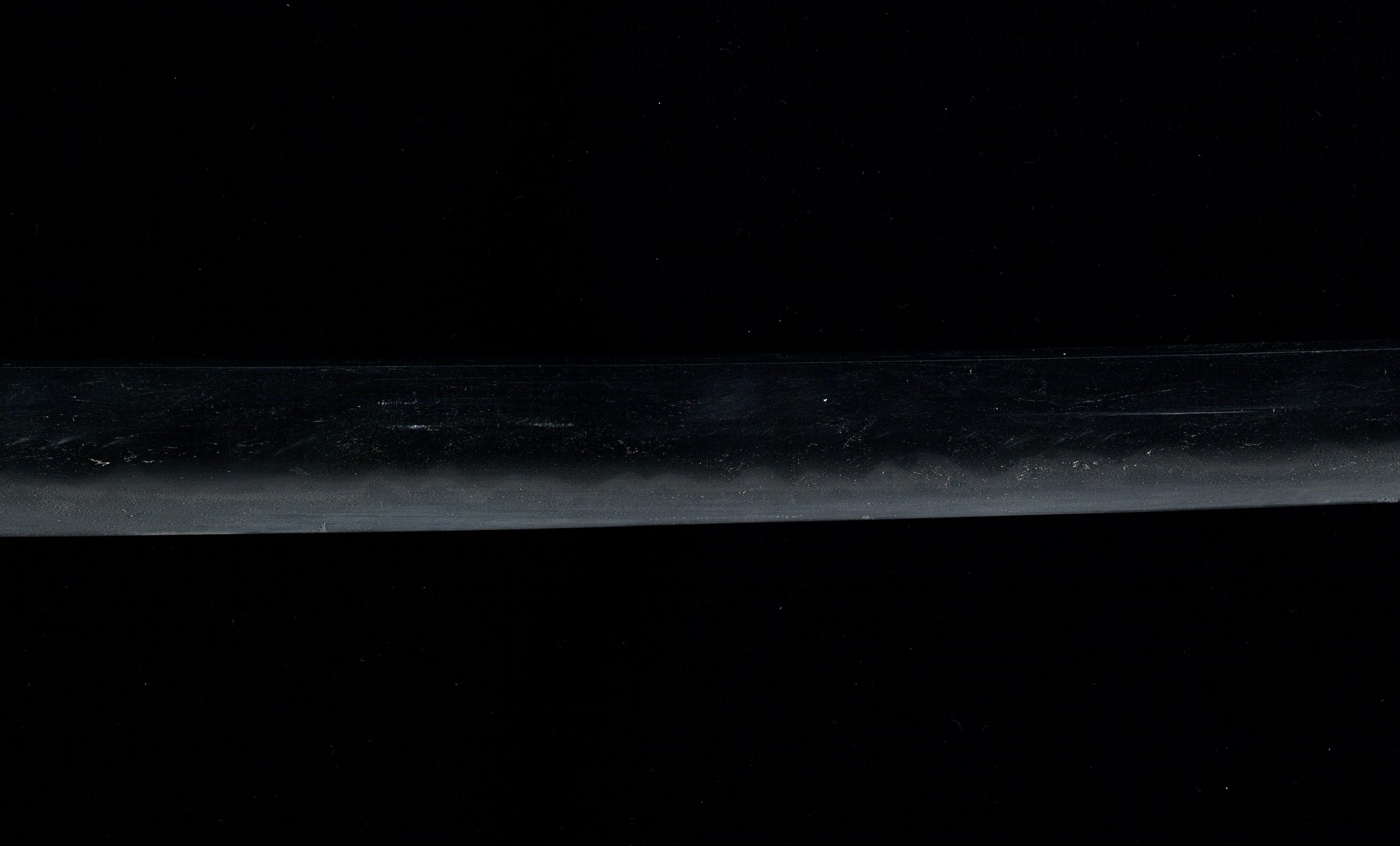
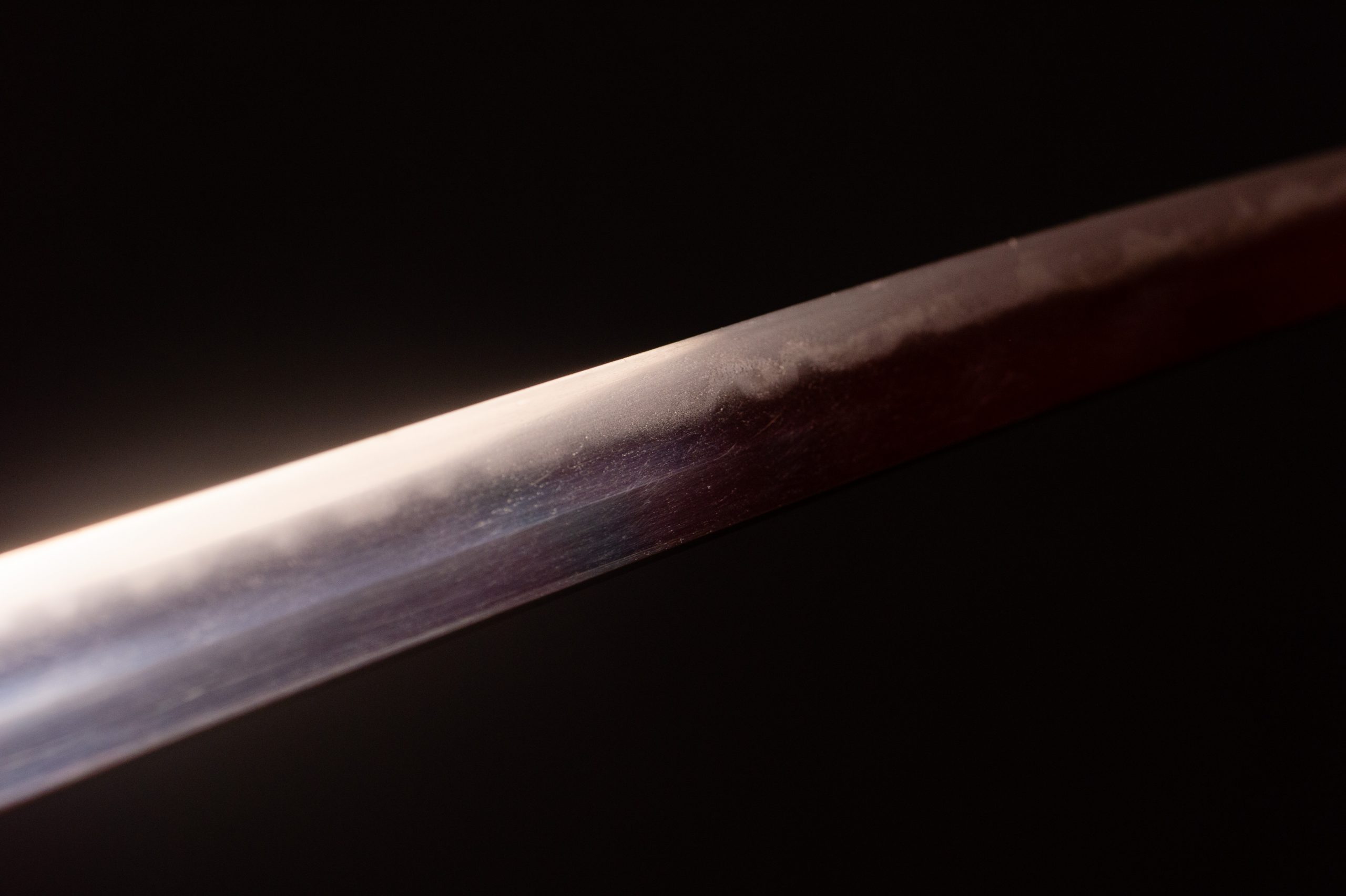
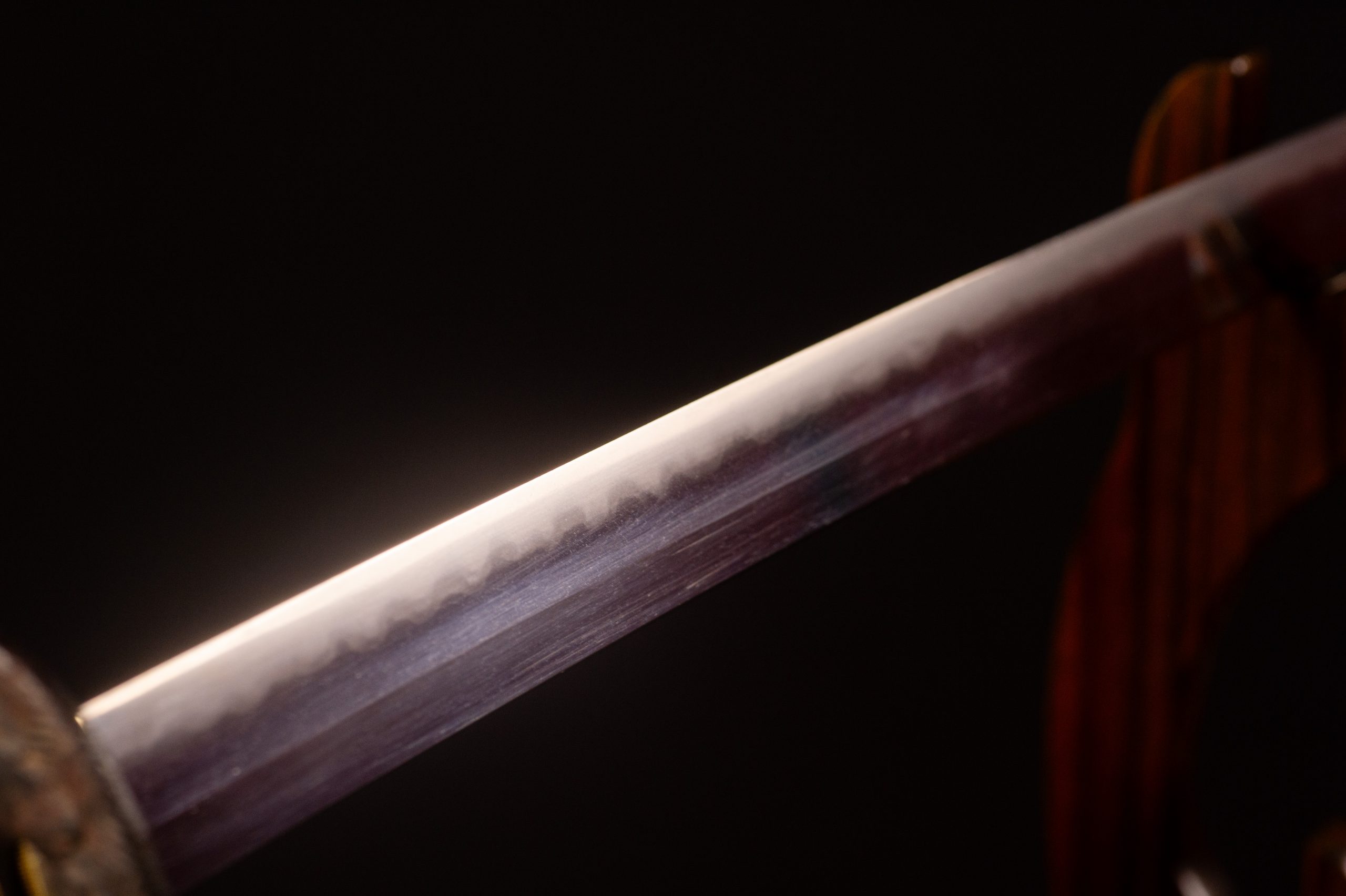
The hamon is clearly visible and pleasing, developing in a gunome-midare with notare tendency, creating a lively, undulating and organic temper line along the edge. It has movement, personality and strong visual appeal. In the kissaki area, the hardening continues coherently into the boshi, reinforcing the good overall impression of the blade.
The jihada surface retains a very respectable appearance and attractive visual reading within the current polish. The whole blade conveys authenticity, age and a well-preserved classical Japanese aesthetic.
The nakago, with three mekugi-ana and well-established old patina, gives the piece a strong sense of historical life. Along the mune, there is light old oxidation, discreet and fully integrated into the character of the sword, without in any way harming its presentation.
Koshirae
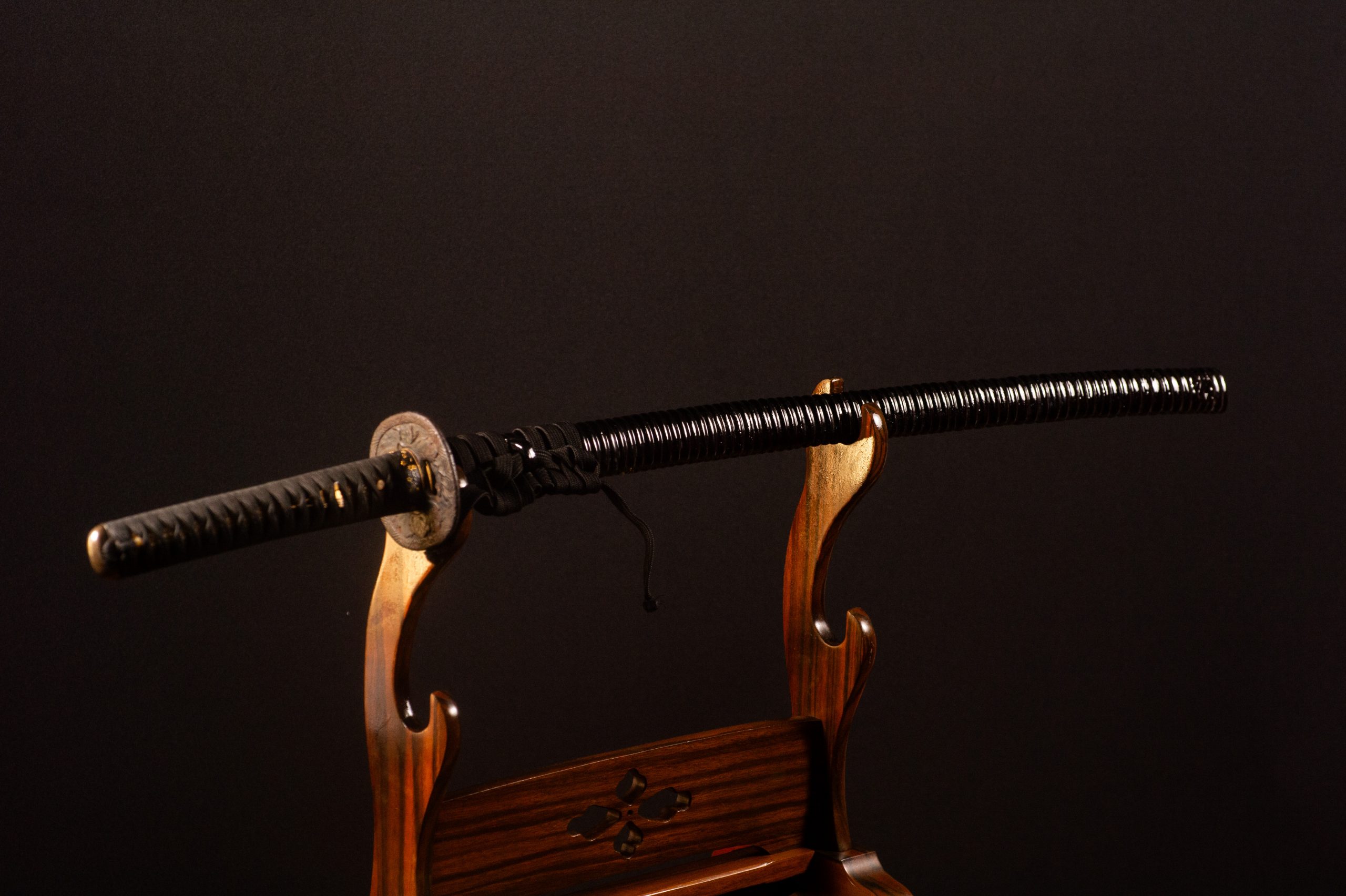
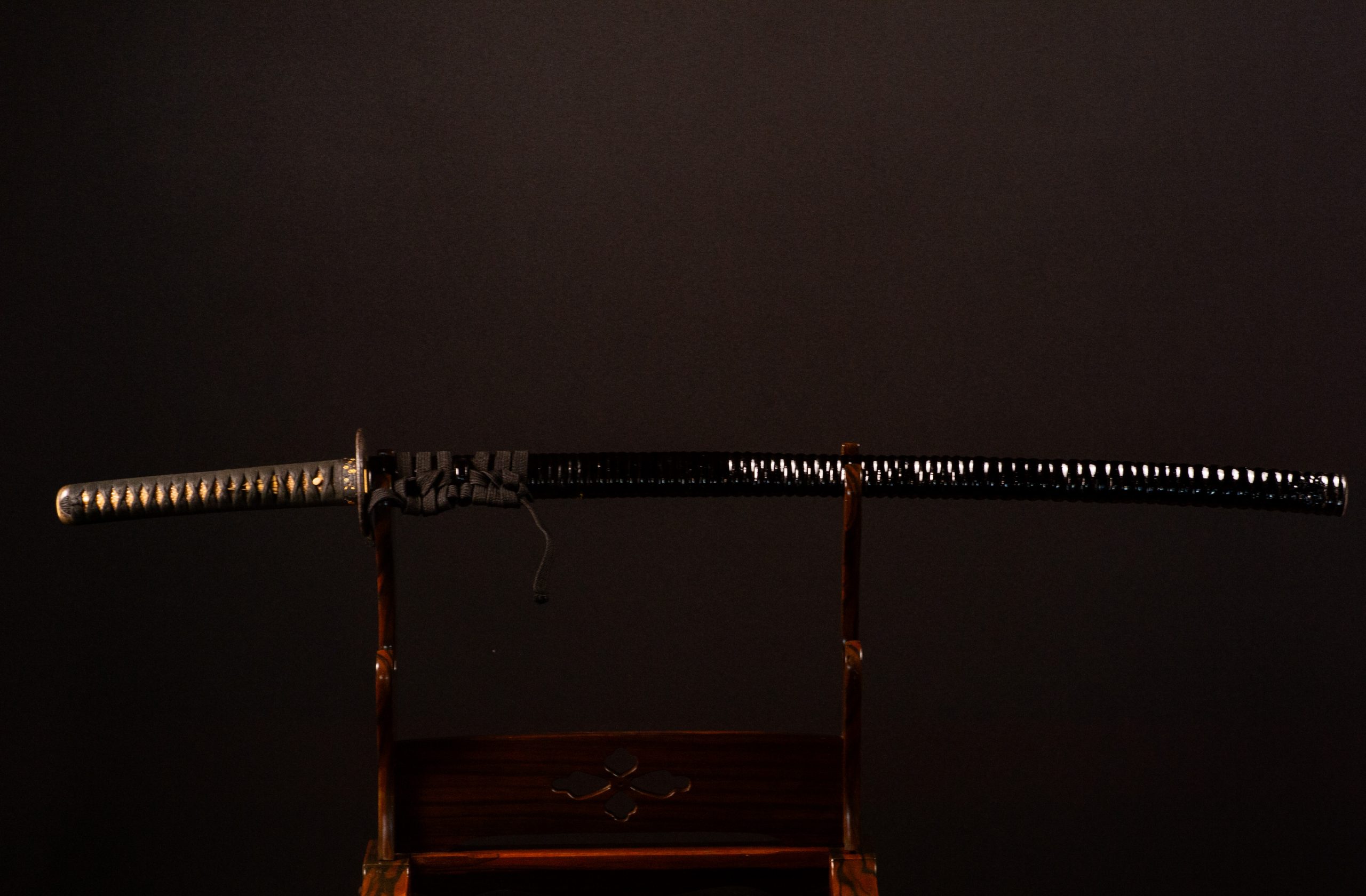
The katana is accompanied by a complete koshirae of dark, refined appearance, highly coherent with the character of the blade.
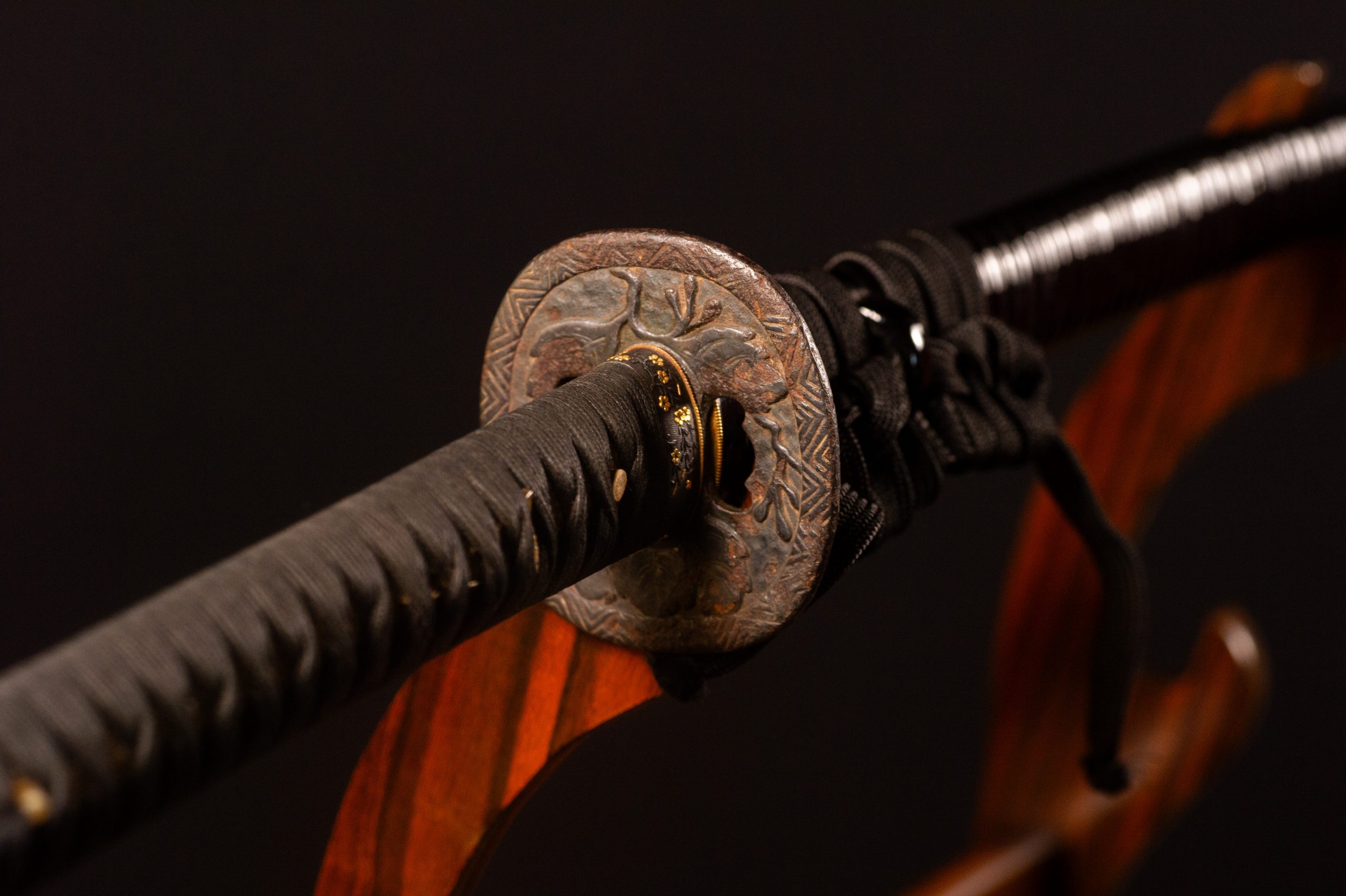
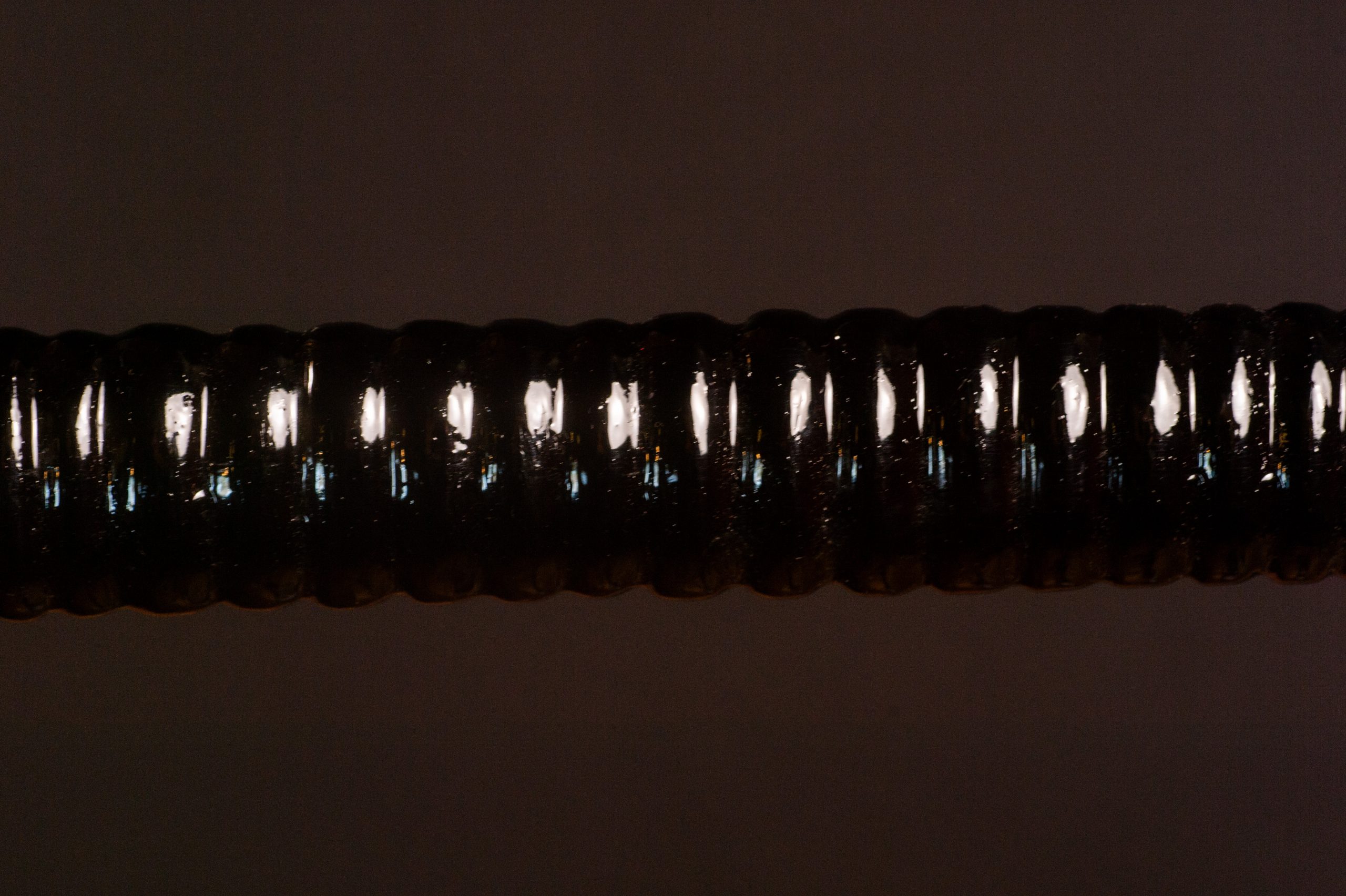
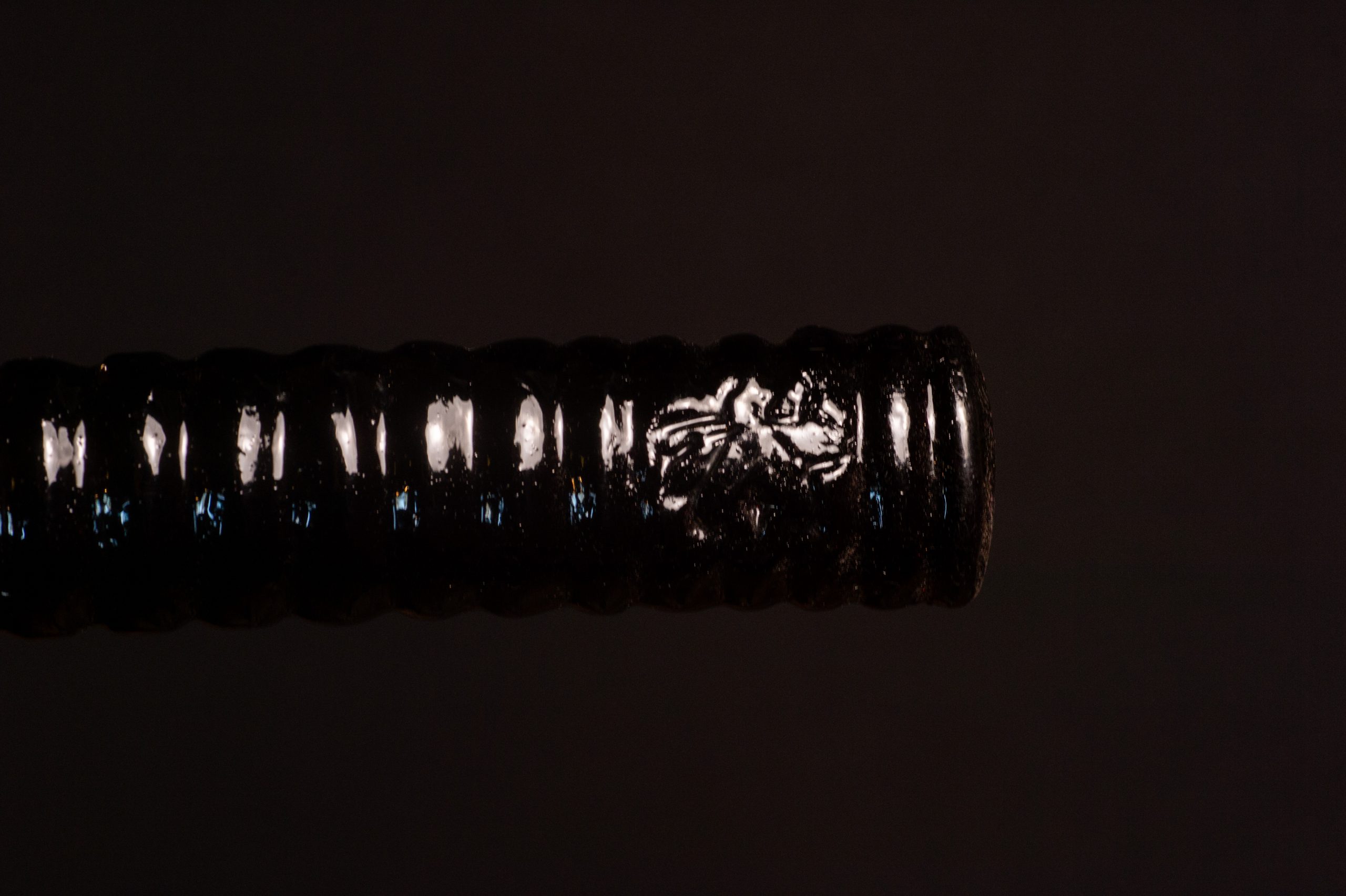
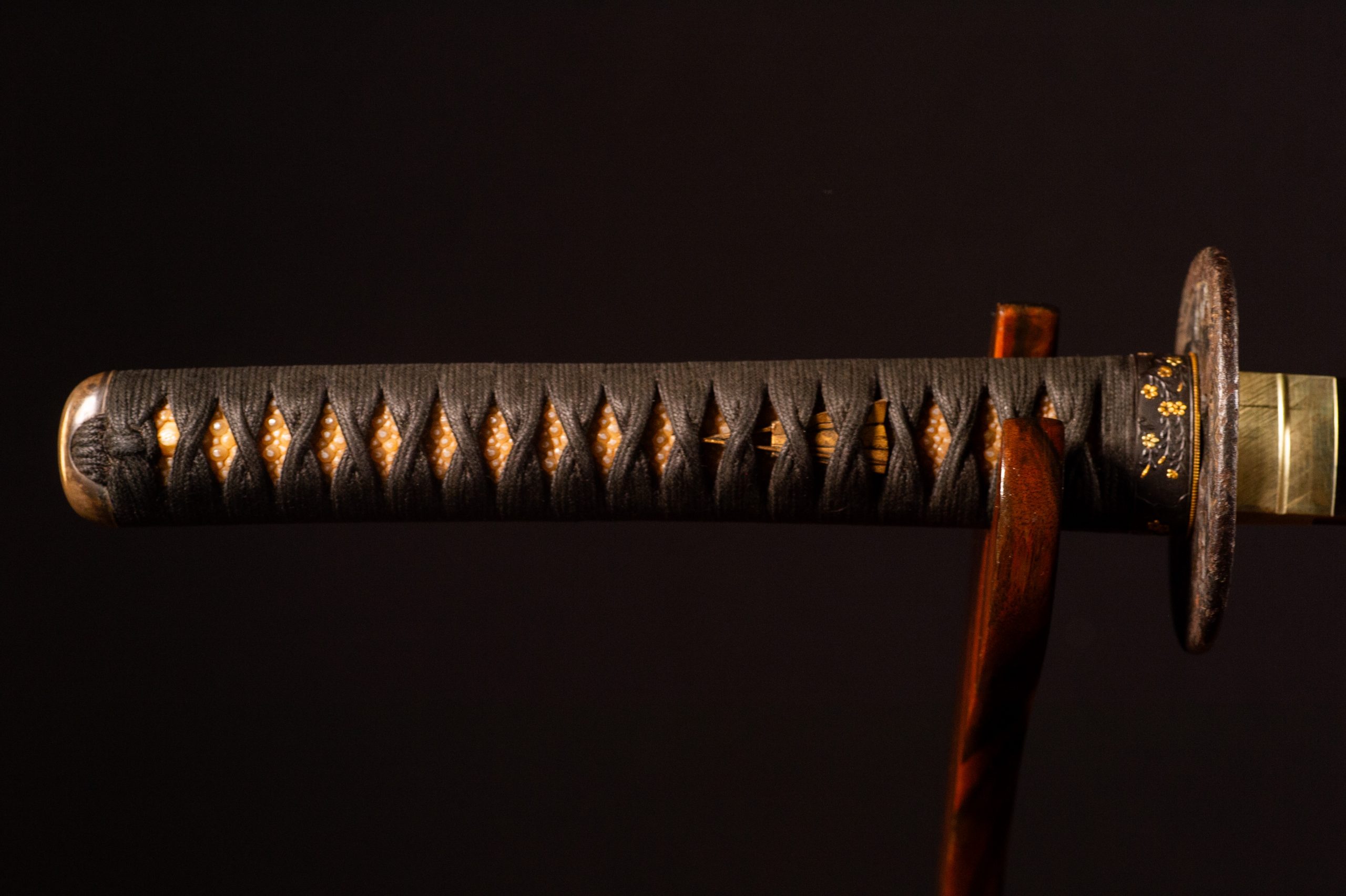
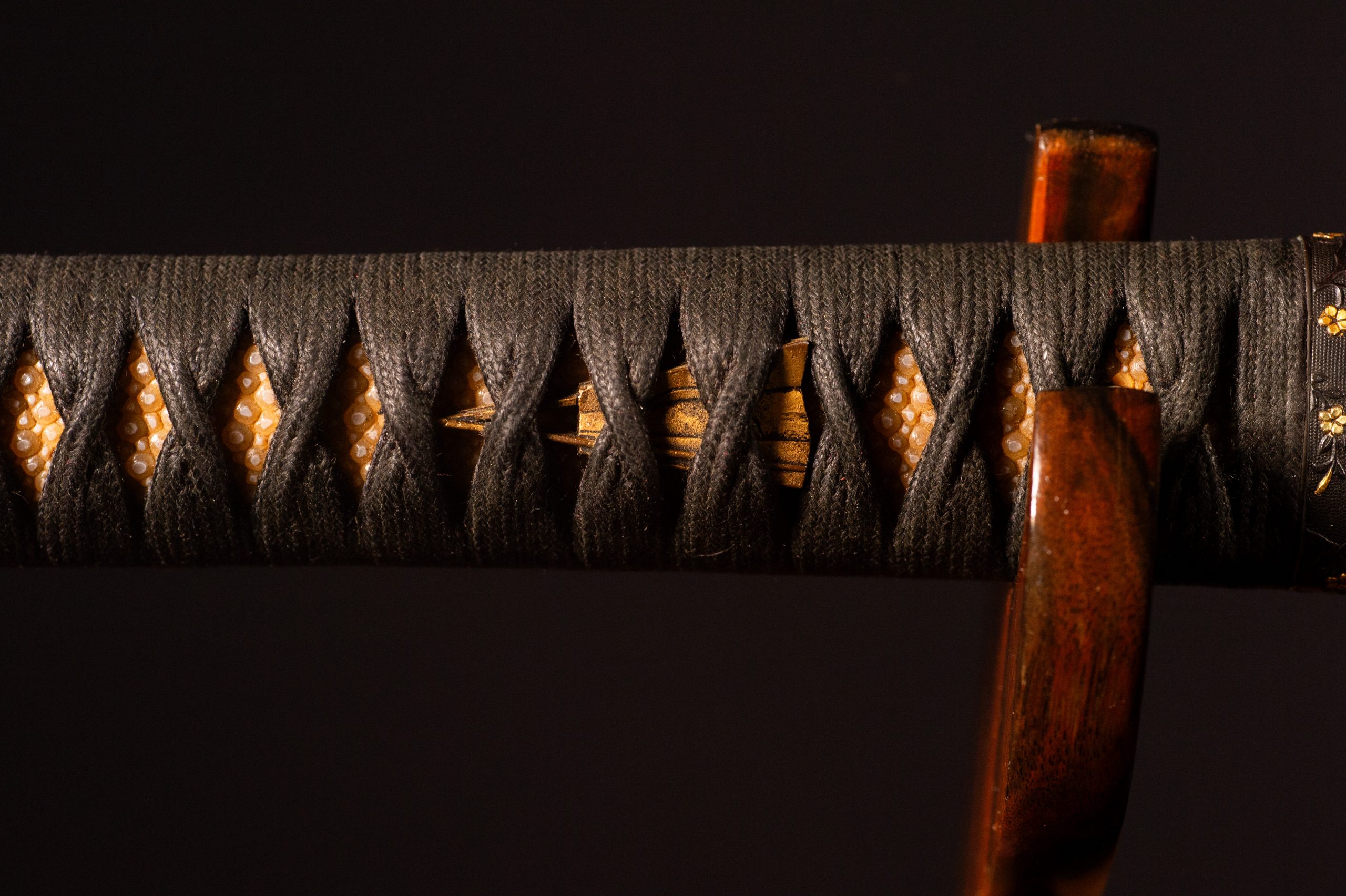
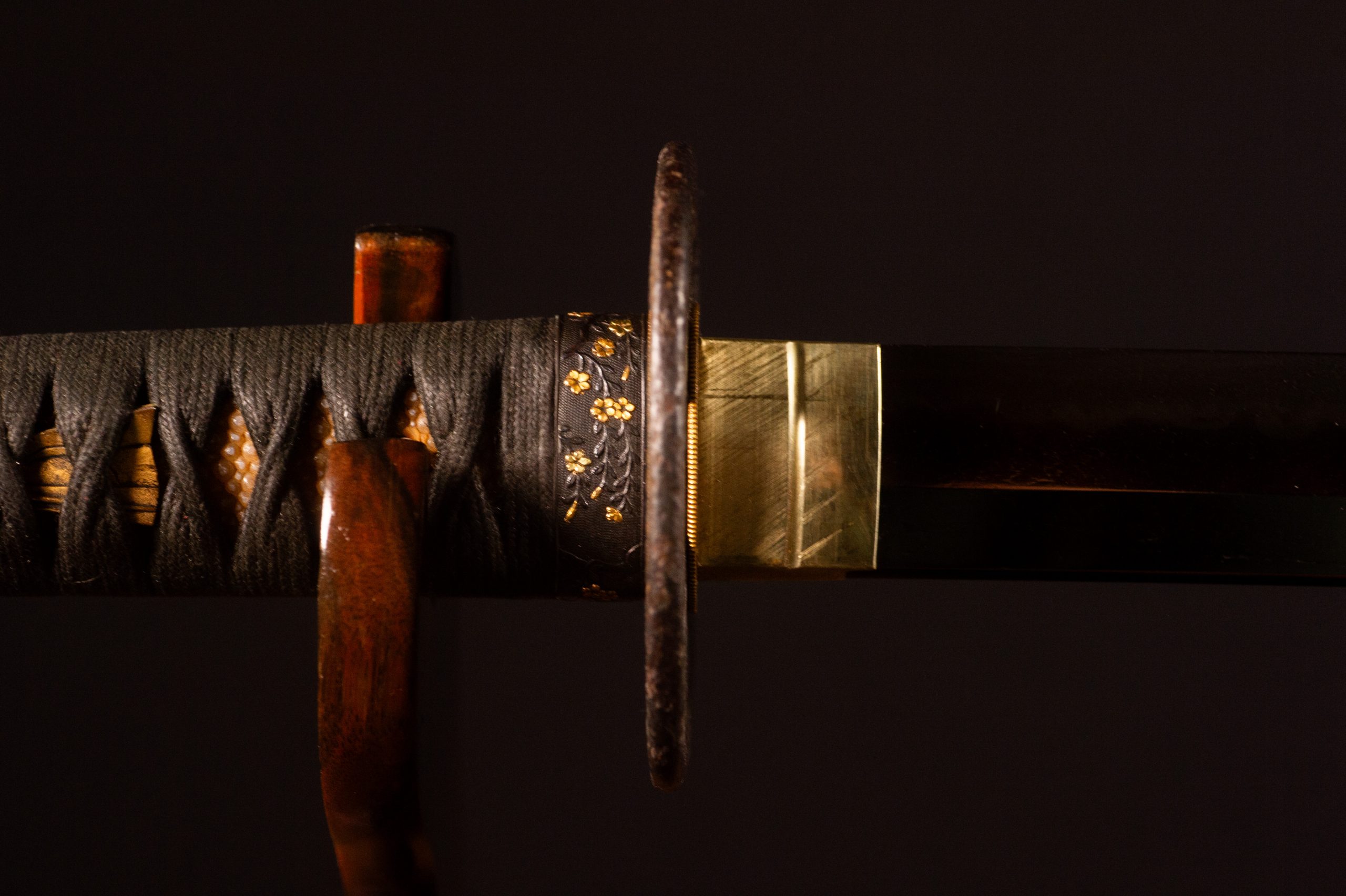
The saya, finished in glossy black lacquer, gives the sword a sober and elegant visual identity. The tsuka, wrapped in black tsuka-ito over light samegawa, preserves the classic contrast that always works so well in serious and distinguished mountings. The gilt menuki introduce a subtle decorative accent that enriches the ensemble without disturbing its balance.
The fuchi displays floral relief decoration with gilt details, delicate and well integrated. The tsuba, in iron and rounded form, has a solid classical presence, with relief decoration that complements the rest of the mounting very well. The habaki, in a golden tone, finishes the base of the blade convincingly and completes a visually powerful mounting highly attractive for collection.
This koshirae, beyond protecting the sword, gives it body, identity and presence. Compared to the austere nakedness of a shirasaya, this is a mounting with visual weight, historical charm and clear display appeal.
Conclusion
This is a mumei katana from the late Muromachi to early Edo period, with direct, classical and distinctly Japanese presence. Its length, visible hamon, old three-hole nakago, and elegant complete koshirae come together in a set of strong visual and commercial appeal. It is a piece that immediately attracts the eye, while also preserving the depth of authenticity and age that serious collectors genuinely value.
Technical sheet
Japanese katana
Mumei
Period: late Muromachi – early Edo, 16th–17th century
Torokusho: Hyōgo no. 67604
Torokusho date: June 2, 1992
Nagasa: 69.6 cm
Sori: 1.0 cm
Mekugi-ana: 3
Hamon: gunome-midare with notare tendency
Nakago: old patina, 3 mekugi-ana
Condition: good overall presentation; light old, discreet oxidation on the mune
Mounting: complete koshirae
Saya: black lacquer
Tsuka: black tsuka-ito over light samegawa
Tsuba: iron with relief decoration
Habaki: golden tone


