Description
ITEM DESCRIPTION:
Comes with kimono or cotton bag. Comes with certificate of supein Nihonto. Comes with copy of Tokosusho. Comes with NBTHK Tokobetsu kicho.
Documentation
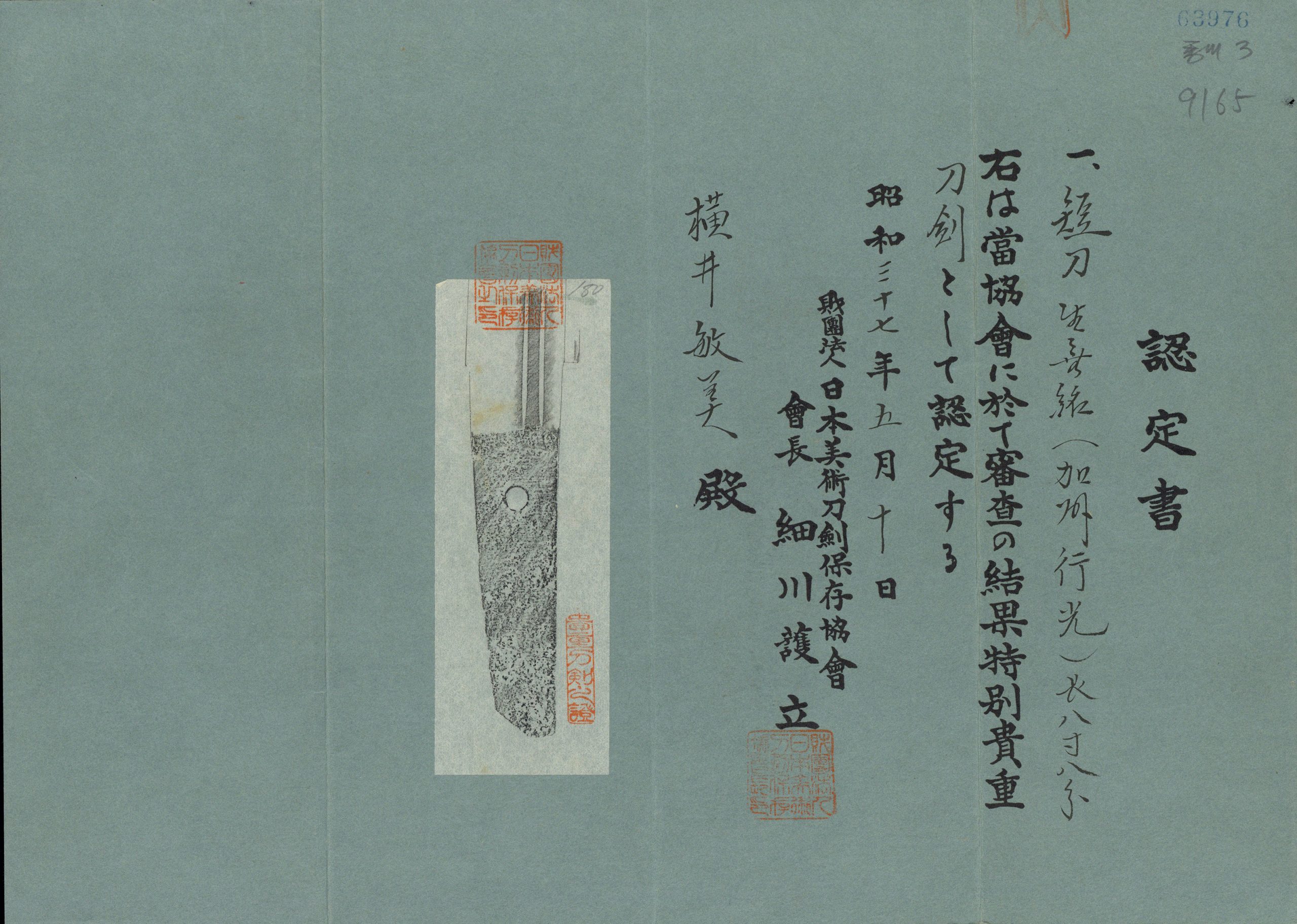
Certificate of recognition.
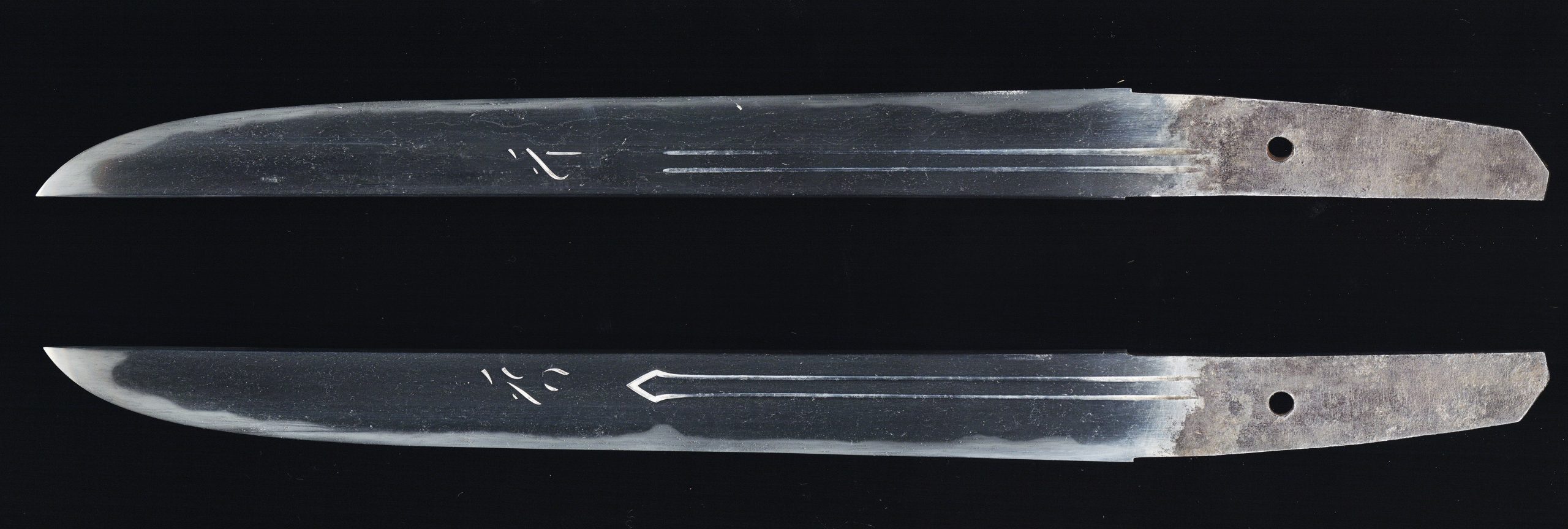
Tantō. Mei: Mumei Kashū Yukimitsu. Length: 8 sun 8 bun
Following examination by this association, it is recognized as Tokubetsu Kichō Tōken (特別貴重刀剣).
10 September, Shōwa 37 (1962).
Foundation: Society for the Preservation of Japanese Art Swords. President: Hosokawa Moritatsu.
Addressed to: Yokoi Takayuki (横井敬之).
Smith, tradition, period, and context
The certificate records the name 加州行光 (Kashū Yukimitsu). “Kashū” is the provincial designation for Kaga (today’s Ishikawa area). Tanto made during the Muromachi period (1445-1568). Is exceptional quality because Yukimitsu belonged to the Fujishima school (藤島派), a well-known school, and because of the longevity of the name “Yukimitsu”, which lasted many generations during the Muromachi period. The first-gen Yukimitsu is said to have been active during the Kosho era (1455-1457) and was an apprentice of Fujishima Tomoshige.
Blade
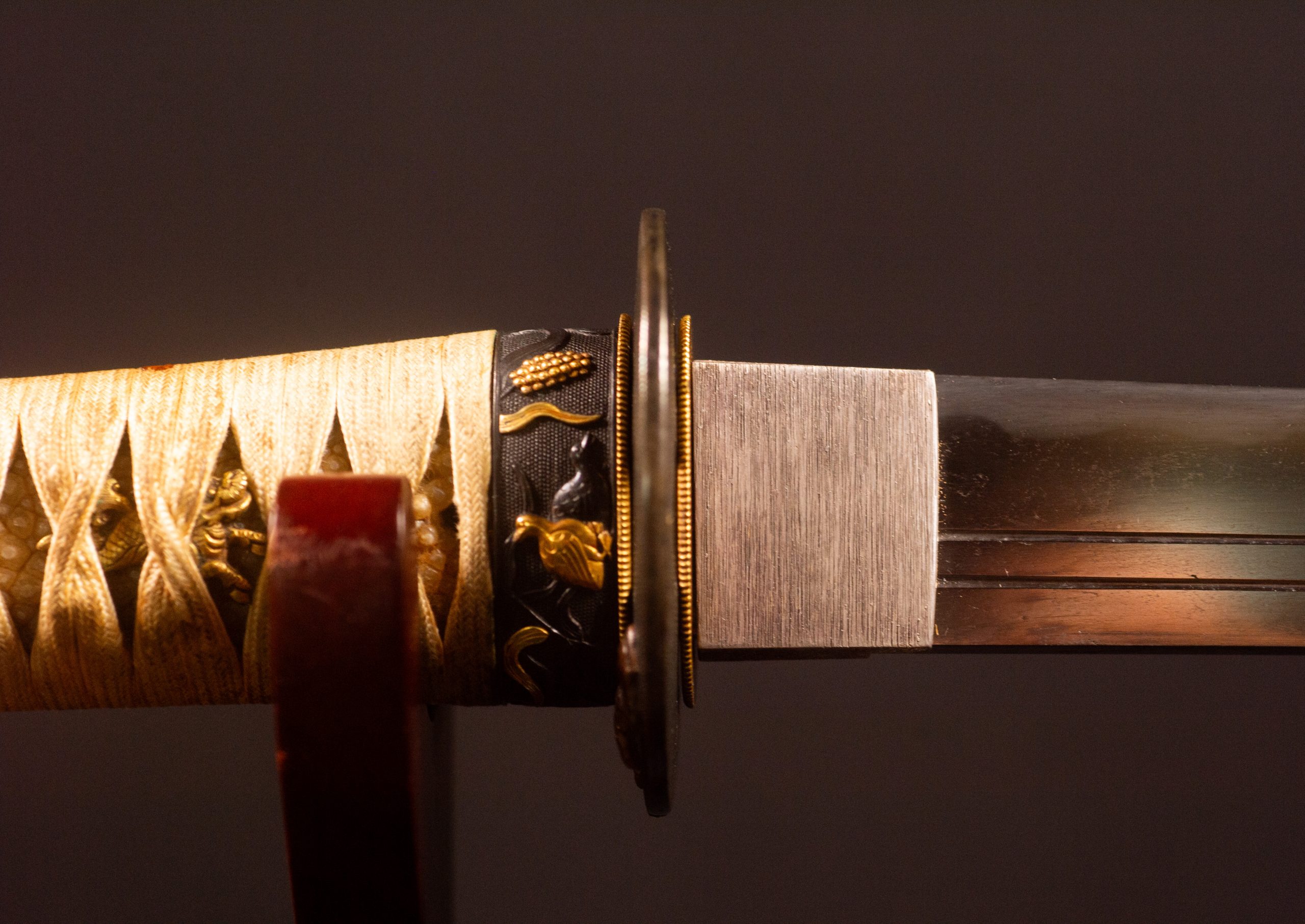
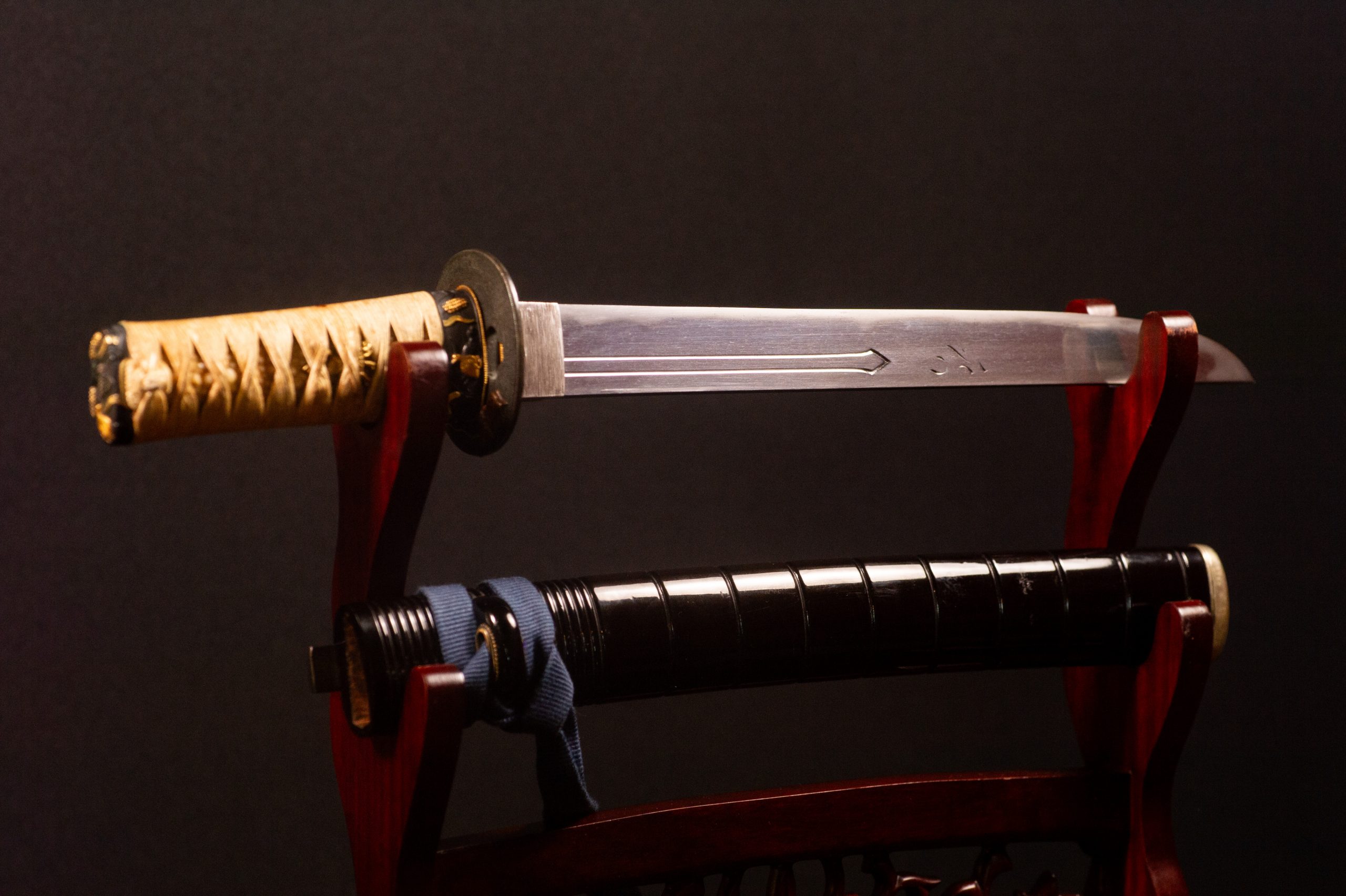
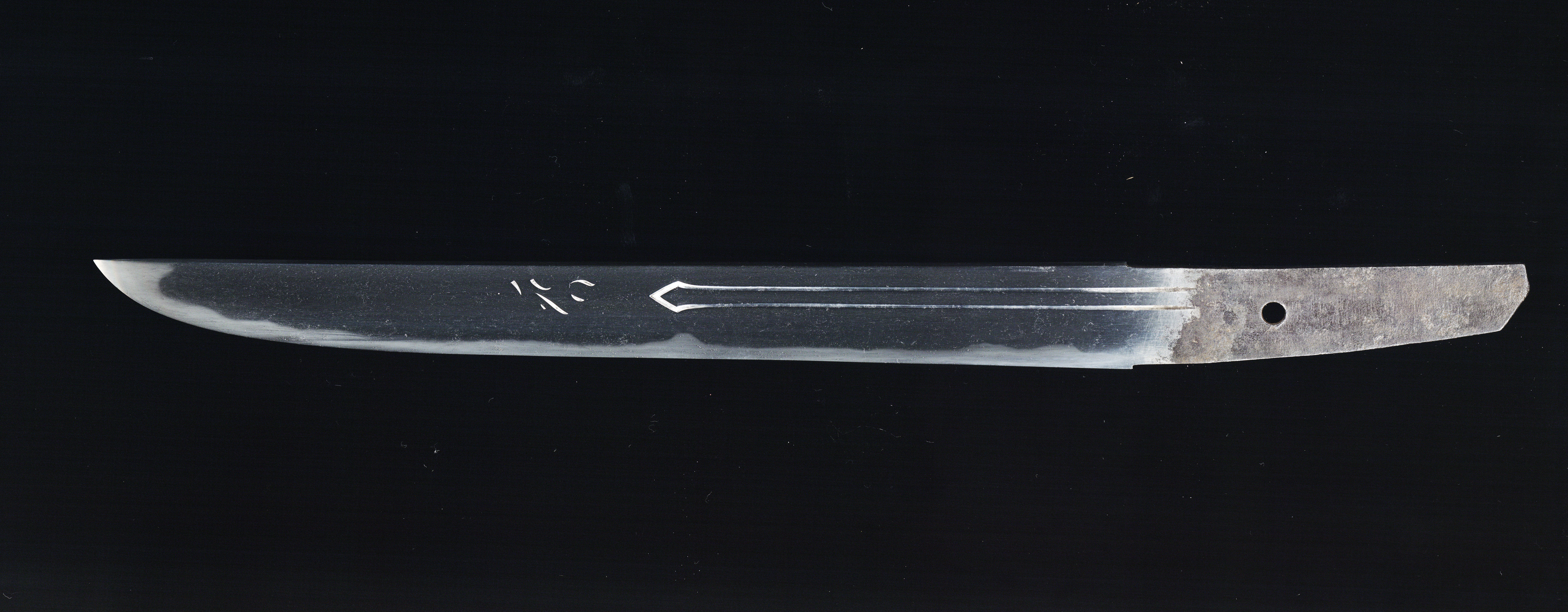
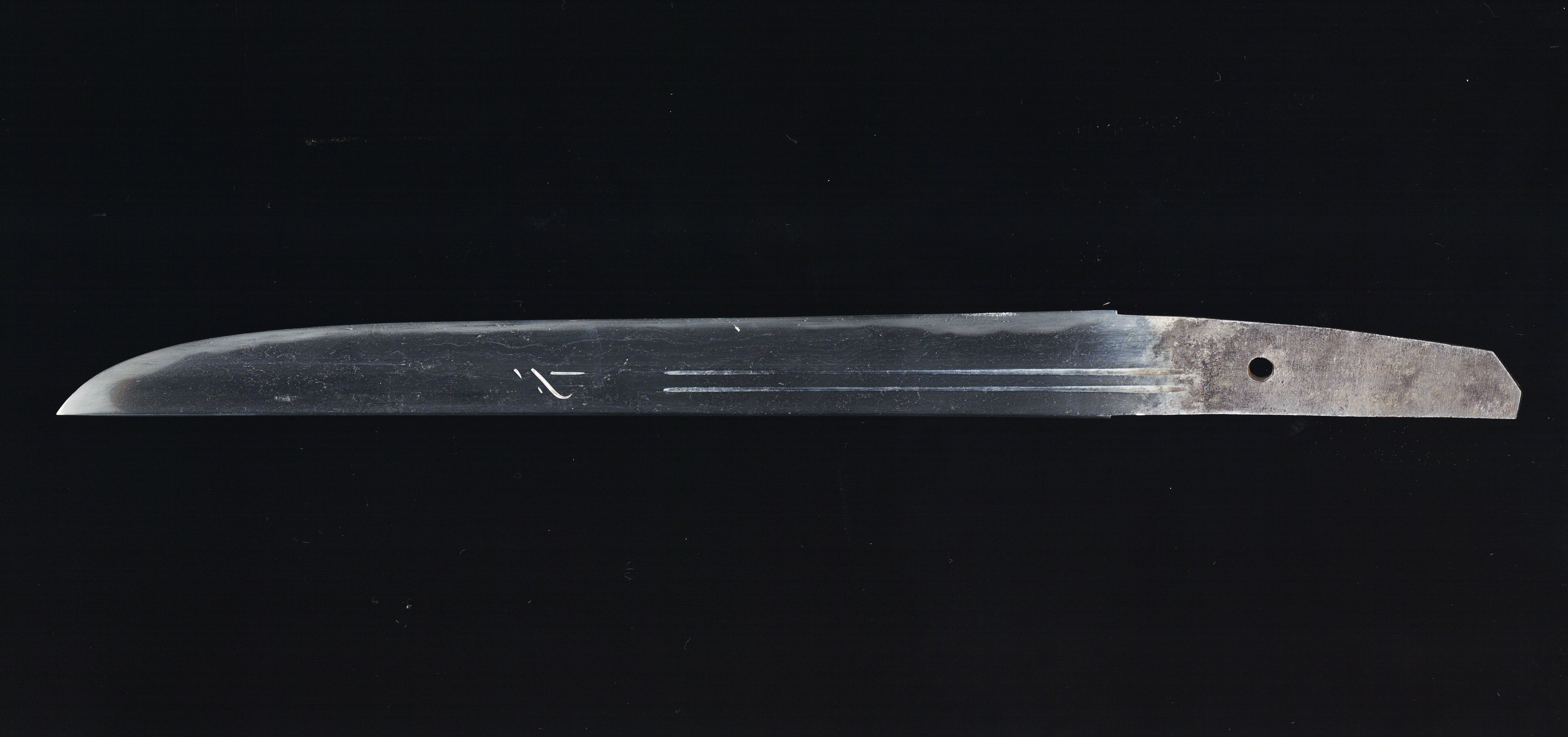
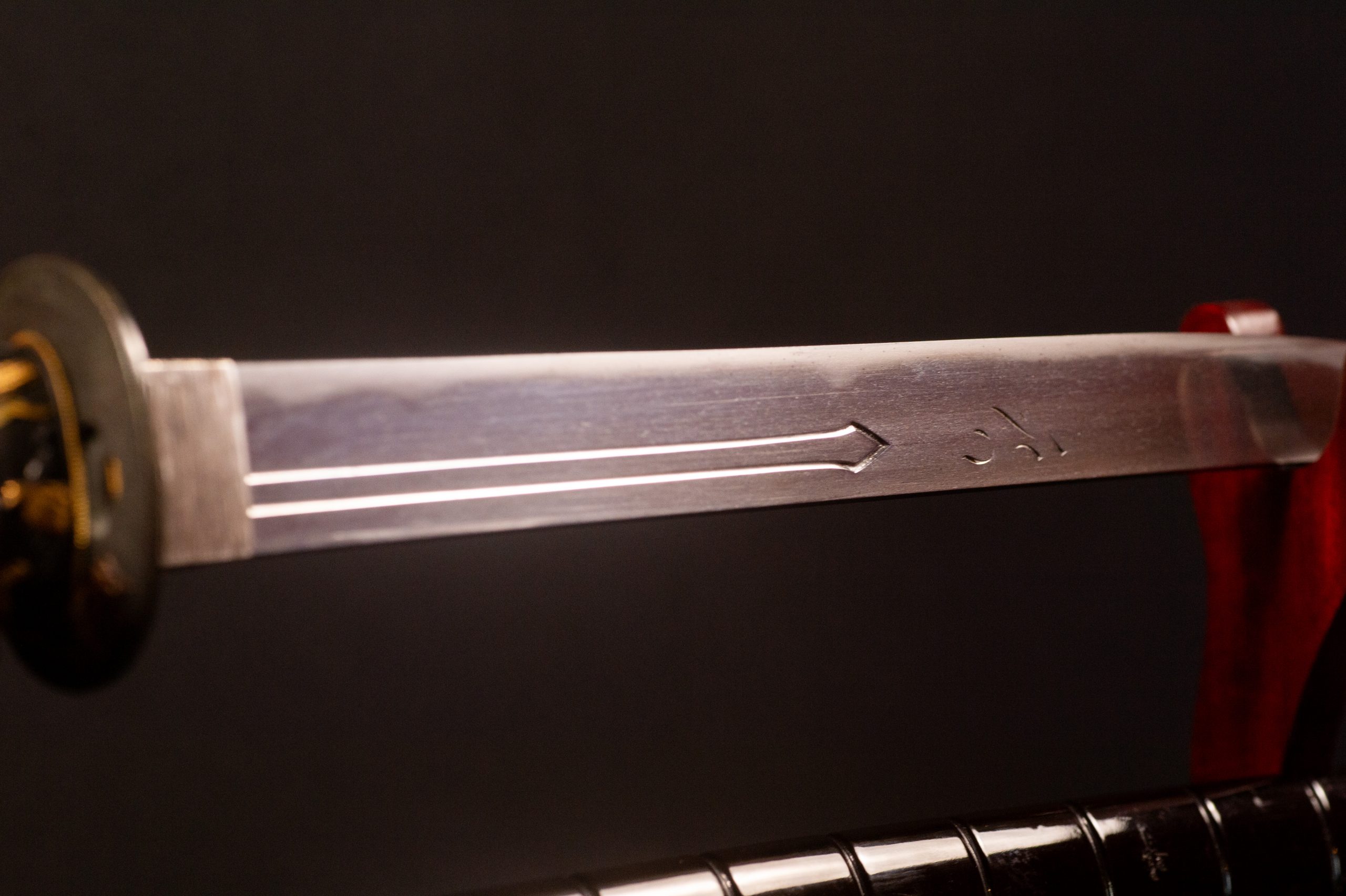
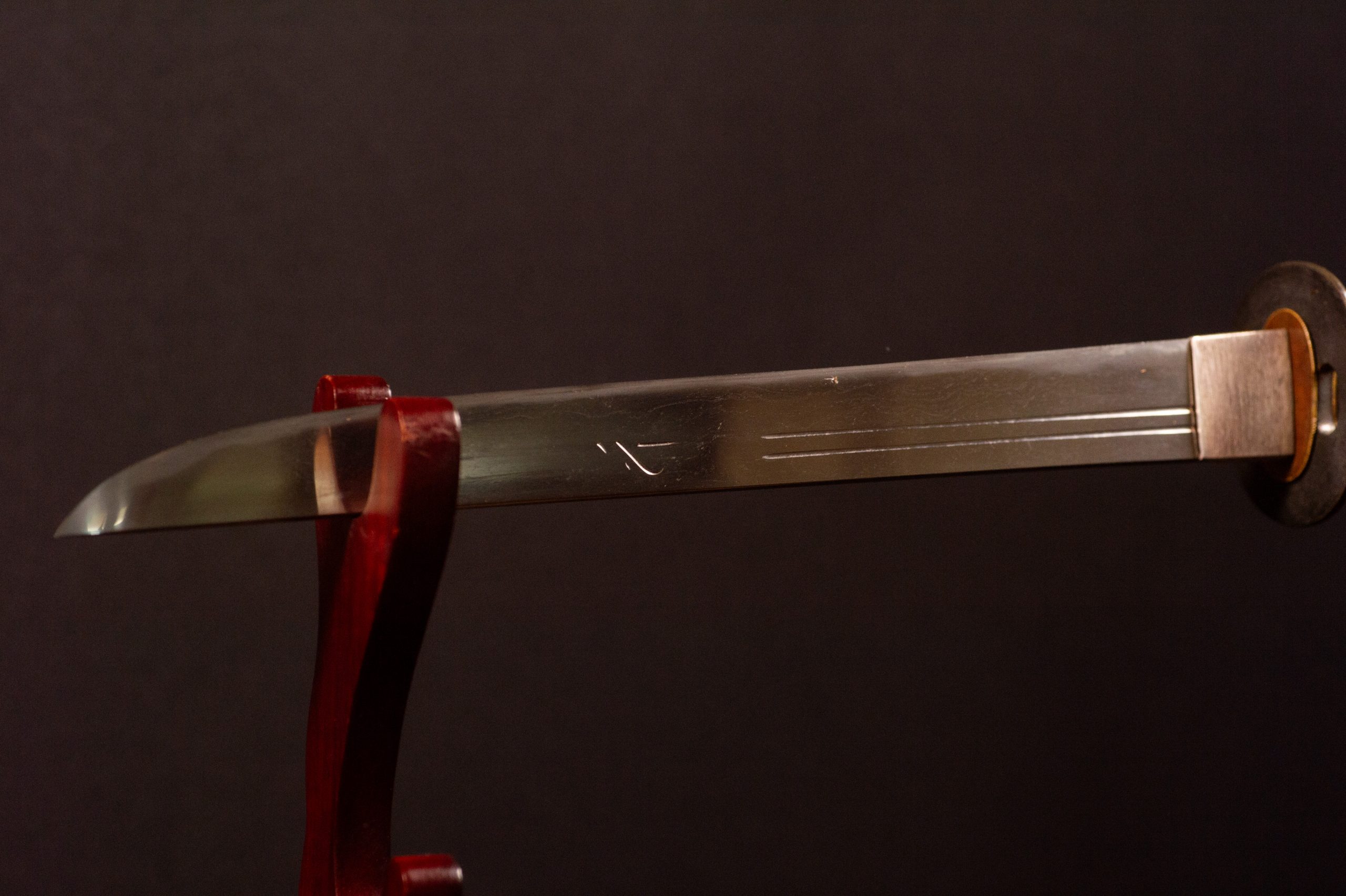
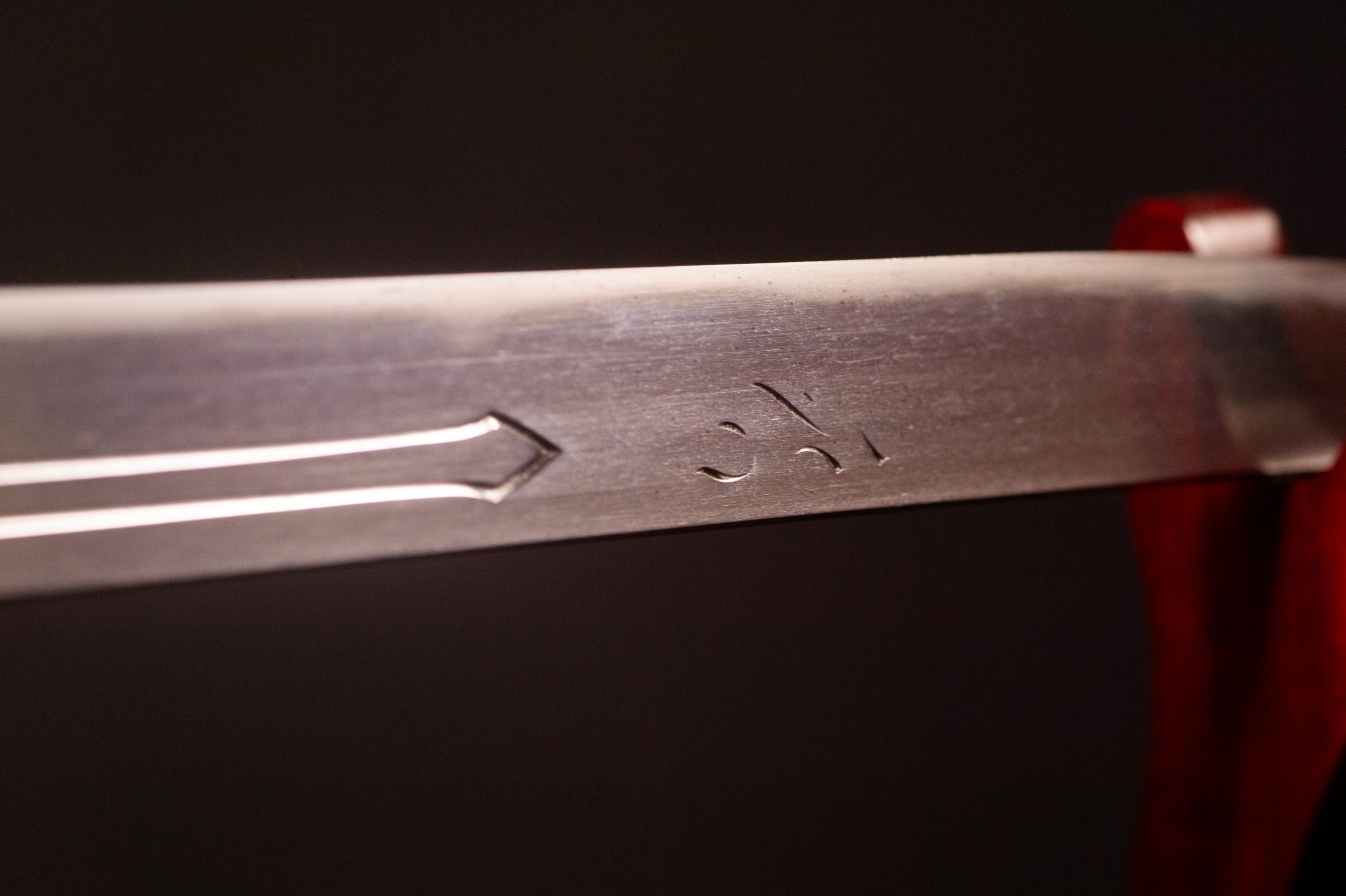
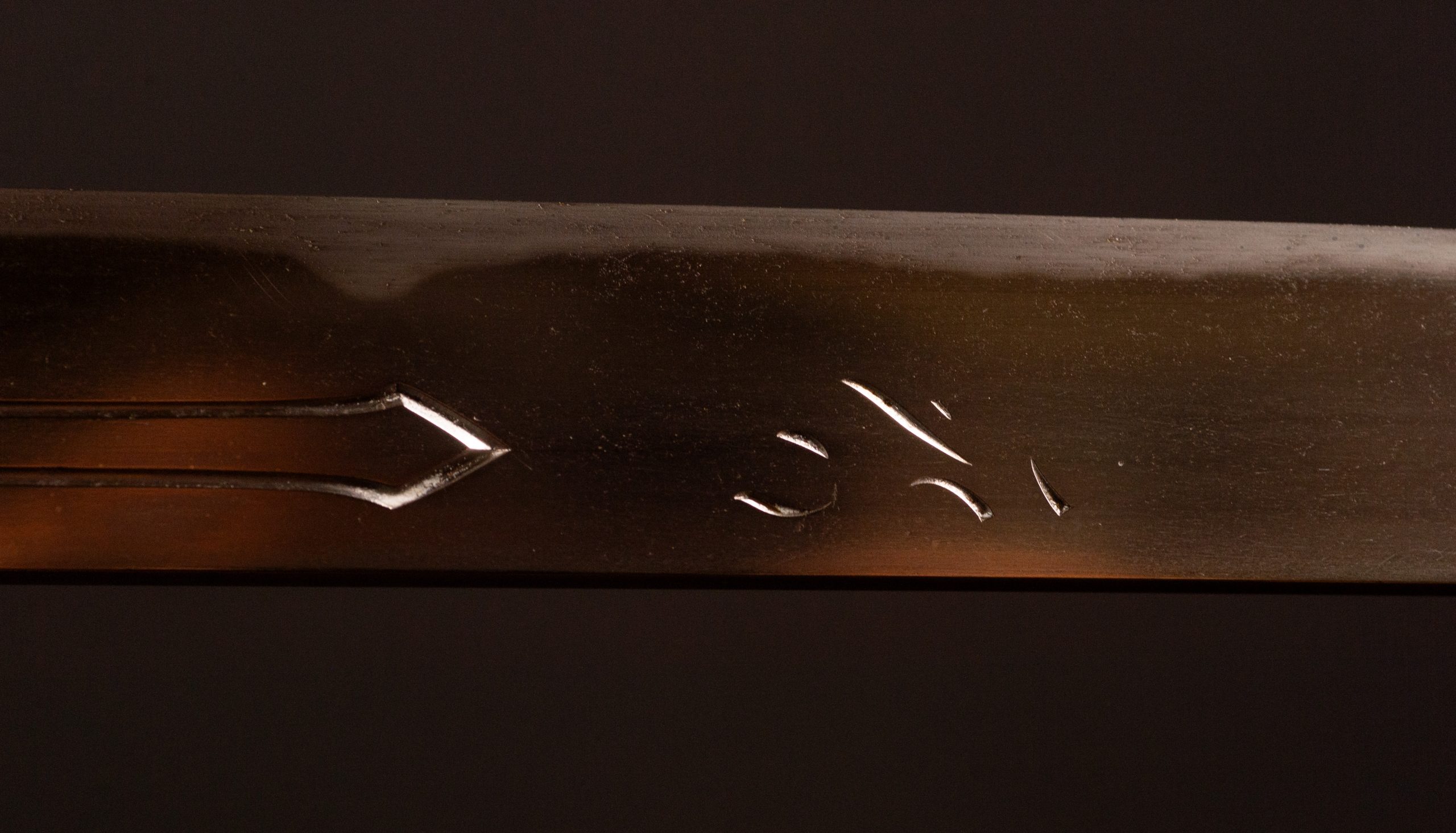
A well-proportioned tantō with clearly executed horimono: a main longitudinal groove accompanied by a secondary parallel line; on one face the termination is finished in a geometric form. On both faces, light-toned metal inlays (linear/geometric motifs) are visible on the flat. The construction shows broad surfaces without a strongly defined shinogi line in the images. The hamon is perceptible along the edge, but the photos do not allow a precise classification of its pattern. Nakago with one mekugi-ana and stable patina.
Length per certificate: 八寸八分 (approx. 26.7 cm).
Koshirae
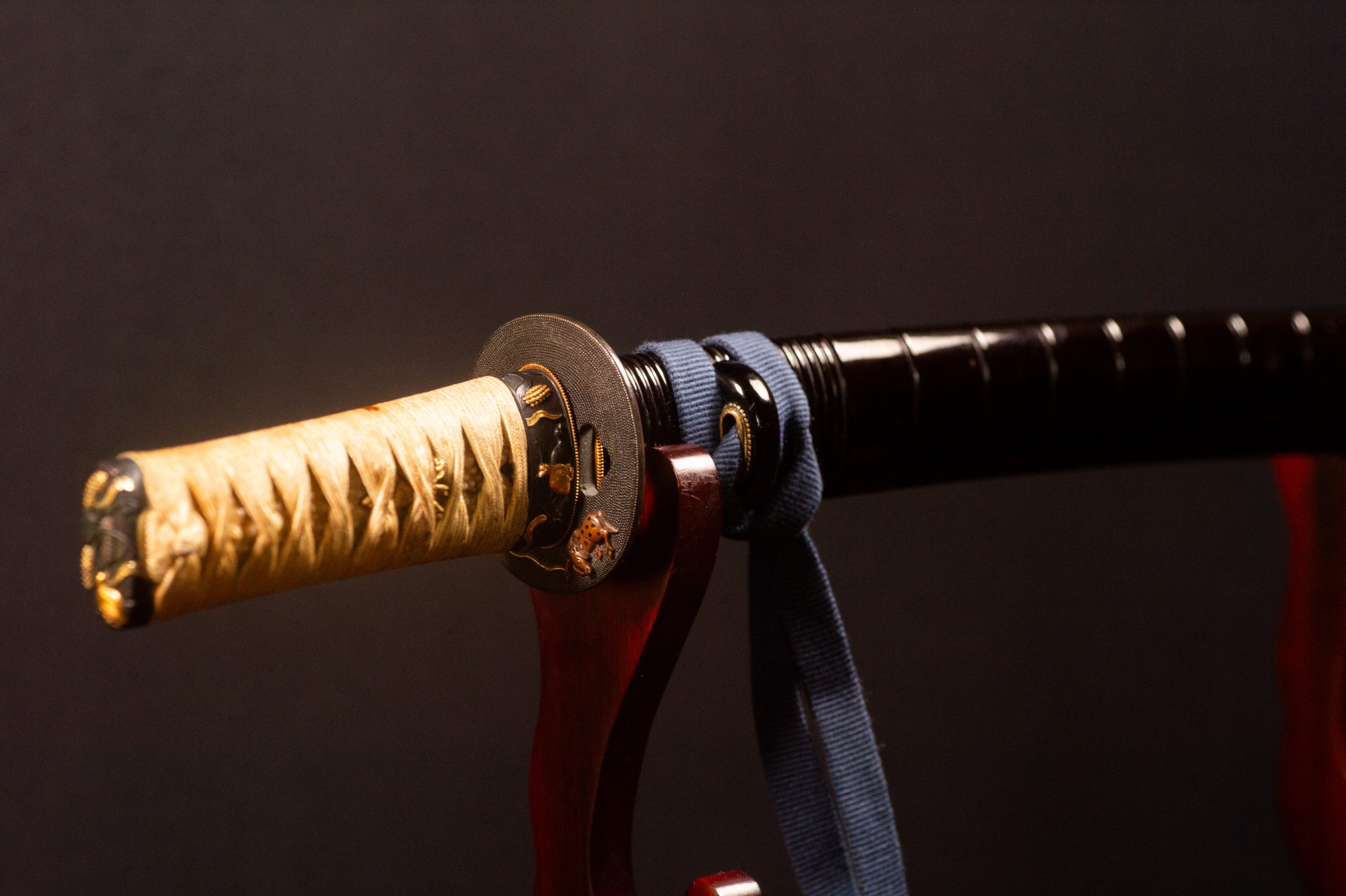
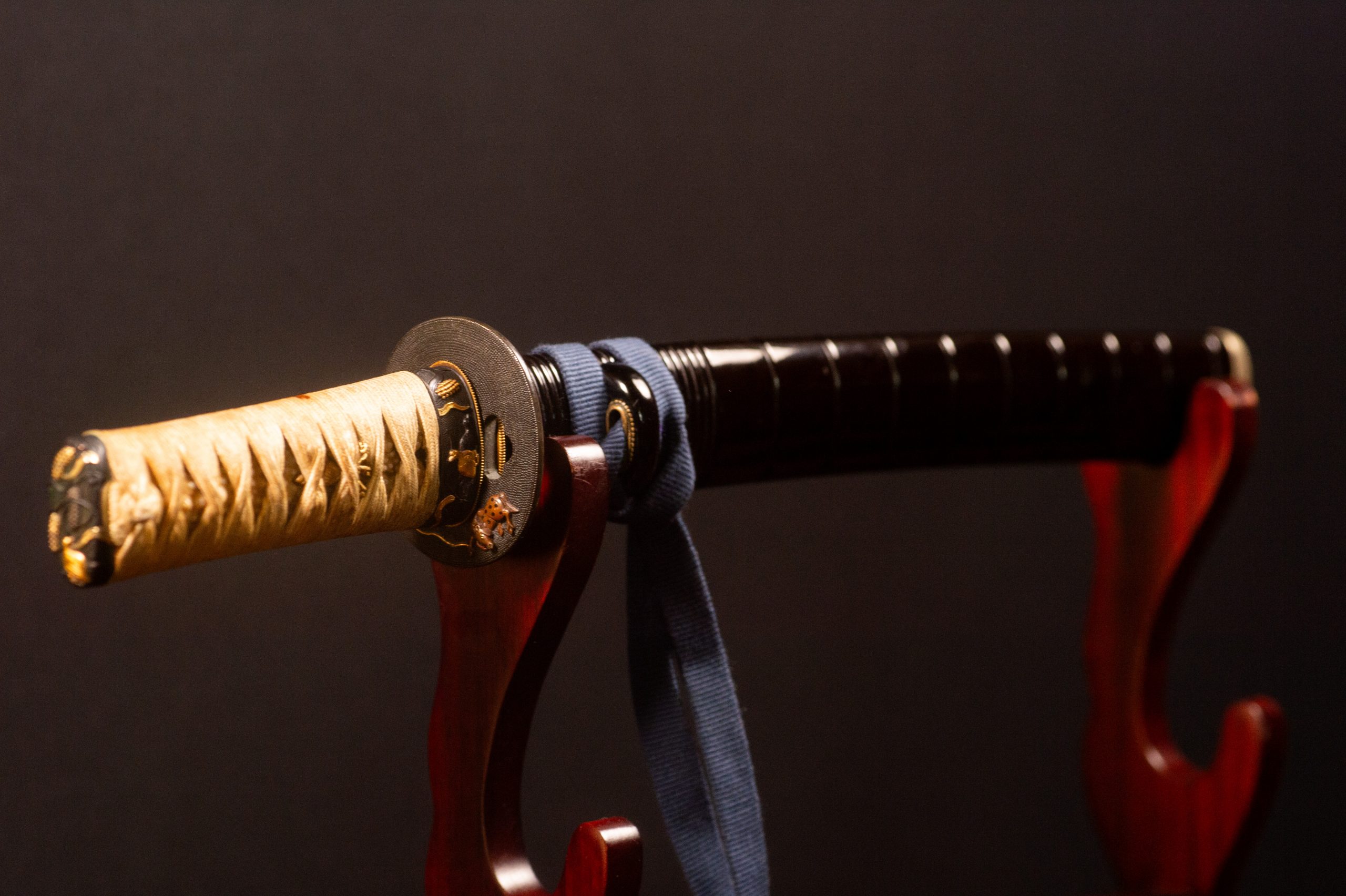
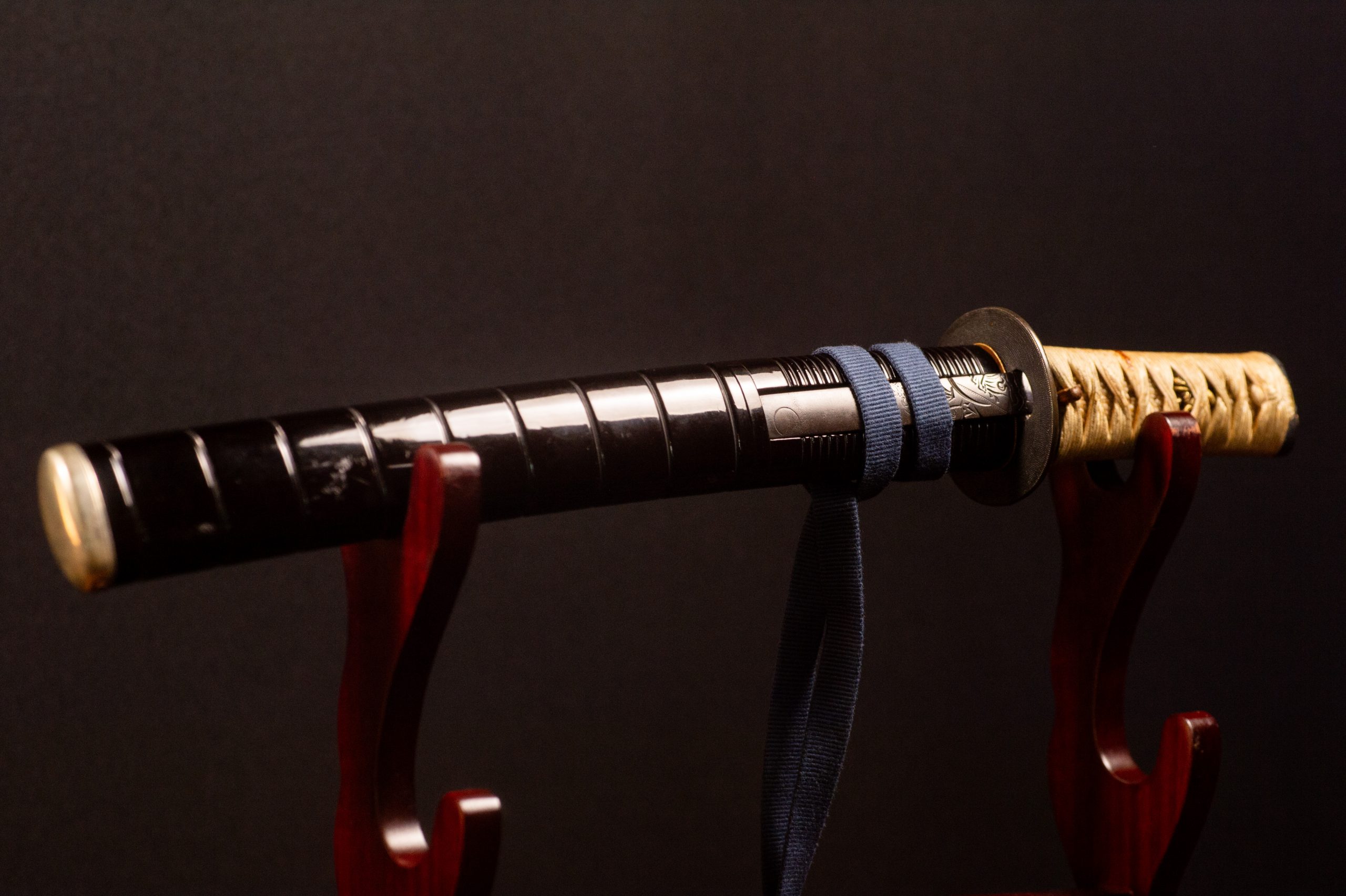
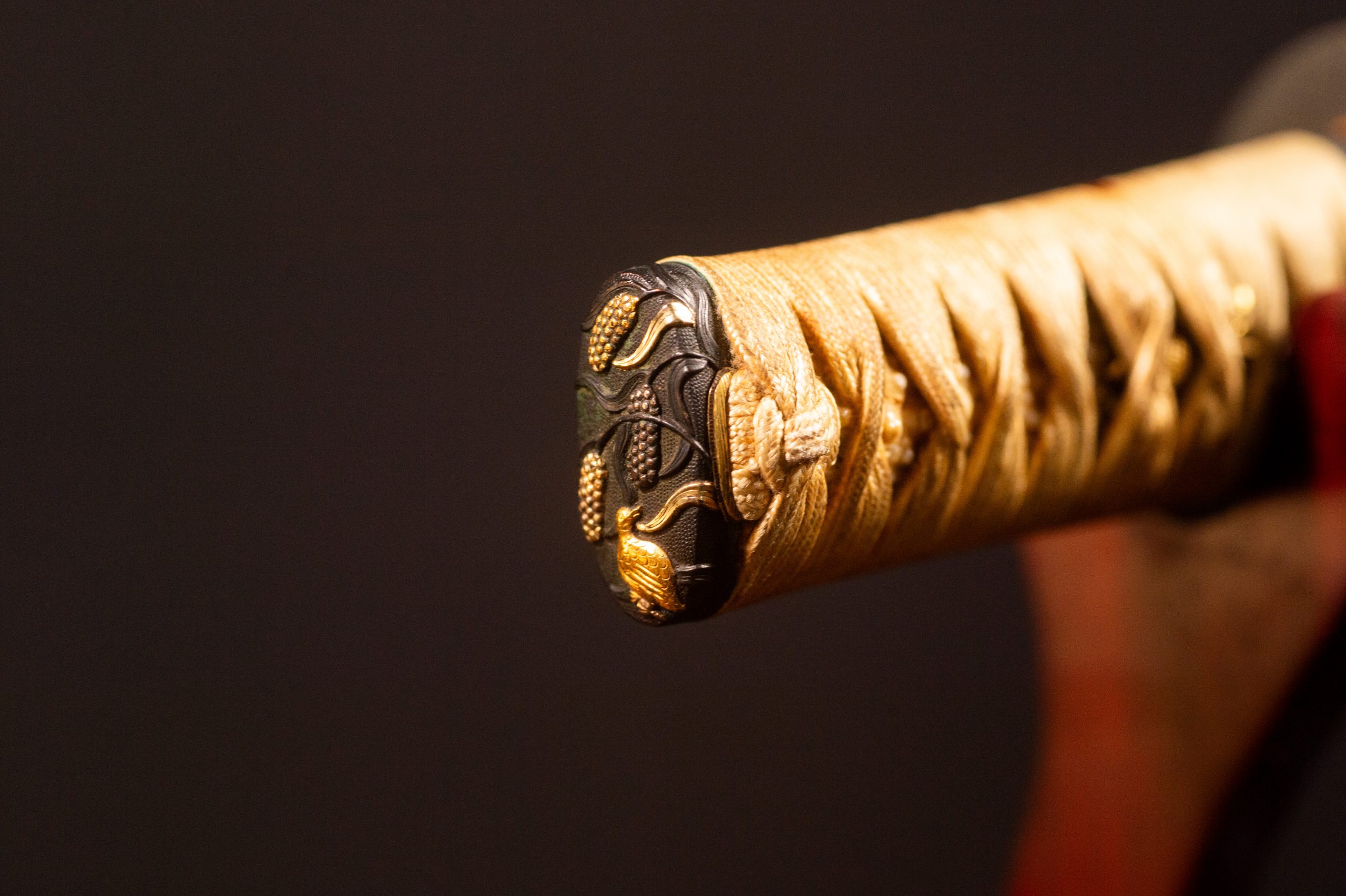
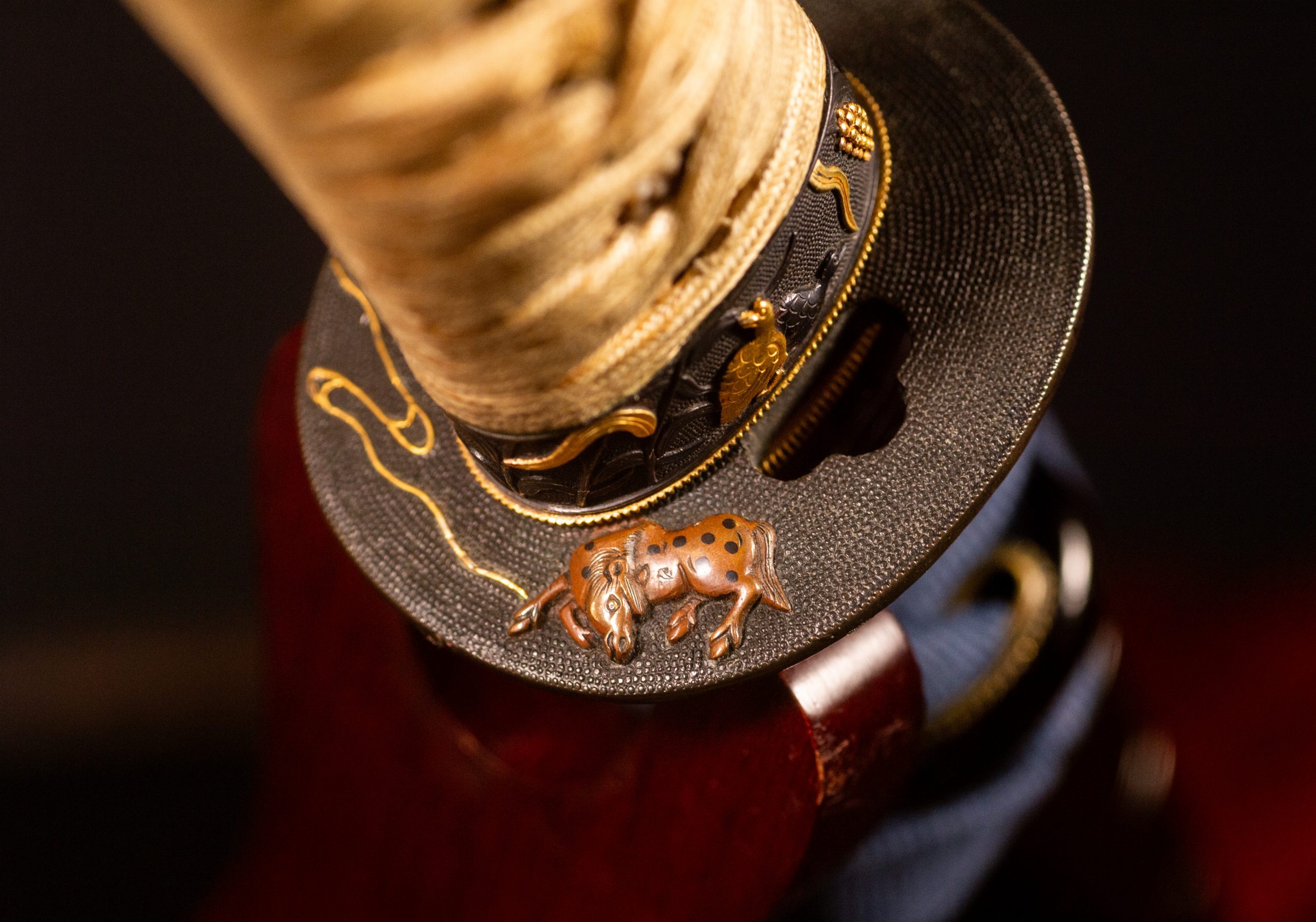
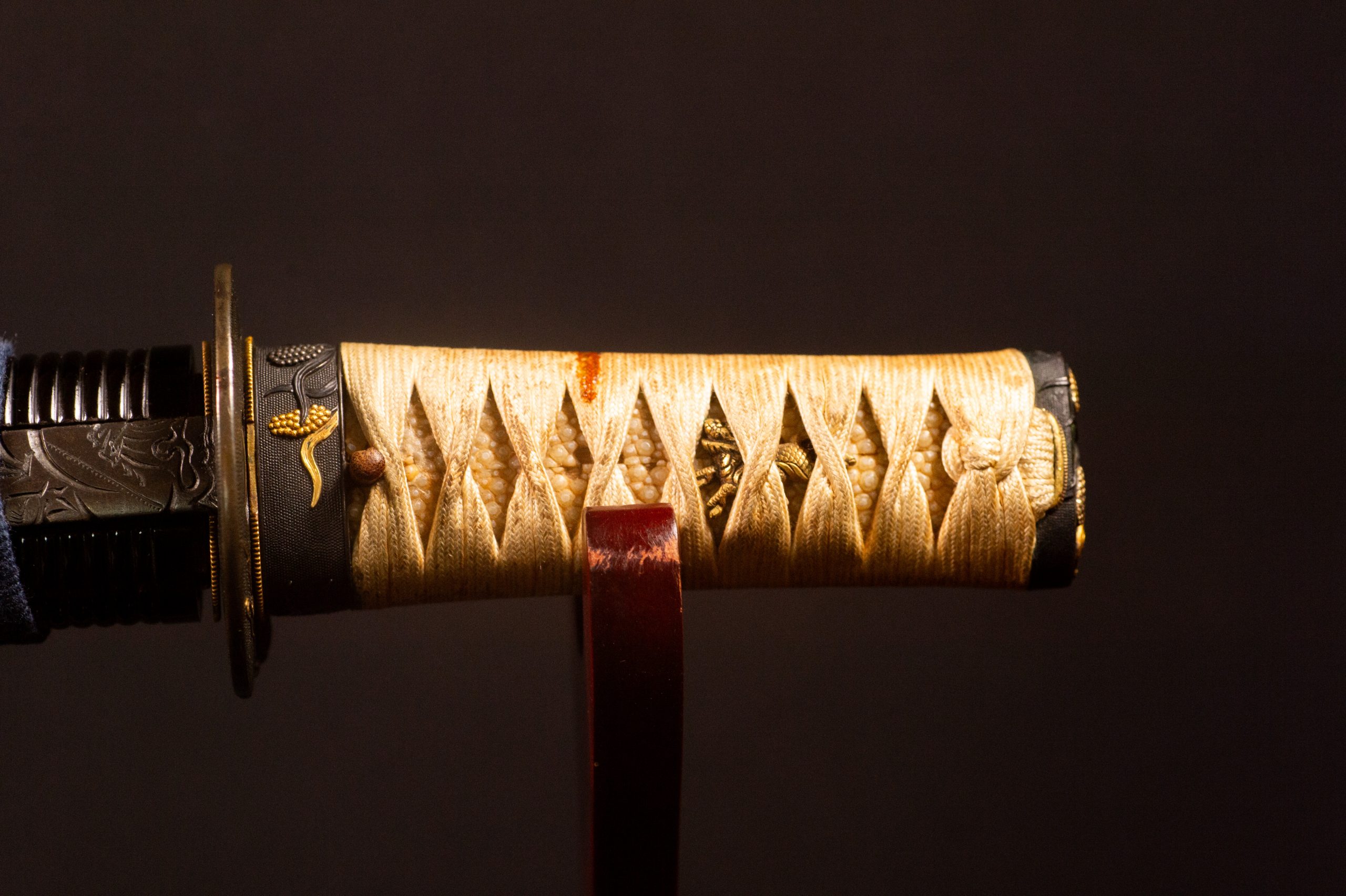
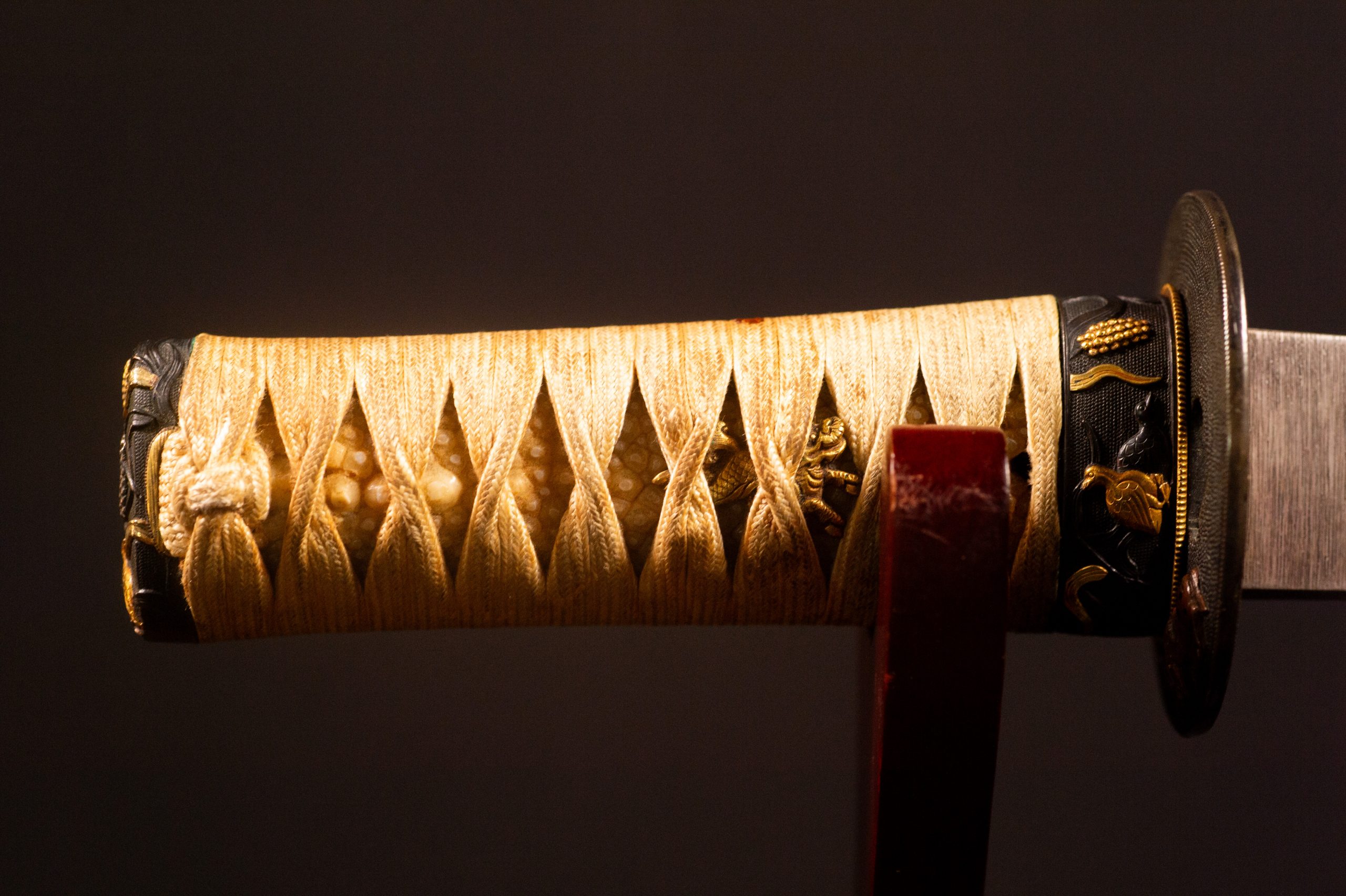
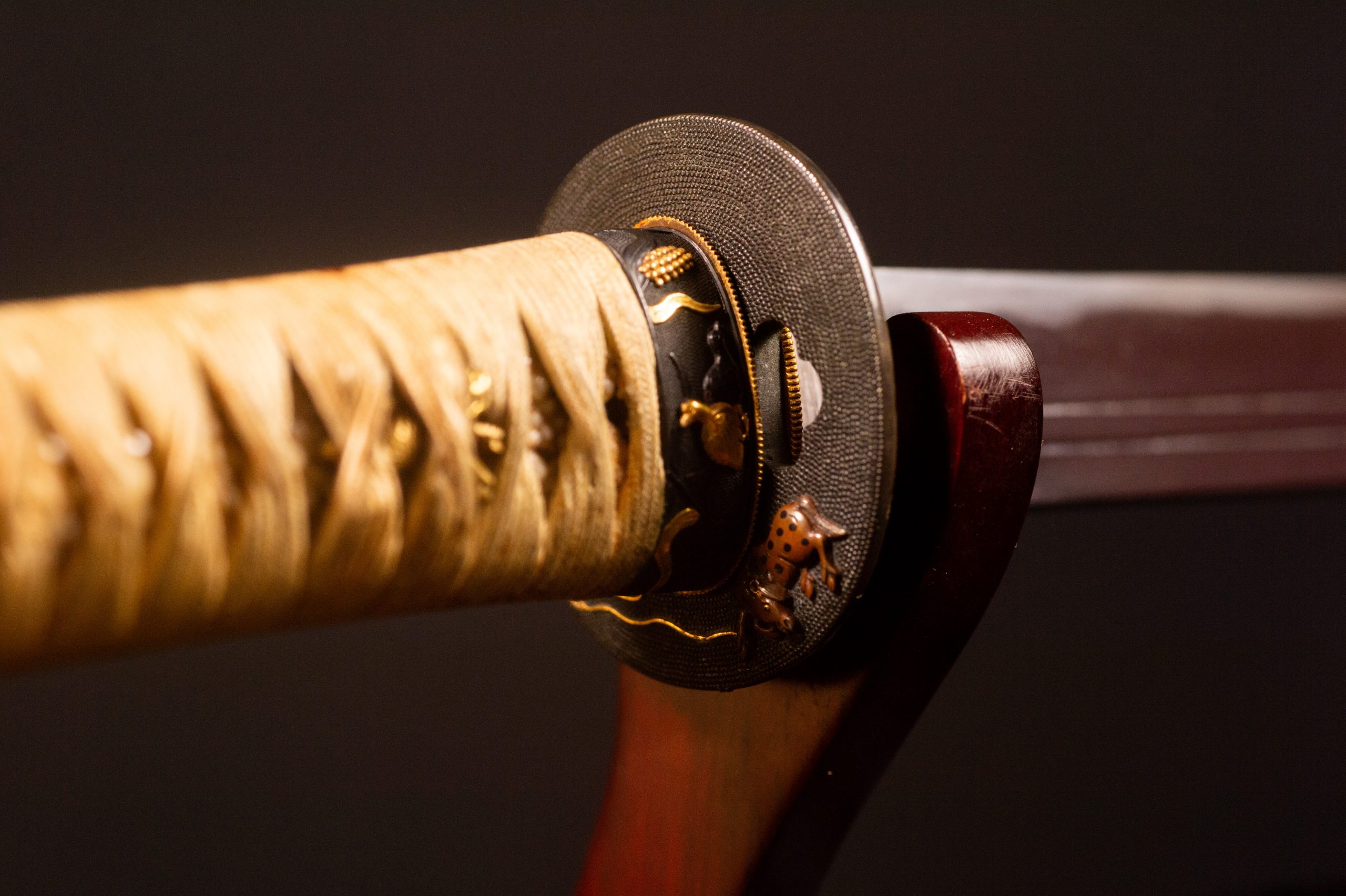
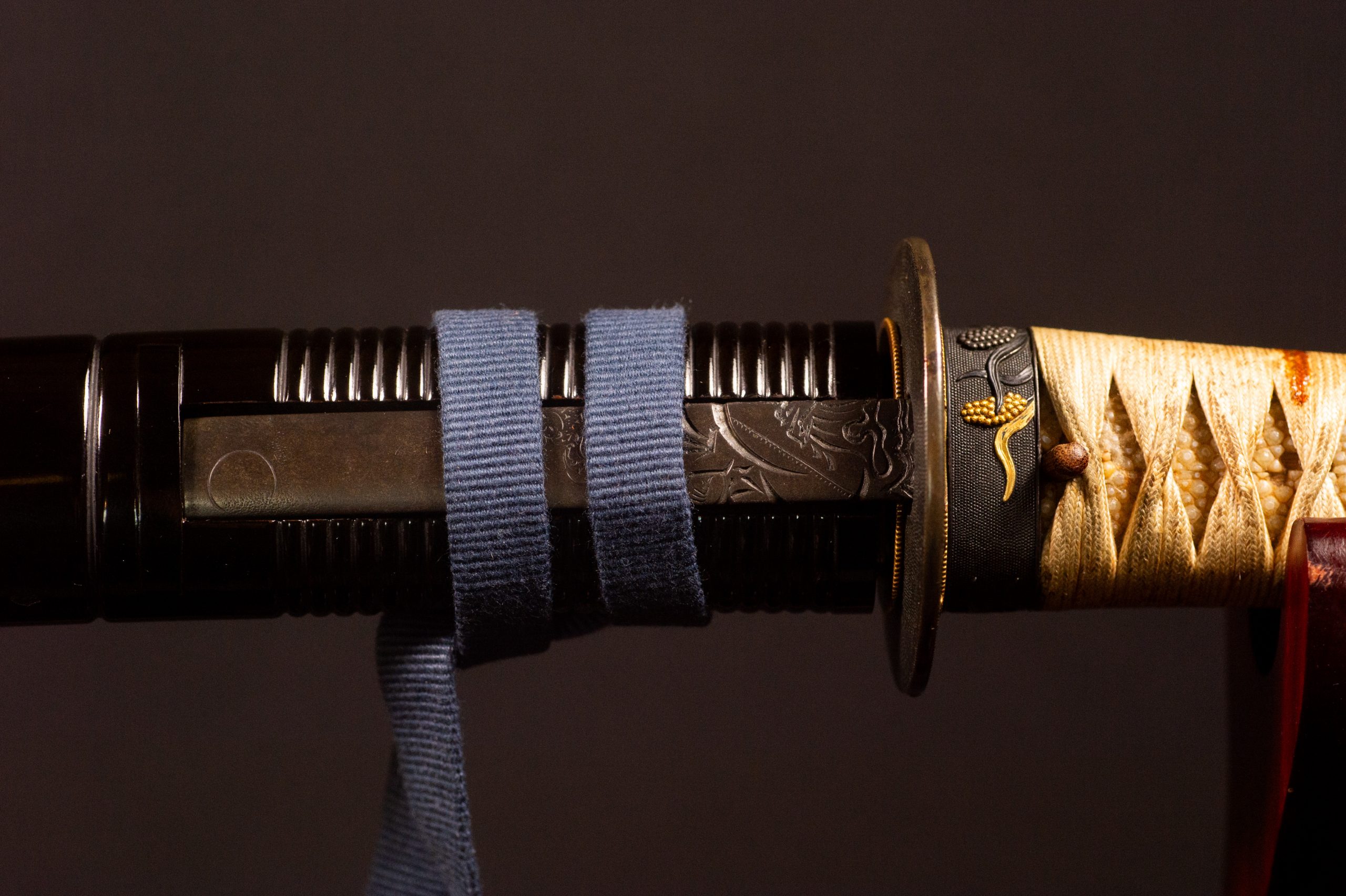
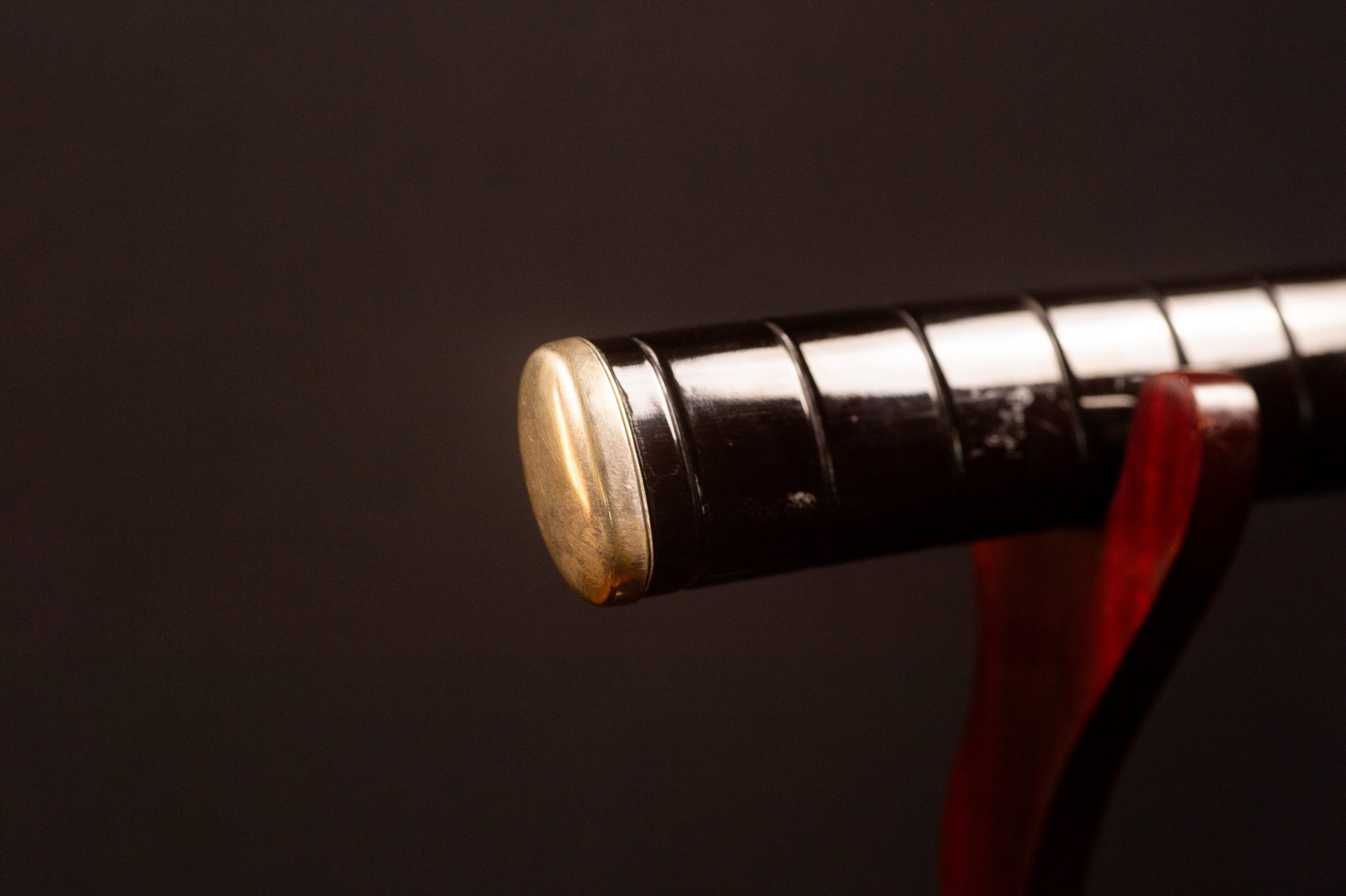
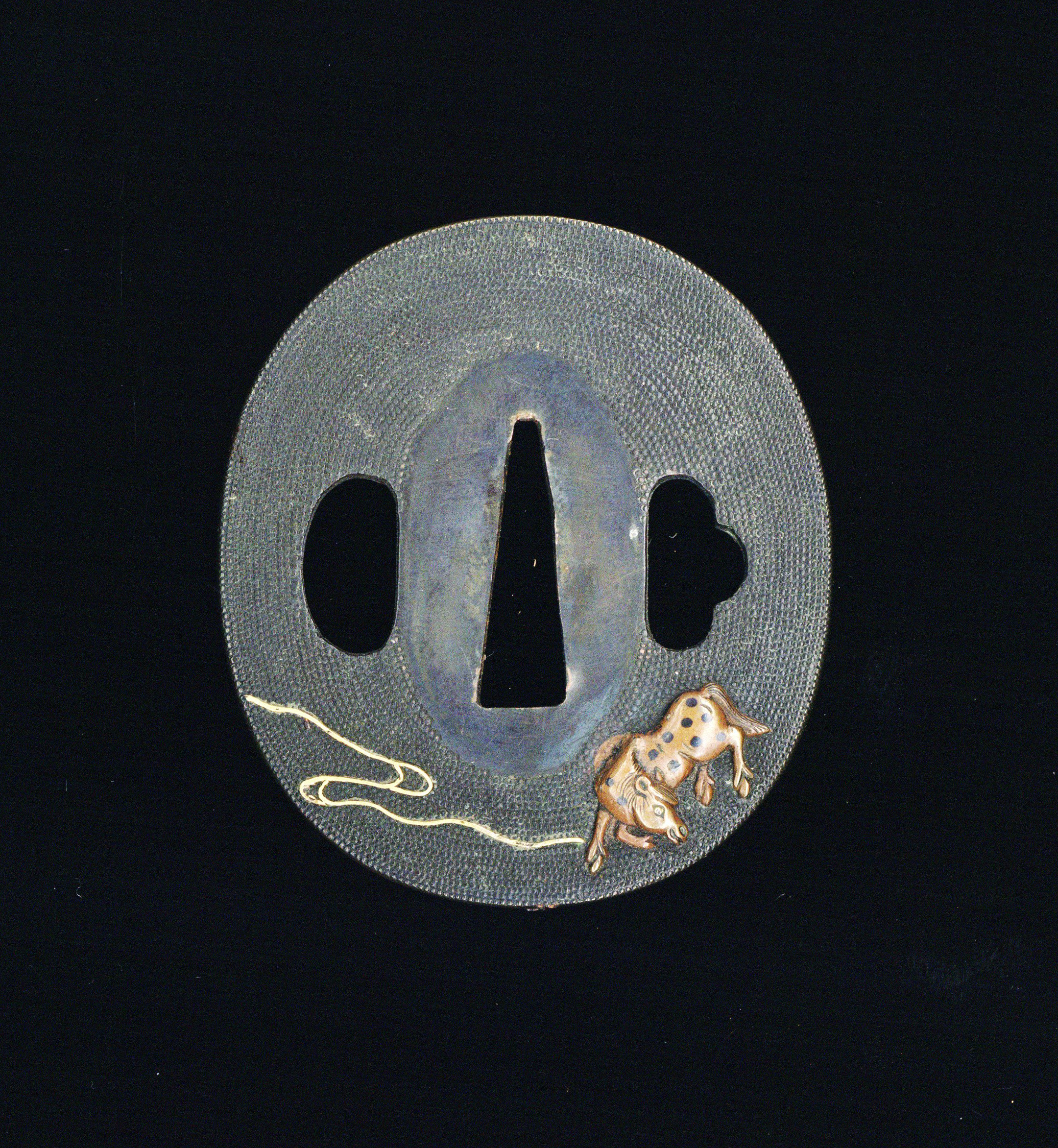
Complete mounting. Black-lacquered saya with helical ribbing and a metal kojiri; blue sageo. Tsuka with prominent-node samegawa and light-colored tsuka-ito; gilt menuki with a figural motif. Dark-based fuchi-kashira with fine surface texture and gilt relief decoration in a vegetal-and-bird theme. Oval tsuba with nanako ground, two hitsu-ana (one oval, one lobed), a gold-toned inlay line, and a raised dappled horse figure. Plain metal habaki.
Final spec sheet
Type: Tantō
Mei (per certificate): 菊紋(加州行光)
Classification (per certificate): 特別貴重刀剣
Organization and signatory (per certificate): 財団法人日本美術刀剣保存協会/会長 細川護立
Certificate date: 昭和三十七年九月十日 (10/09/1962)
Length (per certificate): 八寸八分 (≈ 26.7 cm)
Nakago: 1 mekugi-ana
Koshirae: ribbed black saya, blue sageo, nanako tsuba with inlay and relief, decorated fuchi-kashira, gilt menuki


