


Description
ITEM DESCRIPTION:
Comes with kimono or cotton bag. Comes with certificate of supein Nihonto. Comes with copy of Tokosusho.
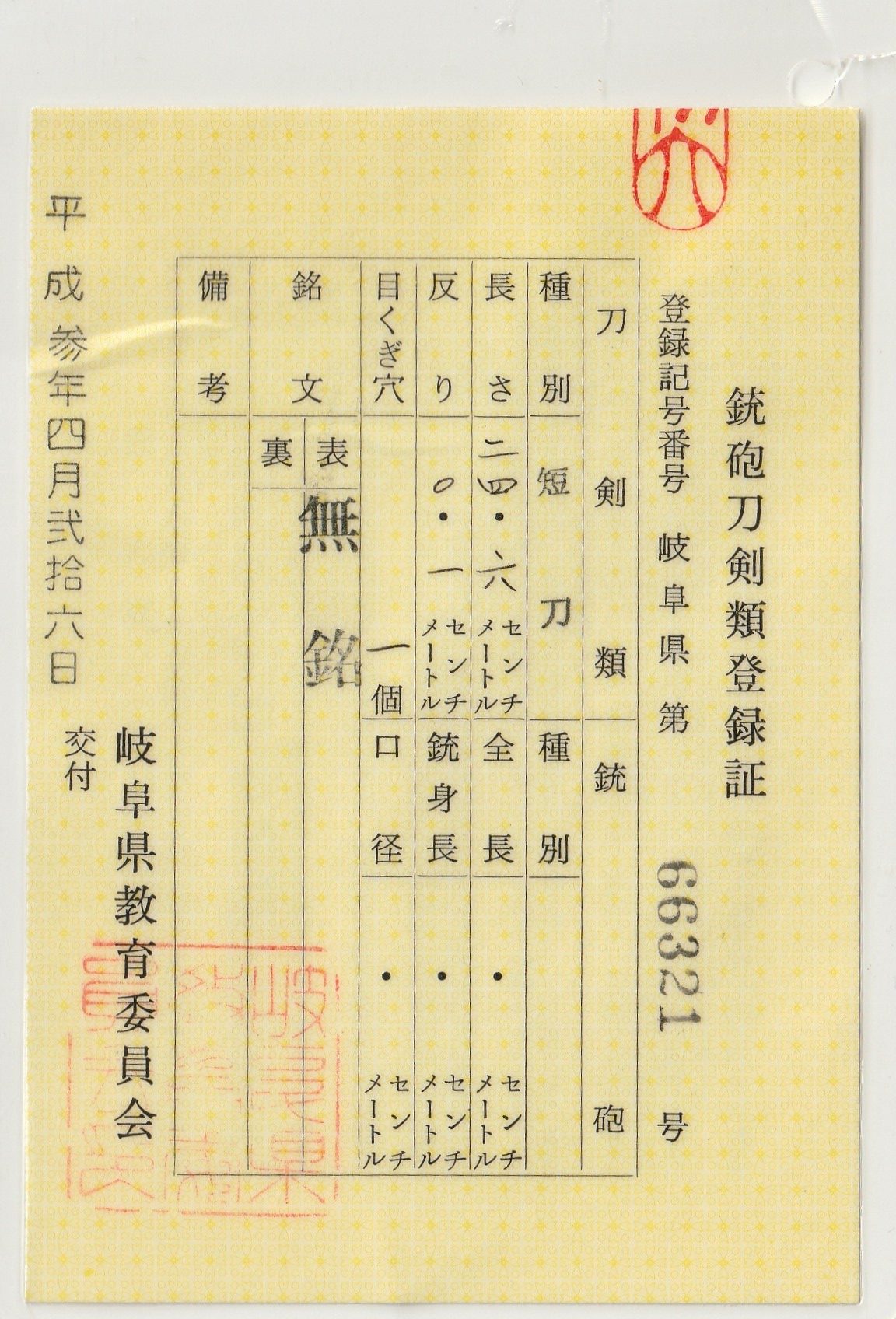
Japanese weapon registration document Tokorusho
Registration number: No. 66321
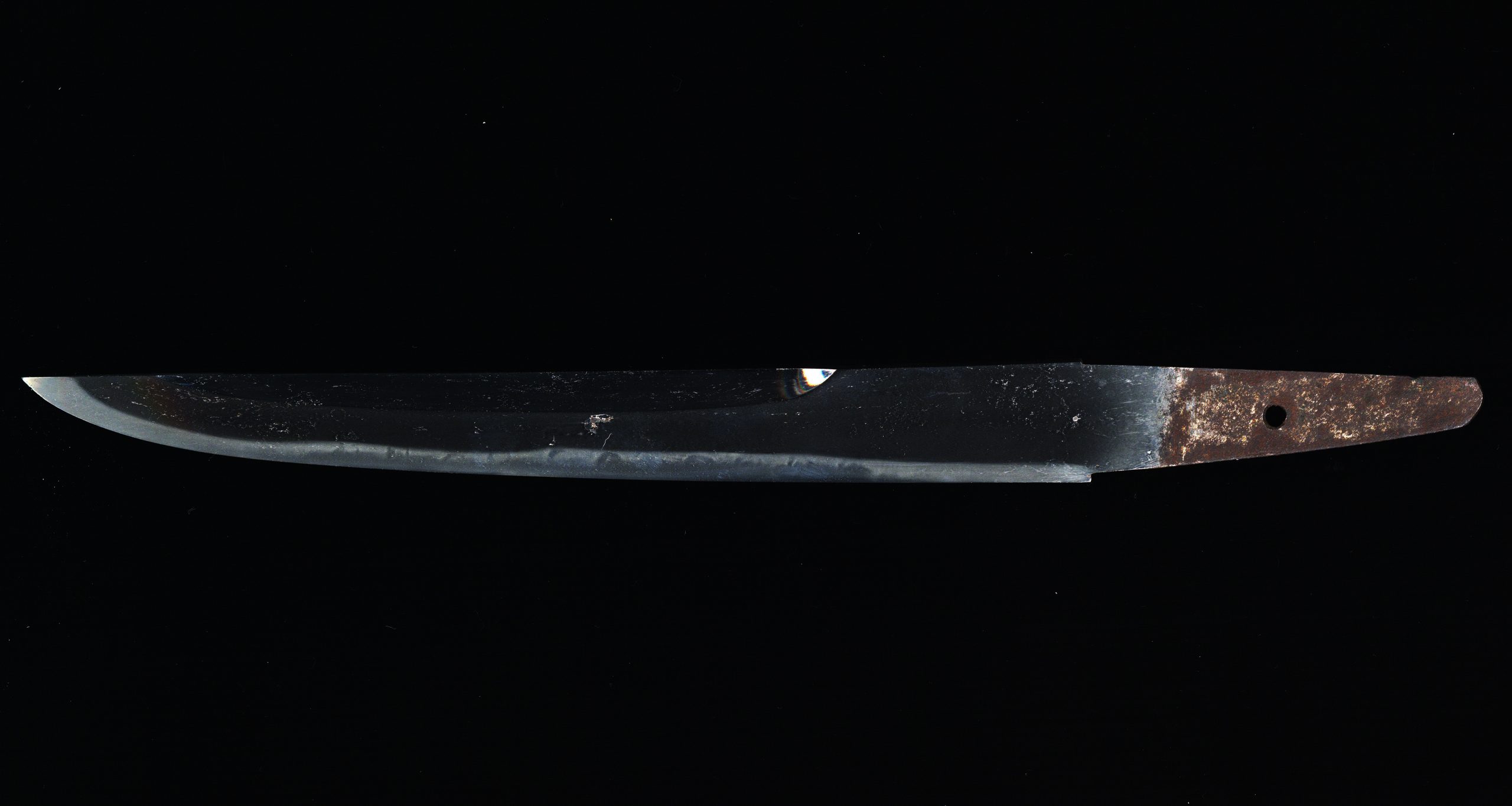
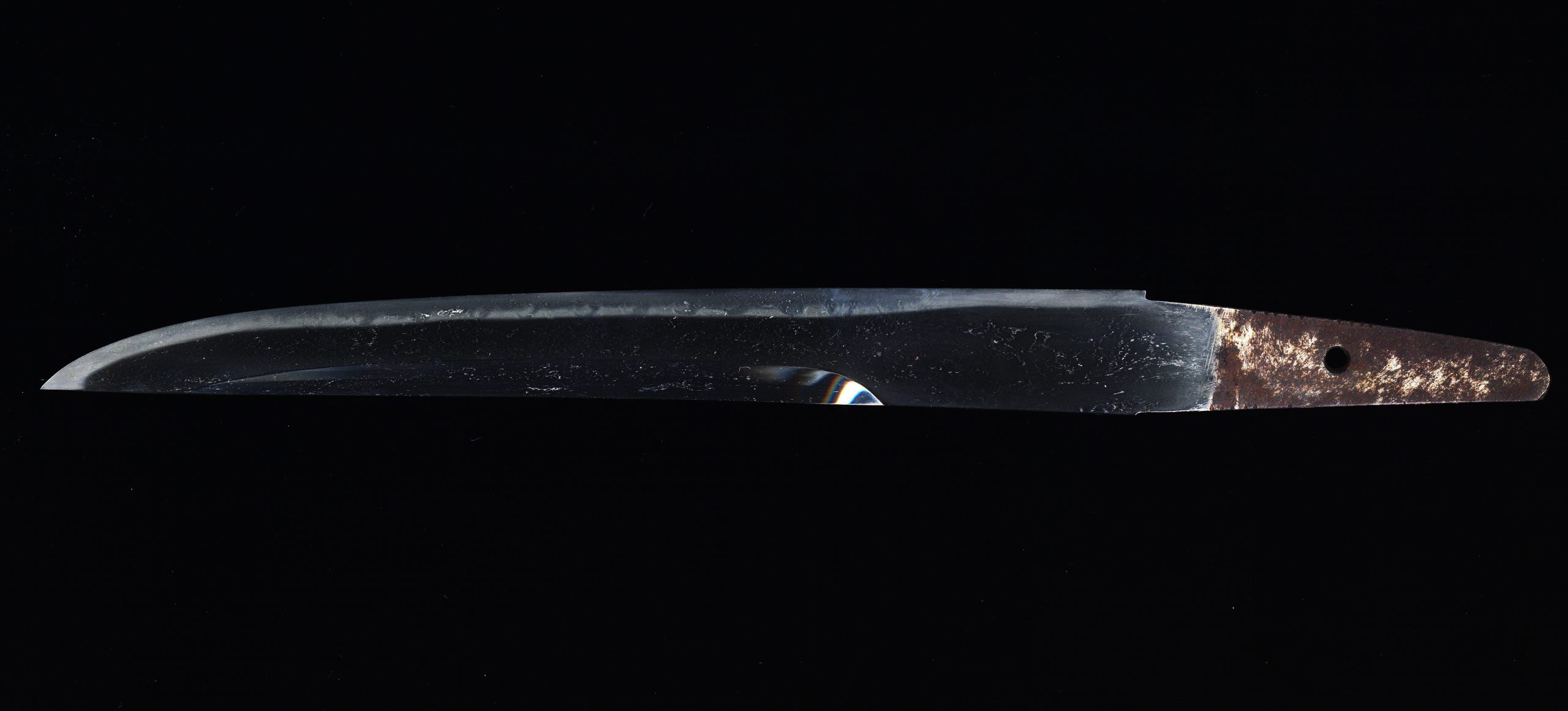
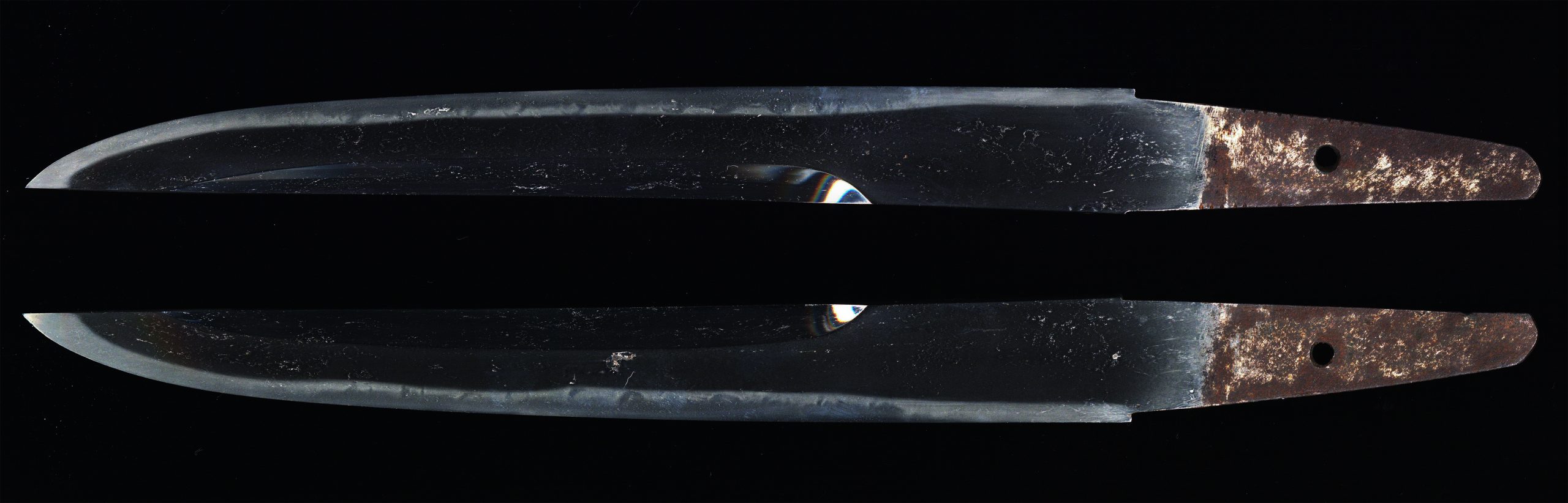
Type: Tantō
Blade length: 21.1 cm
Curvature: 0.1 cm
Number of mekugi-ana: One
Signature: Mumei (unsigned)
Issuing authority: Tokyo Metropolitan Board of Education
Registration date: Shōwa 33
Smith and historical period
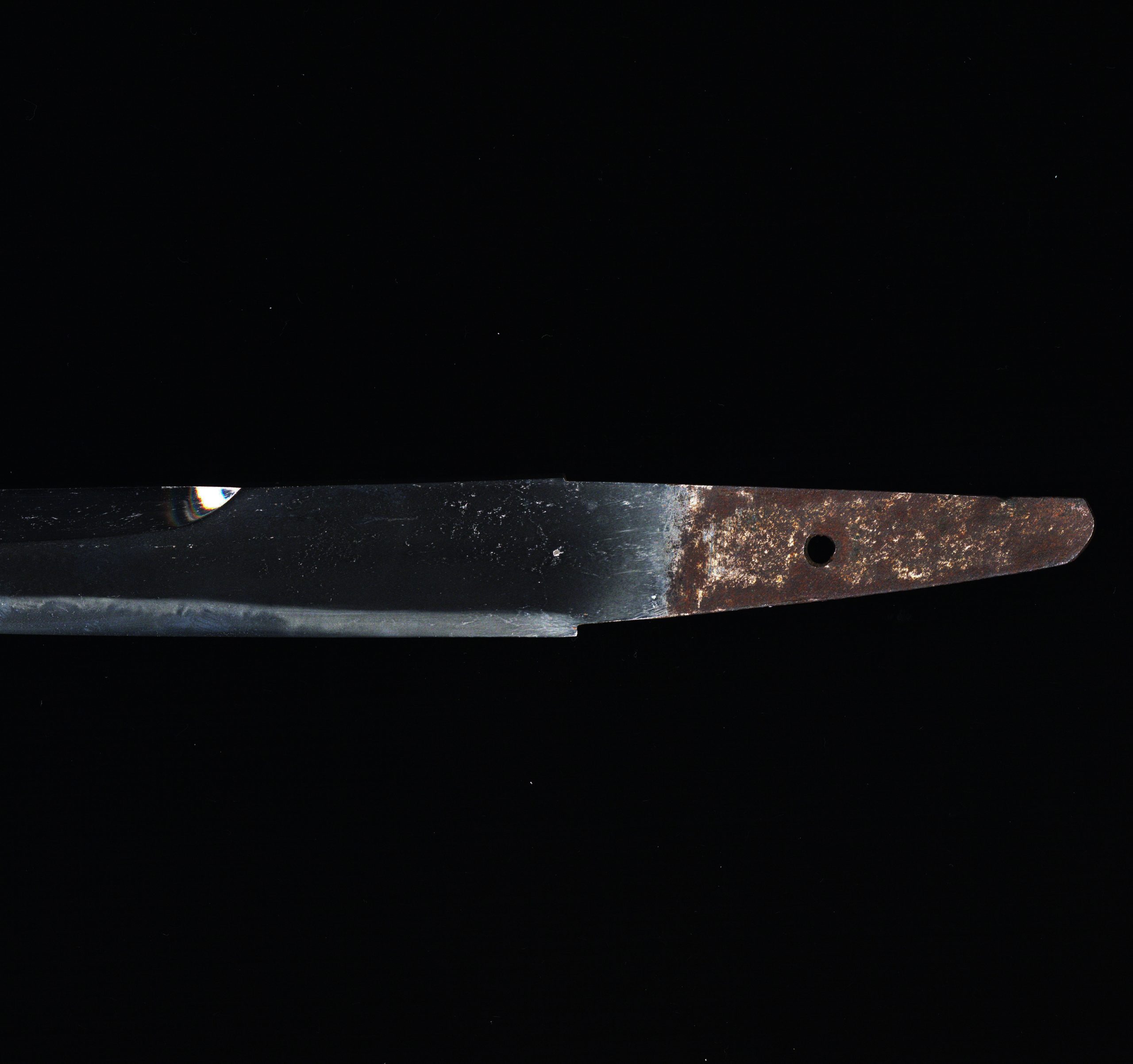
The blade is mumei, with no signature on the nakago.
Based on typology, proportions, and mounting, the piece belongs to the Edo period, corresponding to a sober and functional production characteristic of this era. The documentation provides no attribution to a specific smith, school, or province.
Technical description of the blade
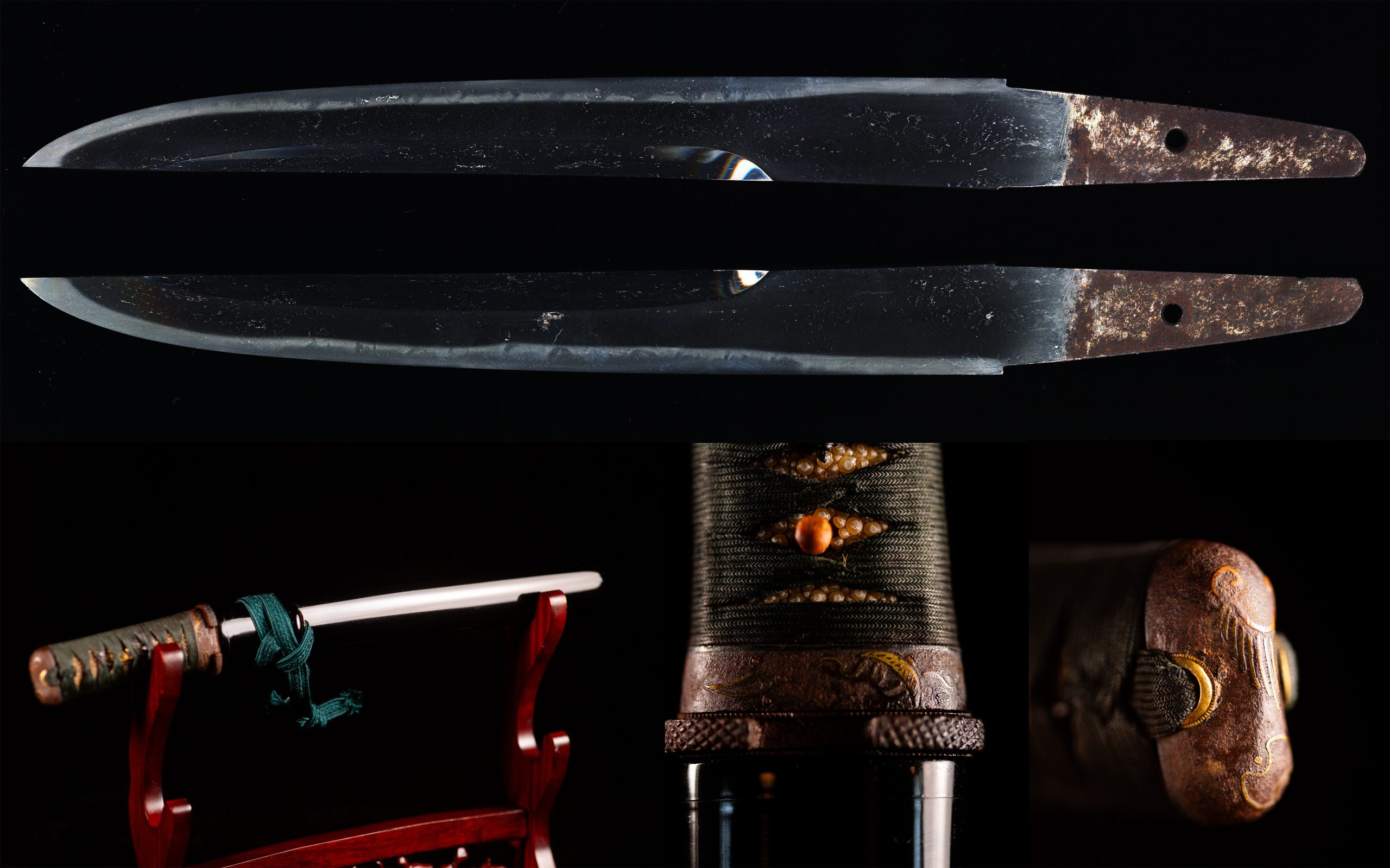
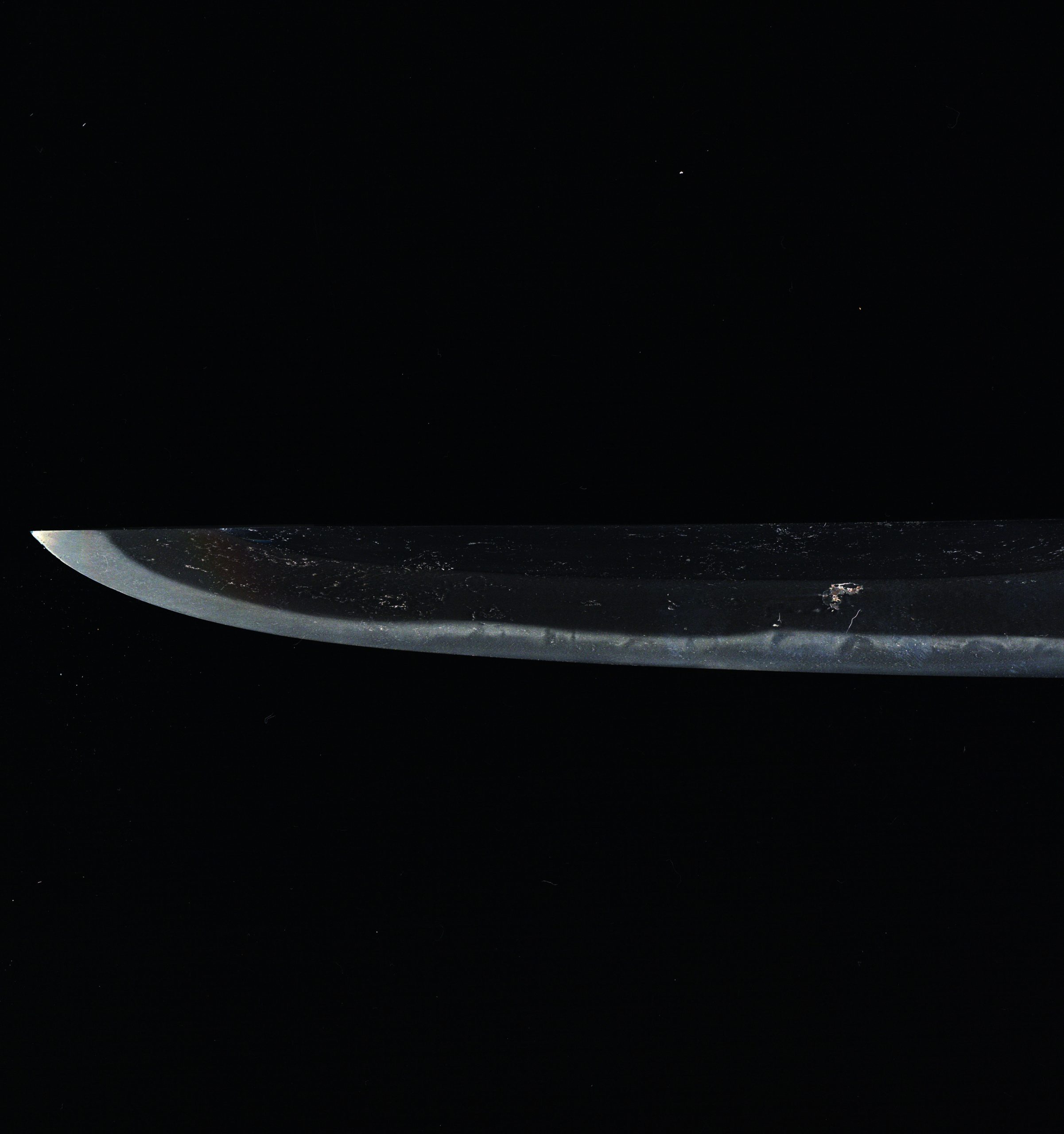
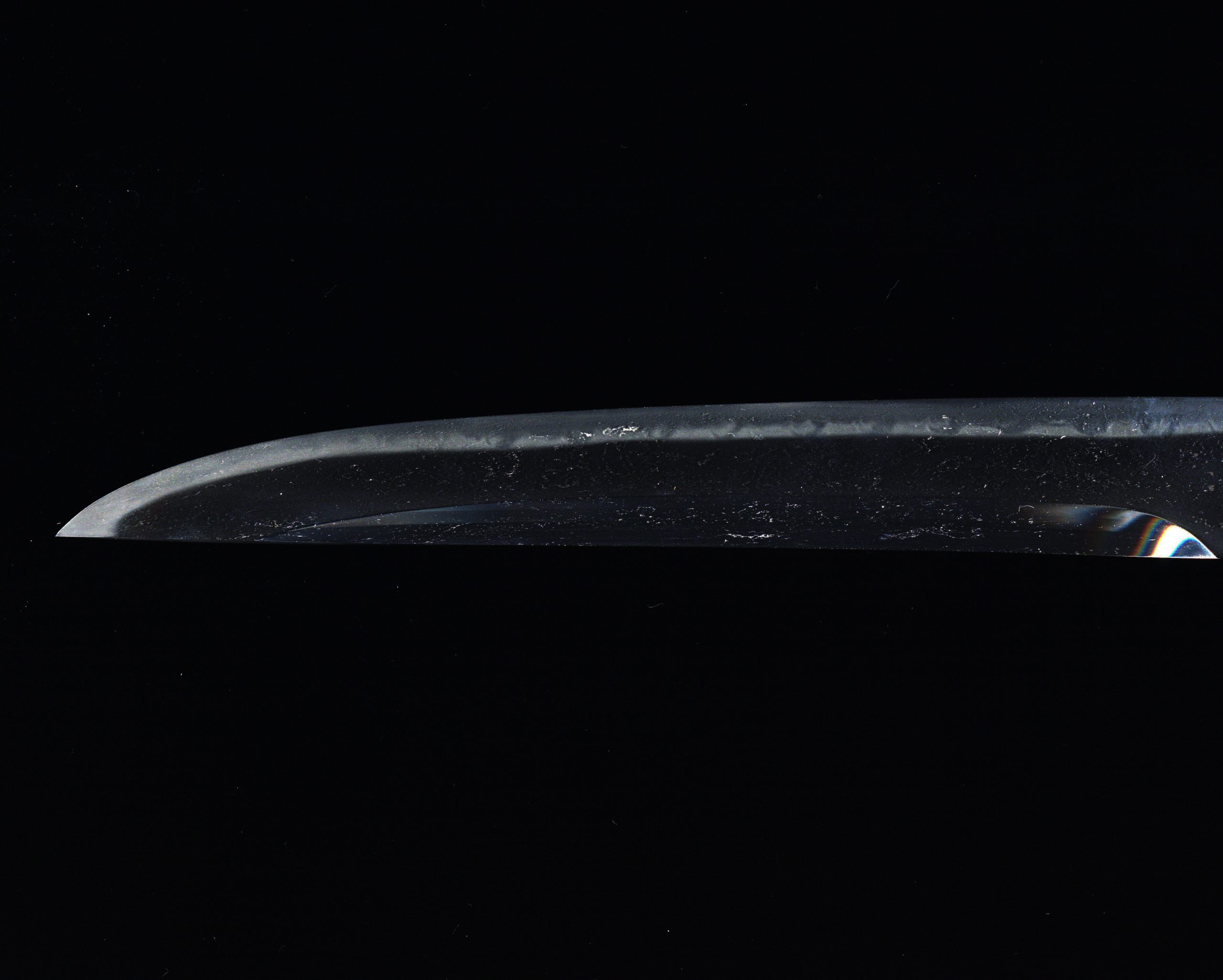
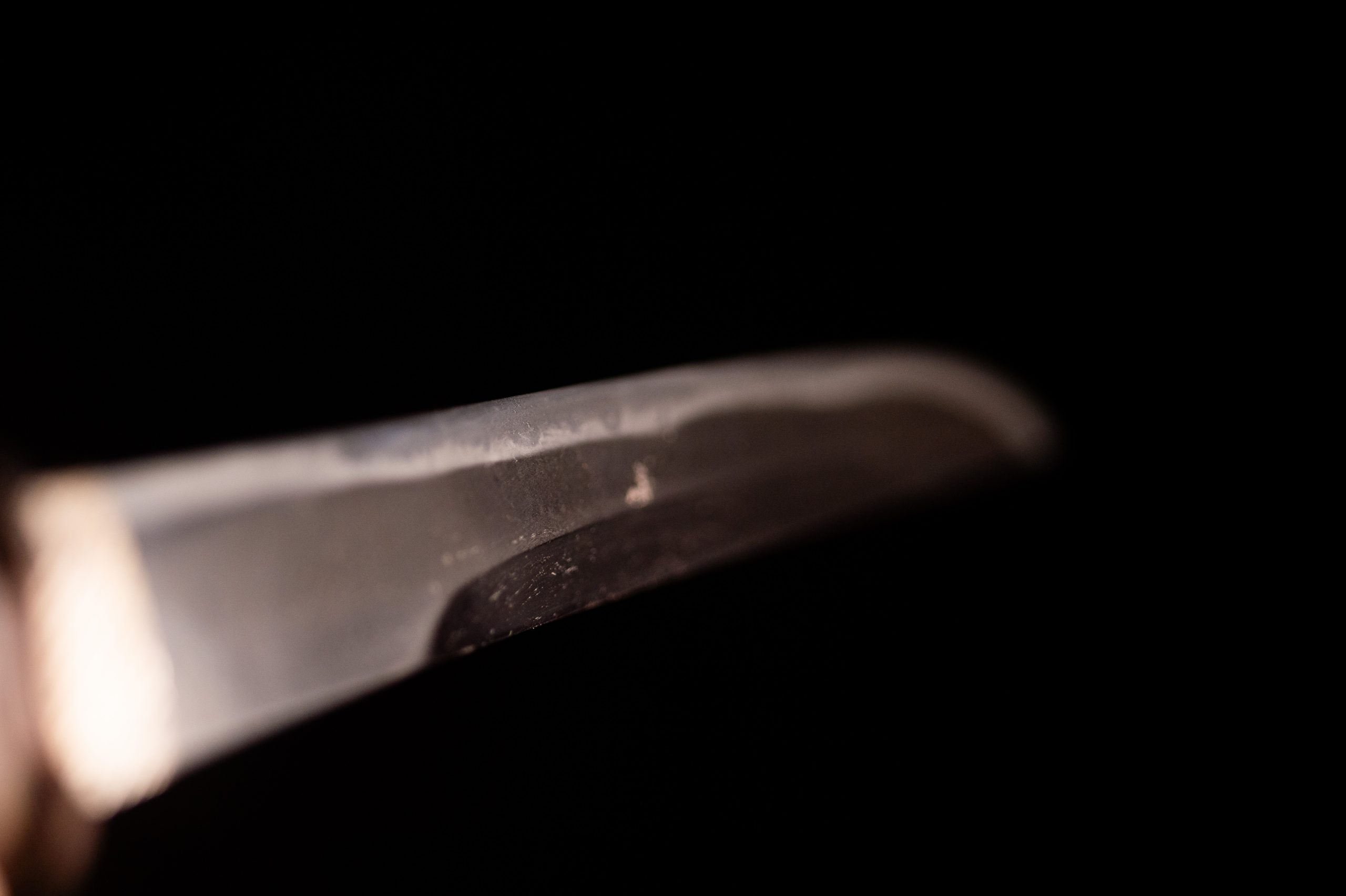
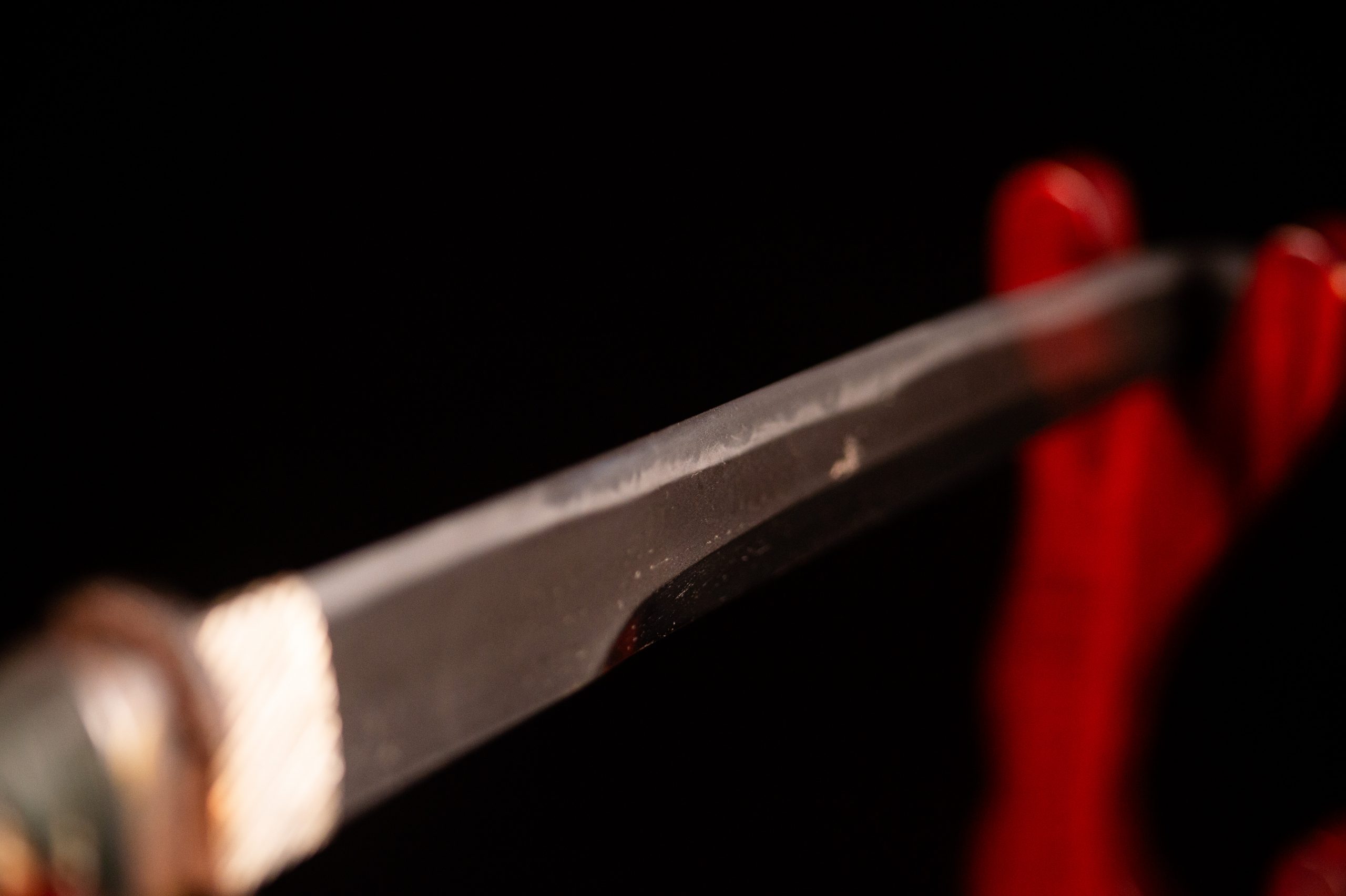
The hamon is visible and restrained, showing a regular and continuous temper line with a smooth transition between the hardened edge and the ji. Its execution is sober, consistent with practical Edo-period blades.
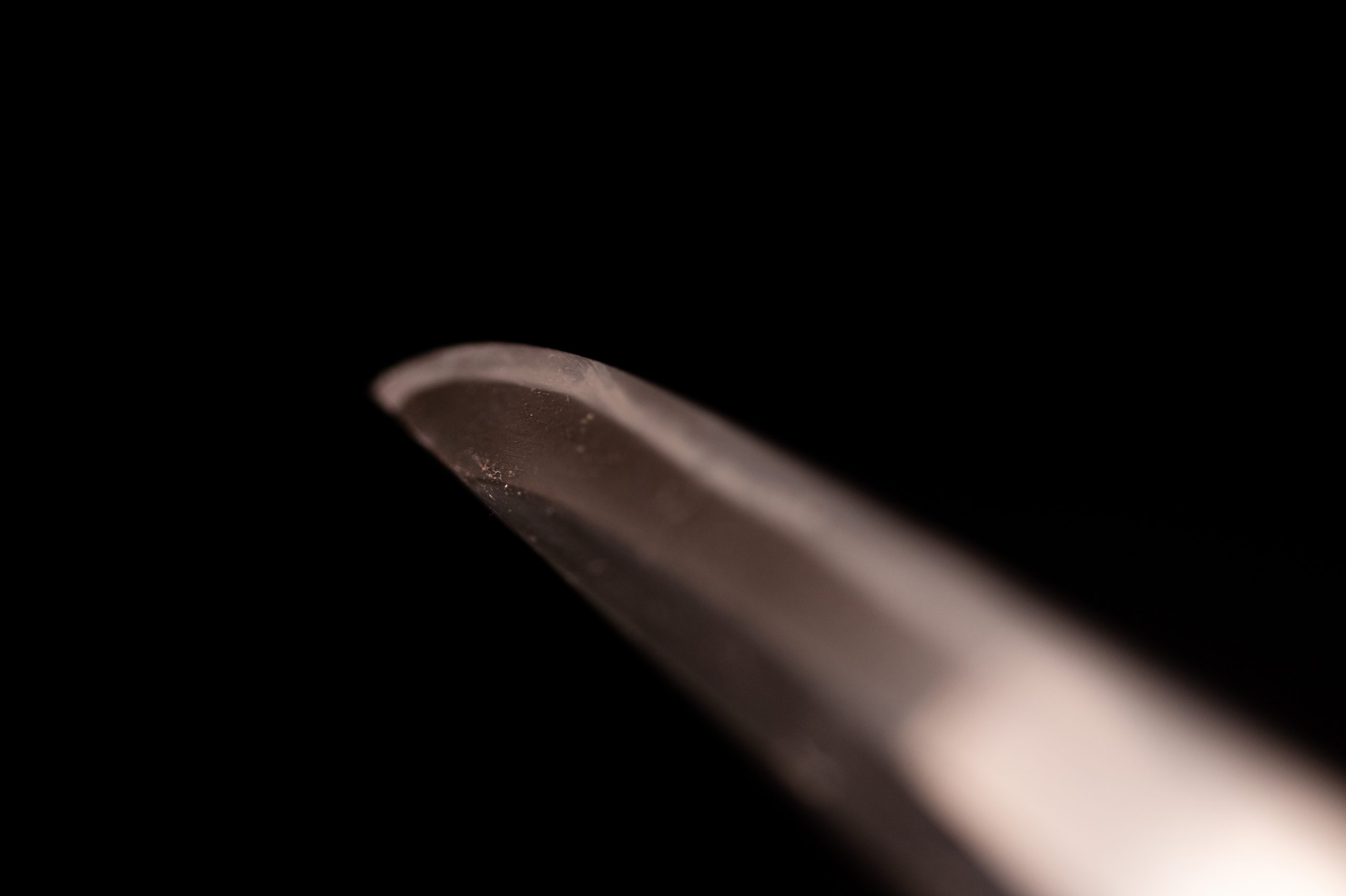
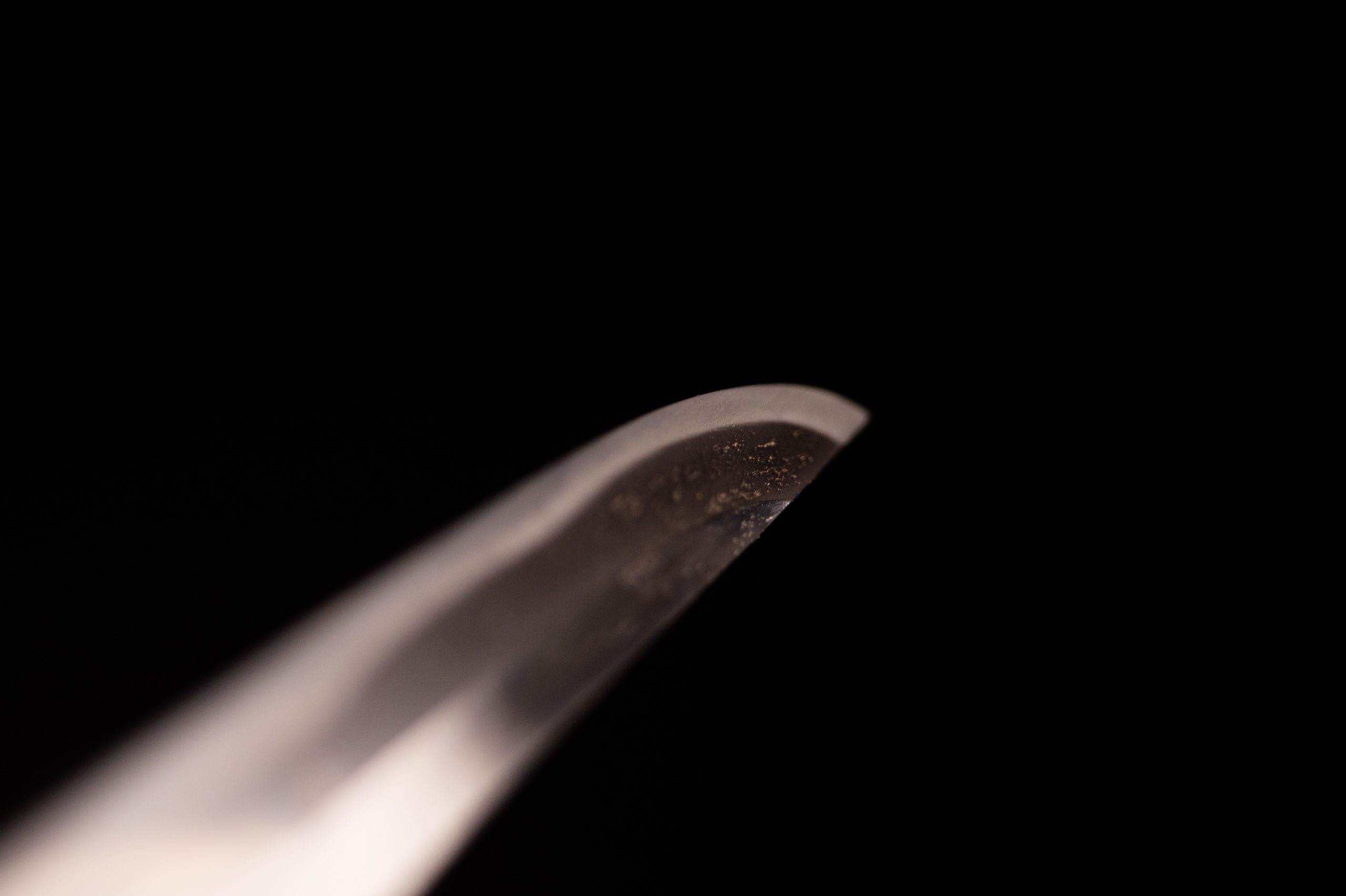
The overall form is that of a well-balanced tantō, with slight curvature and a clean profile. The tip is properly shaped, maintaining stable geometry.
The nakago displays an evenly developed natural dark patina. It features a single mekugi-ana. The overall condition is consistent with an old blade preserved without modern intervention.
Technical description of the koshirae
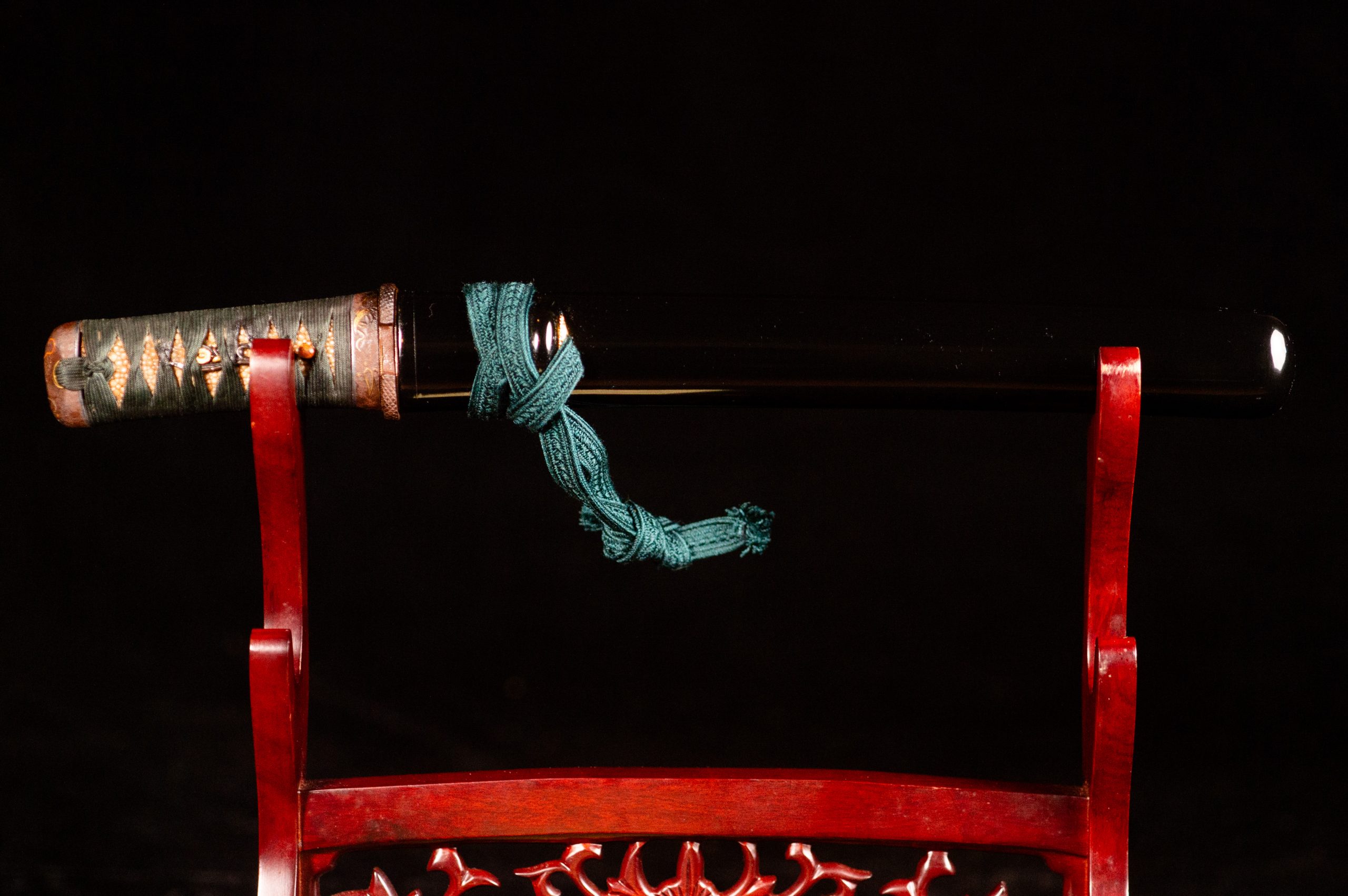
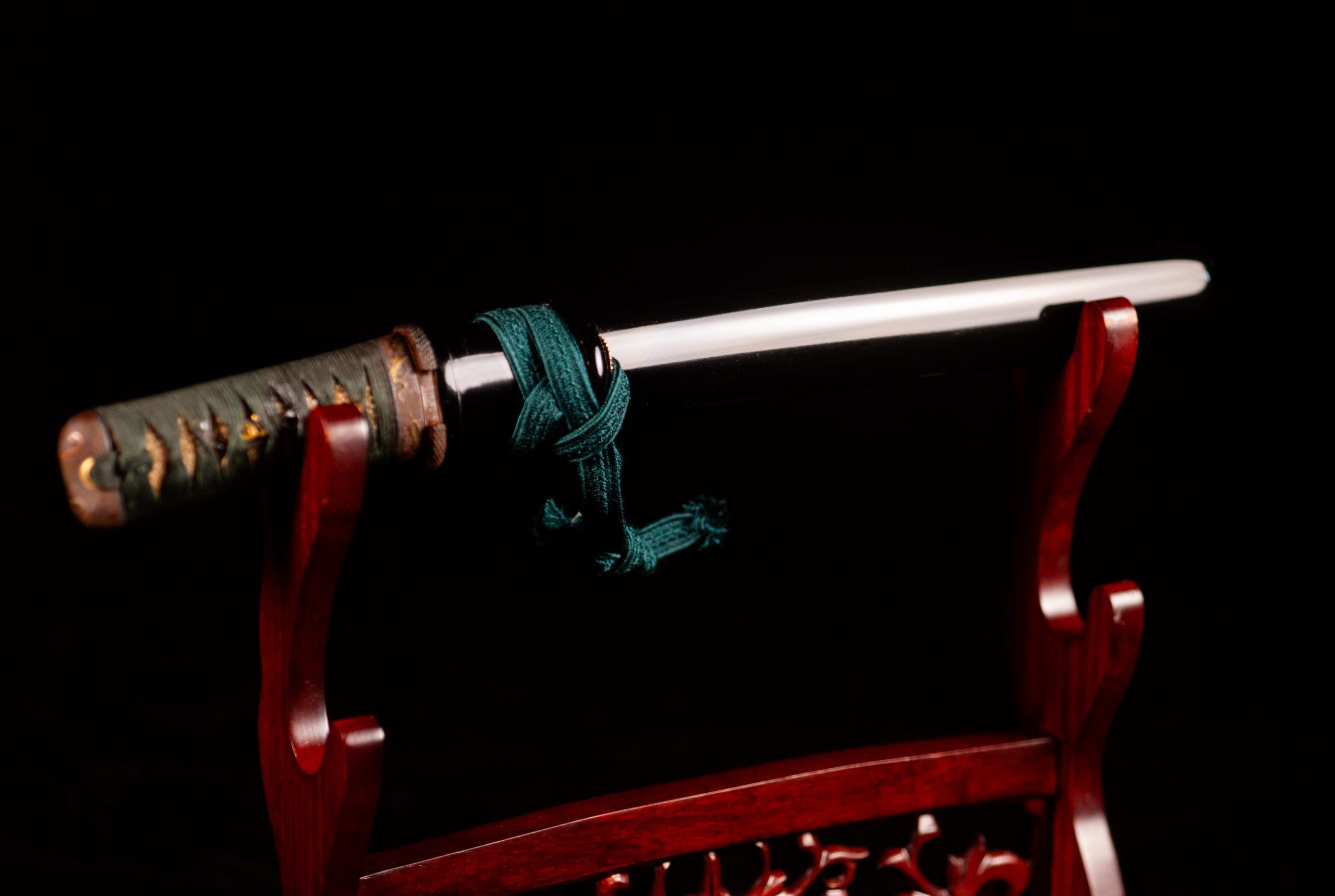
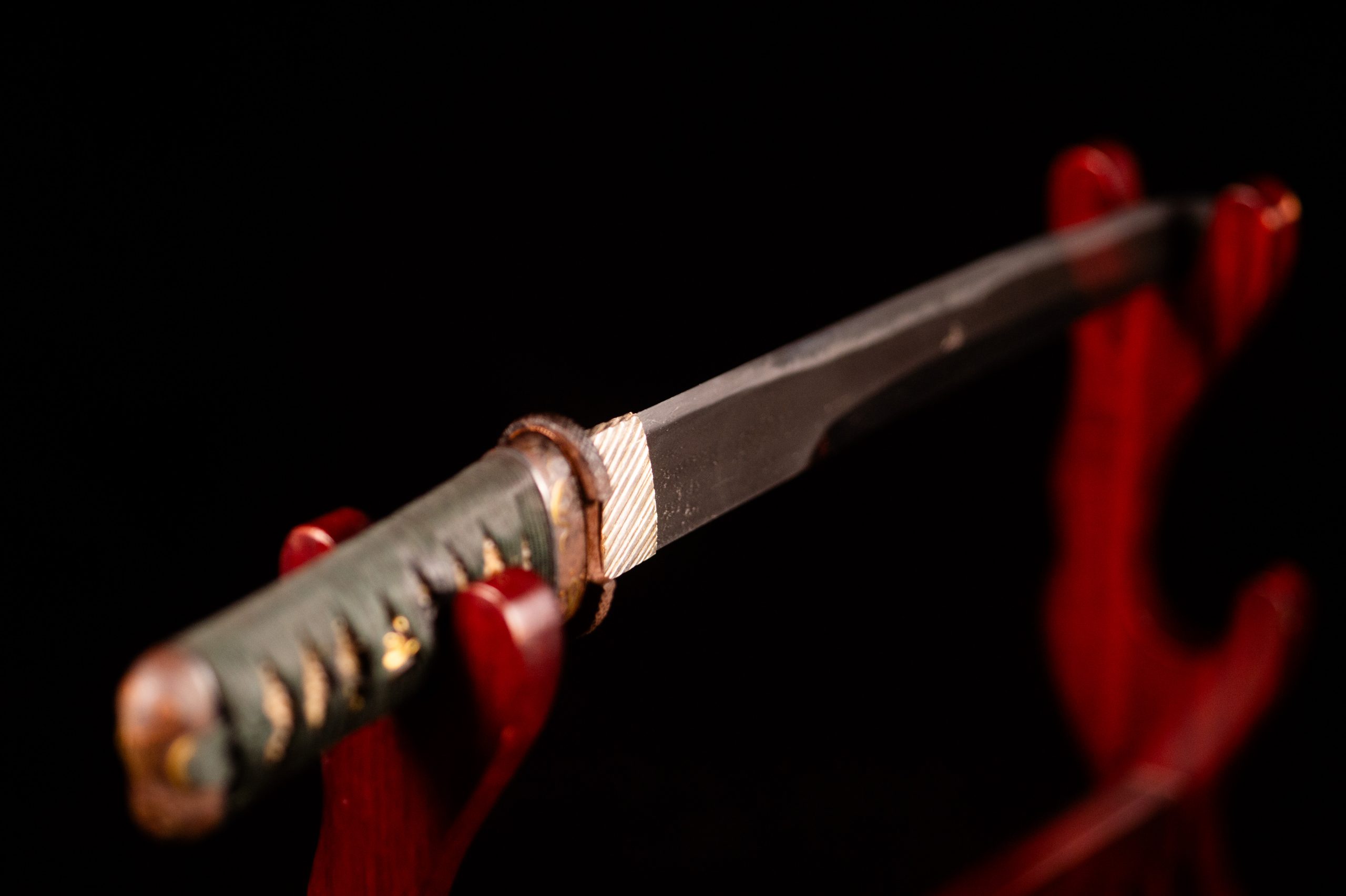
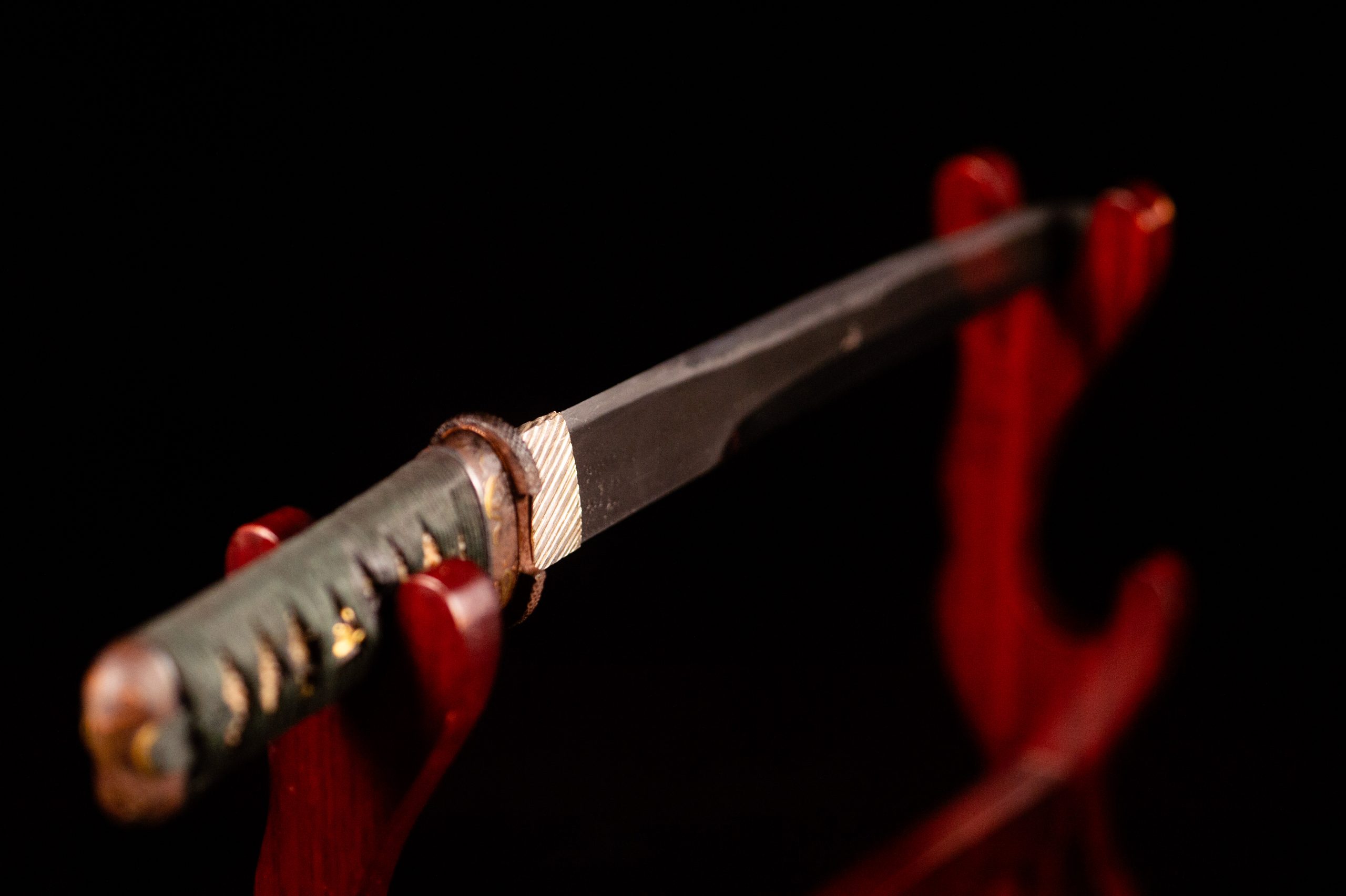
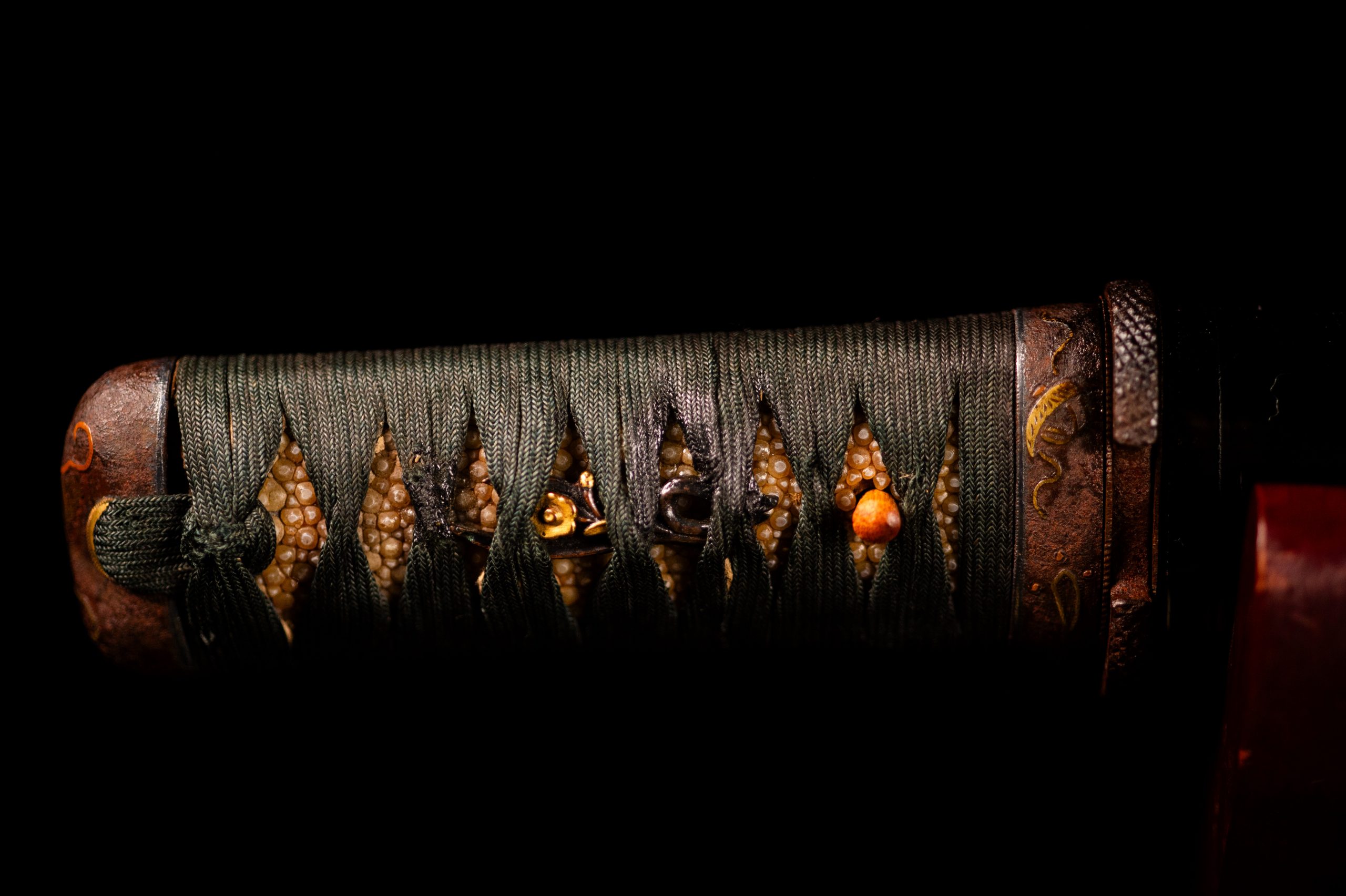
The tantō is mounted in a complete koshirae of sober and coherent design.
The saya is finished in plain black lacquer with a smooth surface.
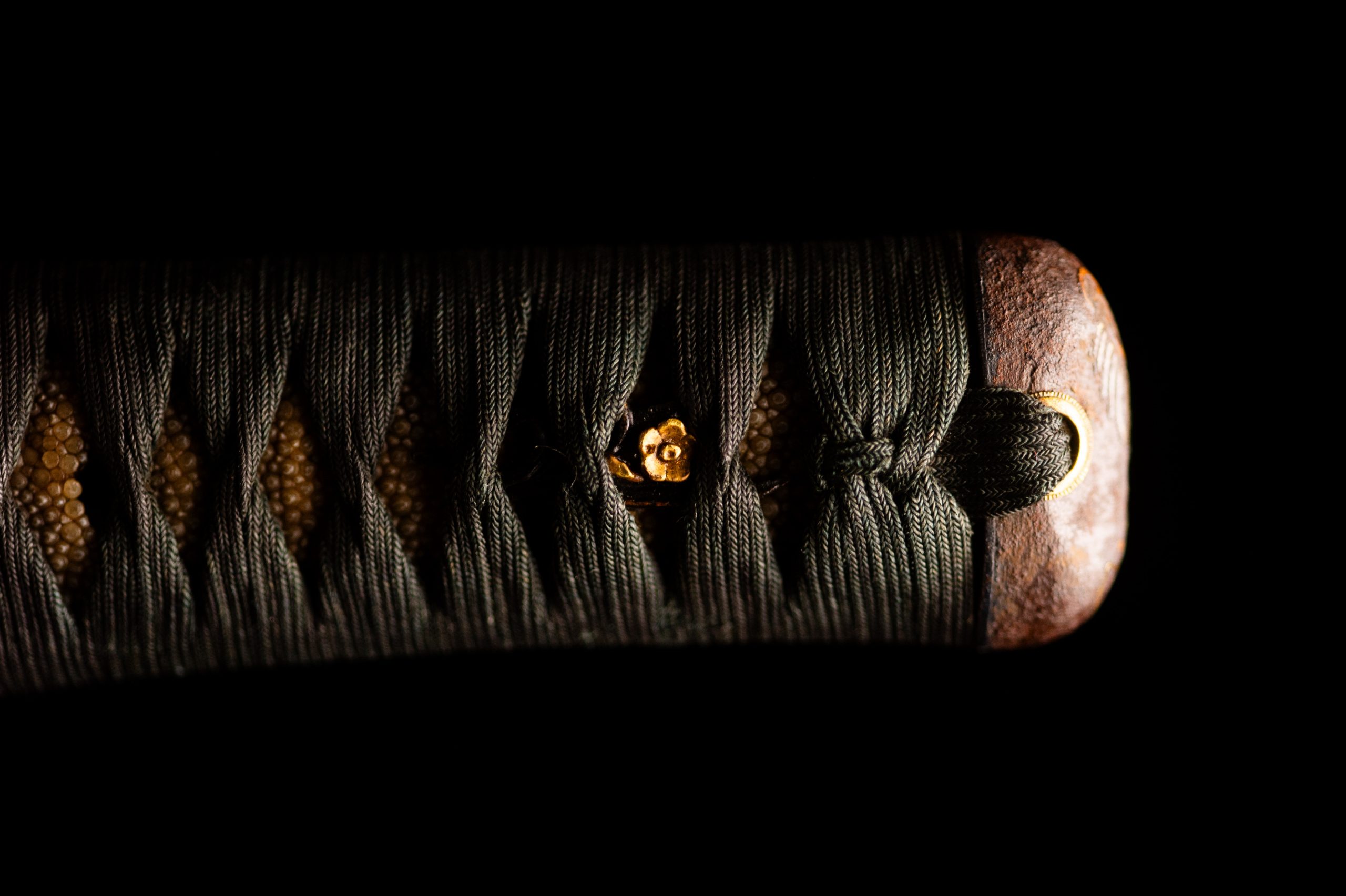
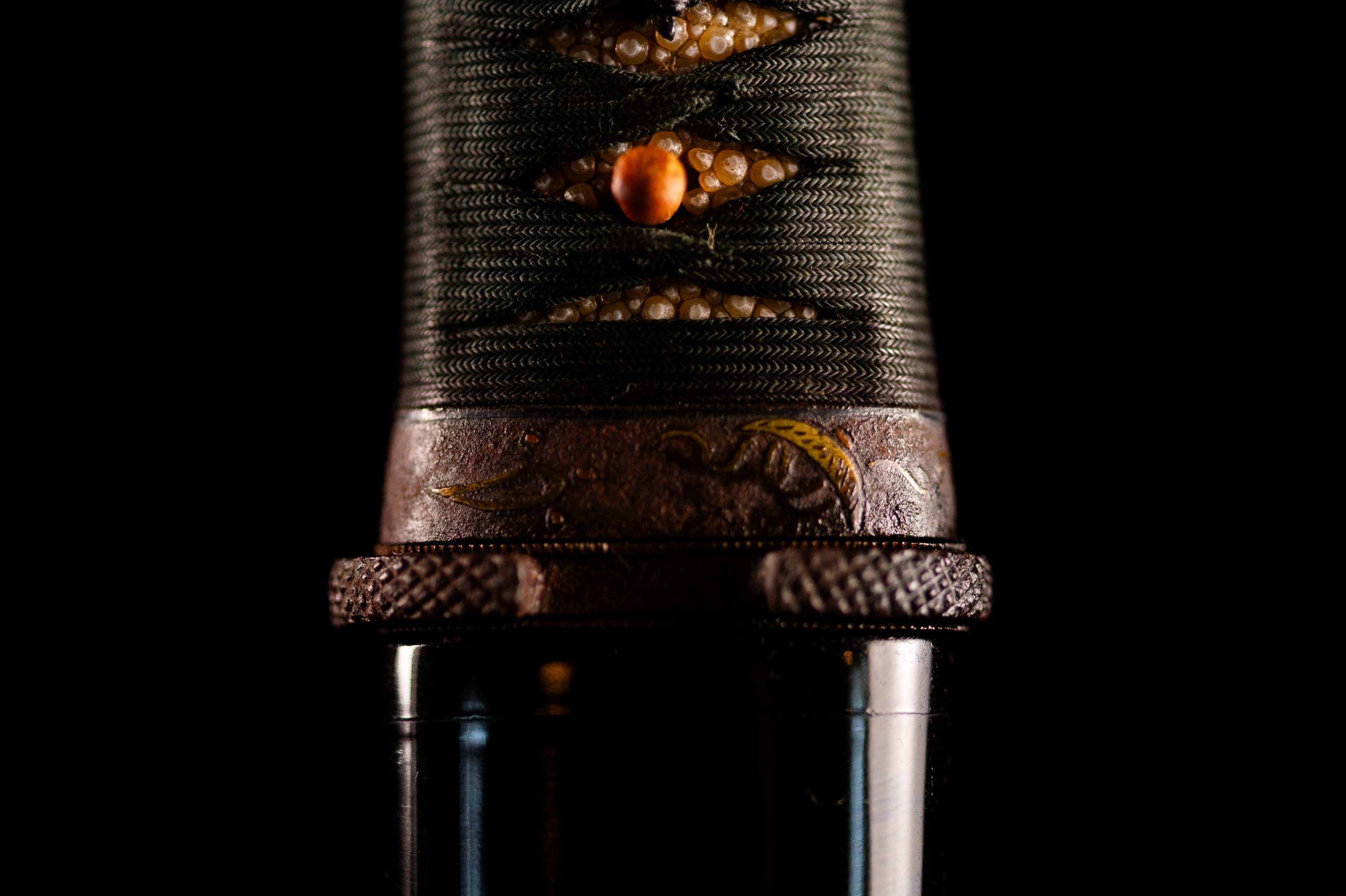
The tsuka is wrapped in dark green tsuka-ito over samegawa, visible through the diamond-shaped openings. The wrapping shows age-appropriate wear and patina.
The menuki are small metal fittings discreetly placed beneath the wrap.
The fuchi features incised vegetal decoration with traces of gilding over a darkened ground, showing natural wear.
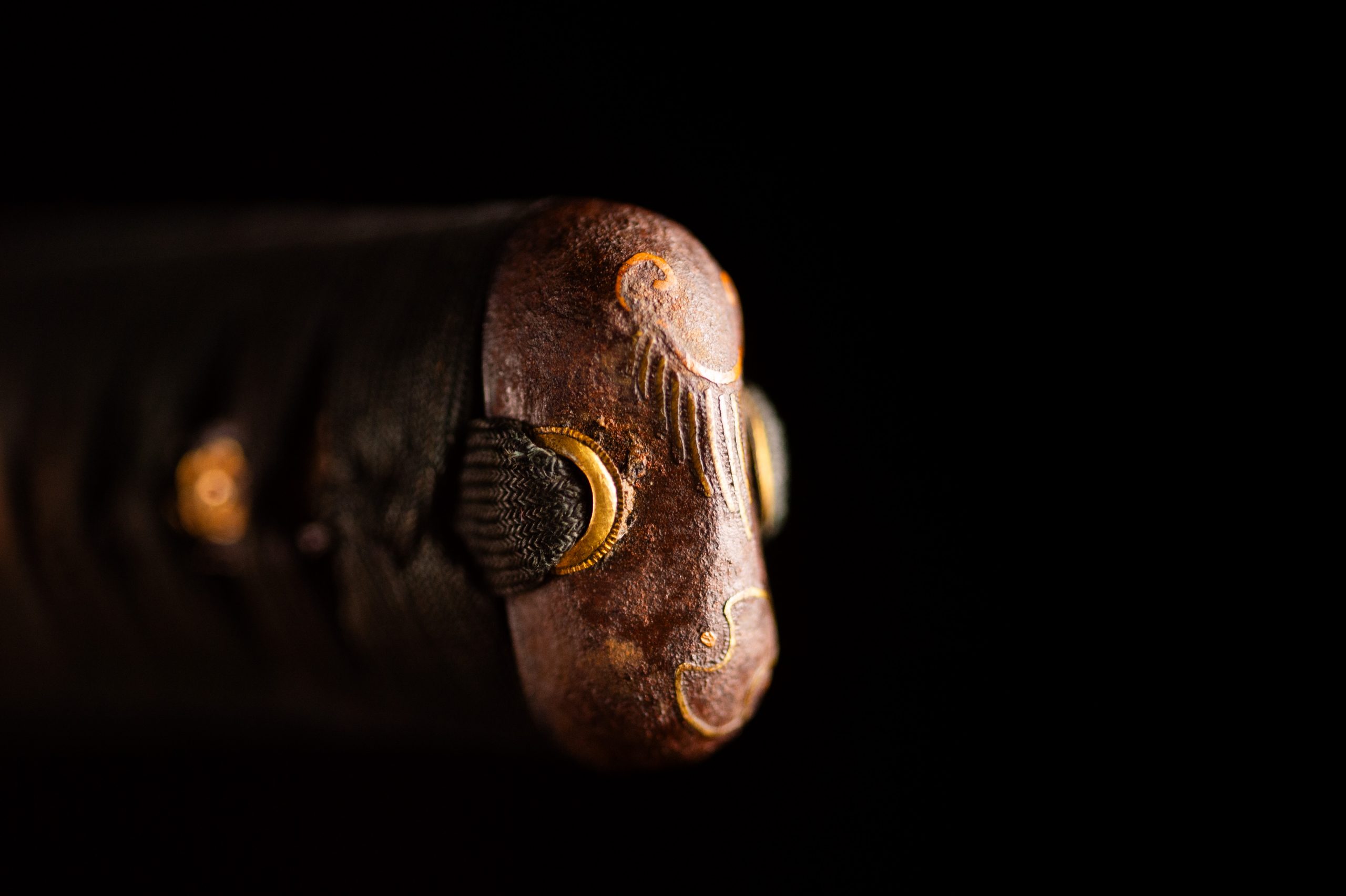
The kashira is metal, dark-toned, with engraved decoration and aged patina.
The habaki is a simple, single-piece example with visible file marks.
Overall, the mounting is functional, sober, and visually coherent, consistent with an Edo-period practical tantō.


