Description
ITEM DESCRIPTION:
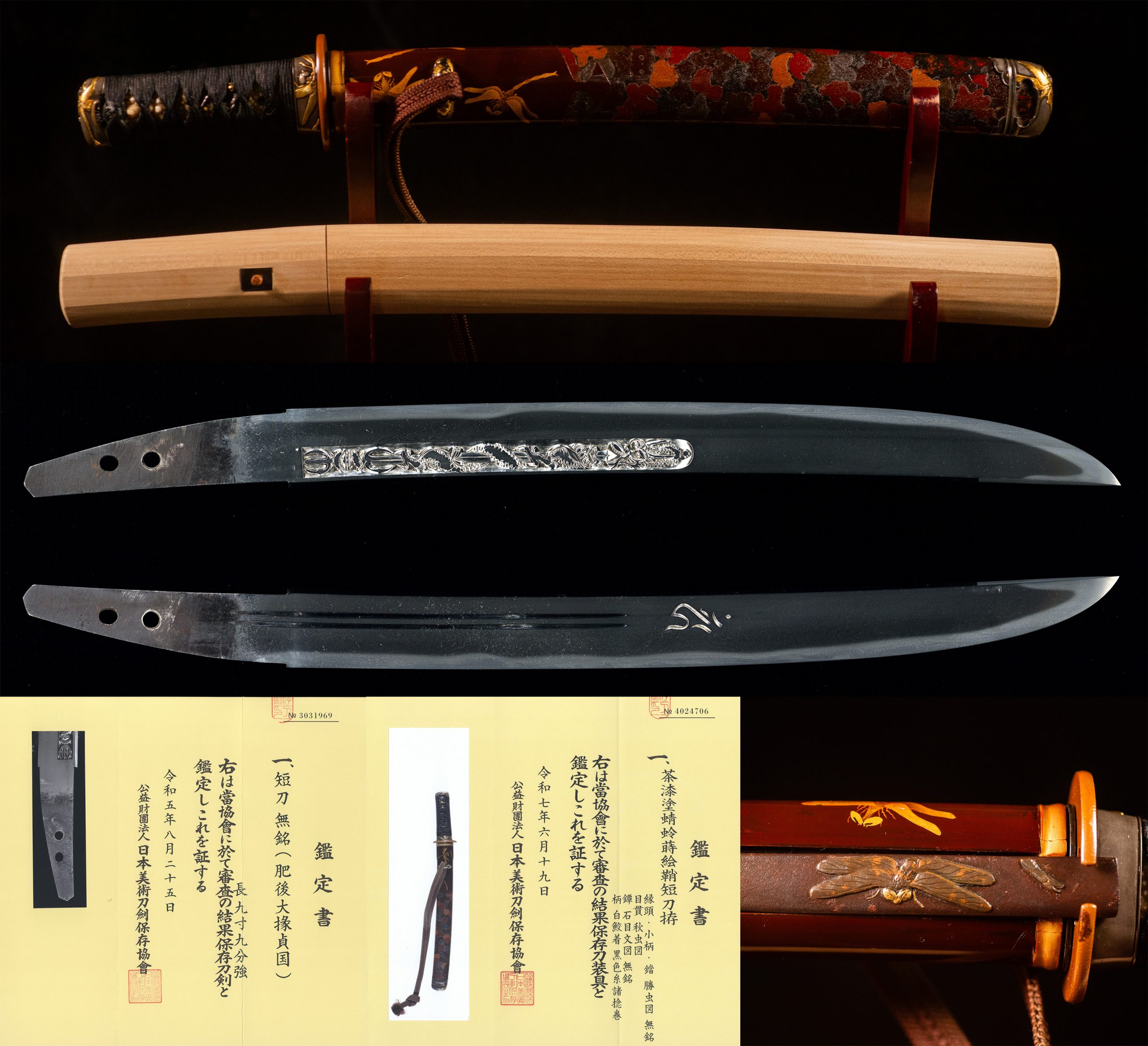
Comes with kimono or cotton bag. Comes with certificate of supein Nihonto. Comes with copy of Tokosusho. Comes with NBTHK Hozon for blade and for koshirae
Documentation
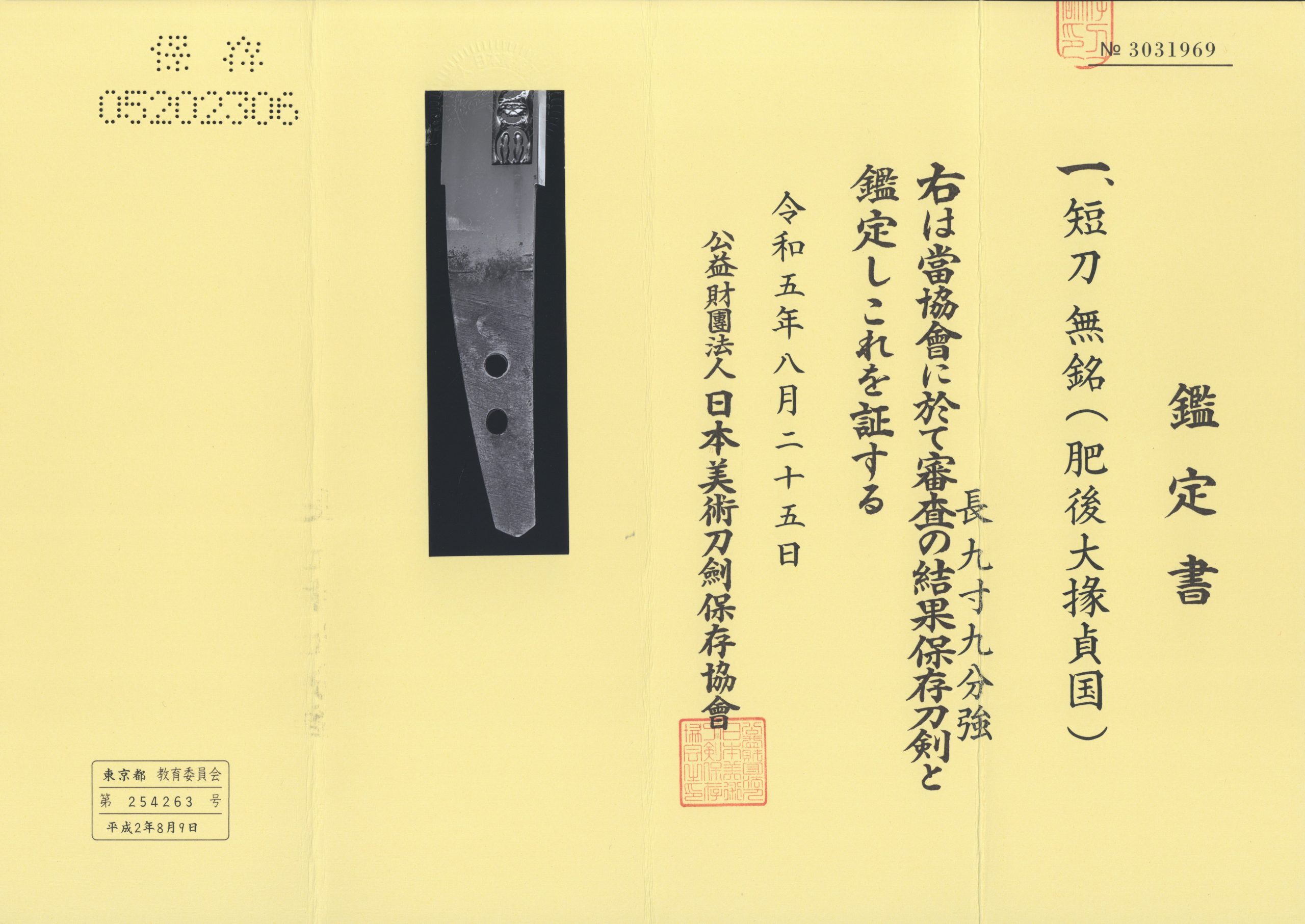
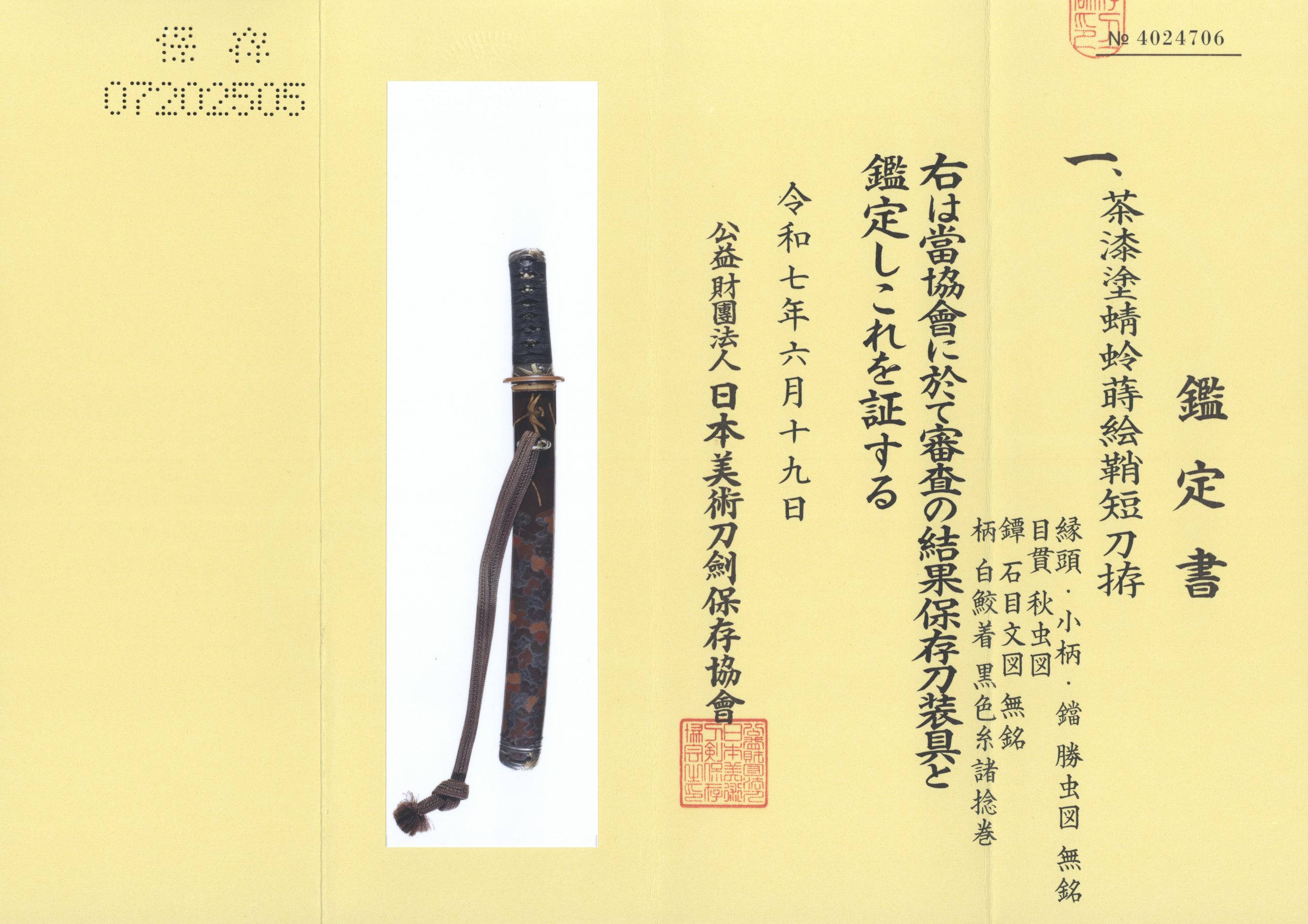
This piece is accompanied by official Japanese registration (torokusho) and two NBTHK papers, one for the blade and one for the mounting.
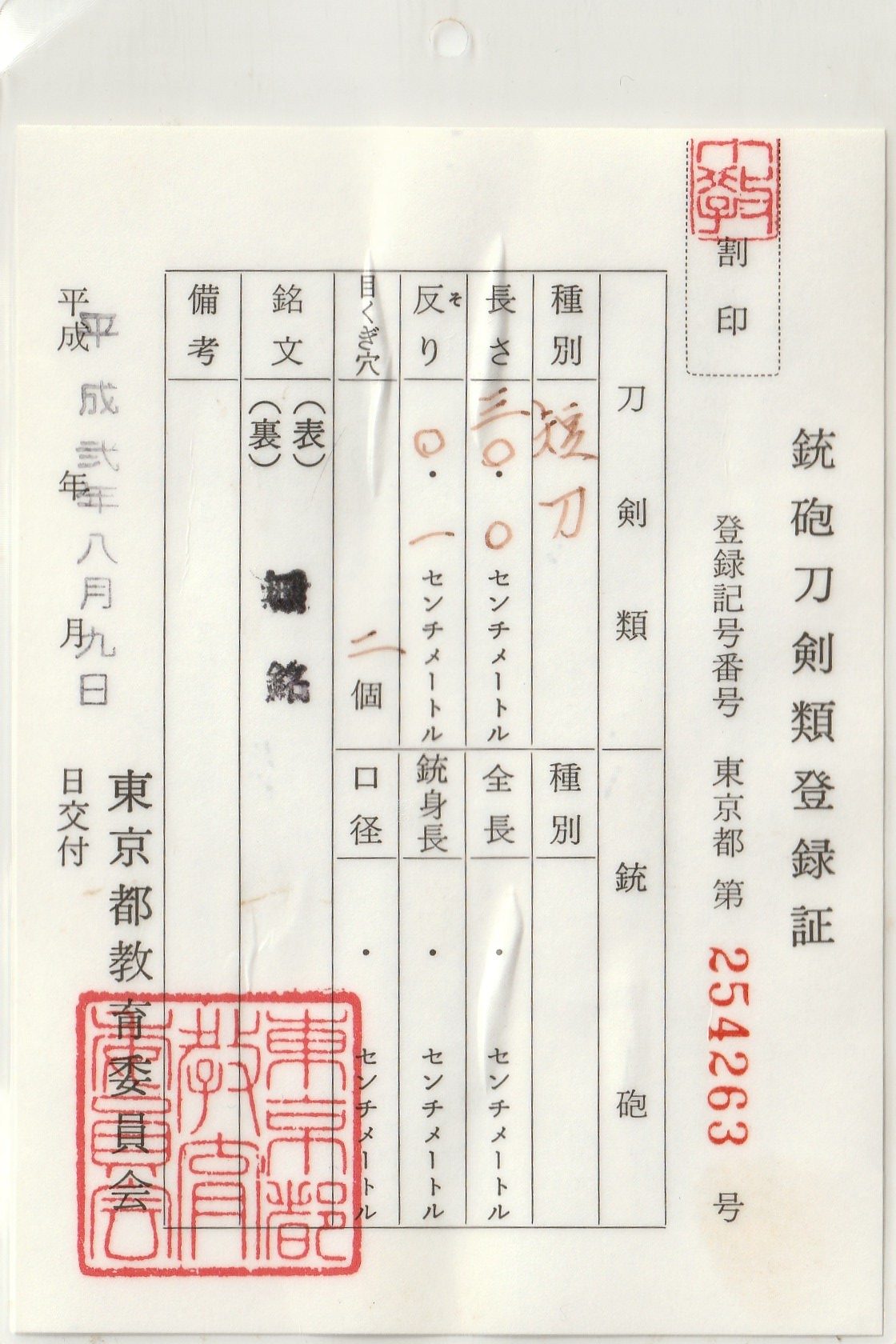
Torokusho (Tokyo Registration No. 254263)
Literal reading and translation of the main fields:
-
Type (種別): 短刀 — Tantō
-
Length (長さ): 30.0 cm
-
Curvature (反り): 0.1 cm
-
Mekugi-ana (目くぎ穴): Two
-
Inscription / Mei (銘文 表裏): 無銘 — Mumei (unsigned)
-
Registration Number (登録記号番号): 東京都第254263号 — Tokyo No. 254263
-
Issue Date (交付日): 平成二年八月九日 — 9 August 1990
-
Issuing Authority: 東京都教育委員会 — Tokyo Metropolitan Board of Education
NBTHK Kanteisho (Blade) – No. 3031969
Main reading:
-
一、短刀 無銘(肥後大掾貞国)
One tantō, mumei (attributed to Higo Daijō Sadakuni) -
長九寸九分強
Length: 9 sun 9 bu and a little over (approx. 30 cm)
Certification text confirms the blade as Hozon Tōken.
Date: Reiwa 5, August 25 (25 August 2023).
NBTHK Kanteisho (Koshirae) – No. 4024706
Main reading:
-
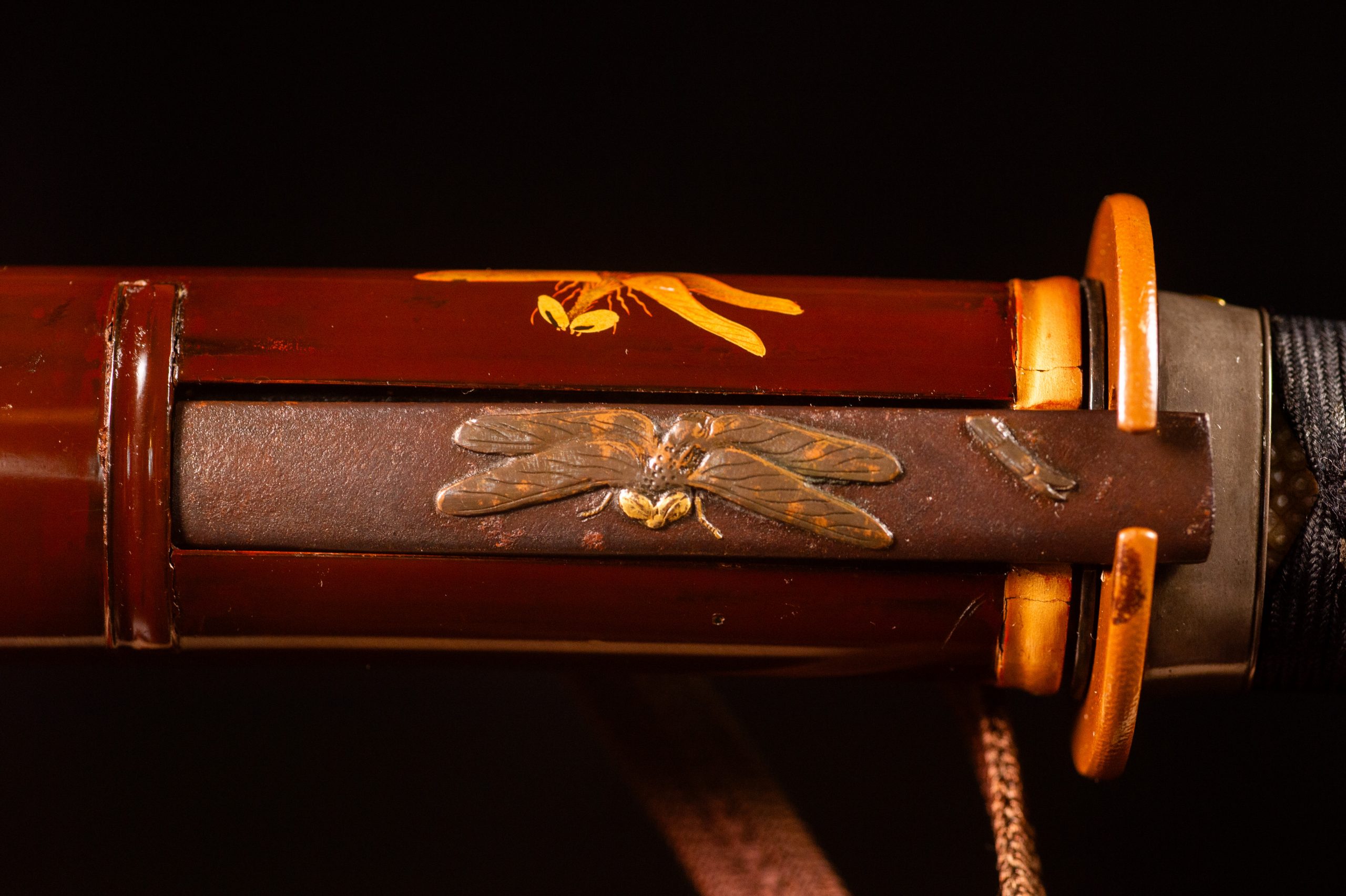
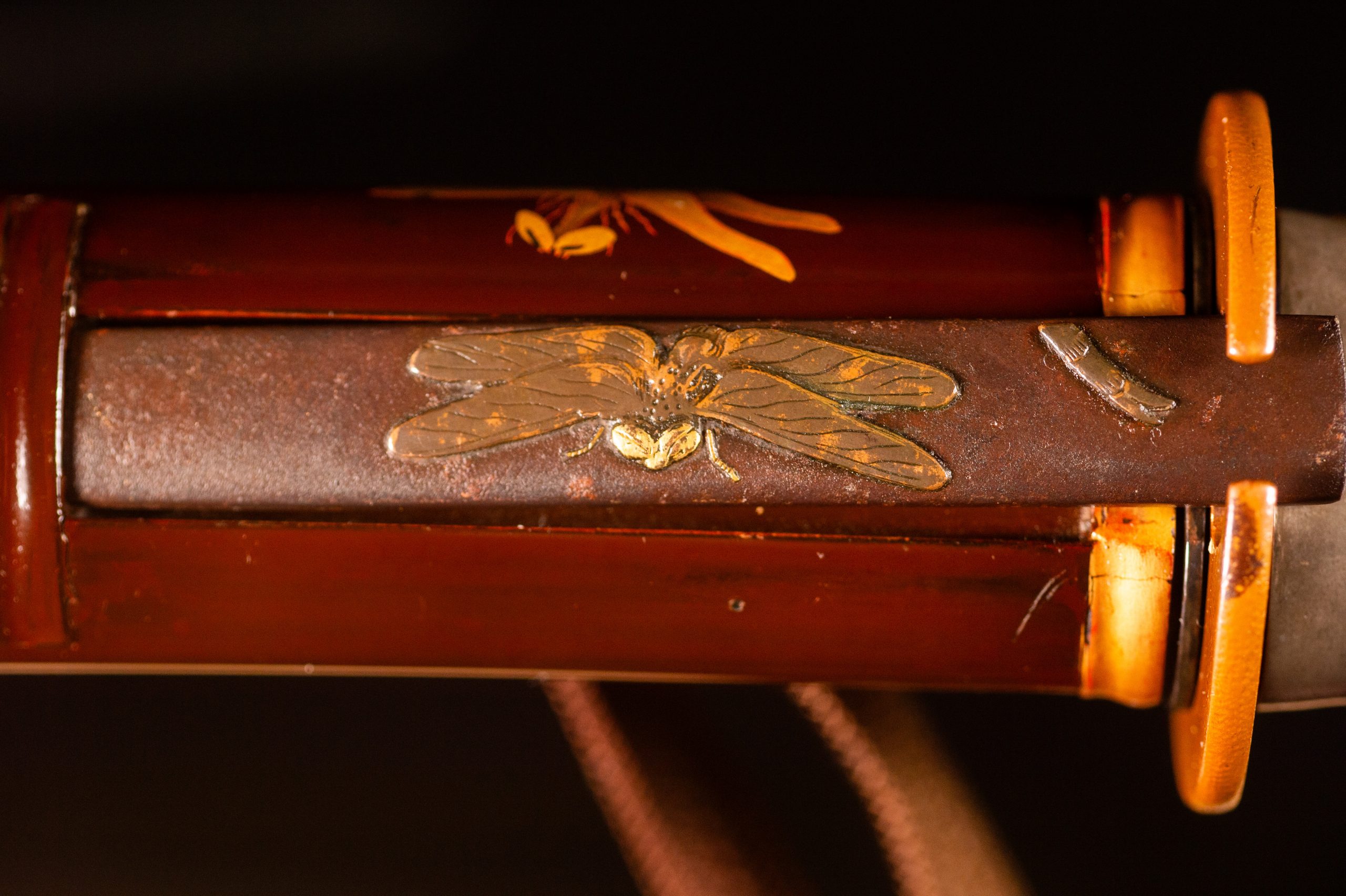
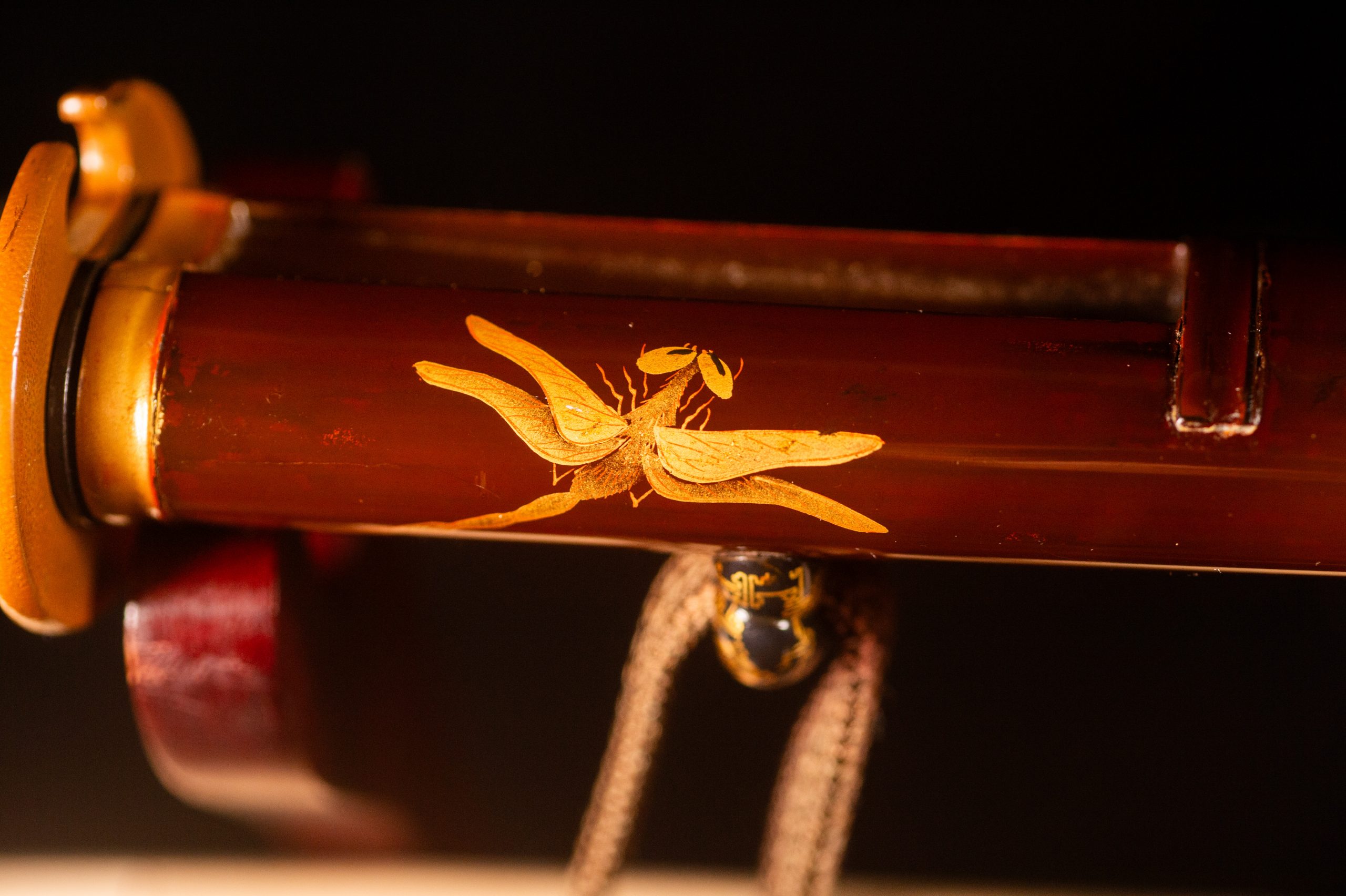
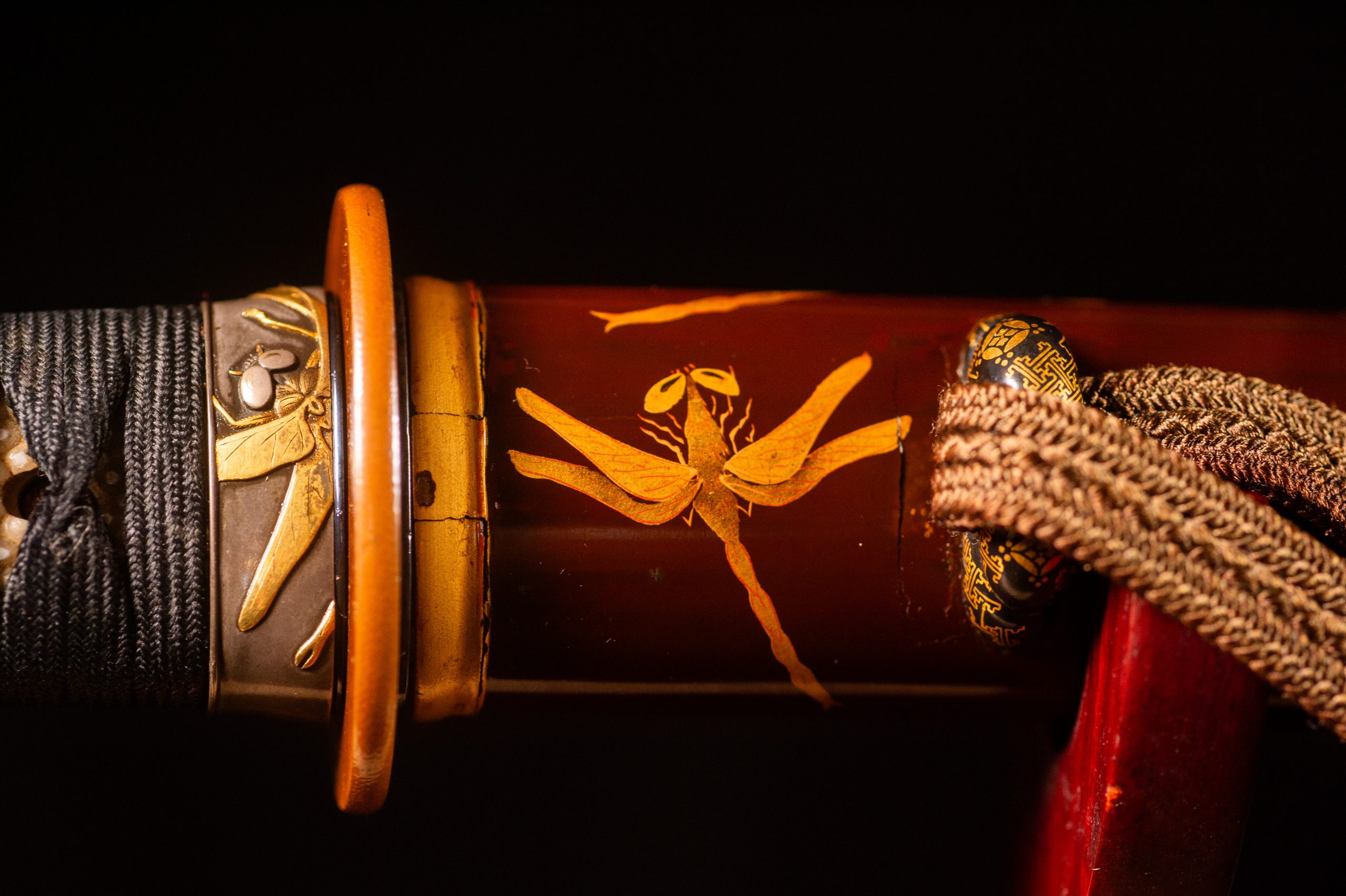
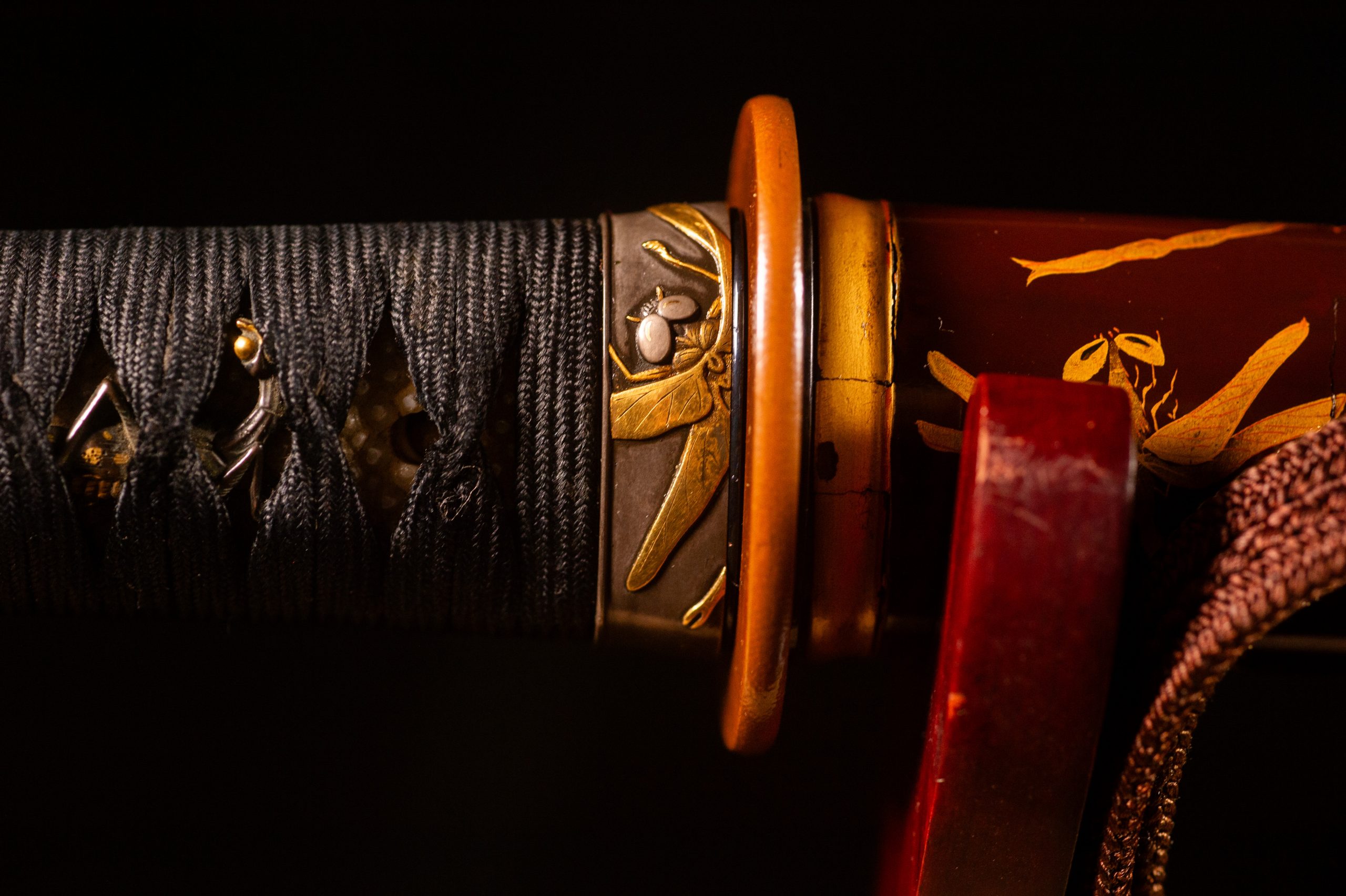
一、茶漆塗蜻蛉蒔絵鞘短刀拵
Tantō mounting with tea-brown lacquer saya decorated with dragonfly maki-e -
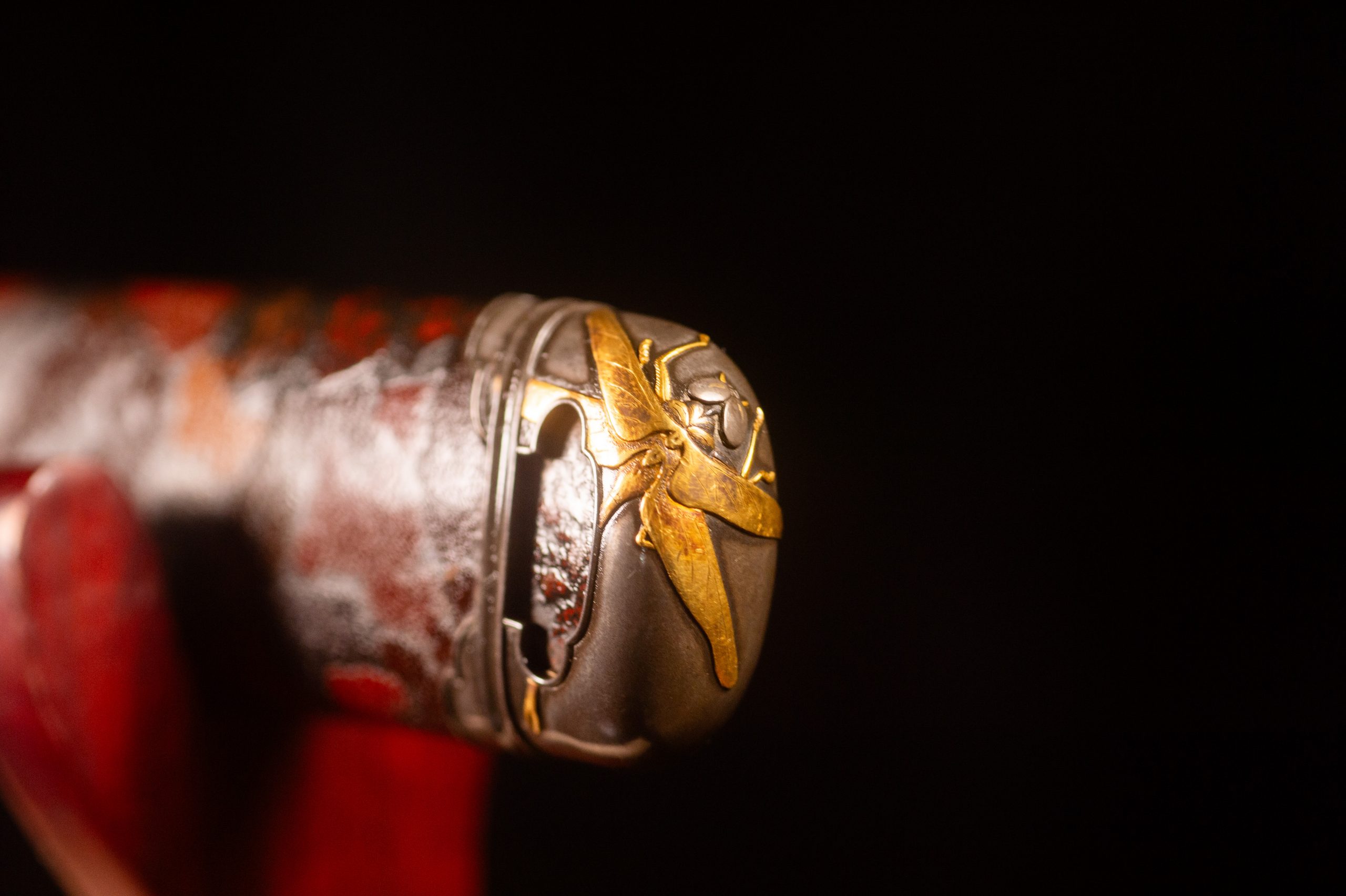
縁頭・小柄・鍔 勝虫図 無銘
Fuchi-kashira, kozuka and tsuba with kachimushi (dragonfly / “victory insect”) motif, mumei -
目貫 秋虫図 無銘
Menuki with autumn insect motif, mumei -
鐺 石目文図 無銘
Kojiri with ishime-style textured design, mumei -
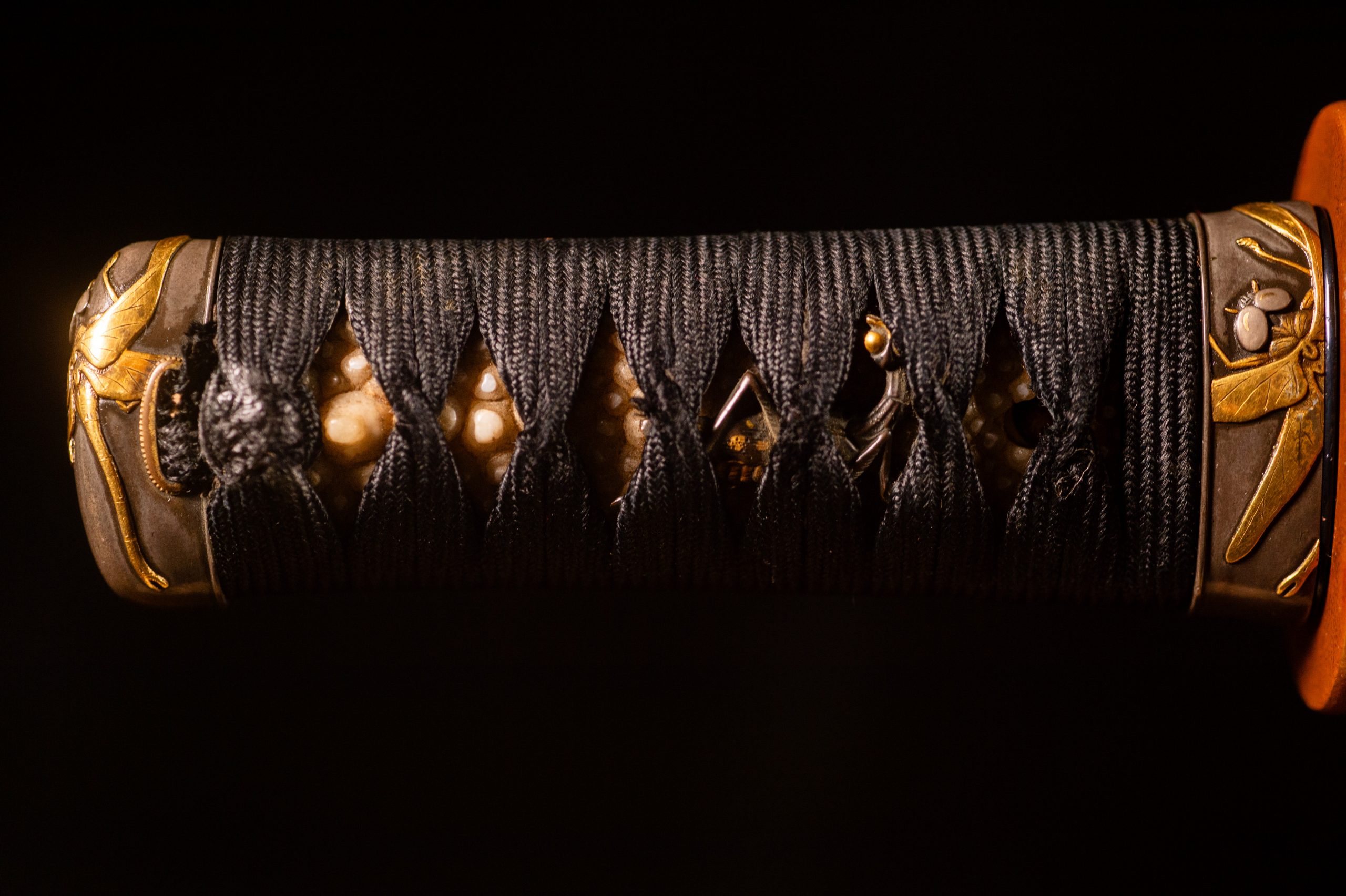
柄 白鮫着 黒色糸諸捻巻
Tsuka with white samegawa and black silk cord in morohineri-maki
Certification text confirms the mounting as Hozon Tōsōgu.
Date: Reiwa 7, June 19 (19 June 2025).
Smith, school and period
The blade is attributed to Higo Daijō Sadakuni, an important Higo smith active during the transition from the Azuchi-Momoyama period into the early Edo period (late 16th to early 17th century).
Working within the Higo tradition associated with the milieu of Katō Kiyomasa, Sadakuni’s output is noted for strong, purposeful blades often paired with meaningful symbolic decoration. The Hozon attribution firmly places this tantō within that historical lineage.
The honorary title Daijō reinforces the impression of an established and respected workshop tradition. The combination of an attributed blade and a separately papered koshirae gives this set exceptional strength: quality steel paired with a fully coherent ornamental program.
Blade
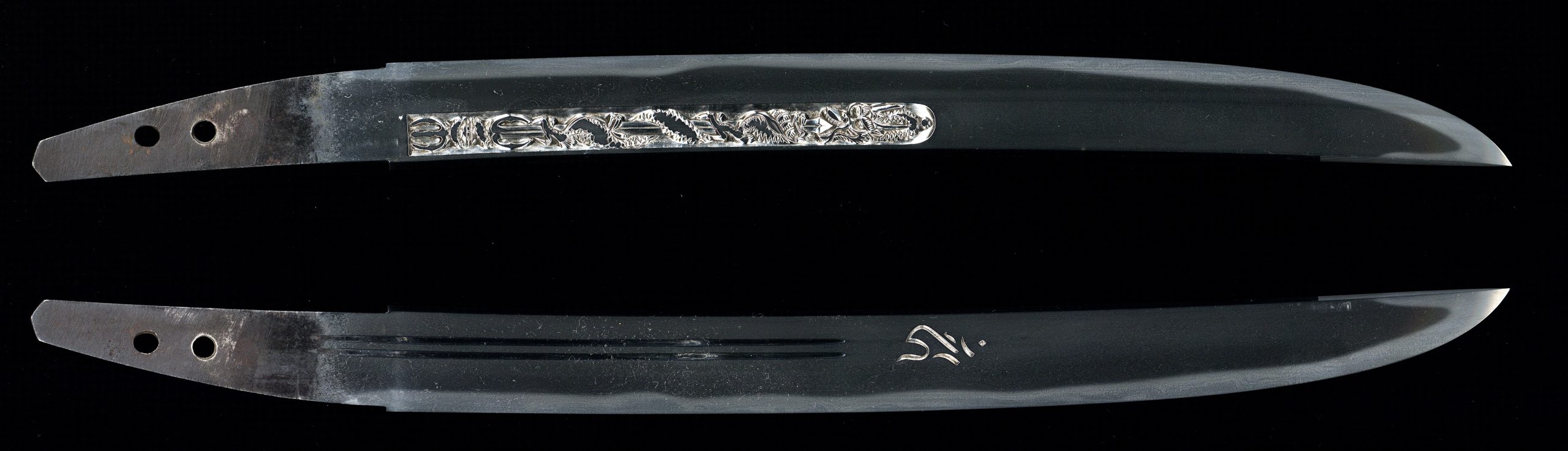
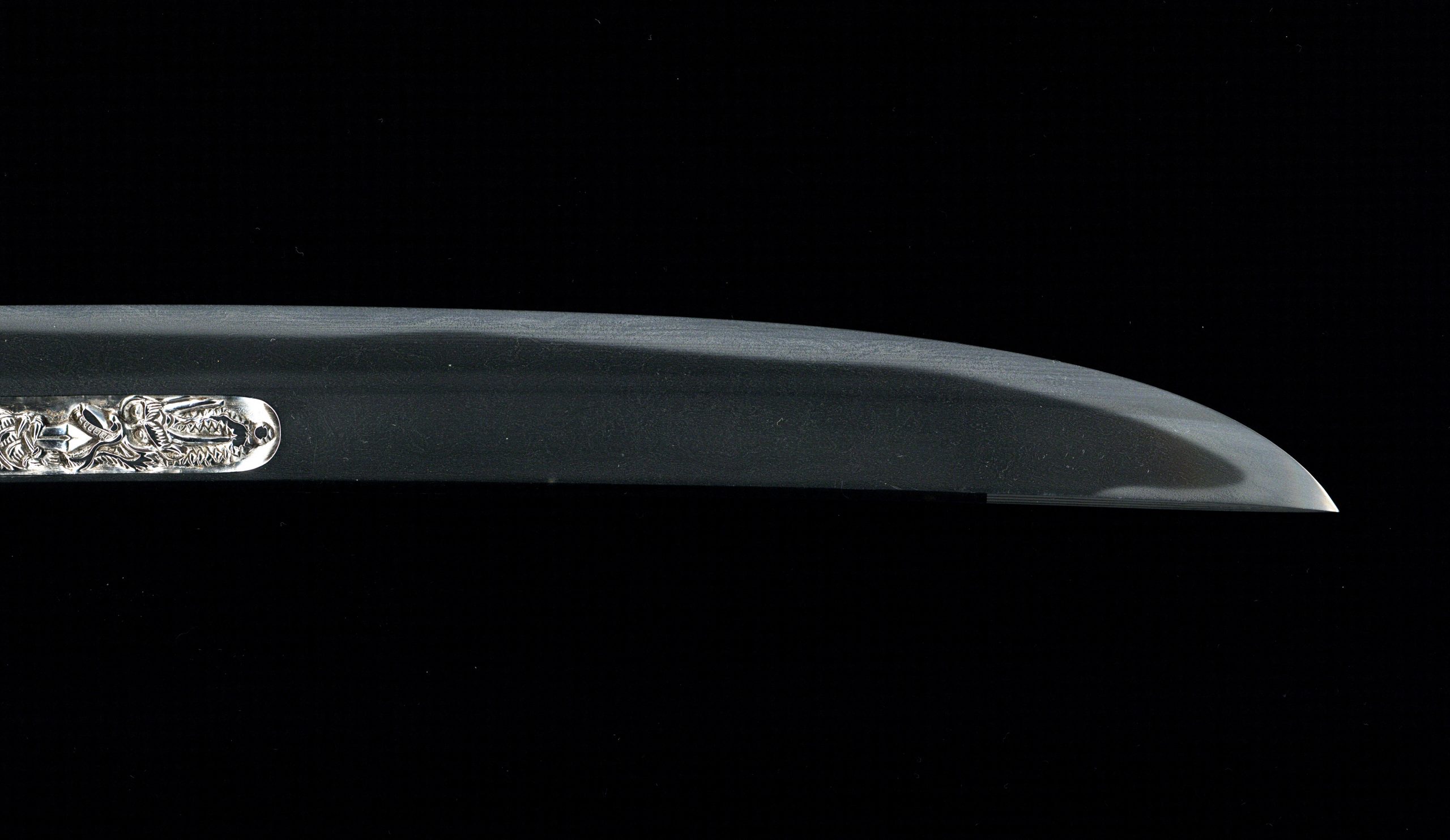
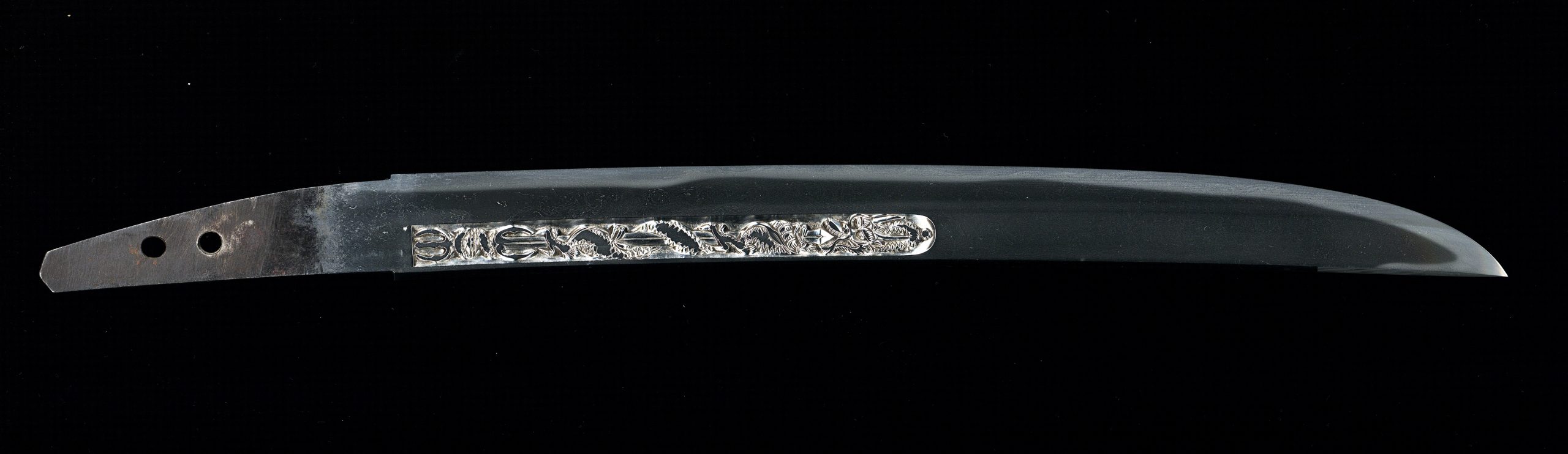
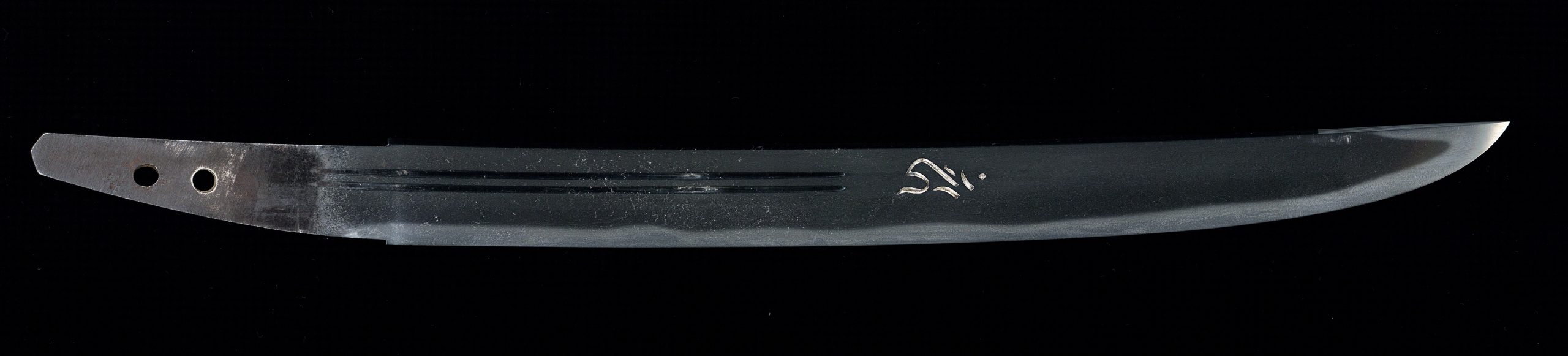
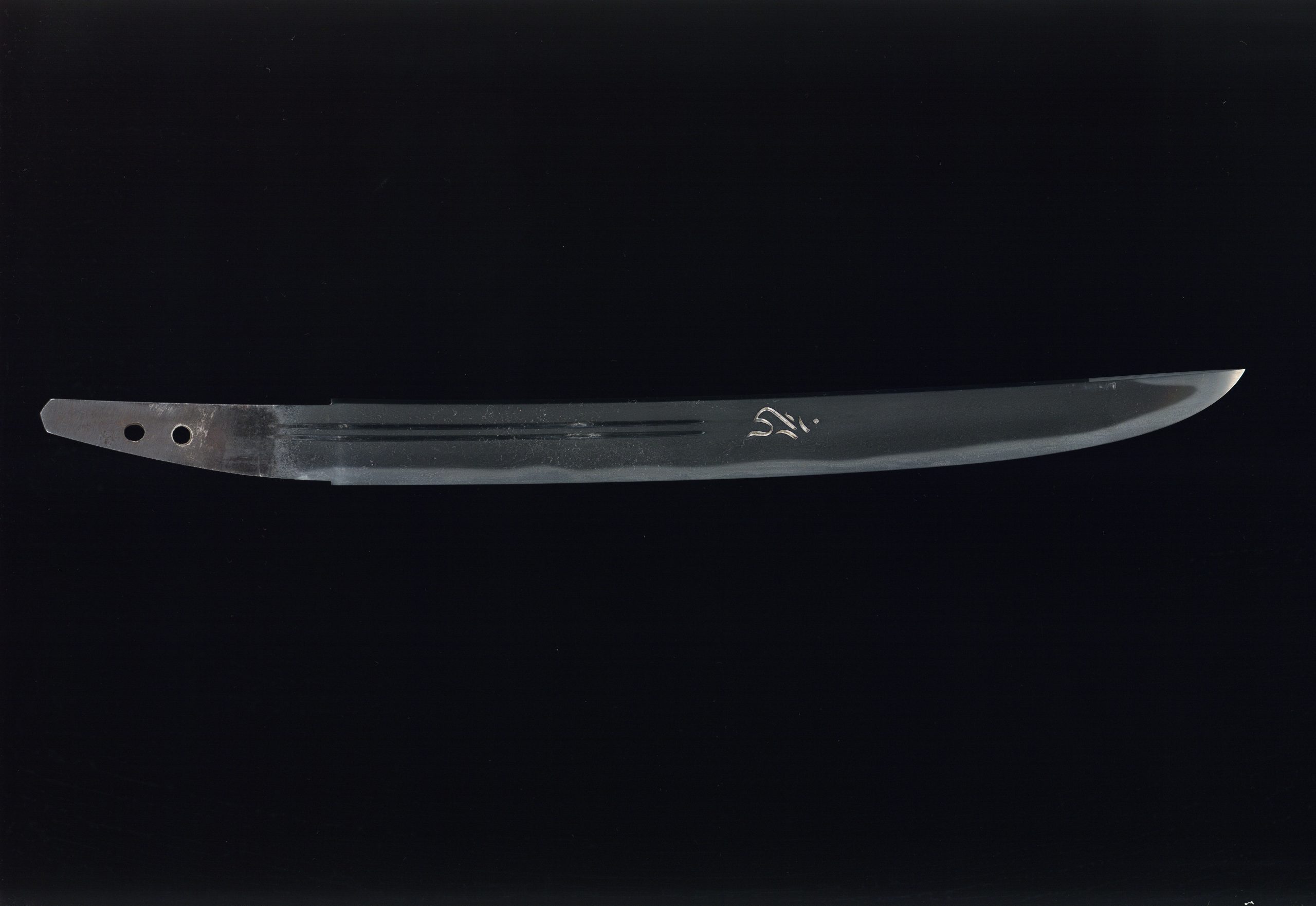
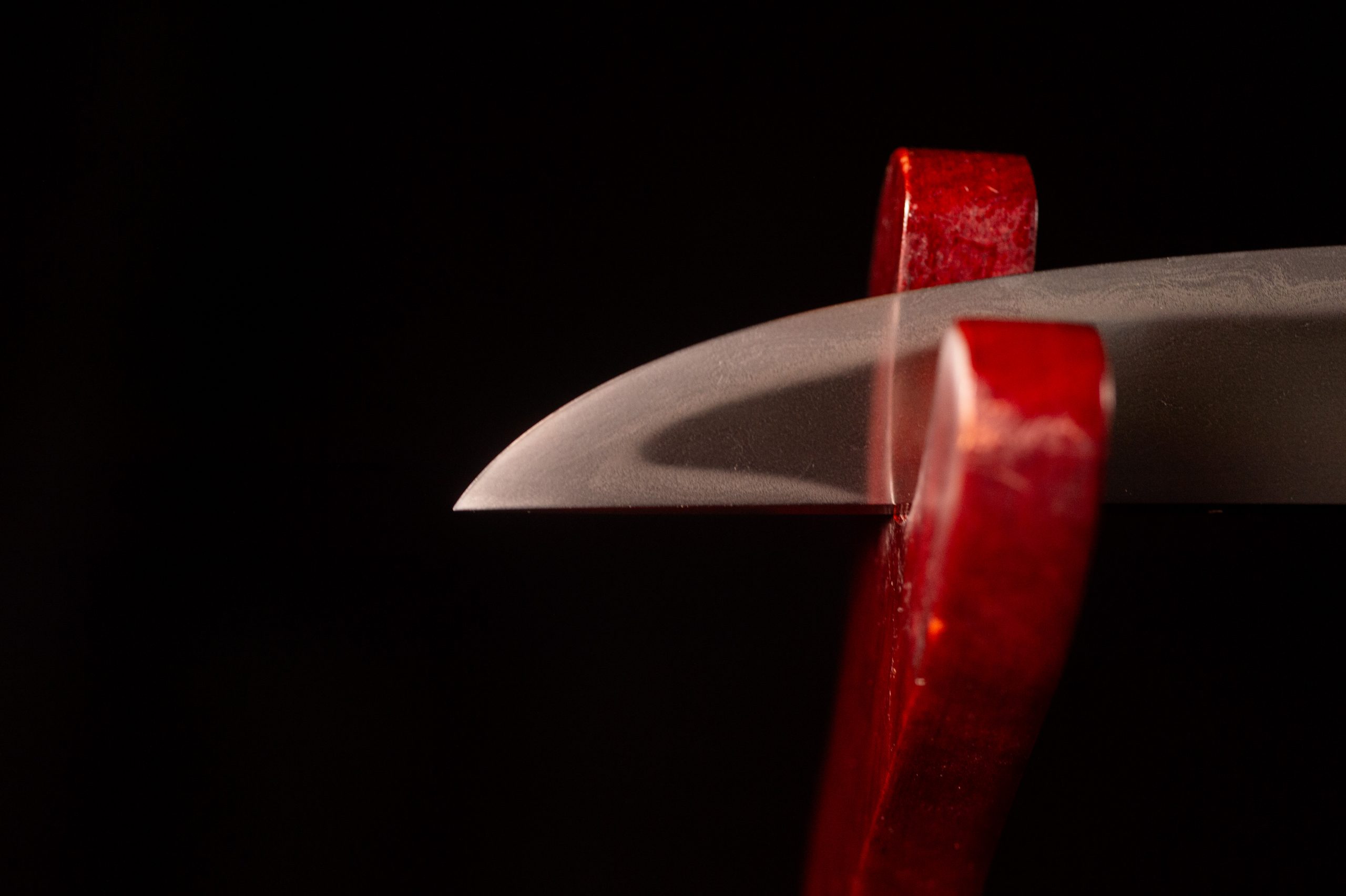
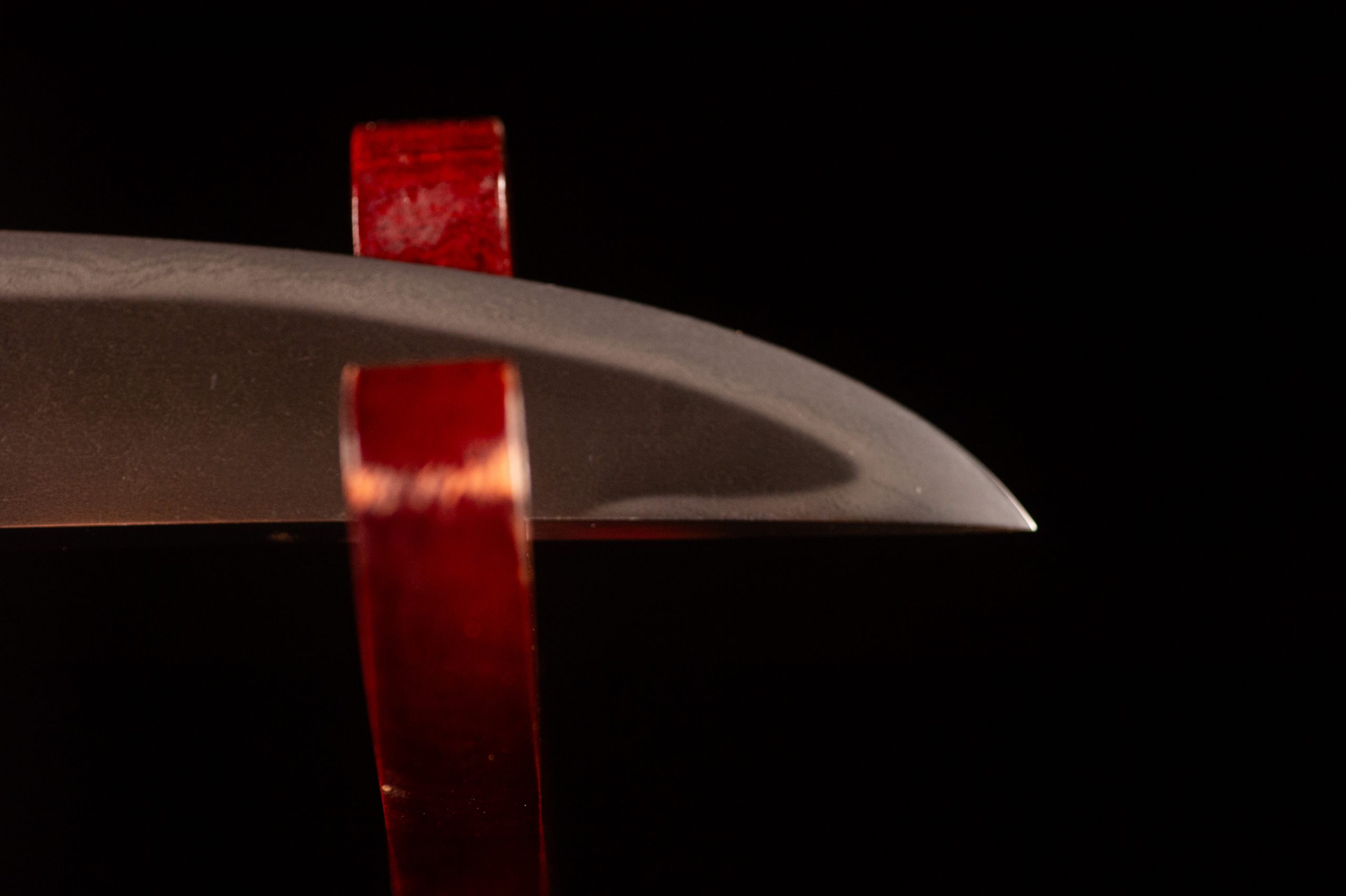
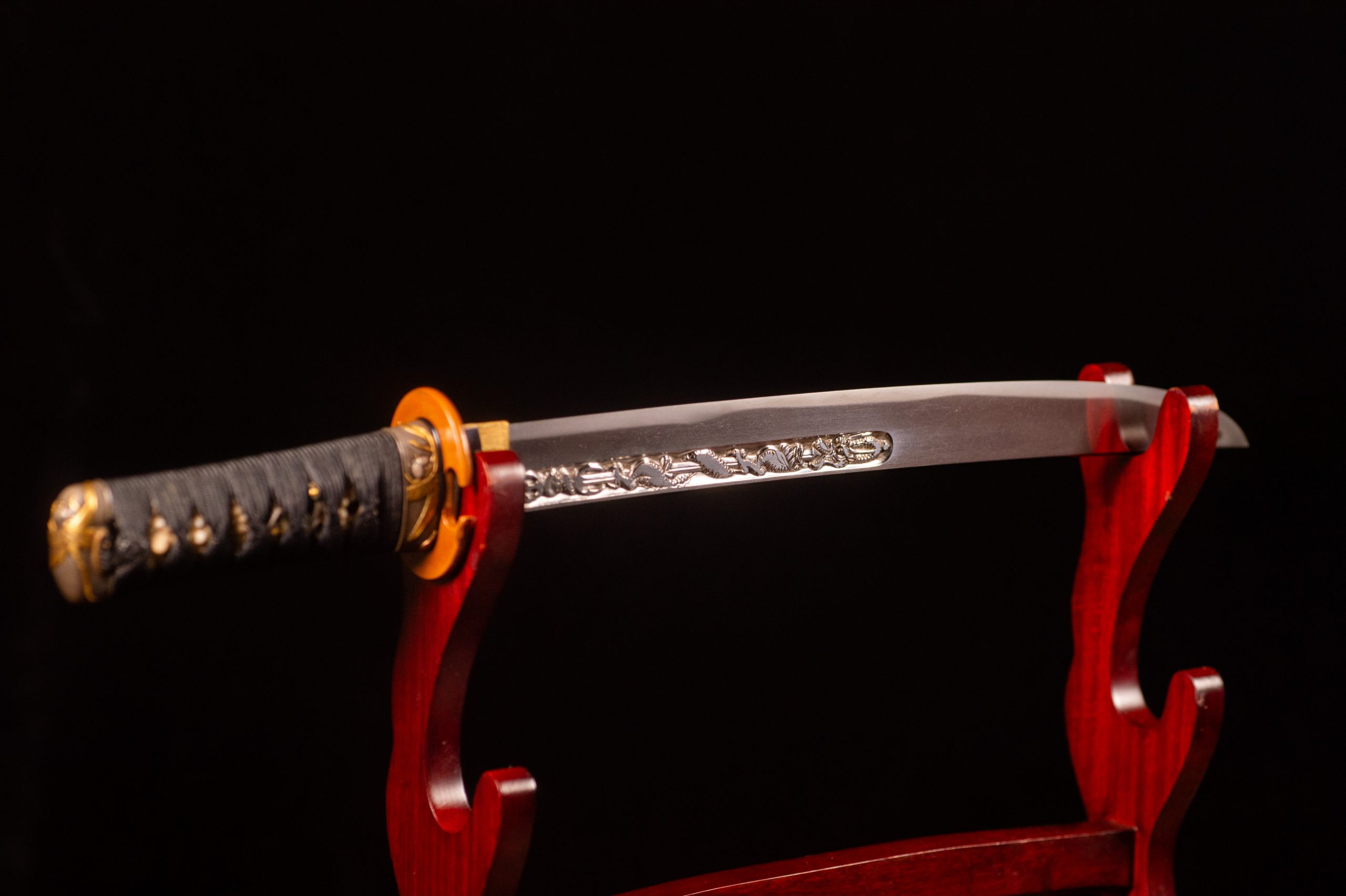
An elegant tantō of refined proportions and mature presence, with 30.0 cm nagasa and slight curvature (0.1 cm). The overall silhouette is clean, taut, and very well suited to the format.
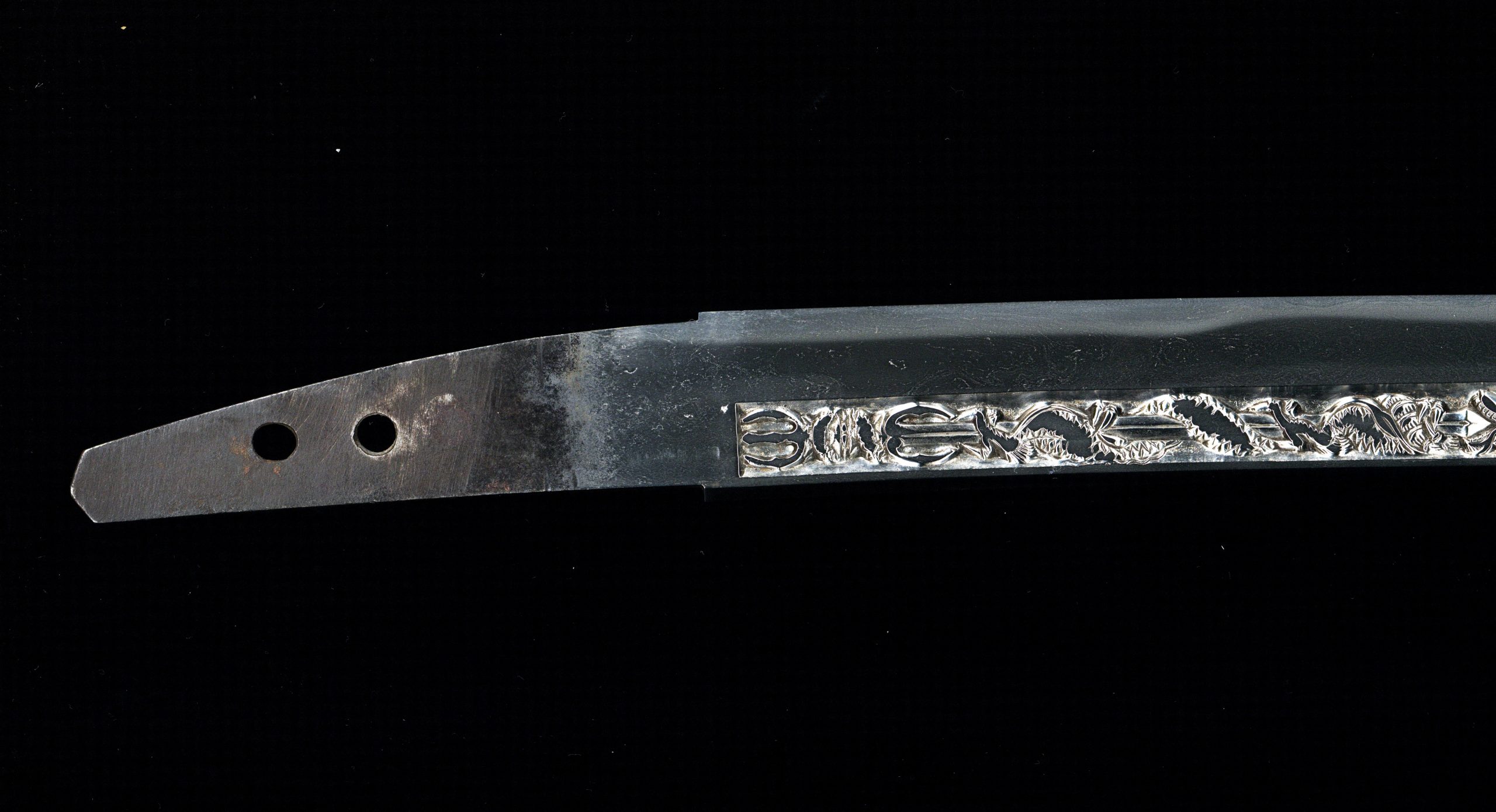
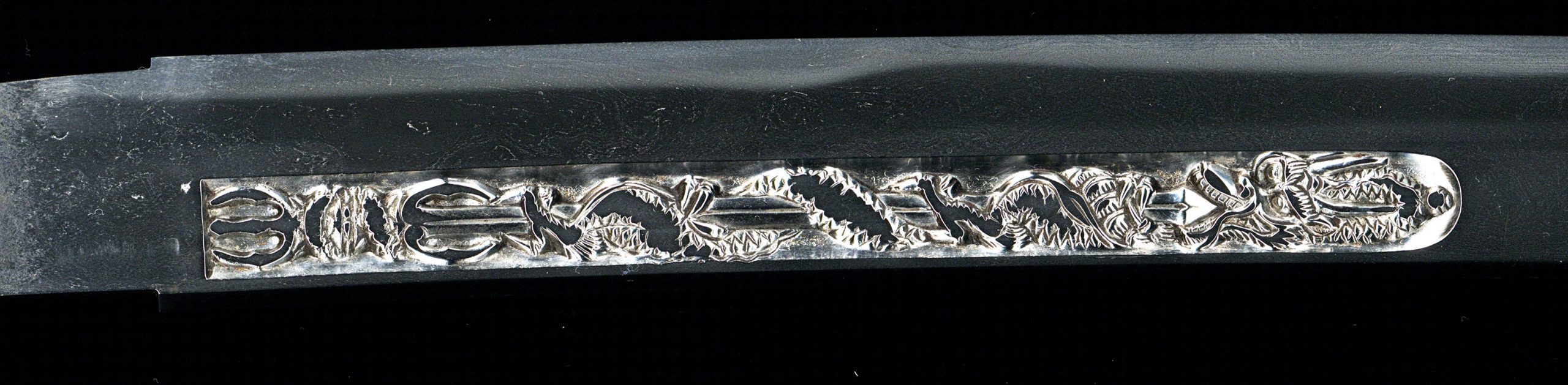
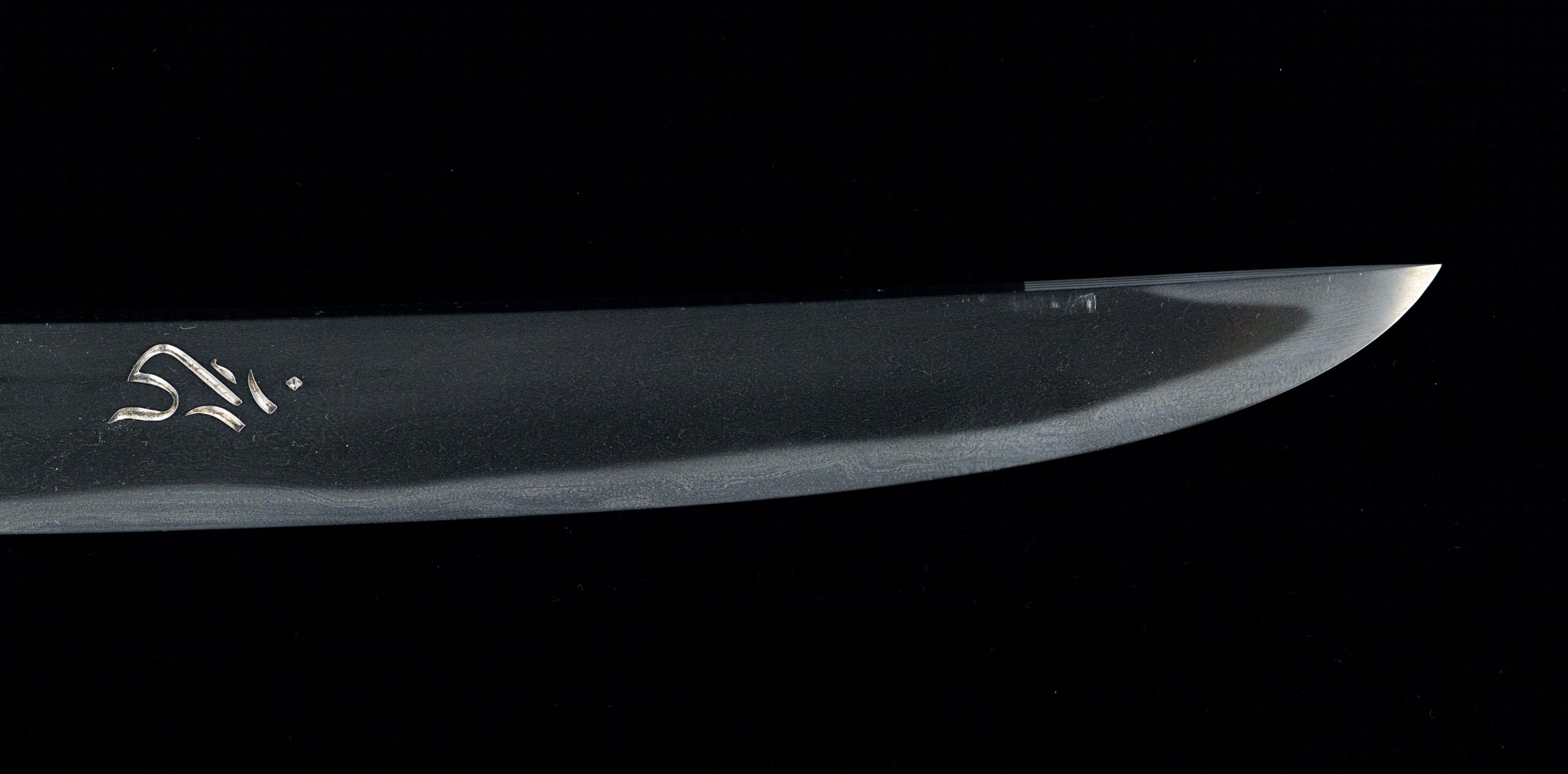
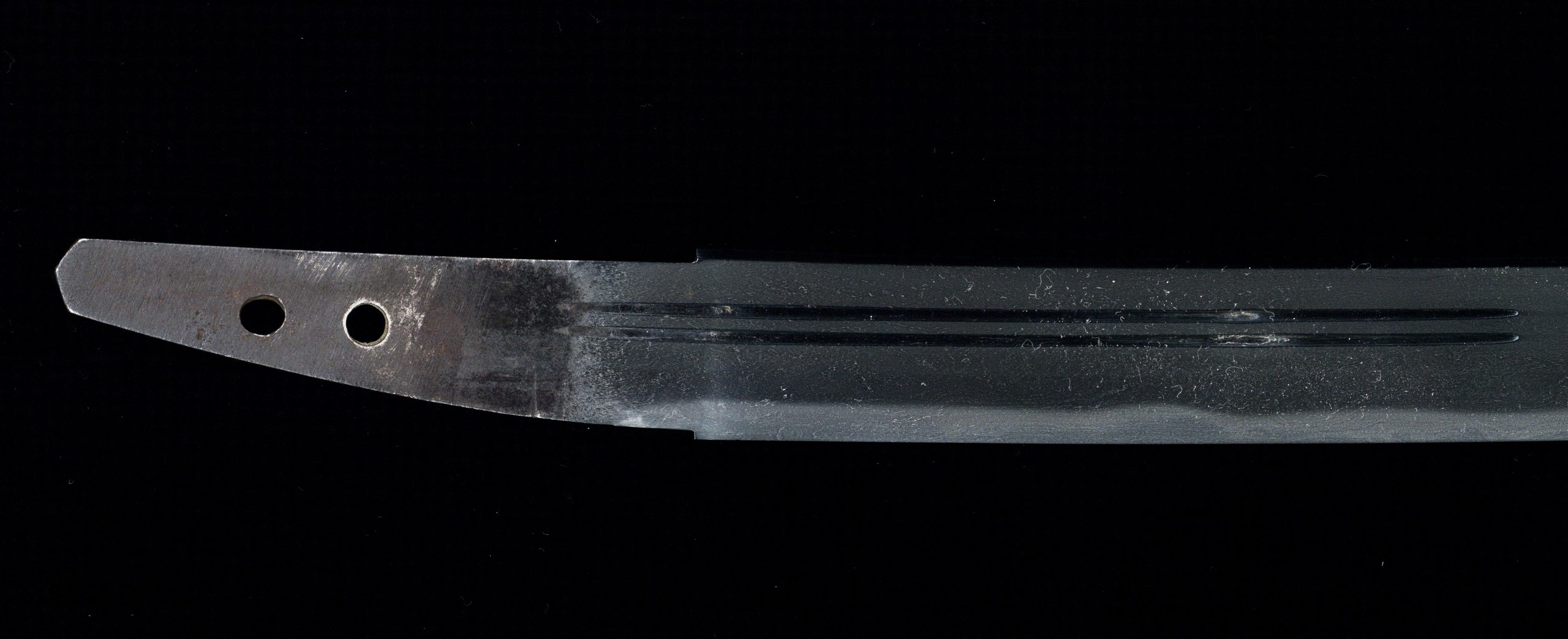
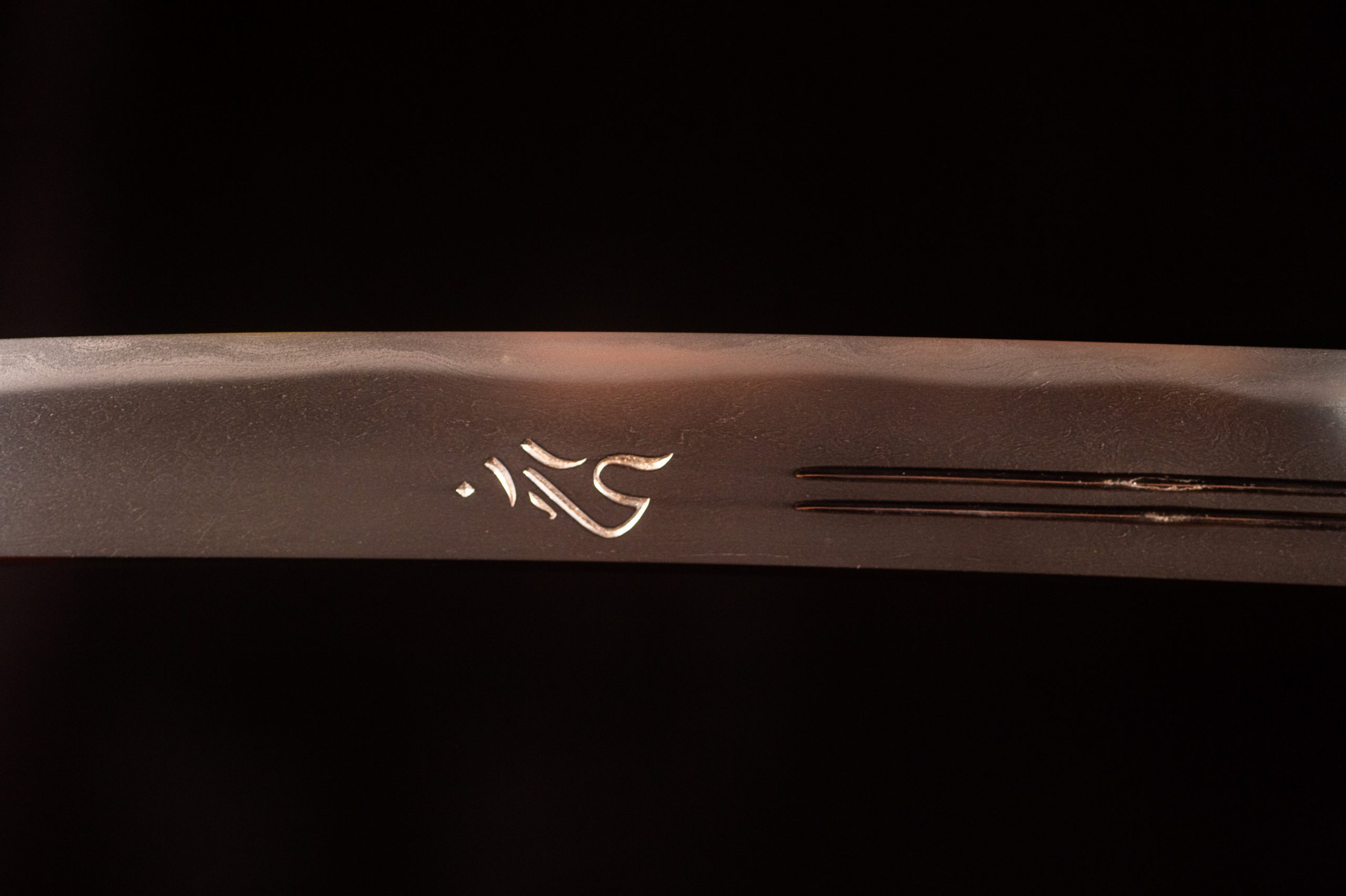
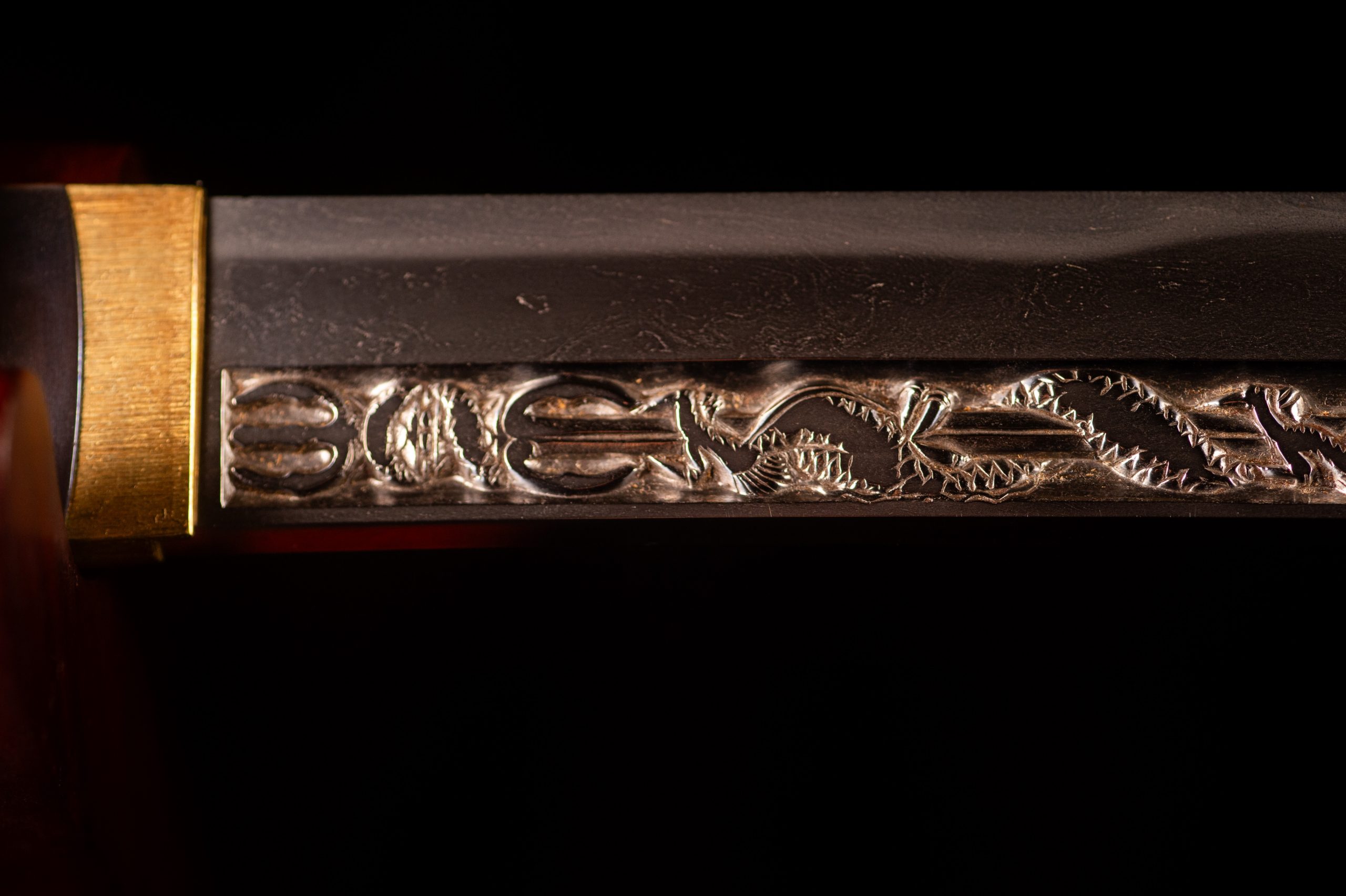
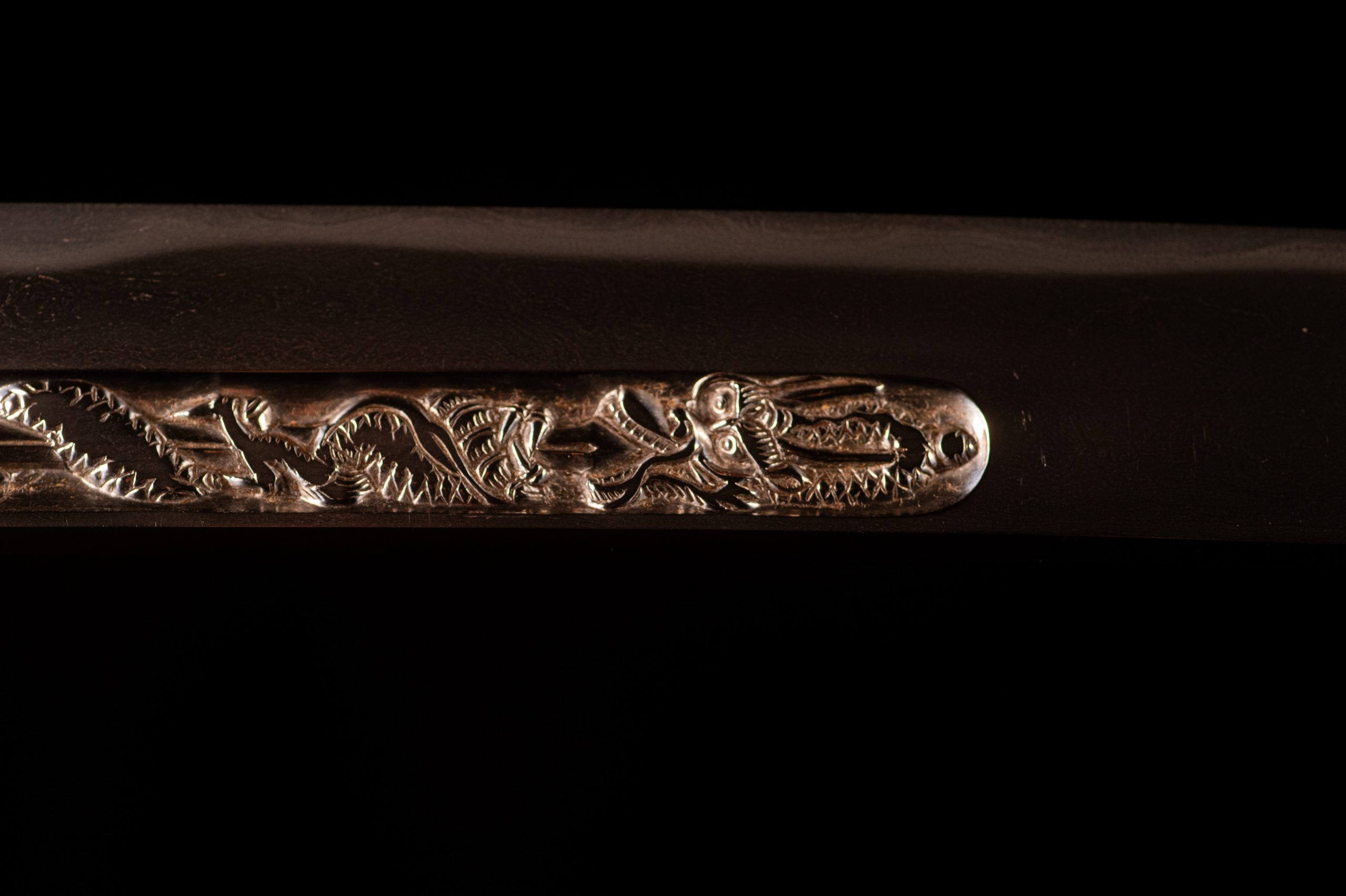
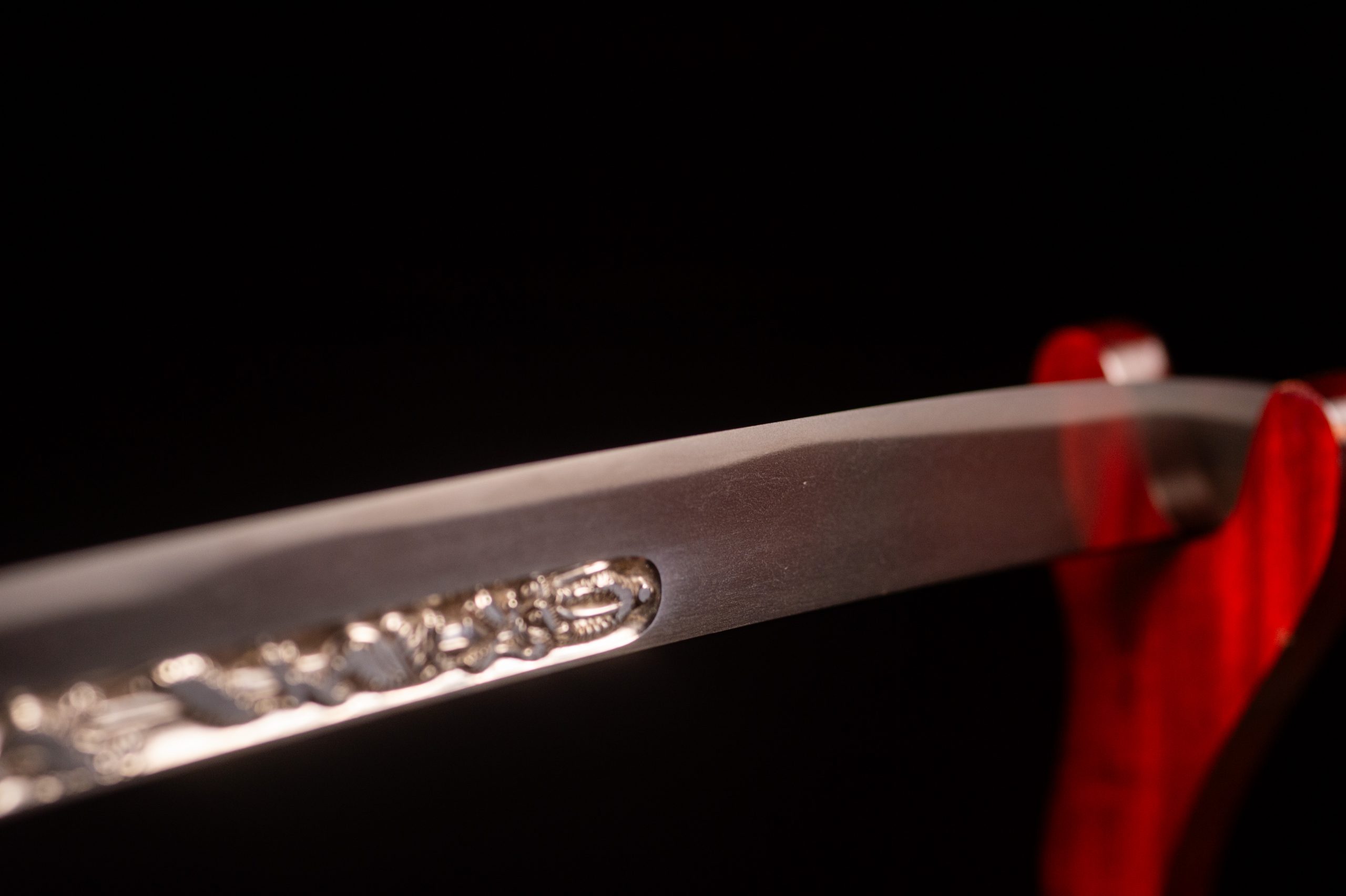
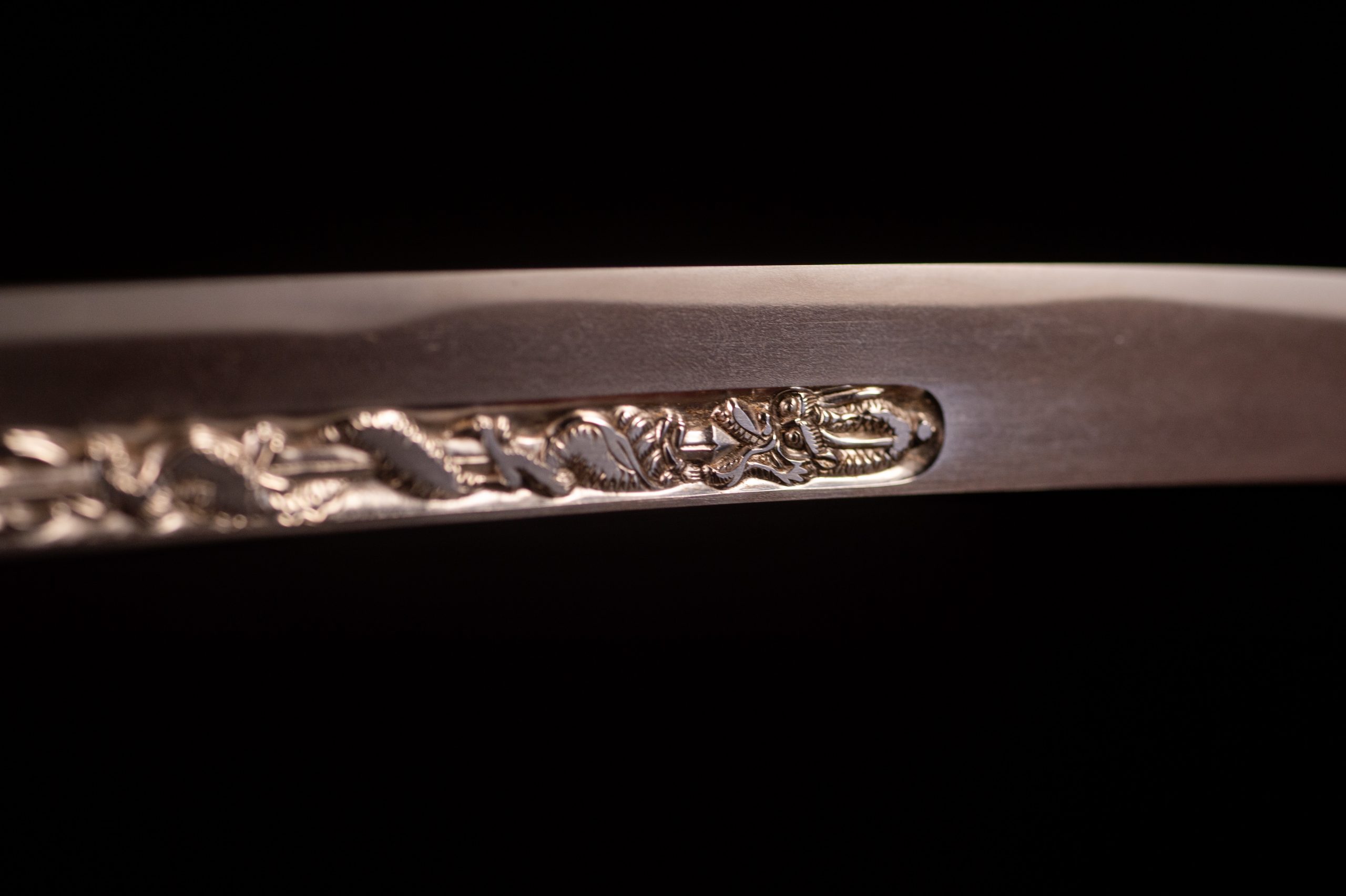
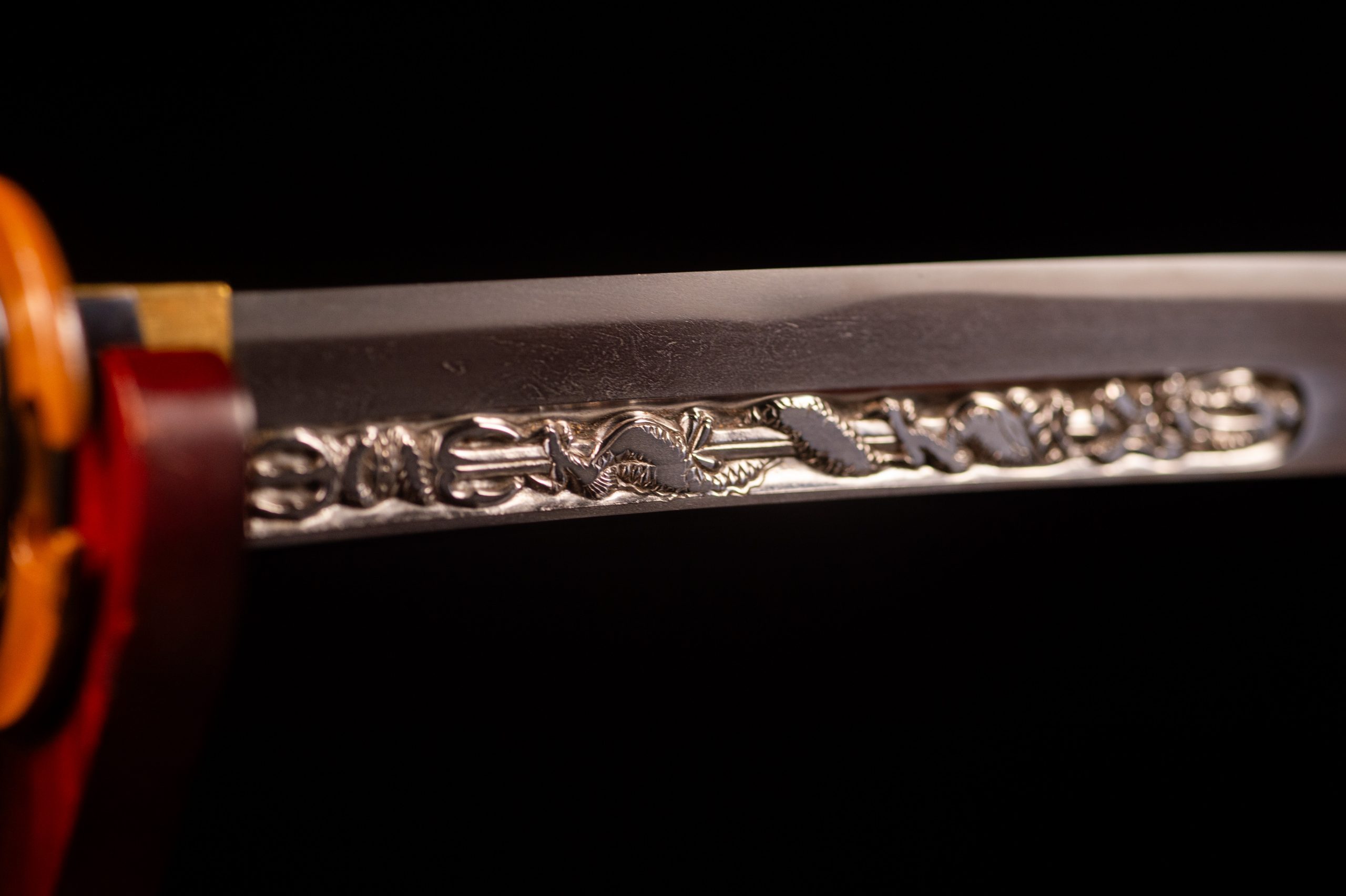
The defining feature of the blade is its rich horimono, carved in an elongated panel with a dragon motif of strong esoteric character, deeply executed and sharply readable. The reverse side carries parallel grooves (hi) and an engraved bonji, reinforcing the devotional and protective visual language associated with this class of ornamented blades.
The nakago is mumei, with two mekugi-ana, established old patina, and a general character fully in harmony with the attribution. The piece delivers the combination that distinguishes memorable examples: presence in the steel and high-level symbolic decoration.
Koshirae and thematic coherence
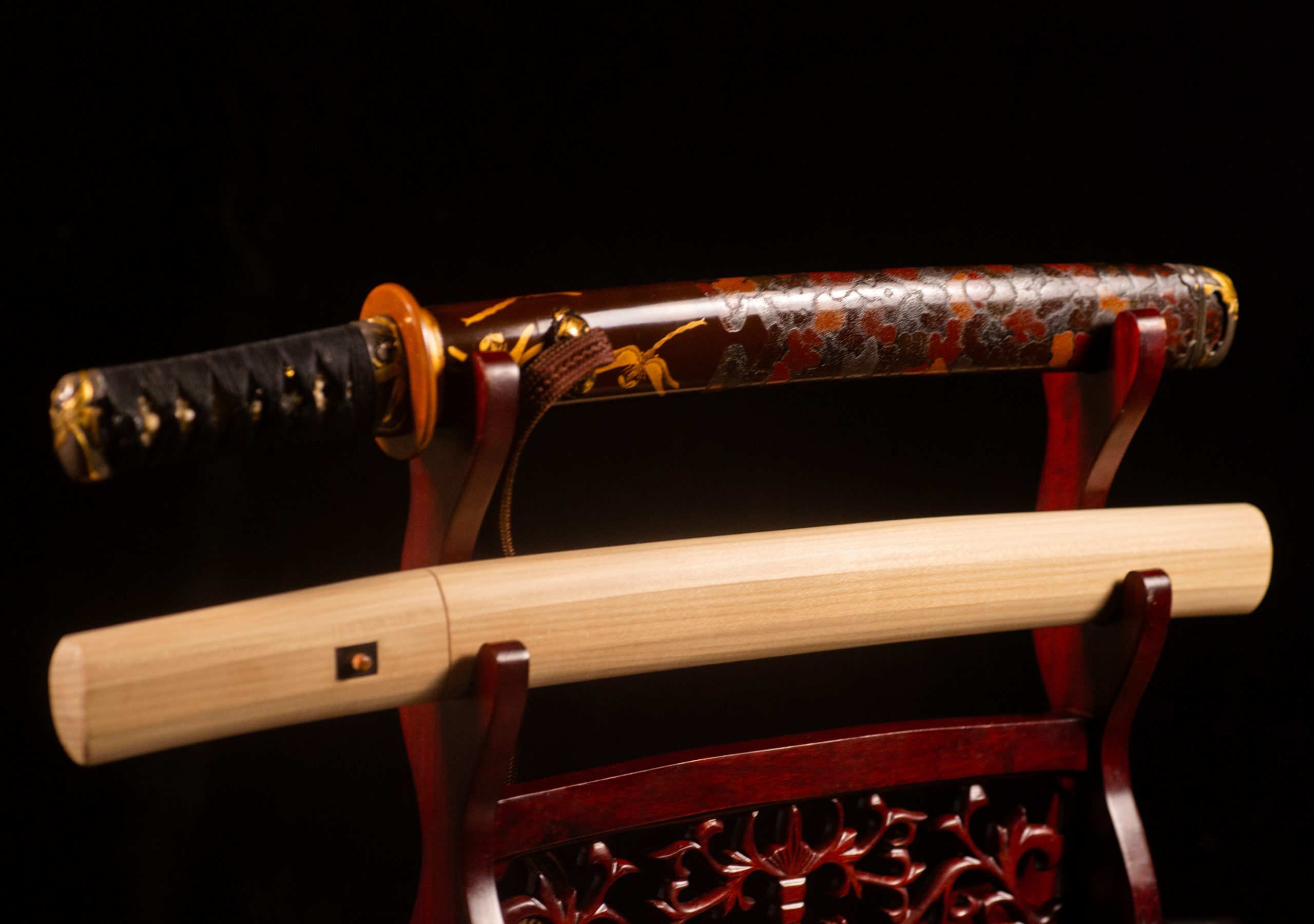
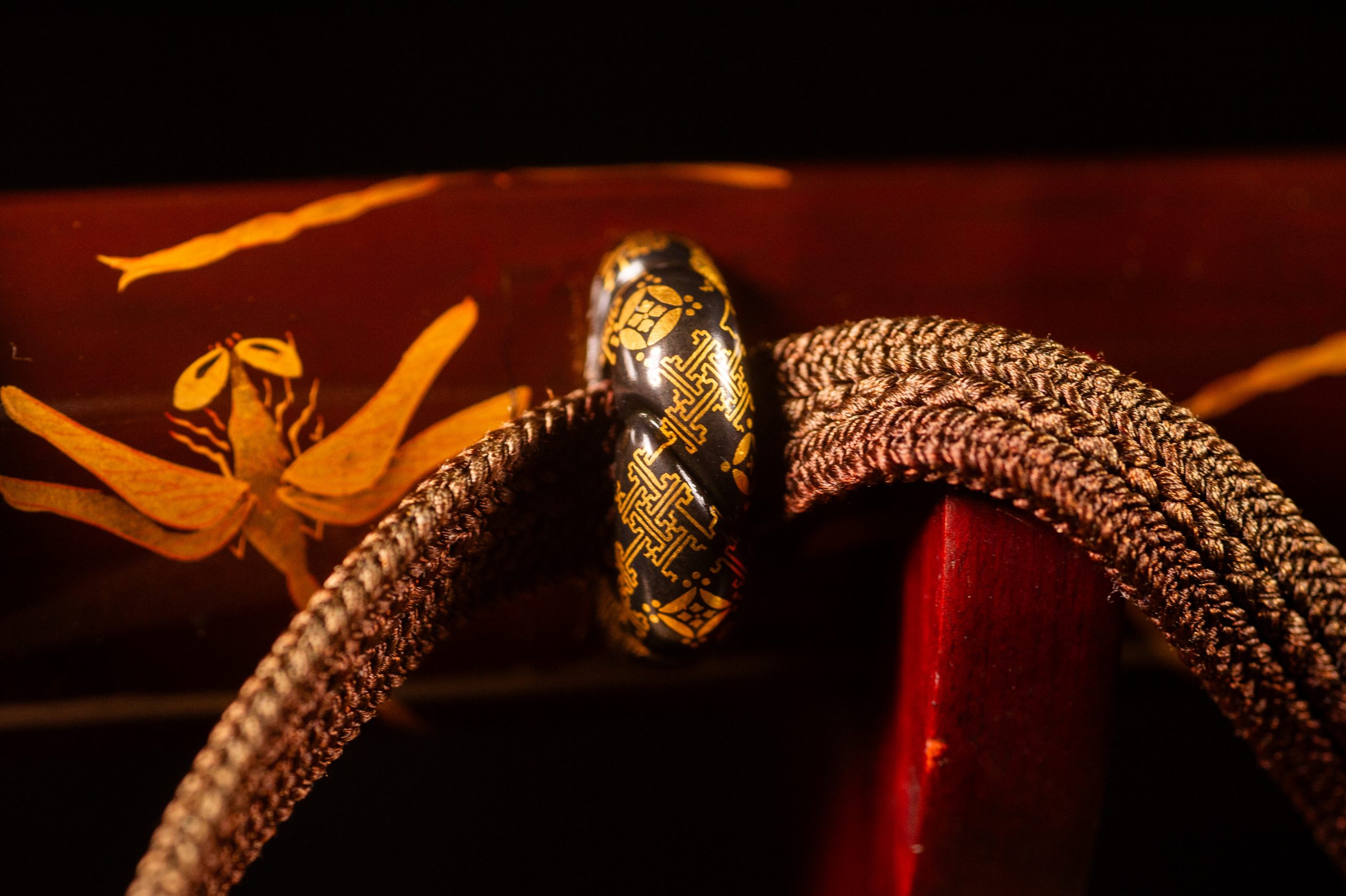
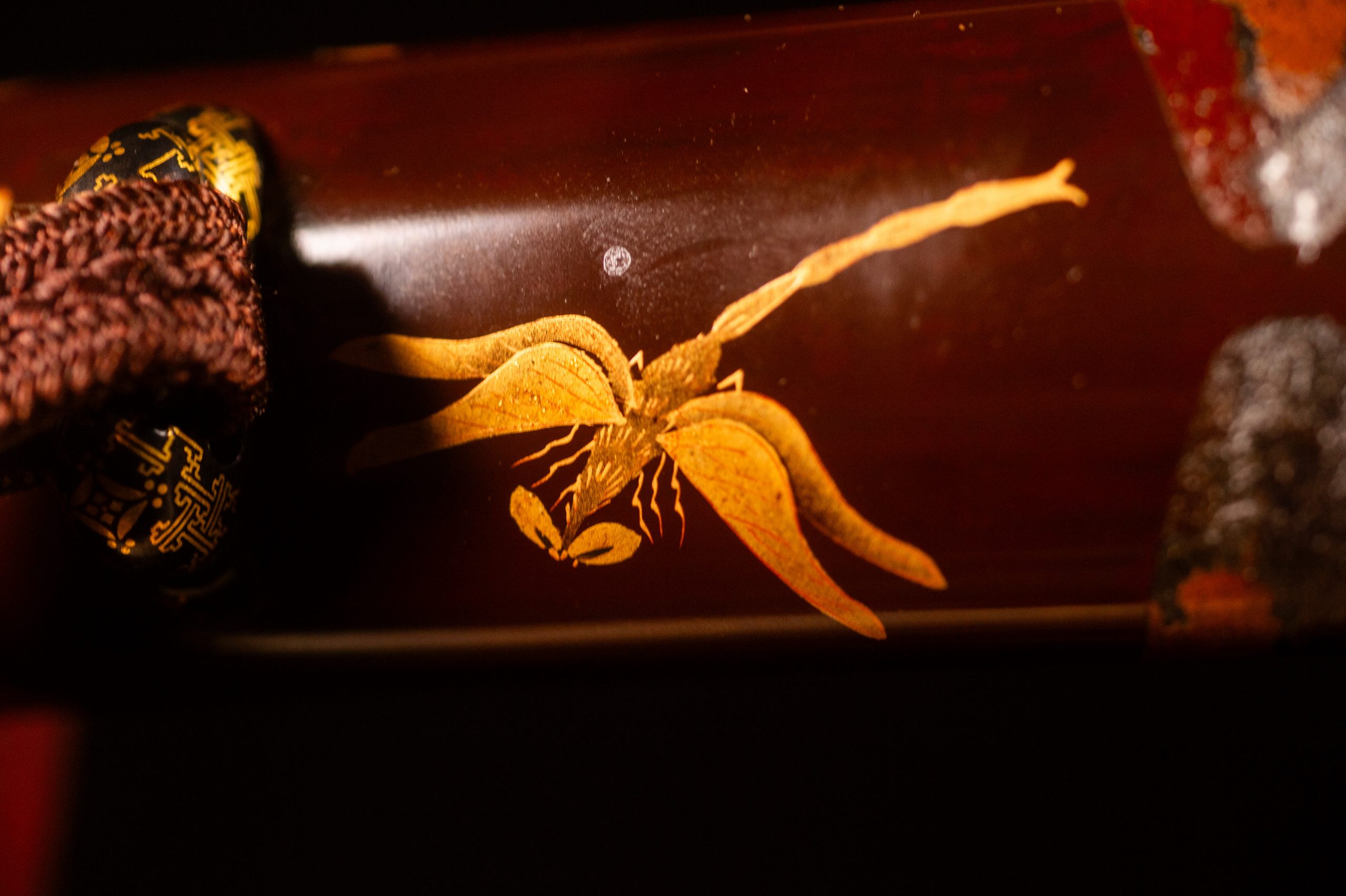
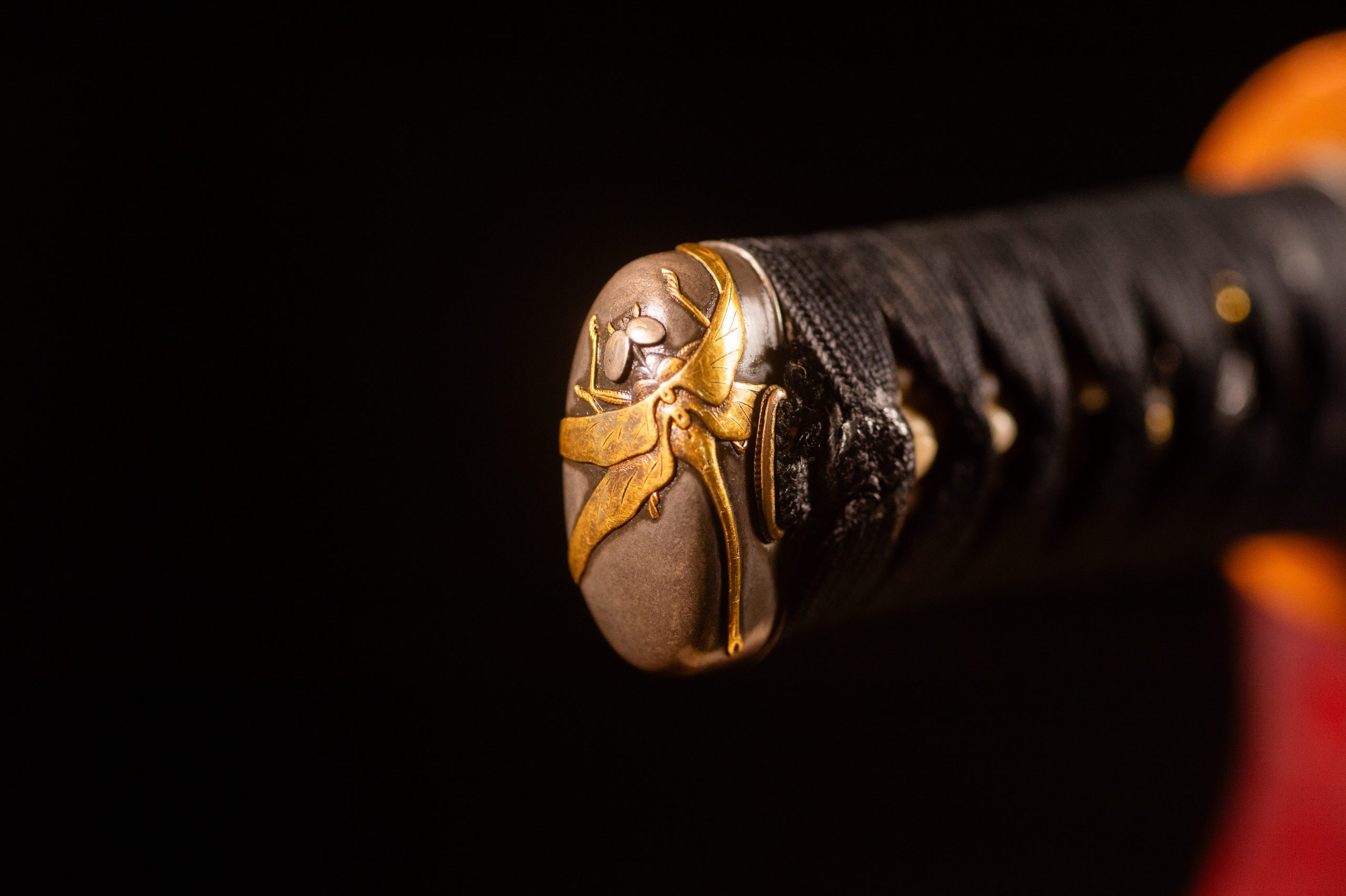
The mounting is one of the set’s greatest strengths. This is a papered tantō koshirae with a fully unified ornamental concept centered on the world of insects, led by the dragonfly (kachimushi, the “victory insect”), a symbol deeply rooted in Japanese martial culture.
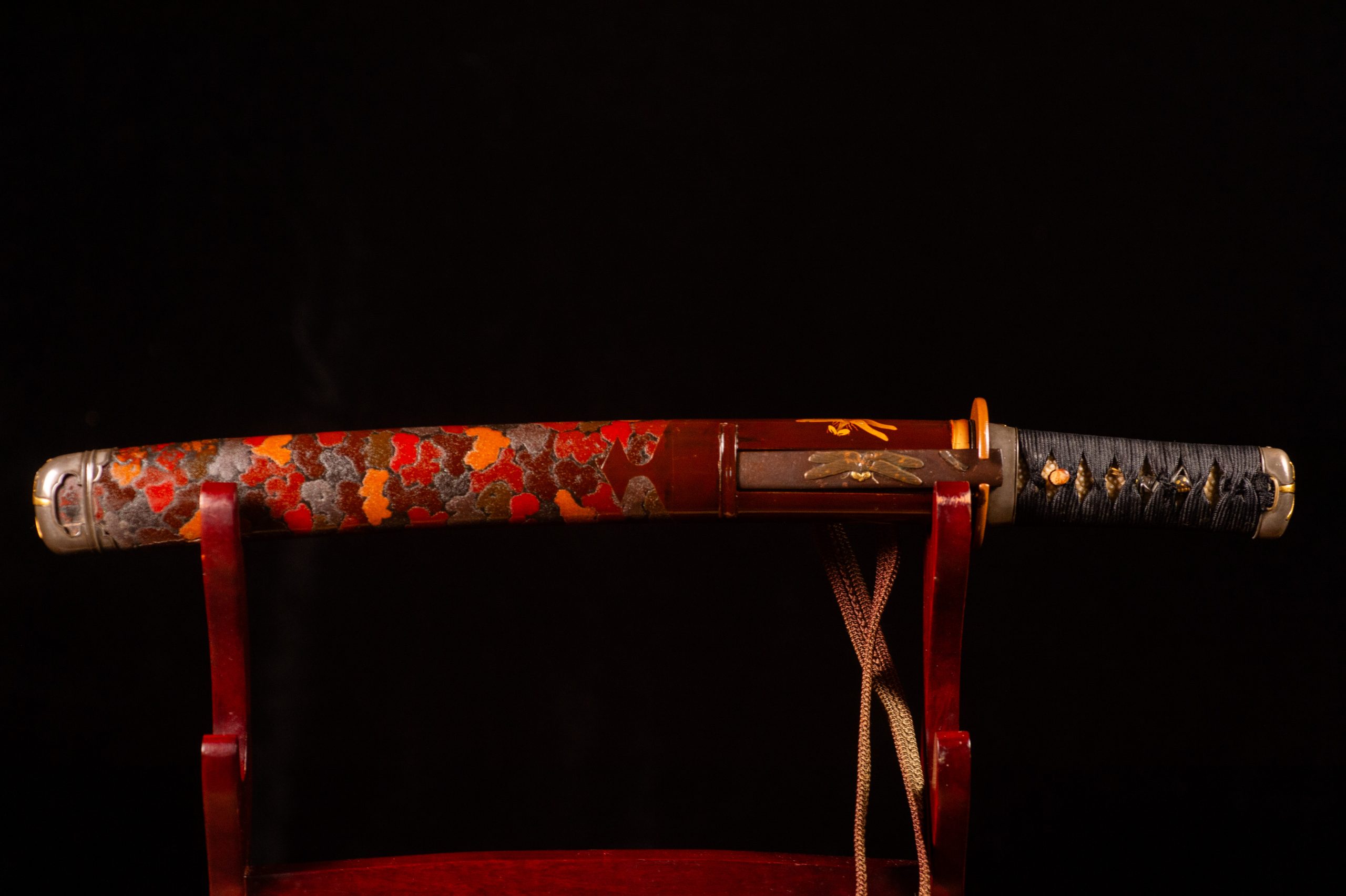
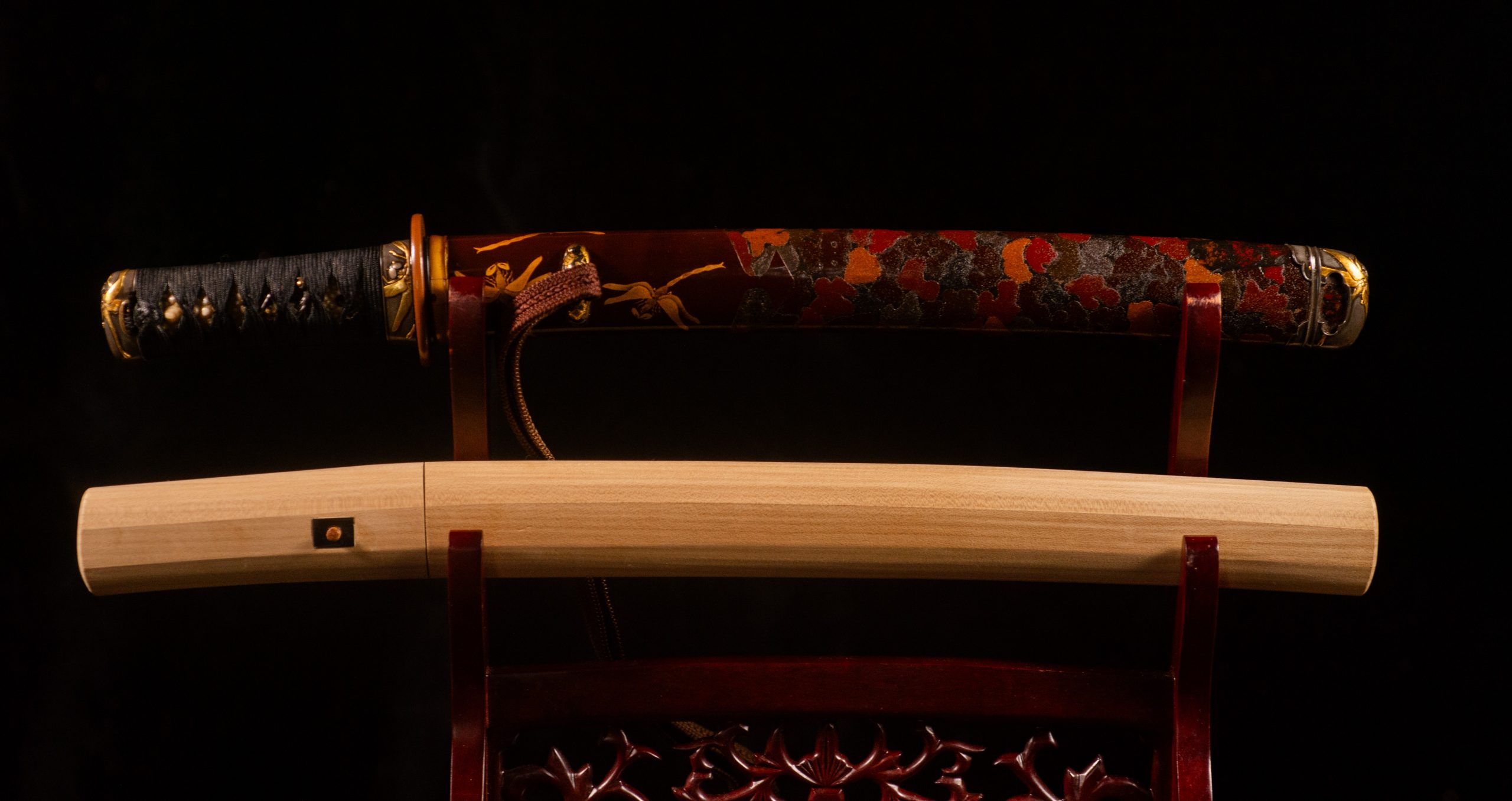
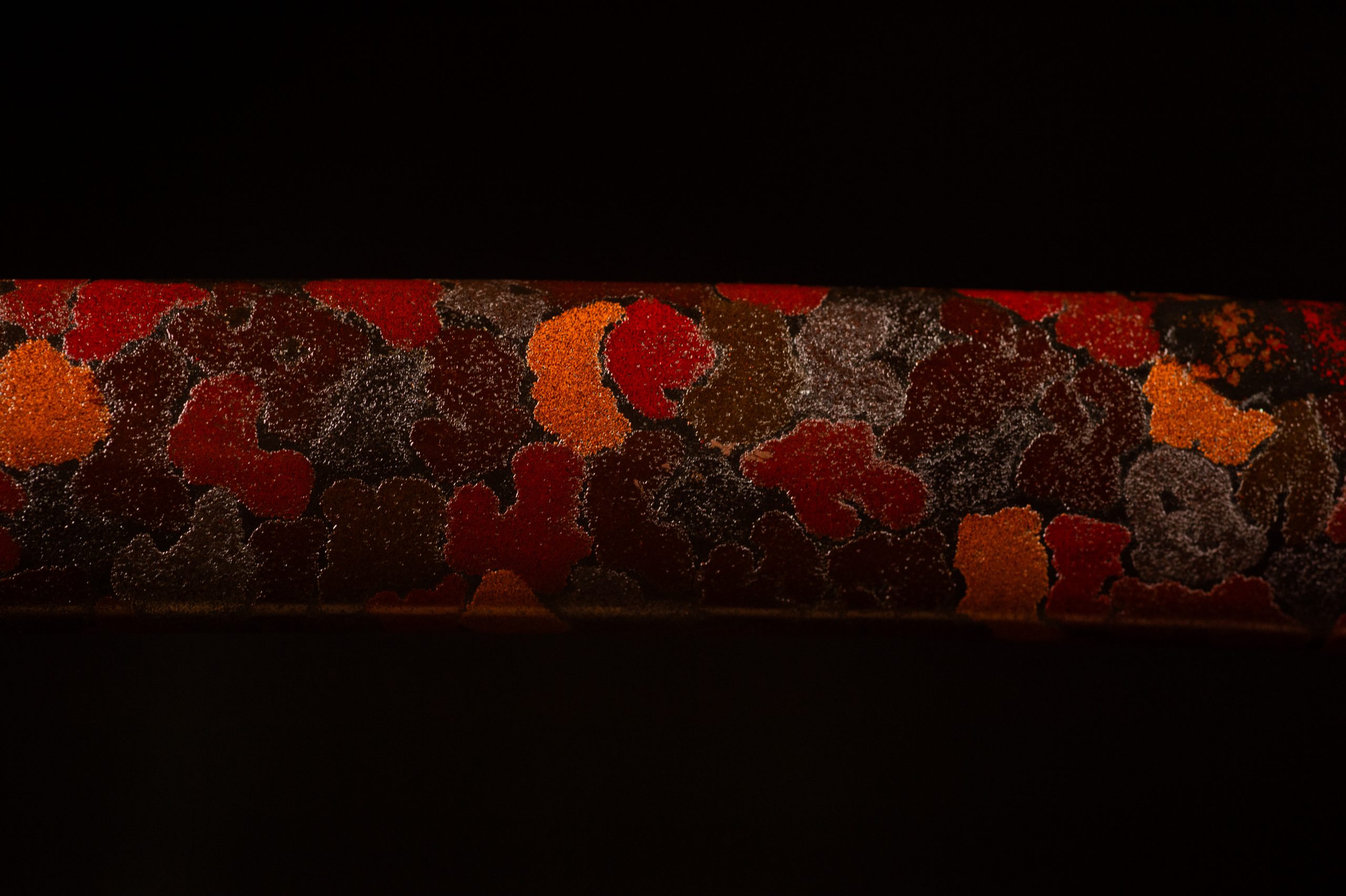
The saya, finished in tea-brown lacquer (cha-urushi), is decorated with dragonfly maki-e of striking visual impact. The composition alternates golden dragonflies with mottled lacquer passages of rich color variation, creating a sophisticated, lively, and distinctly Japanese appearance. The brown sageo complements the whole with restraint and balance.
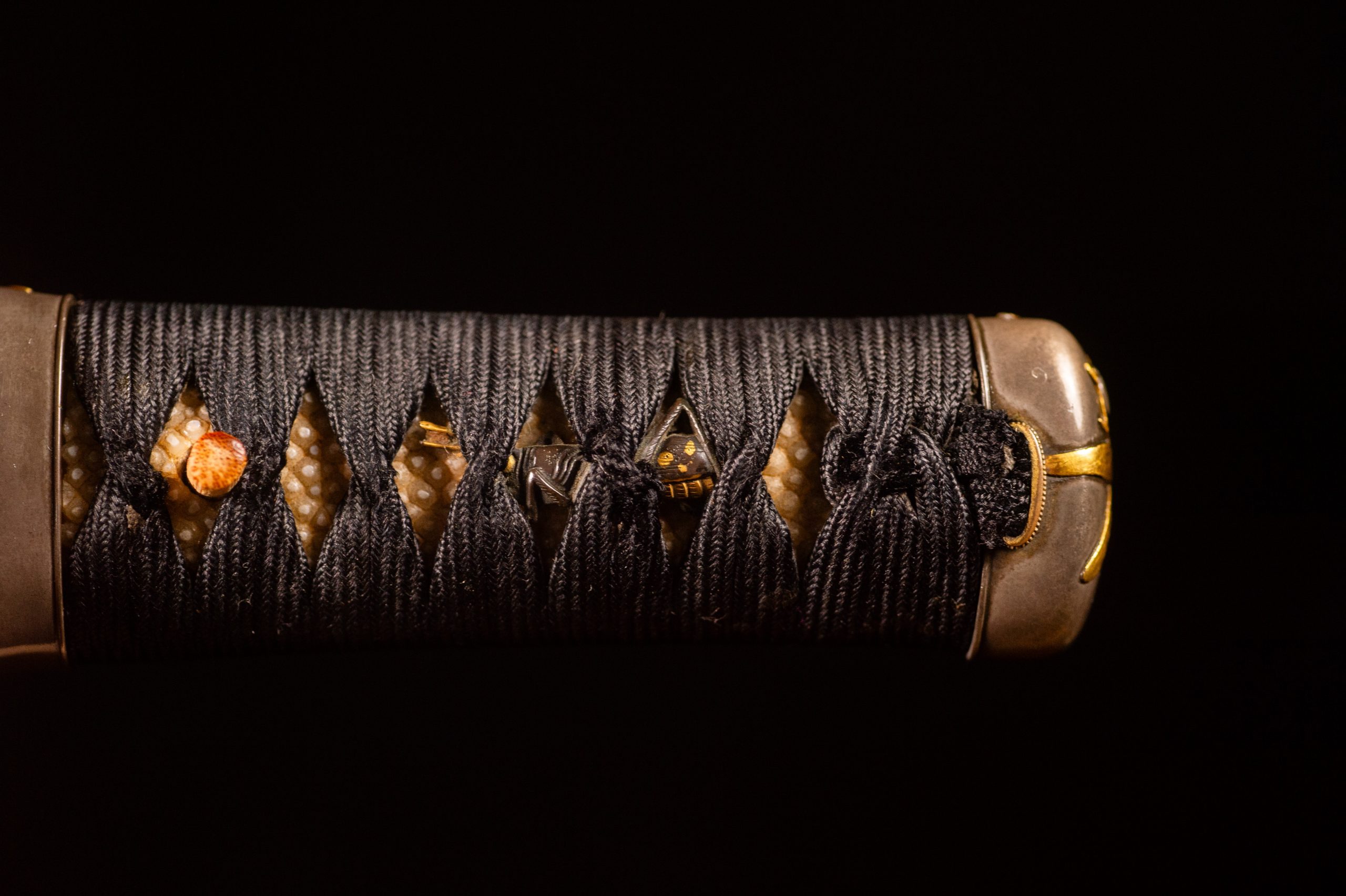
The tsuka is mounted with white samegawa under black tsuka-ito in morohineri-maki, producing a classic contrast and strong visual authority. The result is an elegant, secure, and highly refined grip.
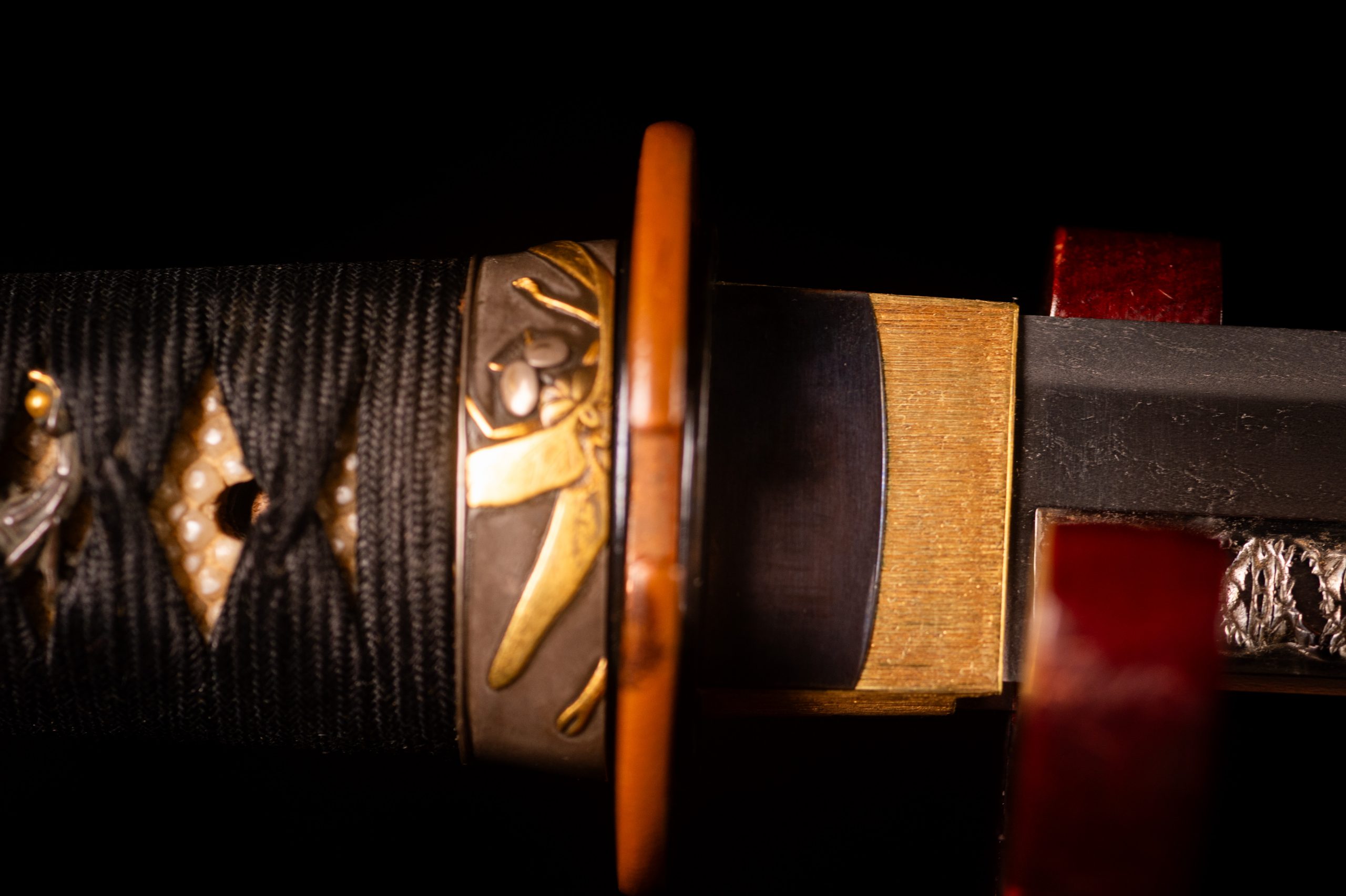
The fuchi-kashira, kozuka, and tsuba are certified with kachimushi motif, while the menuki feature autumn insects, creating exceptional iconographic continuity. The ishime-textured kojiri provides a sober and distinguished final accent.
n Japanese martial culture the dragonfly was known as kachimushi — the “victory insect.” It symbolized forward movement and success in battle, making it a highly favored motif among the warrior class.
Auxiliary pieces
The set includes a kozuka in complete thematic harmony, with a large dragonfly in relief and excellent sculptural presence, as well as an accompanying shirasaya, adding an important conservation and presentation dimension prized in pieces of this level.
Technical summary
Type: Tantō
Signature: Mumei
NBTHK Attribution (blade): 肥後大掾貞国 (Higo Daijō Sadakuni)
Period: Edo
Nagasa: 30.0 cm (torokusho) / 長九寸九分強 (NBTHK)
Sori: 0.1 cm
Mekugi-ana: 2
Torokusho: Tokyo No. 254263 (9 August 1990)
NBTHK blade paper: No. 3031969, Hozon Tōken (25 August 2023)
NBTHK koshirae paper: No. 4024706, Hozon Tōsōgu (19 June 2025)
Mounting motifs: Dragonflies (kachimushi), autumn insects, ishime-textured kojiri
Additional mounting: Shirasaya included


