


Description
ITEM DESCRIPTION:
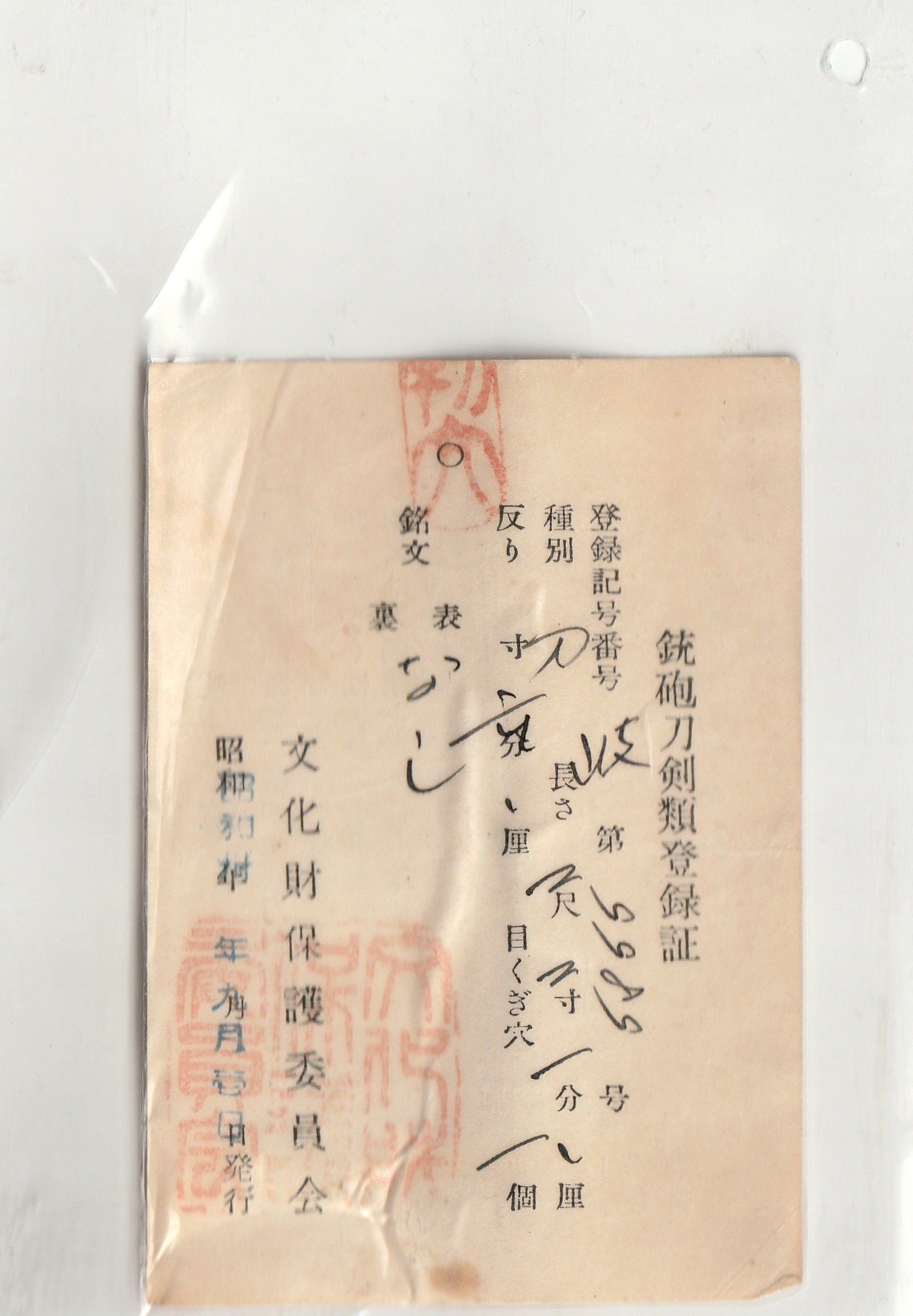
Comes with kimono or cotton bag. Comes with certificate of supein Nihonto. Comes with copy of Tokorusho.
Documentation
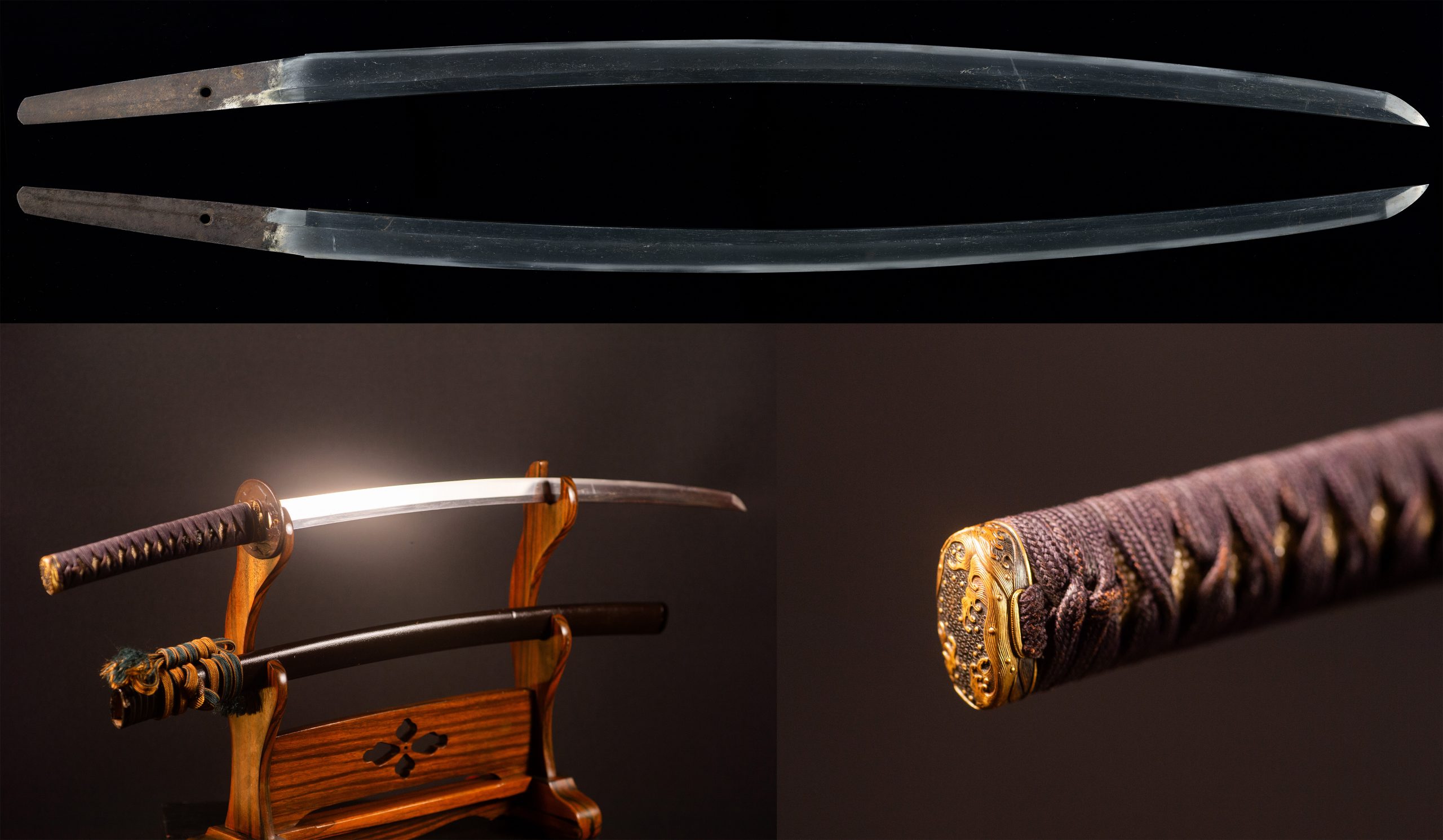
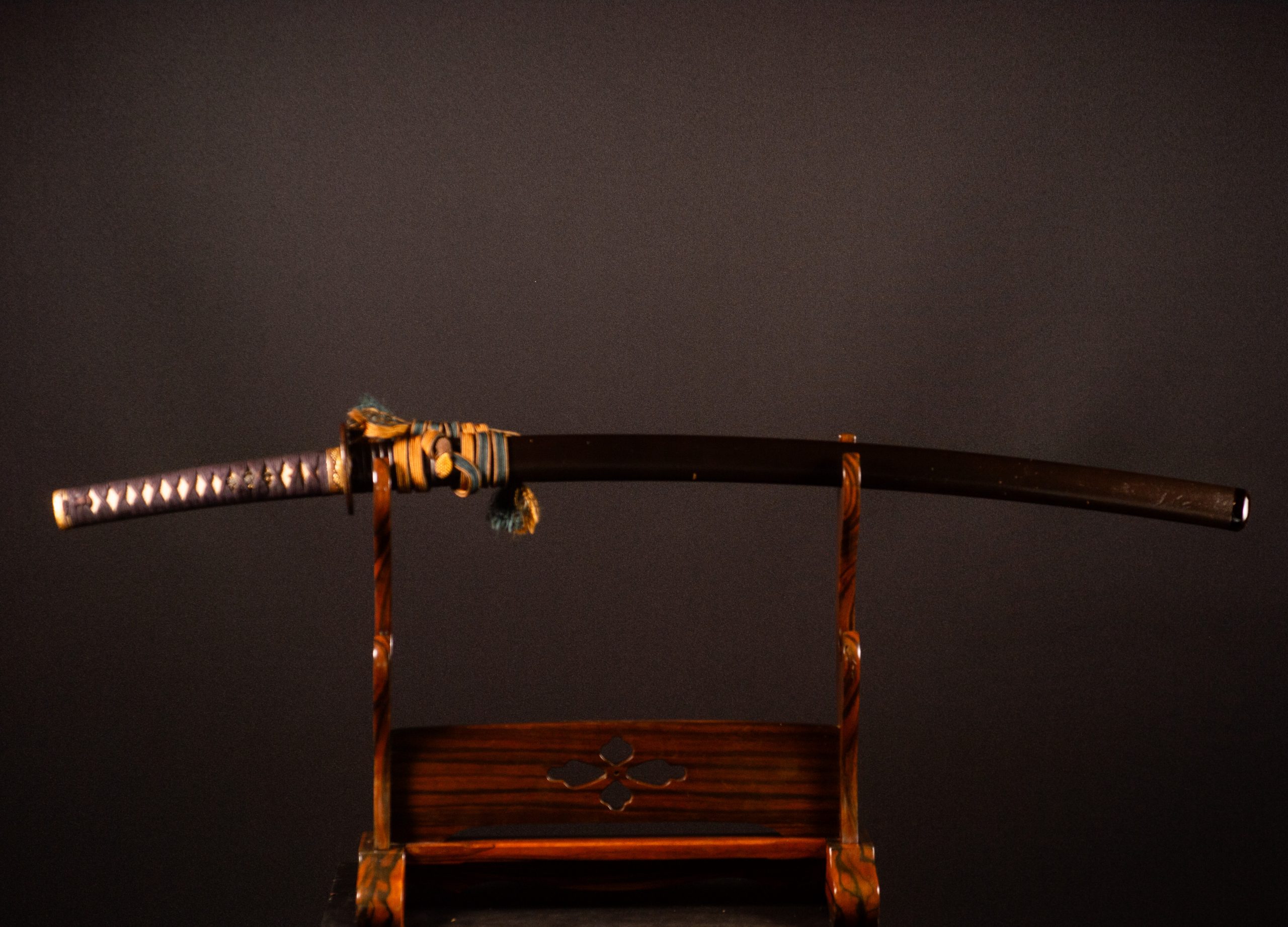
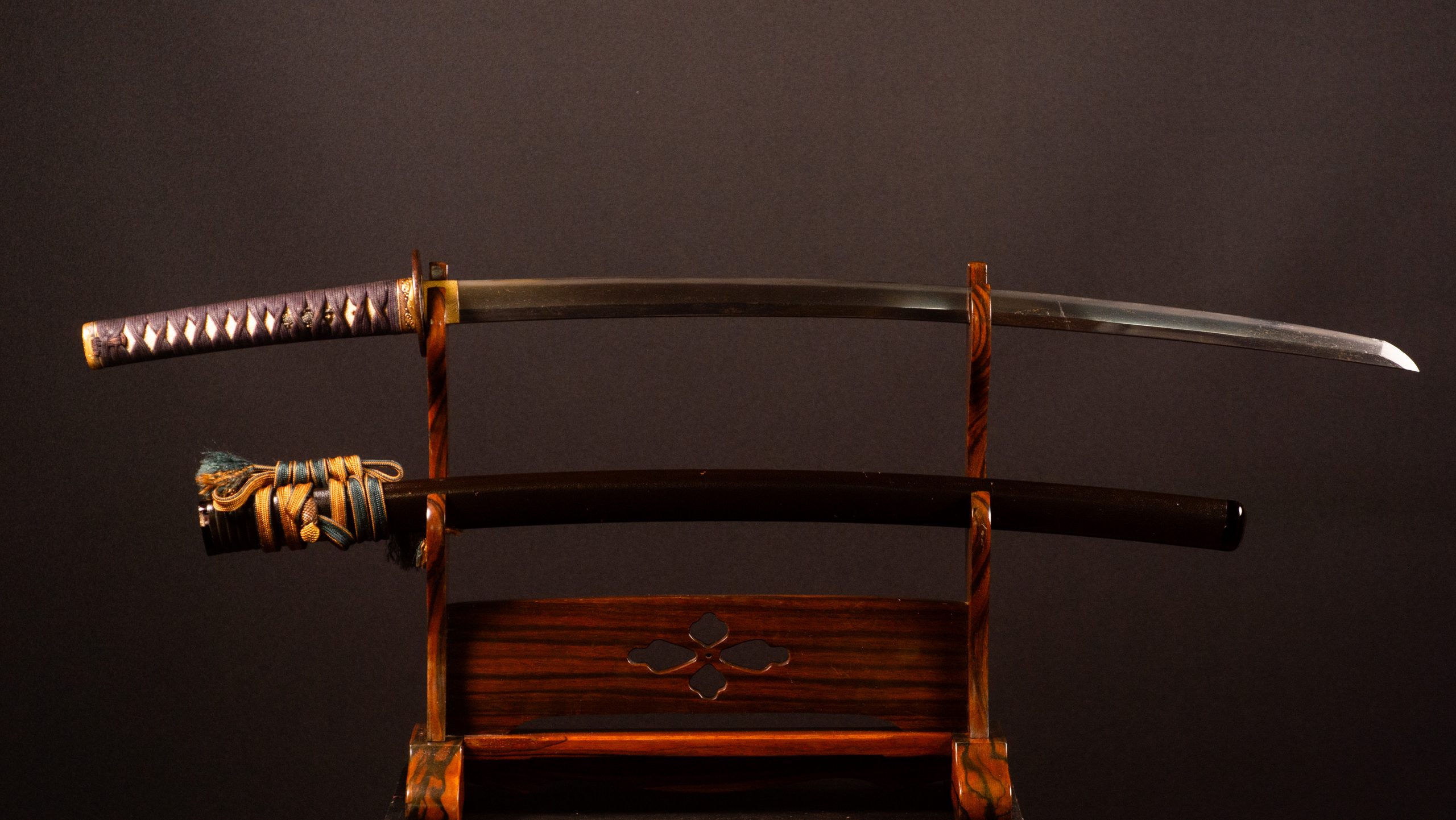
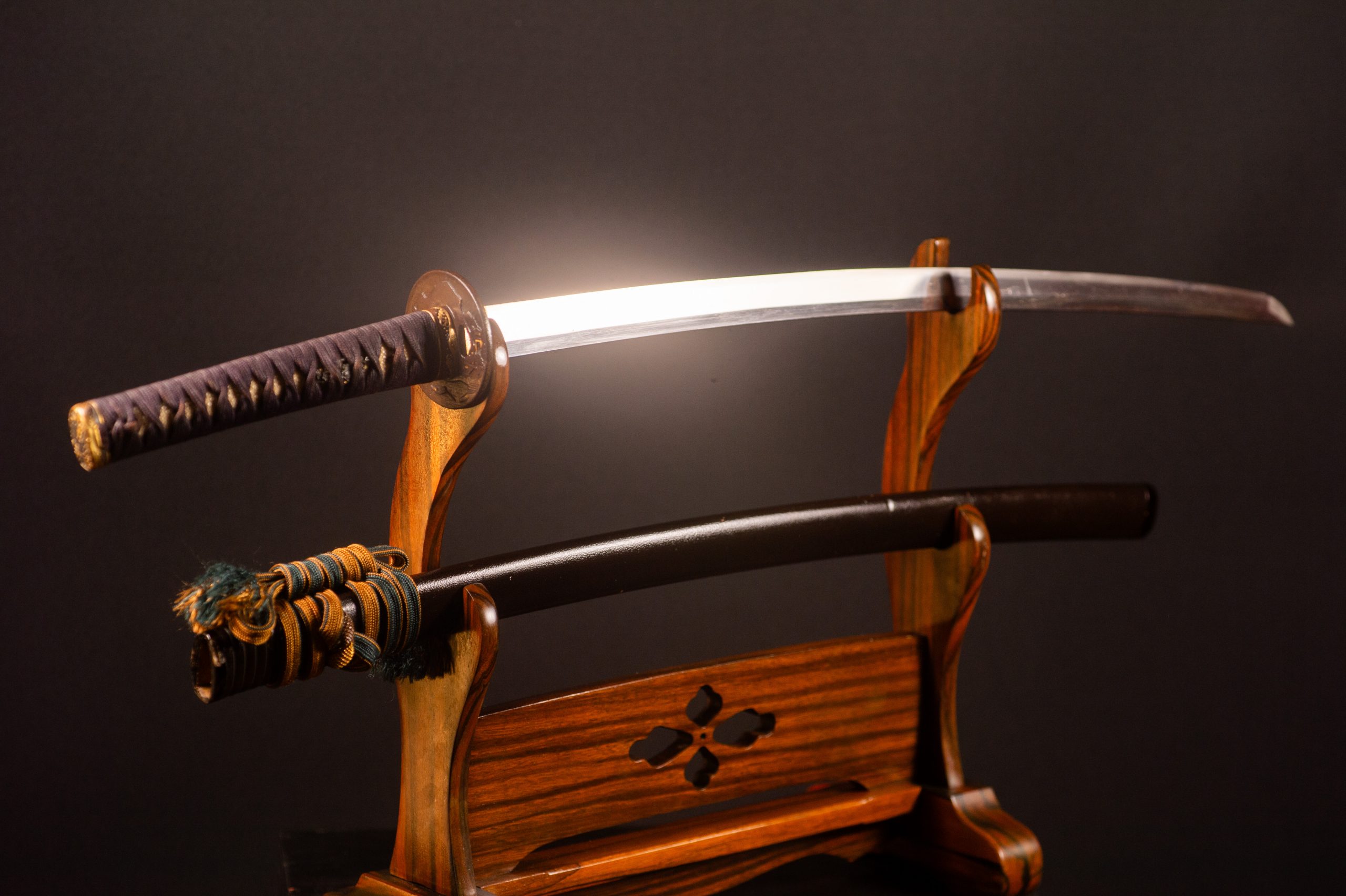
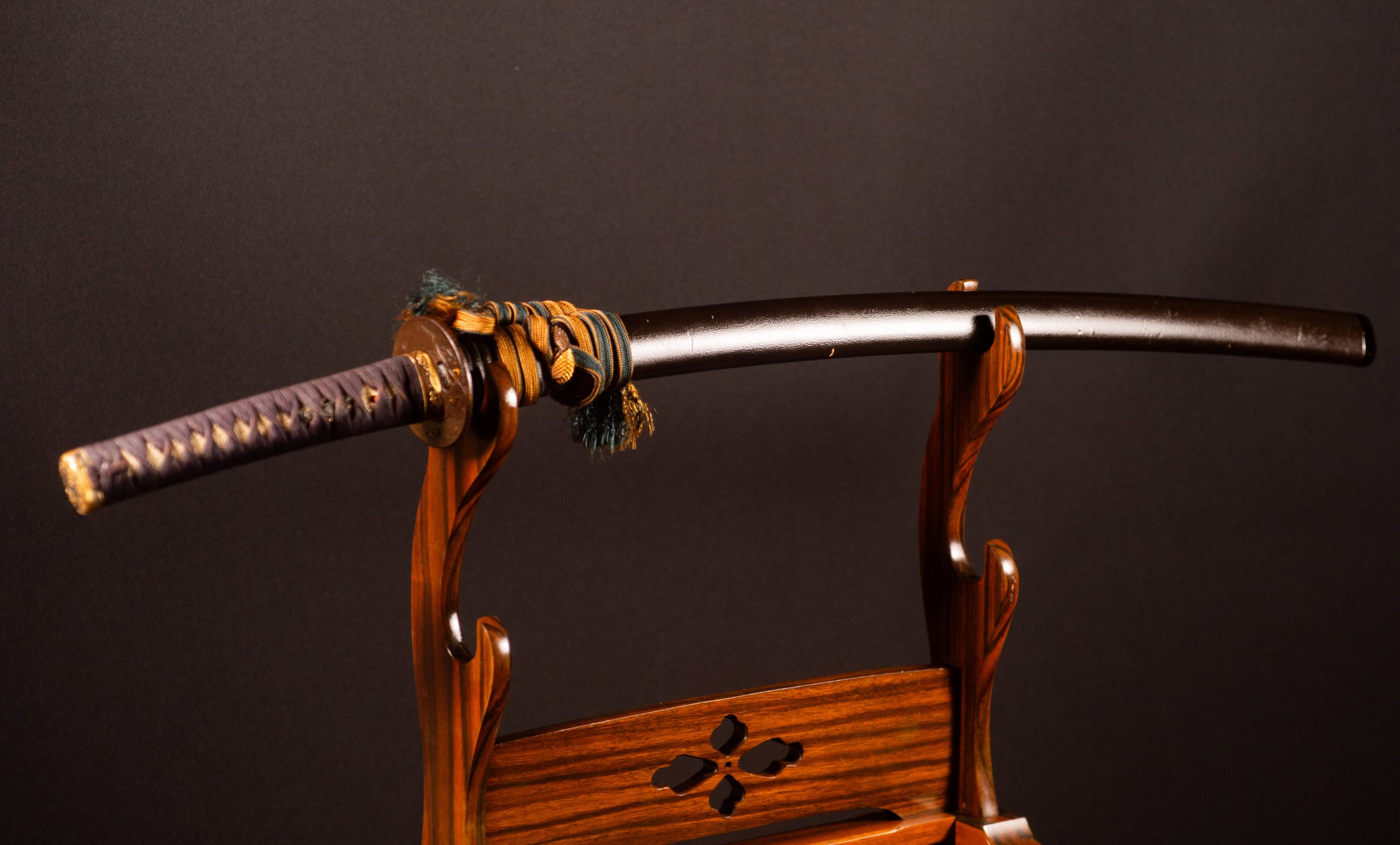
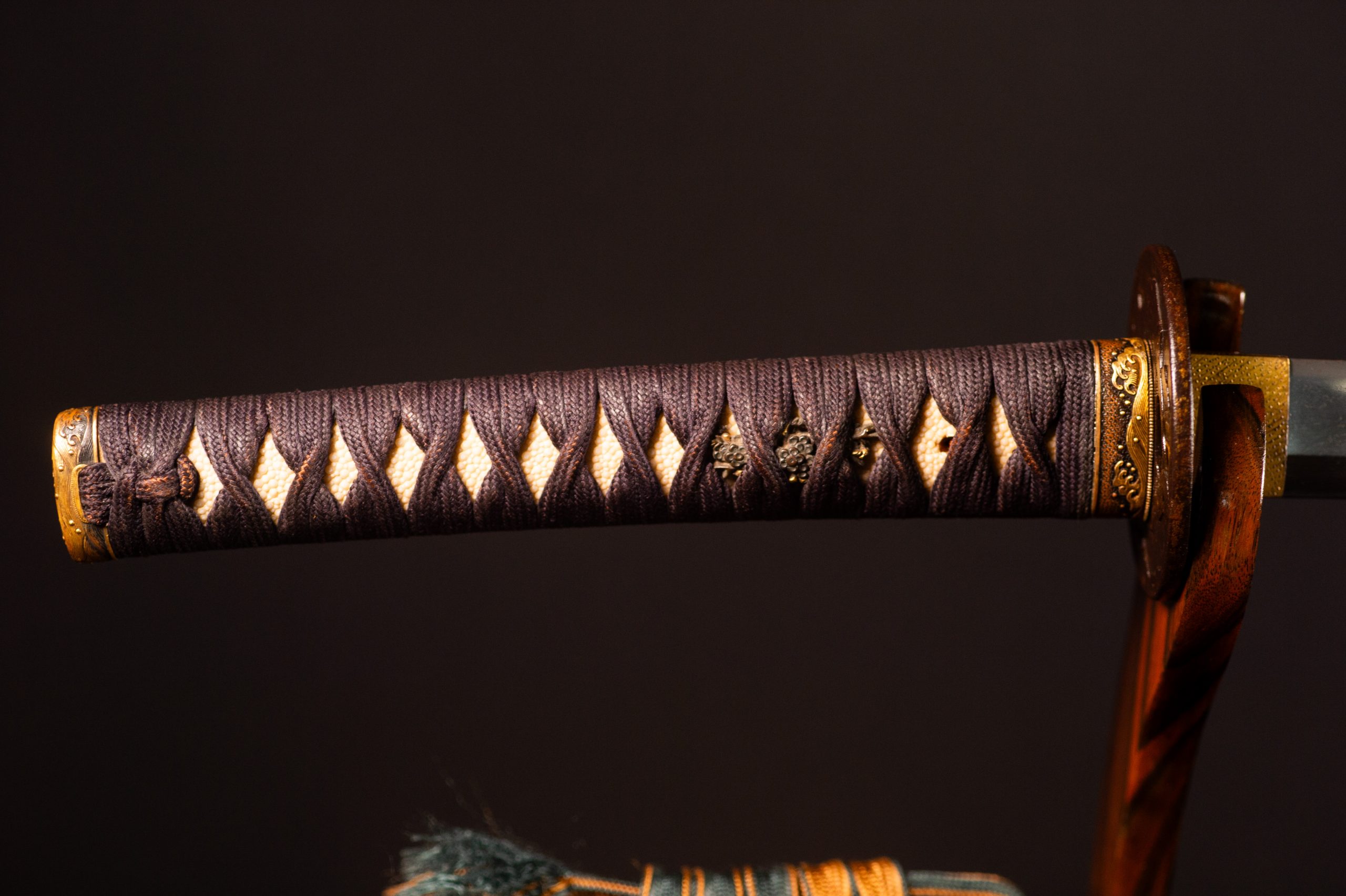
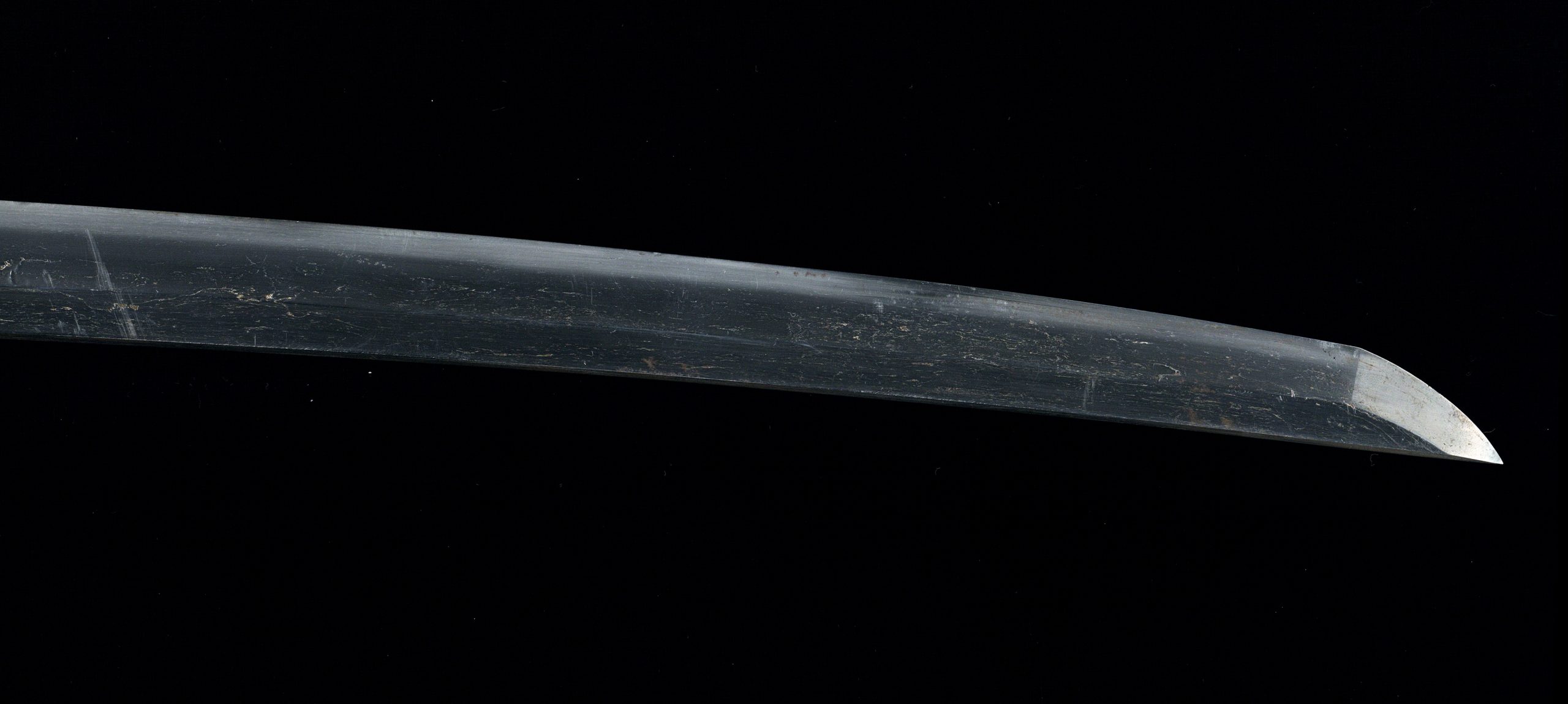
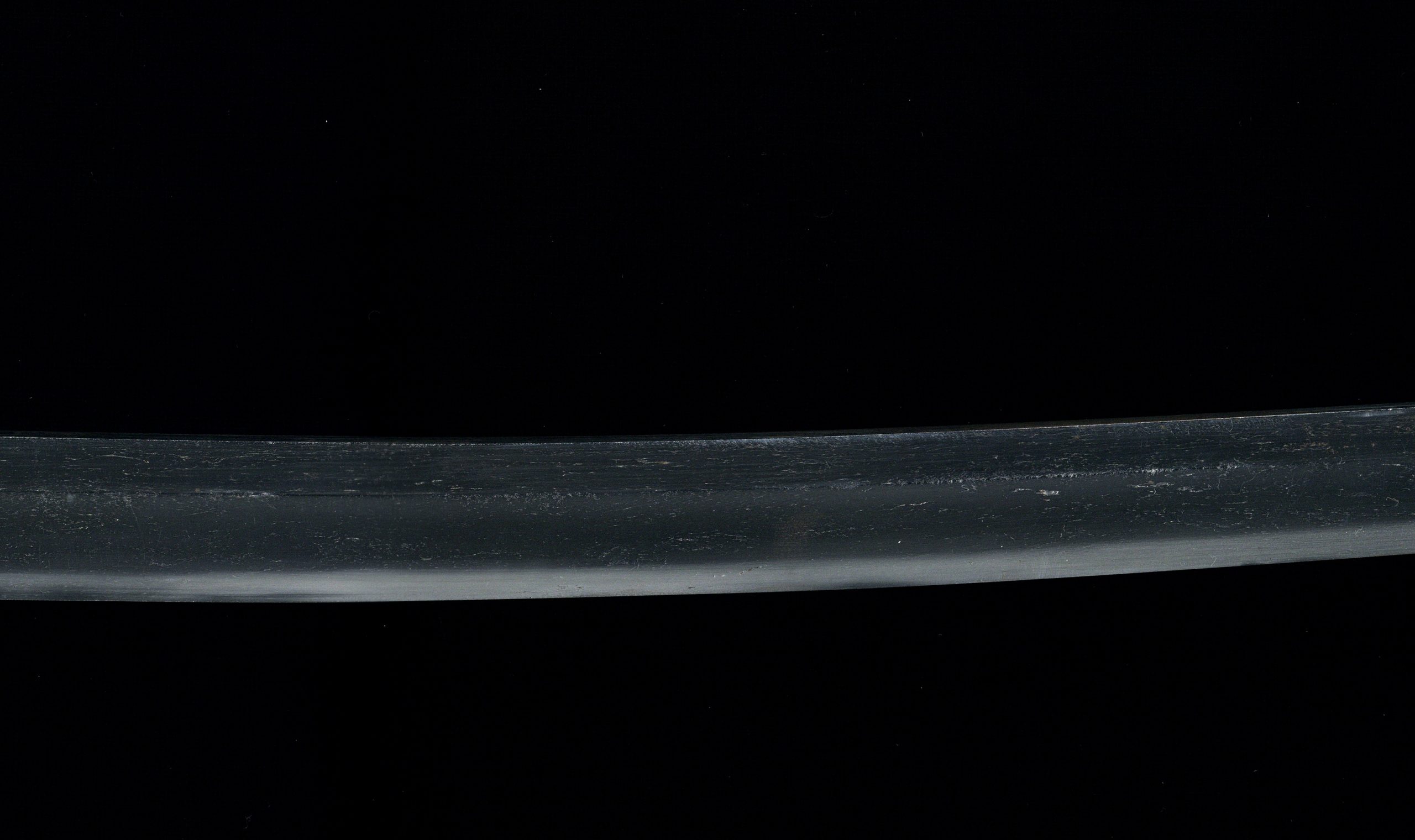
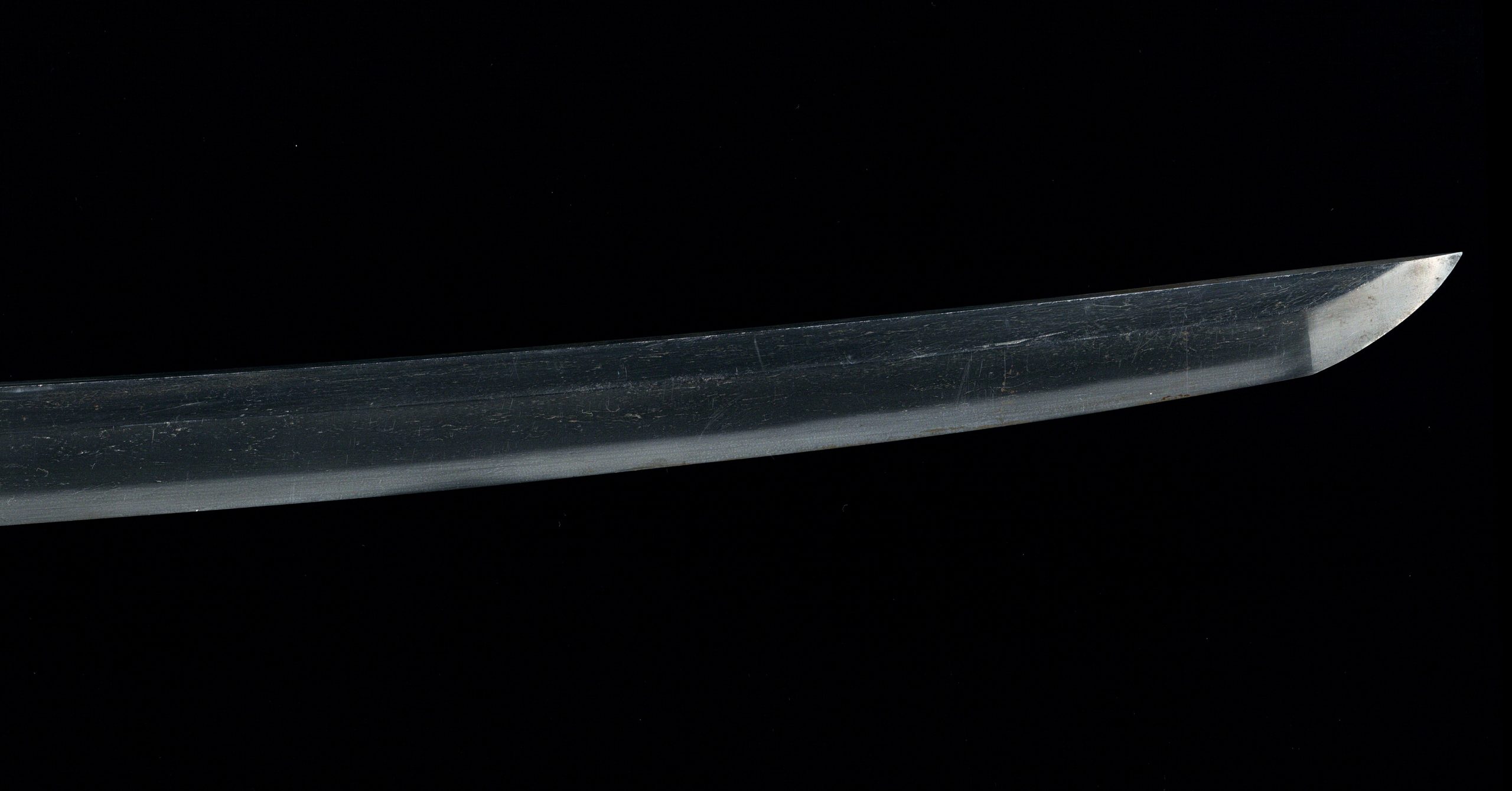
An mumei Japanese katana from the middle Edo period, 17th–18th century, presented in complete koshirae of strong aesthetic balance and excellent visual presence. The blade displays a classic and well-proportioned silhouette, with elegant curvature and a continuous line of notable restraint, characteristic of antique pieces rooted in functional tradition. The ensemble conveys a highly successful sense of harmony between blade and mounting, with a refined, serious and distinctly Japanese character.
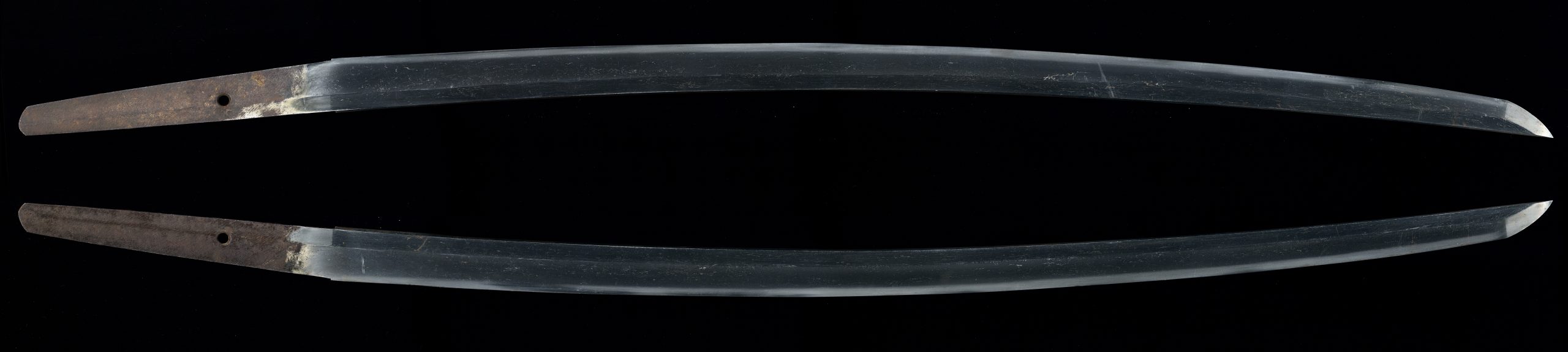
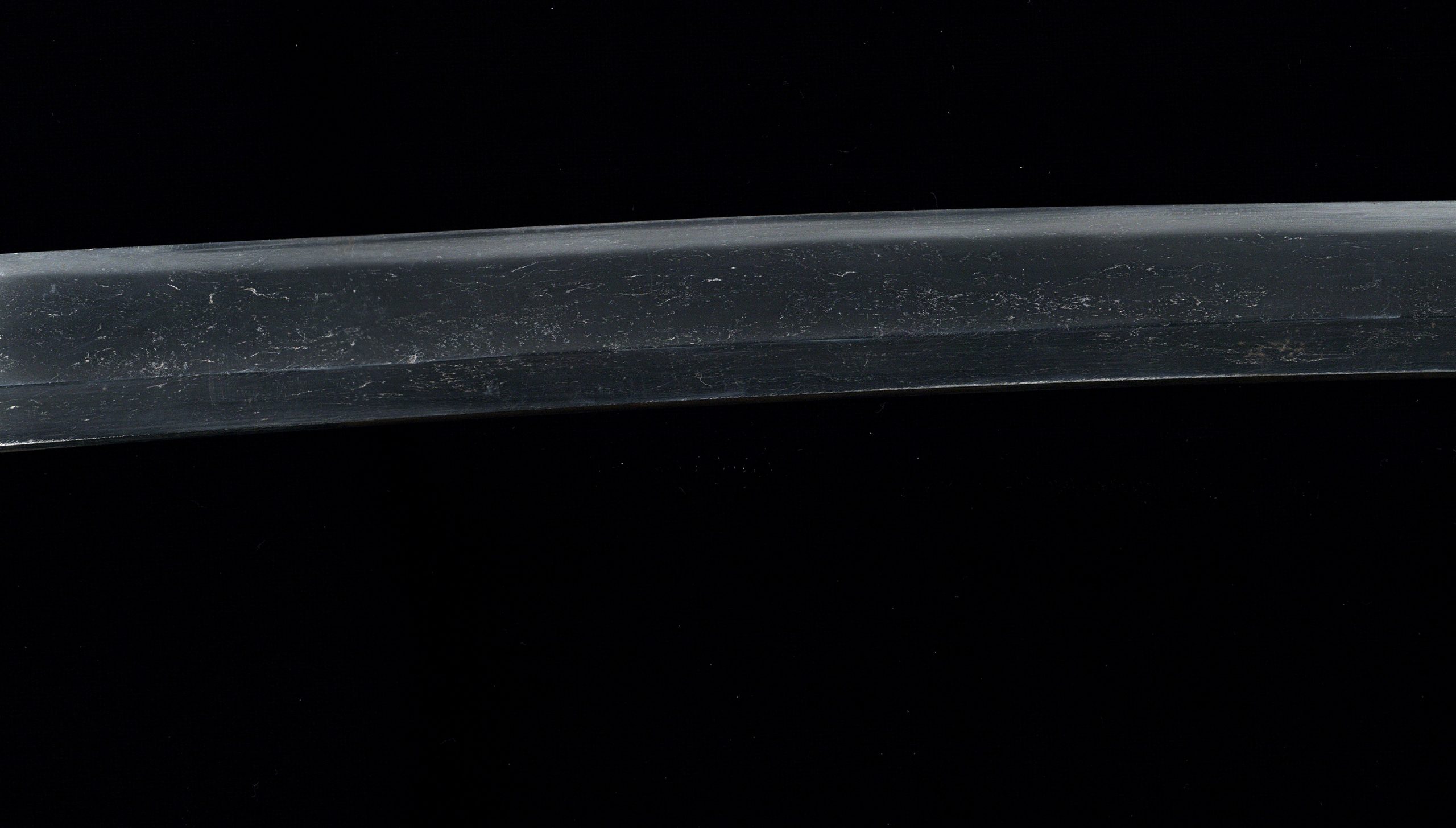
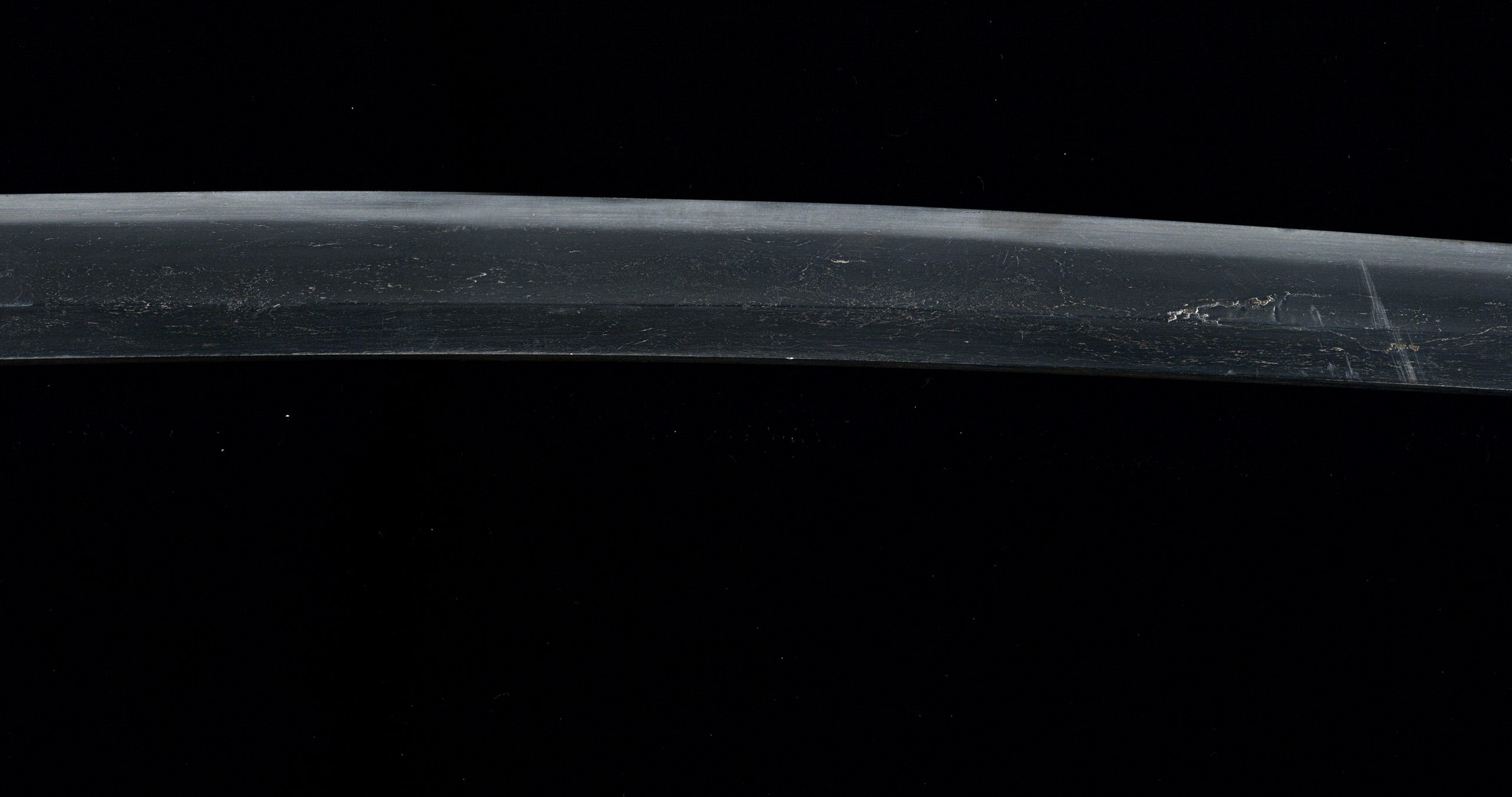
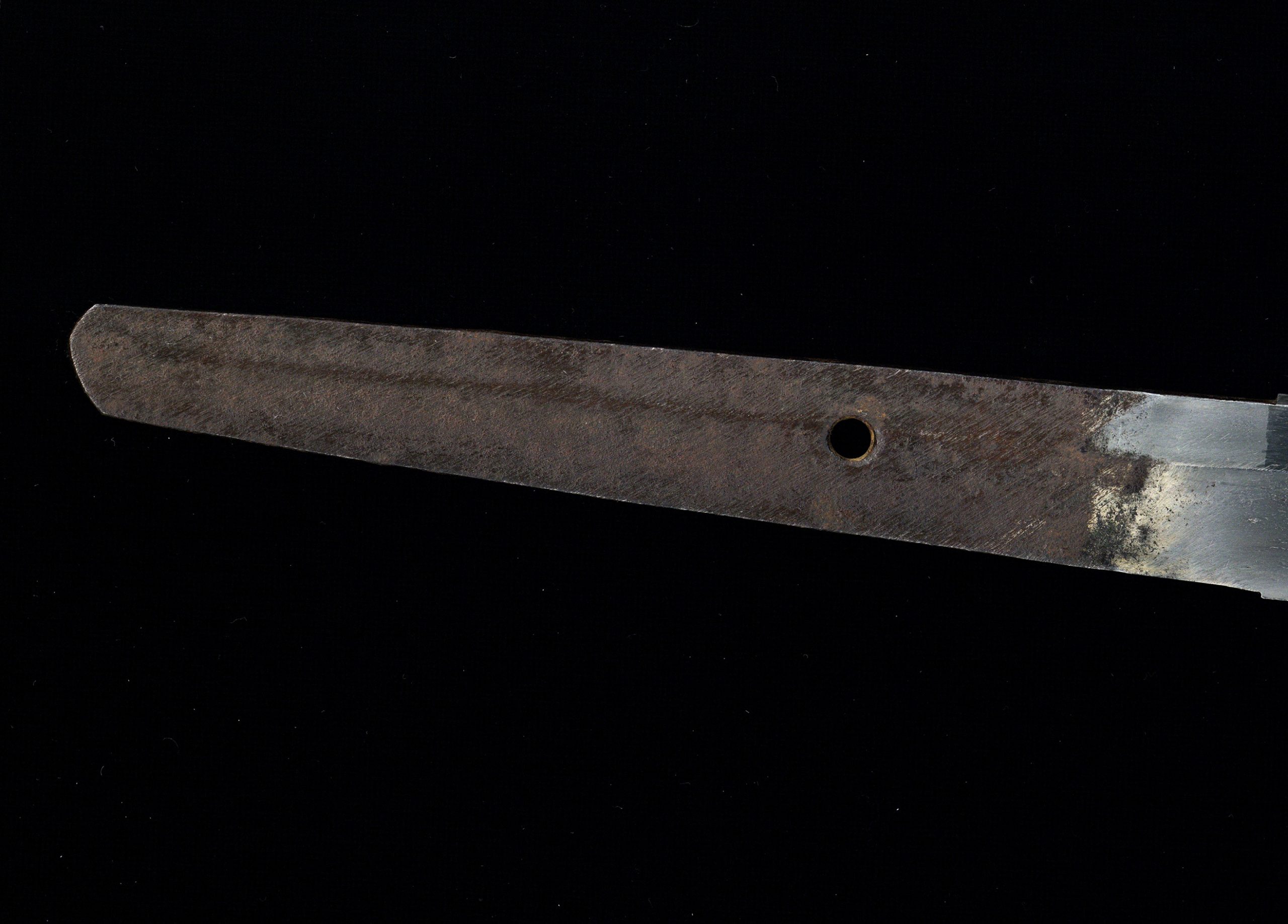
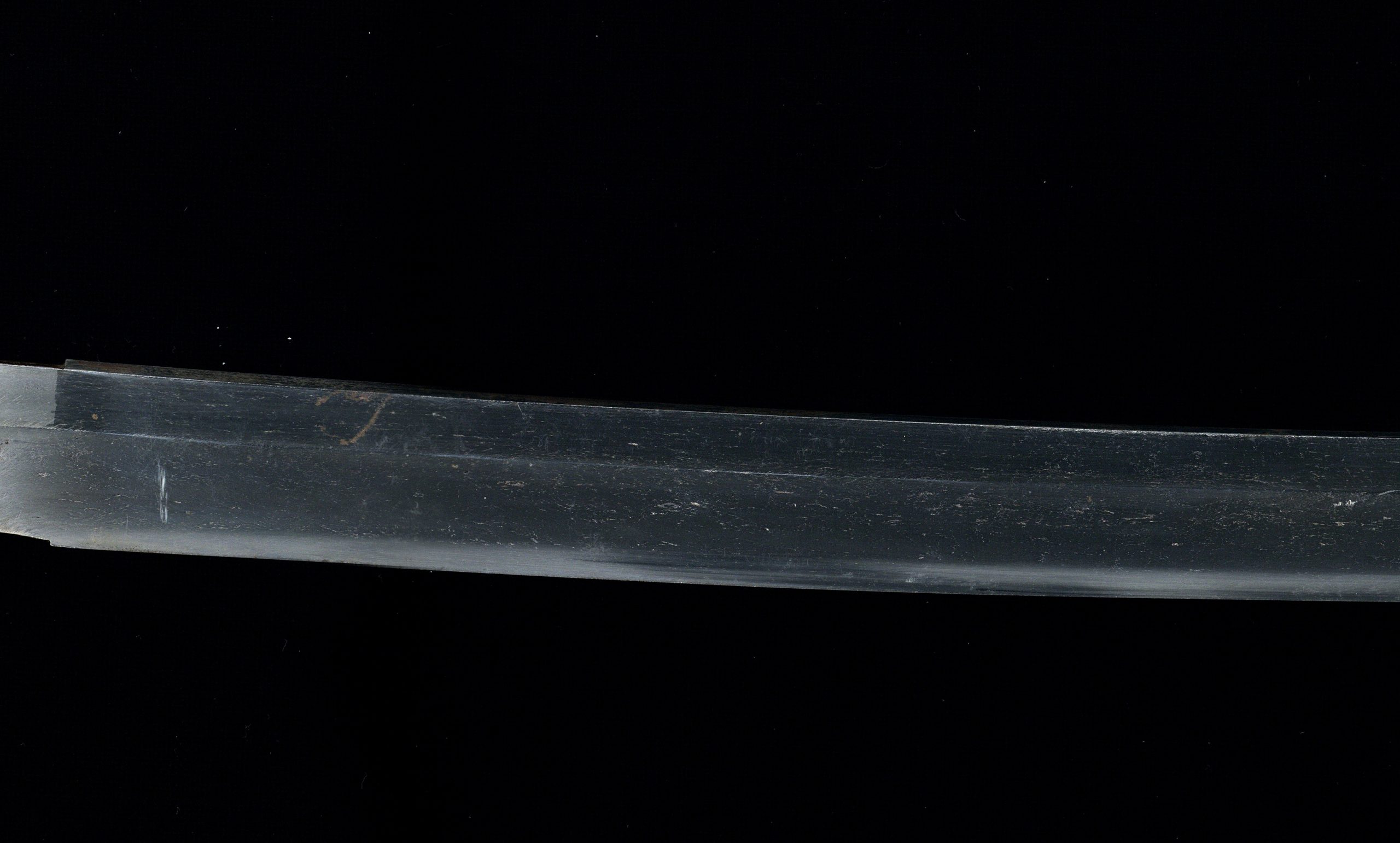
The blade, unsigned, retains a slender and attractive sugata, with moderate sori and a compact kissaki. The nakago shows an old patina consistent with the age of the piece and a single mekugi-ana. Normal signs of age and use are visible on the surface, fully compatible with an authentic sword of this period. The overall geometry remains pleasing, and the sword retains a very convincing presence both mounted and bare.
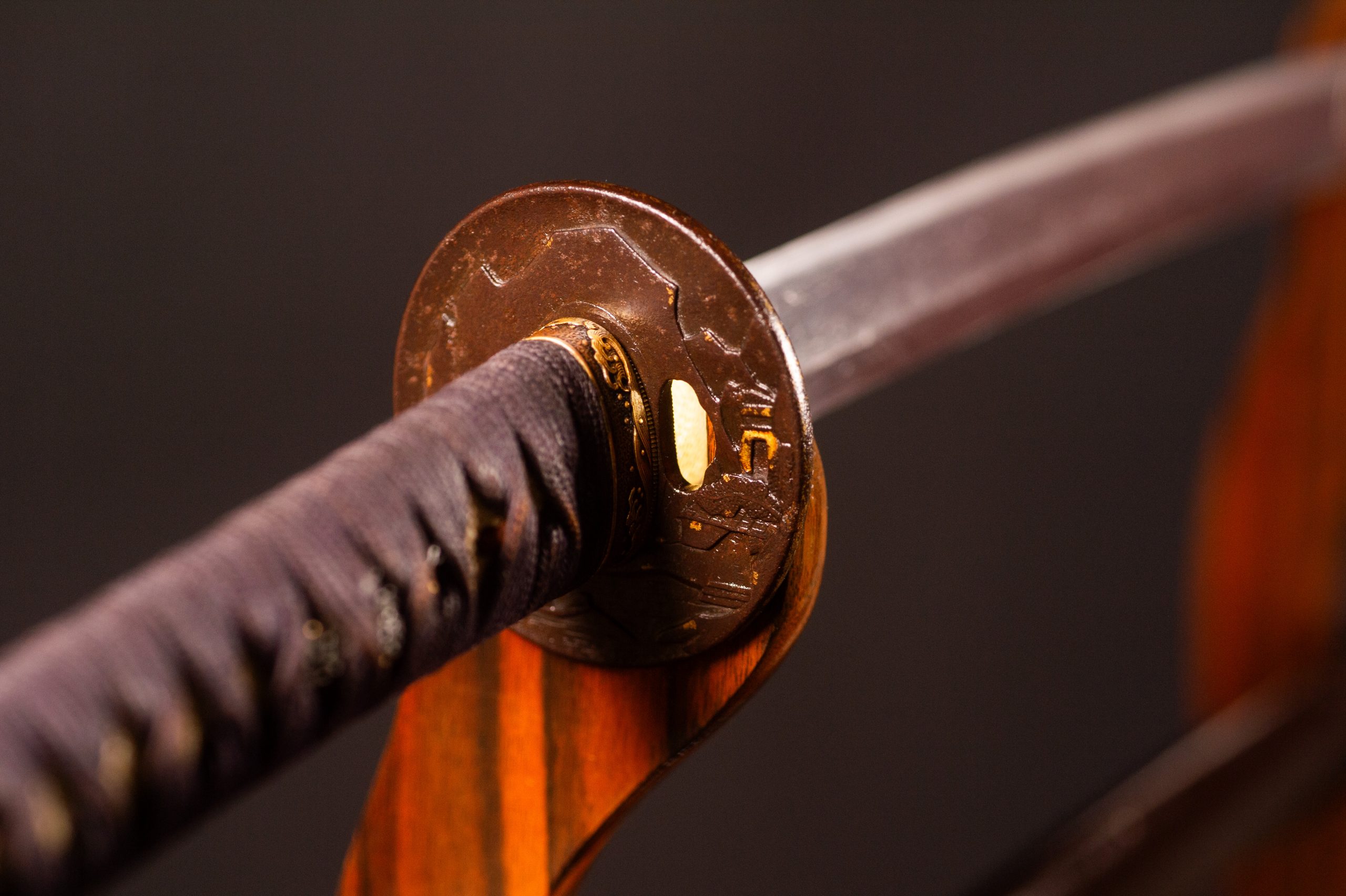
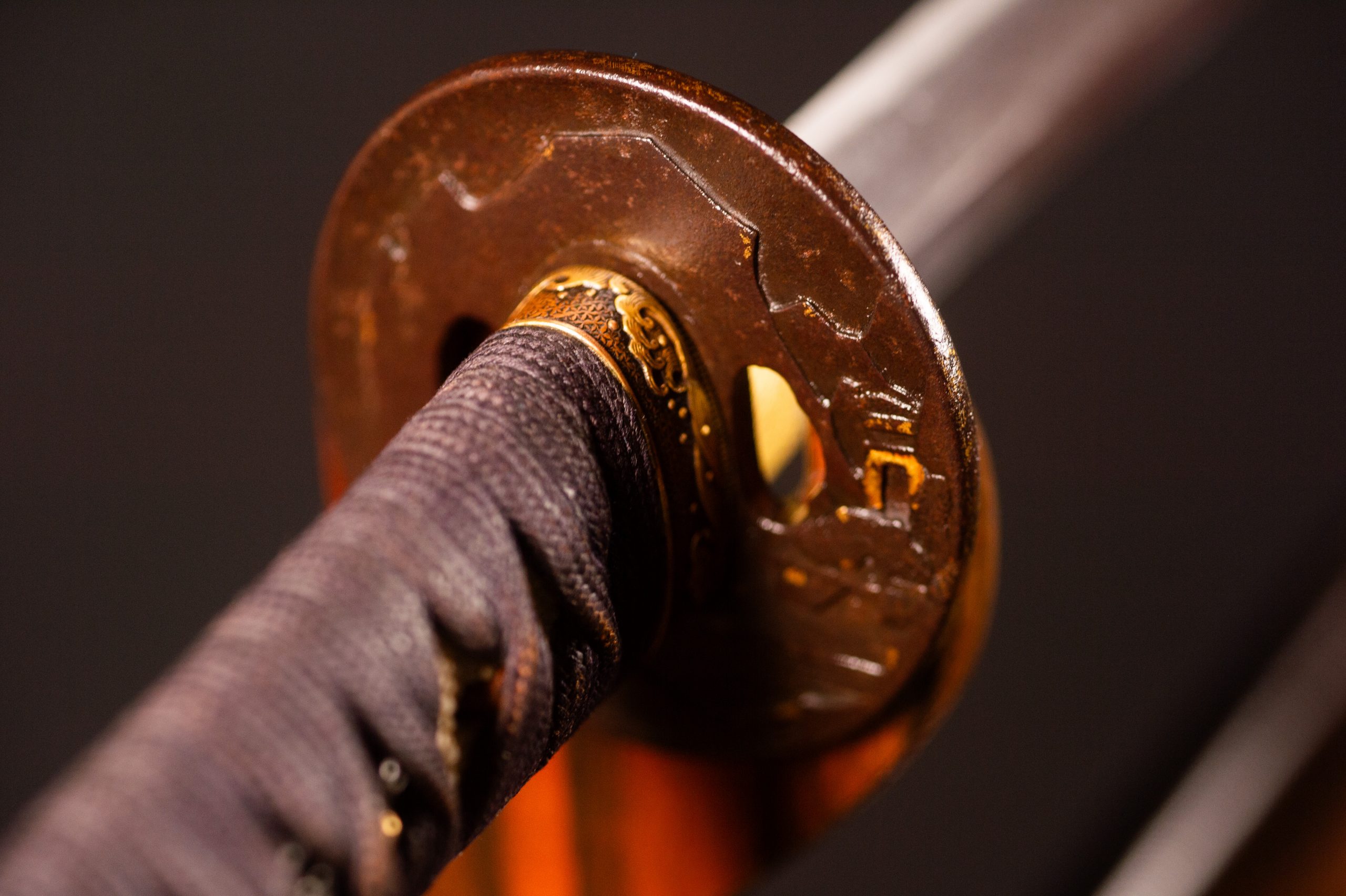
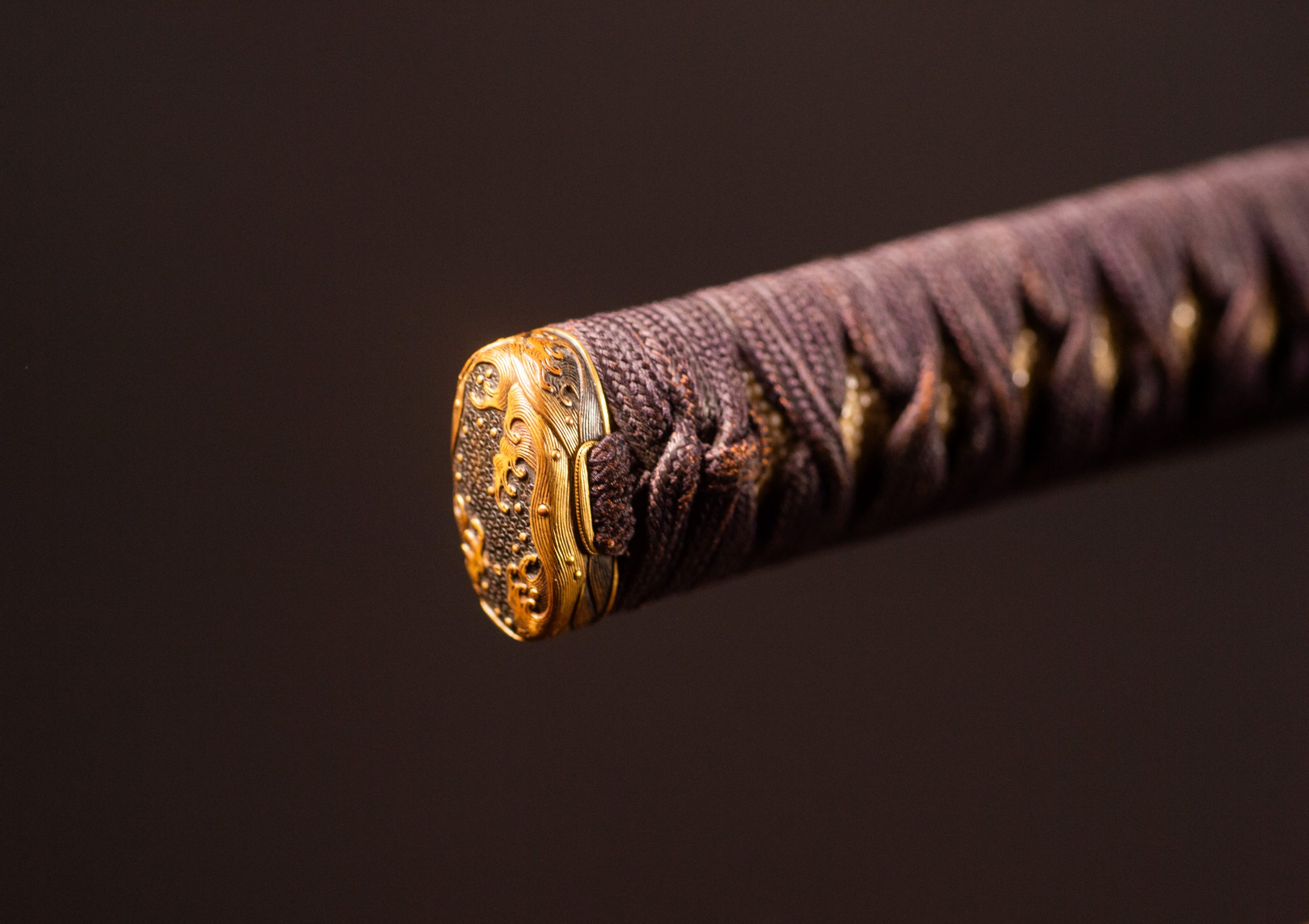
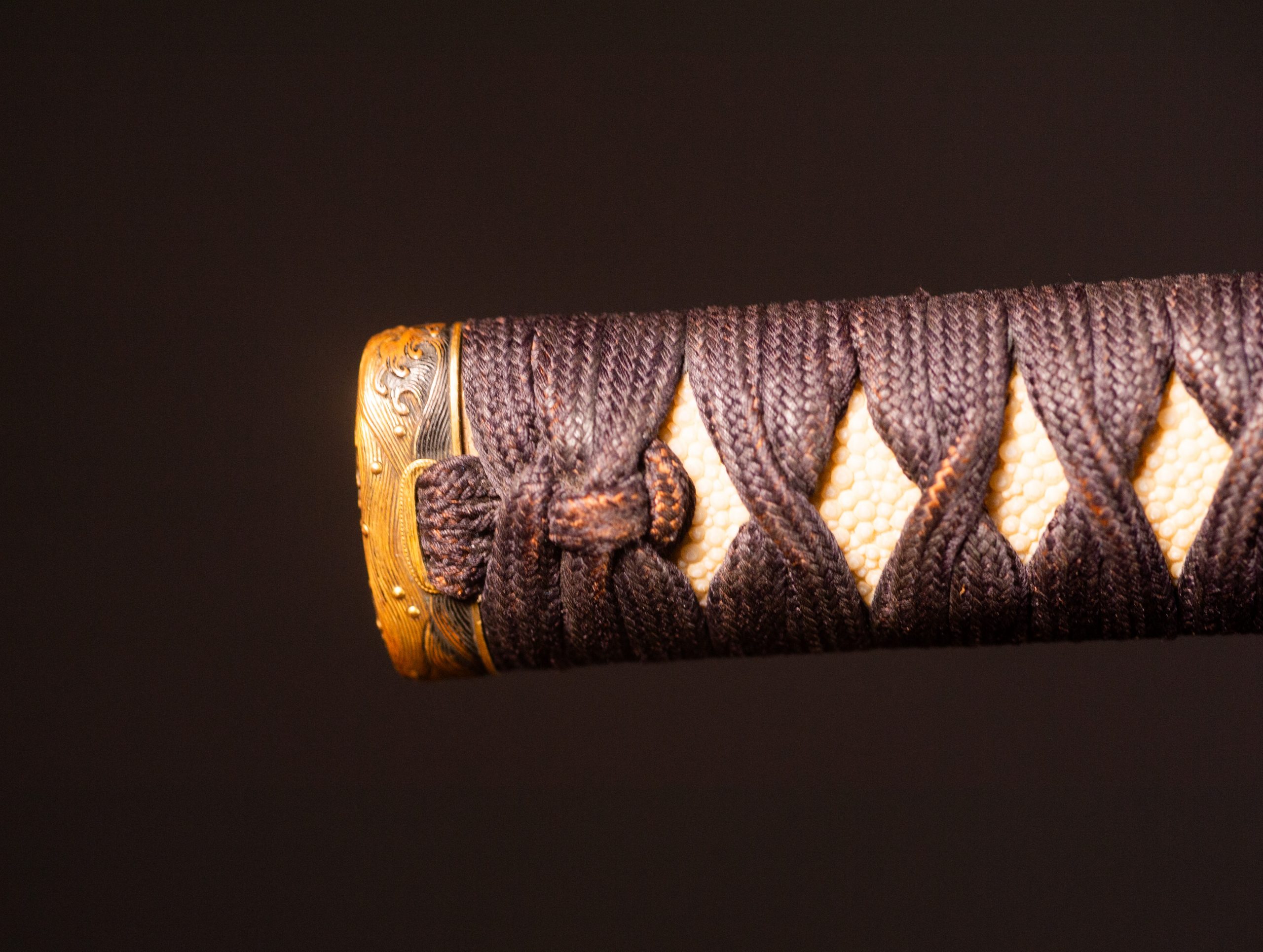
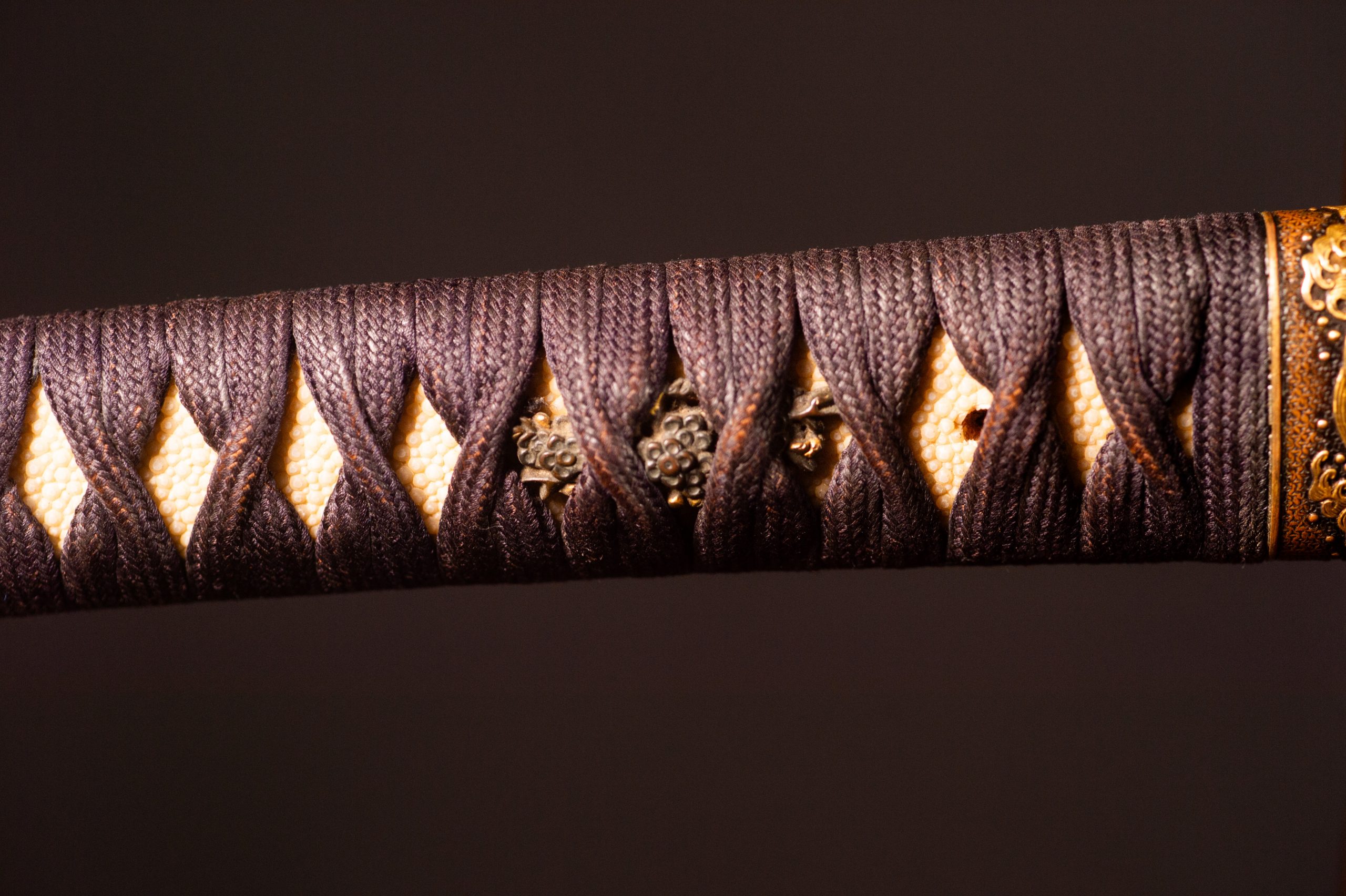
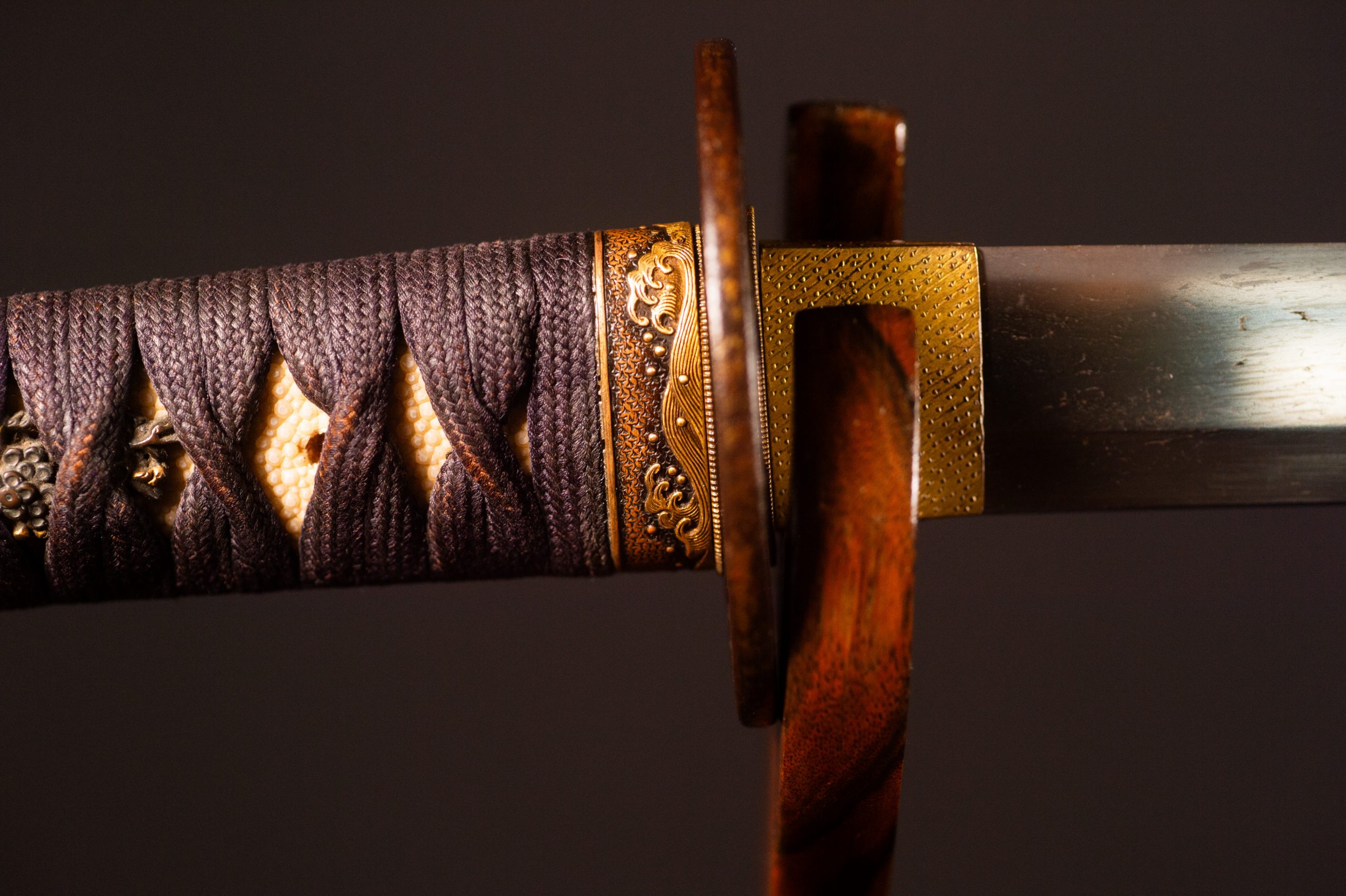
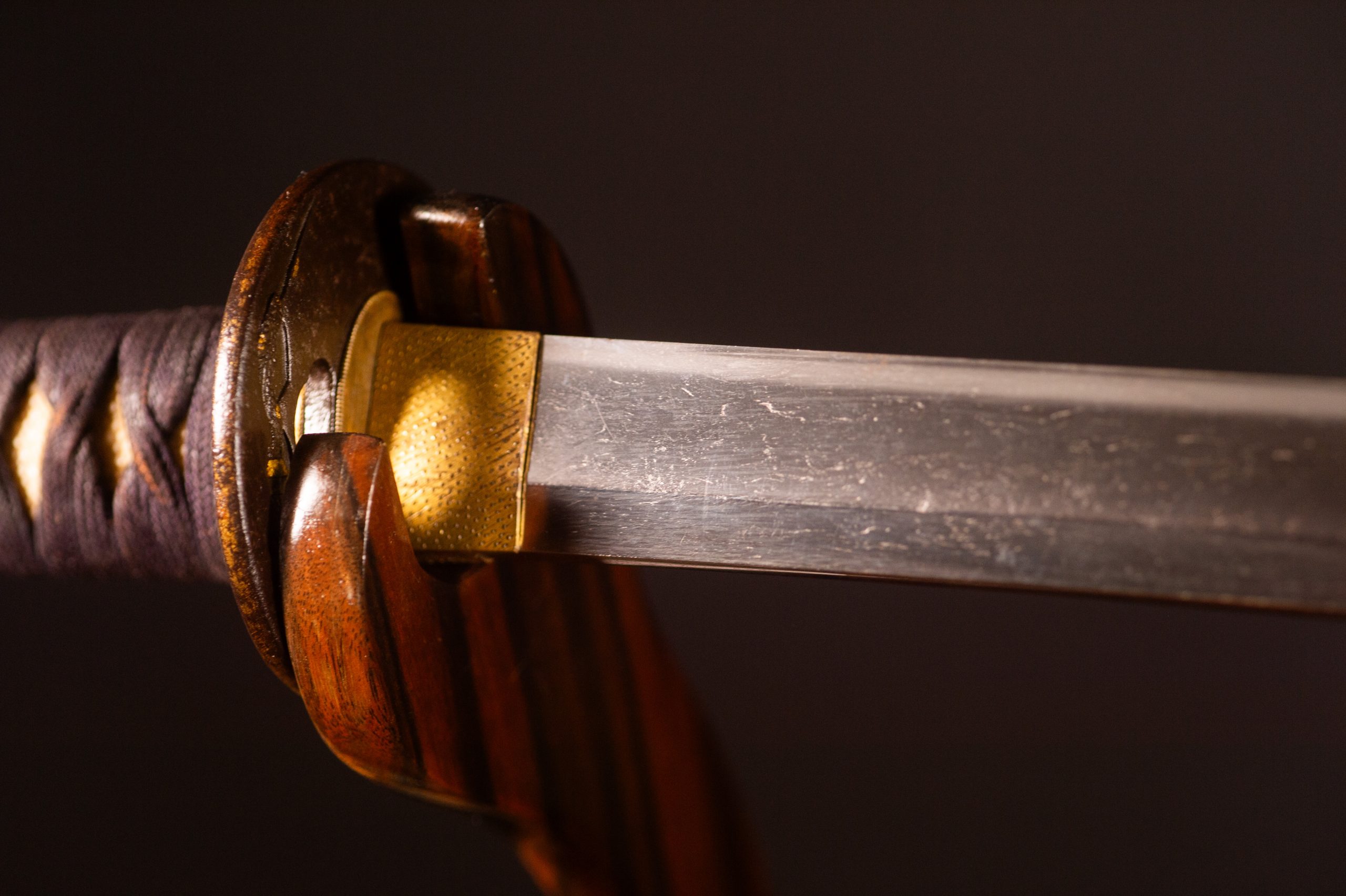
The koshirae complements the blade particularly well. The tsuka is finished in white samegawa and wrapped in dark brownish-purple tsuka-ito, creating a classic contrast of considerable elegance. The menuki, with vegetal motif, provide a discreet and well-integrated ornamental detail. The fuchi and kashira high quality, in bronce or shakudo with traditional relief decoration, visually elevate the mounting and reinforce its distinguished character.
The iron tsuba, of rounded form, maintains a restrained and balanced aesthetic well suited to the ensemble. The habaki, with gilt finish and punched texture, provides a refined decorative accent at the base of the blade. The black lacquer saya completes the mounting with a clean and elegant appearance, accompanied by an old sageo in greenish and ochre tones that adds visual depth and character.
This is an antique katana of direct and noble presence, supported by a complete mounting of notable aesthetic coherence. An especially appealing piece for collectors who value authenticity, harmony of ensemble, and the quiet beauty of a Japanese sword from the Edo period.
Technical sheet
Old Japanese katana
Period: middle Edo, 17th–18th century
Signature: mumei
Nakago: one mekugi-ana, old patina
Curvature: moderate
Koshirae: complete
Saya: black lacquer
Tsuka: white samegawa with dark tsuka-ito
Menuki: vegetal motif
Fuchi-kashira: relief decoration, gilt tone
Tsuba: iron, rounded form
Habaki: gilt finish
Document: Japanese torokusho


