



Description
ITEM DESCRIPTION:
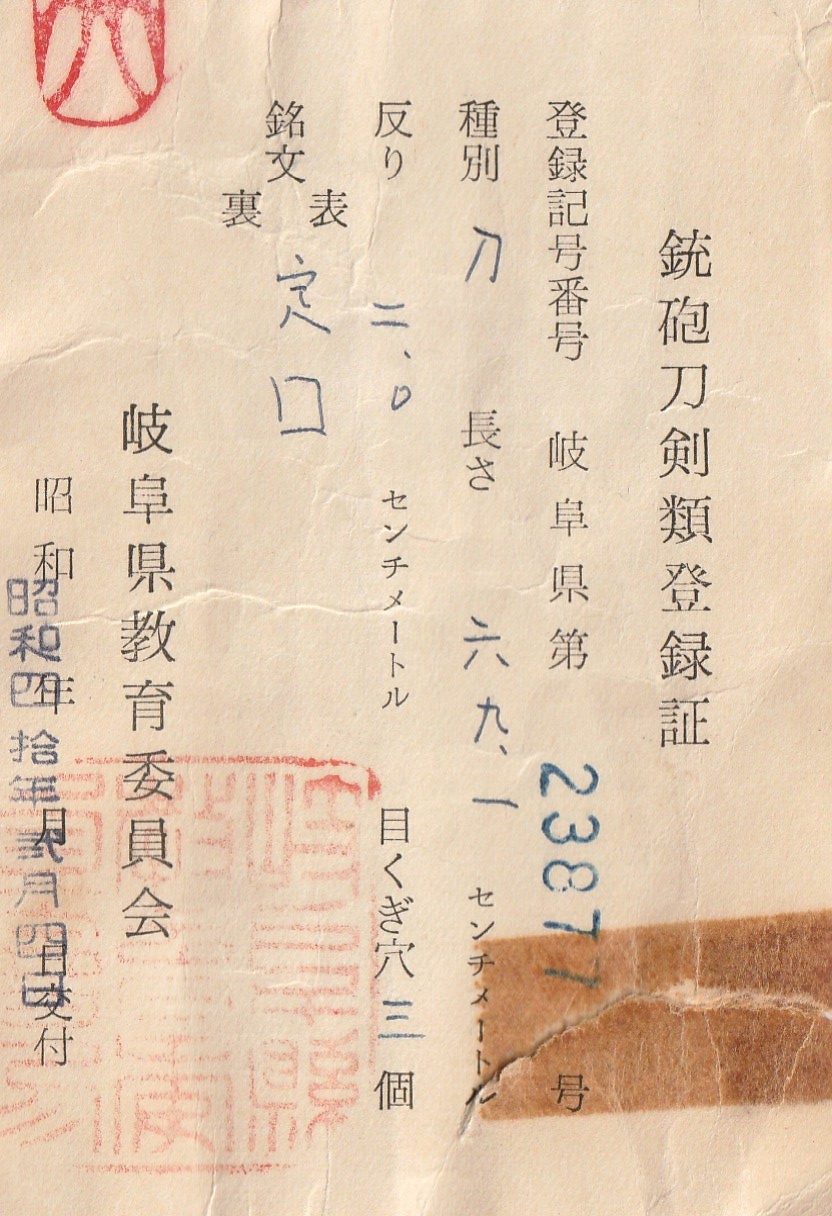
Comes with kimono or cotton bag. Comes with certificate of Supein Nihonto. Comes with copy of Tokorusho.
Muromachi period
Overview
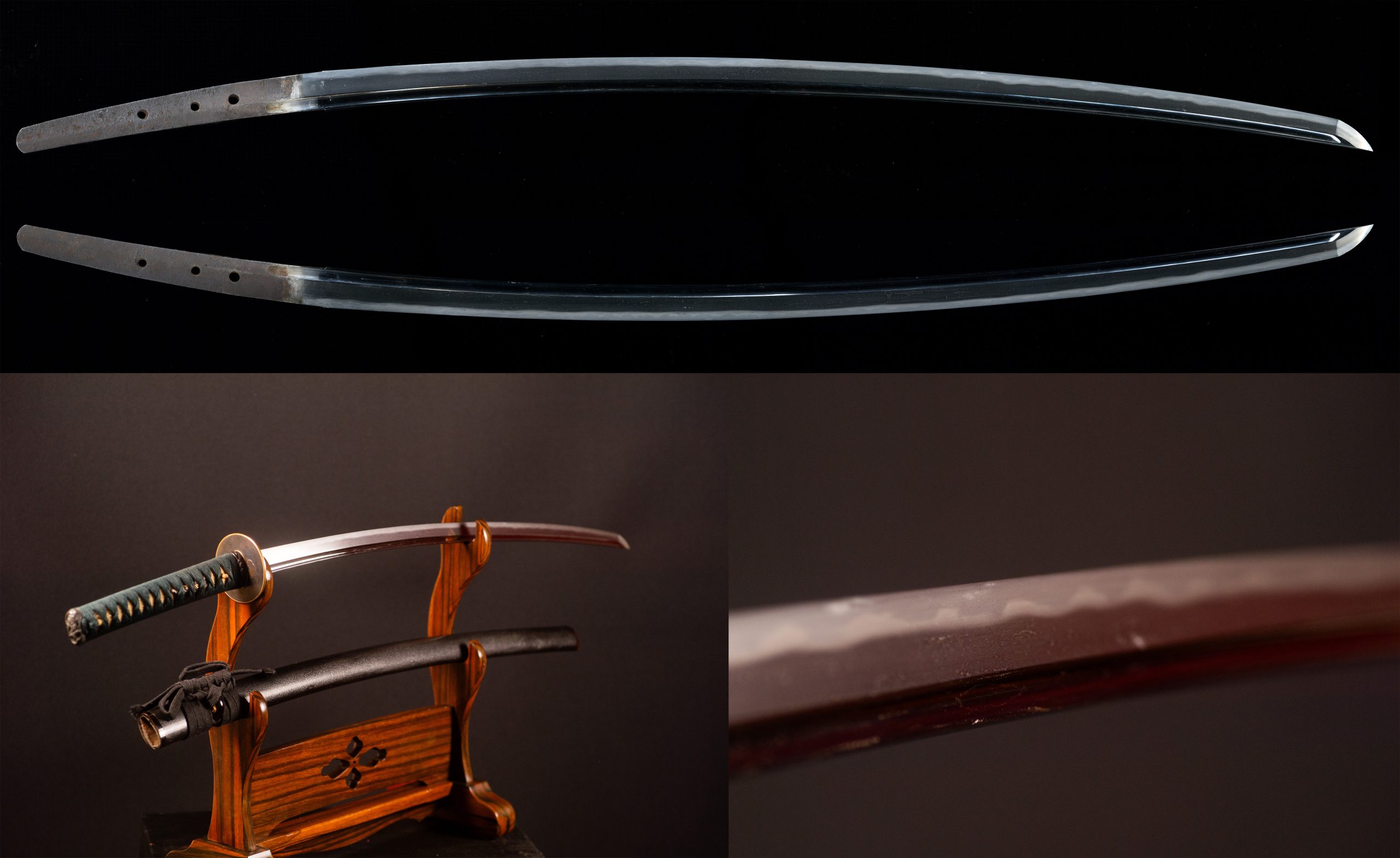
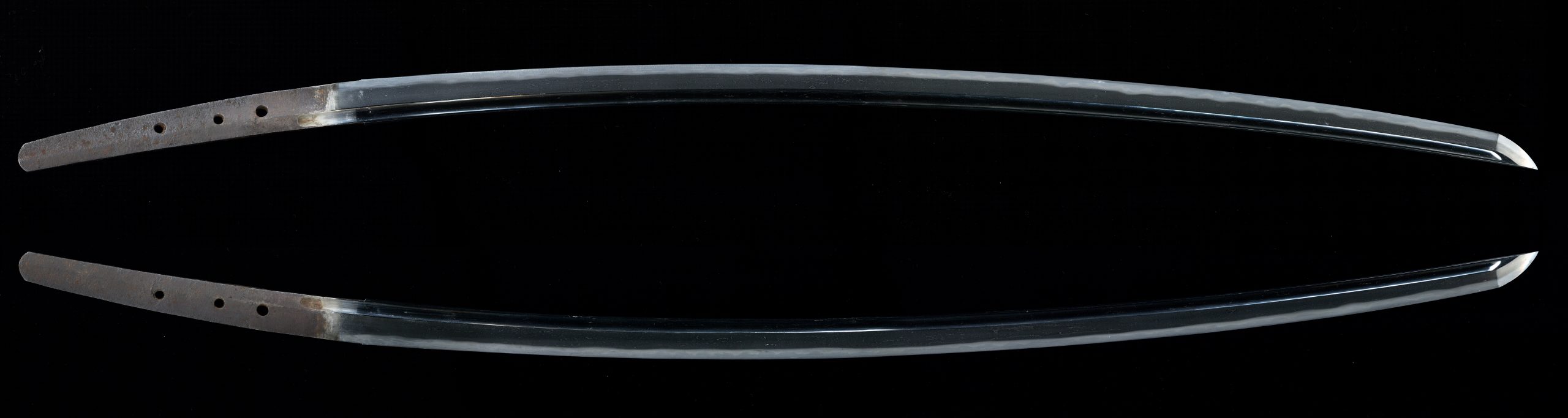
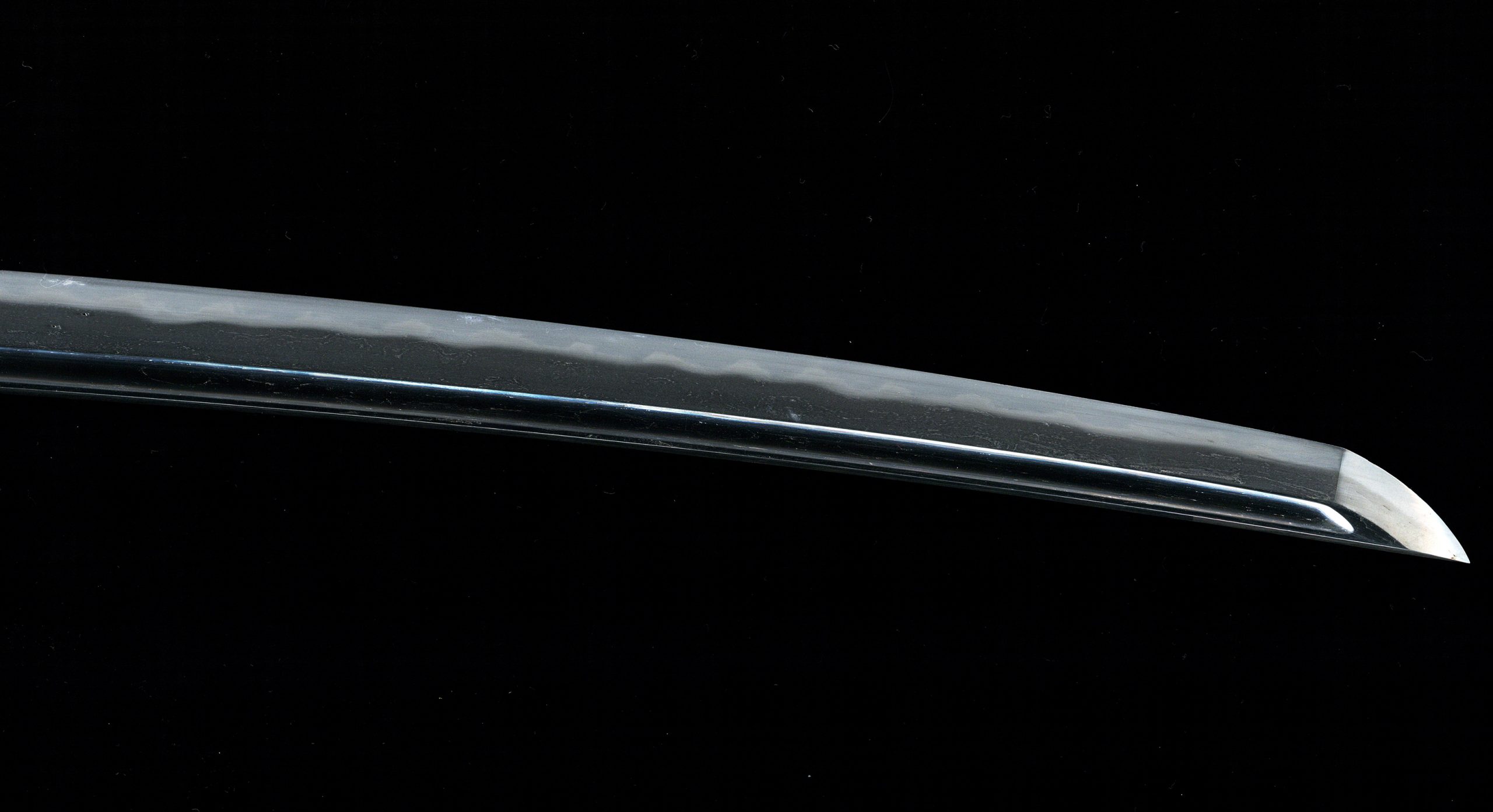
This mumei katana, attributable on stylistic grounds to the Muromachi period, presents a distinctly old and highly convincing sugata, with an elegant and functional overall configuration entirely consistent with a practical koto blade. The proportions are particularly attractive, defined by a long nagasa of 69.1 cm and a generous sori of 2.0 cm, giving the sword a fluent, well-balanced silhouette with strong classical character. There is no stiffness here, nor the impression of later, more contrived geometry; the blade reads immediately as an old sword, with proper curvature, mature proportions, and the quiet authority expected from an authentic early piece.
Blade
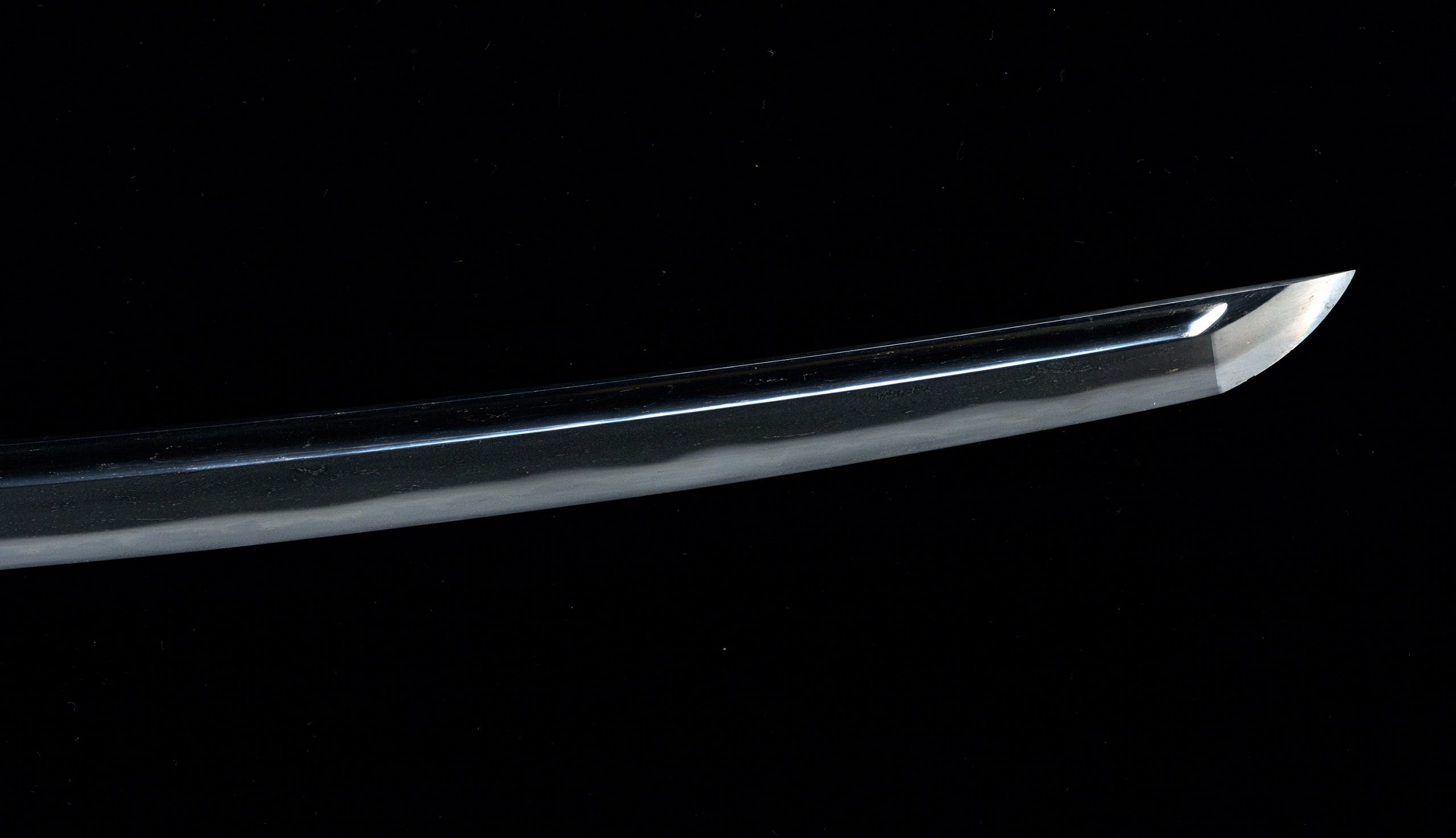
The blade shows an overall slender and well-balanced construction, with a refined profile that reinforces its old appearance. The kissaki is properly proportioned and sits naturally within the flow of the blade, avoiding any exaggerated or overly assertive impression. The overall sugata is one of the sword’s strongest points, combining length, curvature, and proportion in a manner that remains highly appealing both academically and commercially.
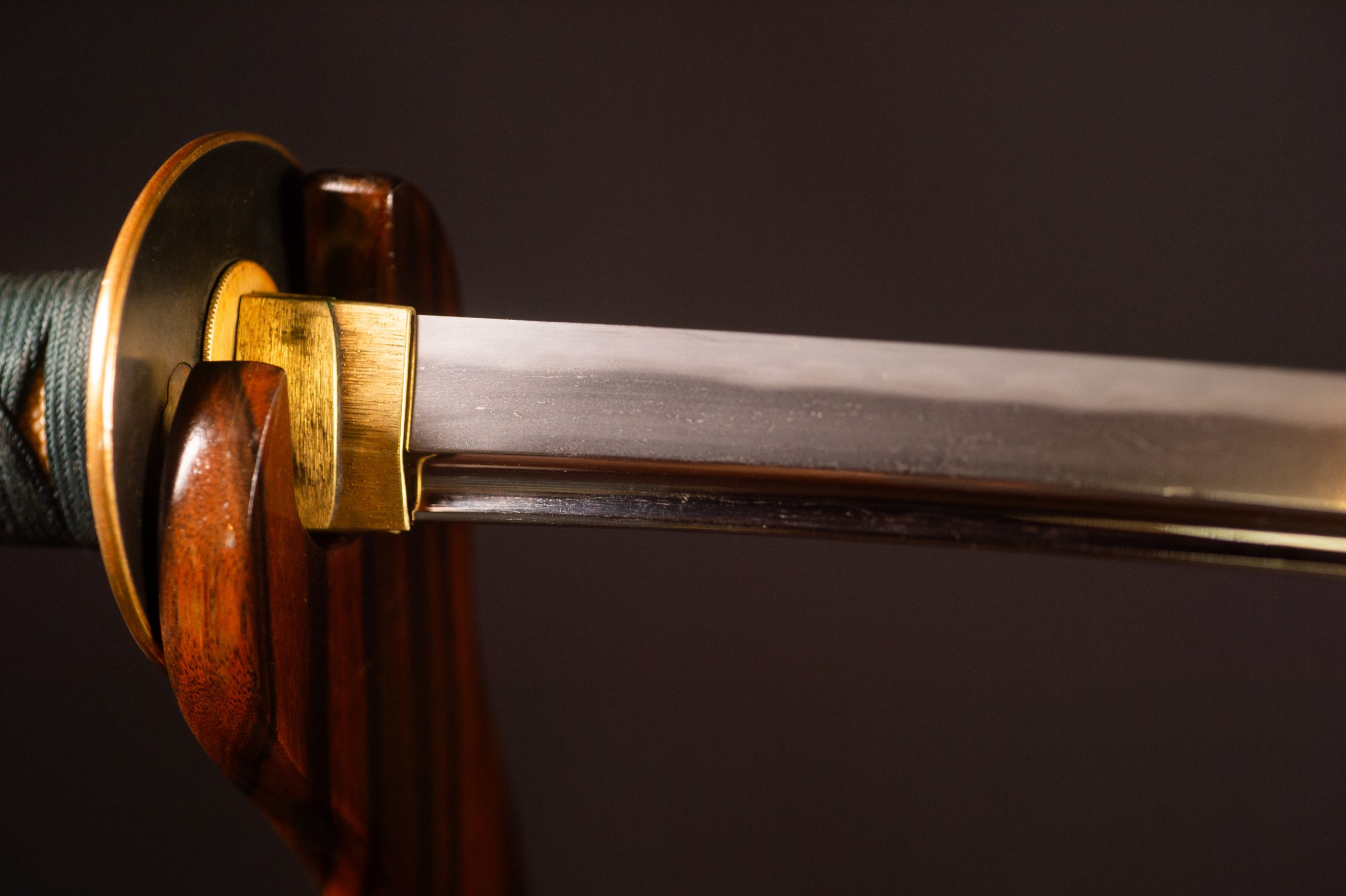
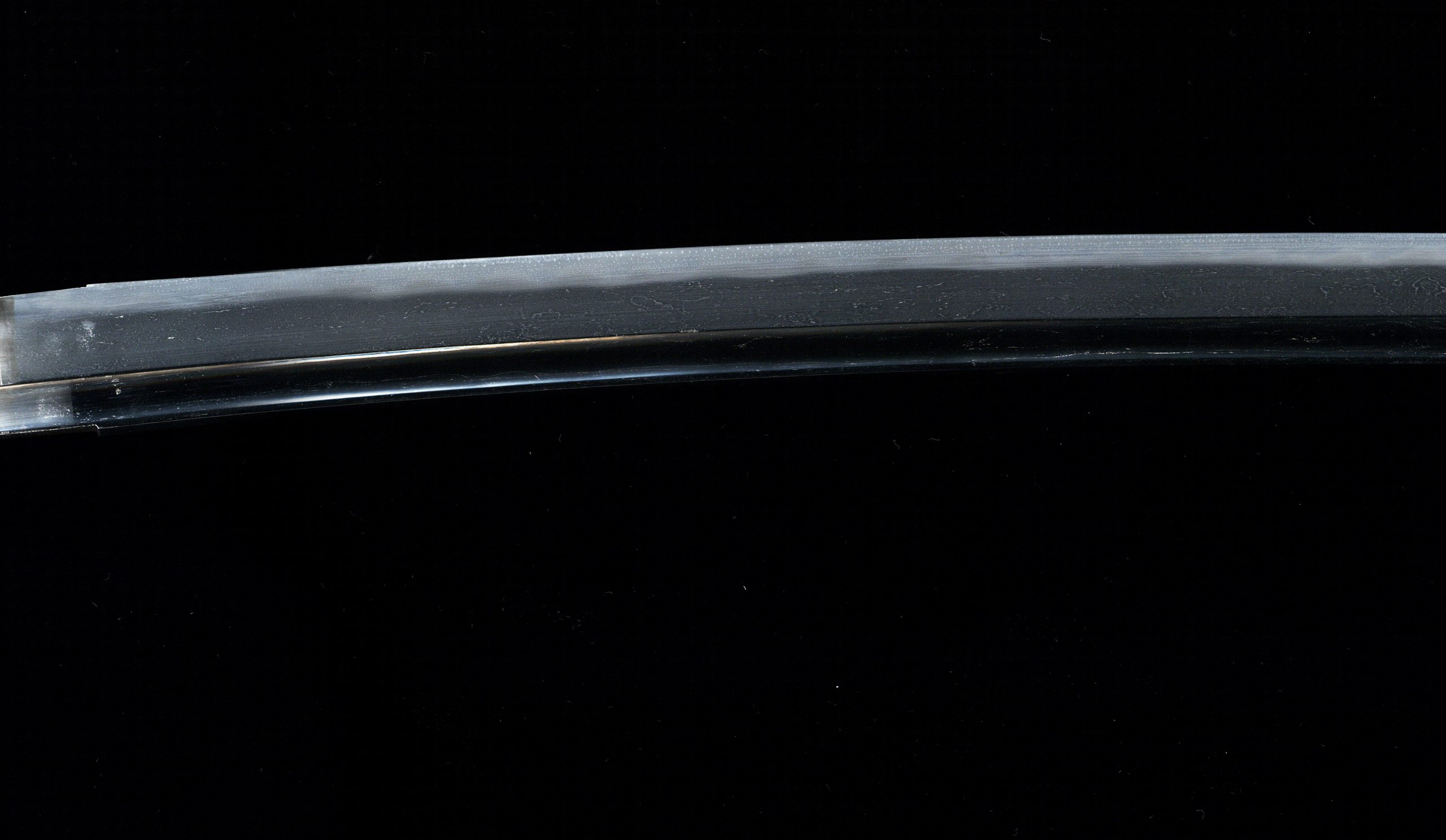
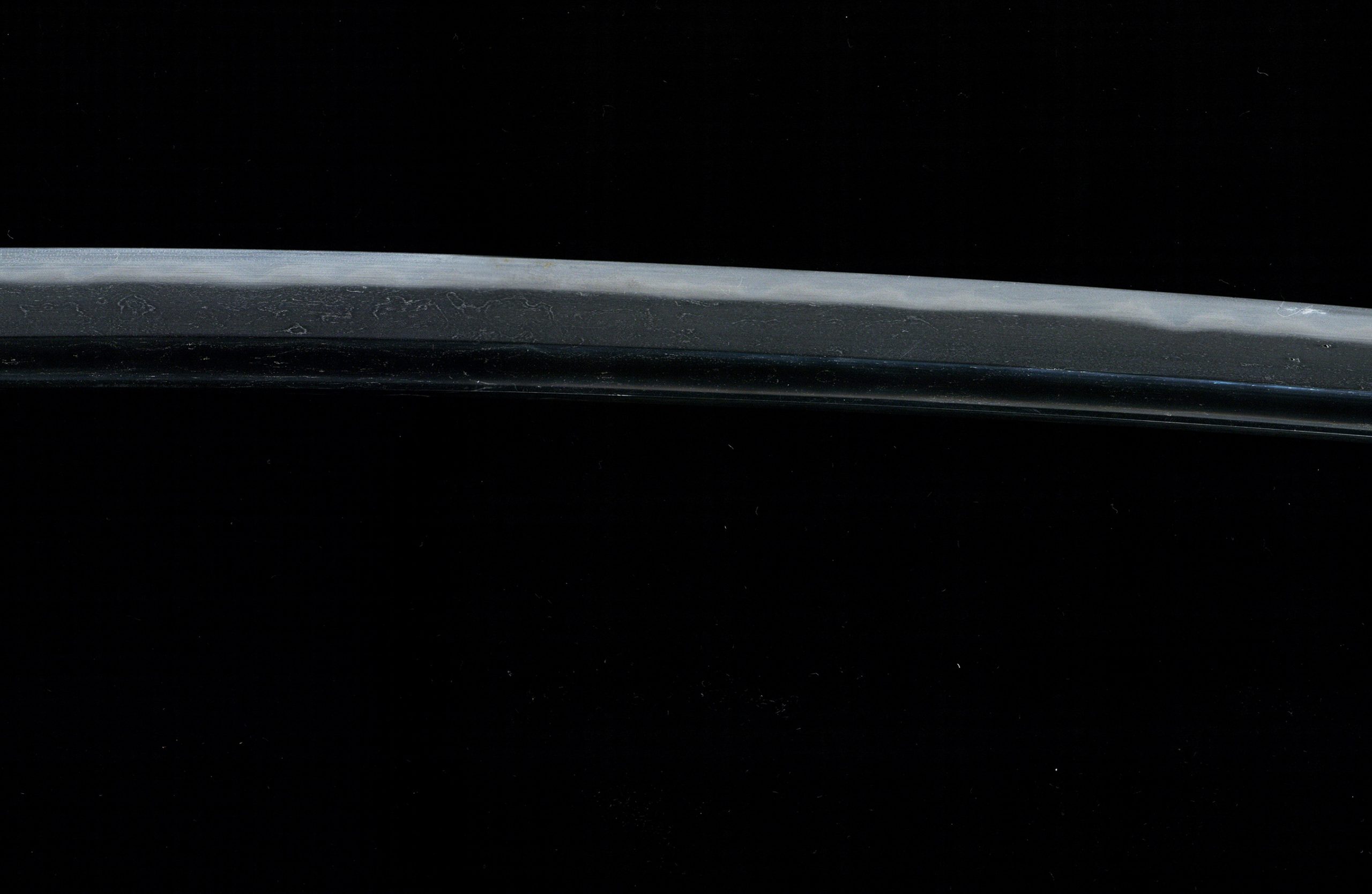
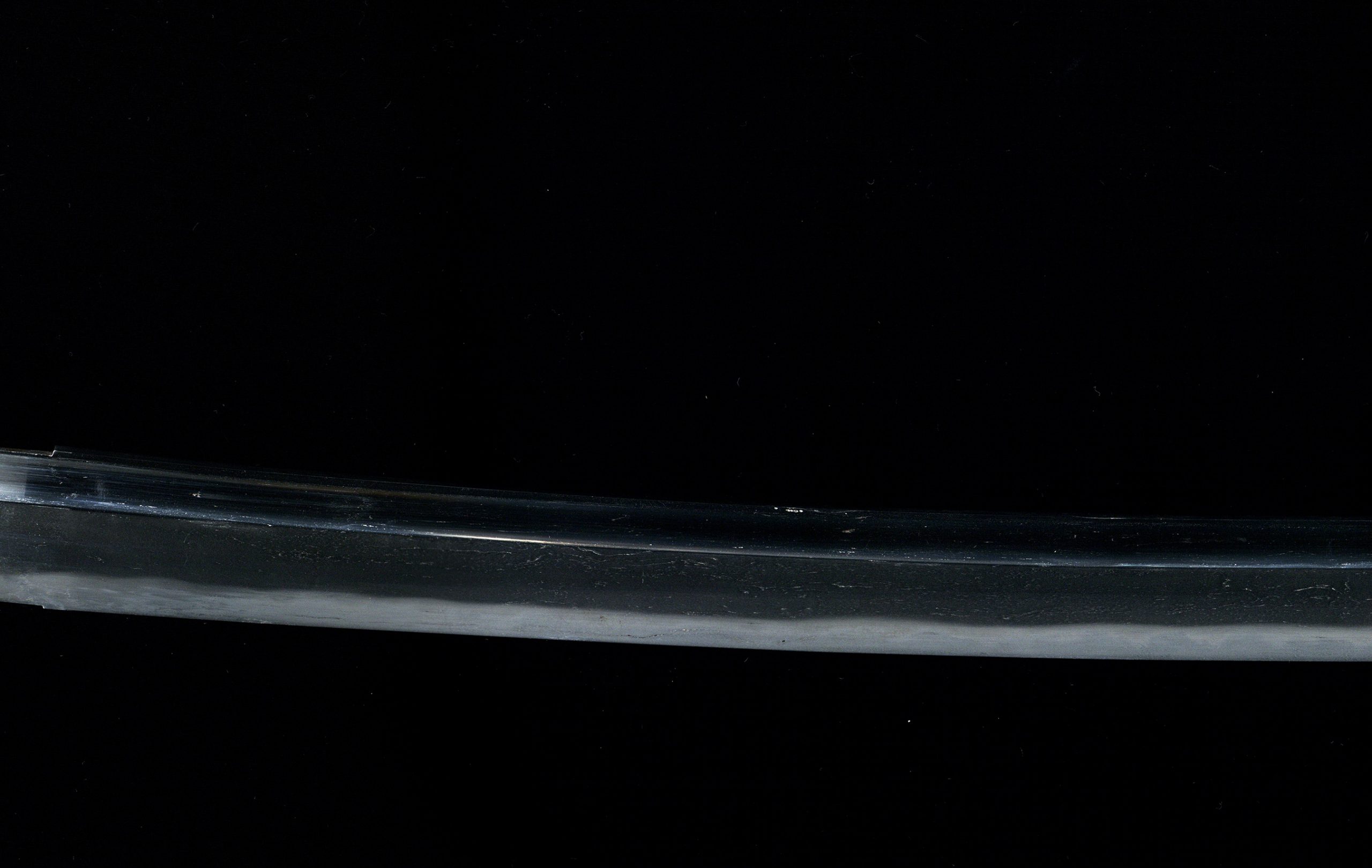
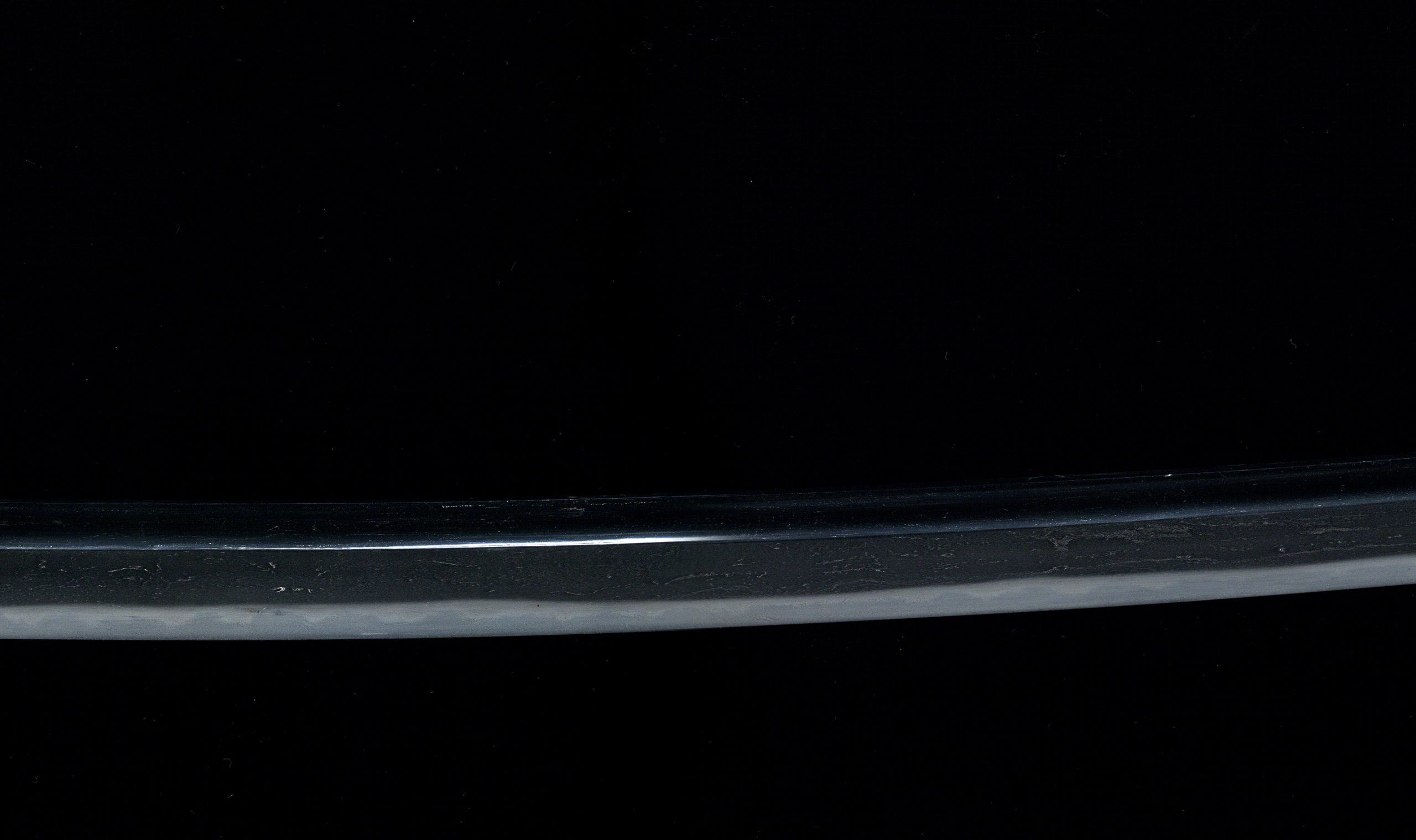
The hamon appears as a suguha-chō with slight natural undulation and minor variations along the yakiba, enough to prevent it from reading as flat or lifeless while preserving a restrained and martial character. This is not an ostentatious temper pattern, nor one designed for decorative effect. Its appeal lies precisely in that controlled, disciplined appearance, which suits the blade extremely well.
The steel surface retains a convincing old texture, and the blade carries sufficient visual activity to remain engaging at close inspection. The jihada is not fully legible in every photograph, but the surface does not appear flat or inert; on the contrary, it preserves the kind of lived-in texture and visual depth expected from an older blade. The polish allows the blade’s construction and hardening pattern to be appreciated clearly enough without masking its age or over-presenting the steel.
Nakago
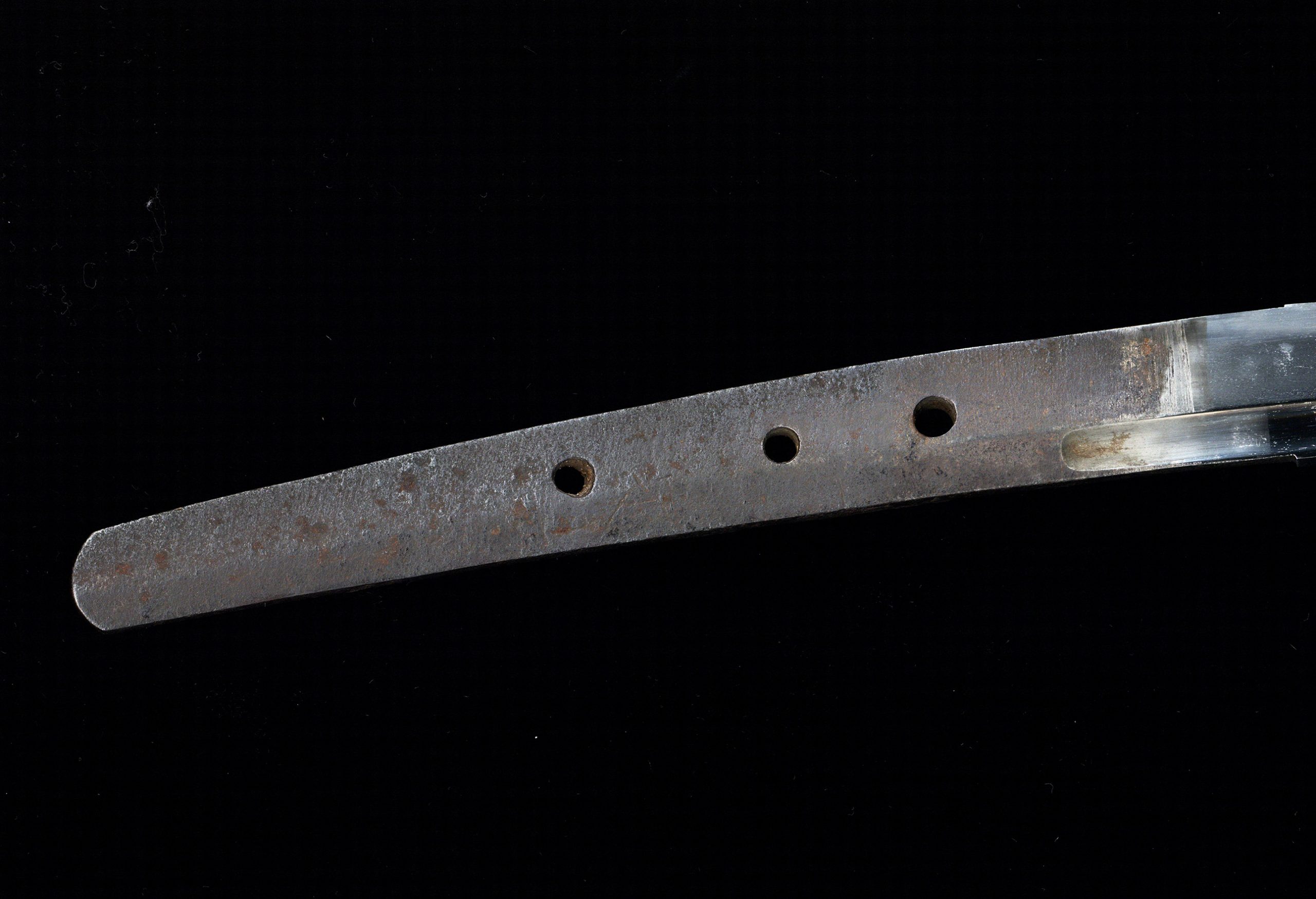
The nakago carries an appropriate dark patina and shows three mekugi-ana, an important detail that strongly supports the impression of a blade with real age and a history of remounting over time. The absence of a signature is entirely consistent with an old blade of this kind and should be understood within that context. What matters here is not the lack of mei, but the strength of the blade’s morphology: the sword convinces through its sugata, its curvature, its hardened edge, and the unmistakable visual presence of an authentic old Japanese sword.
Koshirae
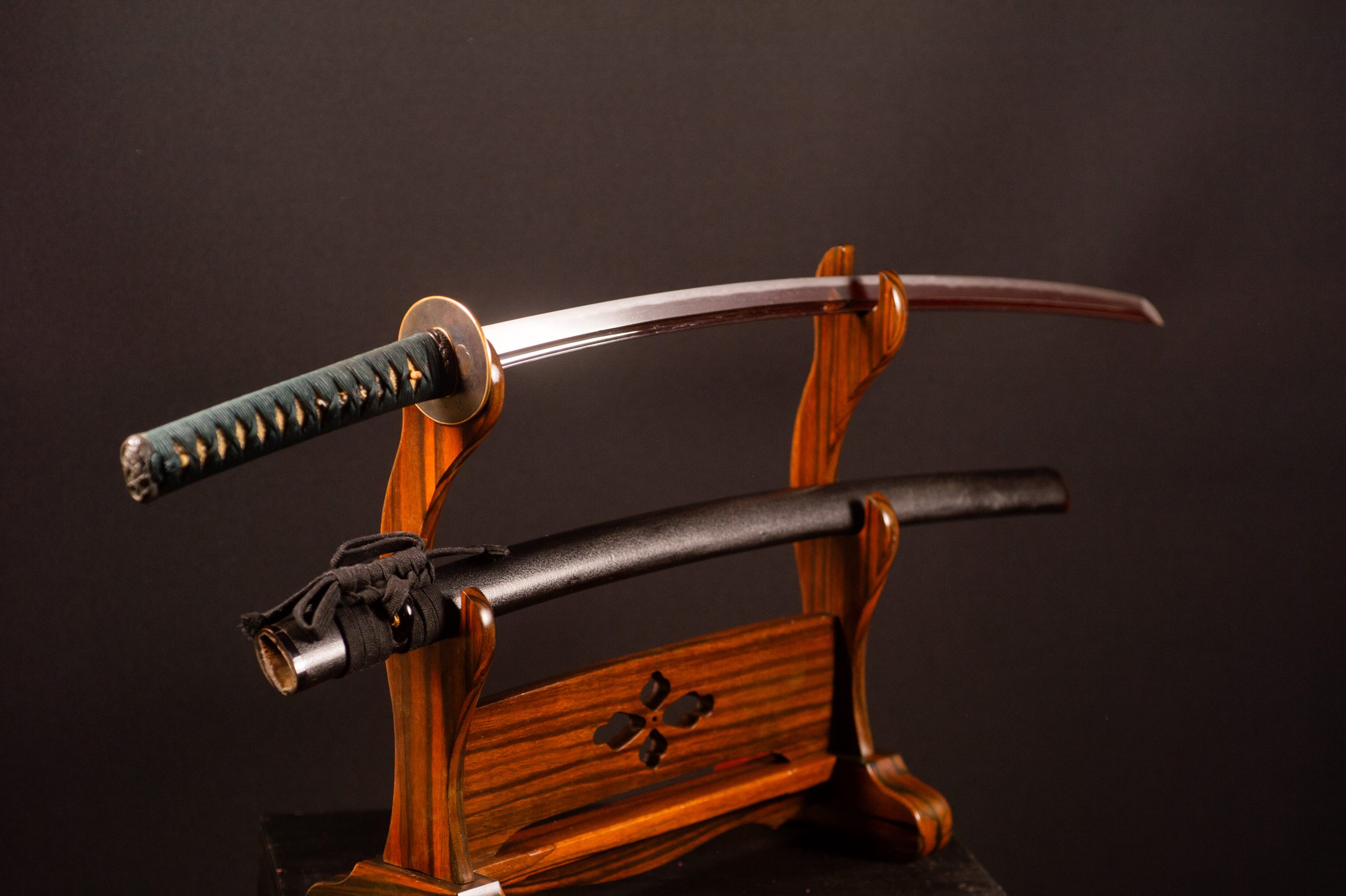
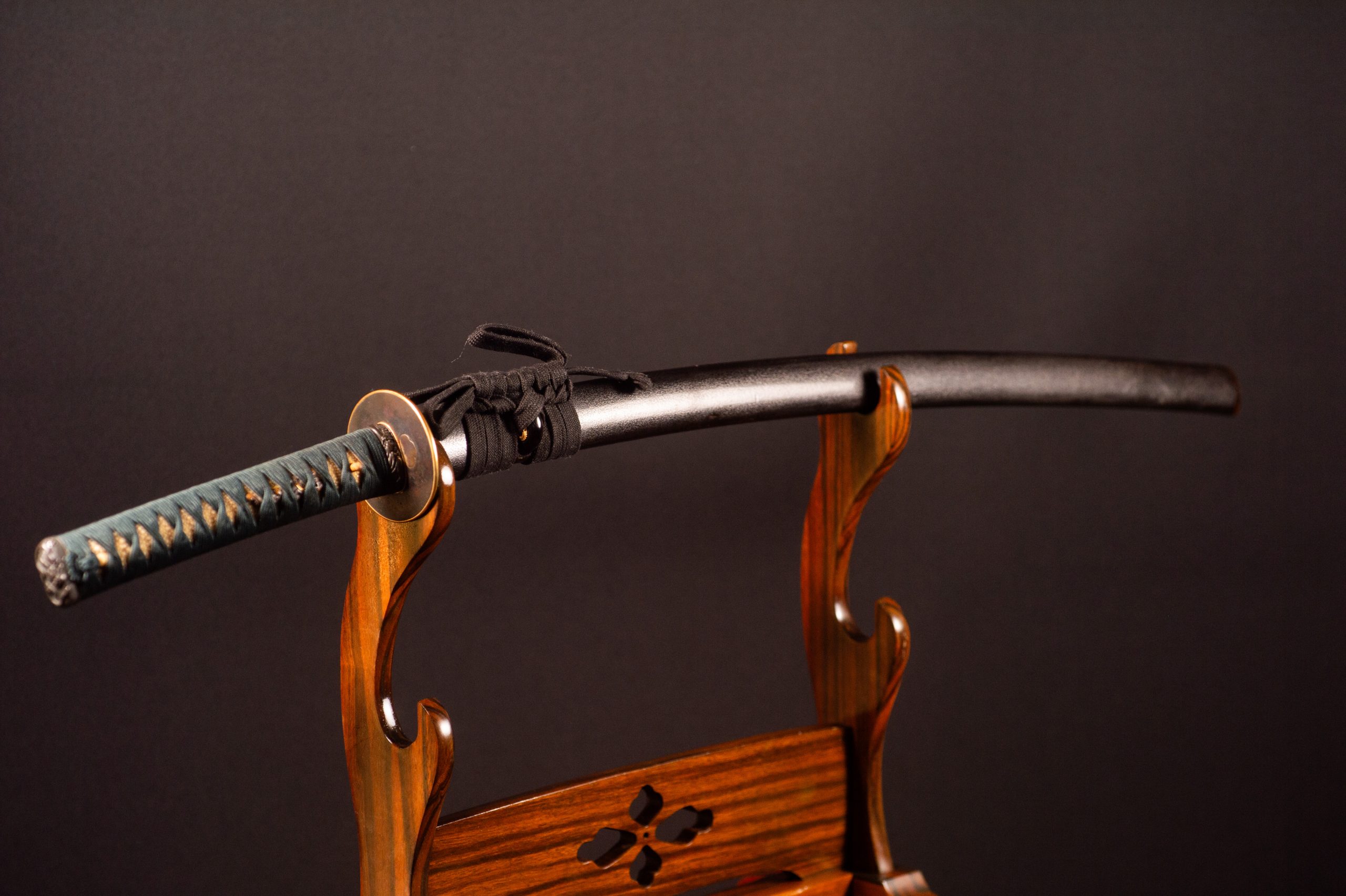
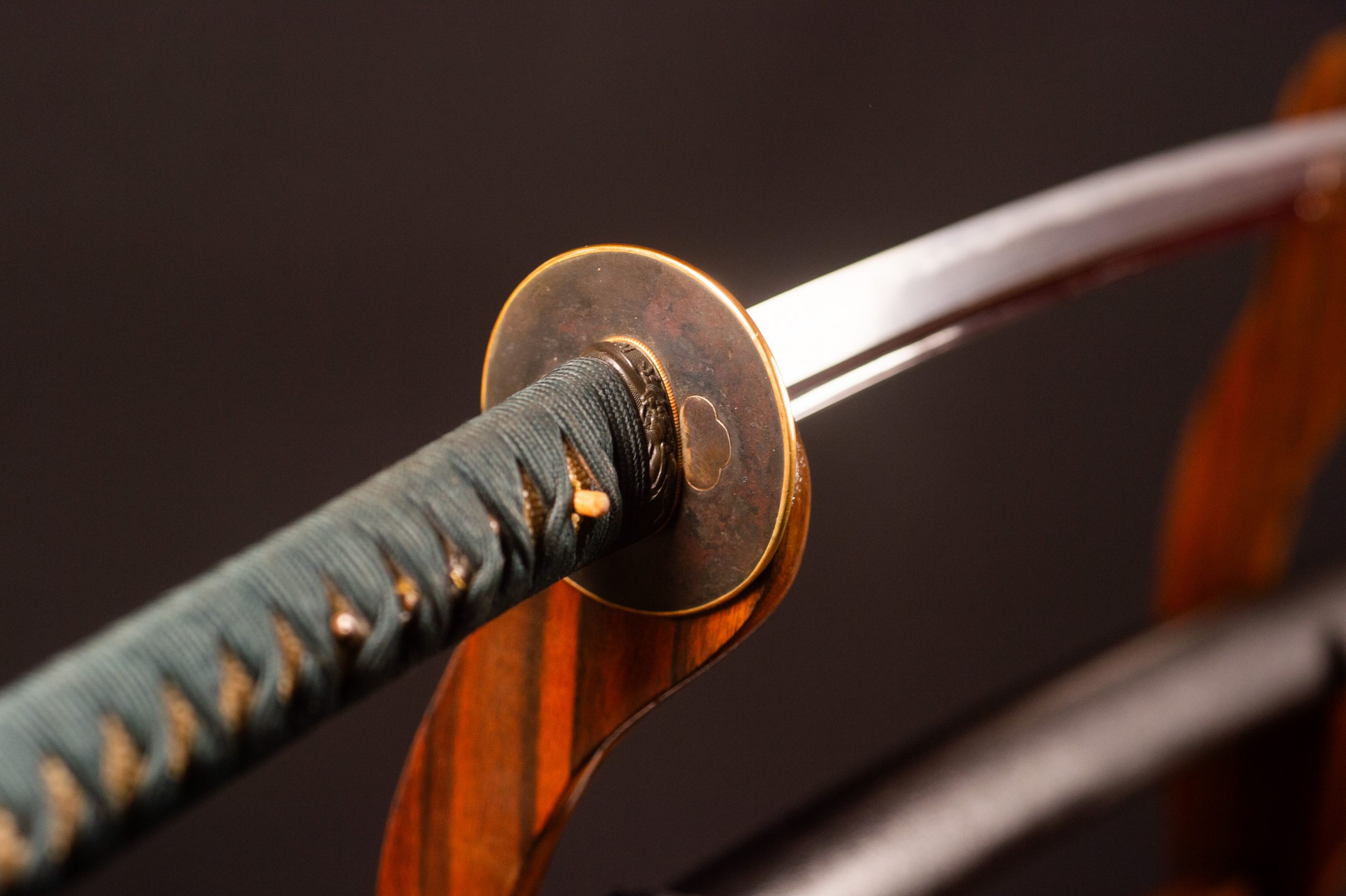
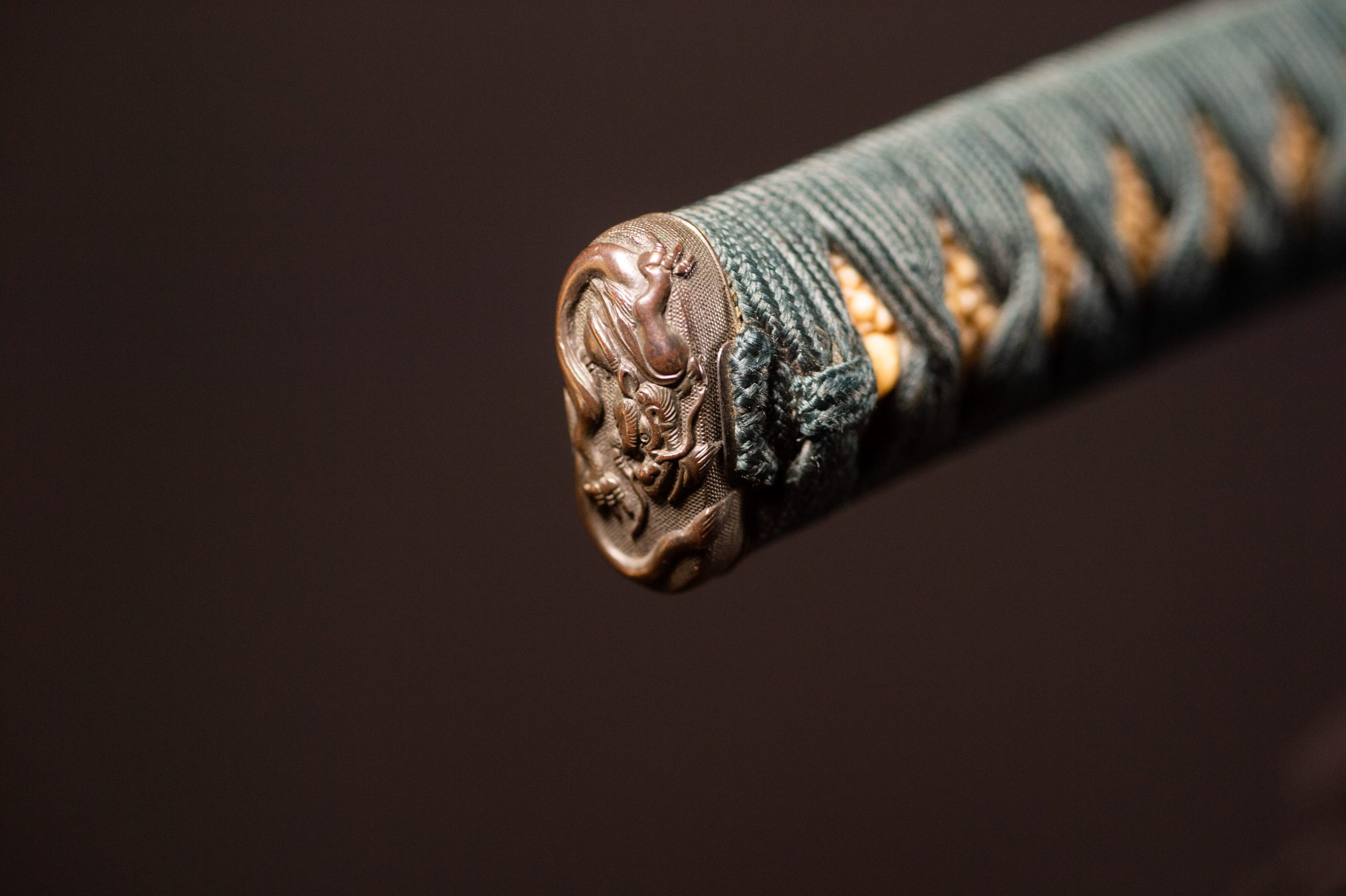
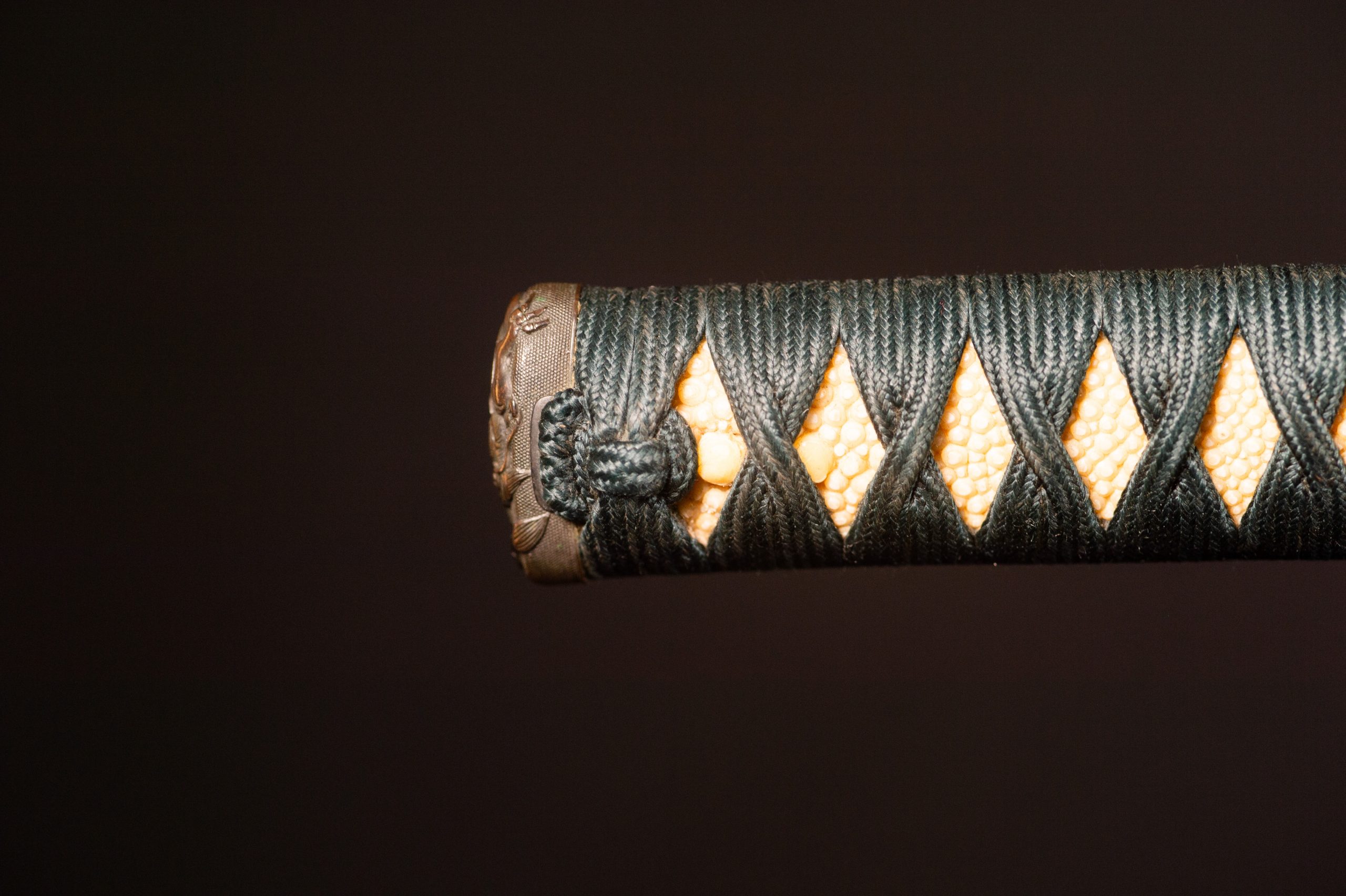
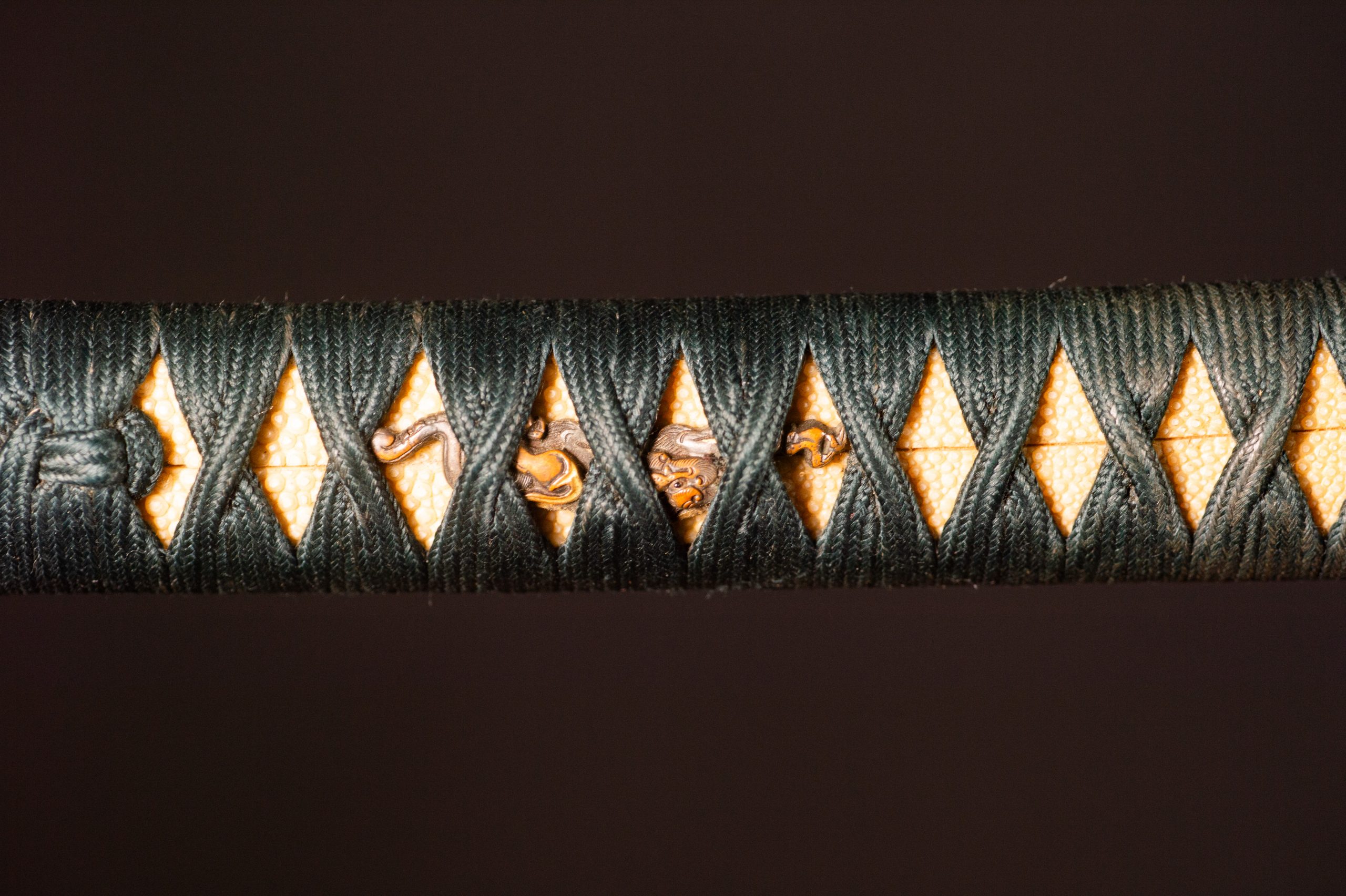
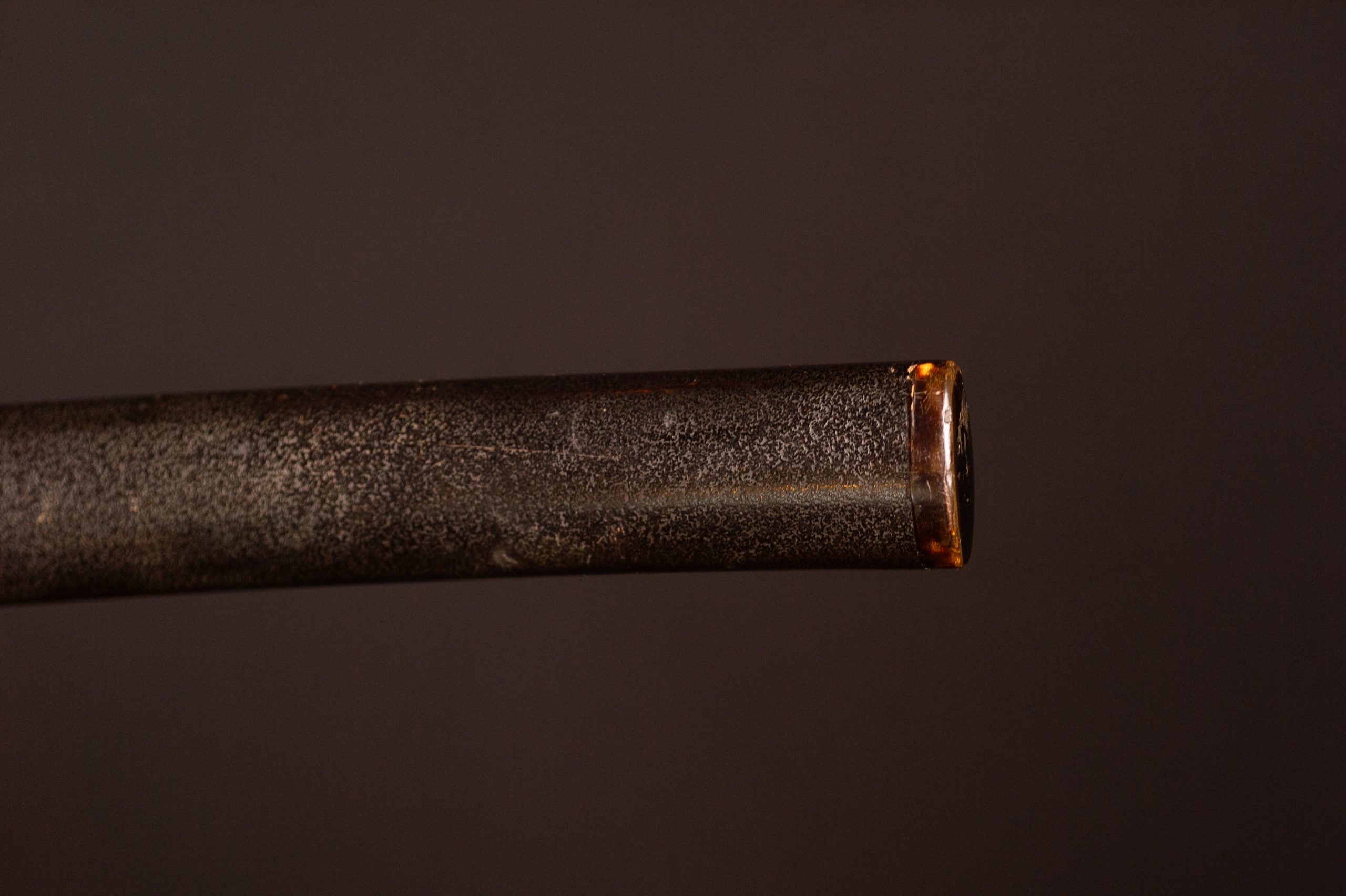
The koshirae is well matched to the blade and built with clear aesthetic coherence. The saya, finished in a subdued black textured surface of ishime-ji character, gives the mounting a restrained and serious appearance entirely appropriate to the sword. The tsuka is wrapped in dark green tsuka-ito over light samegawa, a classic and highly effective combination that gives the mounting dignity without unnecessary excess.
Of particular note is the fact that the fuchi, kashira, and menuki form a matched suite with dragon motifs, an important point that adds both iconographic consistency and commercial strength to the mounting. These are not random assembled fittings, but a coordinated decorative set that gives the koshirae a stronger identity. The tsuba, of simple maru-gata form and restrained appearance, maintains the balance of the mounting without introducing decorative noise. The gilt-toned habaki provides the right visual emphasis at the base of the blade, adding warmth and a subtle sense of quality against the otherwise sober mount.
Assessment
Taken as a whole, this is a highly attractive mumei Muromachi katana with convincing old sugata, generous sori, a visible suguha-chō hamon, a patinated nakago with three mekugi-ana, and a sober but well-resolved koshirae strengthened by a matched set of dragon fittings. Commercially, it works because it offers what actually matters: proportion, age, structural honesty, and a mounting with coherence and taste. It does not rely on theatrical features. Its appeal lies in the quiet confidence of a genuinely old blade that presents itself exactly as it should.
Specifications
Type: Katana
Signature: Mumei
Period: Muromachi
Nagasa: 69.1 cm
Sori: 2.0 cm
Nakago: Dark old patina, 3 mekugi-ana
Sugata: Slender, classical, and well curved
Hamon: Suguha-chō with slight natural irregularities
Jihada: Partially visible, with convincing old texture
Koshirae: Complete
Saya: Black textured finish, ishime-ji style
Tsuka: Dark green tsuka-ito over light samegawa
Fuchi / Kashira / Menuki: Matched dragon motif set
Tsuba: Maru-gata, restrained in style
Habaki: Gilt-toned


