



Description
ITEM DESCRIPTION:
Comes with kimono or cotton bag. Comes with certificate of Supein Nihonto. Comes with copy of Tokorusho.
Documentation
Documents
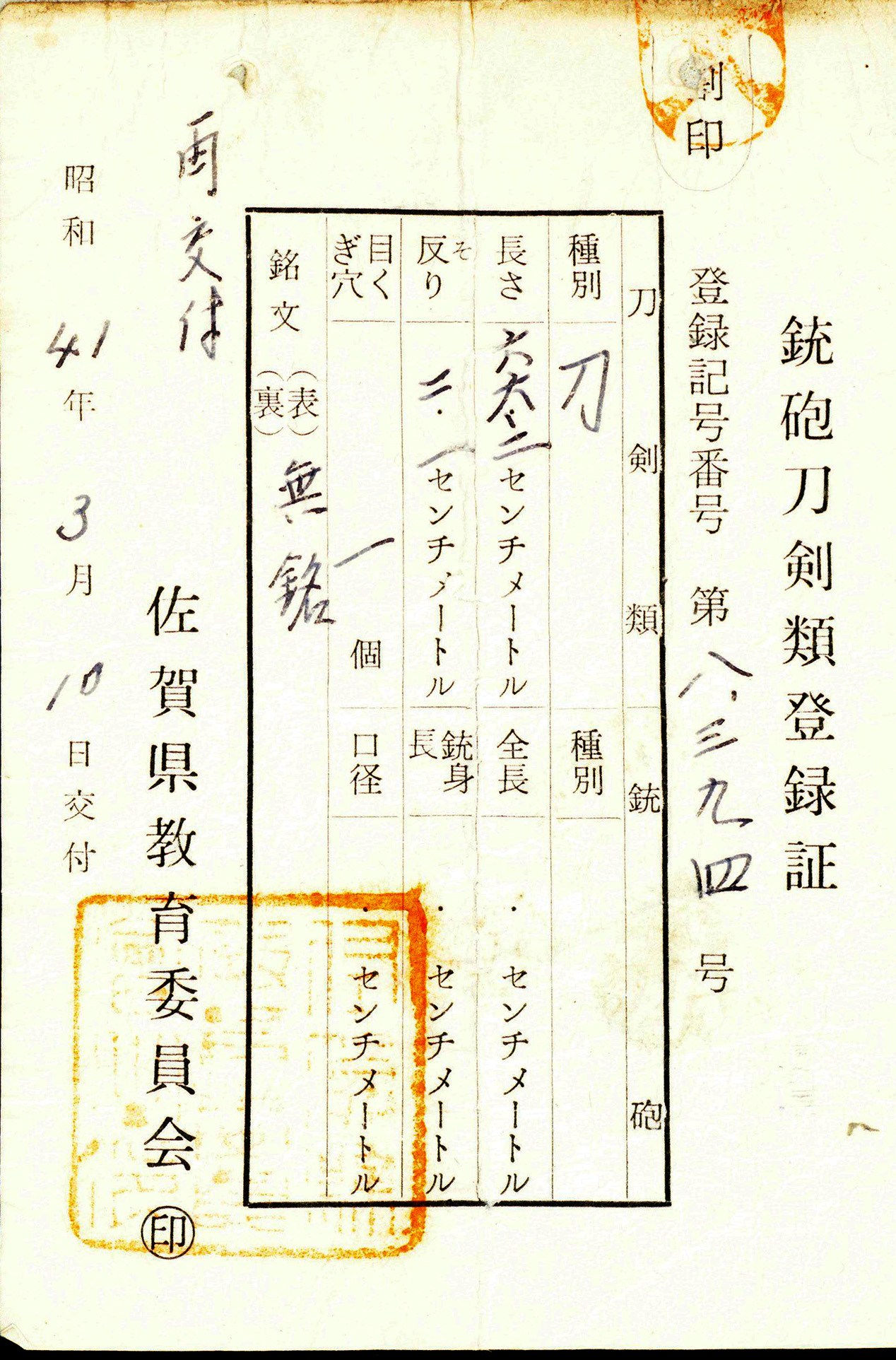
The sword is preserved with its original Japanese torokusho registration paper.
Literal reading of the visible document:
-
銃砲刀剣類登録証 — Firearms and Swords Registration Certificate
-
登録記号番号 第八三九四号 — Registration number: 8394
-
種別 刀 — Type: katana
-
長さ 六八・三センチメートル — Blade length: 68.3 cm
-
反り 三・〇センチメートル — Curvature: 2.1 cm
-
目くぎ穴 一個 — Mekugi-ana: 1
-
銘文(表裏)無銘 — Signature: mumei
-
昭和41年3月10日交付 — Date of issue: March 10, 1966
-
佐賀県教育委員会 — Board of Education of Saga Prefecture
Smith, period, and context
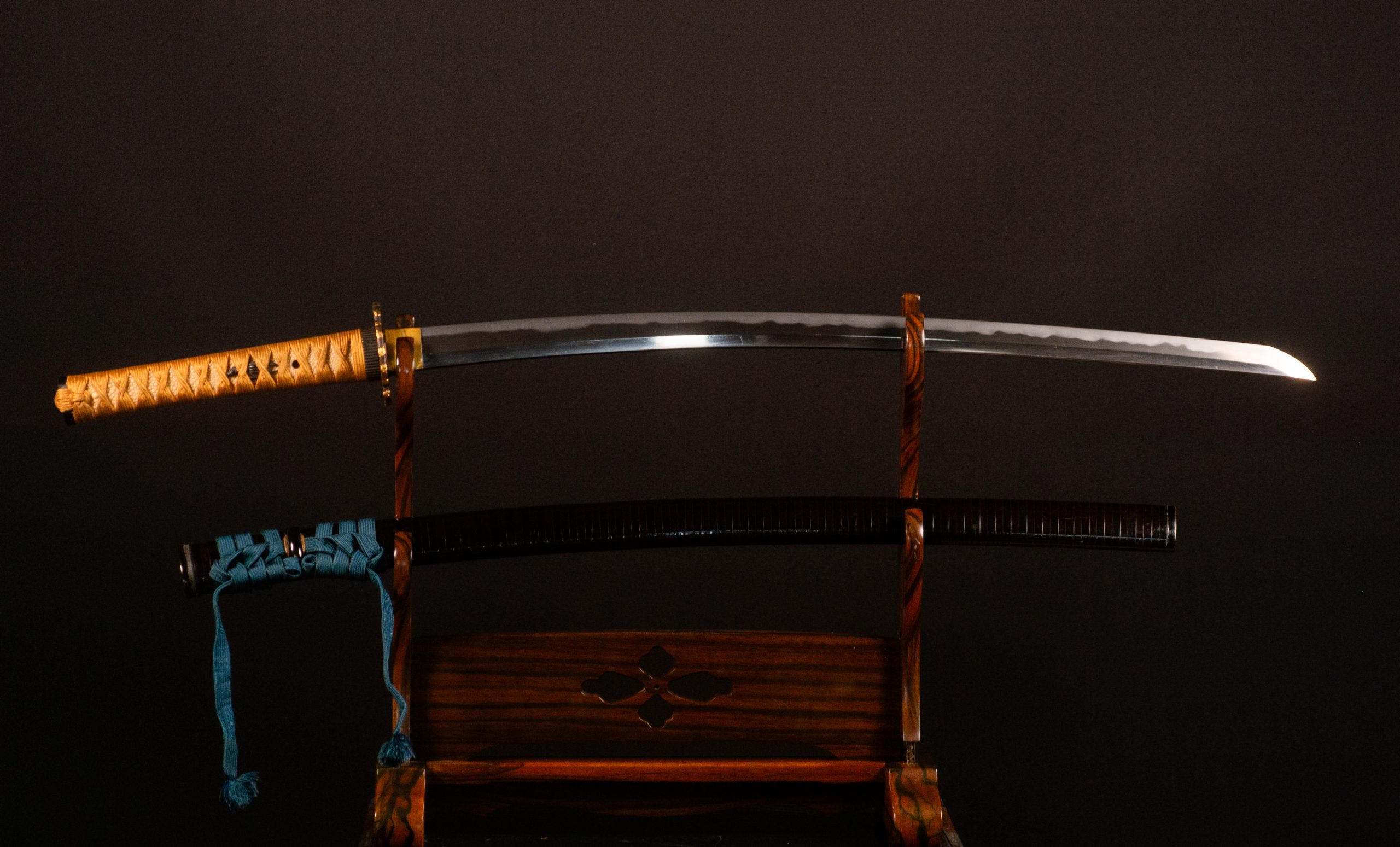
An mumei katana of the Edo period, showing the elegance and formal balance so characteristic of that long historical era. Its pronounced curvature, well-proportioned blade, and overall restraint reflect a mature Japanese aesthetic in which harmony of line takes precedence over visual excess.
The Edo period is marked precisely by this search for refinement, formal control, and contained beauty: swords conceived not only as weapons, but also as objects of prestige, status, and cultivated taste. This example fits that sensibility particularly well, with a sober yet noble presence and a koshirae whose chromatic contrast is both effective and distinguished.
Blade
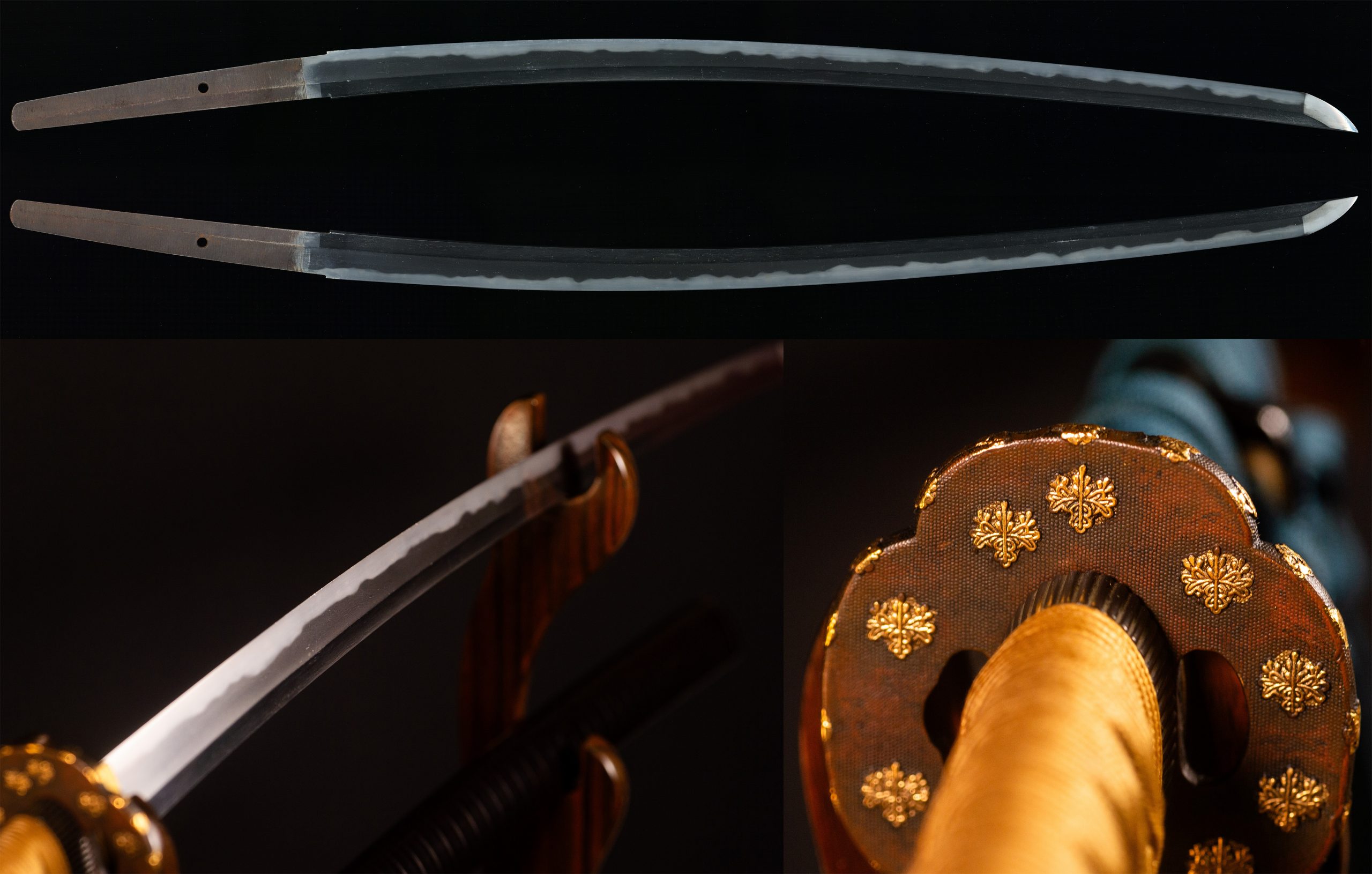
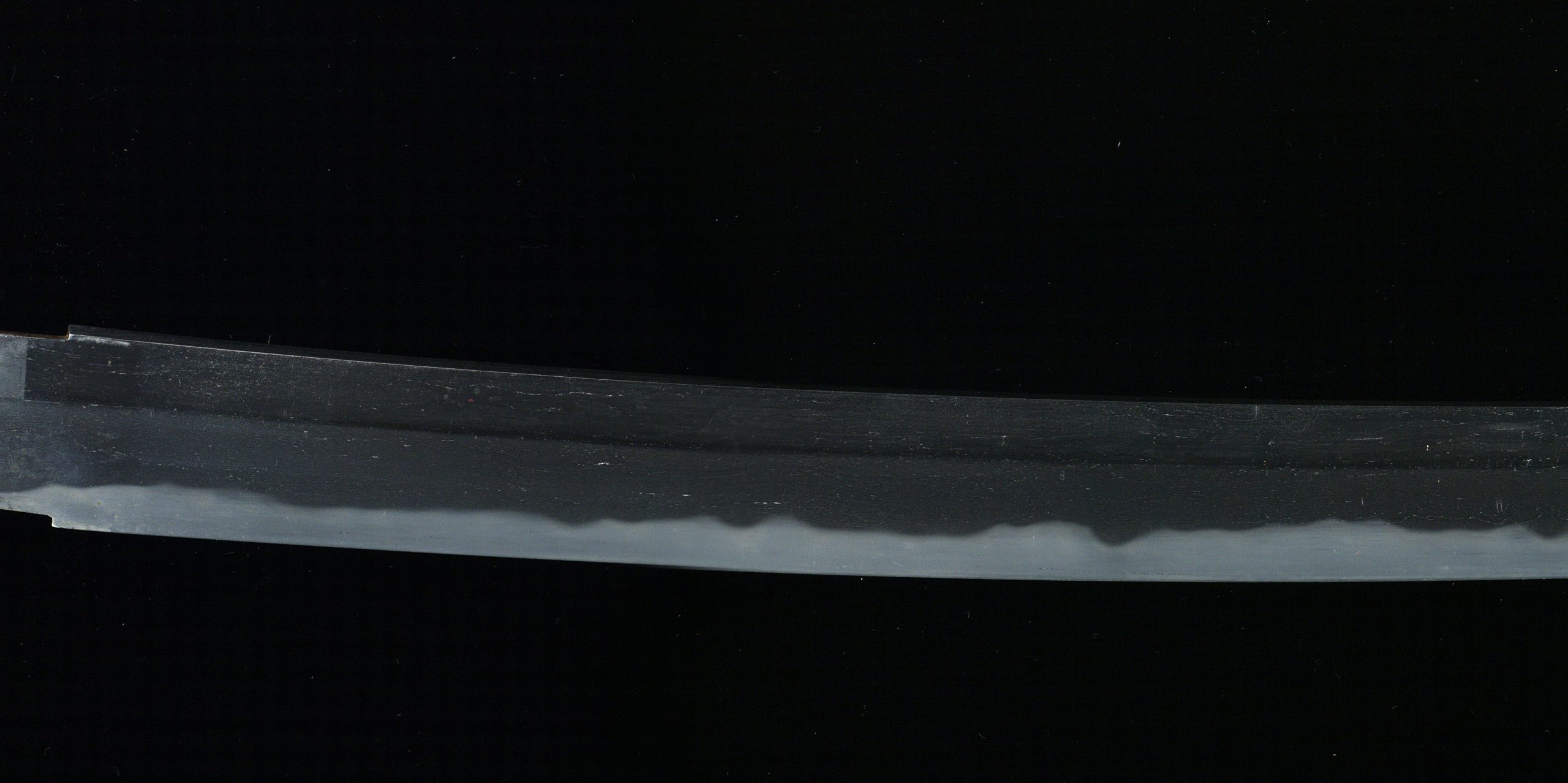
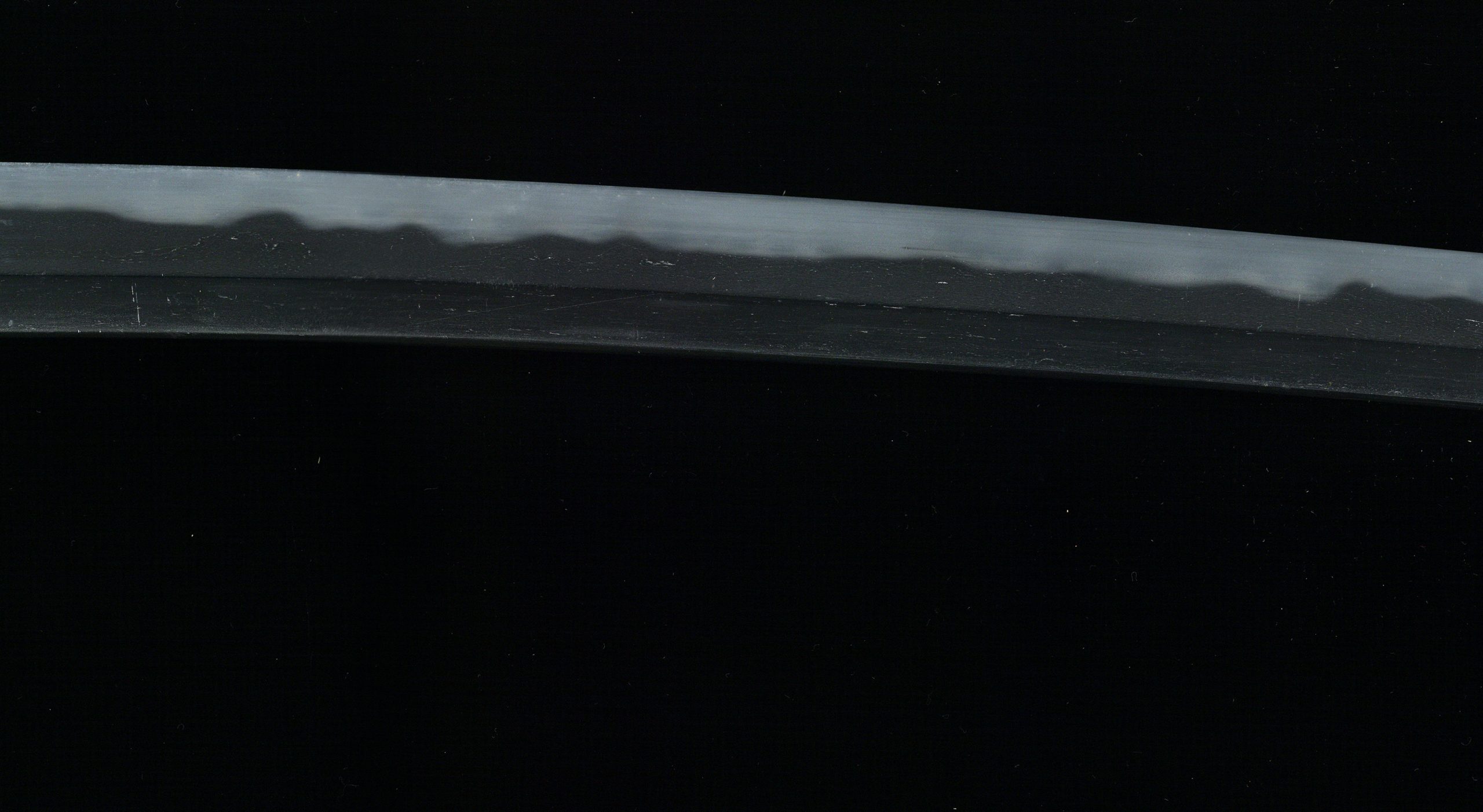
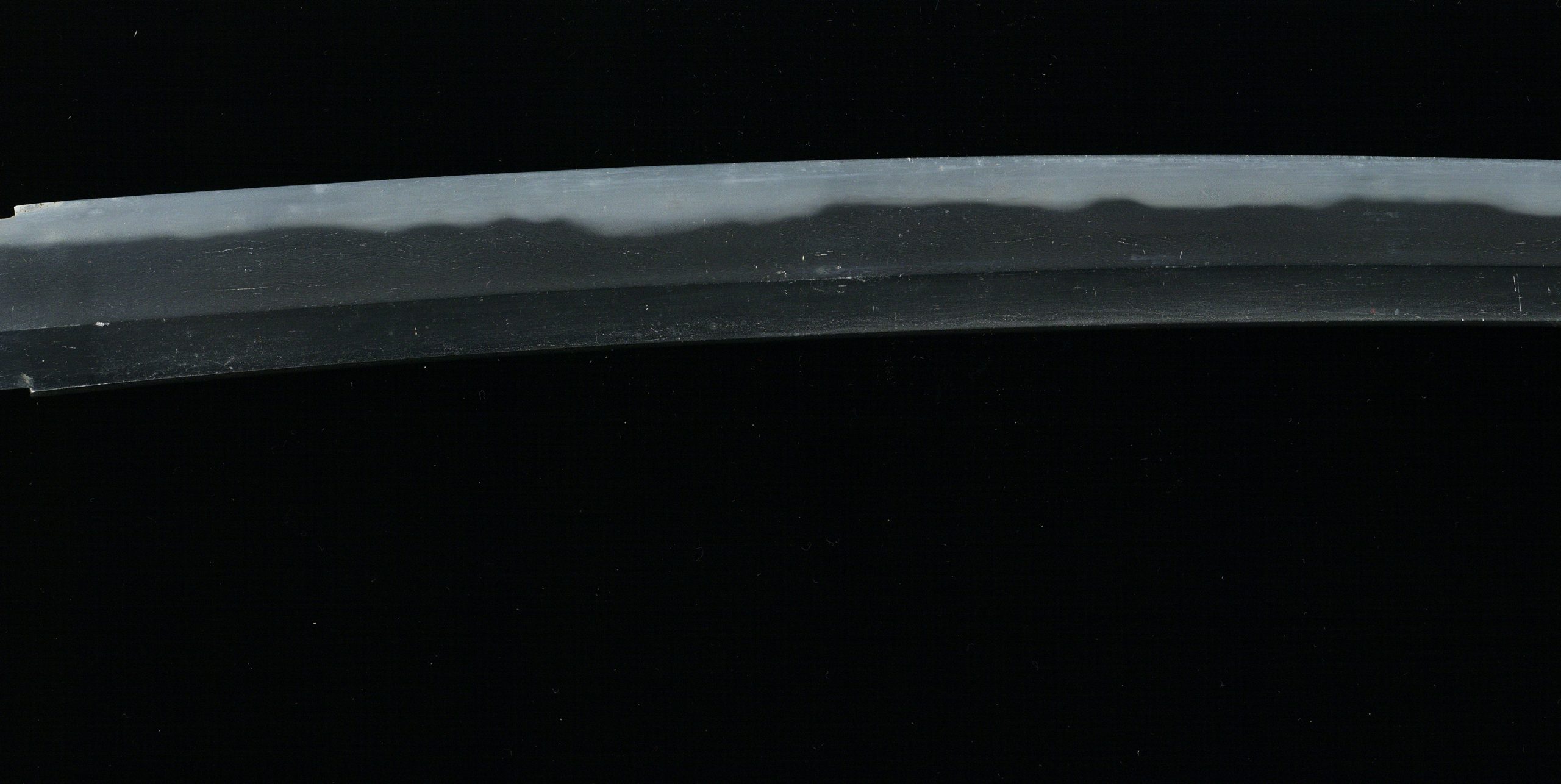
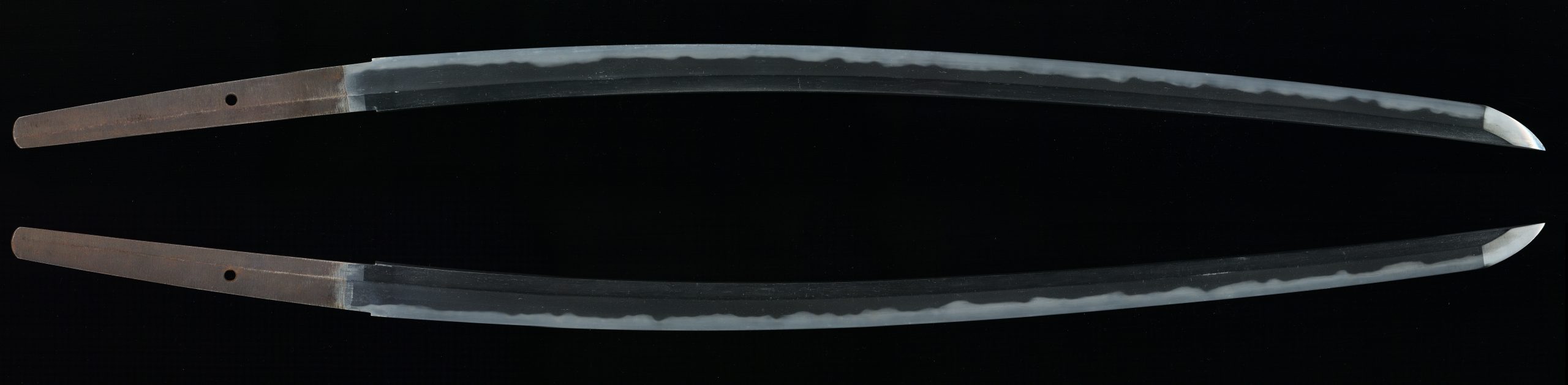
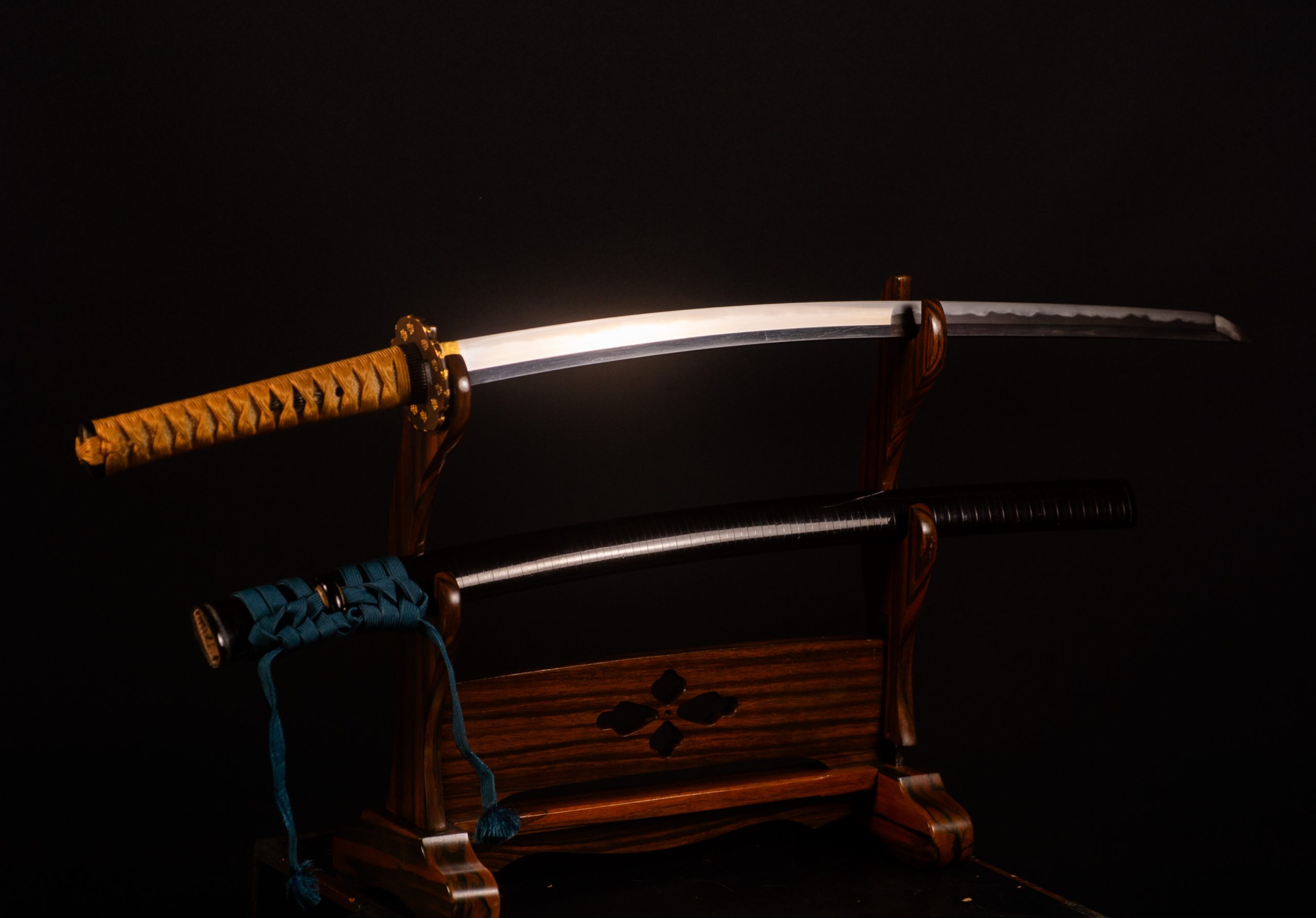
The blade has a nagasa of 68.3 cm and a curvature of 2.1 cm, giving it especially attractive visual presence. The overall profile is slender, fluid, and elegant, with a harmonious line running from the tang to the kissaki.
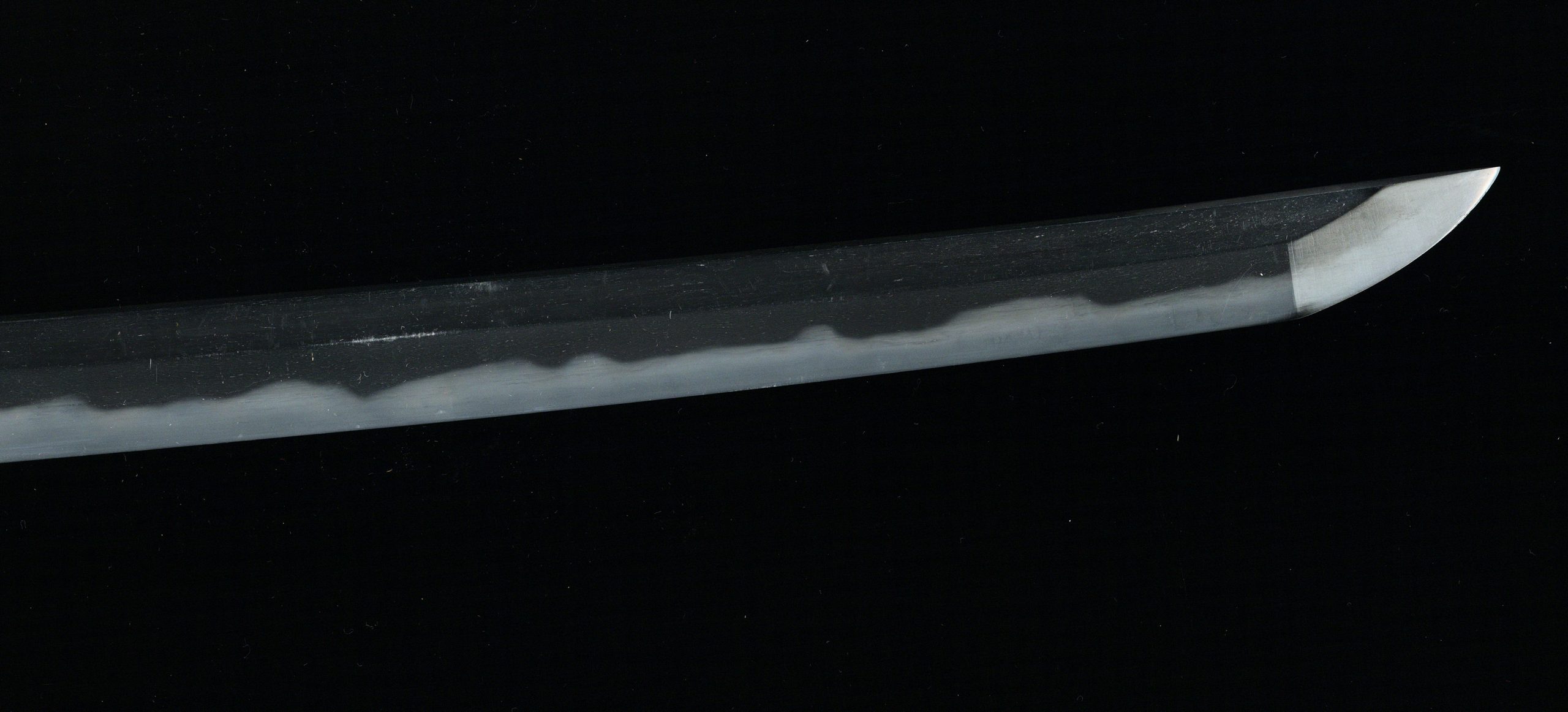
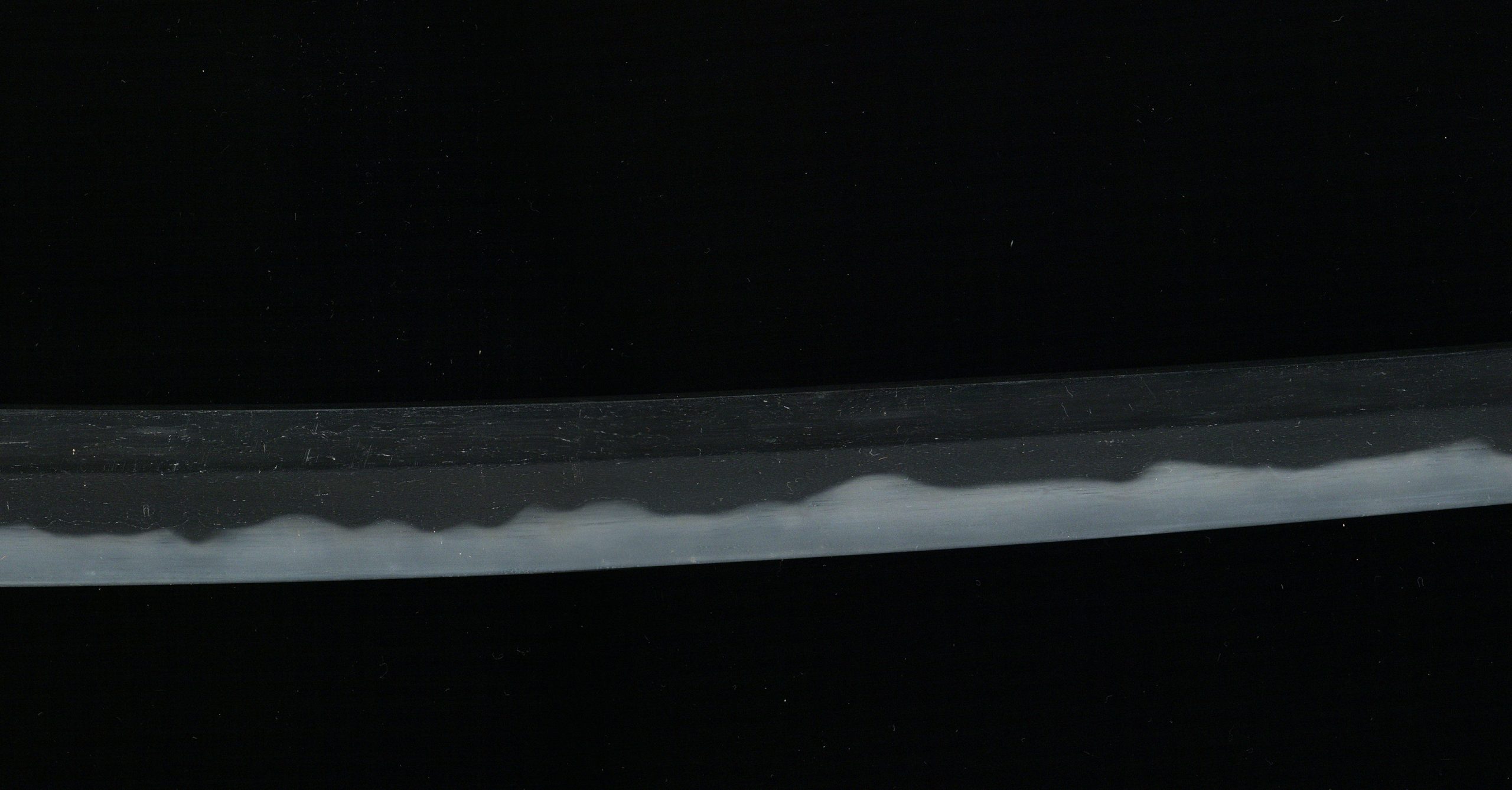
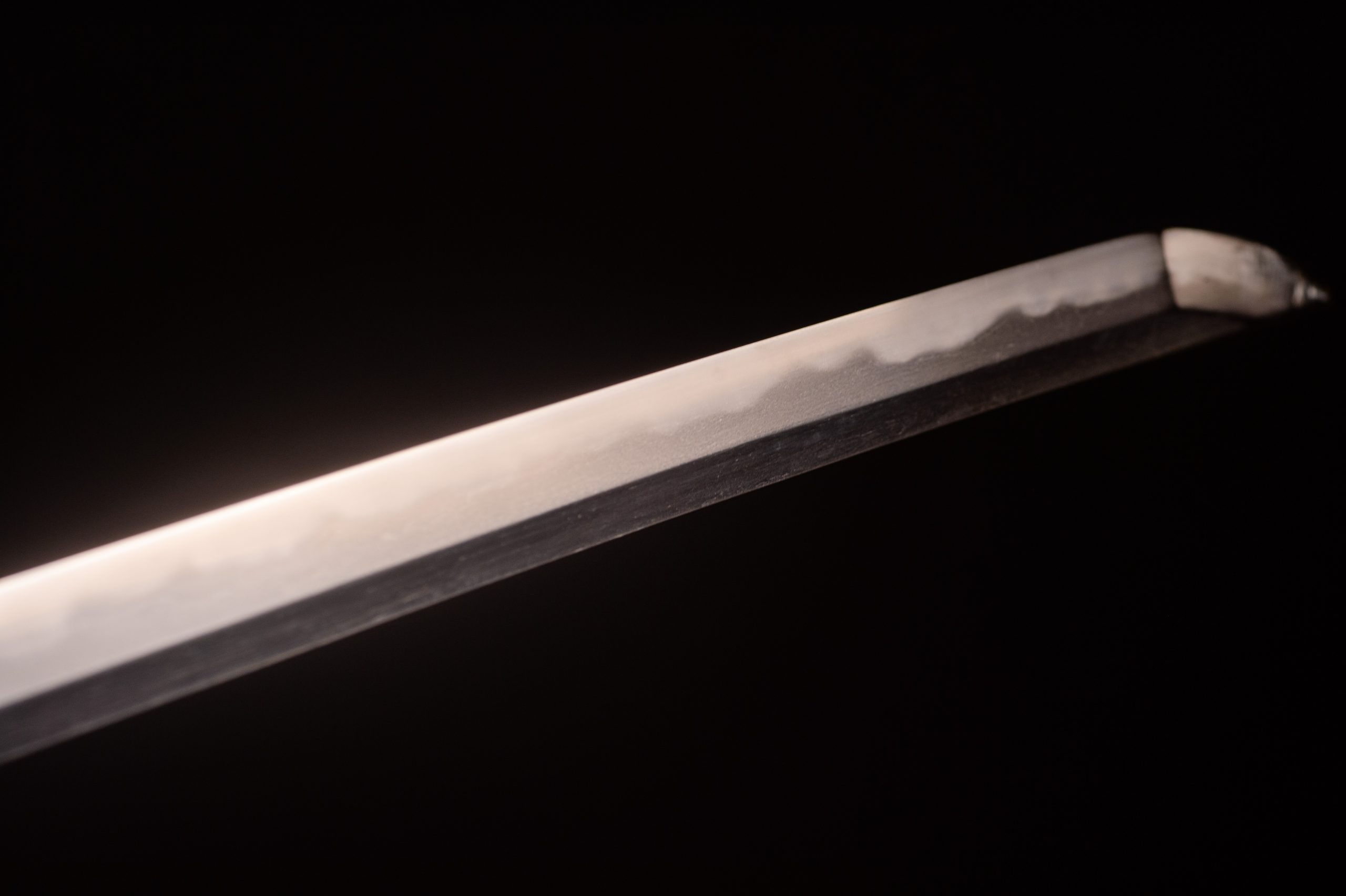
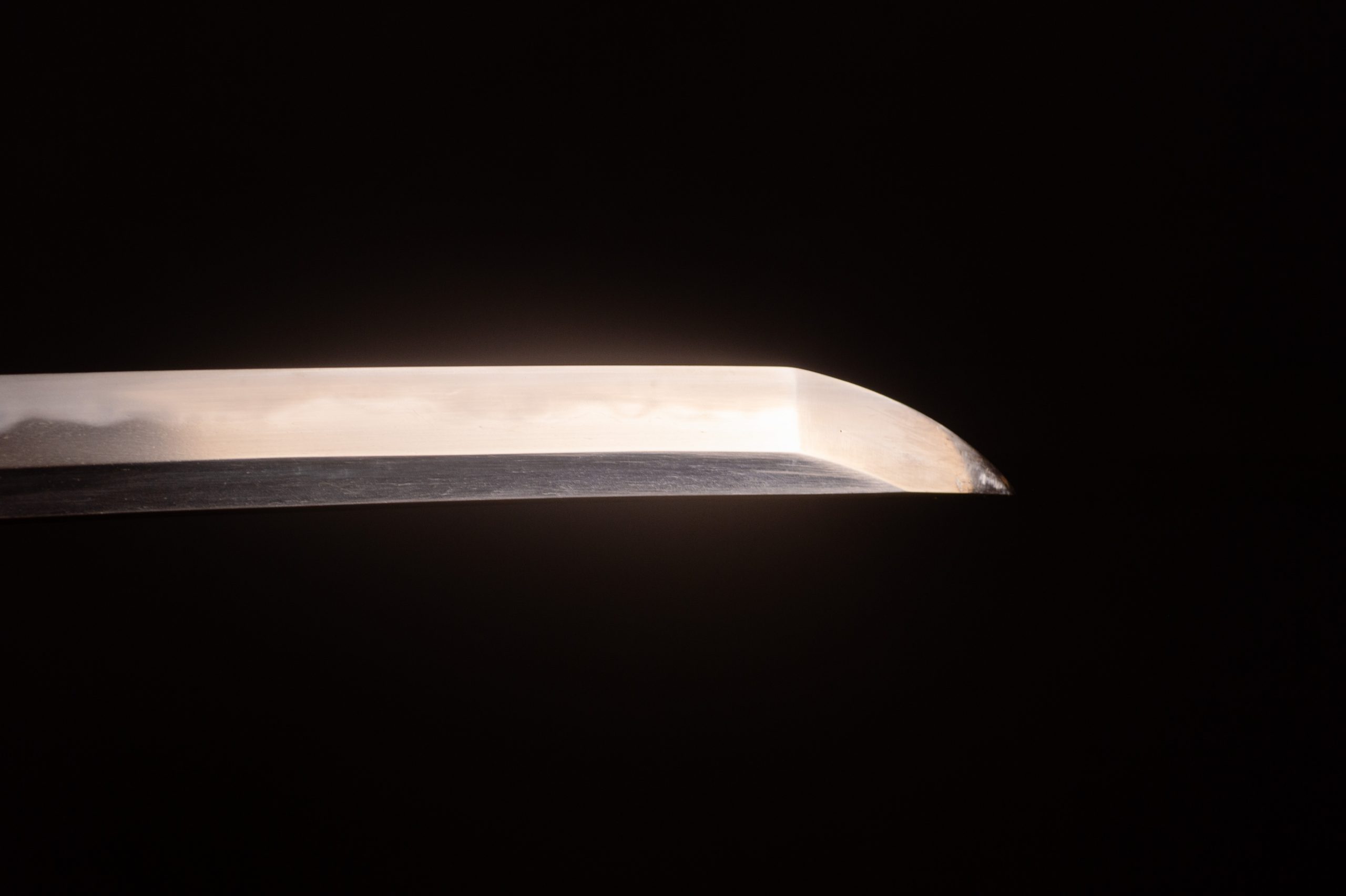
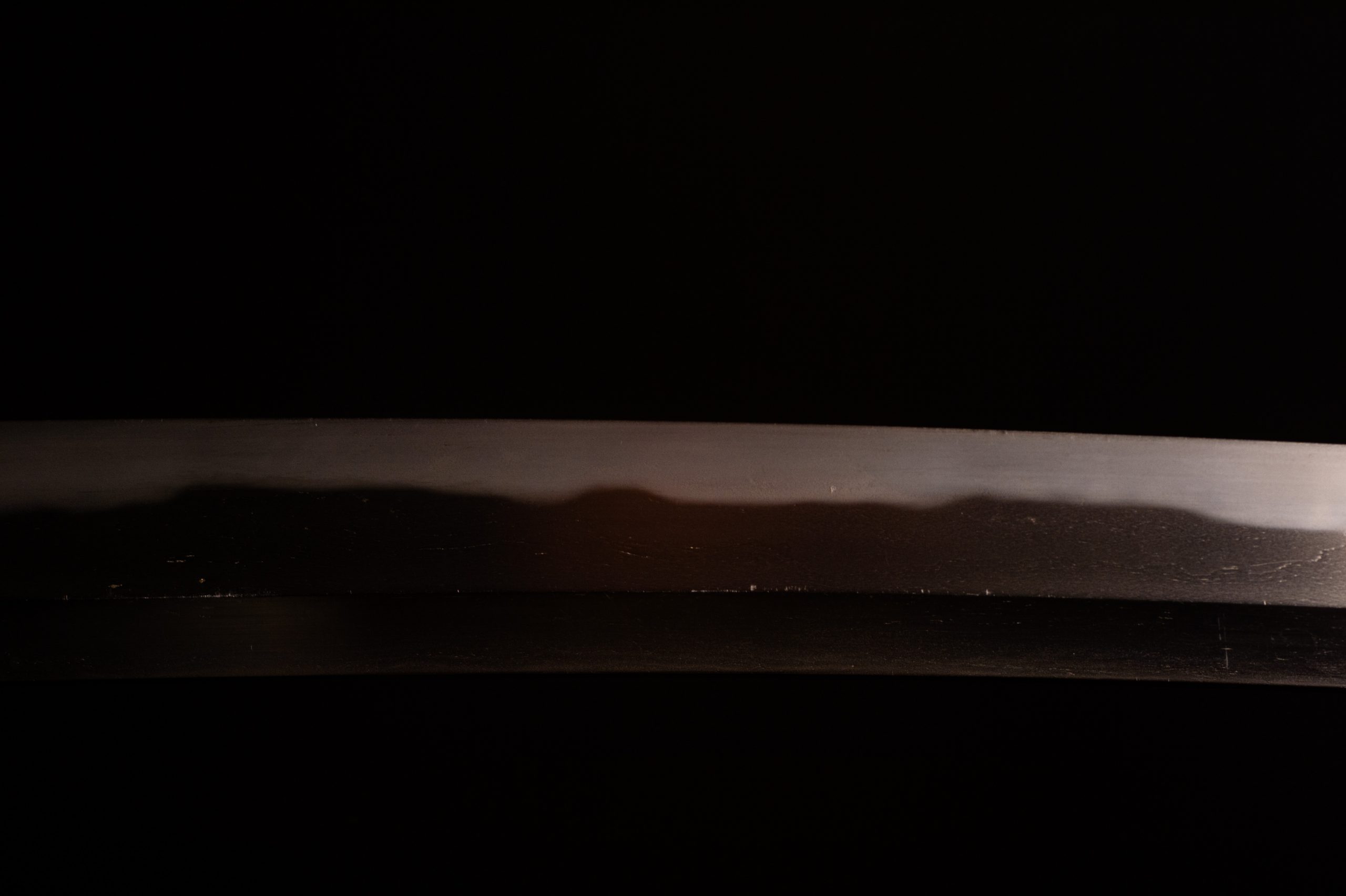
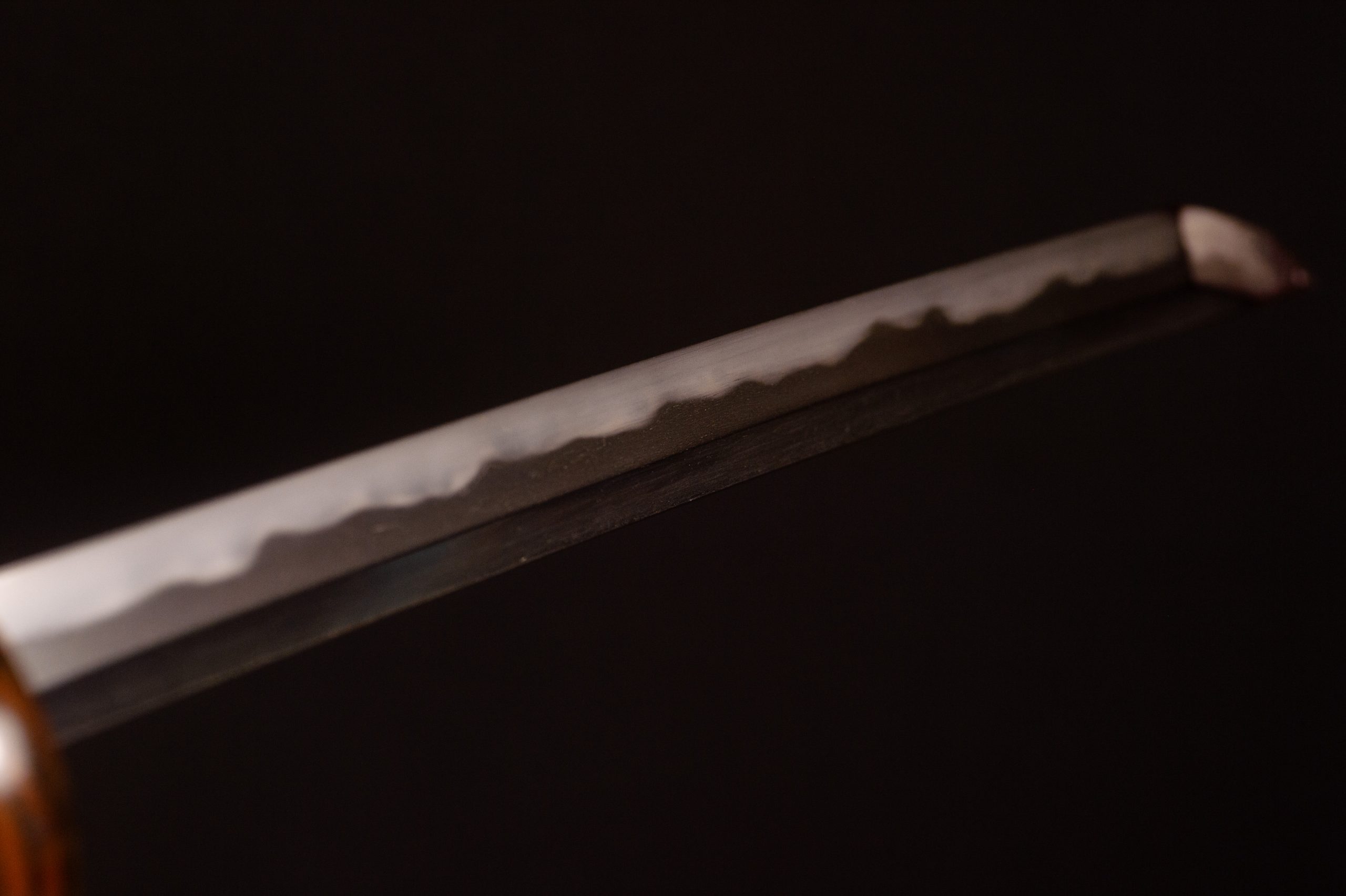
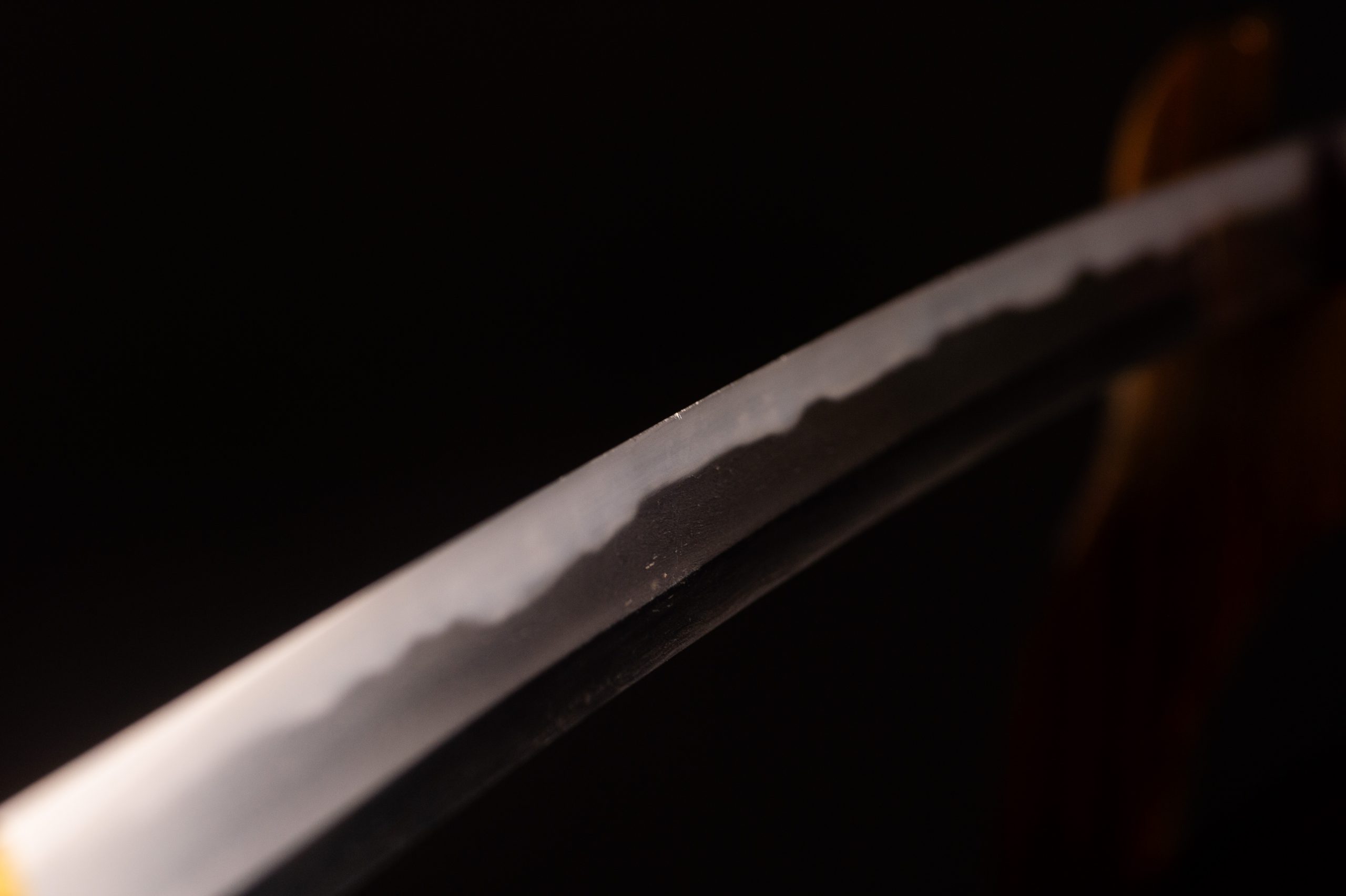
The visible hamon is a broad undulating notare, with a soft, rounded, continuous pattern that is highly pleasing to the eye. It does not show aggressive irregularity, but rather calm and balanced movement, consistent with the refined taste seen in many Edo-period blades. The nioiguchi appears clear and well defined in the photographs, especially in the middle section and near the point.
The jihada is not visible with sufficient clarity in these photographs to support a precise technical classification, but the blade presents a clean reading and a strong overall polish impression.
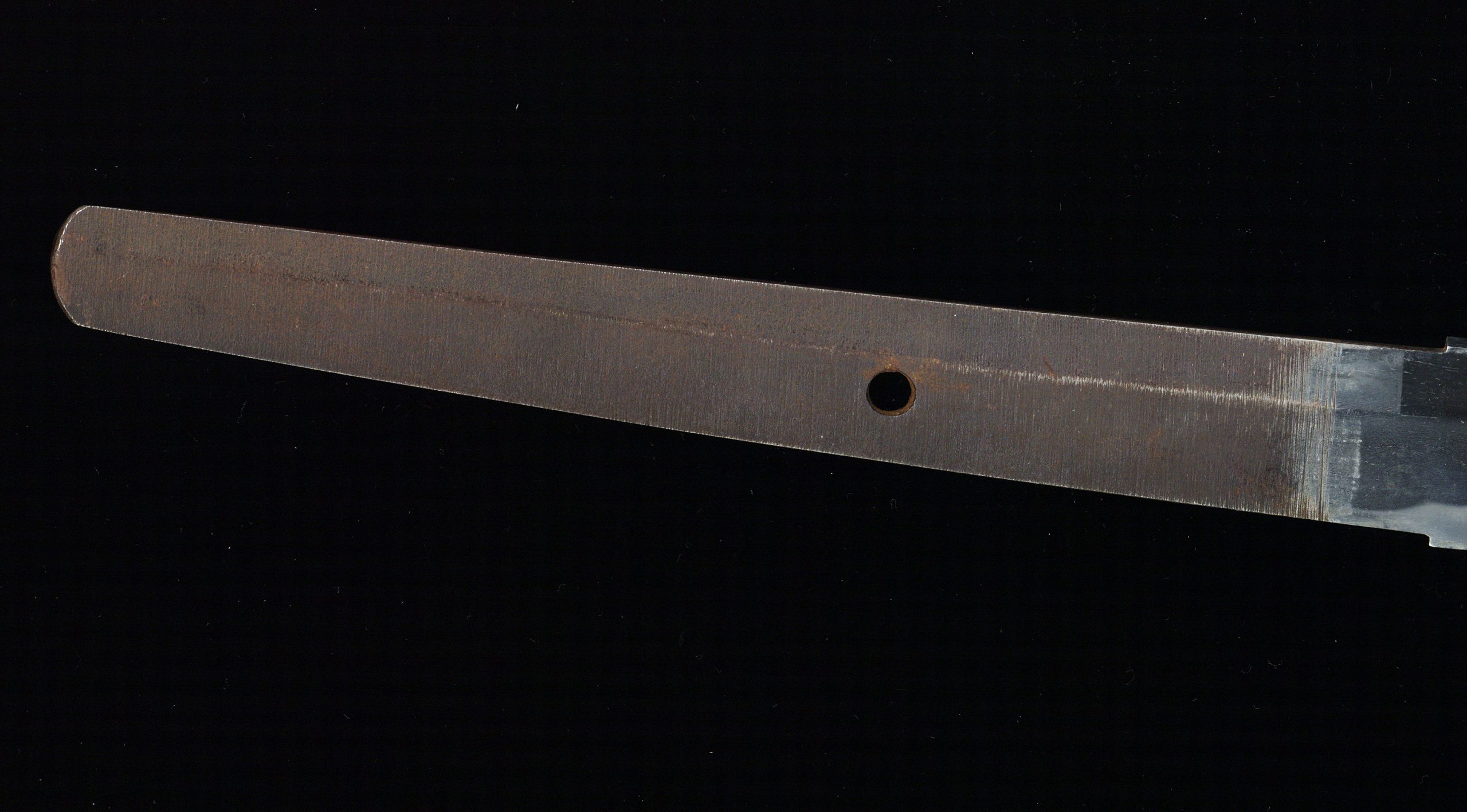
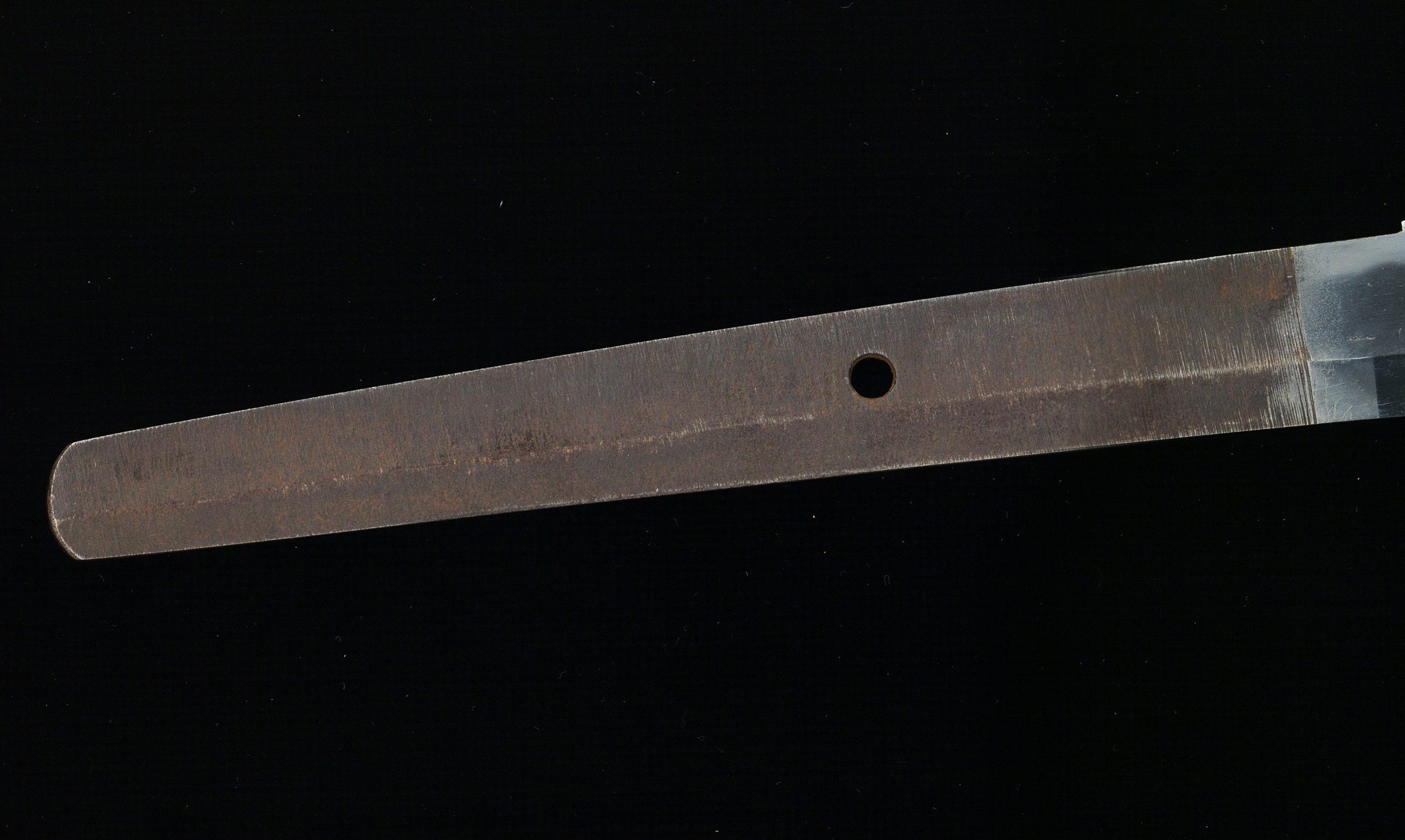
The nakago, with even dark patina, has one mekugi-ana and remains unsigned. The point is well formed, with a proportionate kissaki that finishes the sword elegantly and in full coherence with the rest of the blade.
Koshirae
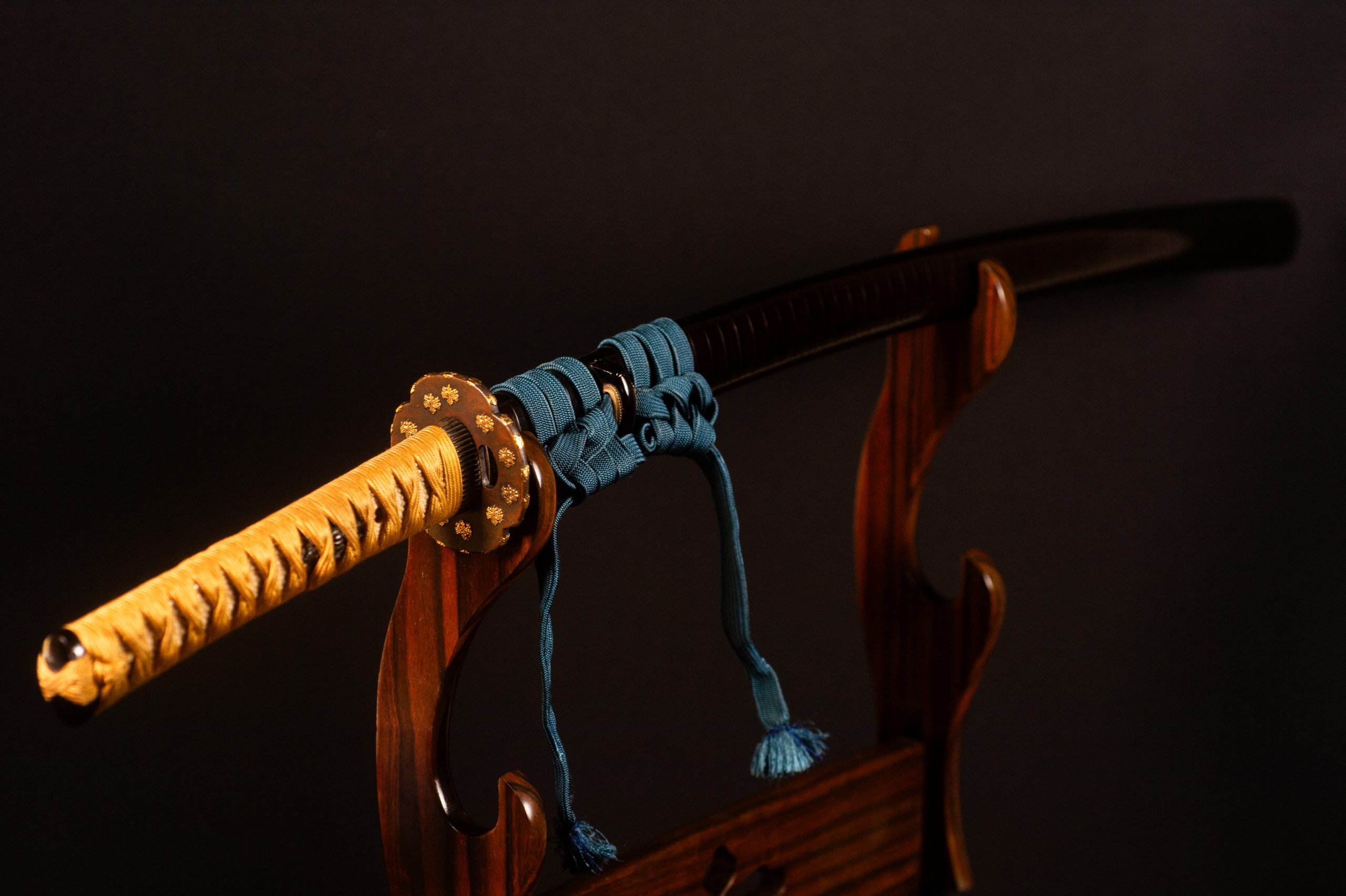
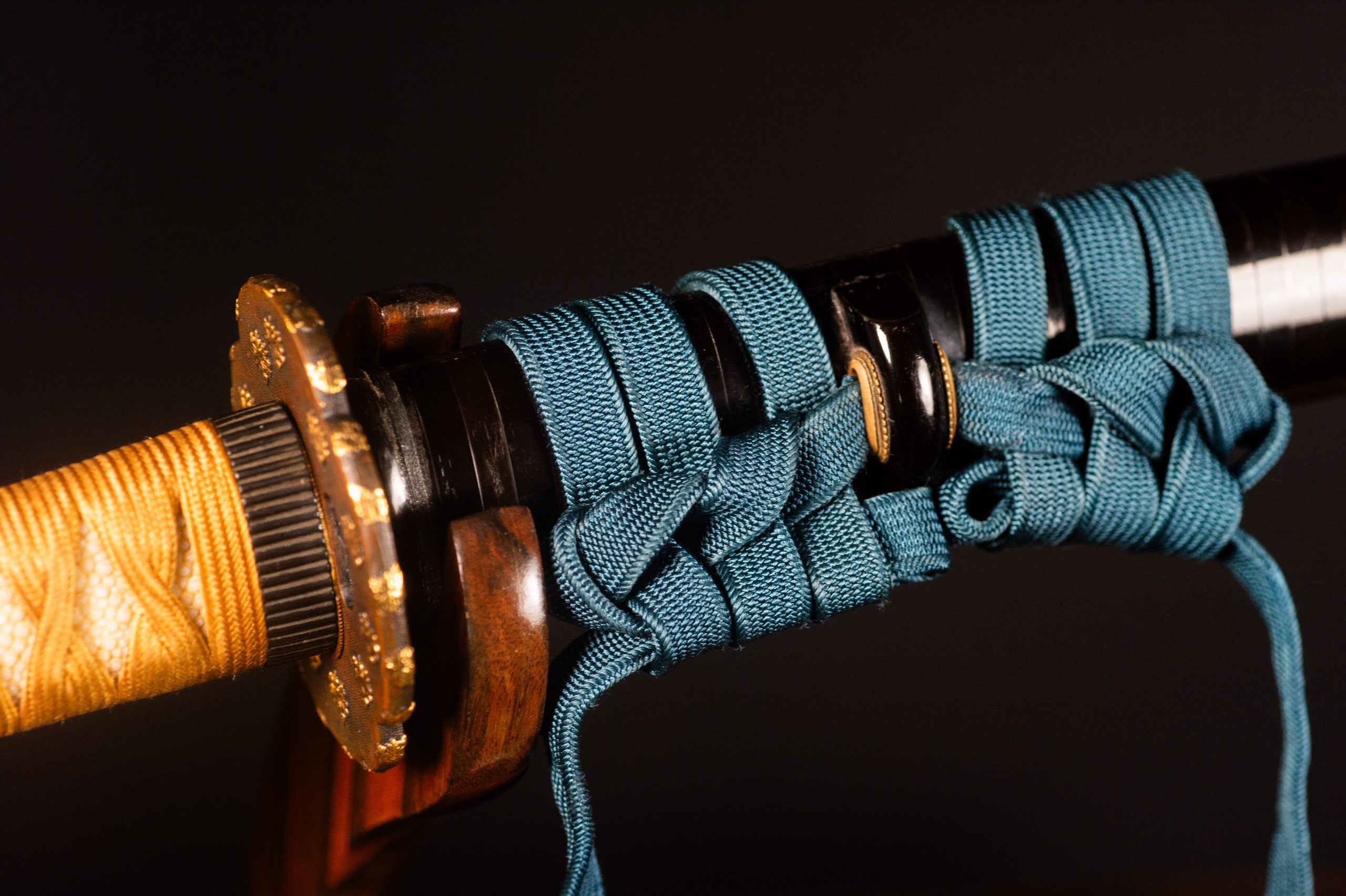
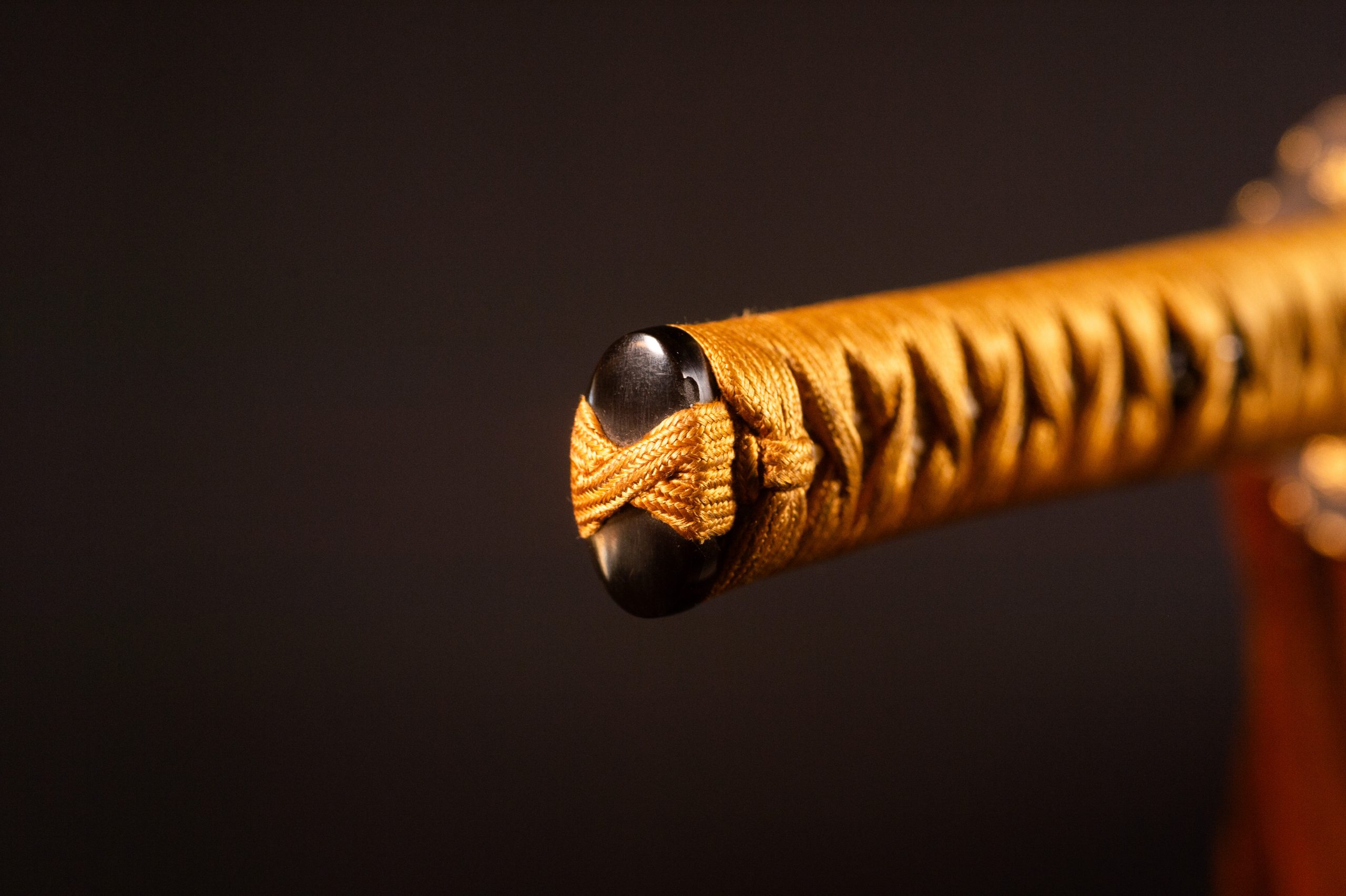
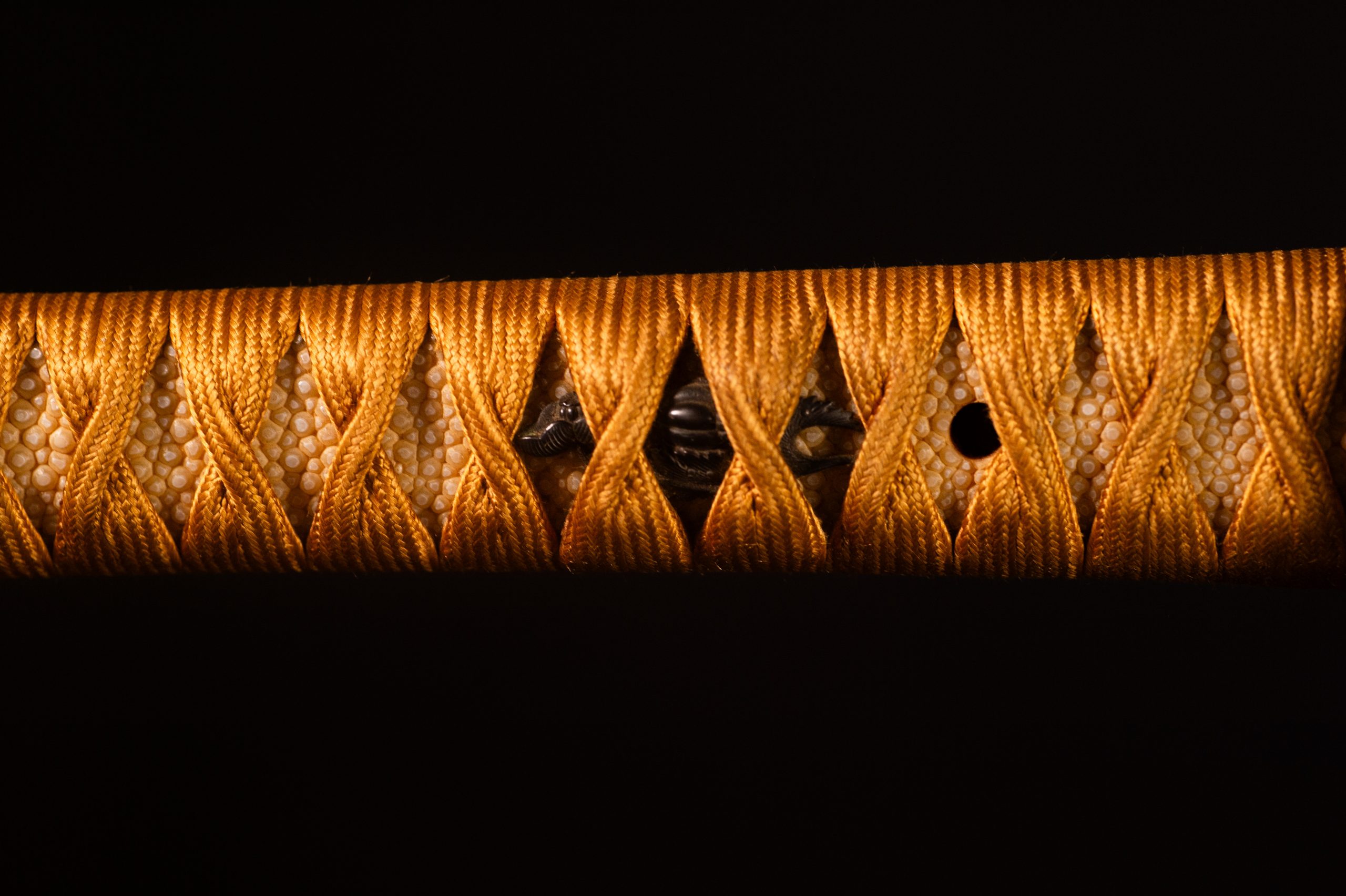
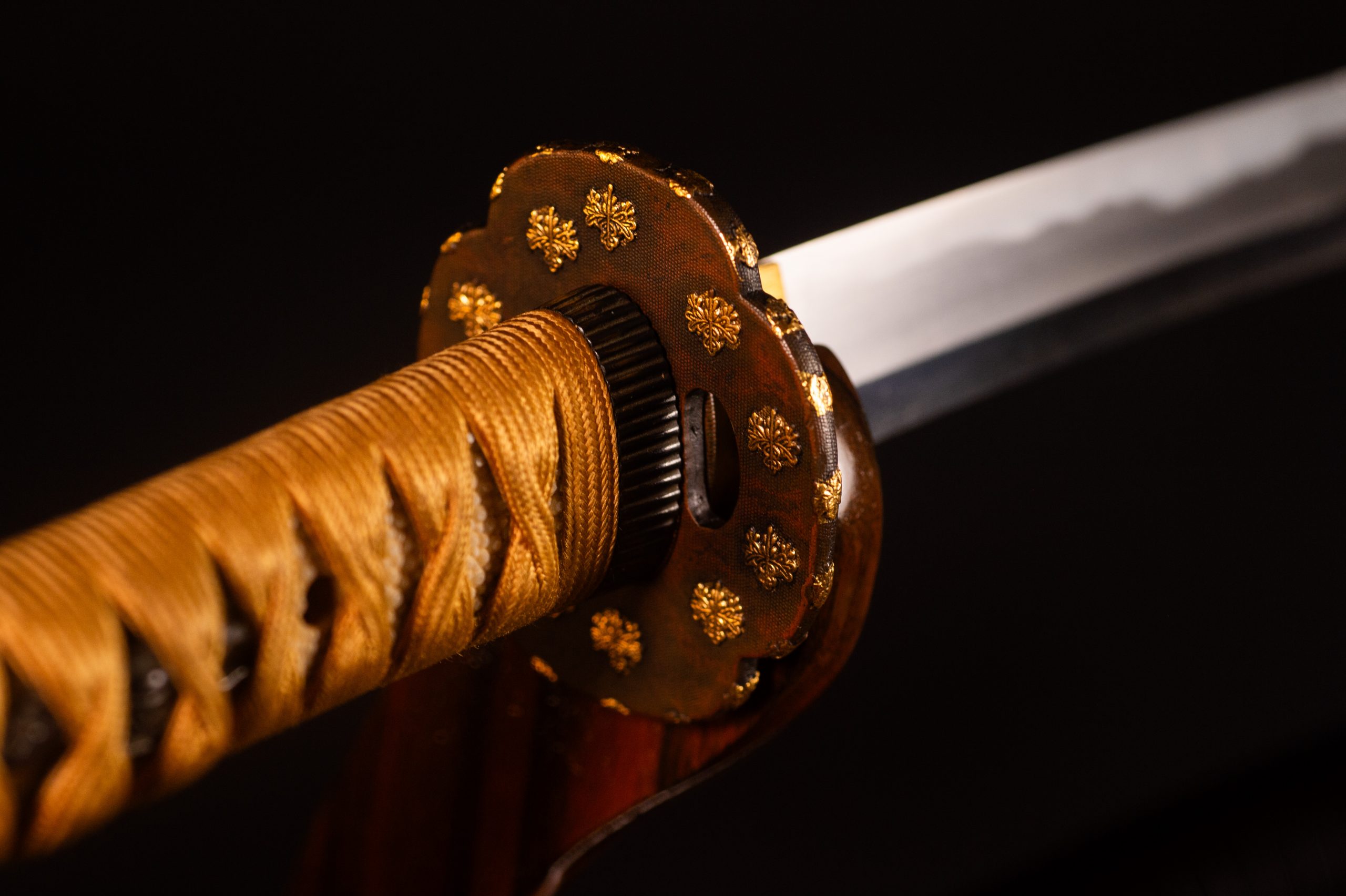
The mounting suits the character of the sword very well. The tsuka is wrapped in mustard-gold tsuka-ito over white samegawa, a warm and visually striking combination. The menuki, in dark metal, are discreetly integrated within the openings of the wrap.
The kashira, as you noted, is made of buffalo horn, in polished black finish, giving the hilt a sober, classical, and very clean termination.
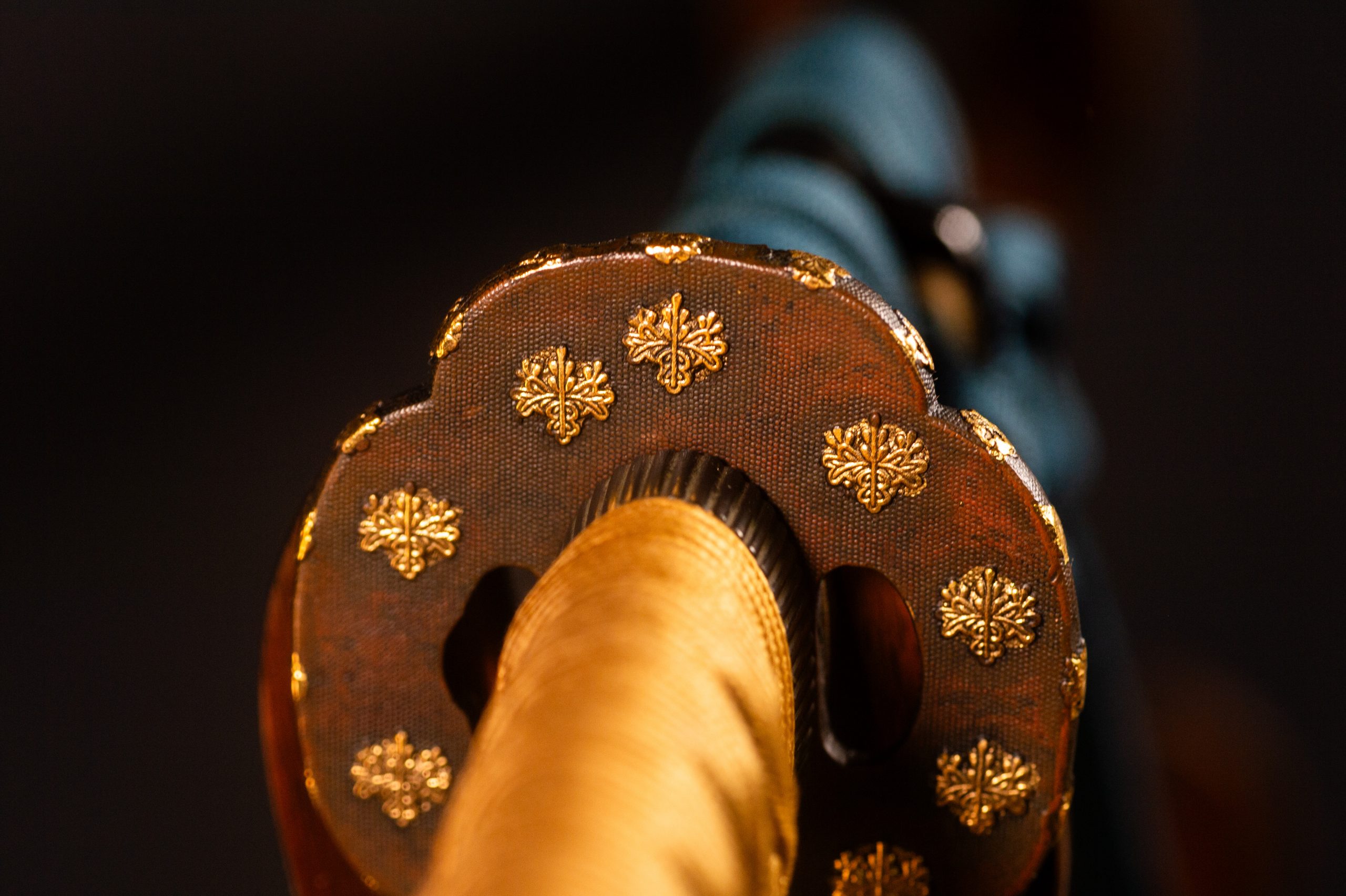
The tsuba is iron, with a lobed outline and a character close to mokko-gata, decorated with small gilt motifs distributed across the surface. The contrast between the dark iron base and the gold details works extremely well, giving the piece a distinguished presence without becoming excessive.
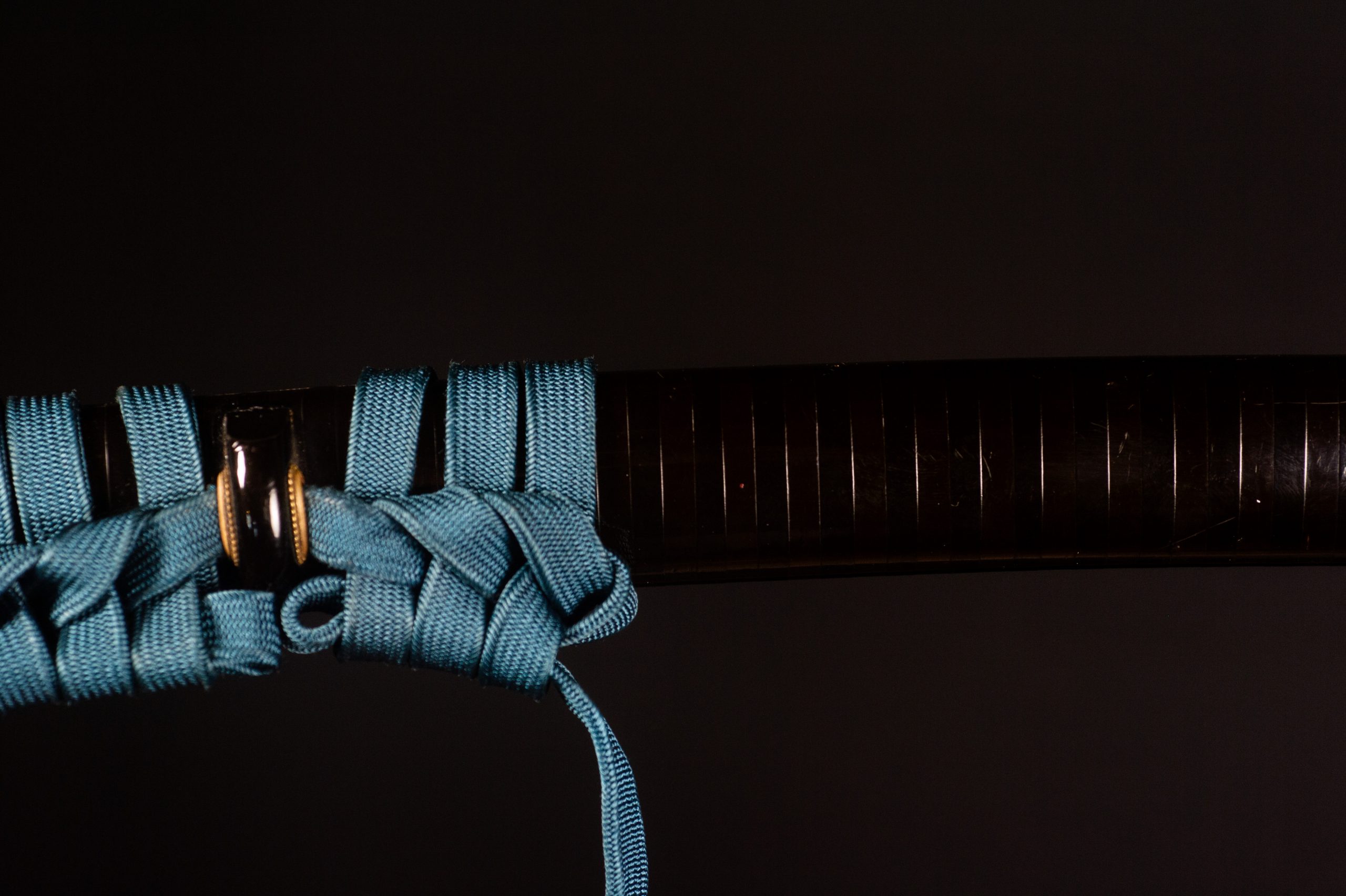
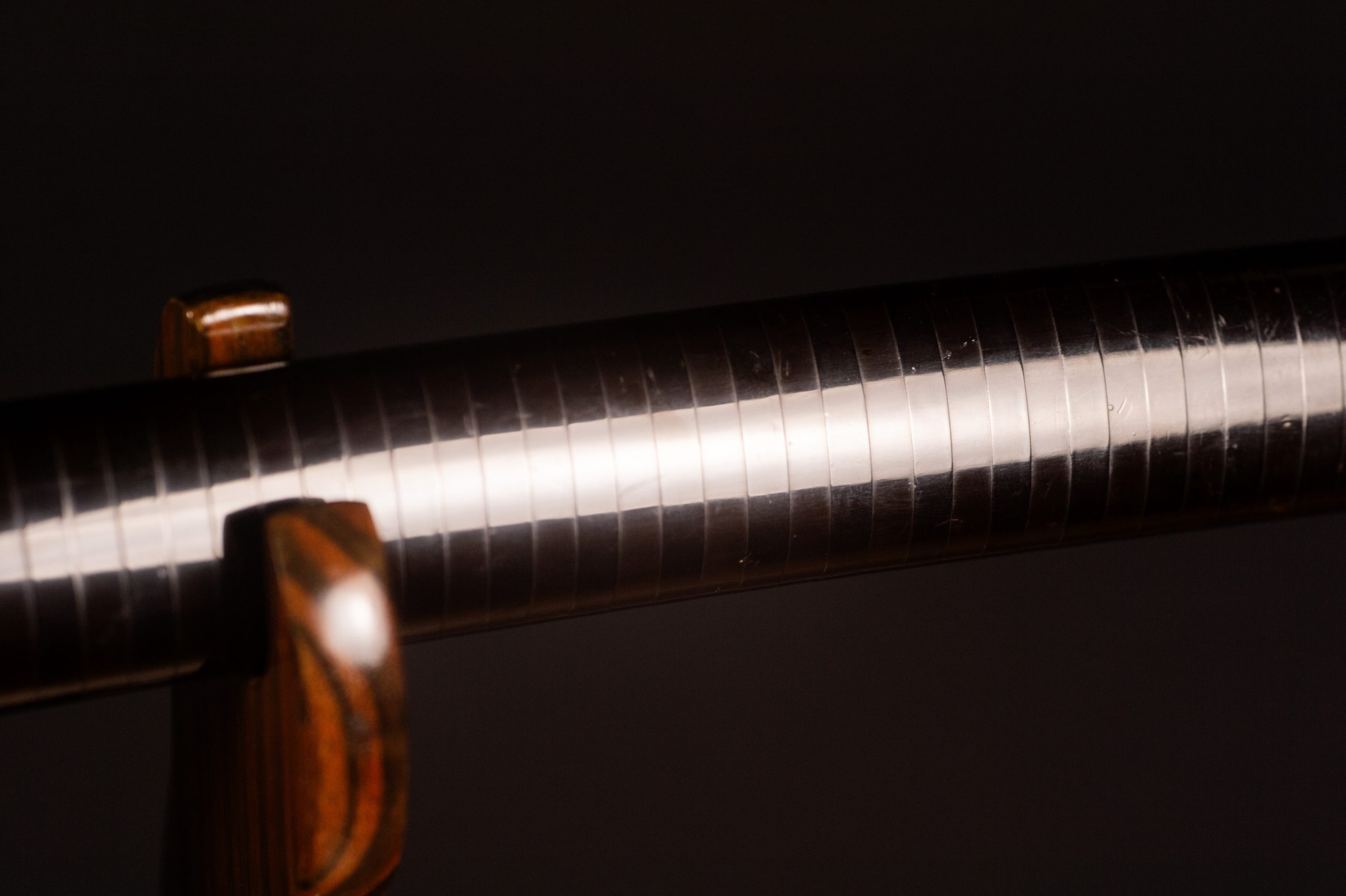
The saya is finished in black lacquer with a longitudinal ribbed texture, adding visual depth and discreet elegance. The sageo, in a blue-green tone, provides an excellent chromatic accent against the black lacquer and the warm golden hilt wrap, creating a highly attractive and coherent ensemble.
Technical details
-
Type: Katana
-
Signature: Mumei
-
Period: Edo period
-
Blade length: 68.3 cm
-
Curvature: 2.1 cm
-
Mekugi-ana: 1
-
Hamon: Broad undulating notare
-
Nakago: Even dark patina
-
Tsuka: Mustard-gold tsuka-ito over white samegawa
-
Menuki: Dark metal
-
Kashira: Buffalo horn
-
Tsuba: Lobed iron guard with gilt decoration
-
Saya: Ribbed black lacquer
-
Sageo: Blue-green
-
Torokusho: Japanese registration no. 8394, issued in Saga


