

Description
About US:
Our photographs are taken without retouching or photoshop to ensure that the customer can judge the reality of the object.
Thanks to a constant work directly with the best collectors, museums and galleries in Japan and friendship with them, along with a profit margin much lower than the European competition we can offer objects so that many people can choose to have authentic pieces with hundreds of years at more than competitive prices. After all, samurai art is our passion and we want to share it with the world.
ITEM DESCRIPTION:
Comes with certificate of supein Nihonto.
Edo period (1615-1868)
Description of the Kabuto
Helmet type:
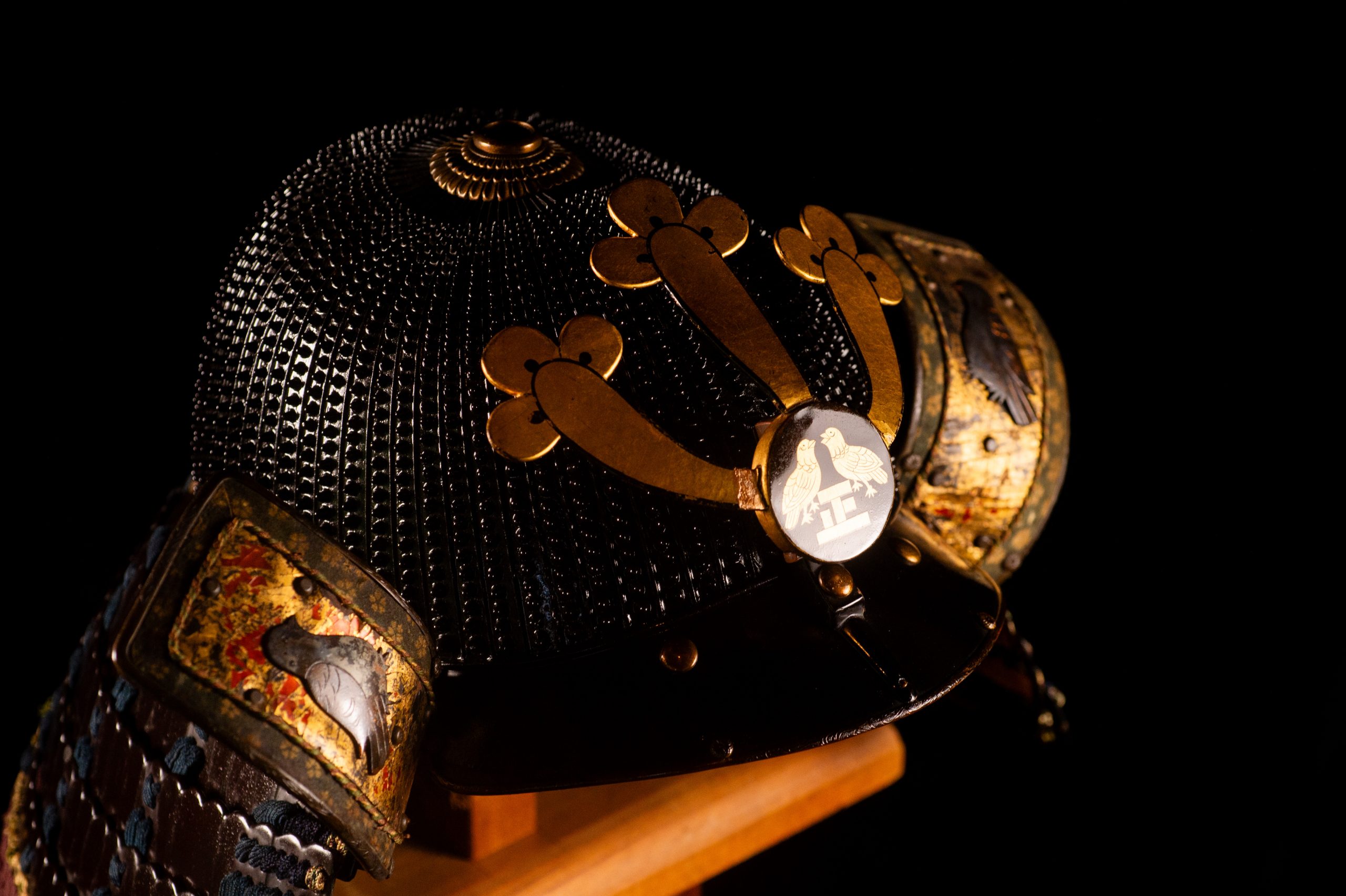
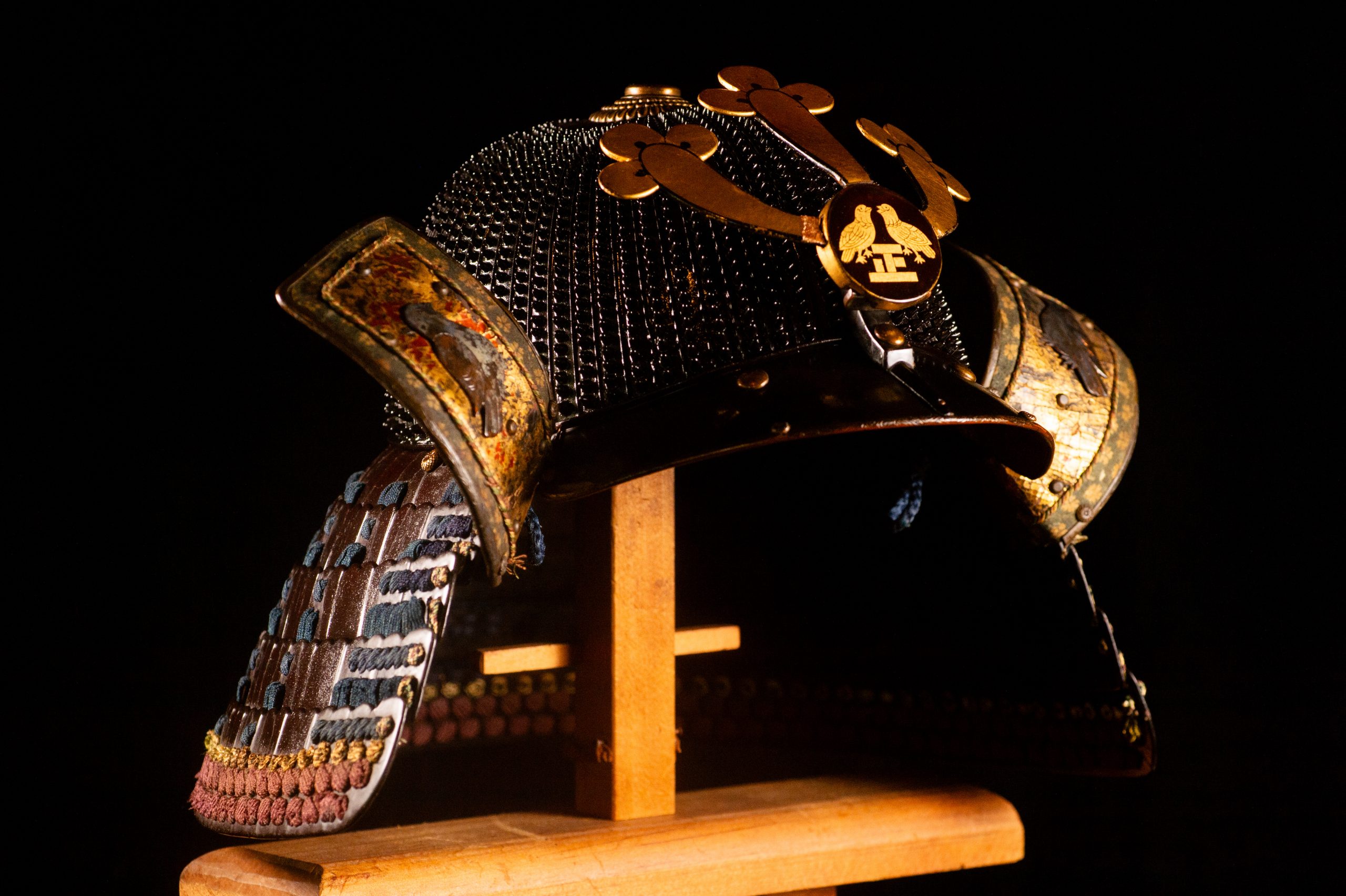
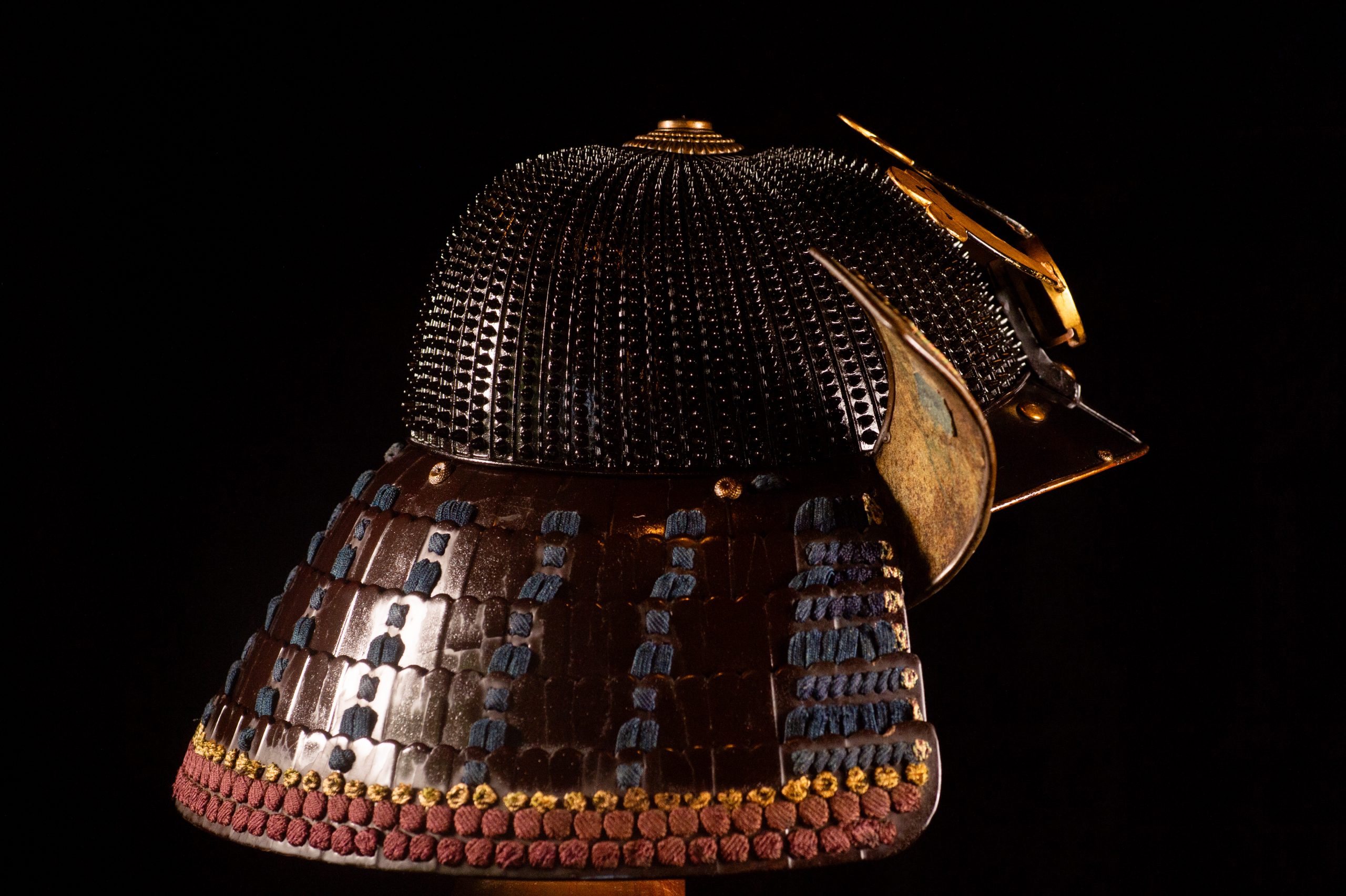
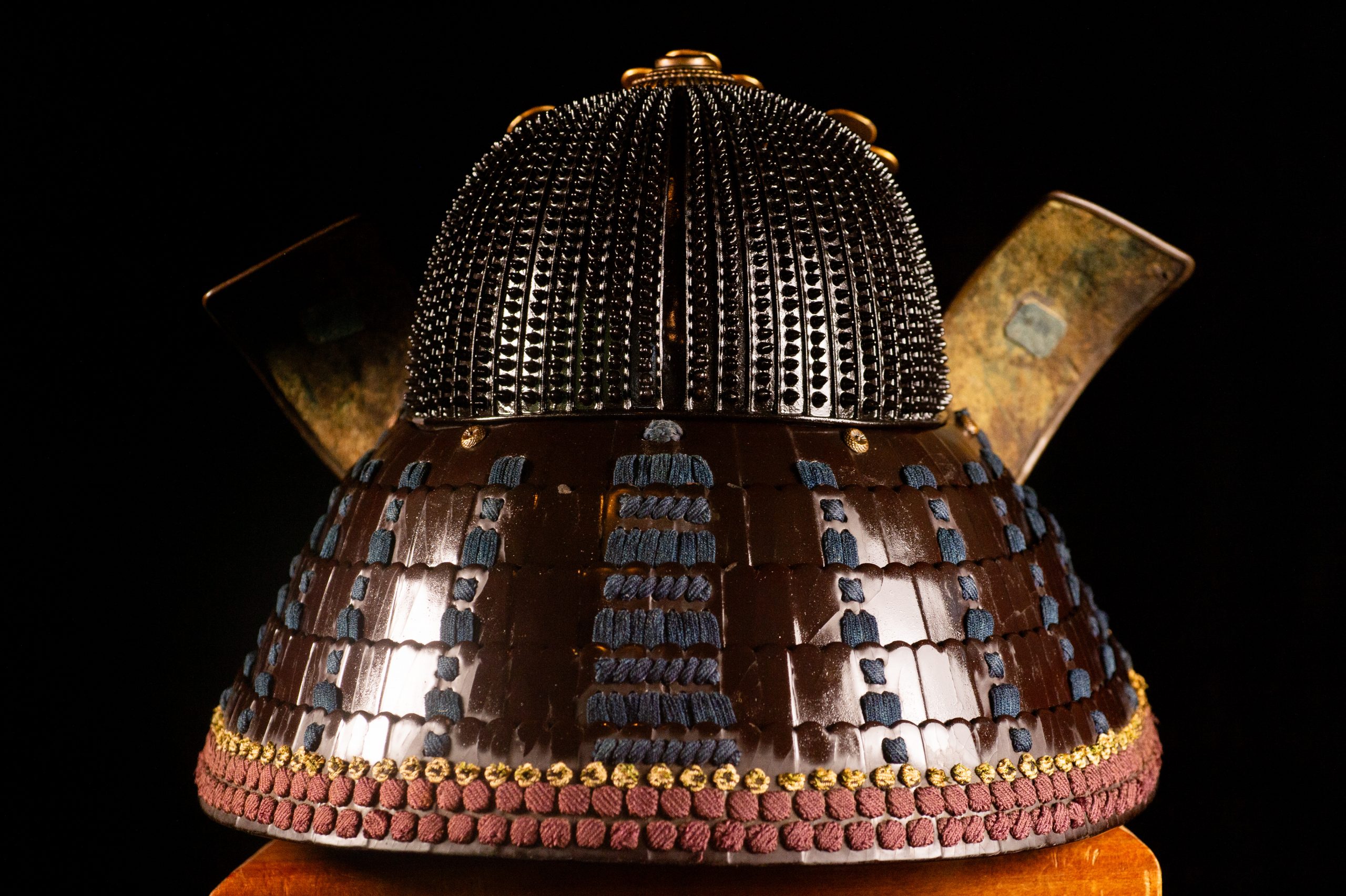
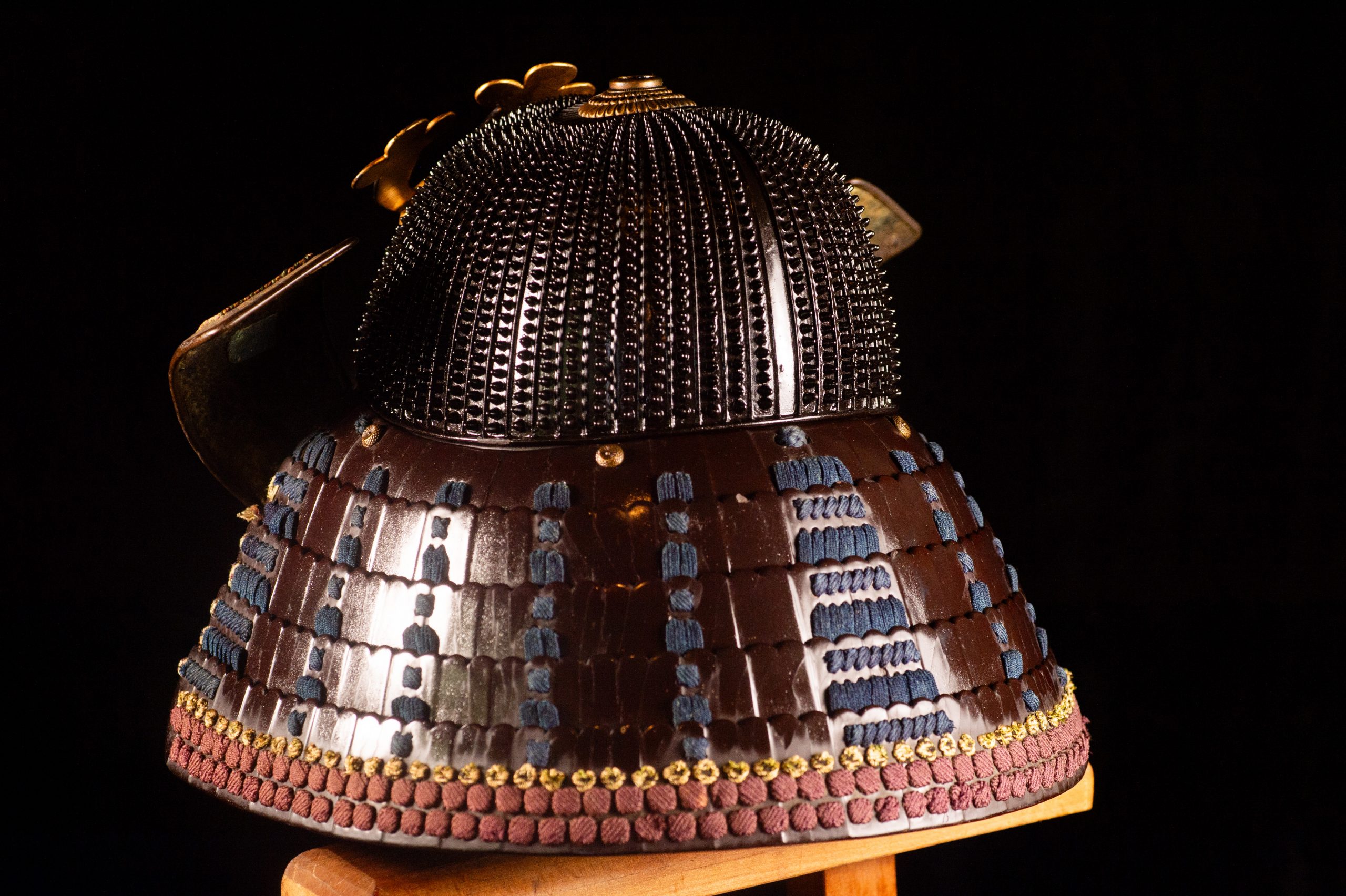
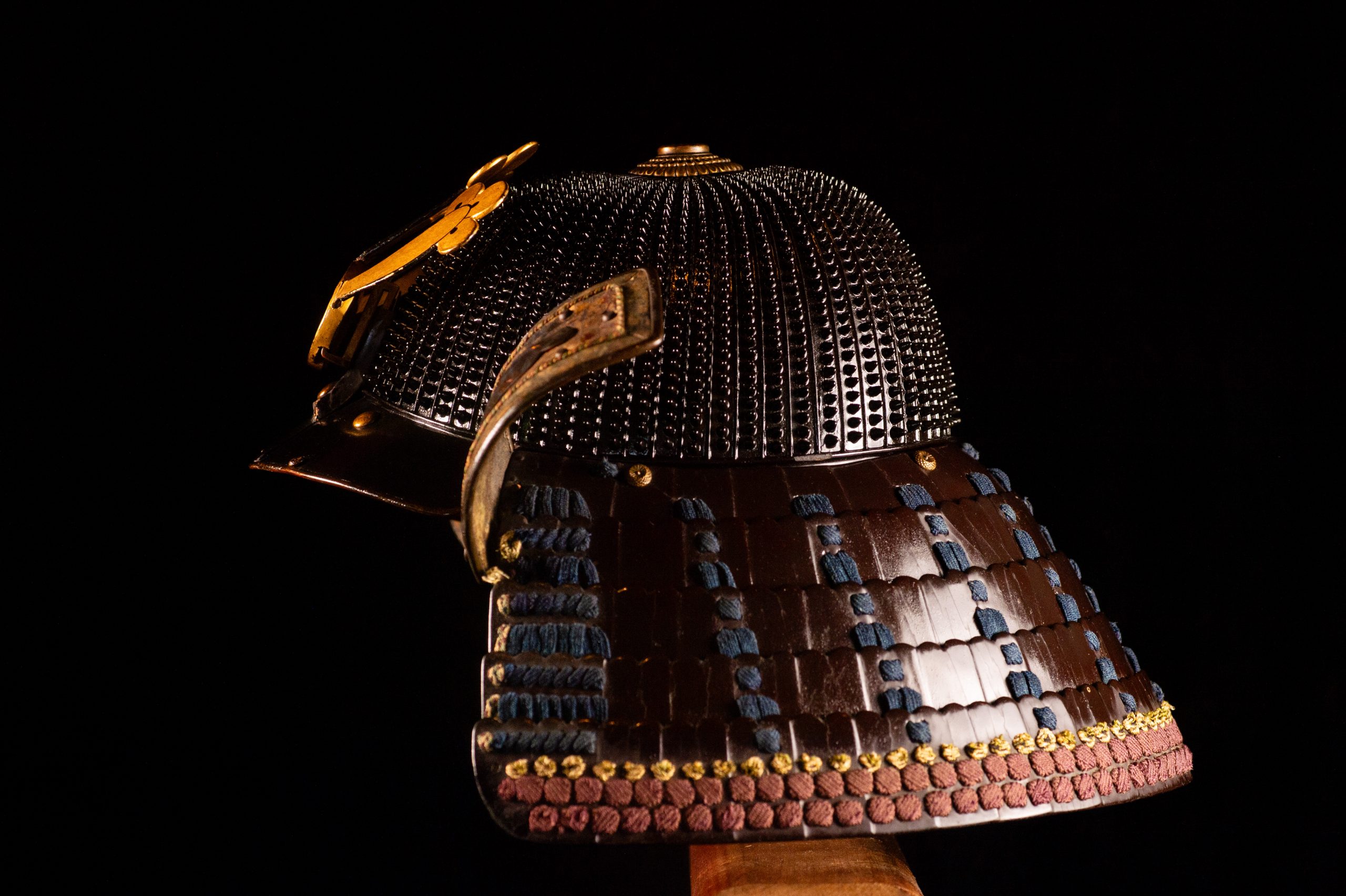
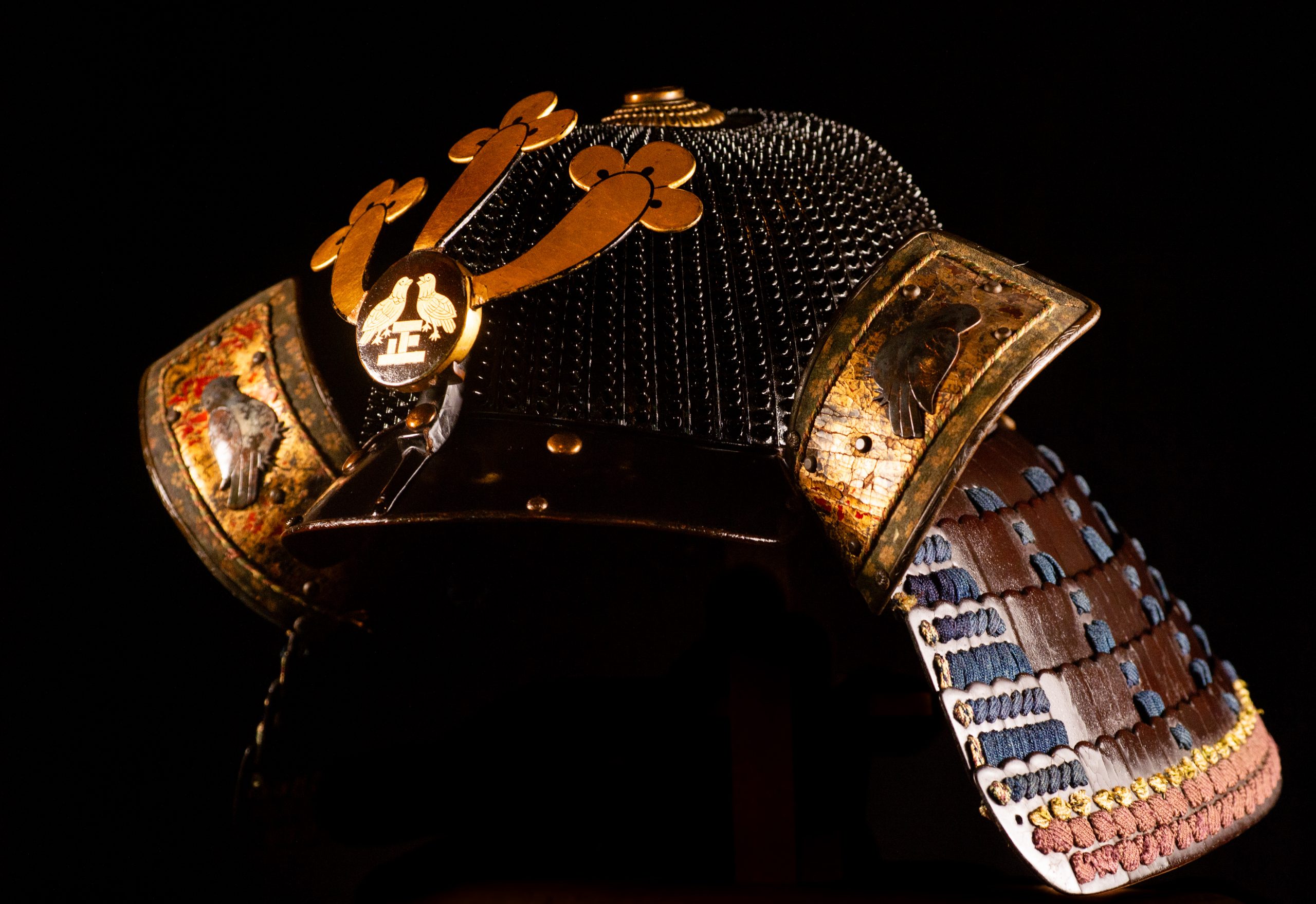
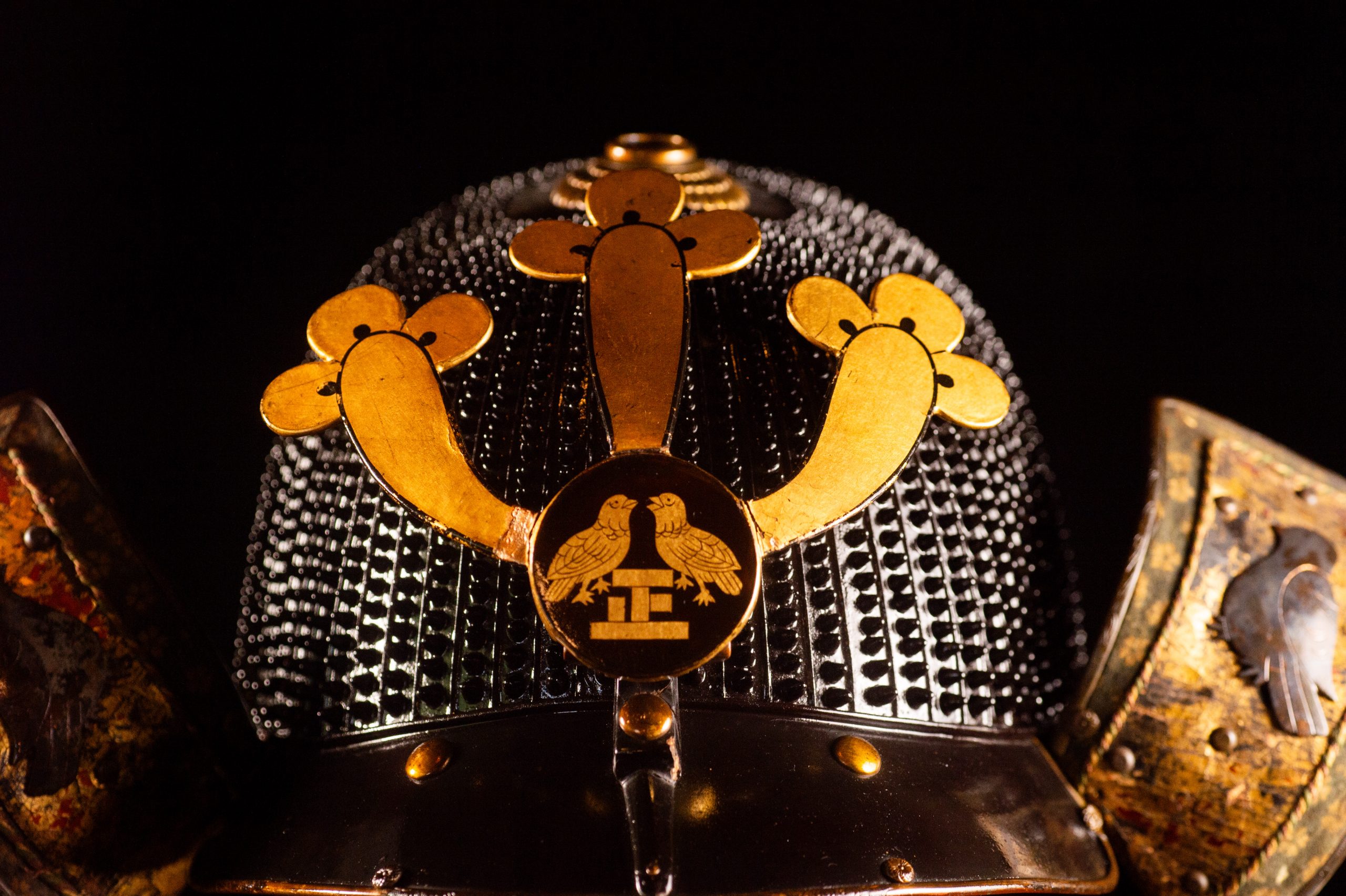
Japanese kabuto from the mid-Edo period, attributed to the Myōchin school, executed as a 62-ken Koboshi Kabuto, one of the most technically demanding traditional helmet constructions.
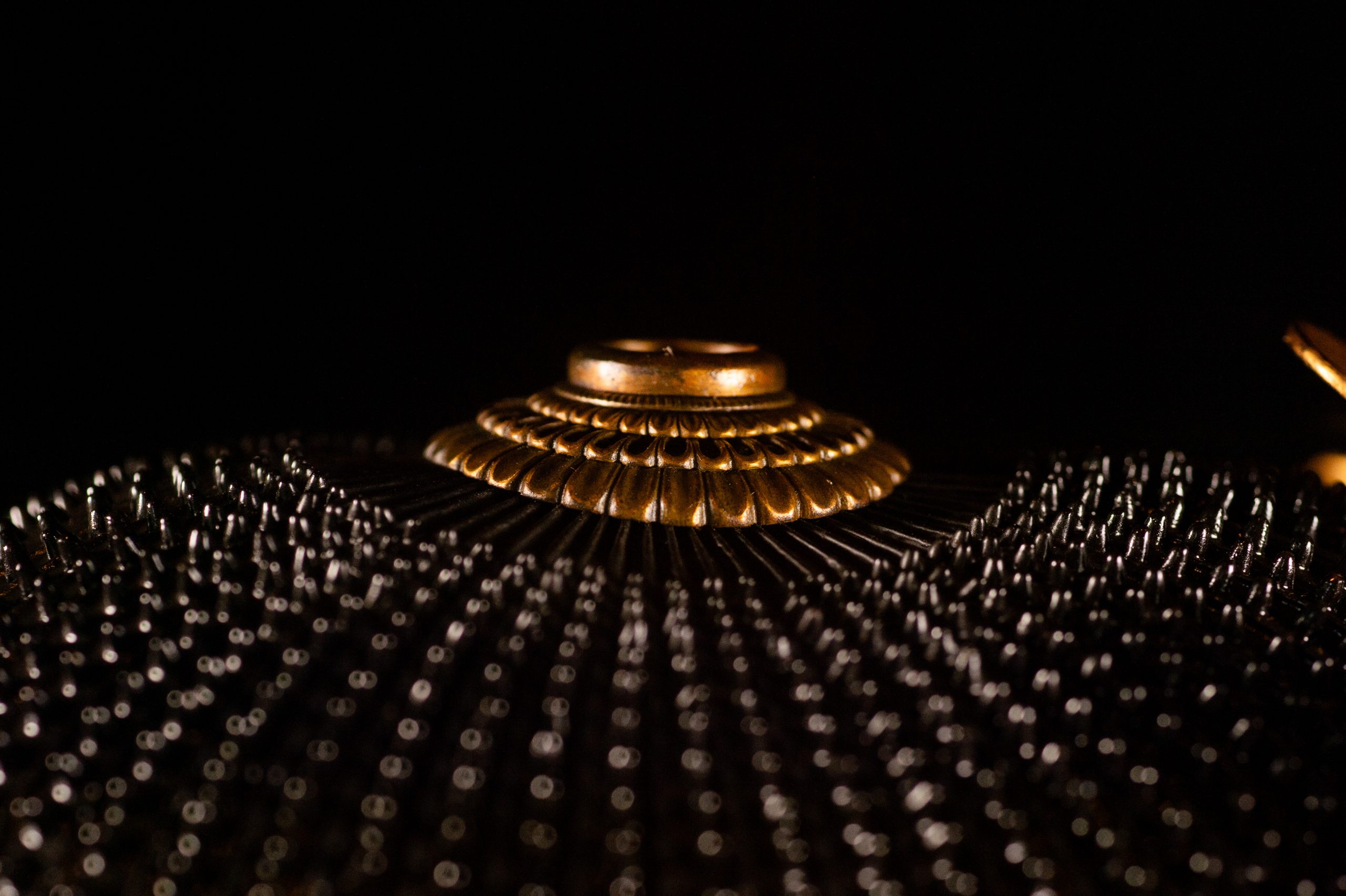
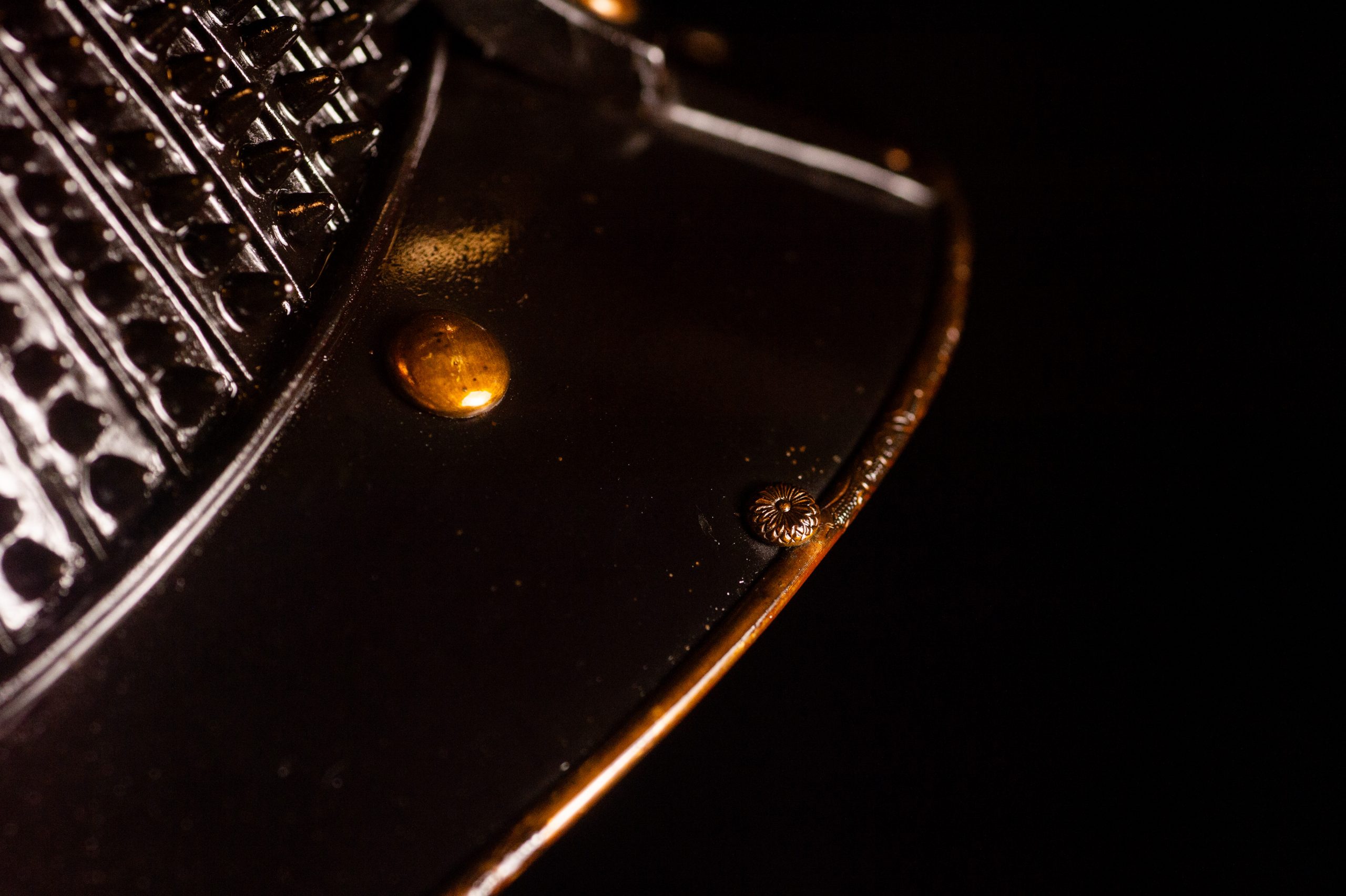
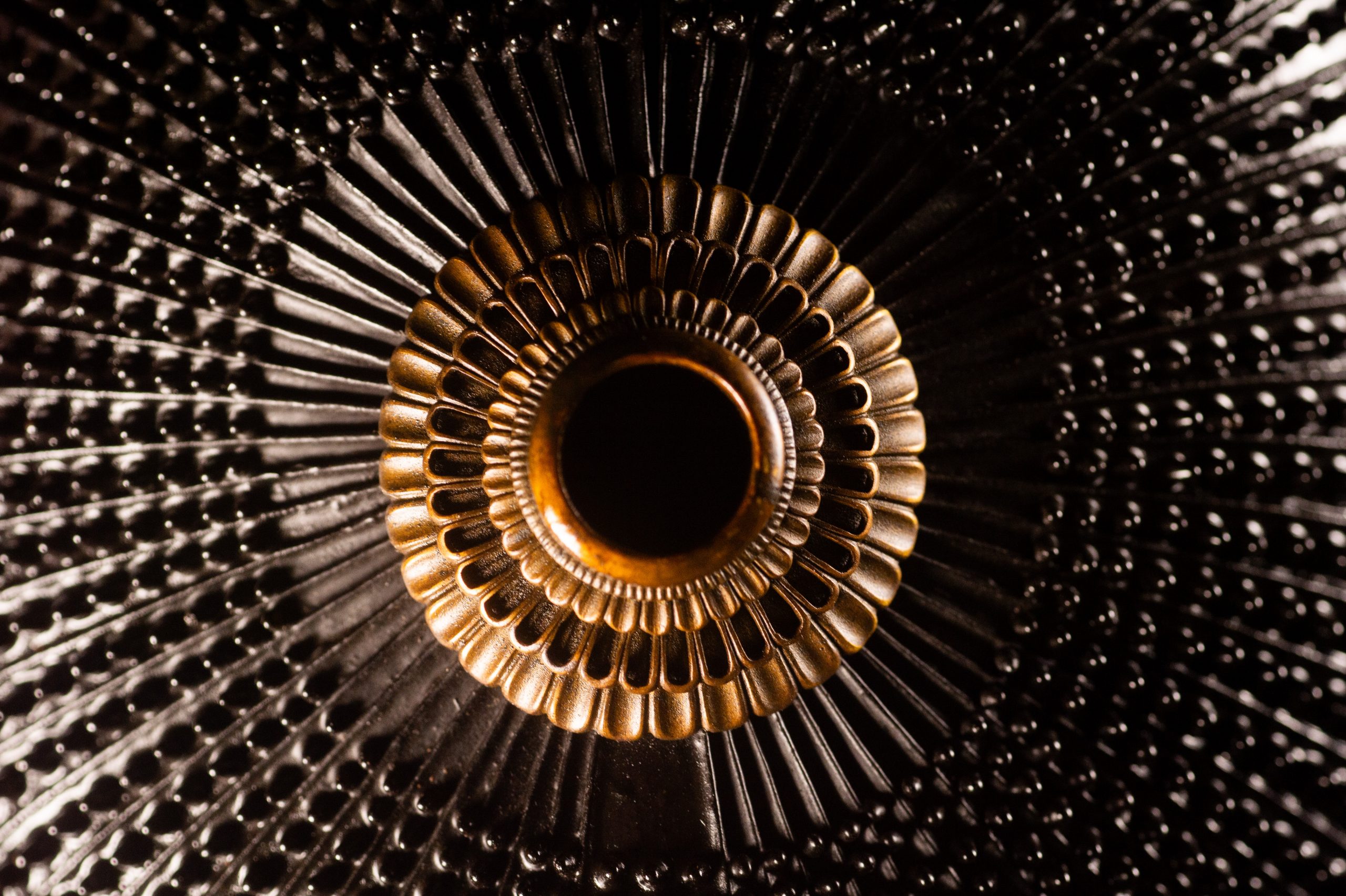
The bachi is formed by 62 vertical plates assembled with clearly visible small hoshi rivets (ko-boshi), creating a dense, uniform, studded surface. This is not a decorative choice: koboshi construction requires precise alignment and advanced metalworking skills, and is typically associated with high-level workshops, particularly within the Myōchin tradition. The profile is tall, well balanced, and visually authoritative.
At the apex, the helmet retains a well-proportioned tehen no kanamono with concentric rings and a gilt finish, correctly integrated into the structure.
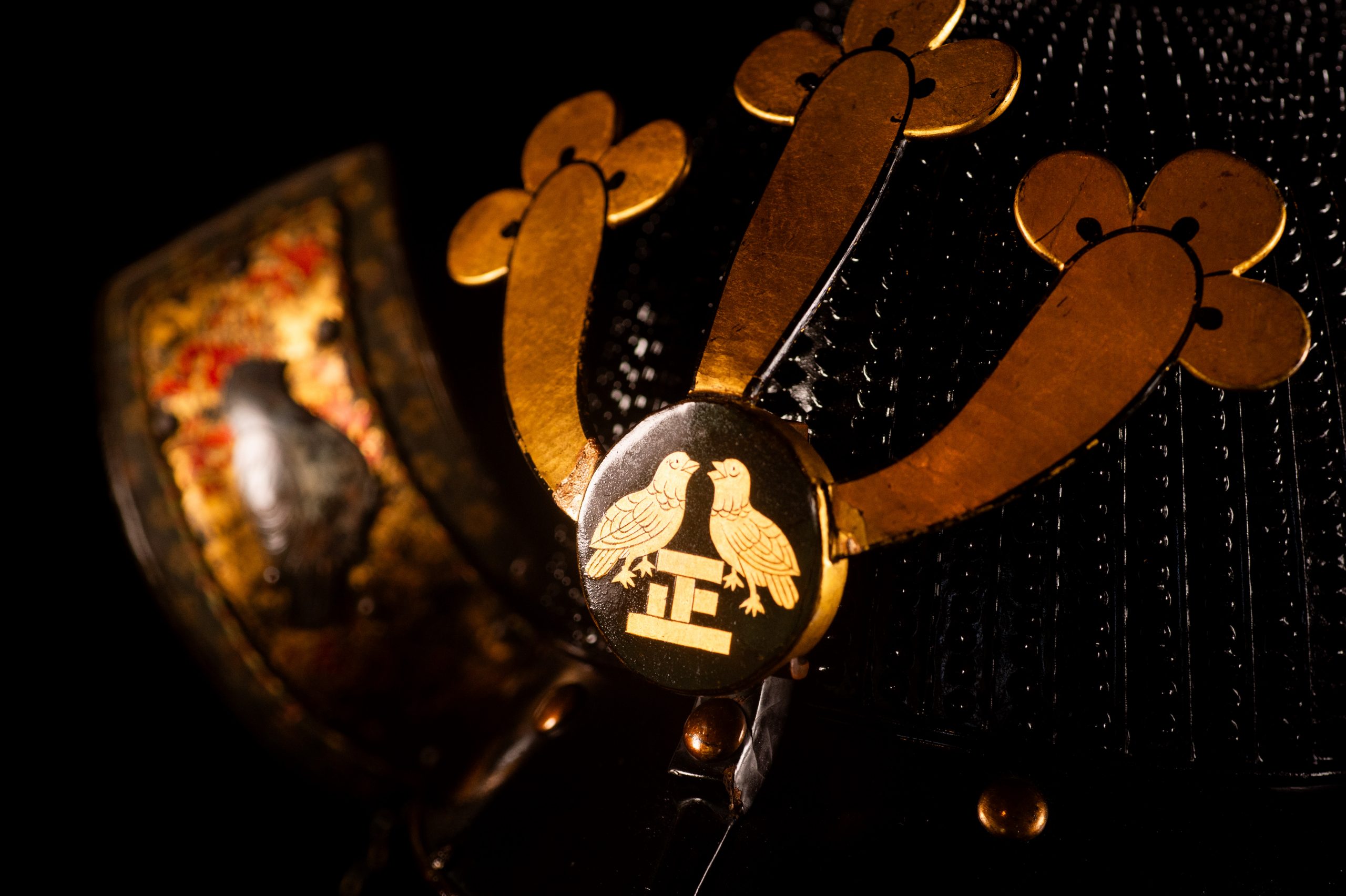
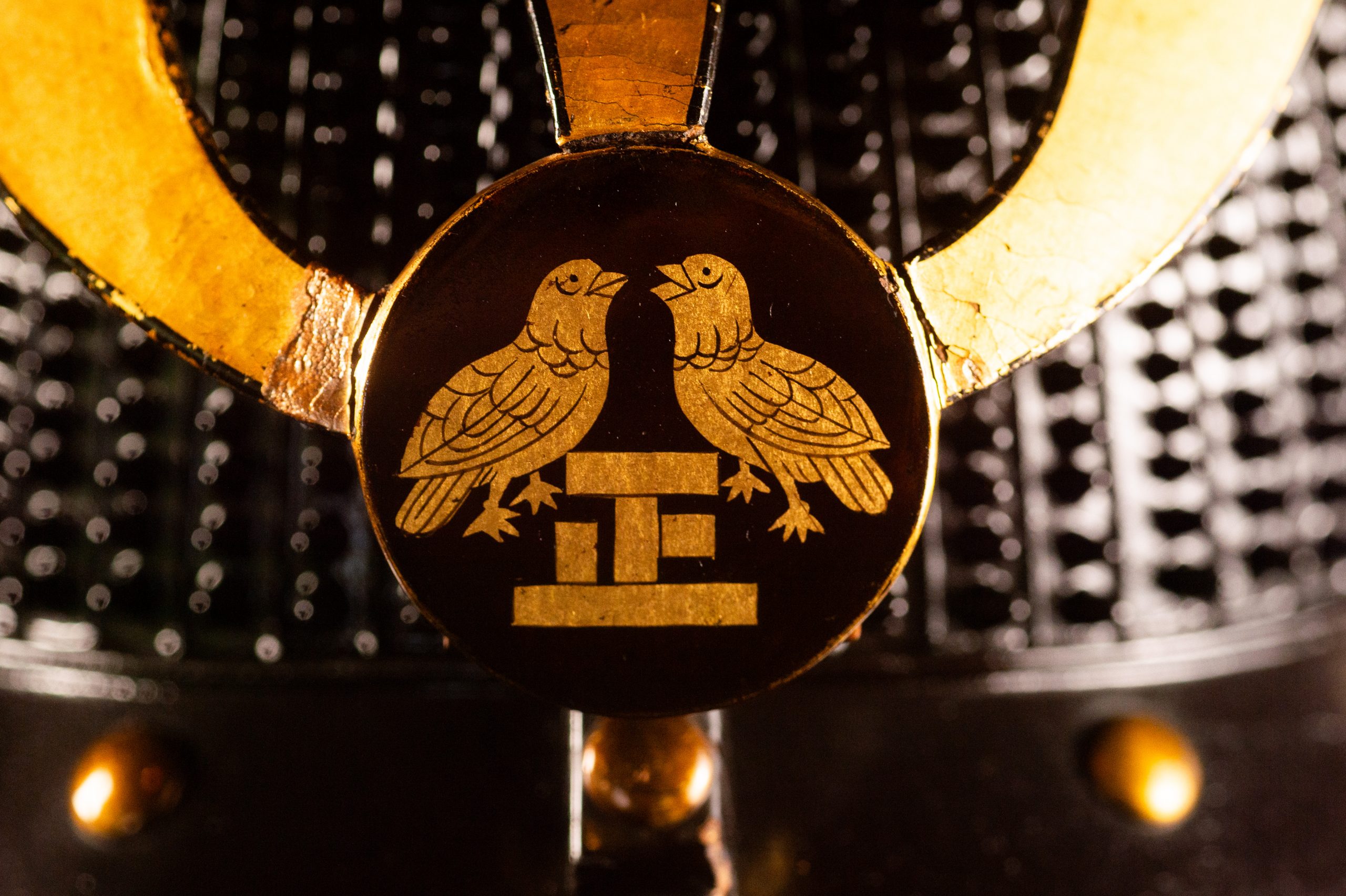
The maedate is an elegant gilt composition: elongated arms ending in floral forms frame a central black-lacquered disc depicting a pair of facing doves (hato) above a geometric mon in gold. The iconography is deliberate, clear, and consistently executed.
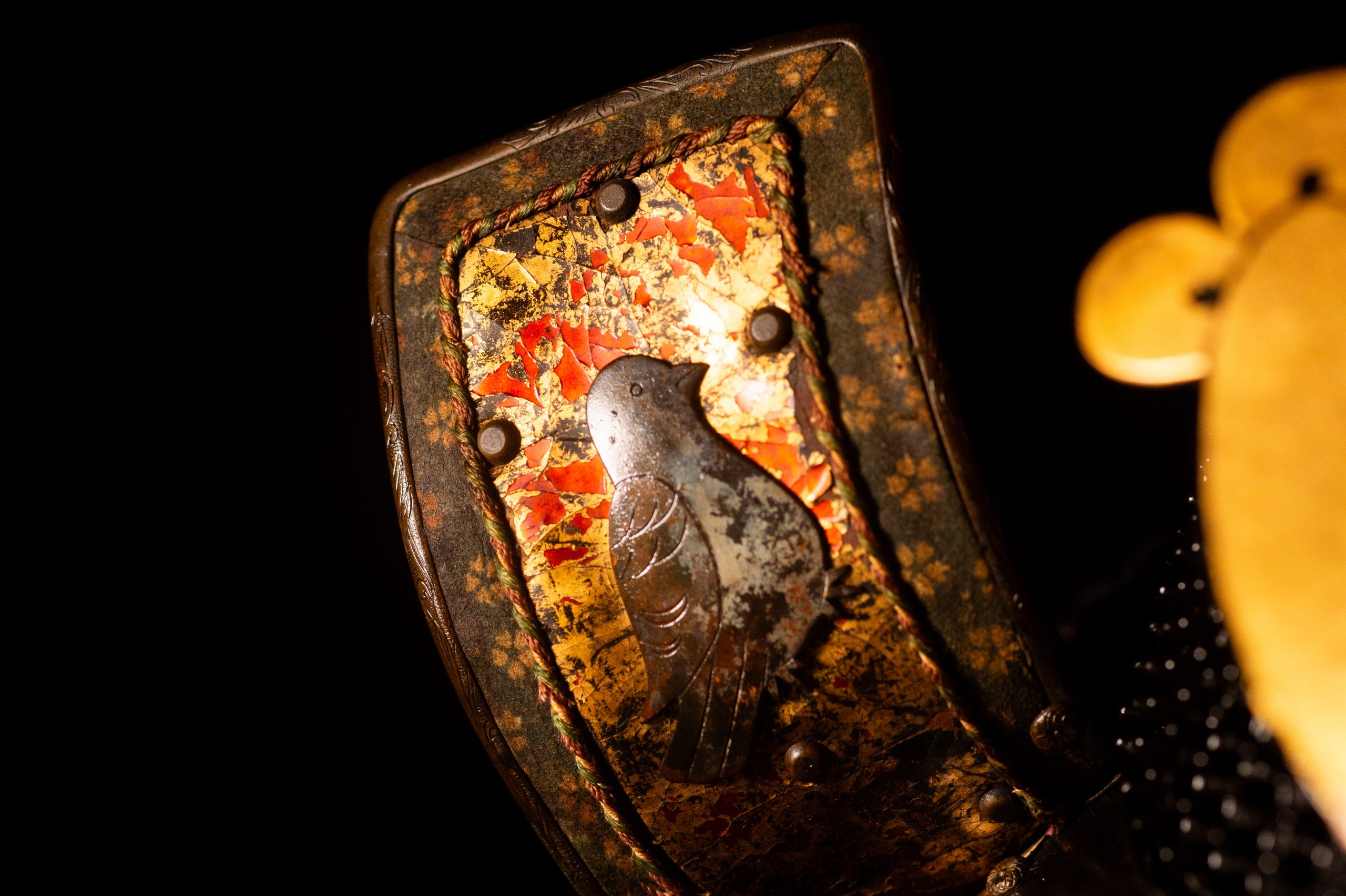
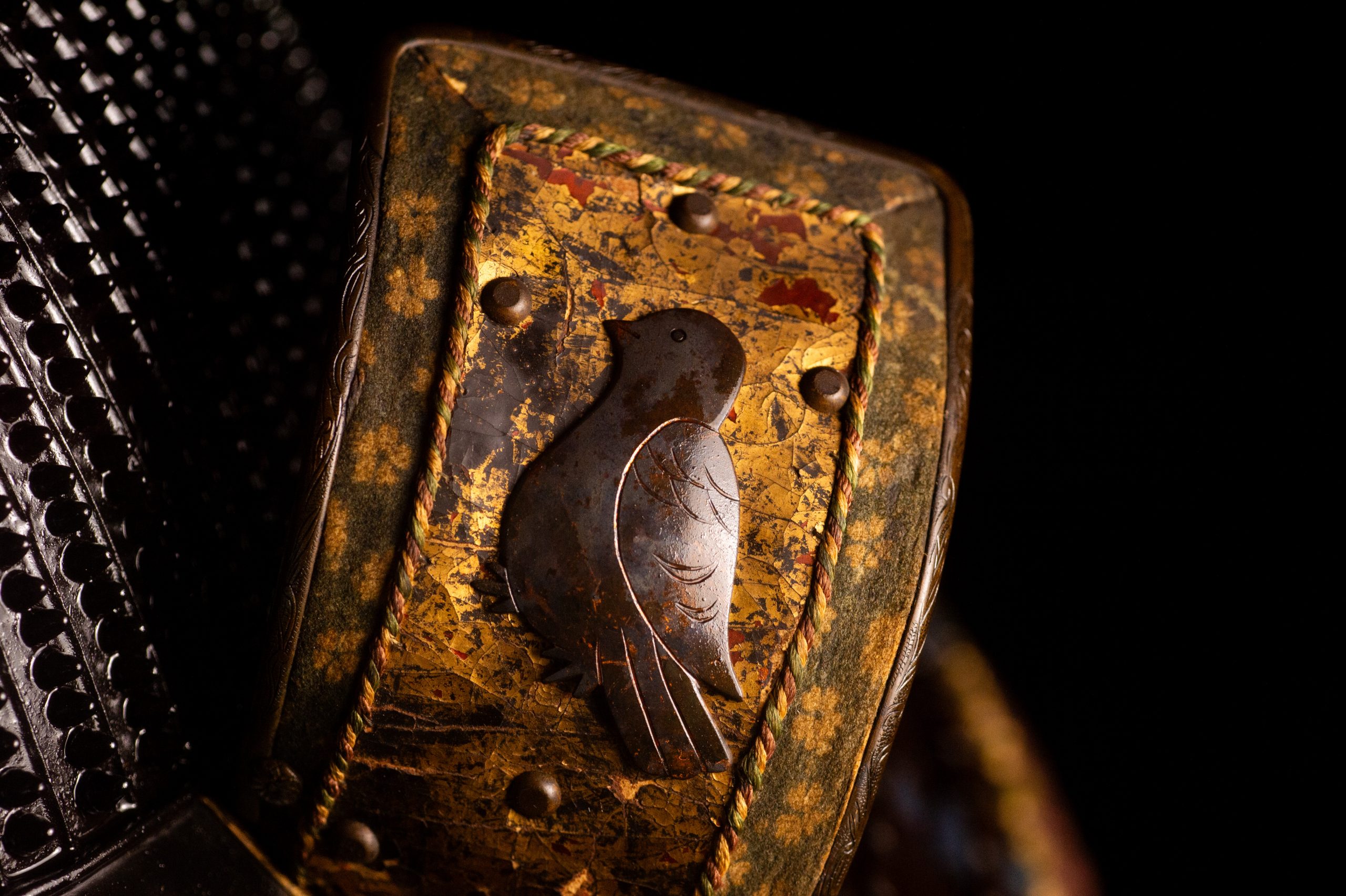
The fukigaeshi are broad and finely shaped, gilt-lacquered and decorated with metal relief doves, reinforcing the symbolic coherence of the helmet. This is not random ornamentation: the dove is traditionally associated with Hachiman, the warrior deity and protector of the samurai, suggesting a devotional or personal emblem rather than a strictly clan-specific attribution.
The shikoro remains structurally sound, with well-articulated lames and odoshi lacing in subdued blue tones combined with purplish-red registers—an elegant and period-appropriate palette typical of mid-Edo armor. The overall composition balances iron, dark lacquer, and gilt elements with restraint and consistency.
This kabuto stands as a serious and technically accomplished example of Myōchin craftsmanship in the mid-Edo period: authoritative, disciplined, and symbolically grounded, reflecting martial continuity in a time of peace without sacrificing formal legitimacy.
