Description
About US:
Our photographs are taken without retouching or photoshop to ensure that the customer can judge the reality of the object. Thanks to a constant work directly with the best collectors, museums and galleries in Japan and friendship with them, along with a profit margin much lower than the European competition we can offer objects so that many people can choose to have authentic pieces with hundreds of years at more than competitive prices. After all, samurai art is our passion and we want to share it with the world.
About The armor:
It Comes with certificate of SupeinNihonto.
ITEM:
Japanese Edo period Samurai Armor Gusoku
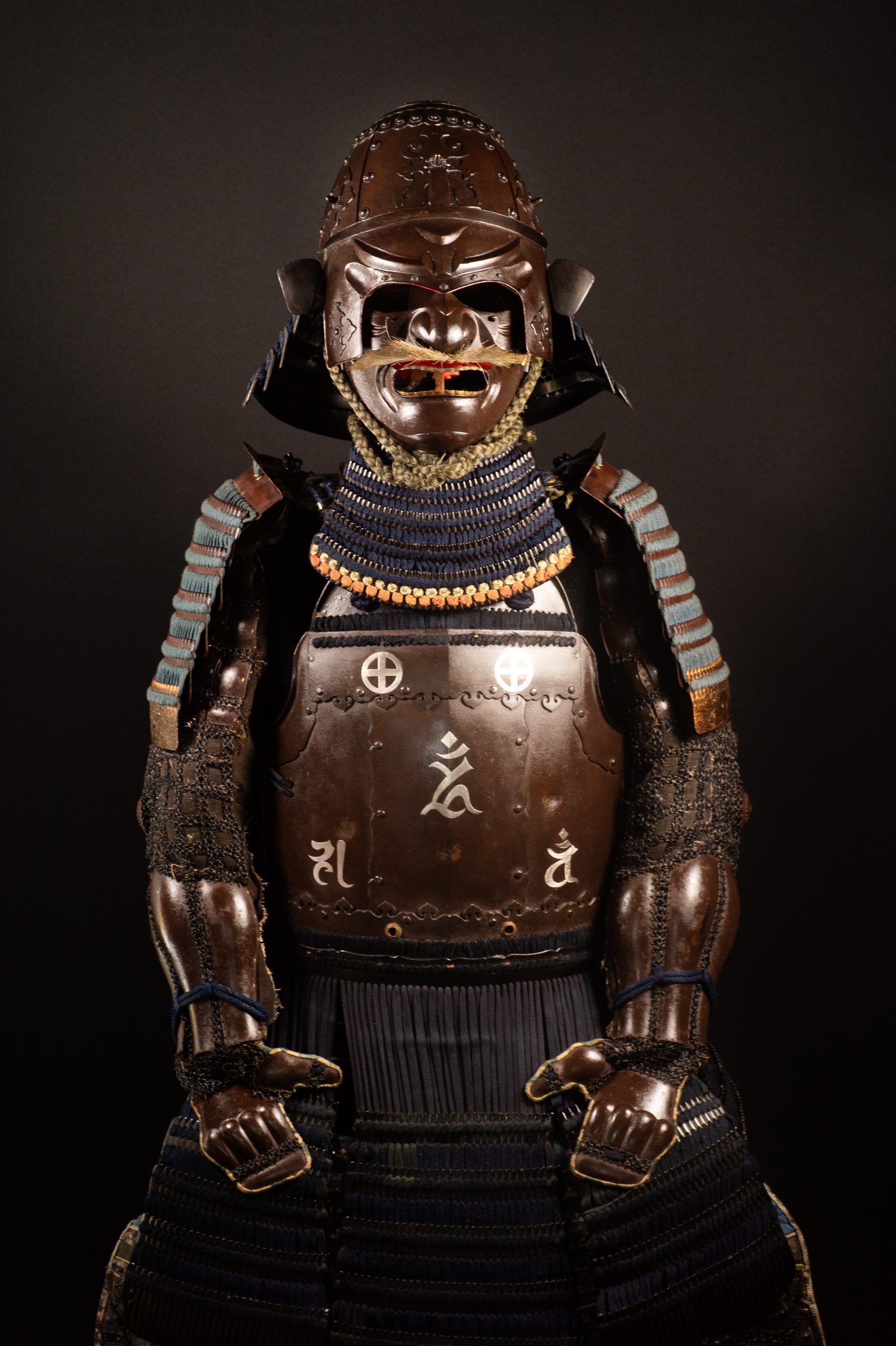
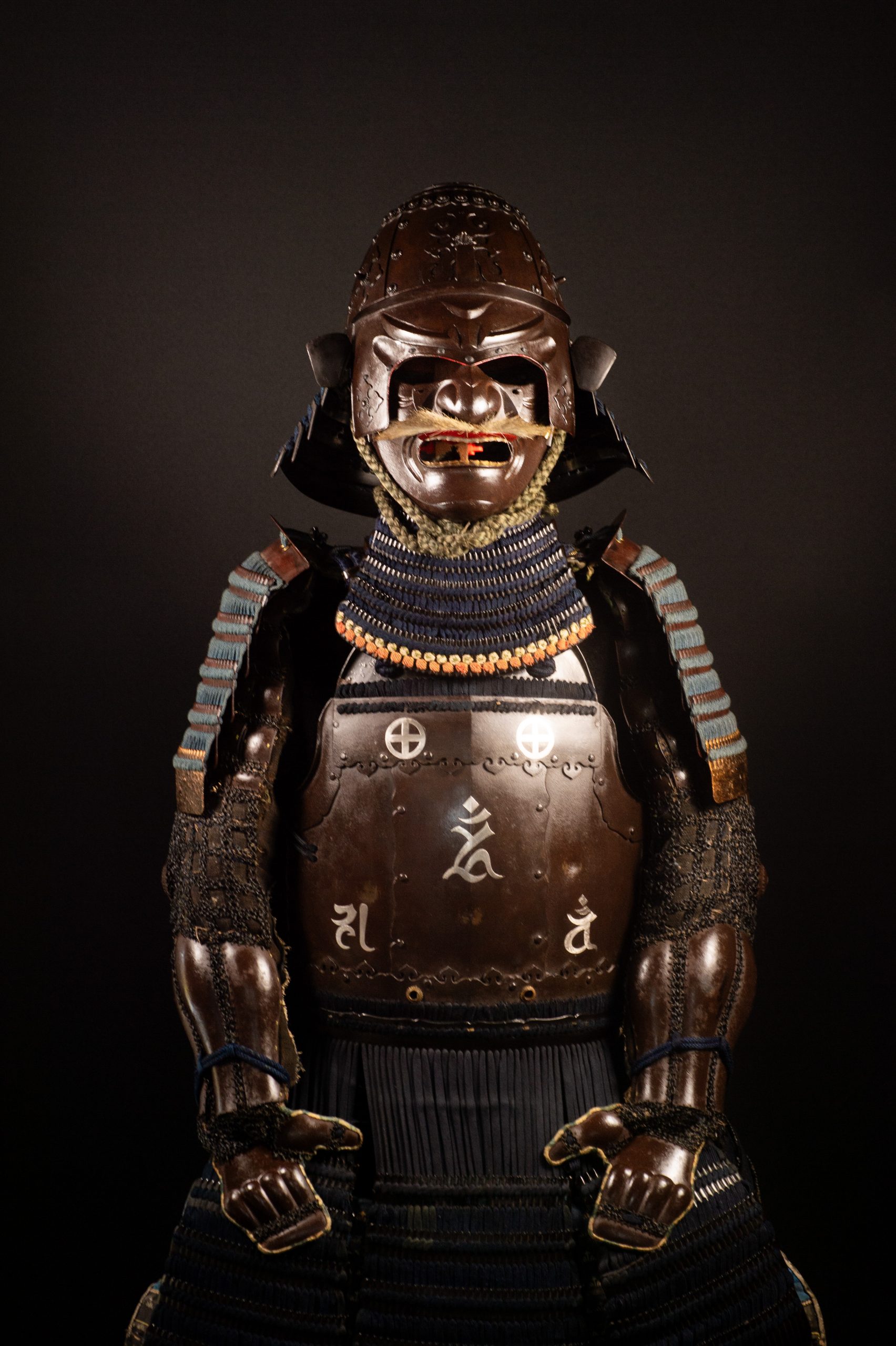
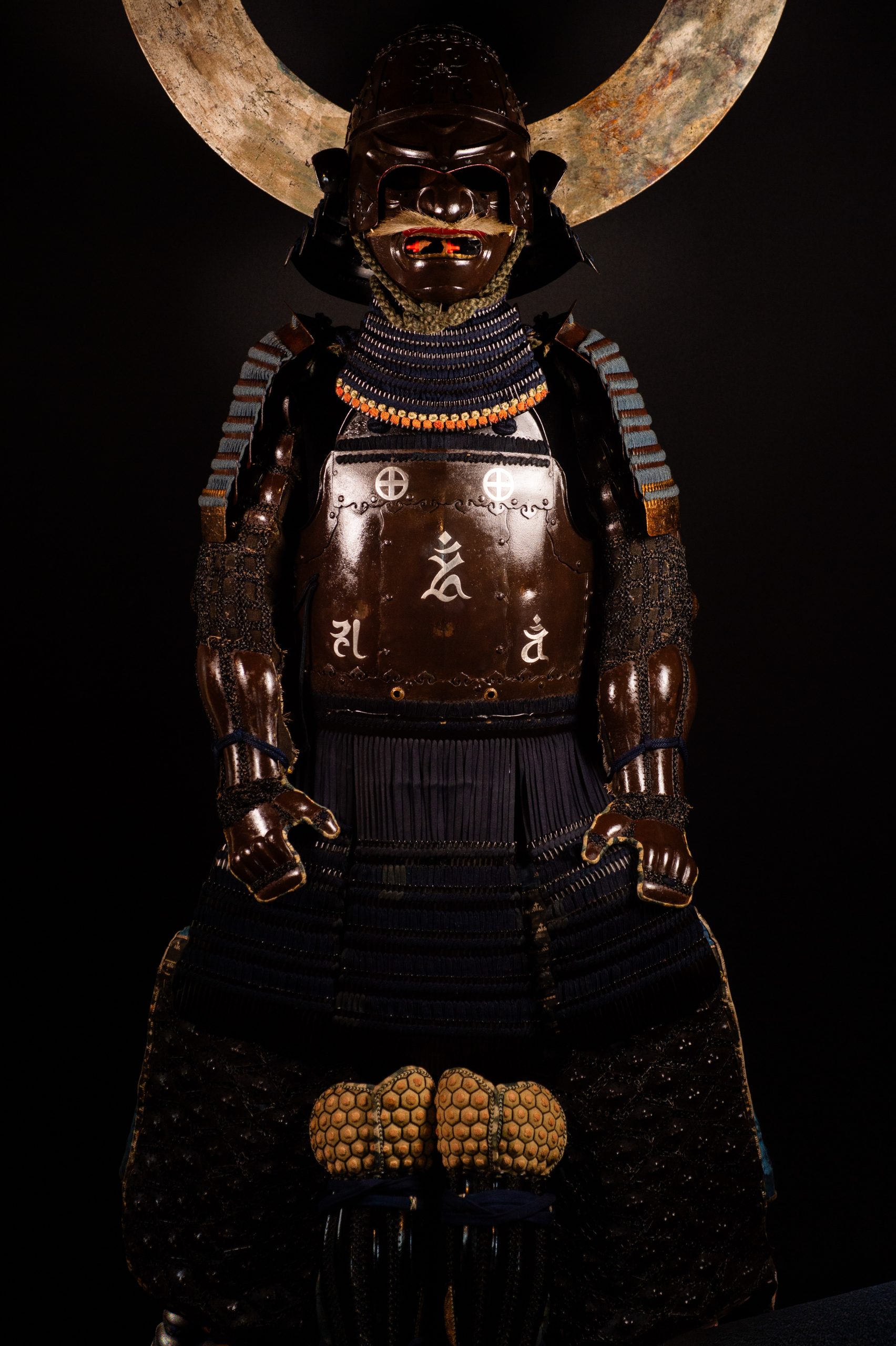
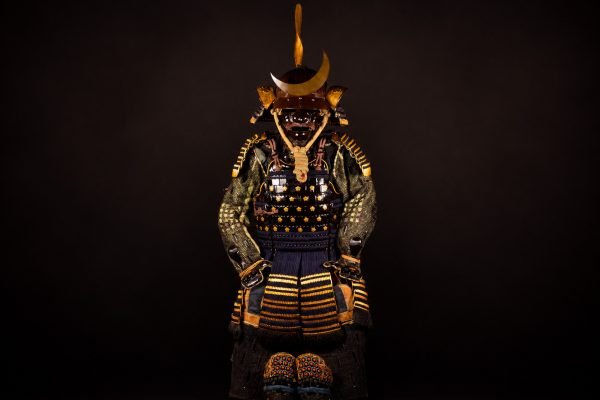
This remarkable Japanese armor of the tōsei gusoku type, datable to approximately c. 1800, Edo period, embodies with extraordinary visual force the perfect synthesis of martial authority, artisanal refinement, and theatrical presence. It is a highly imposing ensemble, conceived not merely as protection, but as a decisive statement of status, identity, and warrior power.
Kabuto
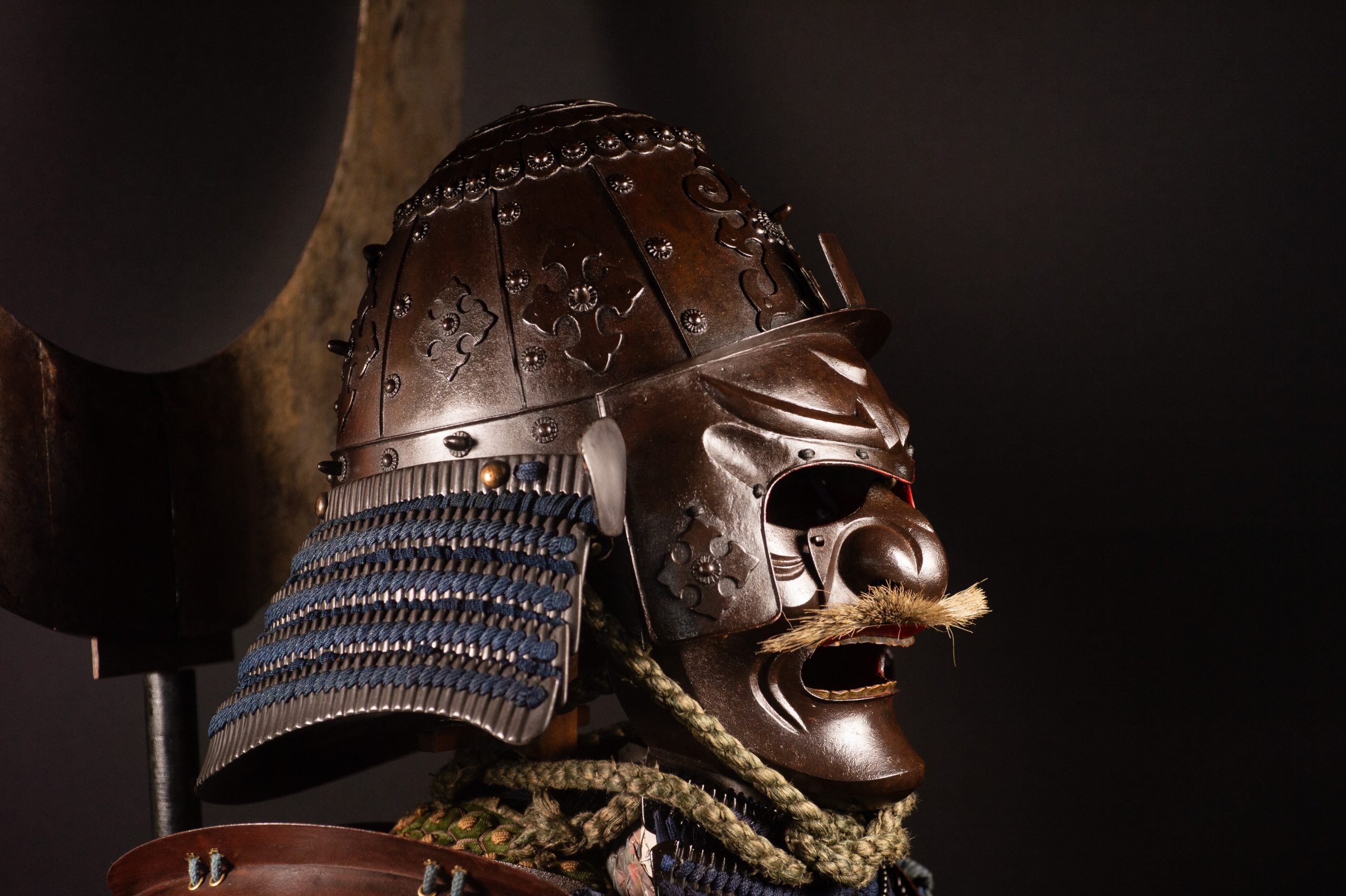
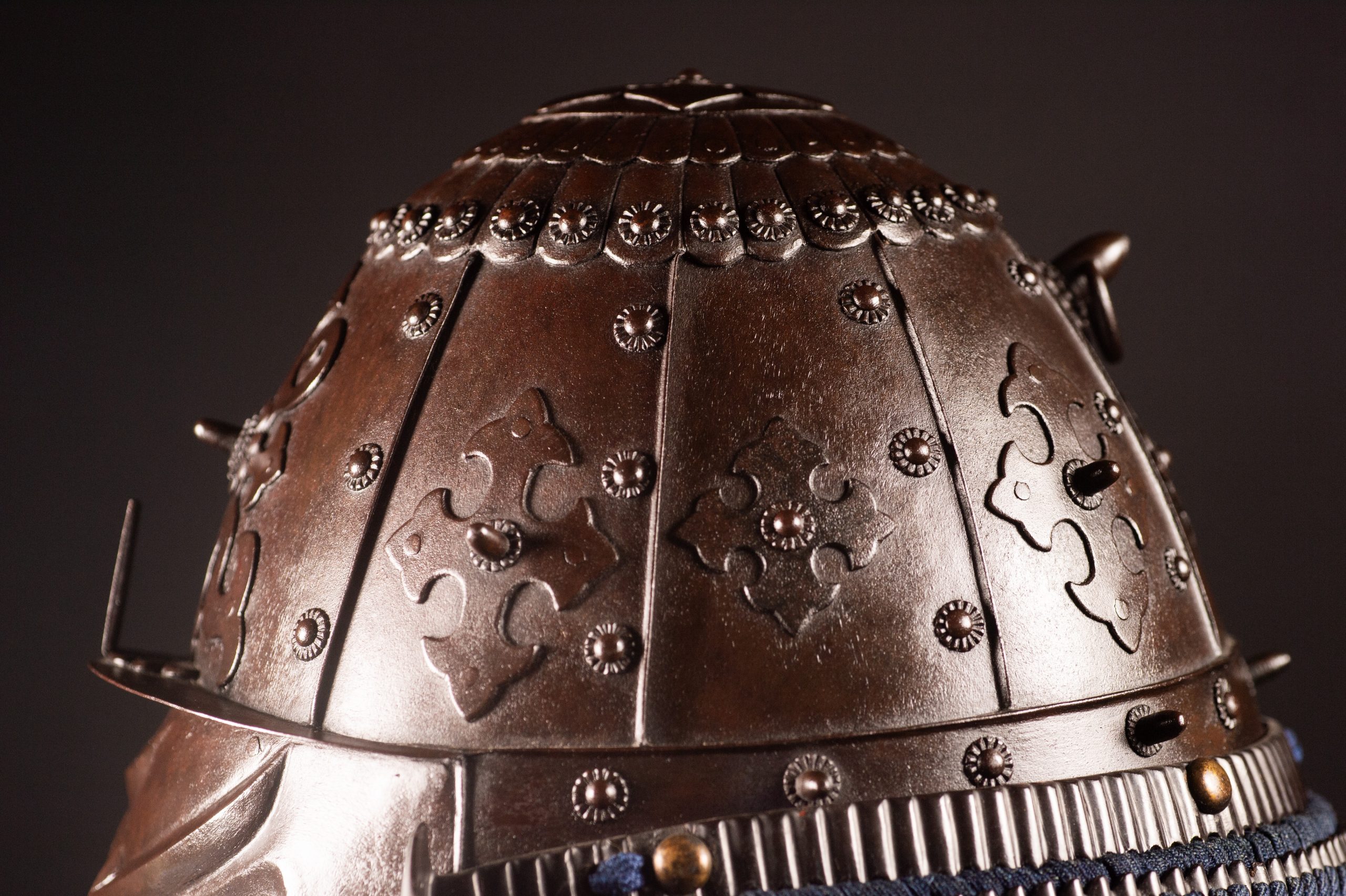
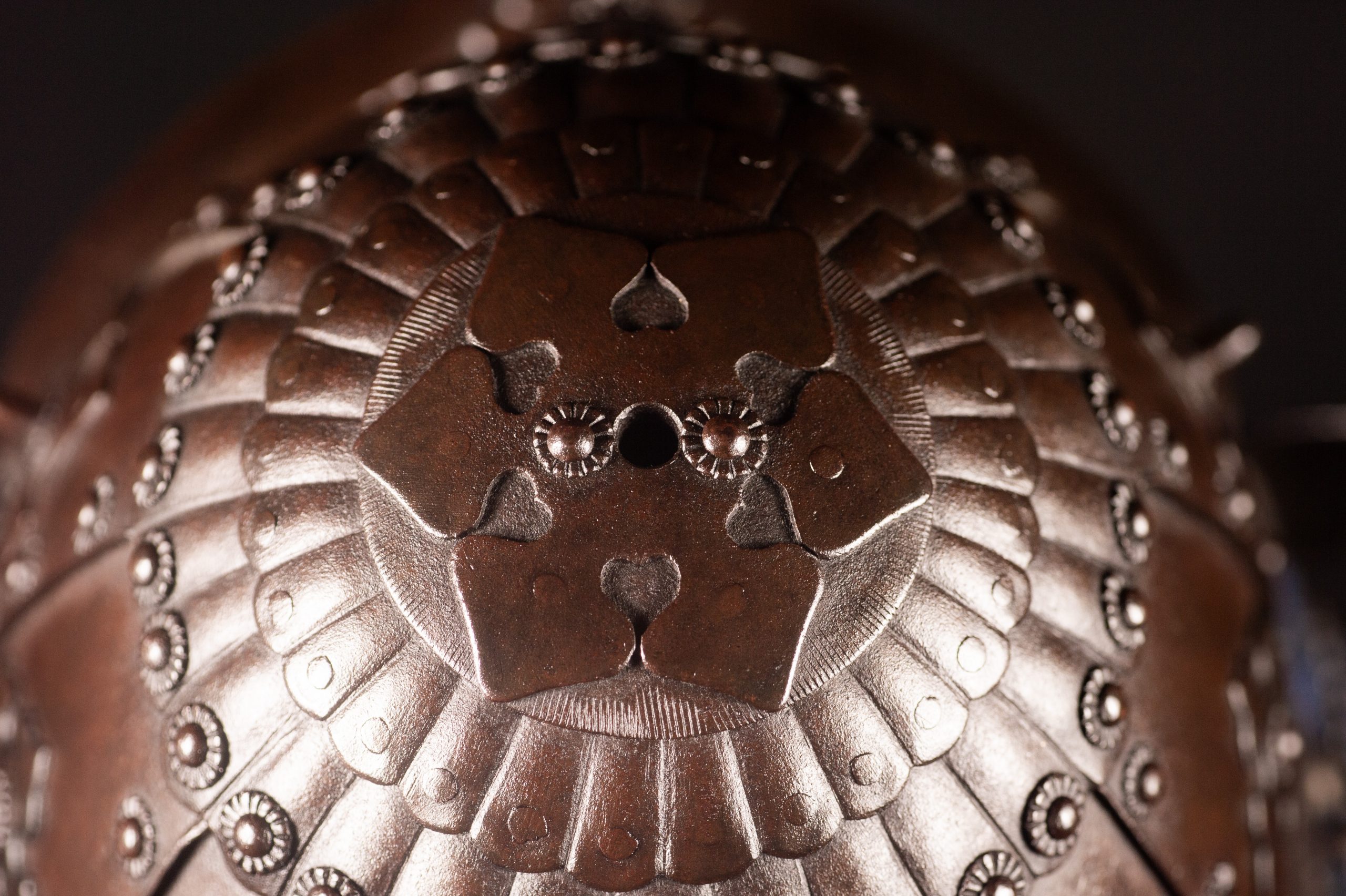
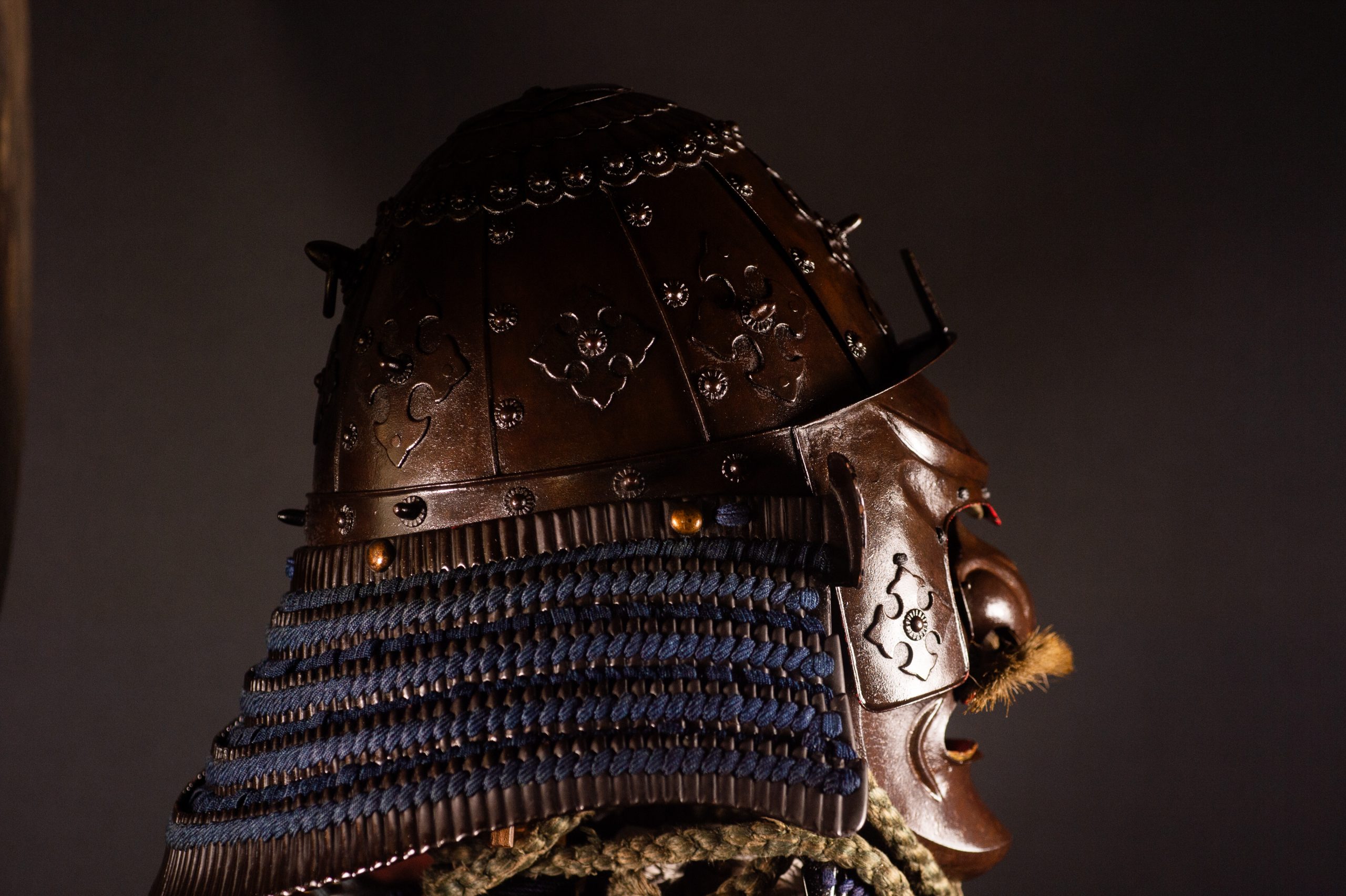
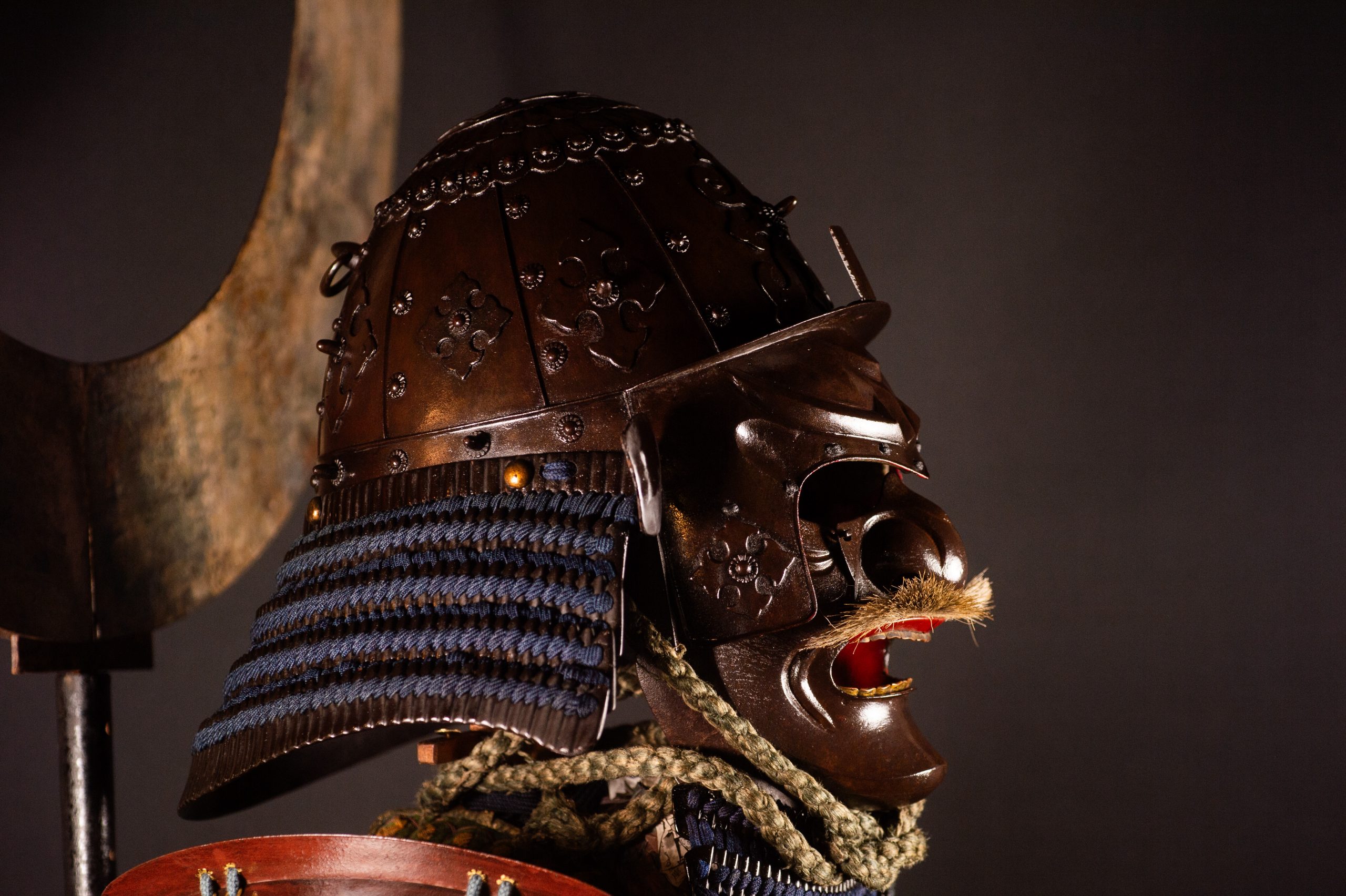
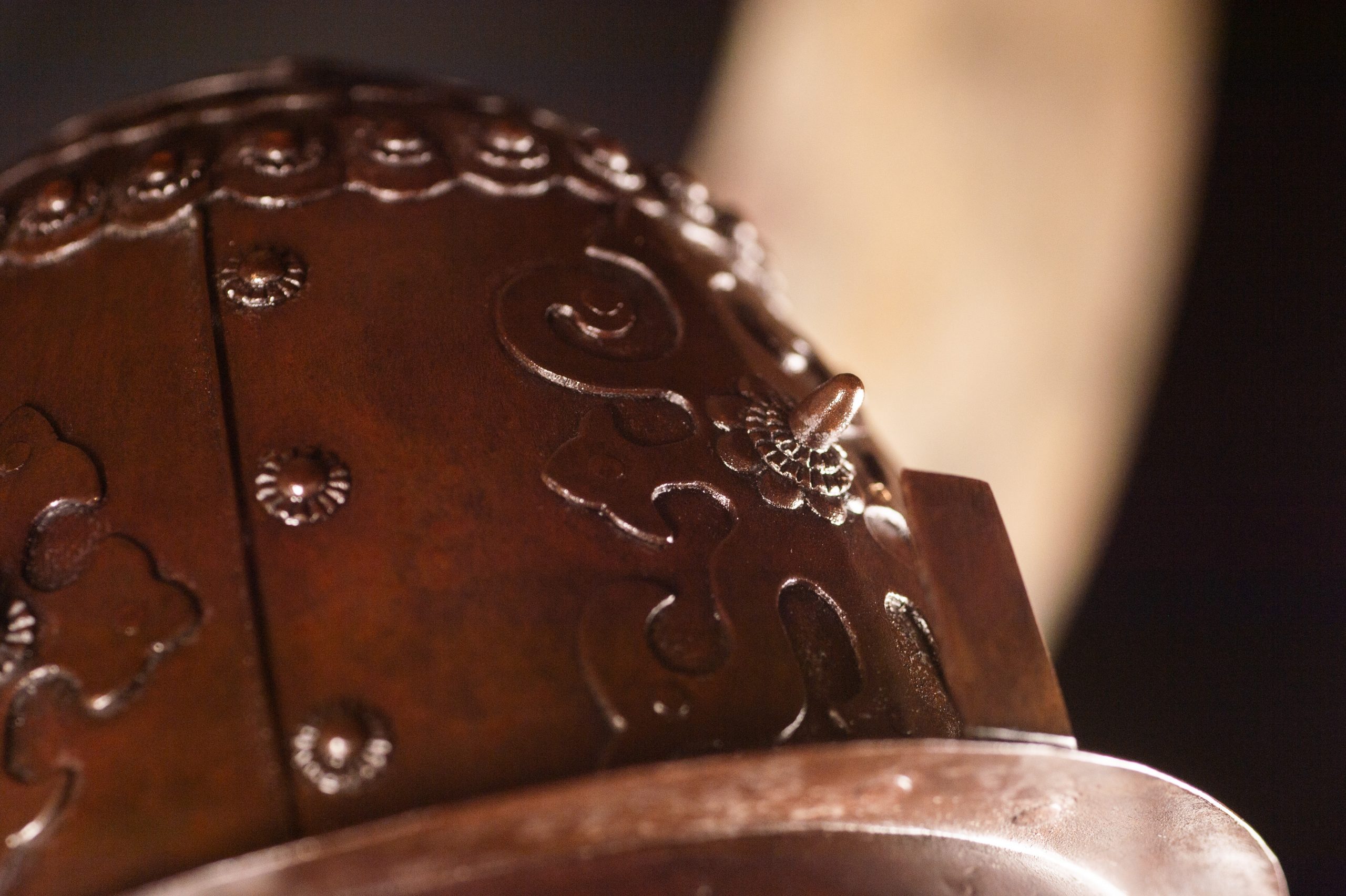
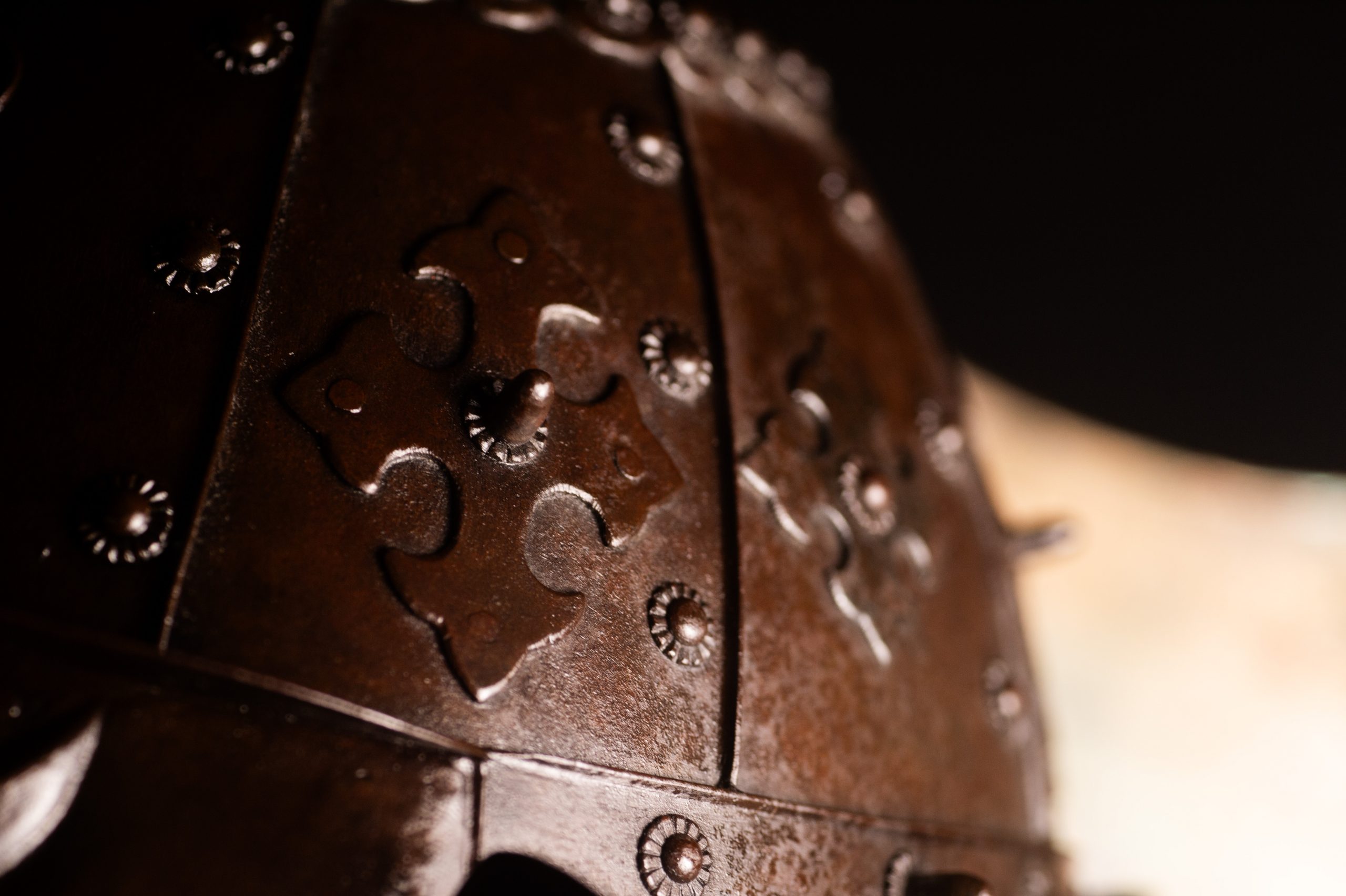
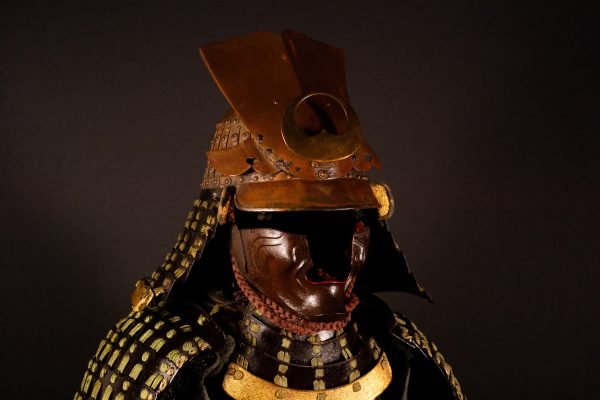
The ensemble is dominated by a kabuto of singular character, with a rounded bowl and powerful silhouette, belonging to the sphere of late-sensibility kawari kabuto, in which formal elegance is expressed not through excess, but through the balance of volume, proportion, and carefully considered relief ornament. The surface of the helmet is enriched with decorative appliqué work and meticulously distributed ornamental rivets, creating a sophisticated sculptural reading entirely coherent with the rest of the armor. Its presence is severe, compact, and noble, far removed from the ordinary.
Menpō
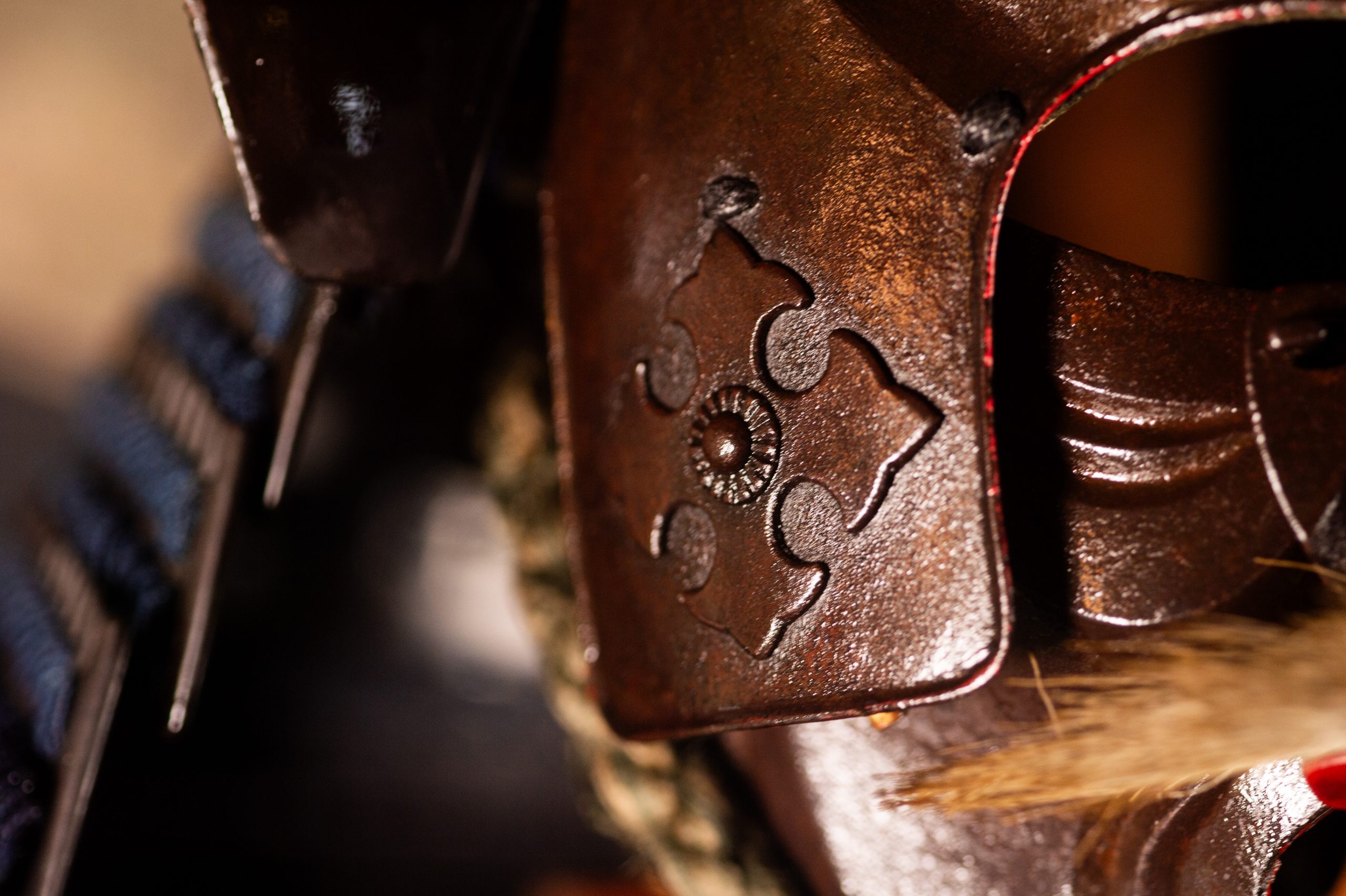
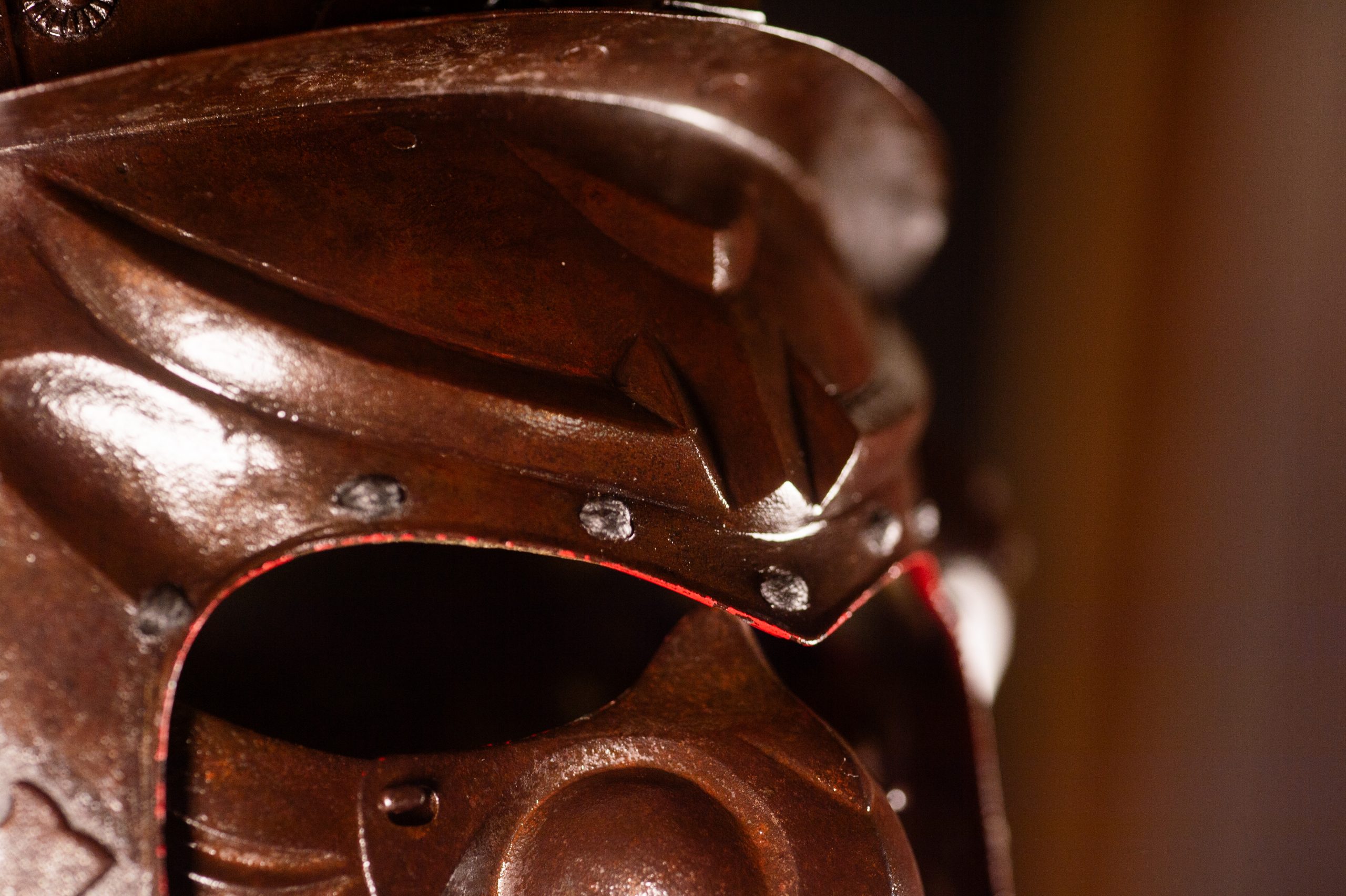
To this magnificent helmet is joined a menpō of intense expressiveness, lacquered in a dark tone, with vigorous facial modeling and a natural mustache, lending the ensemble a physiognomy of extraordinary authority. The mask does not merely complete the armor: it defines it. Its restrained, dry, and resolved expression conveys precisely what the finest samurai armor was meant to project: determination, discipline, and command.
Dō and Silver Inlays
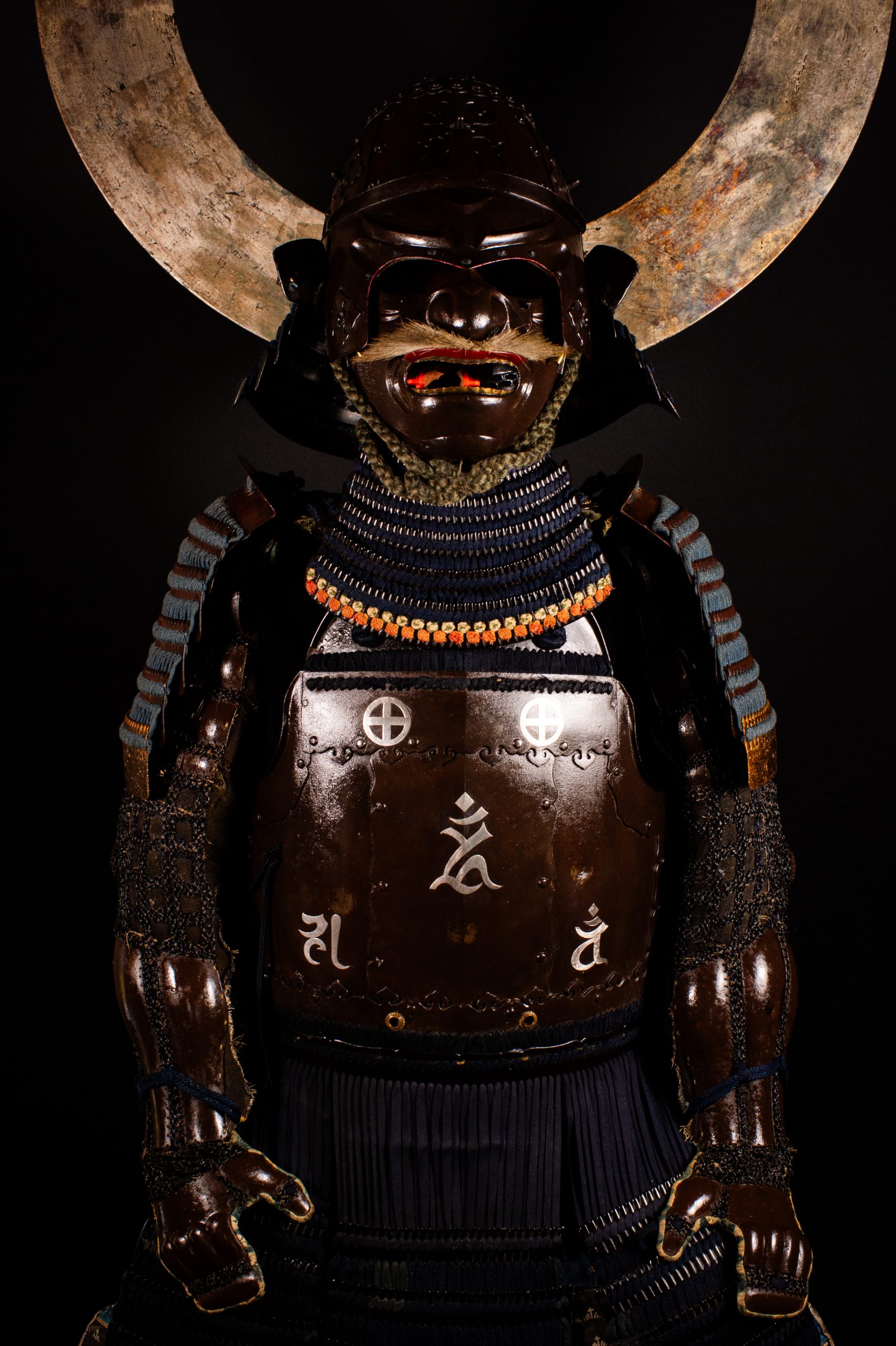
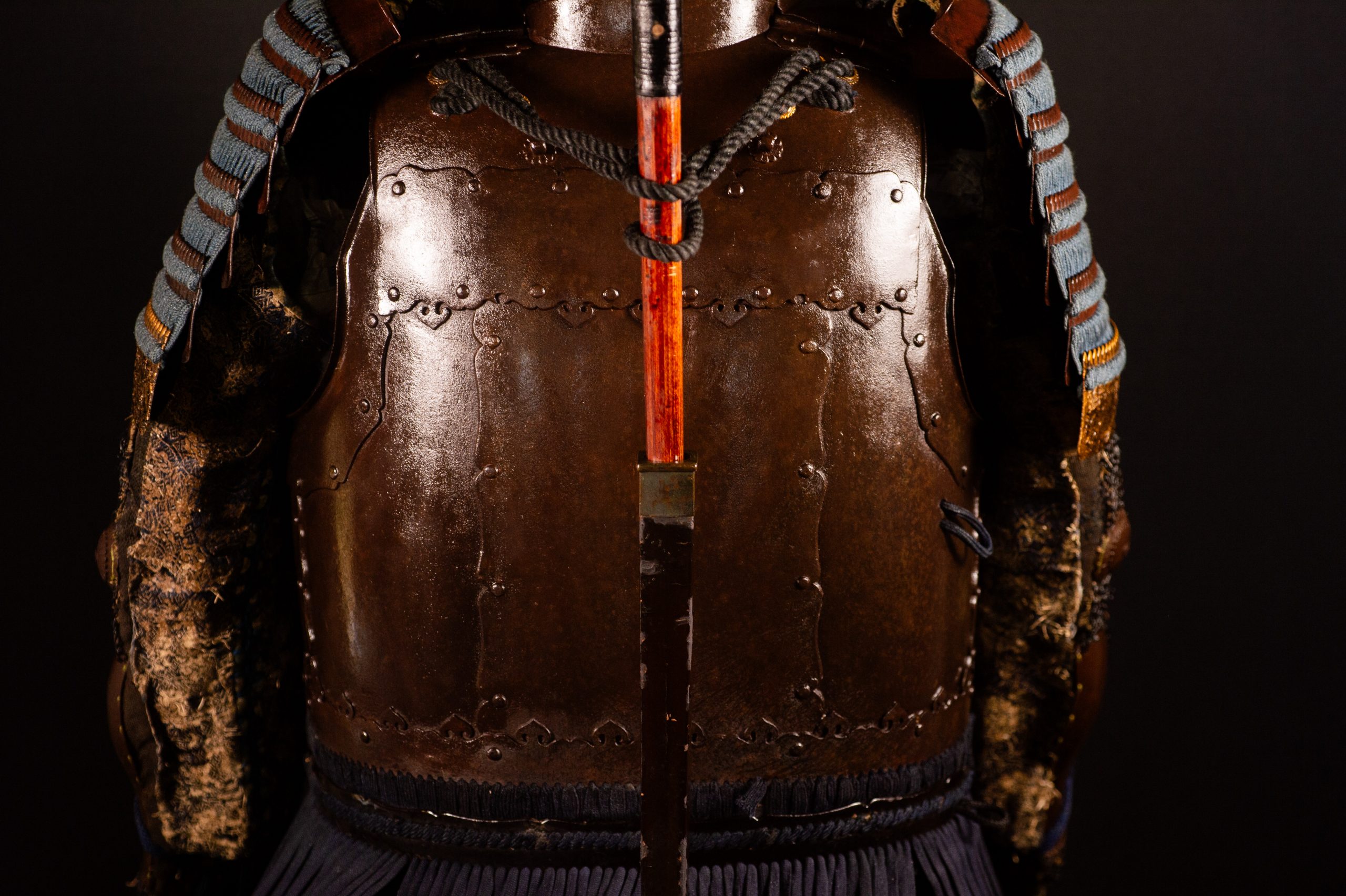
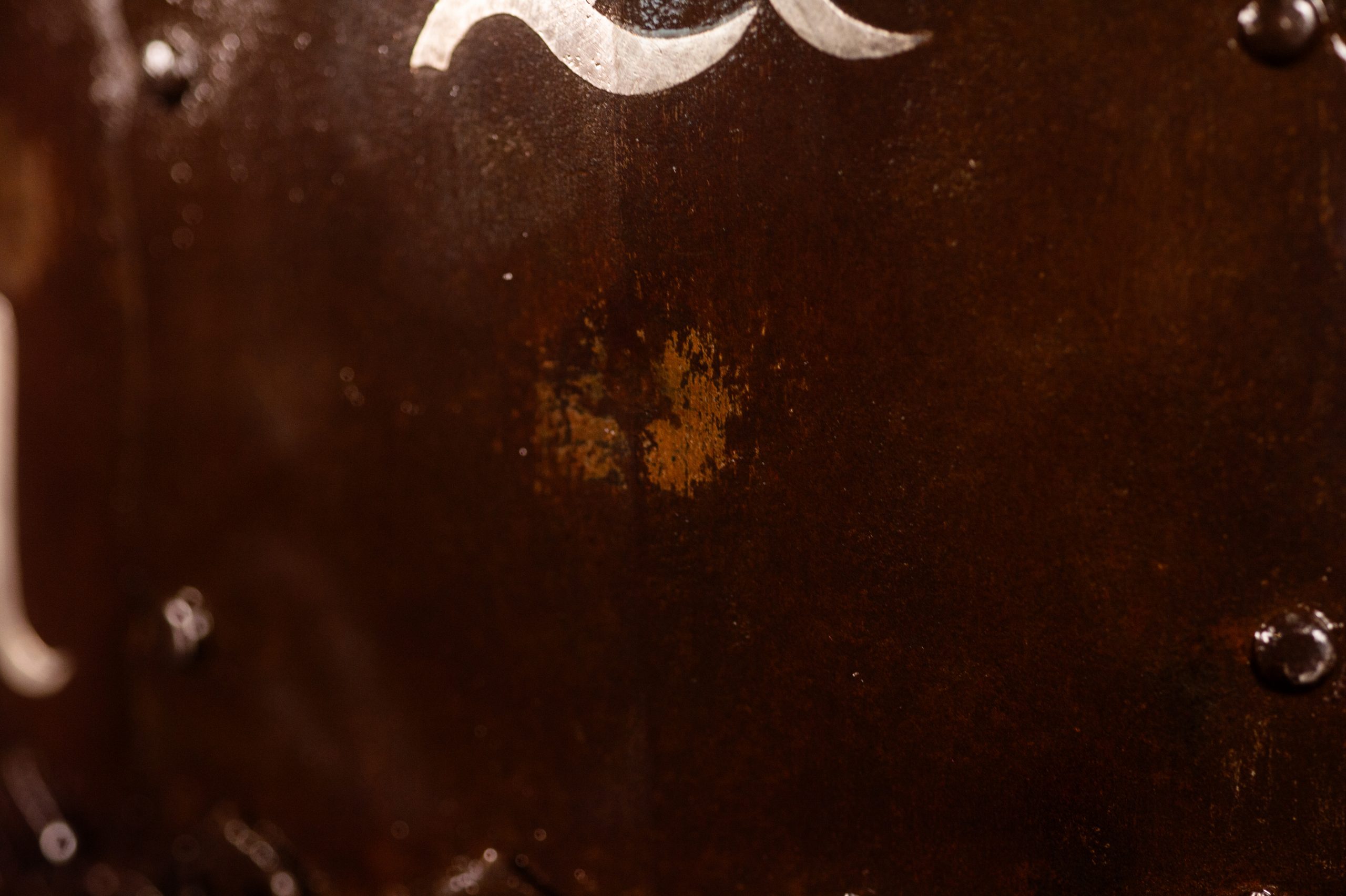
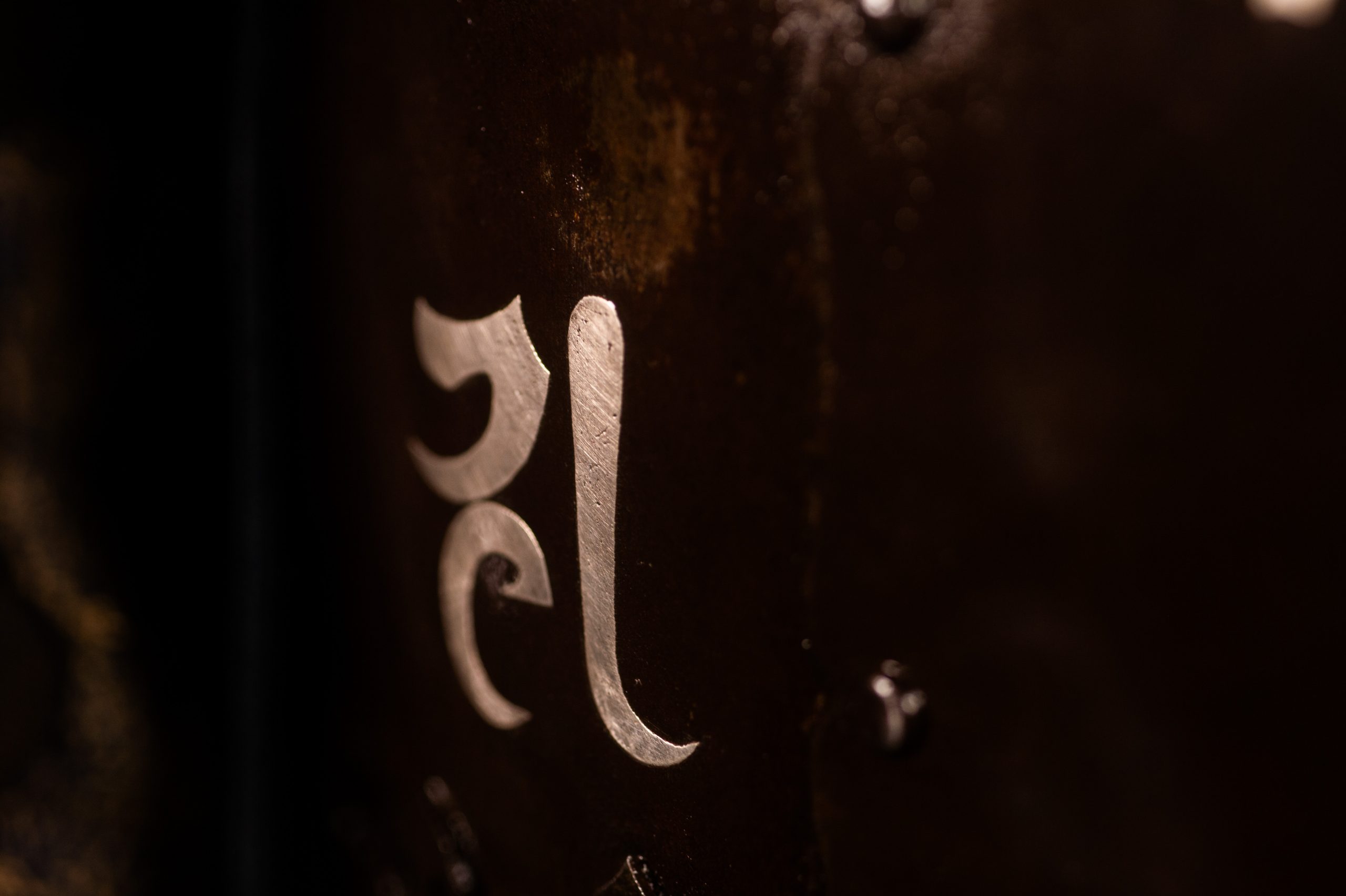
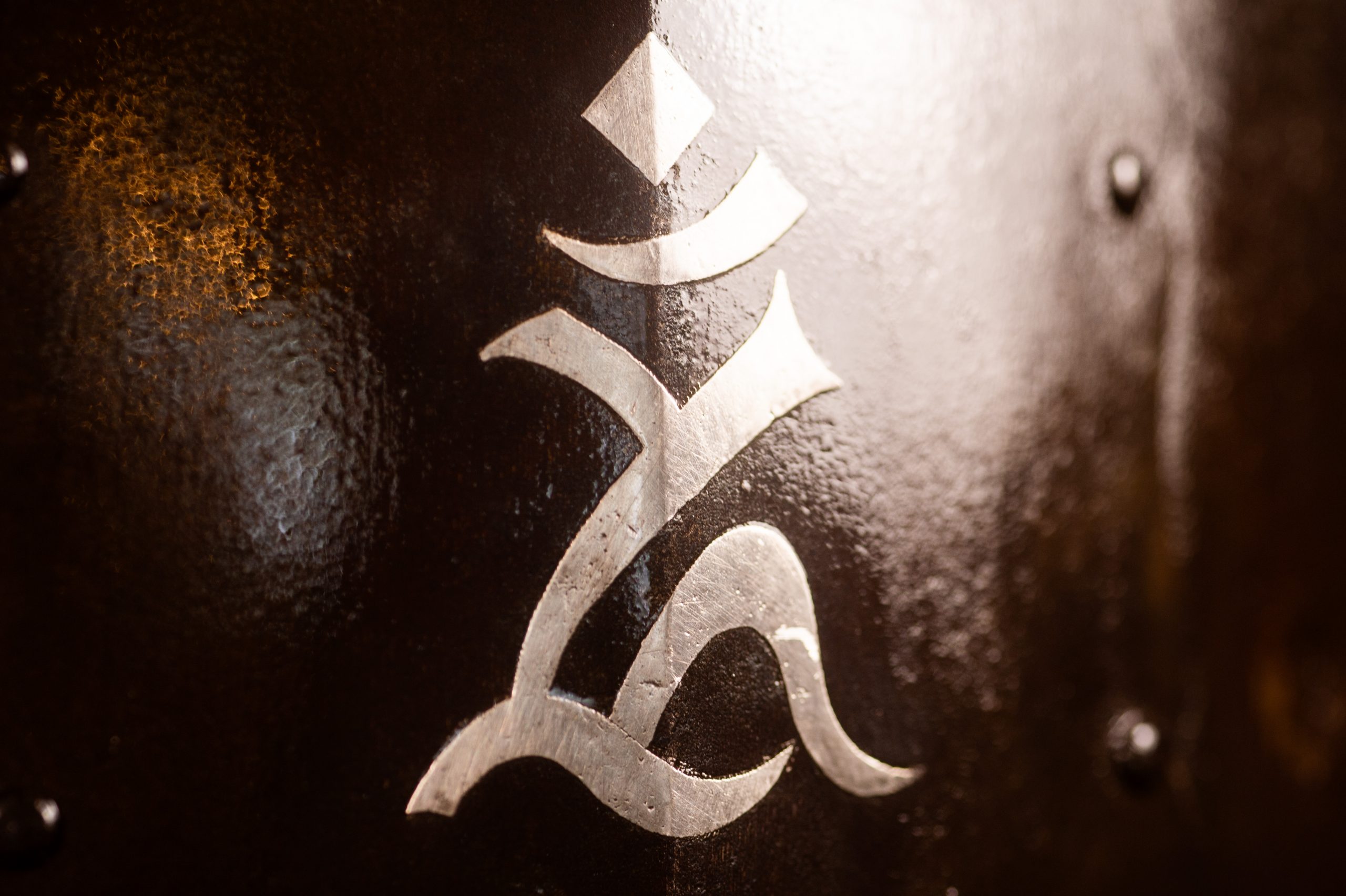
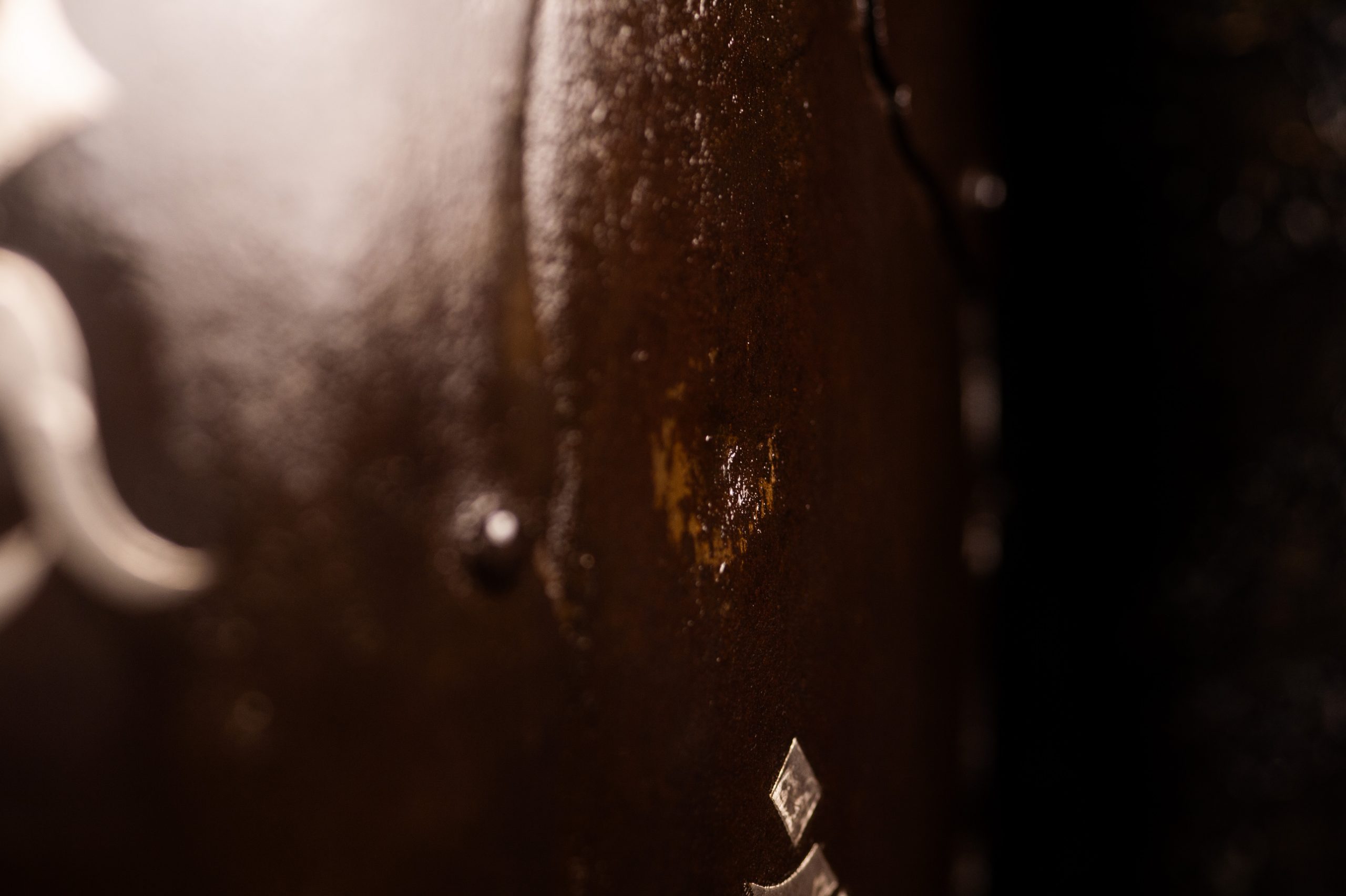
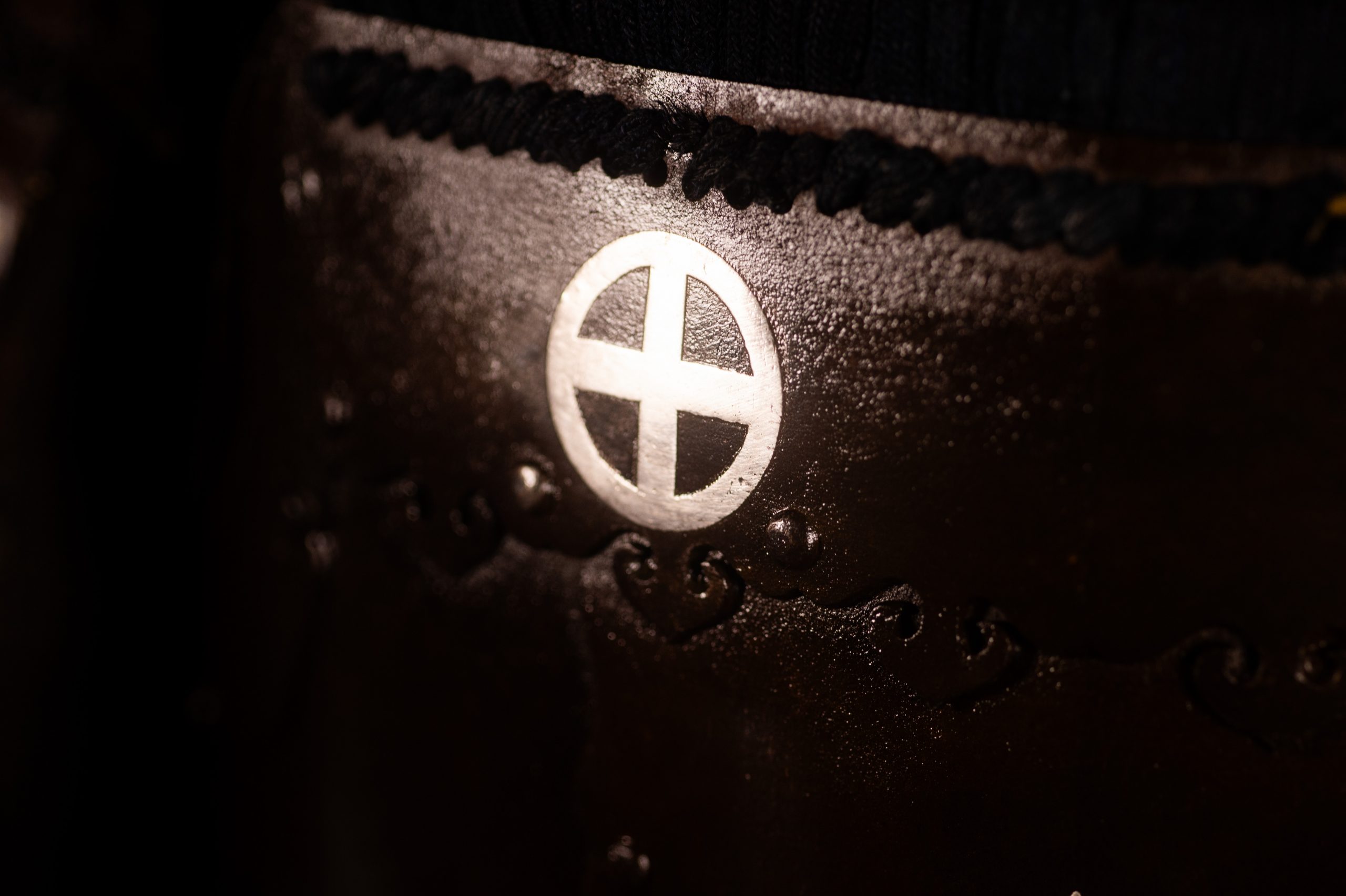
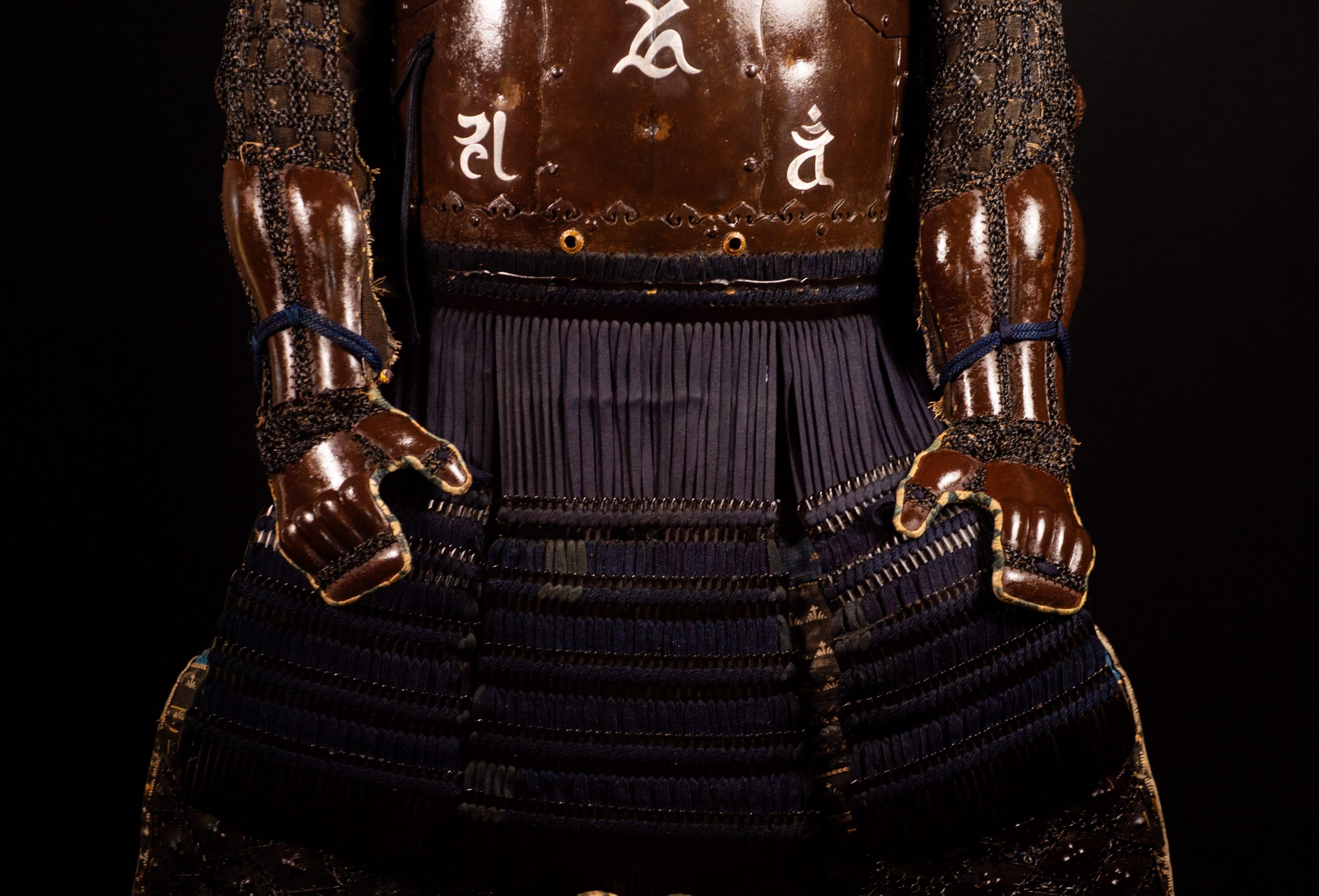
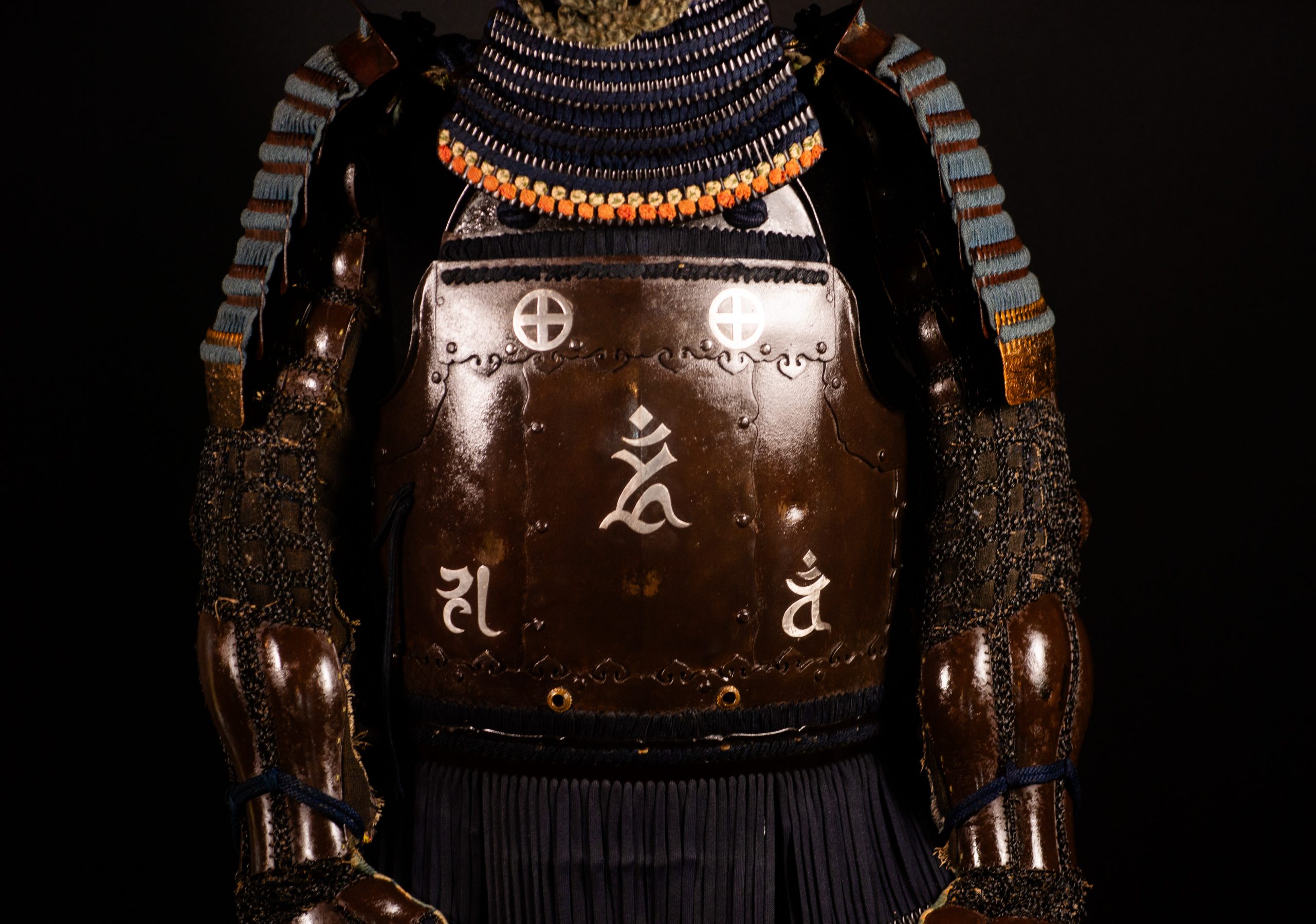
The cuirass, fashioned in lacquered iron of excellent substance, constitutes one of the principal attractions of the ensemble. Its surface, sober yet unequivocally elegant, is enhanced by fine silver inlays that articulate the front of the dō with exceptional heraldic and symbolic presence. These silver applications are not mere superficial embellishment: they are the unmistakable sign of armor of rank, executed with superior craftsmanship and a clear desire for distinction. The upper emblems evoke the heraldic imagery associated with the Shimazu, one of the most celebrated and respected lineages of feudal Japan, whose iconography has long been linked to the military power of southern Japan and the prestige of a foremost warrior tradition. The presence of these motifs immediately elevates the reading of the ensemble and lends it a powerful historical resonance.
Teppō Impact Marks
Of exceptional importance is also the fact that the dō preserves teppō impact marks that did not penetrate the plate. This detail transforms the armor into something far greater than a beautiful decorative survival: it makes it a material witness to resistance. In the samurai world, cuirasses capable of stopping a gunshot were always held in special esteem. They were not merely valued for their effectiveness; they were admired as tangible manifestations of solidity, quality of forging, and reliability in combat. A cuirass that had withstood the force of gunpowder without yielding acquired a singular, almost emblematic prestige, uniting the technical value of iron with the legendary dimension of survival. In this respect, the present piece possesses extraordinary historical and narrative appeal.
Auxiliary Components
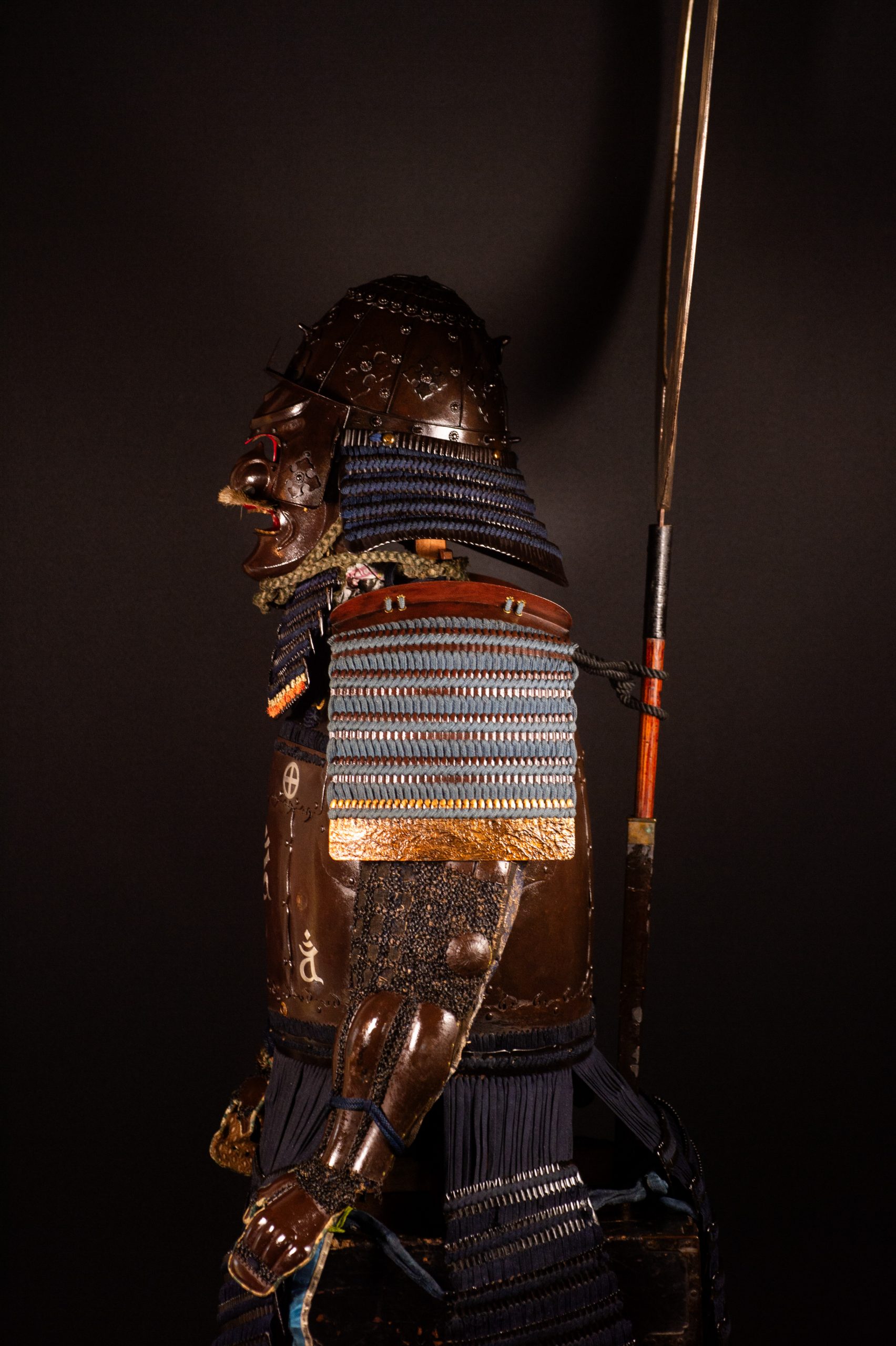
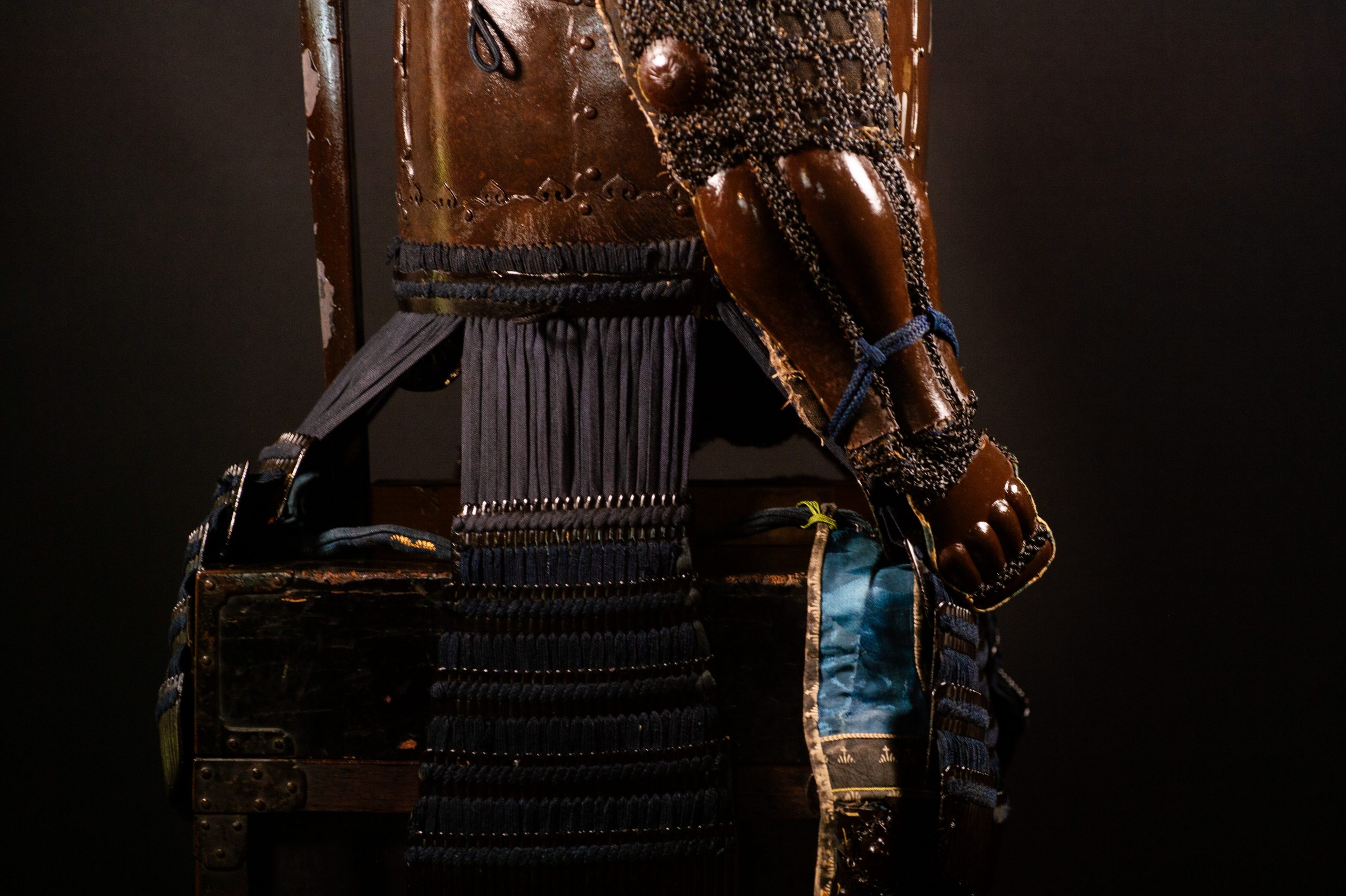
The remainder of the armor maintains a visual standard fully worthy of the importance of the cuirass. The sode of generous proportion, with blue-grey odoshi, frame the torso with admirable balance; the kote, composed in a combination of lacquered plates and mail, contribute textural richness and functional elegance; the haidate and suneate, both of strong visual presence, complete the ensemble with an imposing and perfectly resolved silhouette. The chromatic harmony between the dark lacquered iron, the deep blue of the odoshi, and the noble gleam of the silver inlays produces an aesthetic that is sober, aristocratic, and profoundly martial.
Rear Element
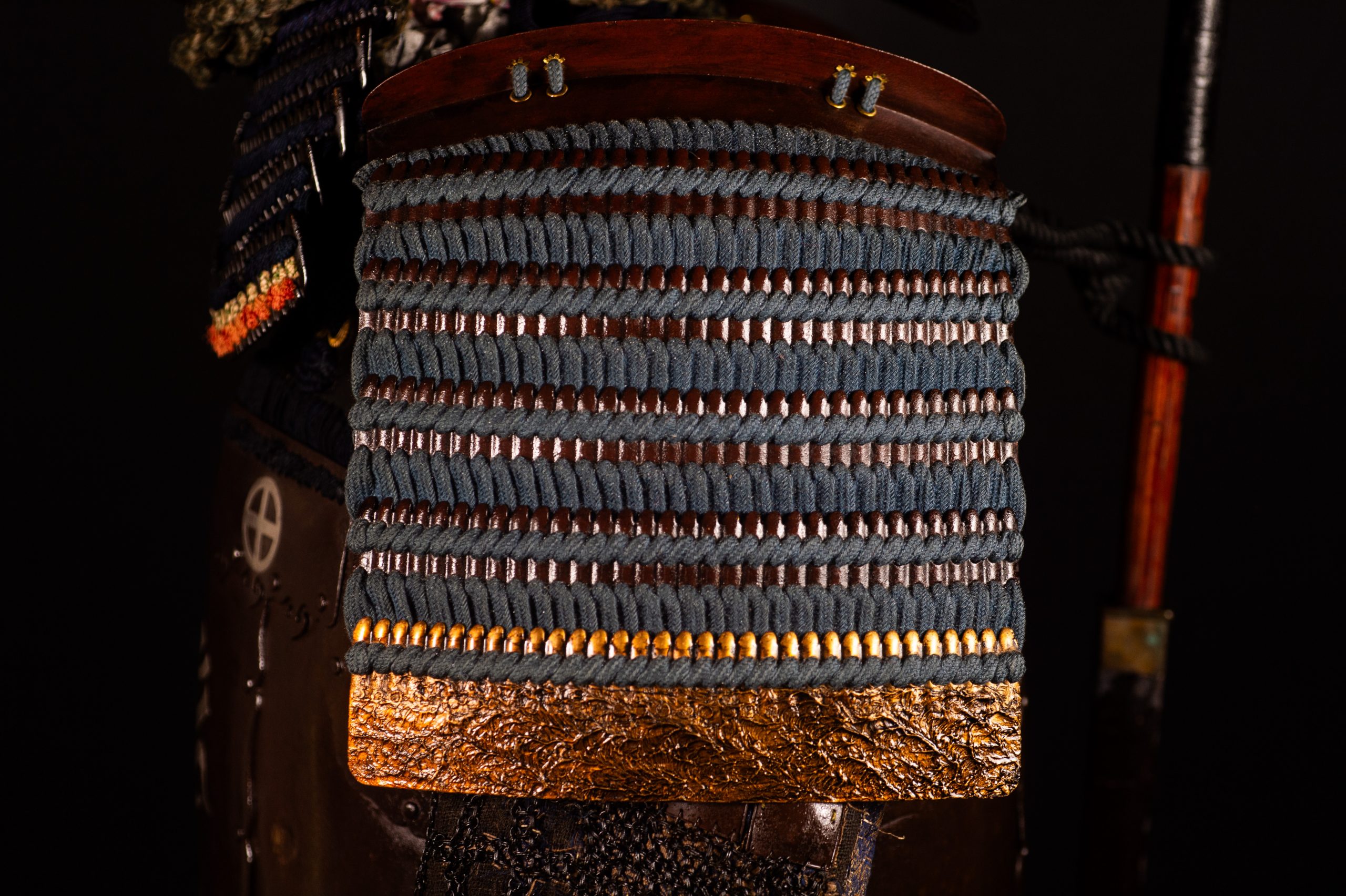
Particularly spectacular is the large circular rear element, which endows the ensemble with a monumental and almost sacral silhouette. Its visual effect, of a force rarely encountered, transforms the armor into a true sculptural presence. Viewed from the front or from behind, the ensemble acquires an almost ceremonial authority, worthy of the finest armors that combine function, status, and visual impact in equal measure.
Conclusion
In sum, we are presented with a samurai armor of the Edo period, circa 1800, of notable quality, extraordinary aesthetic force, and great evocative historical power. The refined execution of the helmet, the intensity of the menpō, the nobility of the lacquered iron, the distinguished silver inlays, and, above all, the rarity and prestige of a cuirass that withstood teppō impacts, make this piece one of exceptional appeal for the discerning collector. It is not merely a beautiful armor; it is an armor that conveys rank, character, and the memory of combat.
An authentic samurai armor that will be the central focus of any room where it is placed and that will delight any fan of Japanese art. This exclusive piece is making it an incredible opportunity for any collector of Japanese, war or simply historical art to get their hands on a piece that will attract attention wherever it is displayed, from offices, to private homes, offices or restaurants and will give a regal look to any place. The armour has gilded details that show the quality of the piece. The incredible workmanship accentuates such ornate pieces as the kabuto, the mempo and the Do. The stand to assemble it and the box are included. This armour is sure to delight any collector of Asian art and will be the focal point of any visitor’s home, shop or office. There is a very ancient object and there are damaged by time and tears. Due to the delicacy of continuous assembly and disassembly, returns are not allowed on old armor.