Japanese Edo-period Samurai Armor with Nanban Kabuto
Complete tōsei gusoku with museum-grade presence and strong nanban character
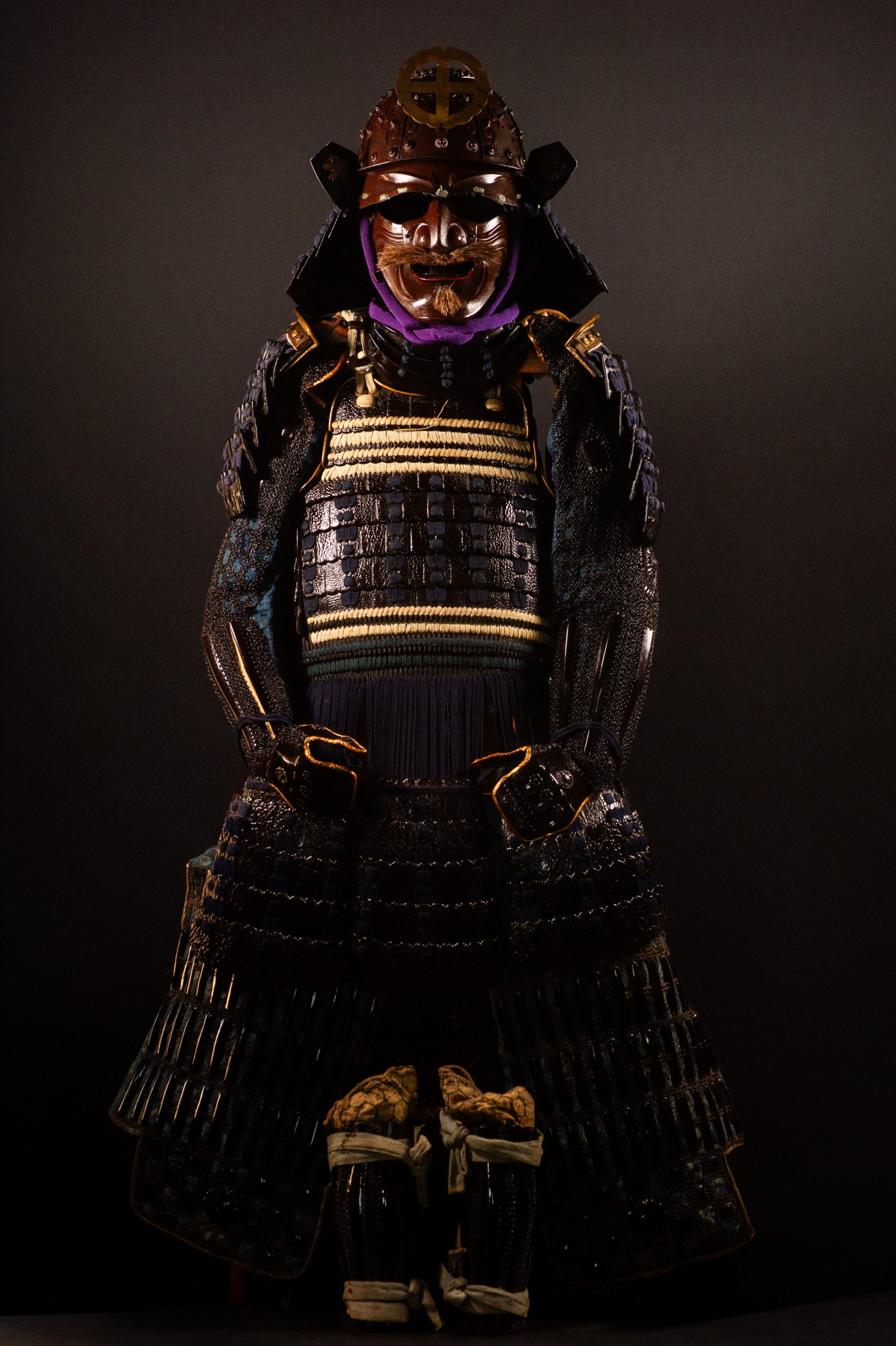
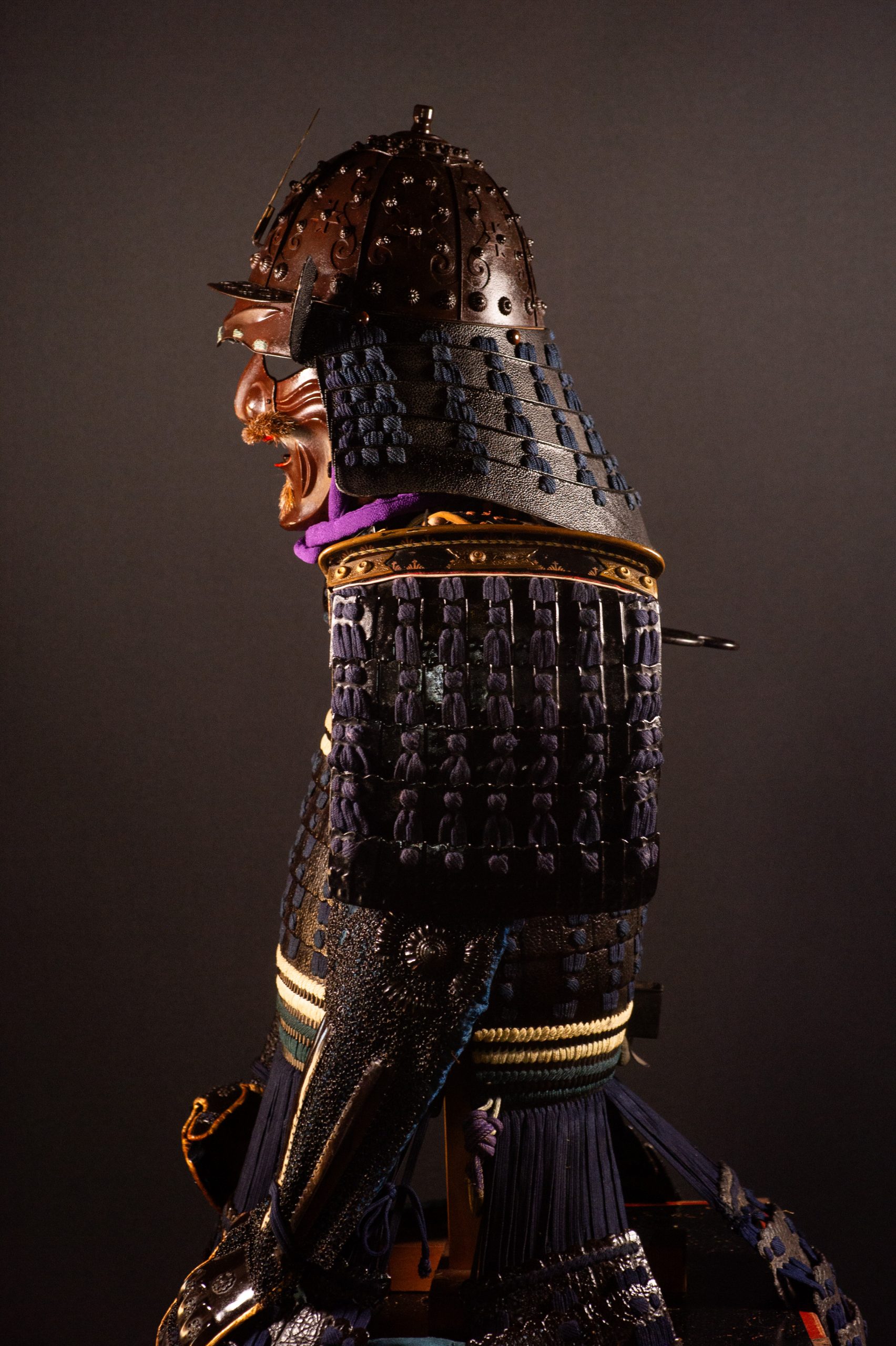
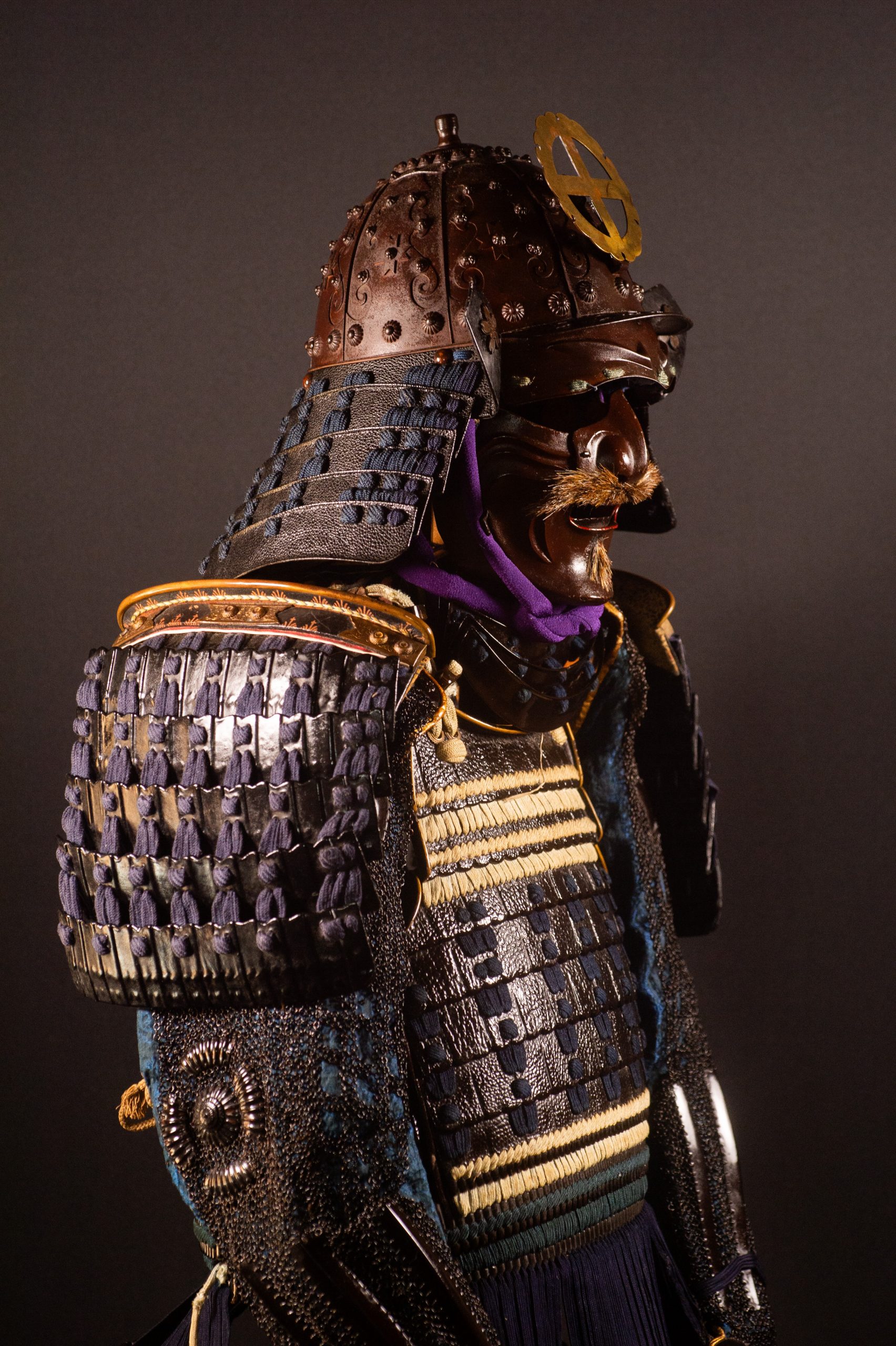
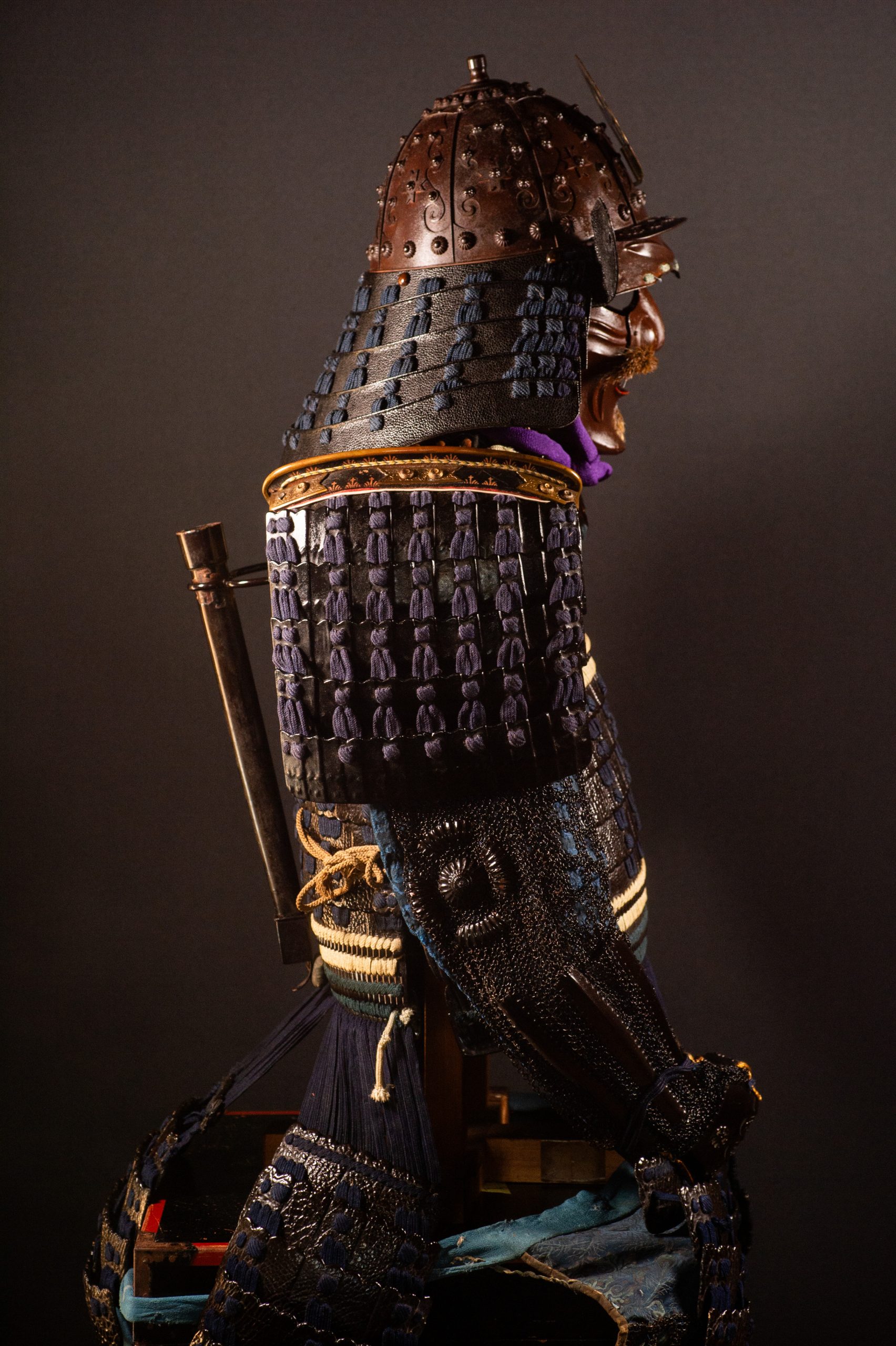
Magnificent Edo-period Japanese samurai armor presented as a complete tōsei gusoku, distinguished by an exceptional nanban kabuto that gives the entire ensemble a rare and highly desirable identity, well beyond that of a standard display armor.
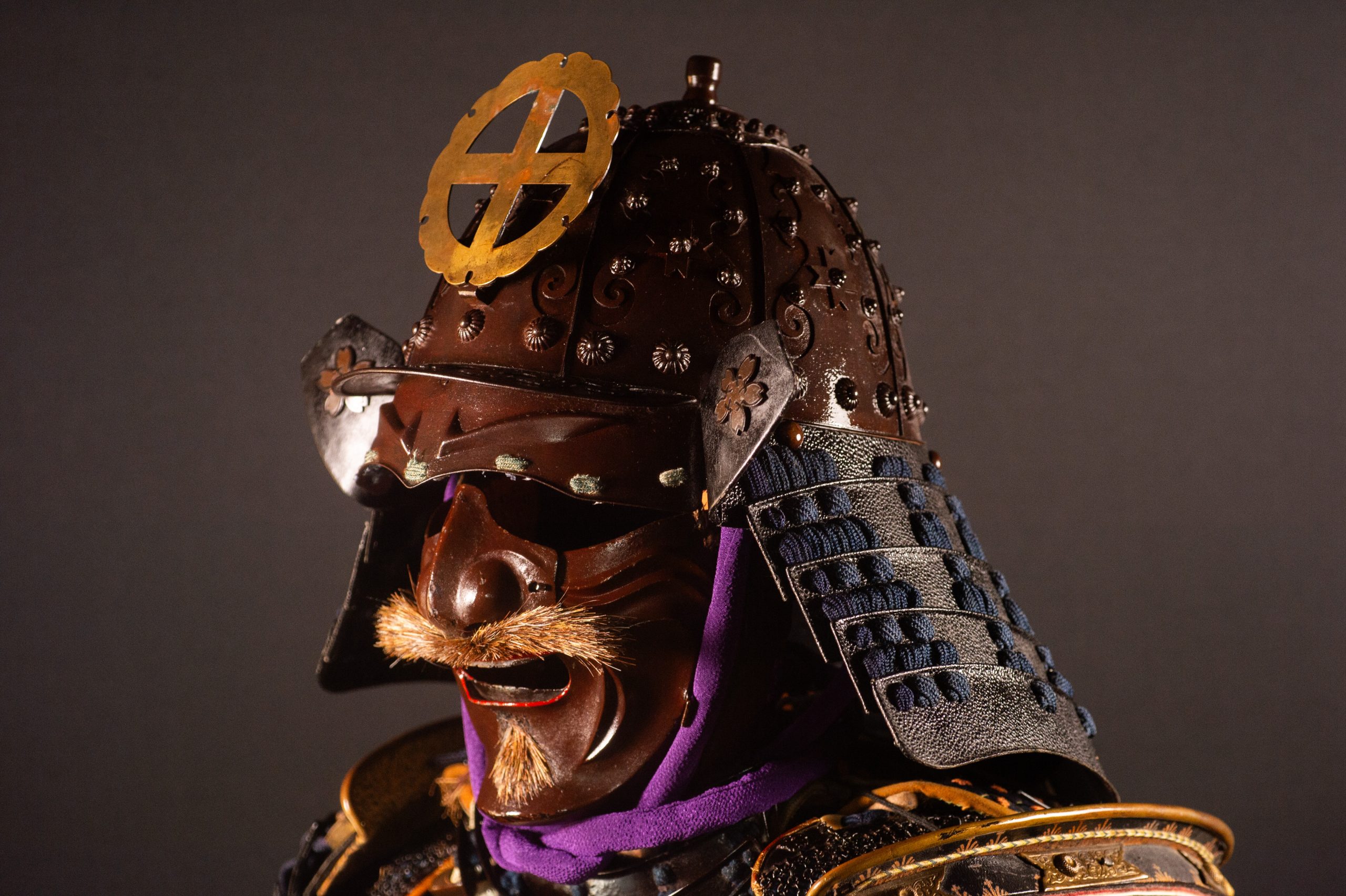
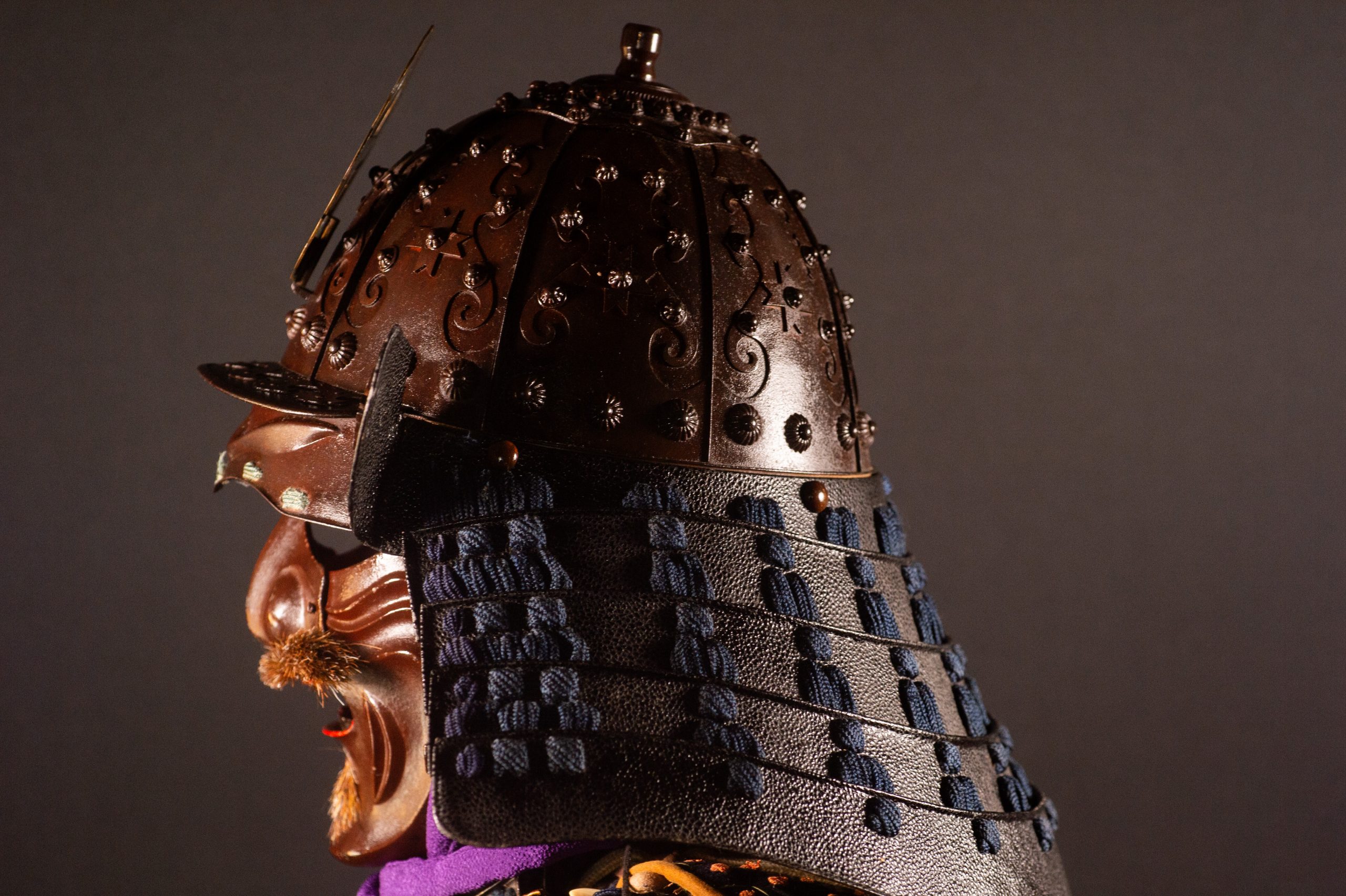
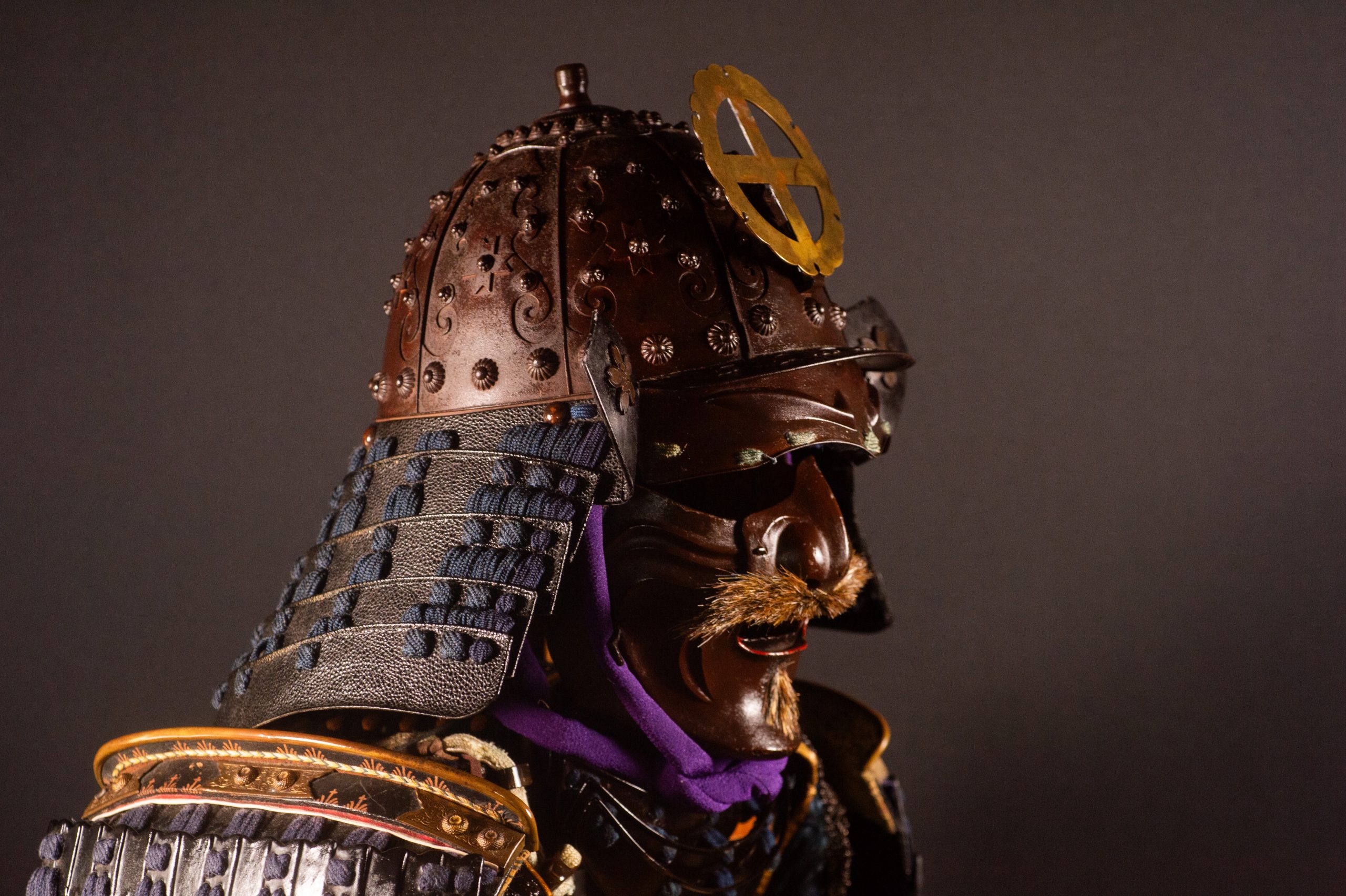
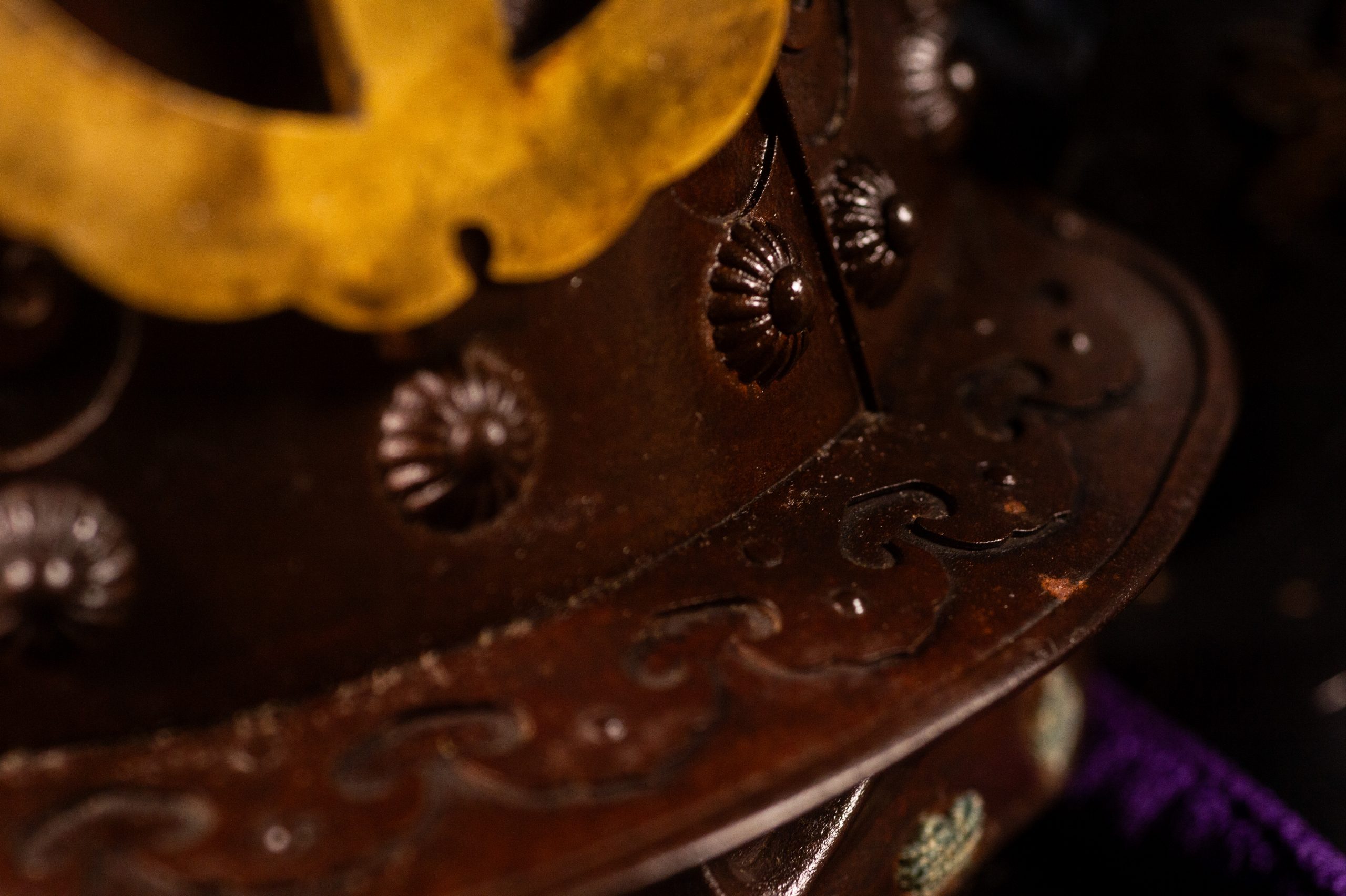
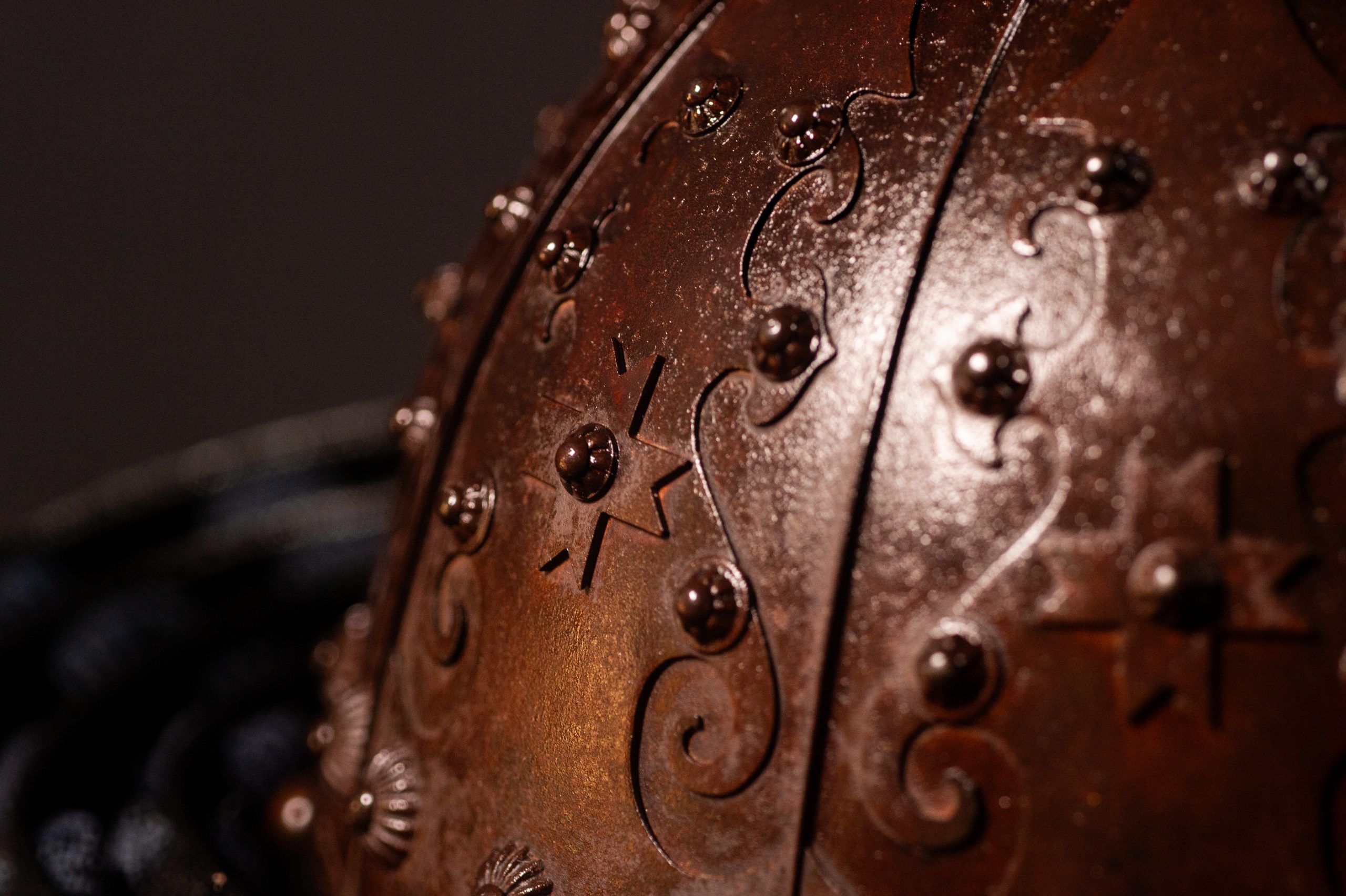
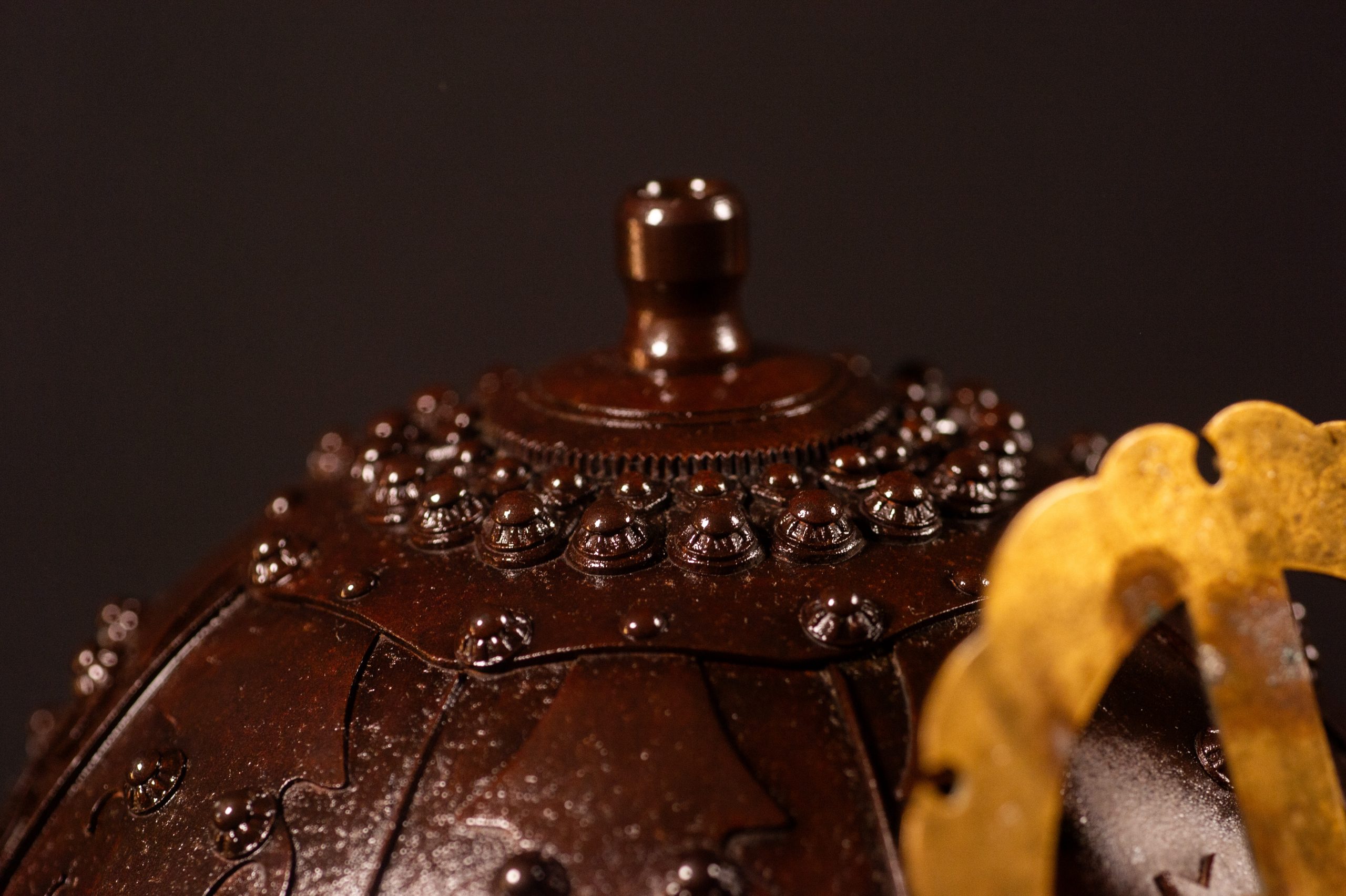
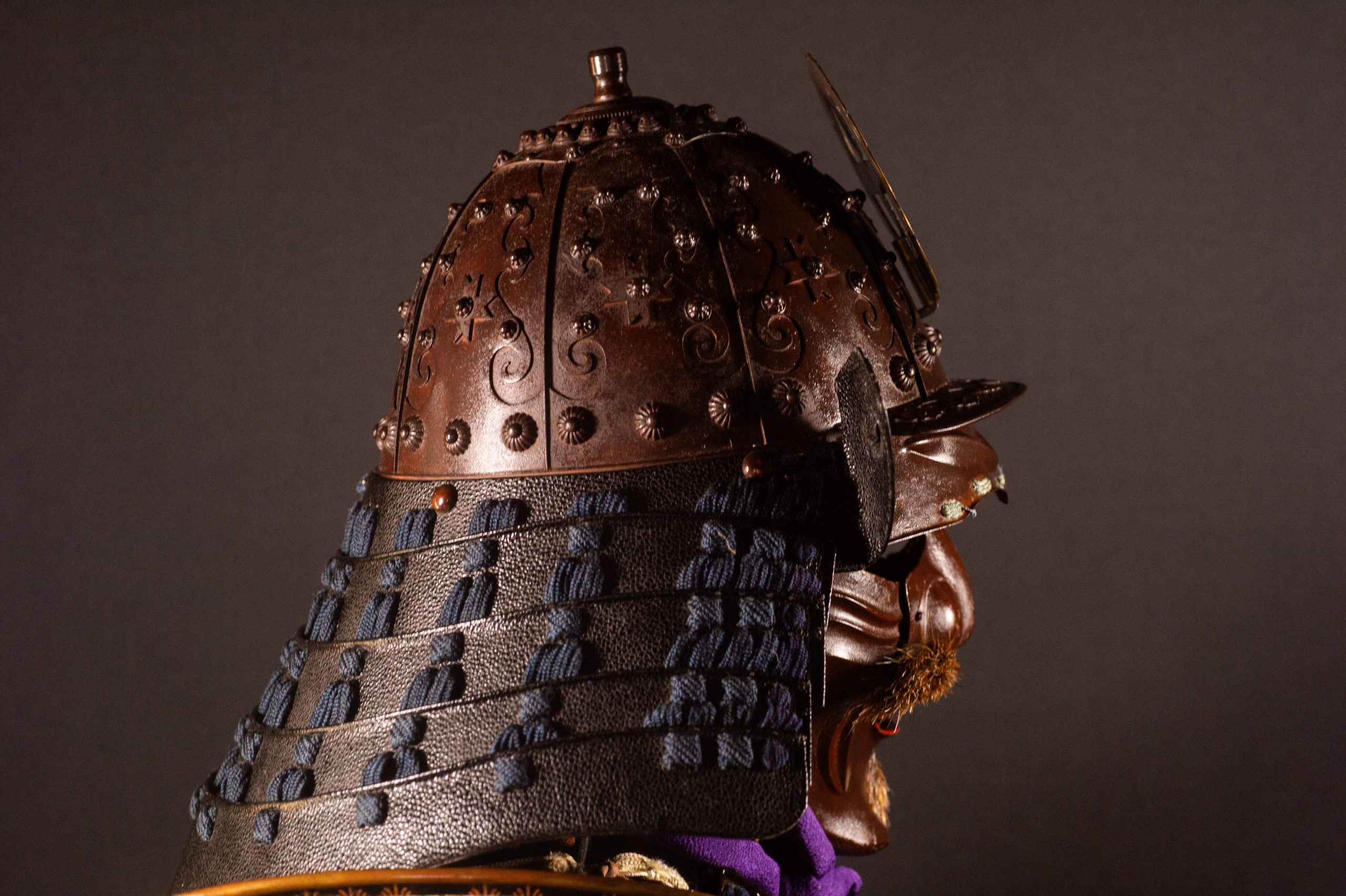
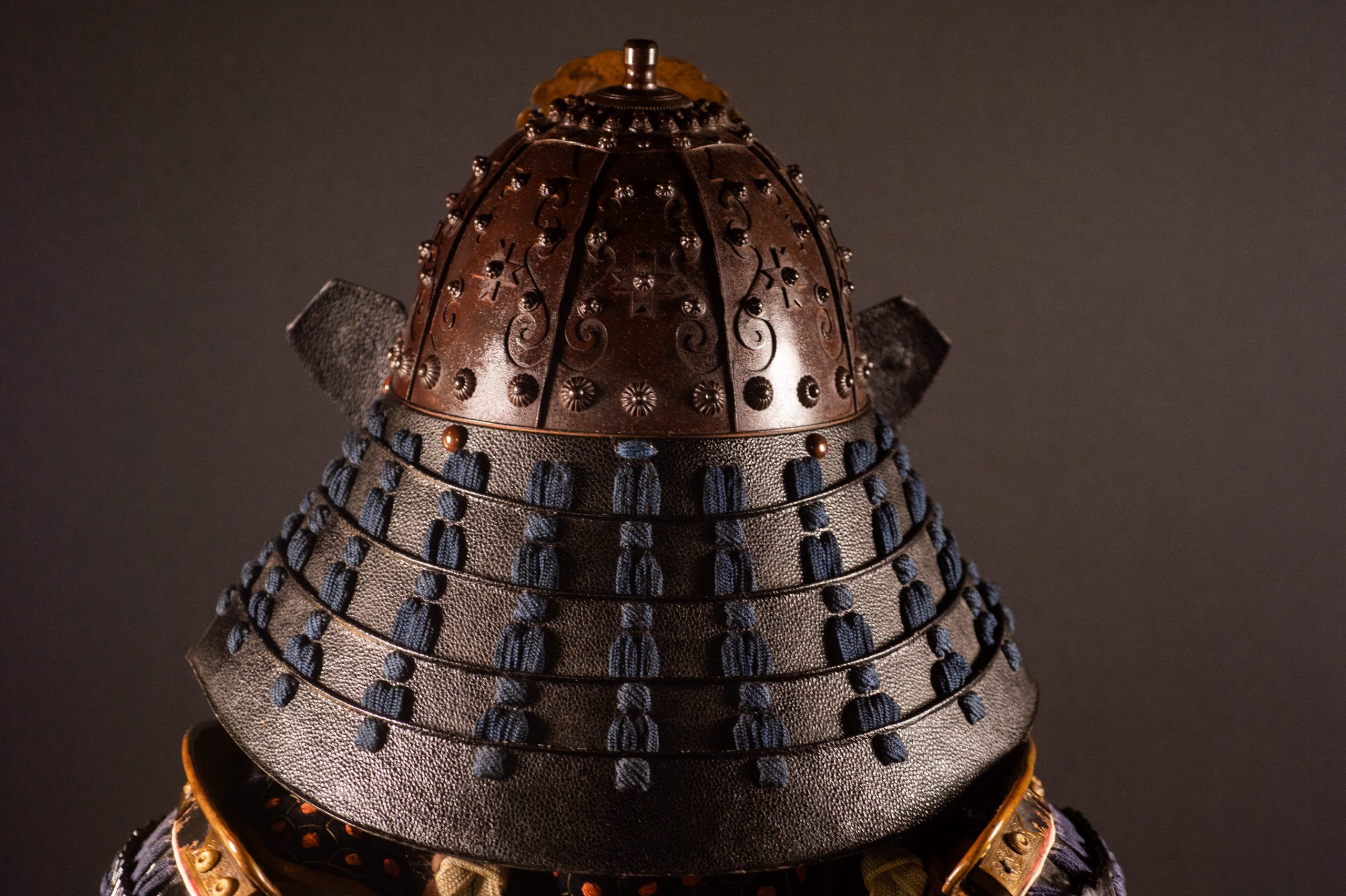
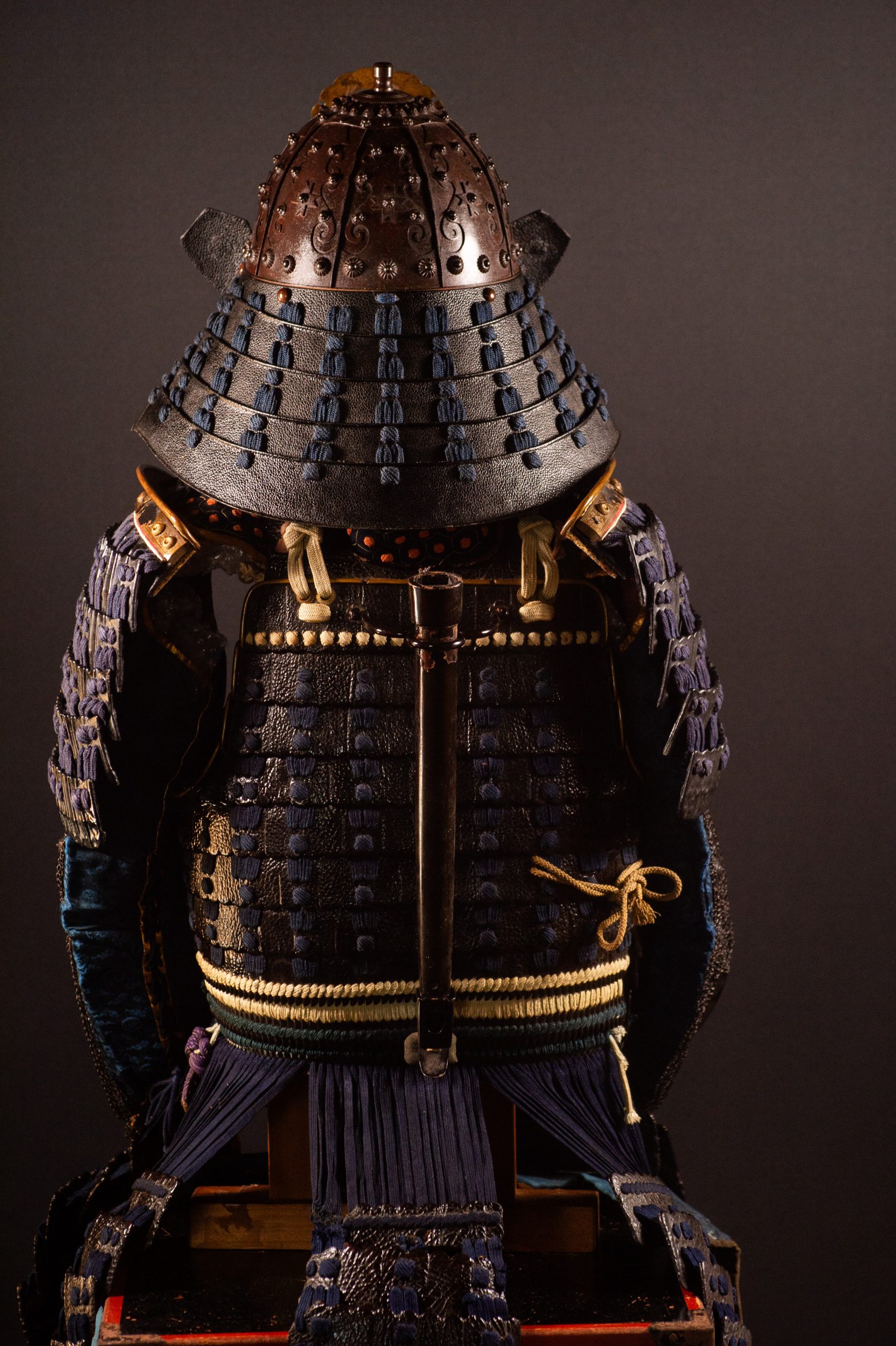
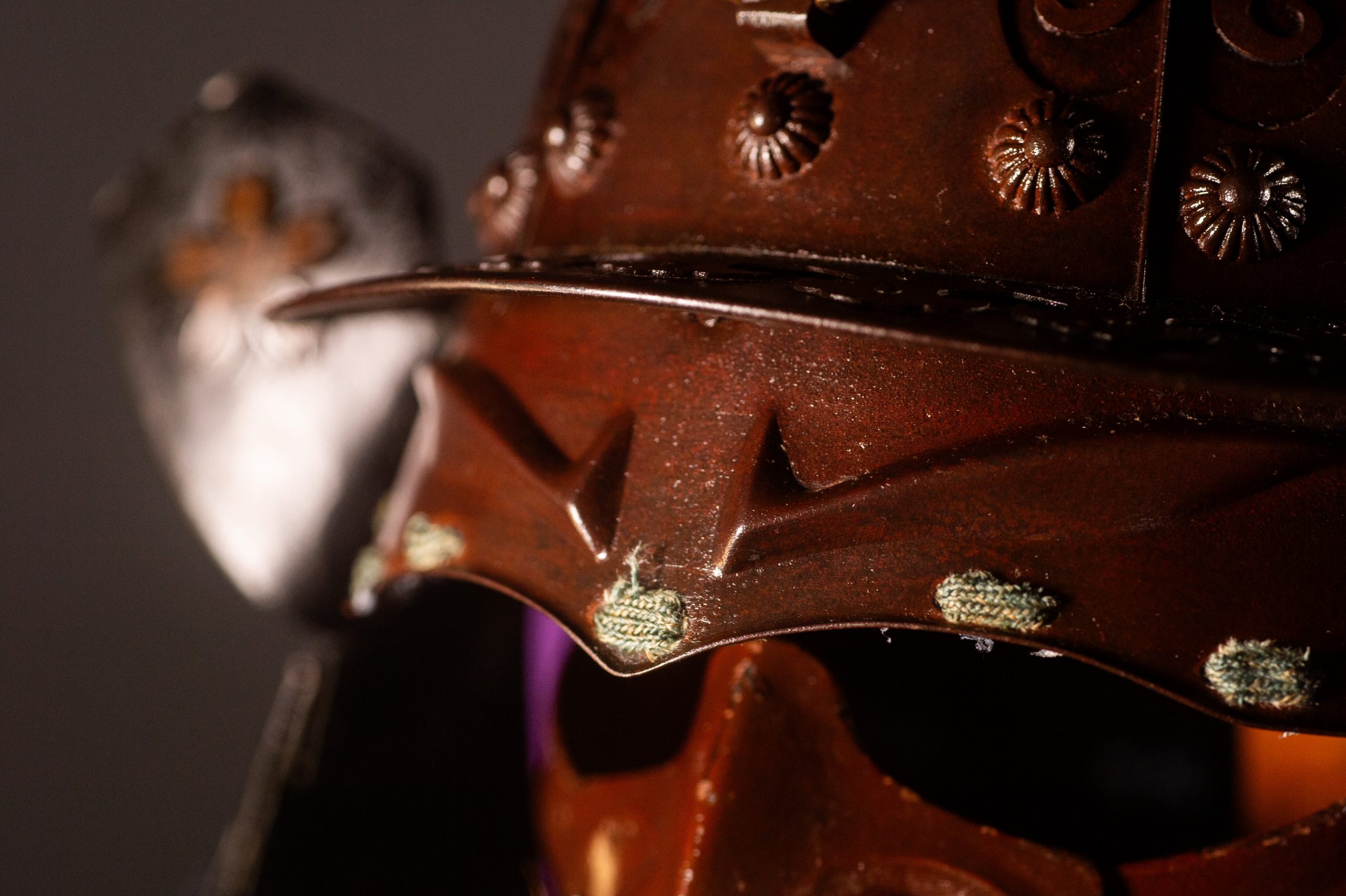
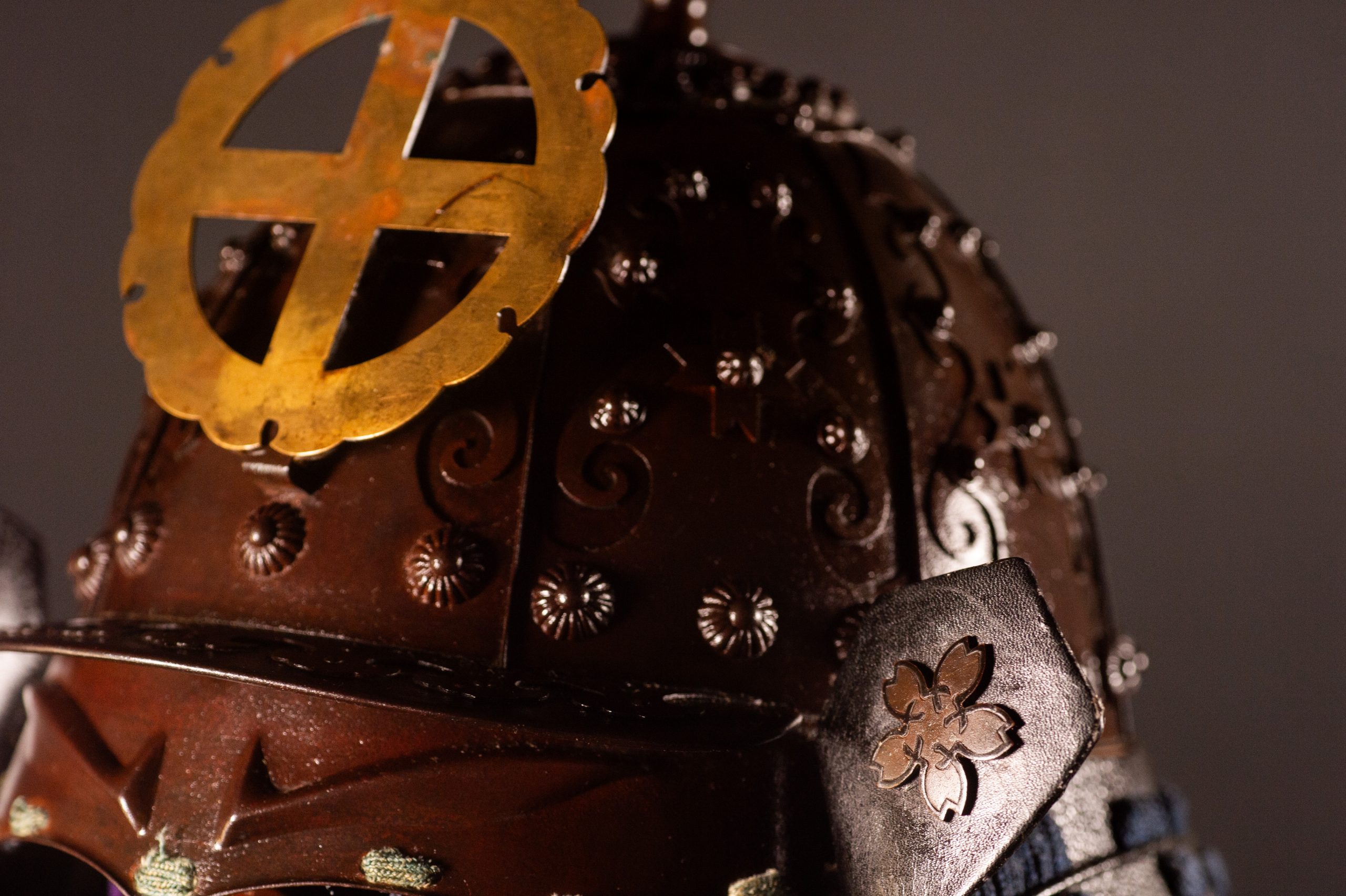
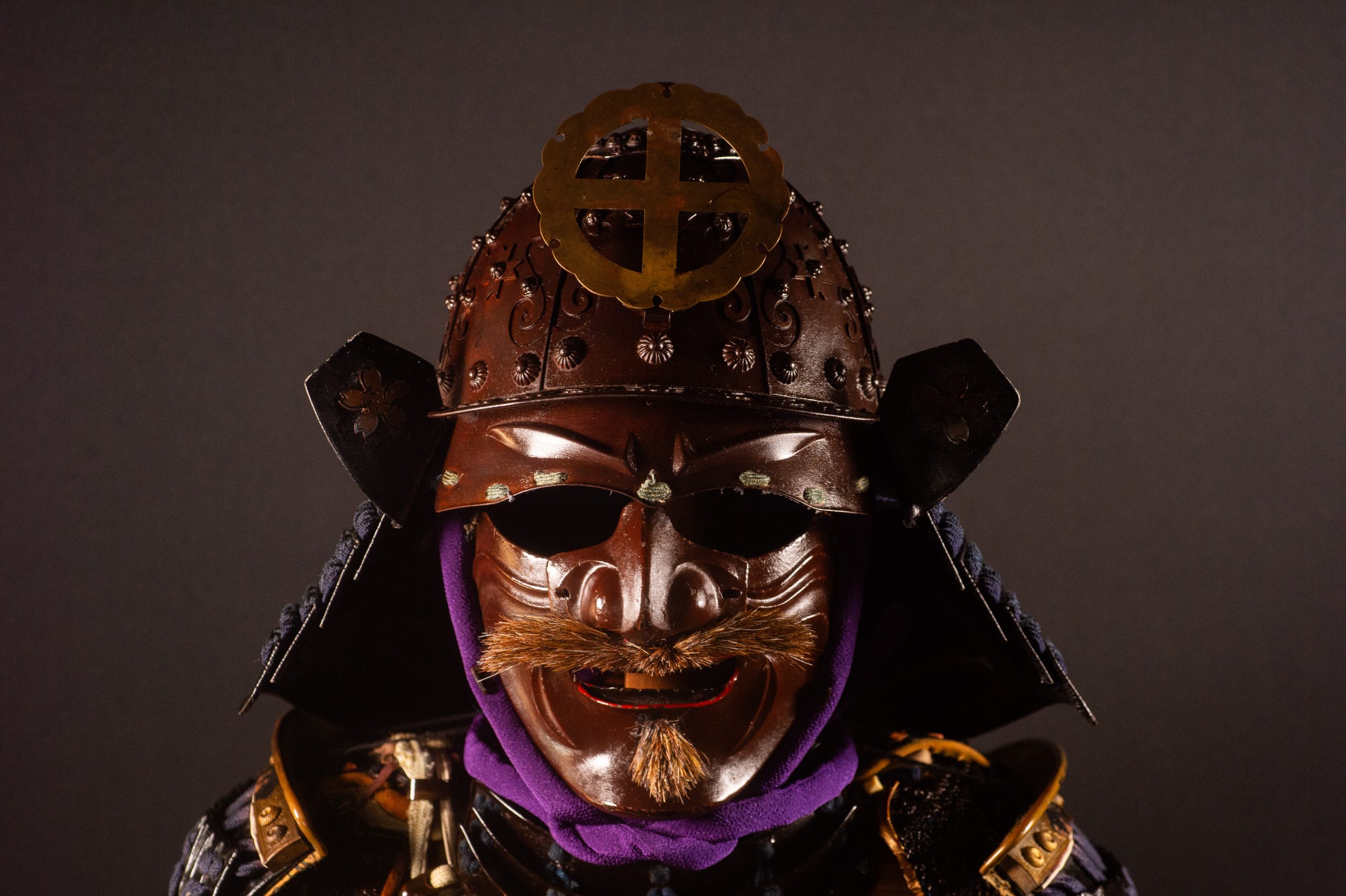
The helmet, a nanban type kabuto (nanban-bachi), features a bold rounded profile, riveted construction, and a foreign-influenced aesthetic fully reinterpreted within samurai armor design. This nanban taste—developed in Japan through contact with the West (especially Portuguese and Spanish influences)—is not a minor stylistic detail; it is a statement of status and connoisseurship. It gives the armor a rarer, more sophisticated, and far more collectible silhouette.
The hachi is visually striking, with ornamental rivetwork, raised curvilinear and rosette motifs, a worked top fitting, and a large frontal maedate in the form of a lobed disc with cruciform motif, delivering a strong and elegant frontal reading. The ensemble is completed by decorated fukigaeshi and a broad shikoro of excellent proportion and fall, laced in dark blue, enhancing the helmet’s dramatic display presence.
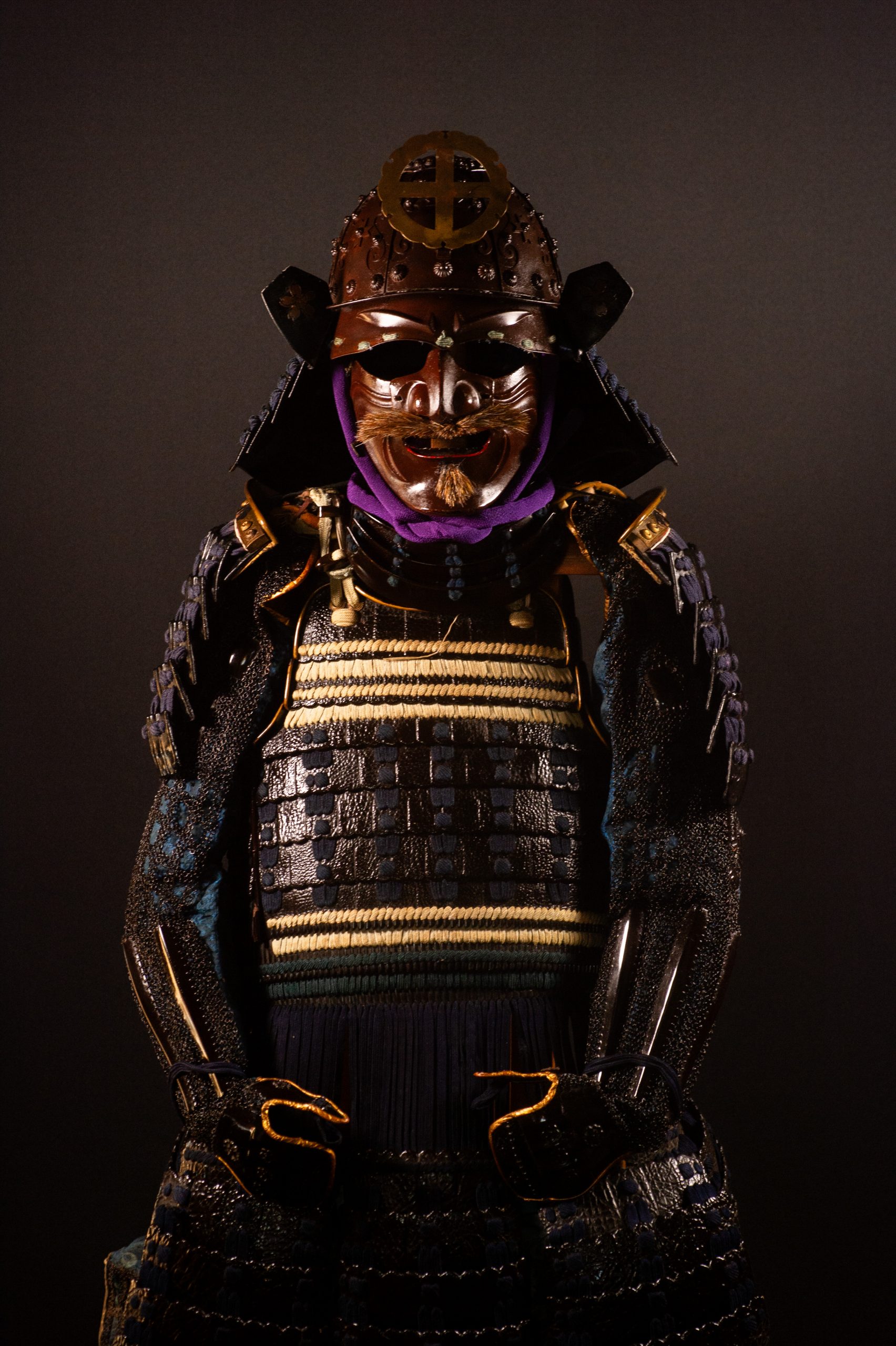
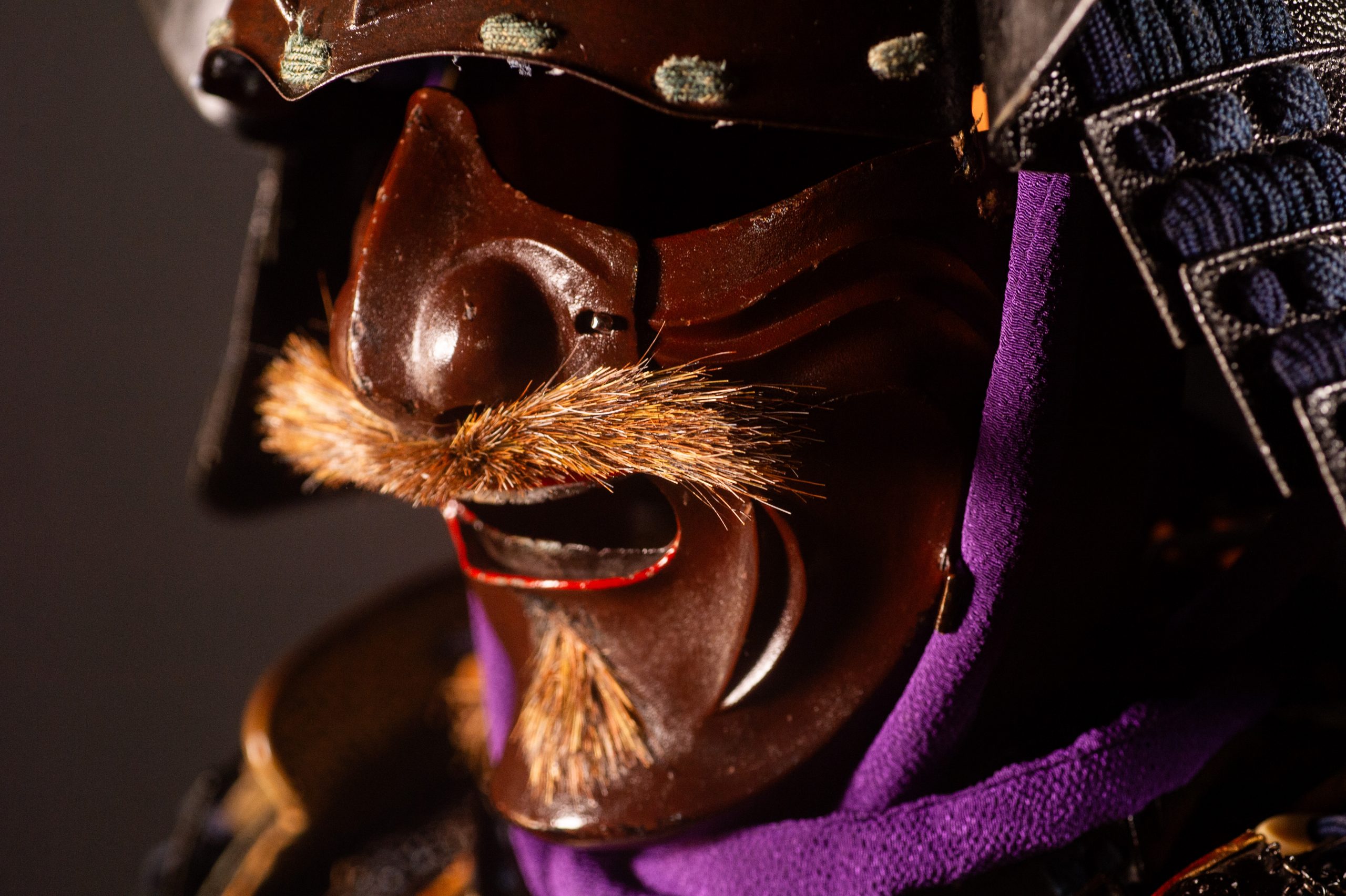
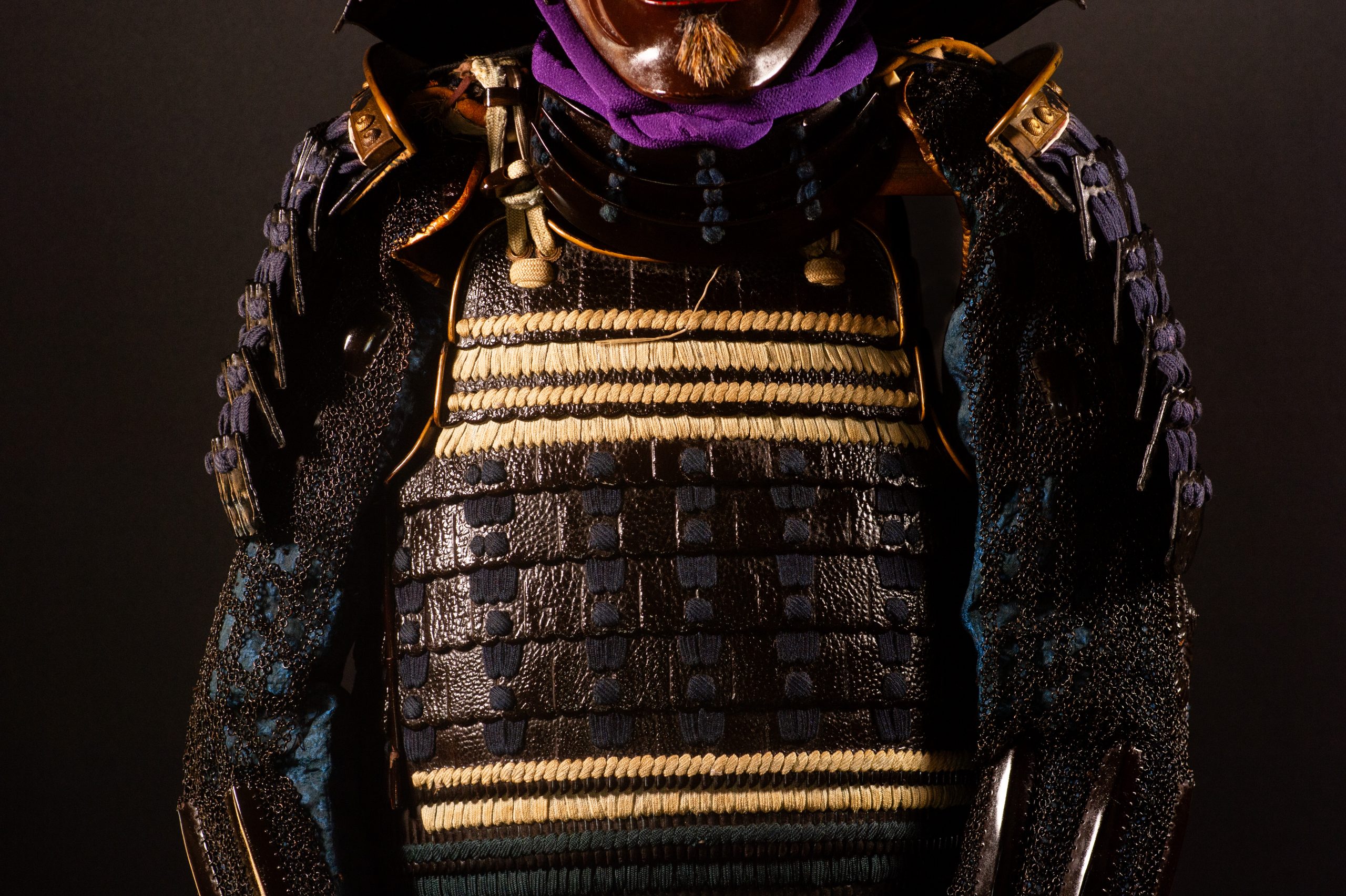
The face armor, lacquered in dark brown to match the kabuto, is fitted with applied moustache and chin tuft, creating a severe ceremonial expression with substantial visual impact. The interplay between the brown lacquer of the helmet and menpō and the deep black lacquer of the body armor creates a refined contrast, further enriched by the visible purple textile at the neck.
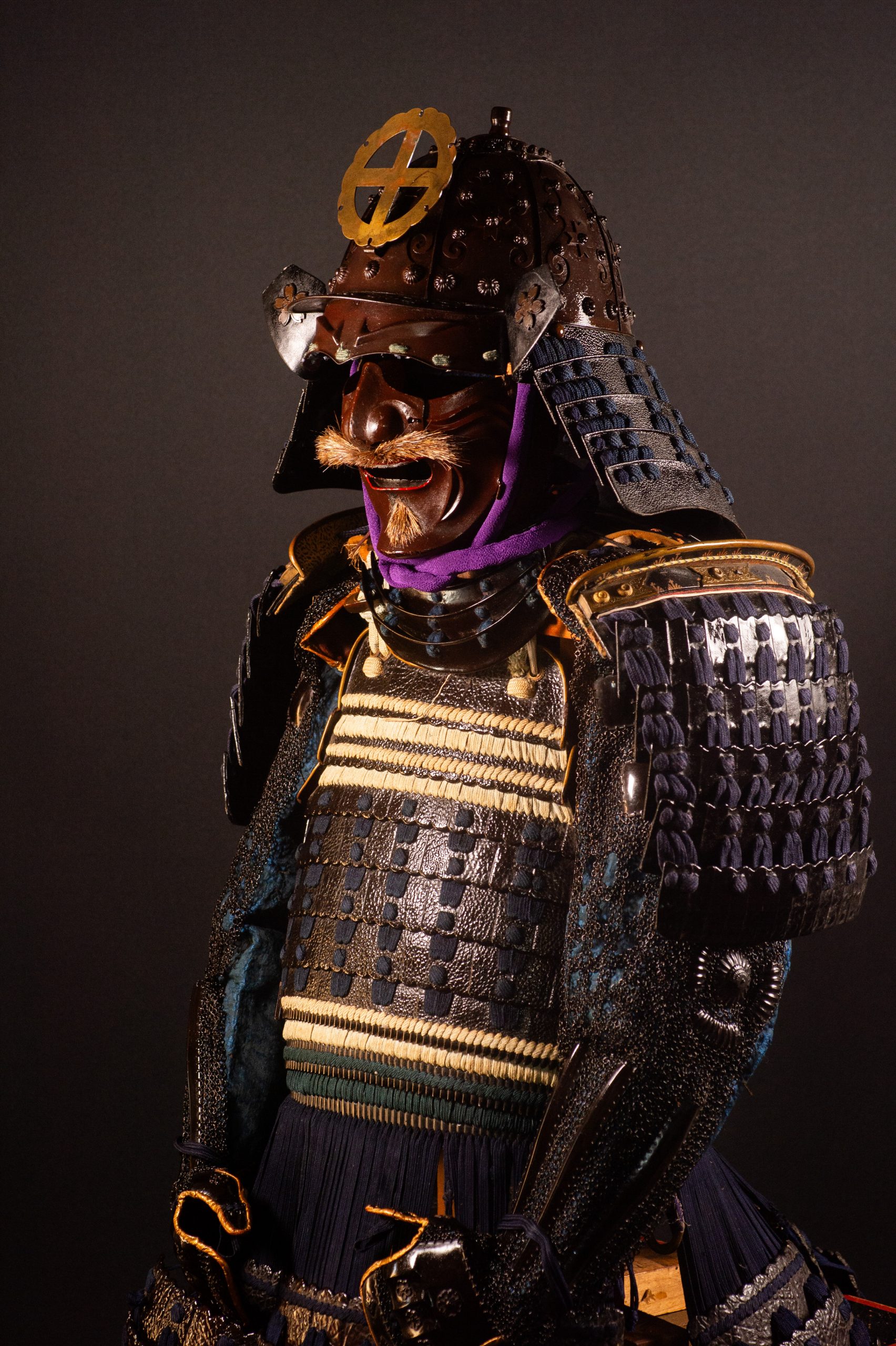
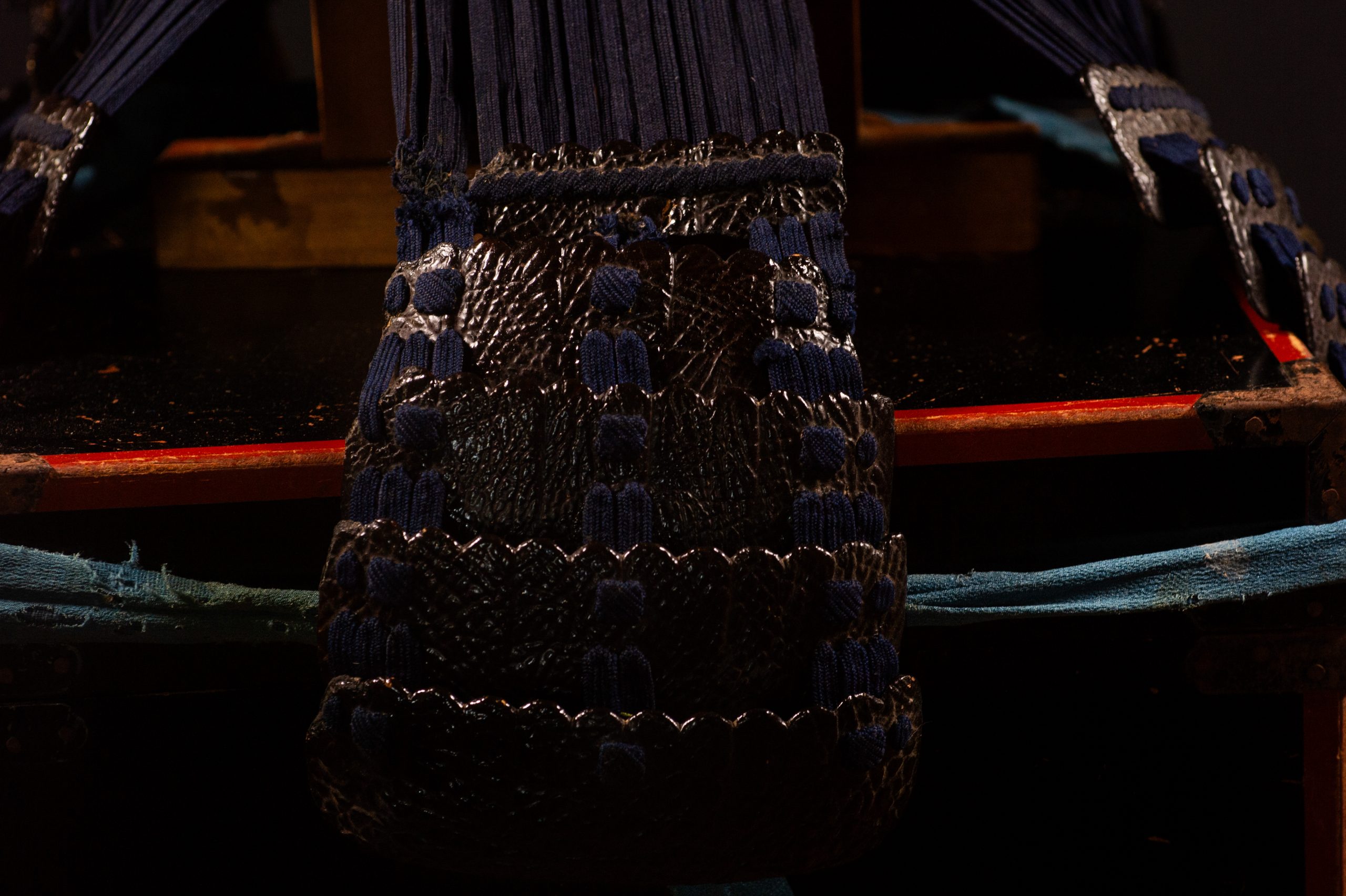
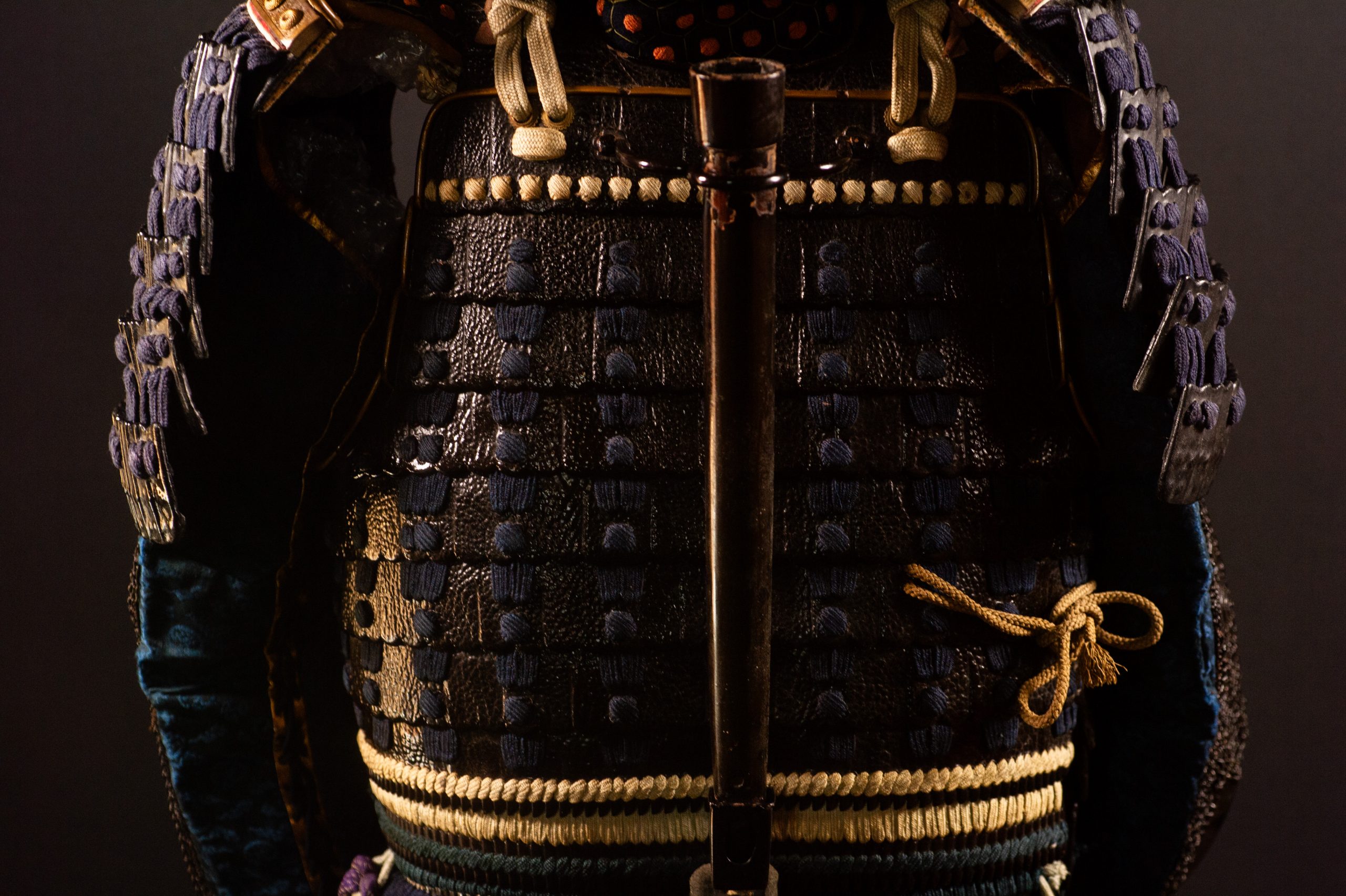
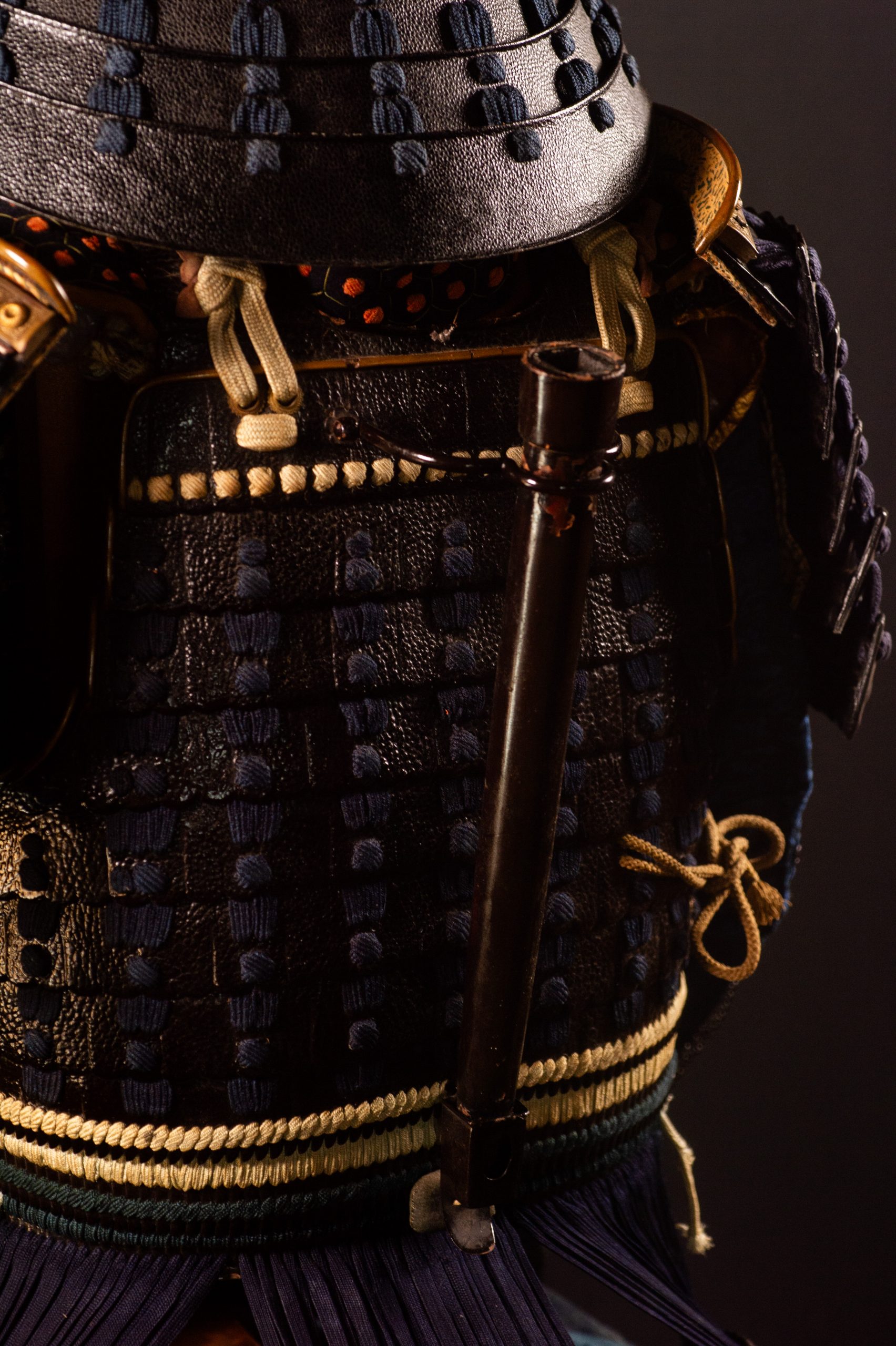
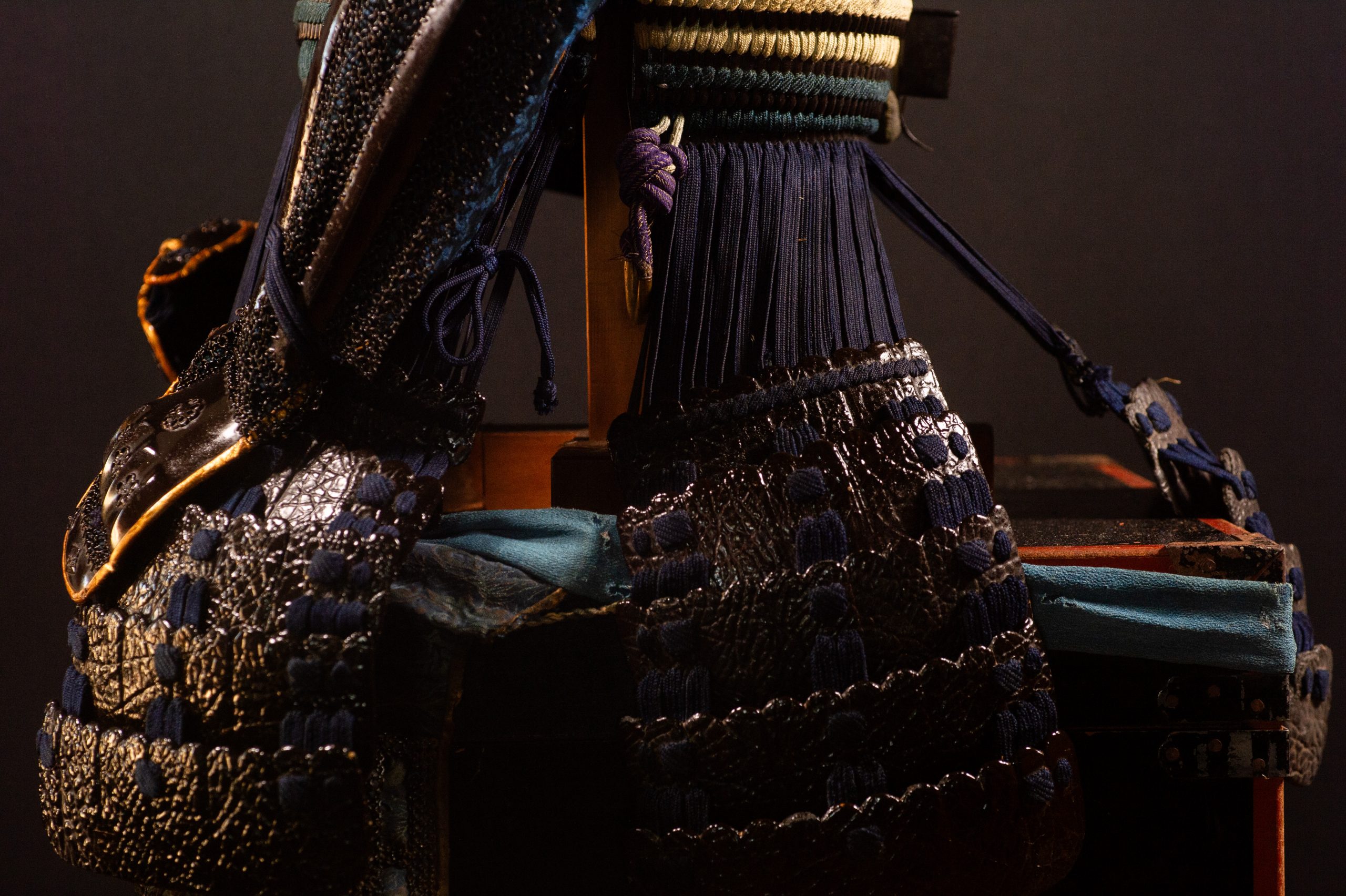
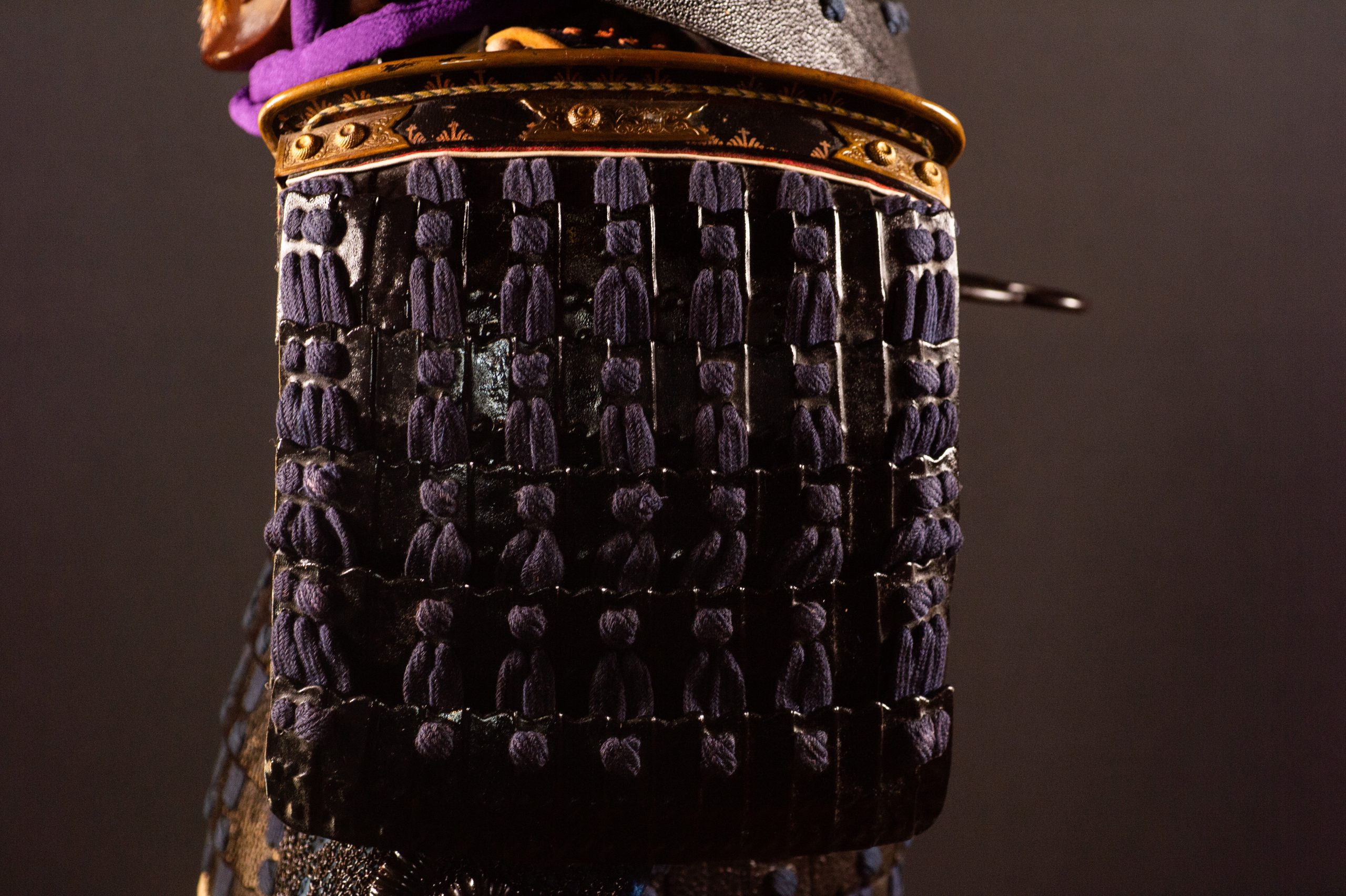
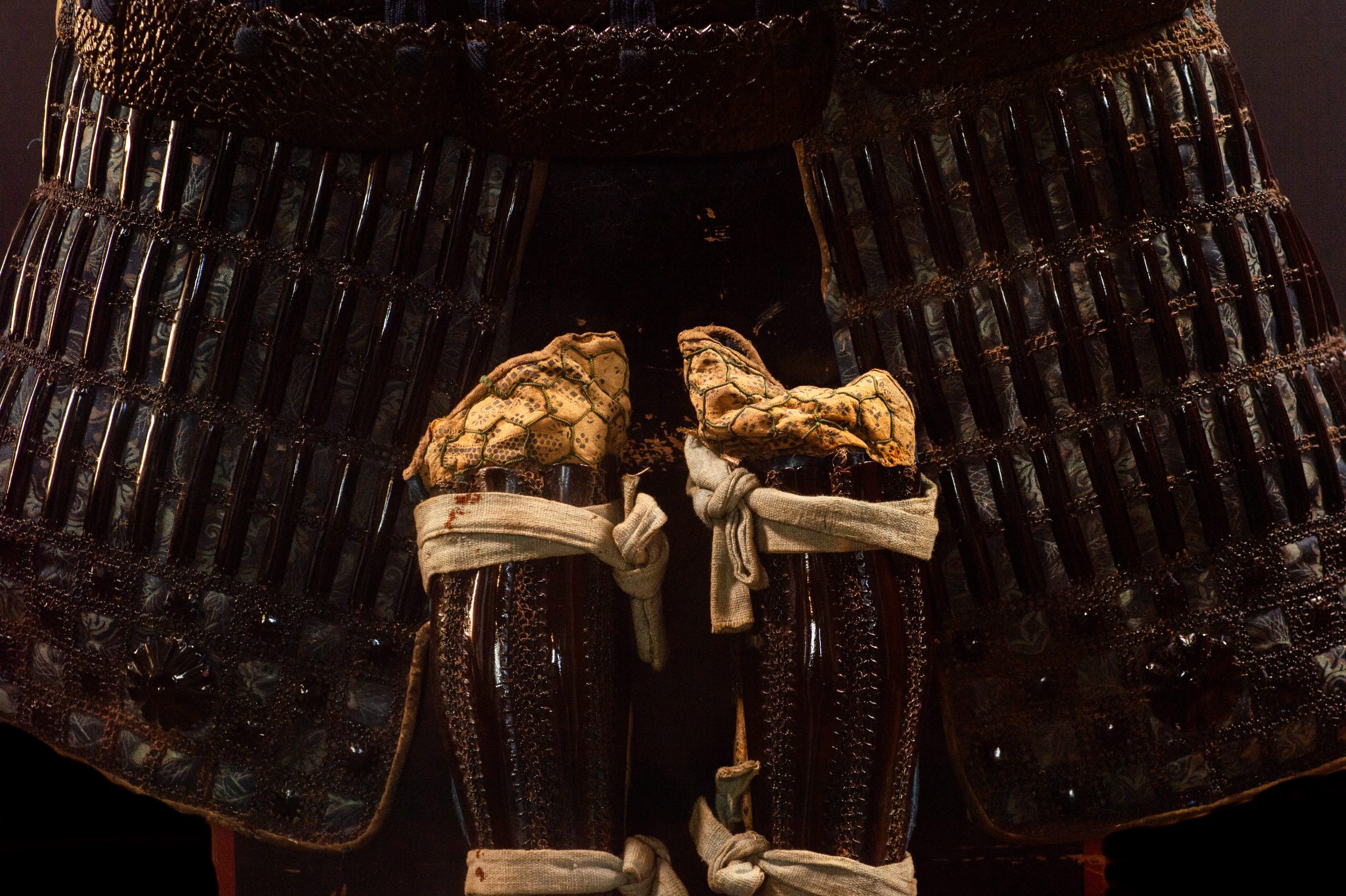
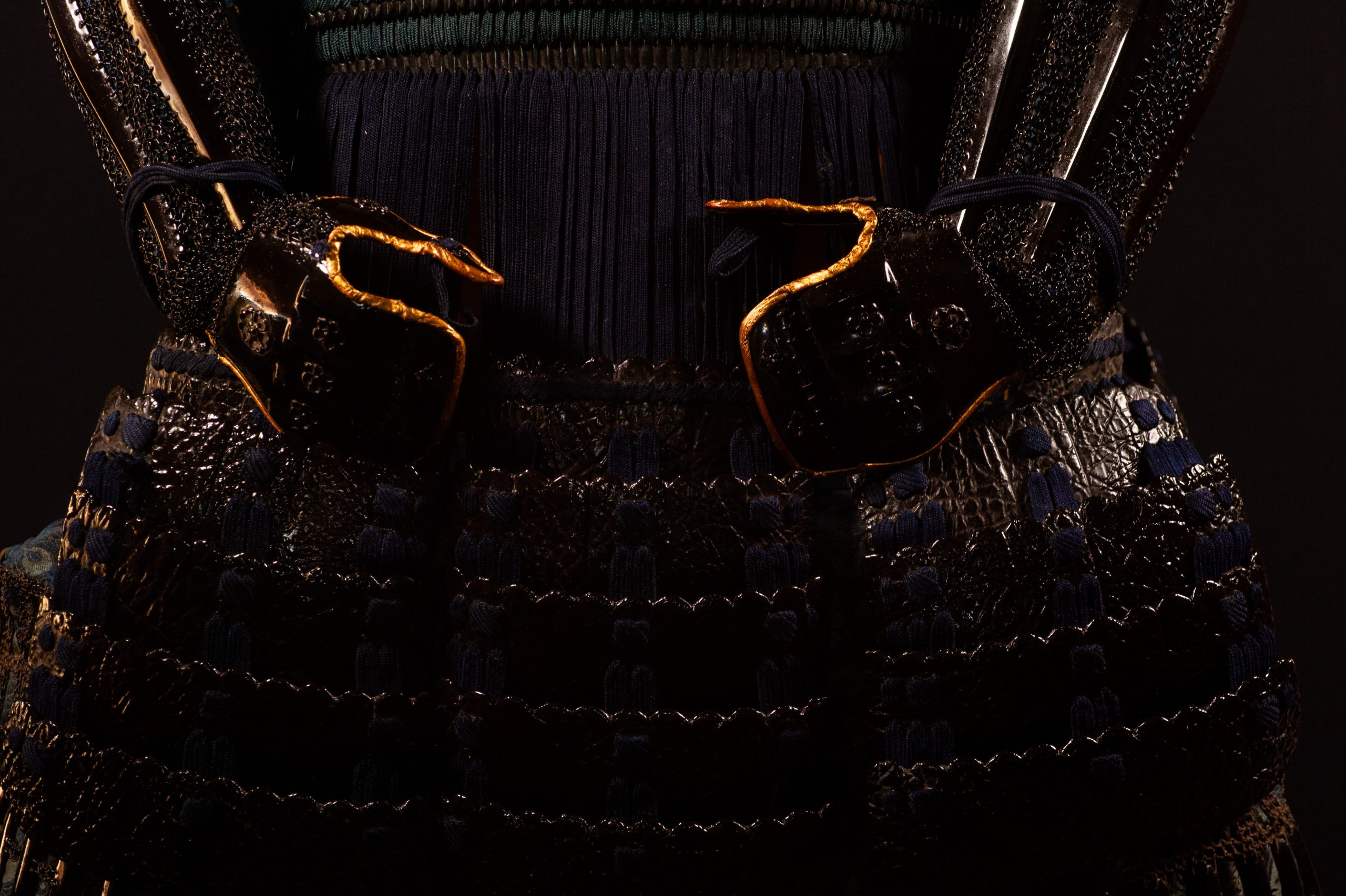
The dō, in black lacquer and lamellar/laminated construction, presents a compact, aristocratic visual structure. Cream-toned odoshi bands across the chest and waist introduce rhythm and an elegant chromatic break against the dark body of the armor. The kusazuri is broad and well proportioned, maintaining a strong enveloping silhouette and excellent formal presence.
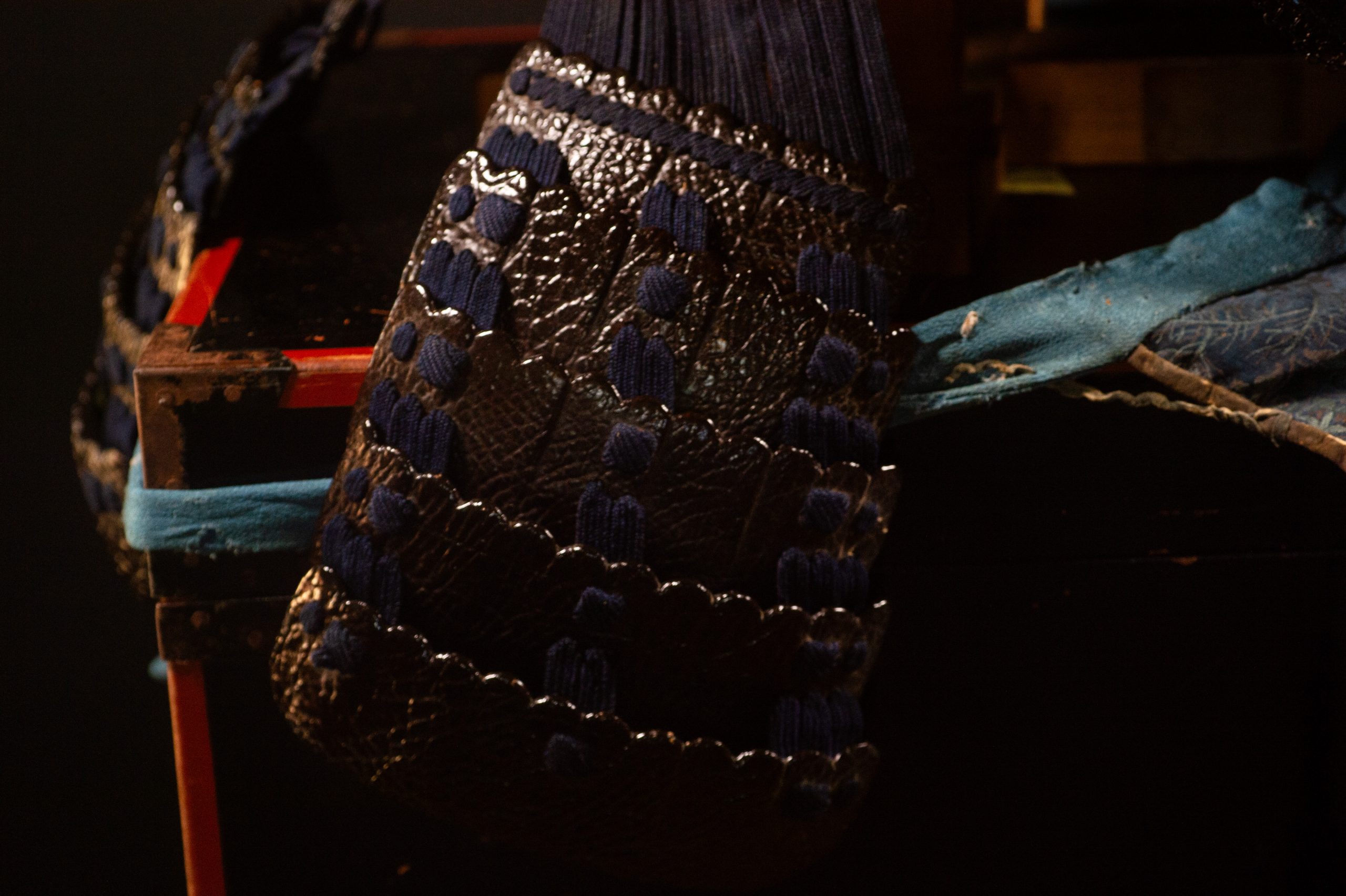
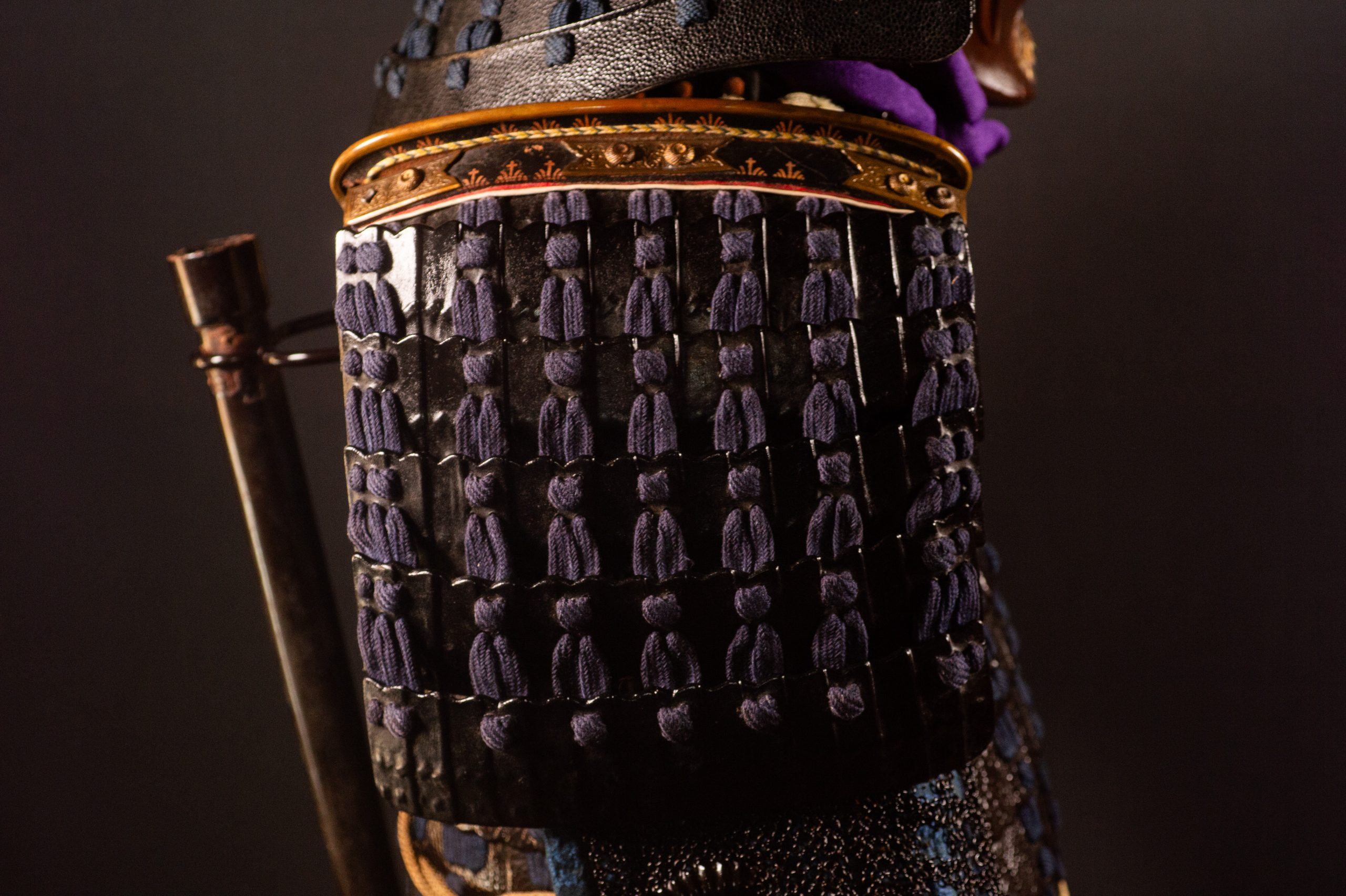
The sode are large, deep, and fully coherent with the set, with black lames, dark blue lacing, and refined gilt ornamental detailing along the upper edges. In profile, they deliver the classic high-ranking armor silhouette with volume and authority.
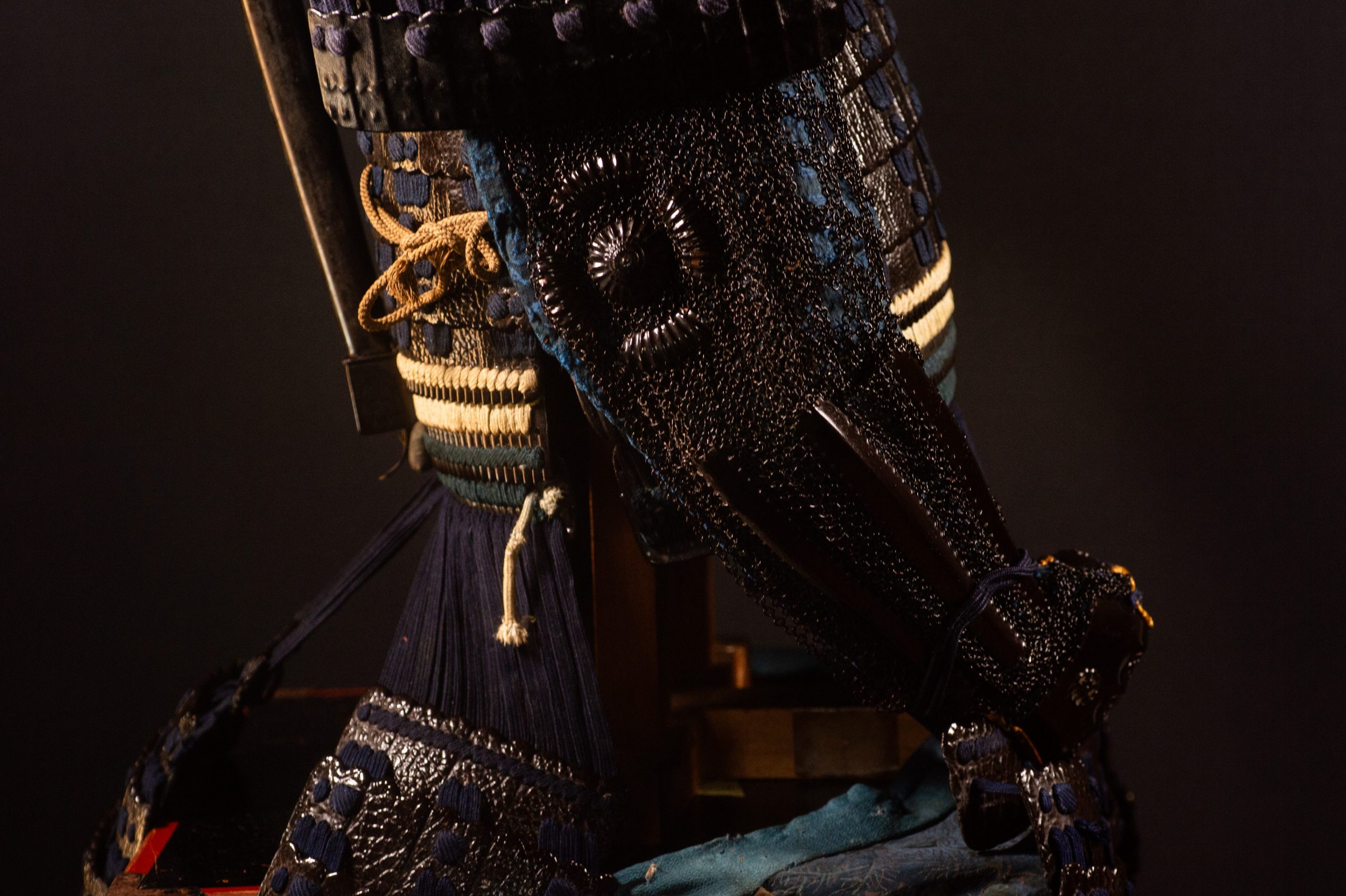
The kote combine kusari (mail), textile, and lacquered rigid elements in a robust and sophisticated construction, preserving material and visual continuity across the full armor. Matching suneate are also present, visible in the photographs, with light textile ties and dark lacquer finish.
The back retains its sashimono holder, an essential detail in an armor of this category, both for visual completeness and for display value in a serious collection.
This is exactly the kind of armor that performs where major pieces should perform: in a serious collection, reception hall, library, executive office, or a carefully designed interior. It is not a generic decorative suit; it is a piece with presence, historical reading, and collector-grade aesthetic strength, defined by a remarkable Edo nanban kabuto.
Sales summary
-
Type: Japanese samurai armor (tōsei gusoku)
-
Period: Edo
-
Key feature: Nanban kabuto / nanban-bachi
-
Kabuto: Rounded riveted hachi with ornamental raised/riveted decoration
-
Maedate: Lobed disc with cruciform motif
-
Fukigaeshi: Decorated with floral motif
-
Shikoro: Broad black lames with dark blue lacing
-
Menpō: Dark brown lacquer with applied moustache and chin tuft
-
Dō: Black lacquer, lamellar/laminated construction
-
Kusazuri: Multiple sections, broad skirt
-
Sode: Large matching shoulder guards with ornamented upper edges
-
Kote: Kusari, textile, and lacquered rigid elements
-
Suneate: Pair present
-
Rear section: Sashimono holder preserved
-
Visual condition: Excellent overall presentation with age-consistent patina and wear