


Description
ITEM DESCRIPTION:
Comes with kimono or cotton bag. Comes with certificate of supein Nihonto. Comes with copy of Tokosusho. Comes with NTHK Kanteisho Certificate.
Documentation
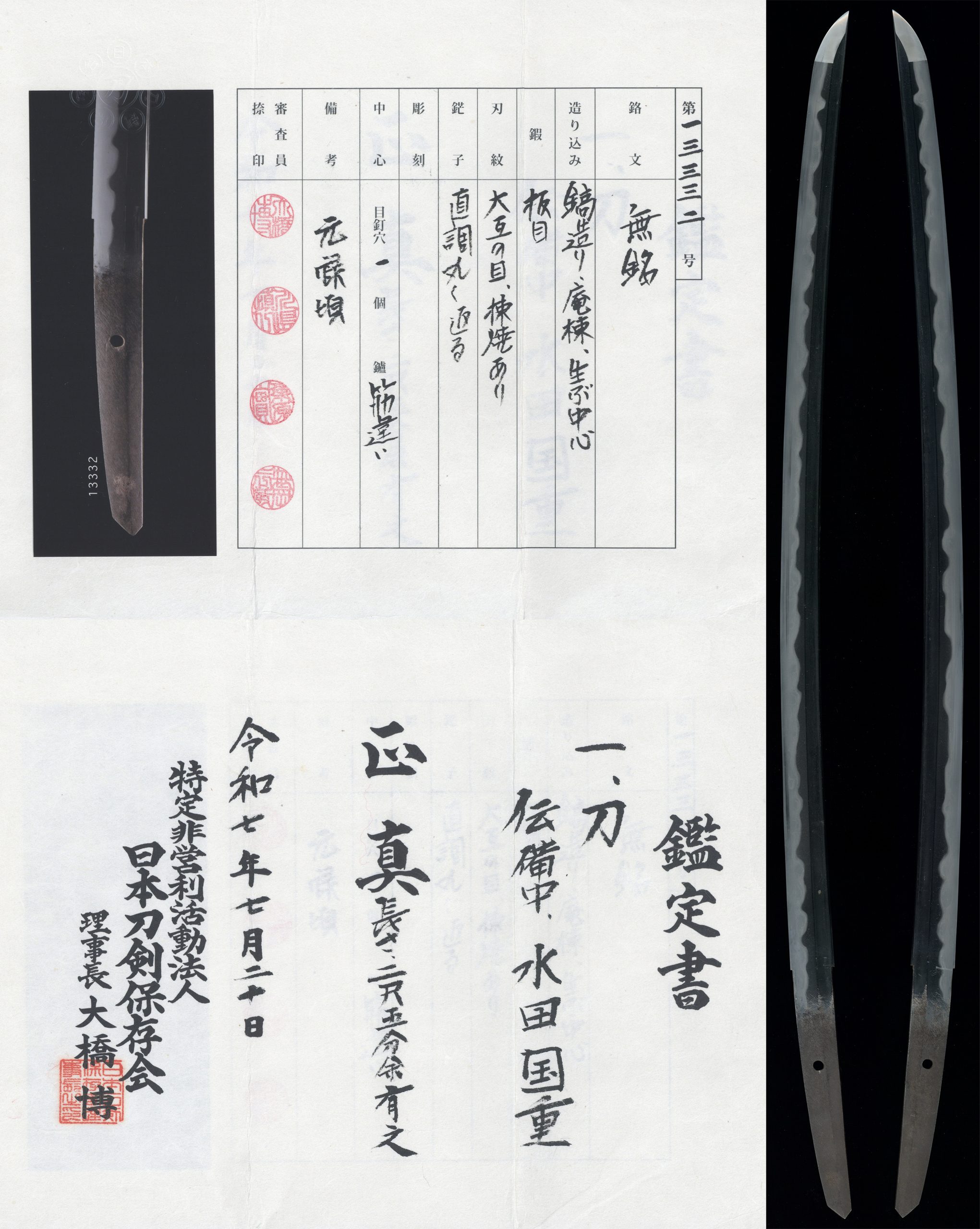
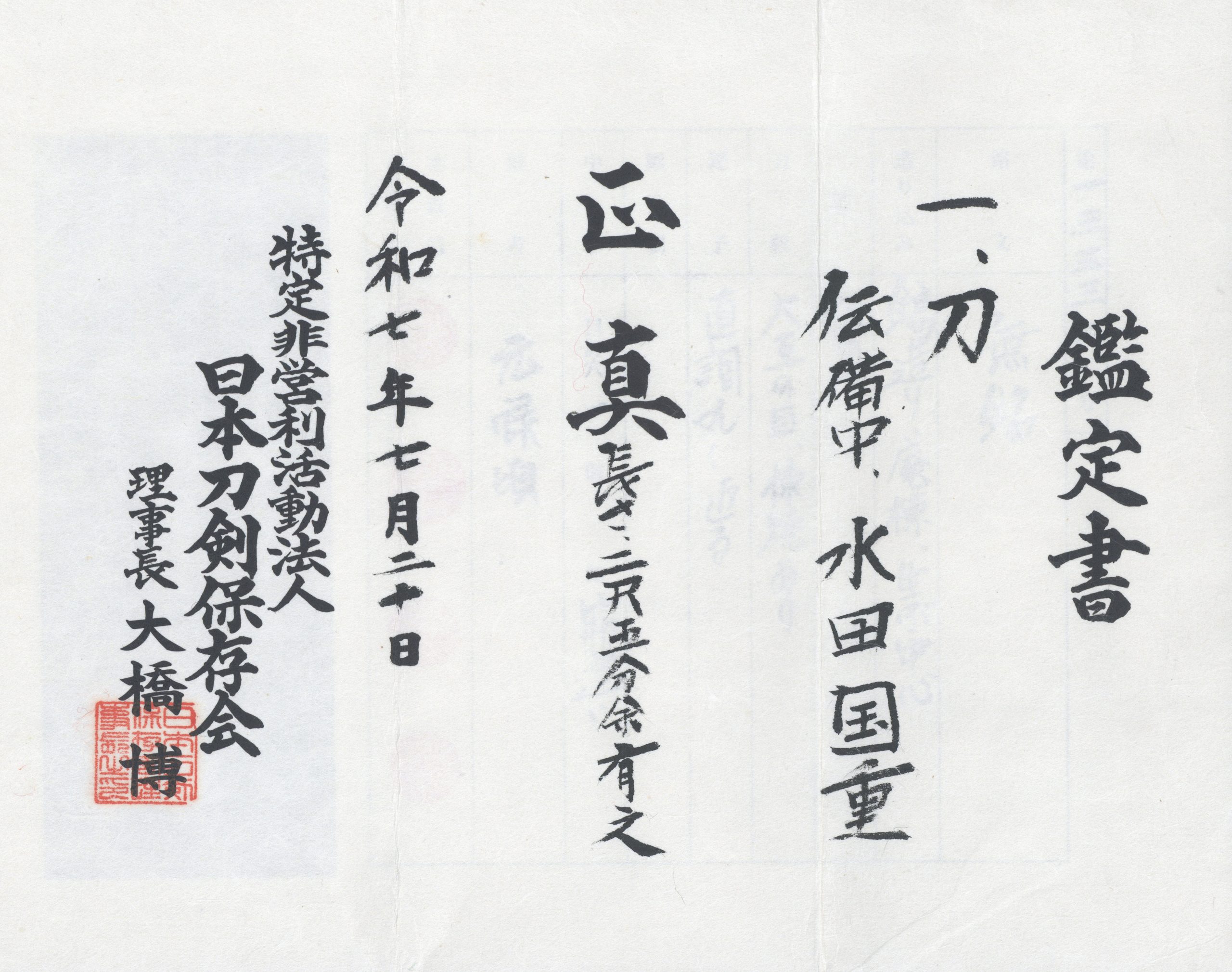
1) 鑑定書 (Kanteishō / appraisal certificate)
“Appraisal certificate. One sword. Attributed (den) to Bitchū, Mizuta Kunishige. Genuine. Length: ‘a little over 2 shaku 5 sun’. Reiwa 7 (2025), July 20. Organization: (NPO) Nihon Tōken Hozon Kai. Chairman/Director: Hiroshi Ōhashi (seal).”
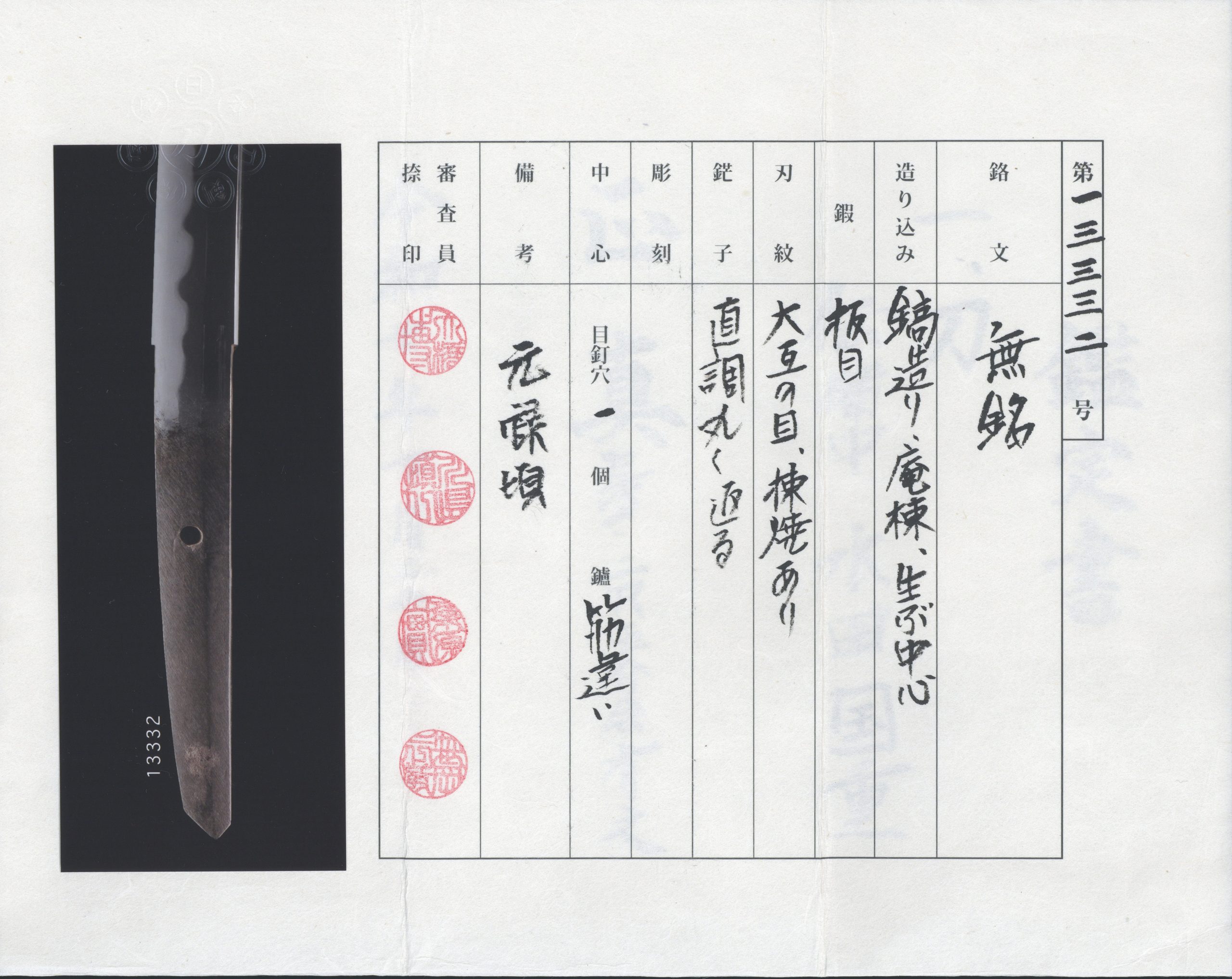
2) Attached specification sheet (with item no.)
“No. 13332. Inscription: mumei (unsigned). Construction: shinogi-zukuri, iori-mune, ubu nakago. Kitae: itame. Hamon: ō-gunome, with masame-yaki present. Bōshi: sugu-chō, returning in maru. Nakago: 1 mekugi-ana. Yasurime: suji-chigai. Remarks: ‘around Genroku’. (Multiple seals).”
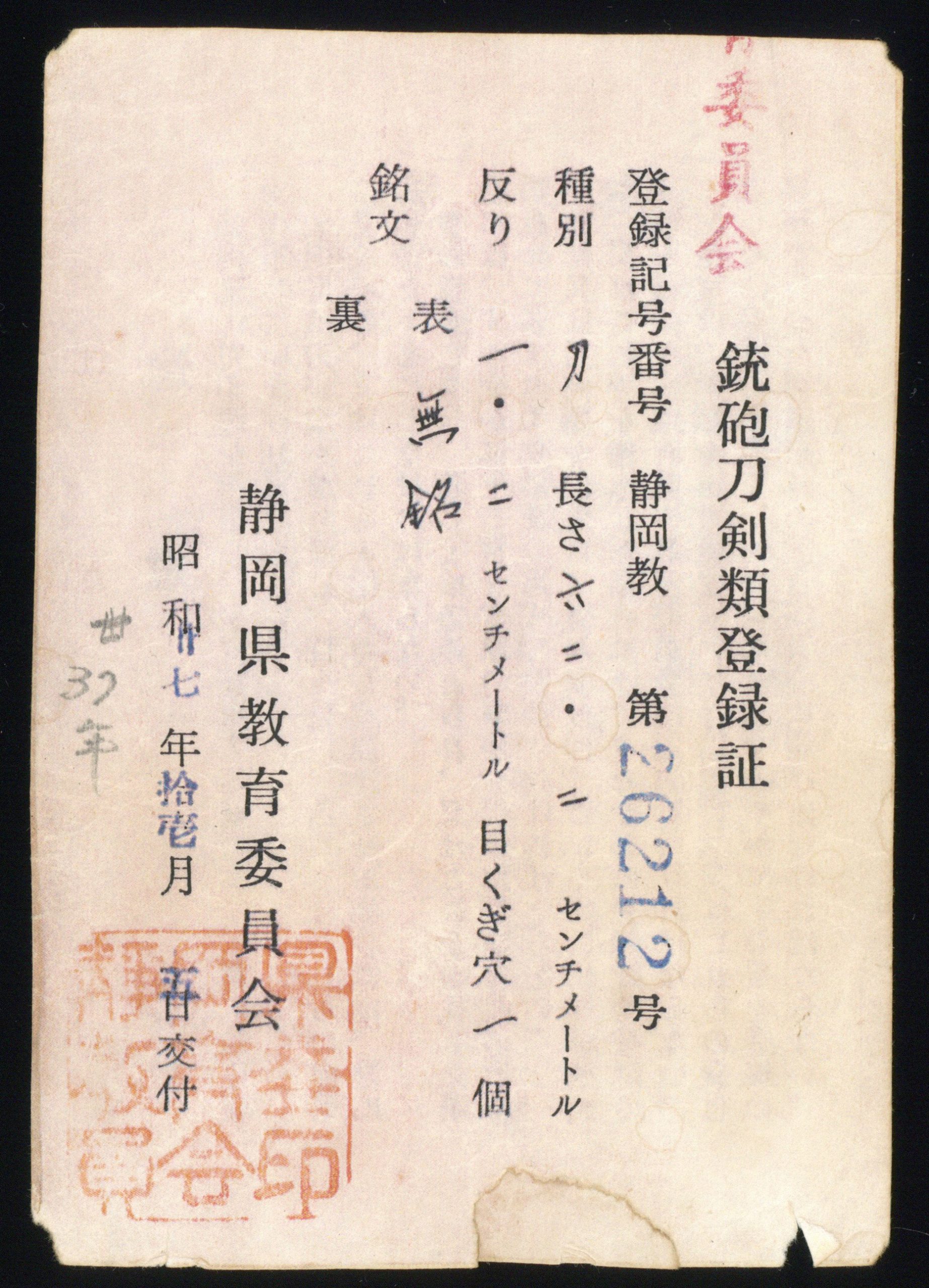
3) 銃砲刀剣類登録証 (Torokusho / registration)
“Firearms and swords registration certificate. Registration no.: Shizuoka-kyō, No. 26212. Category: katana (刀). Sori: 1.2 . Length: 62.2 cm. Mekugi-ana: 1. Mei: mumei. Shizuoka Prefectural Board of Education.
CONTEXT AND ATTRIBUTION
The blade is mumei and is attributed in “den” style to 備中 水田国重 (Bitchū Mizuta Kunishige) per the kanteishō. The specification sheet notes 元禄頃 (Genroku 1688 – 1704), placing the piece in the Early Edo period as per the document itself.
TECHNICAL ANALYSIS OF THE BLADE
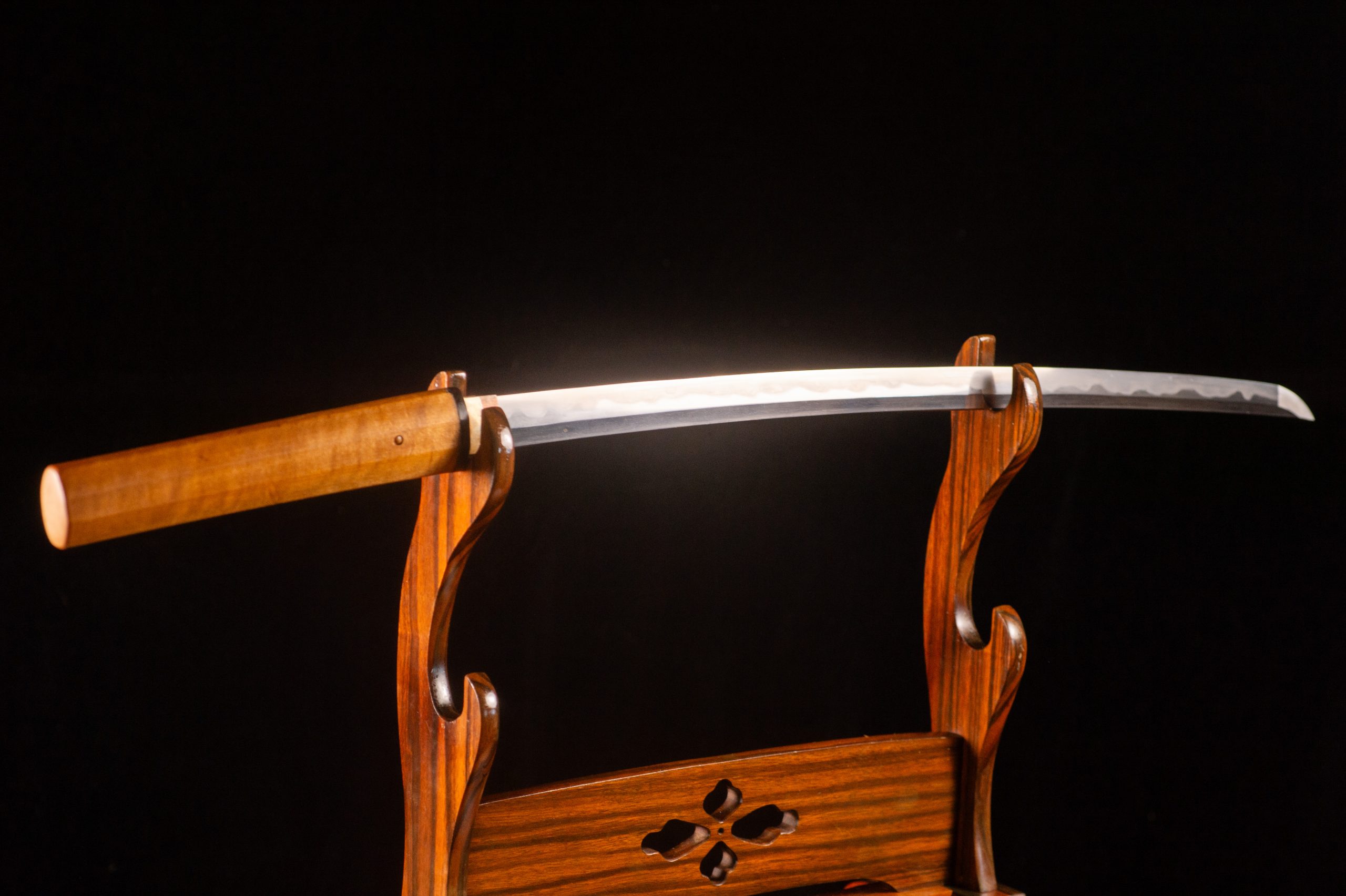
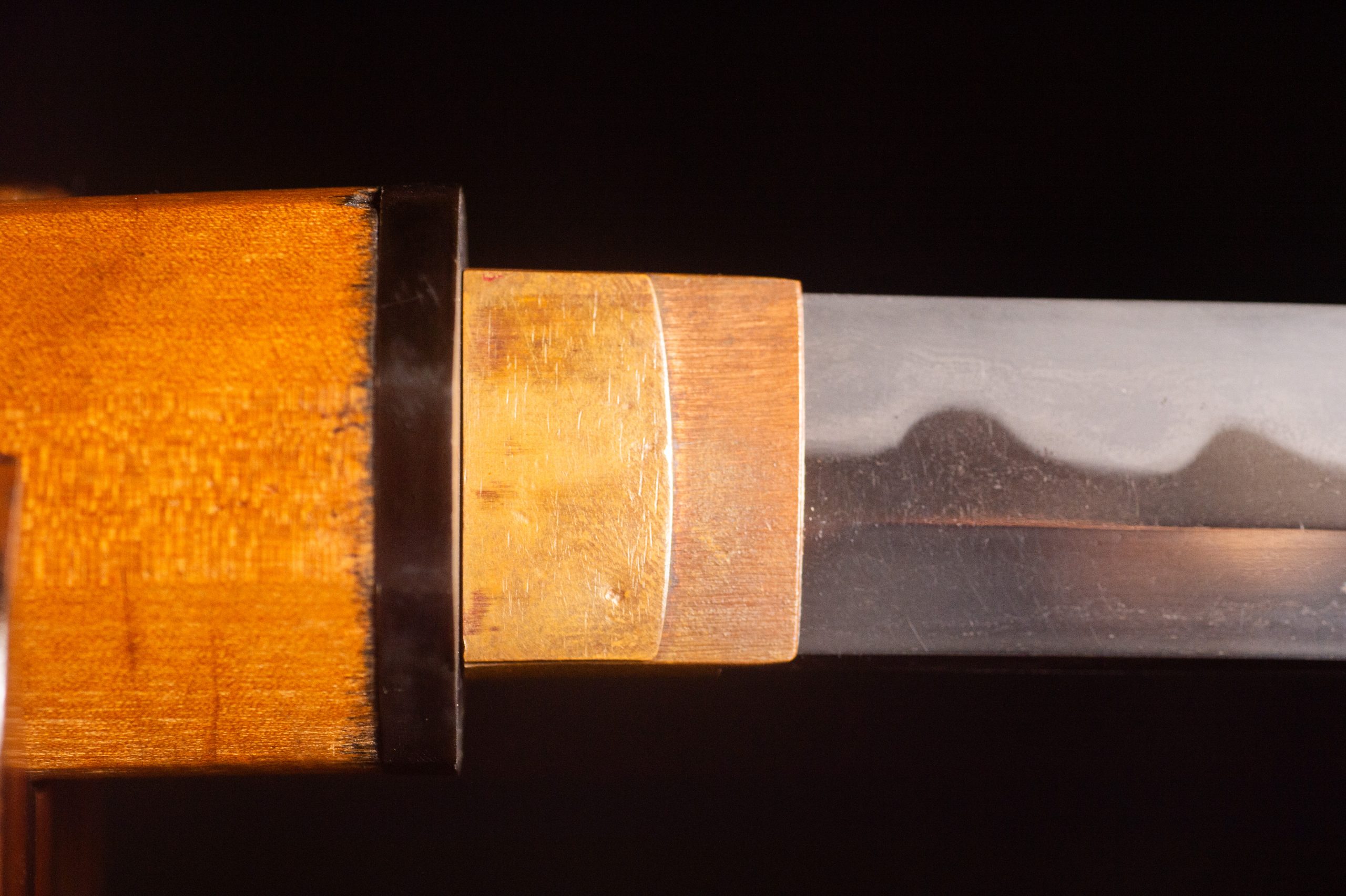
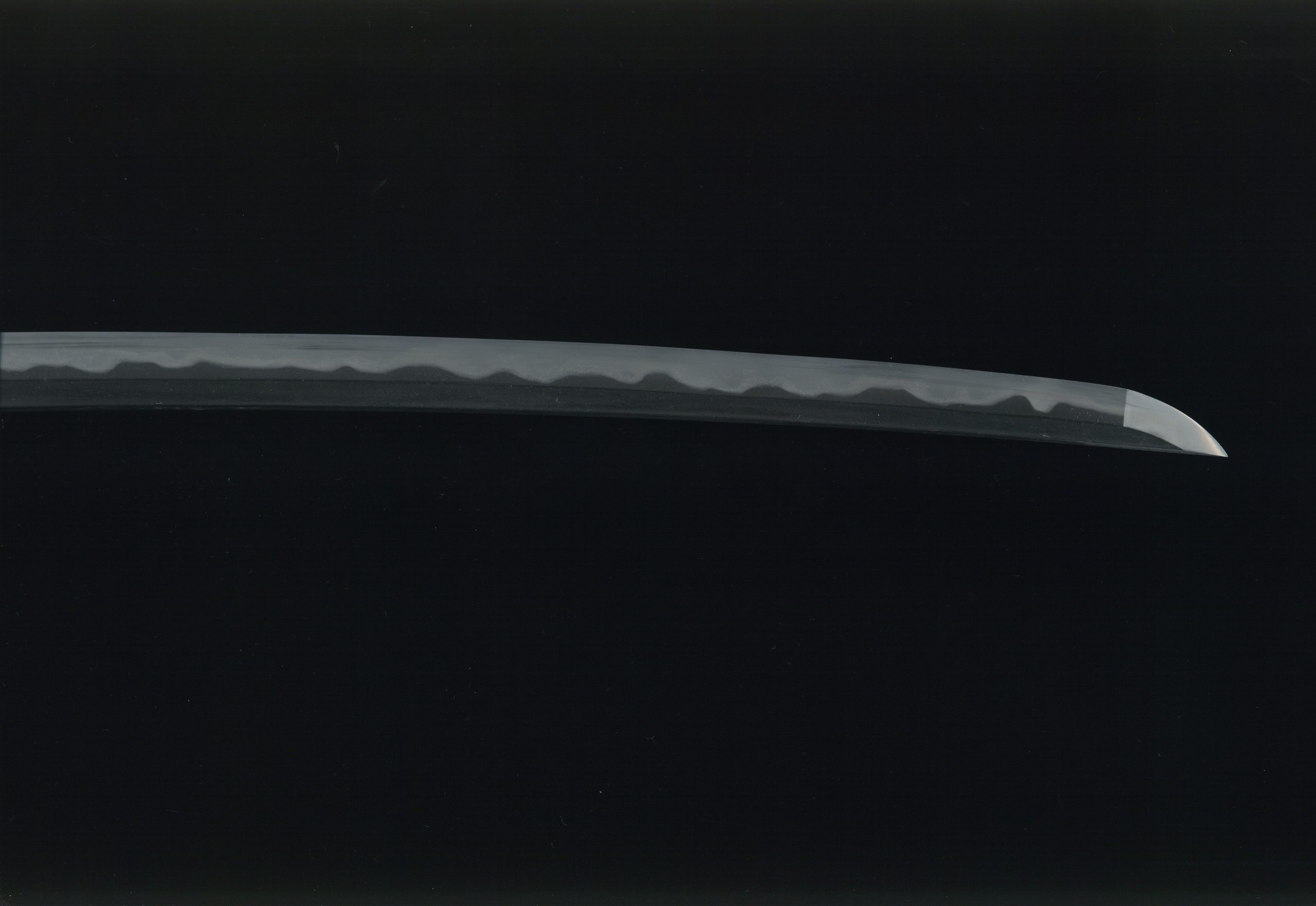
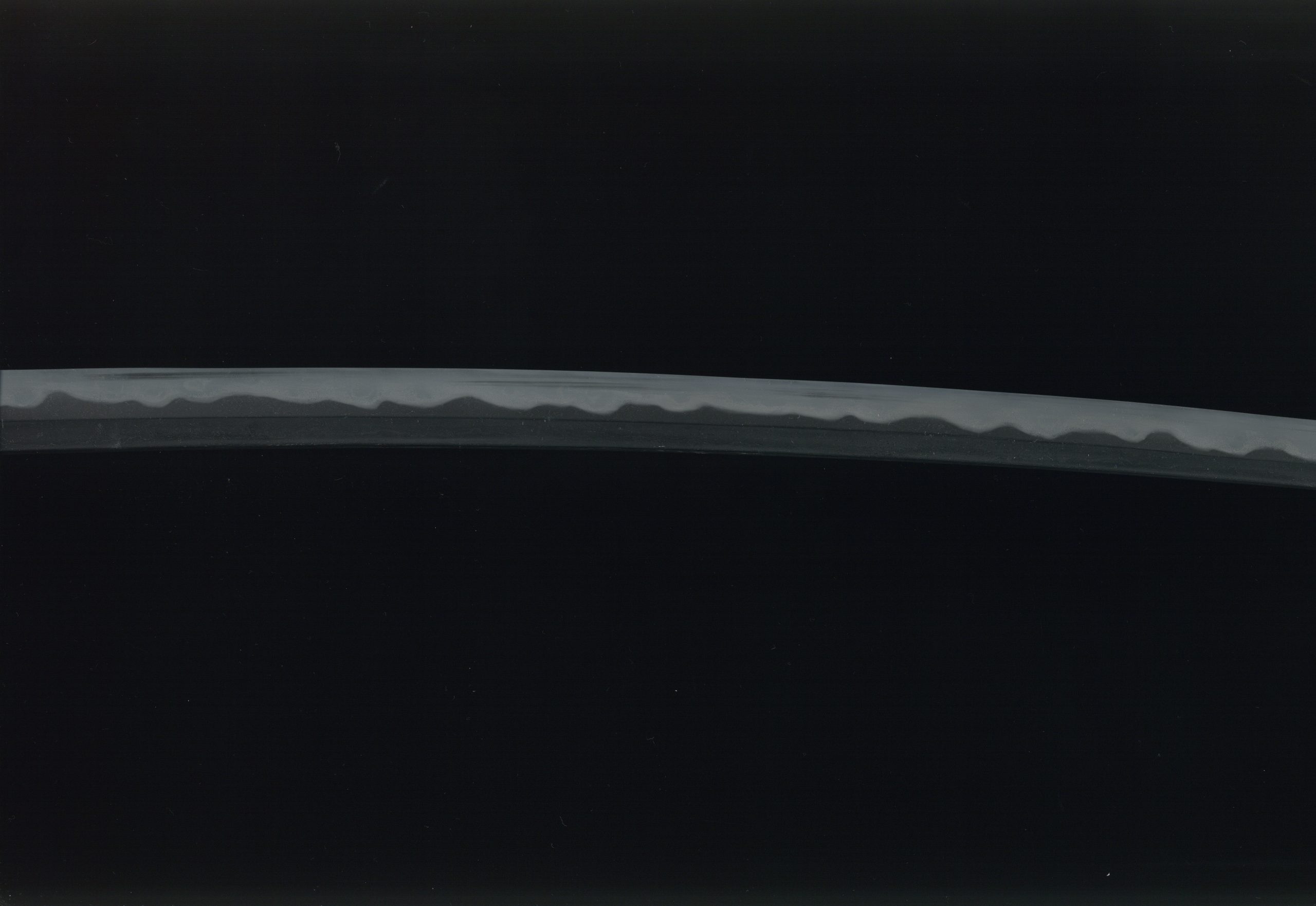
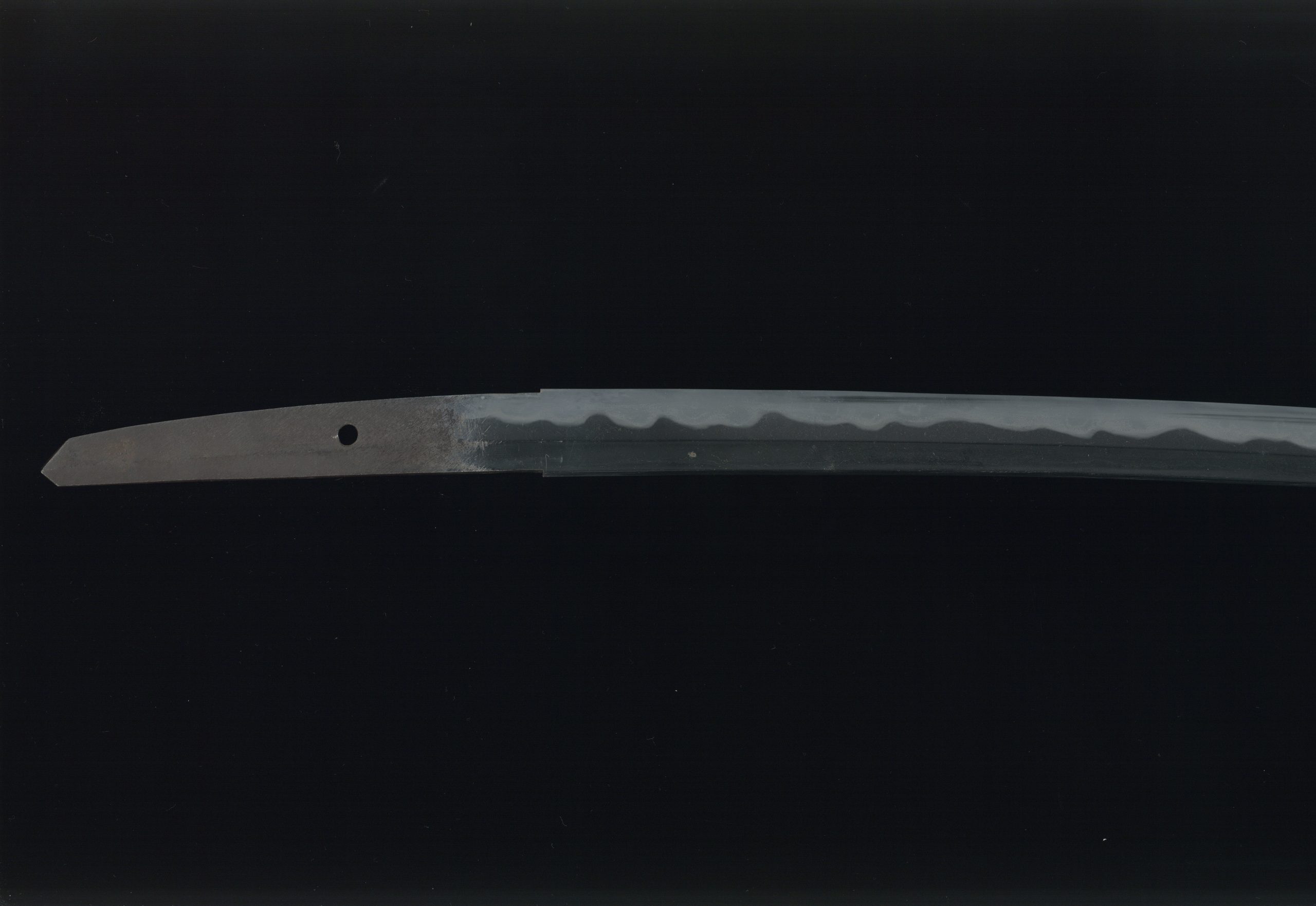
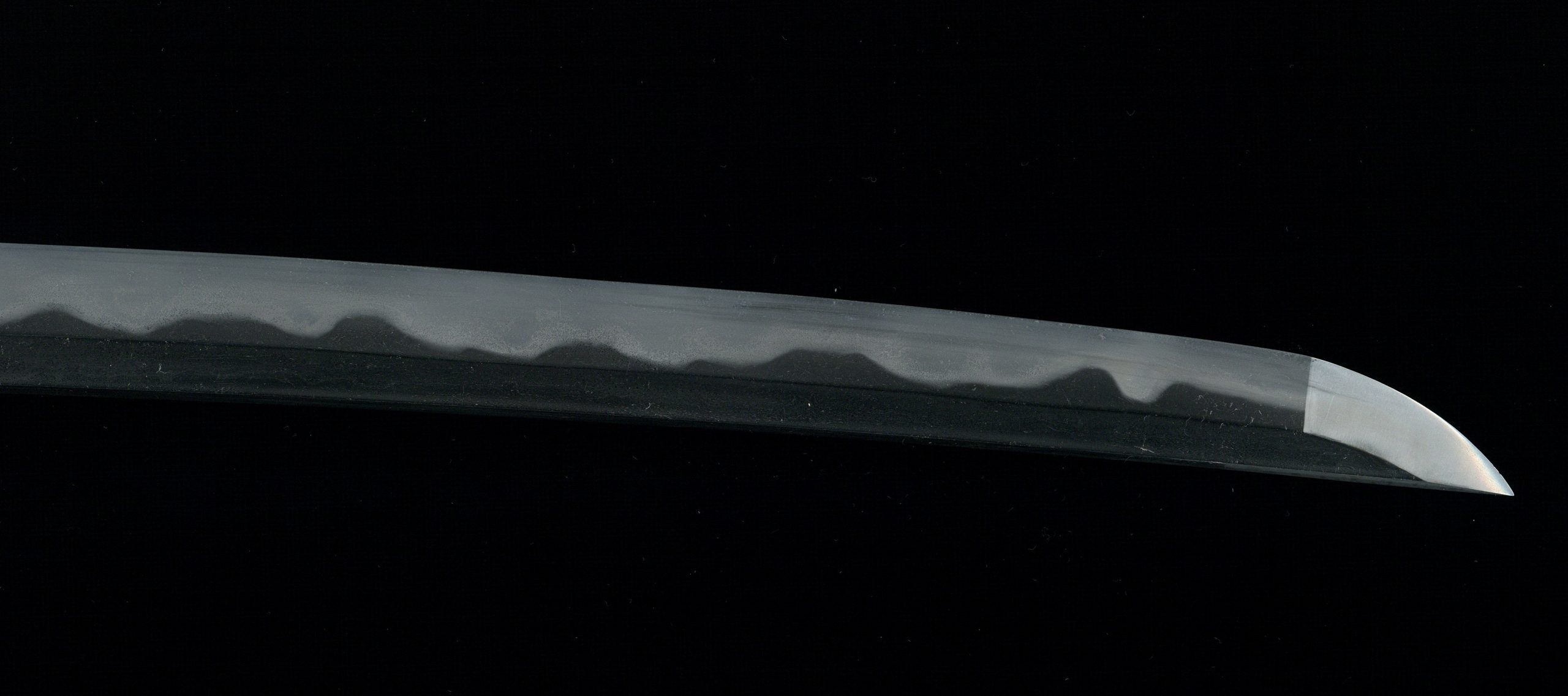
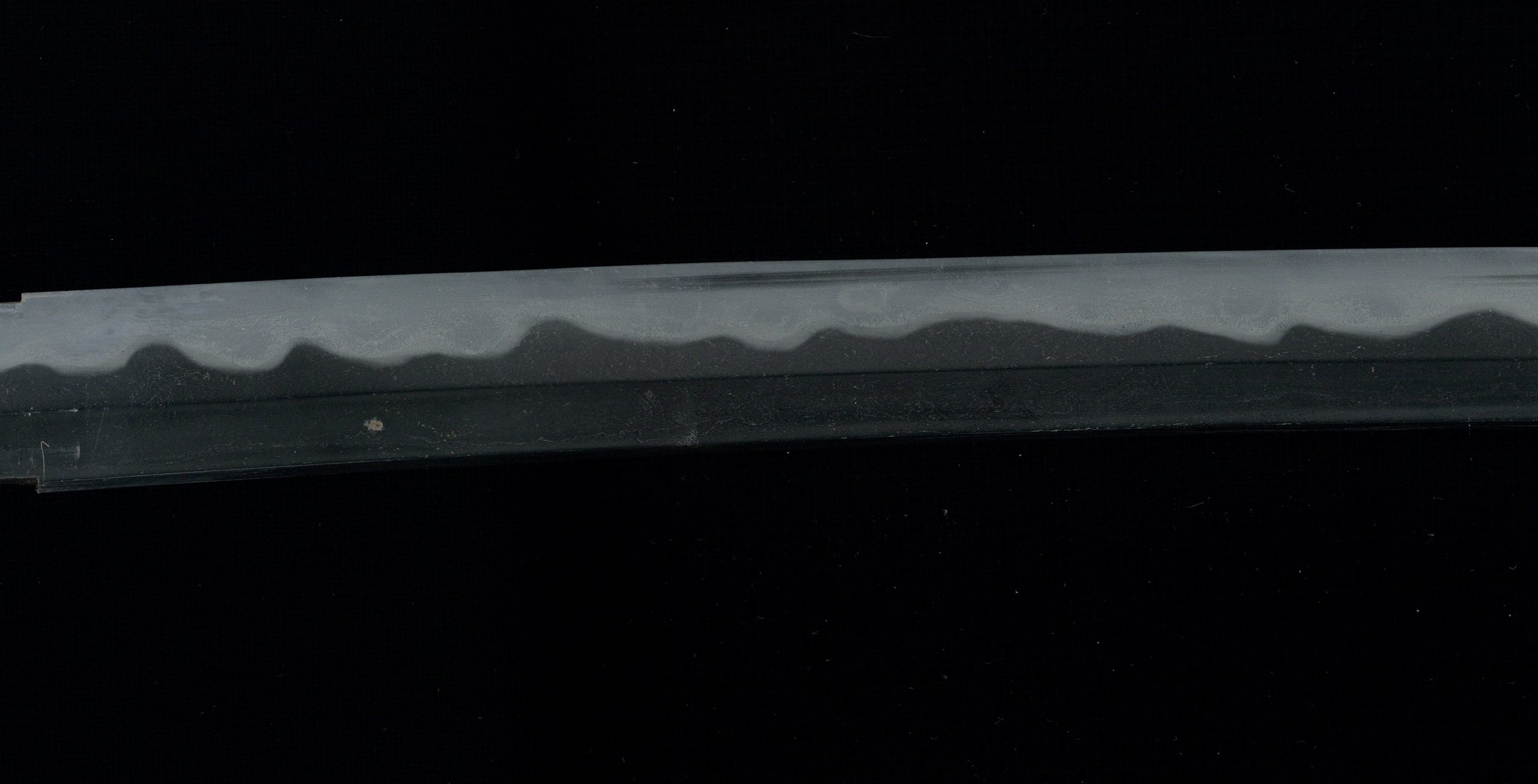
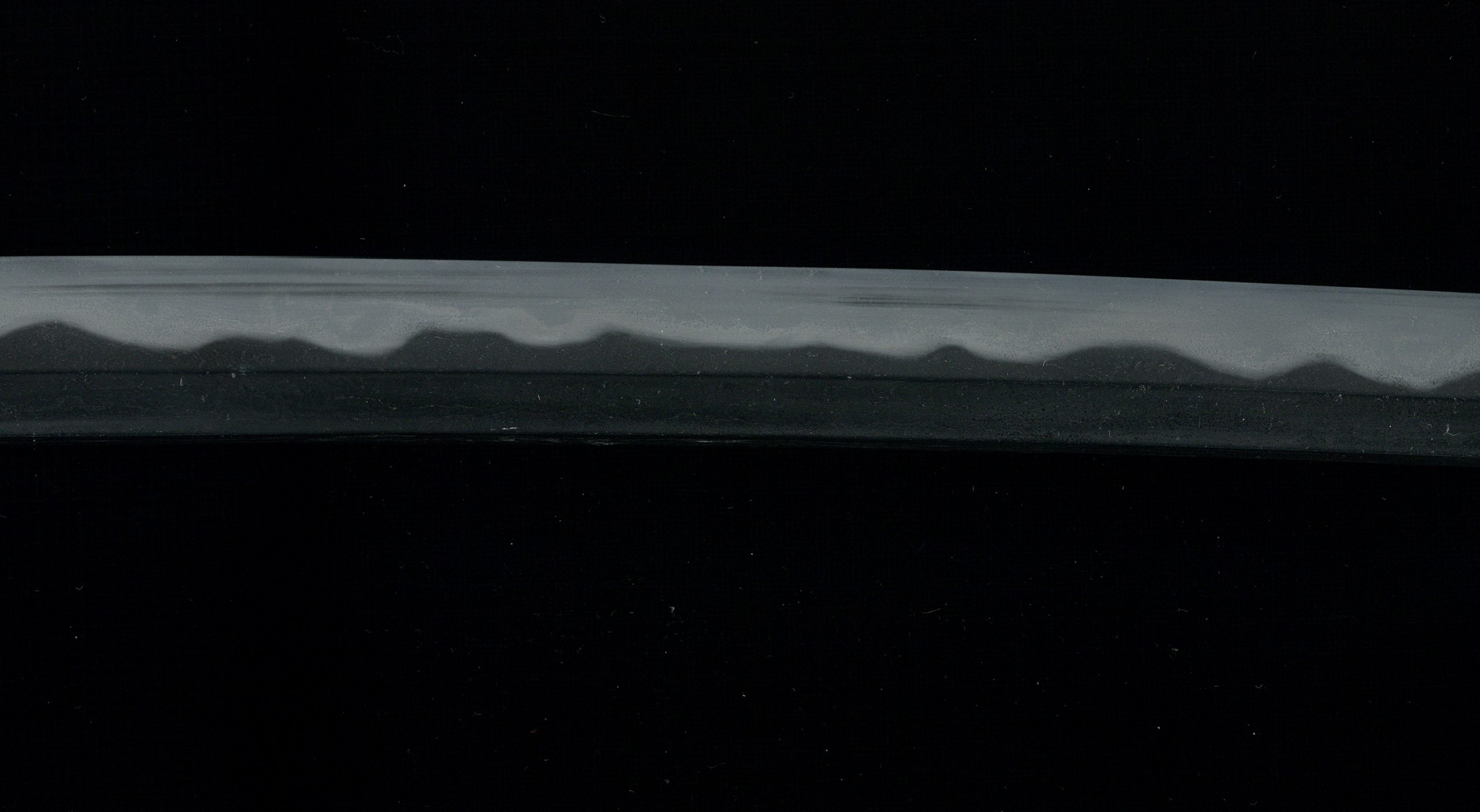
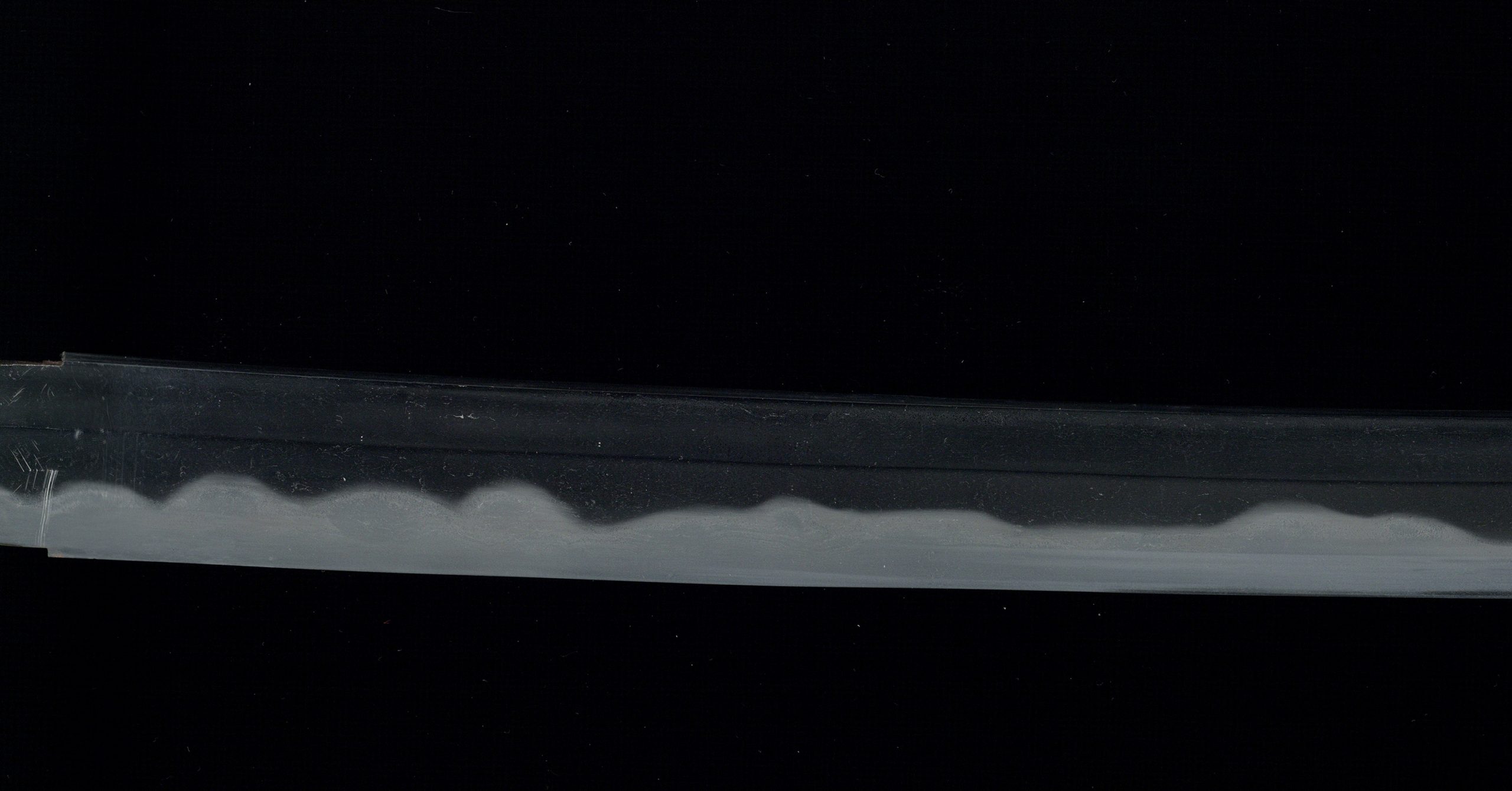
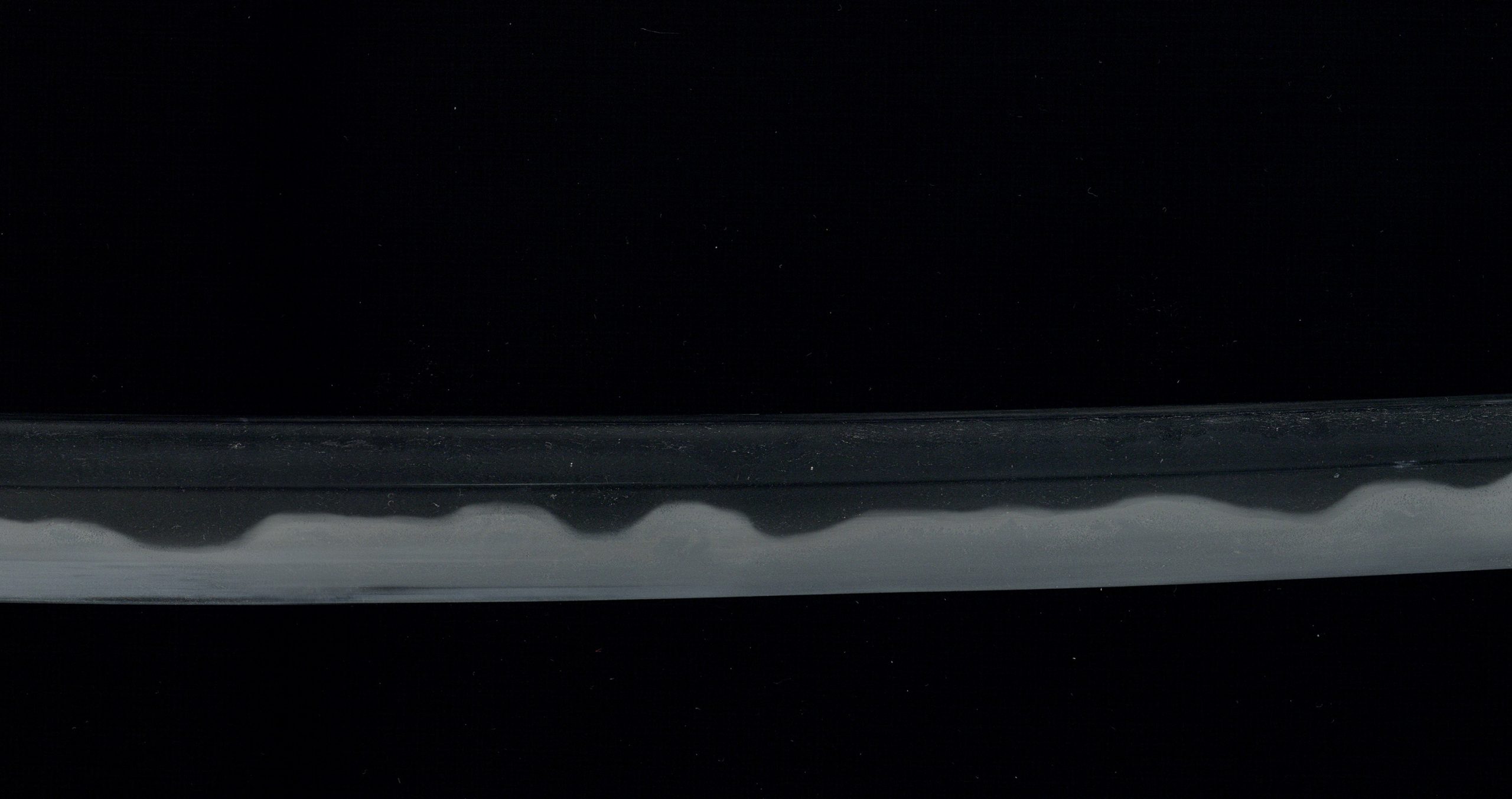
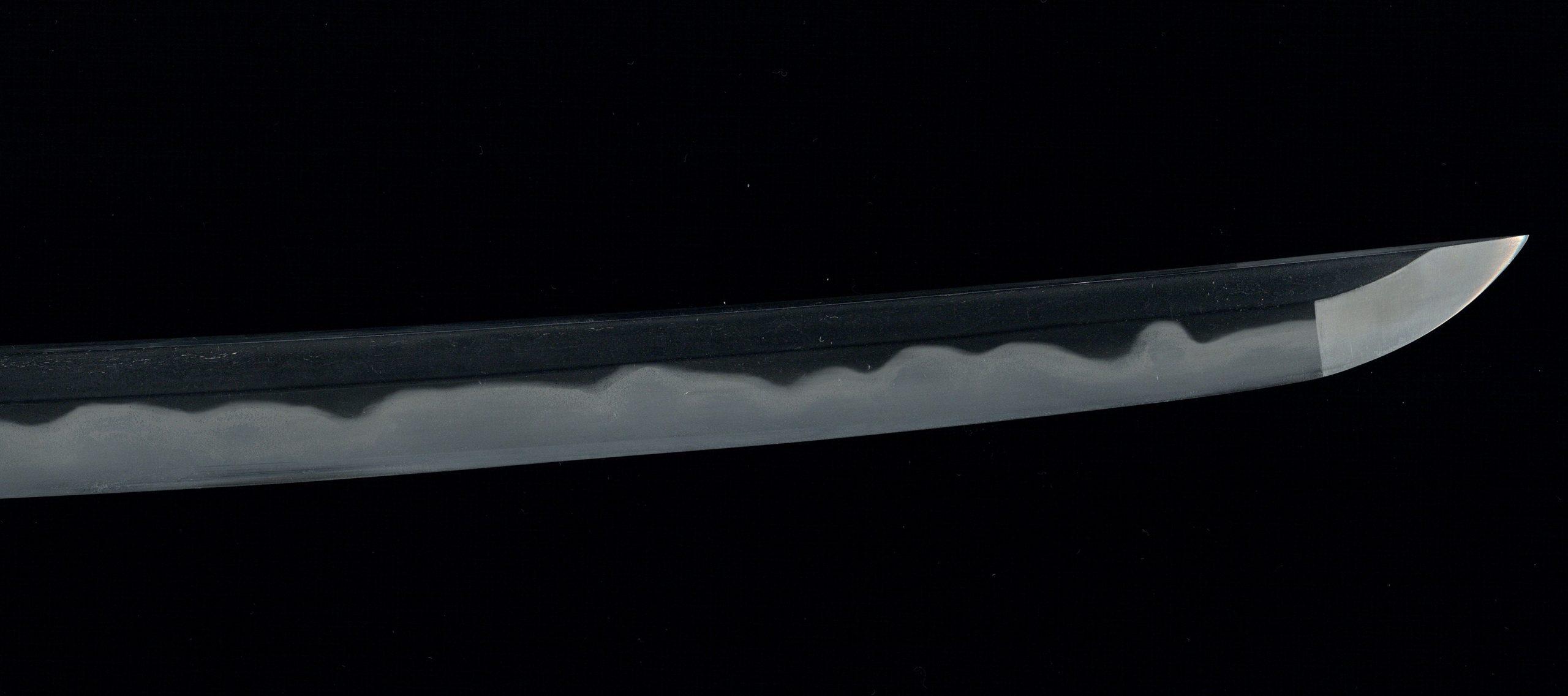
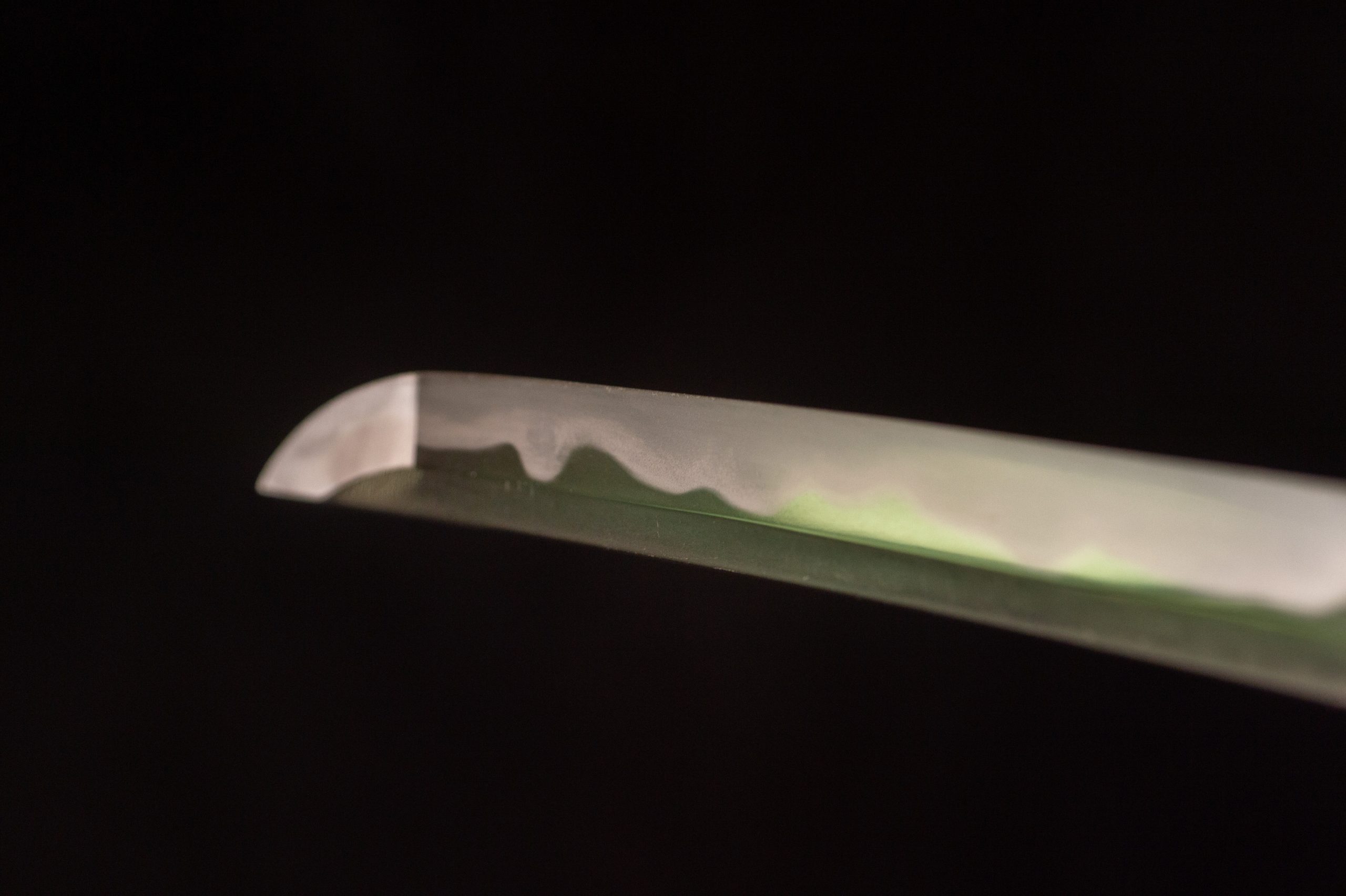
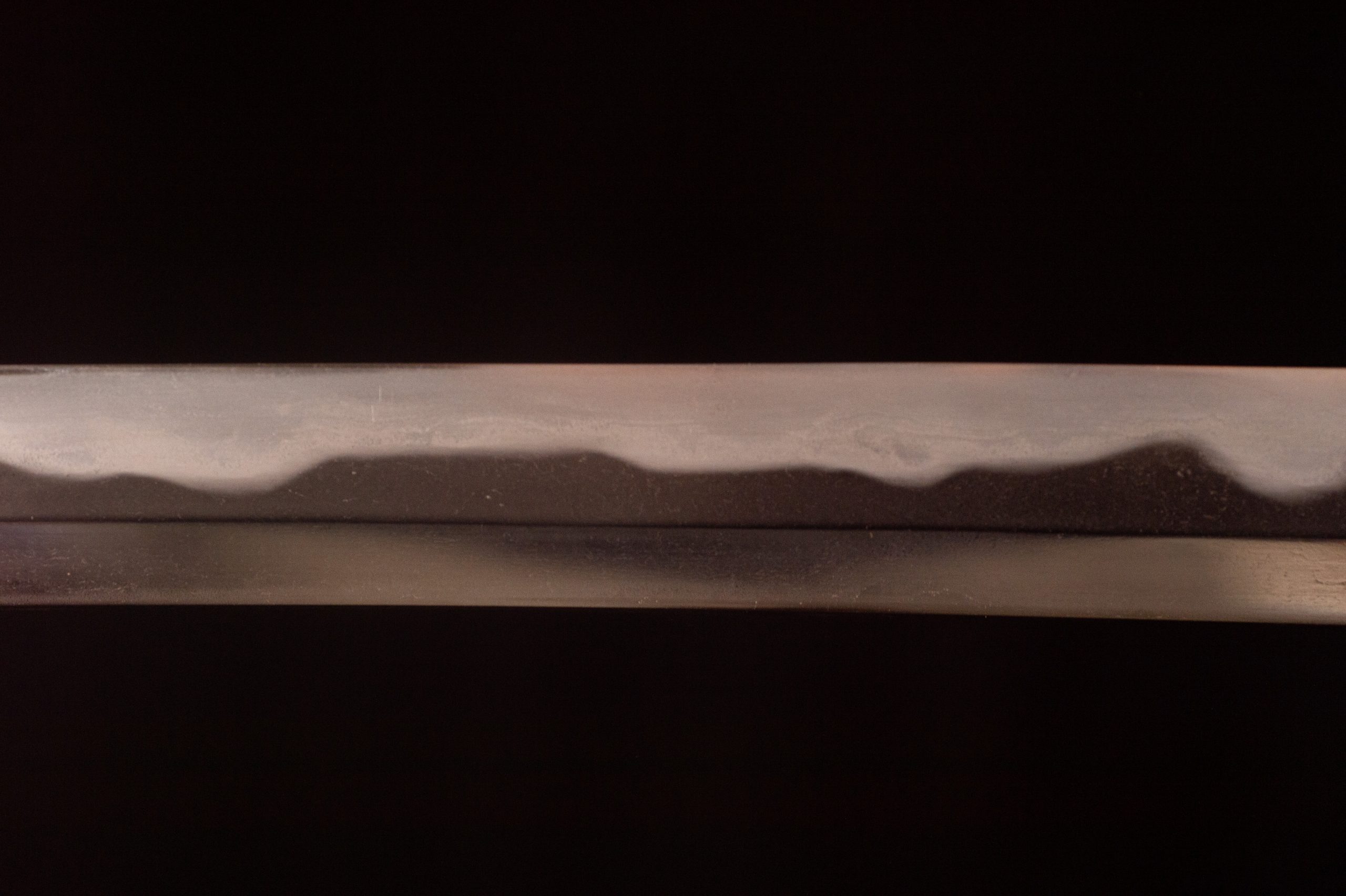
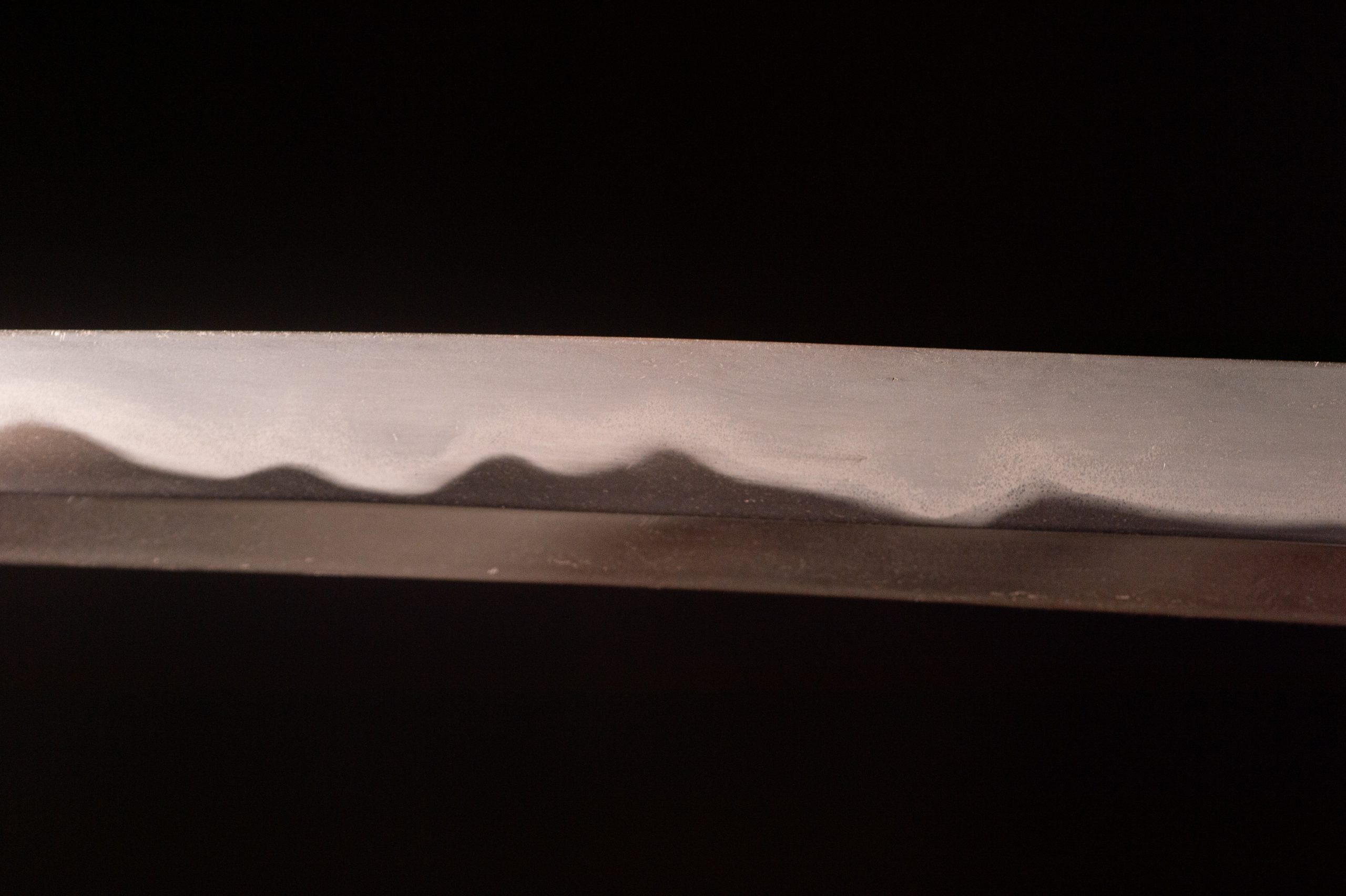
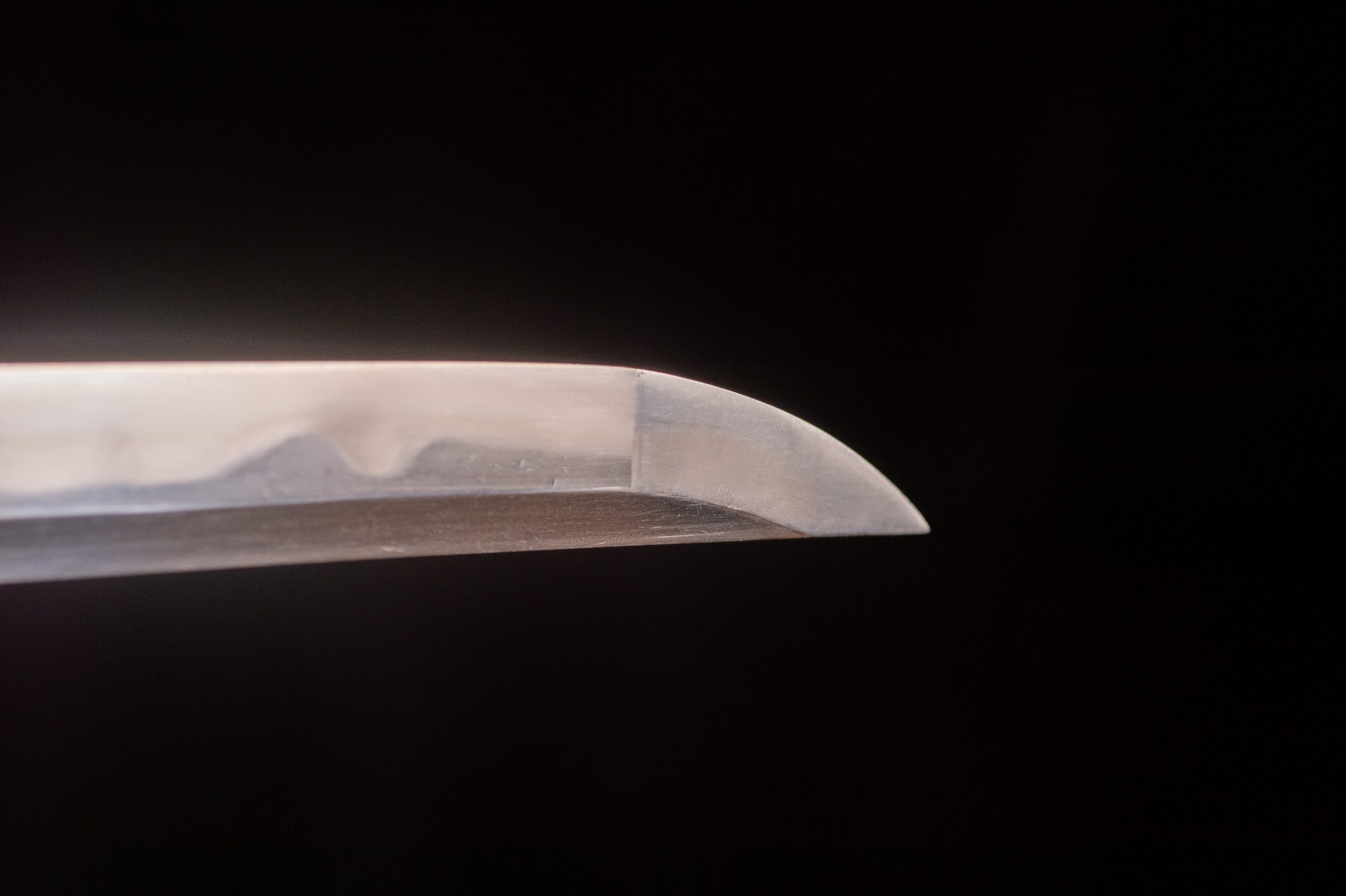
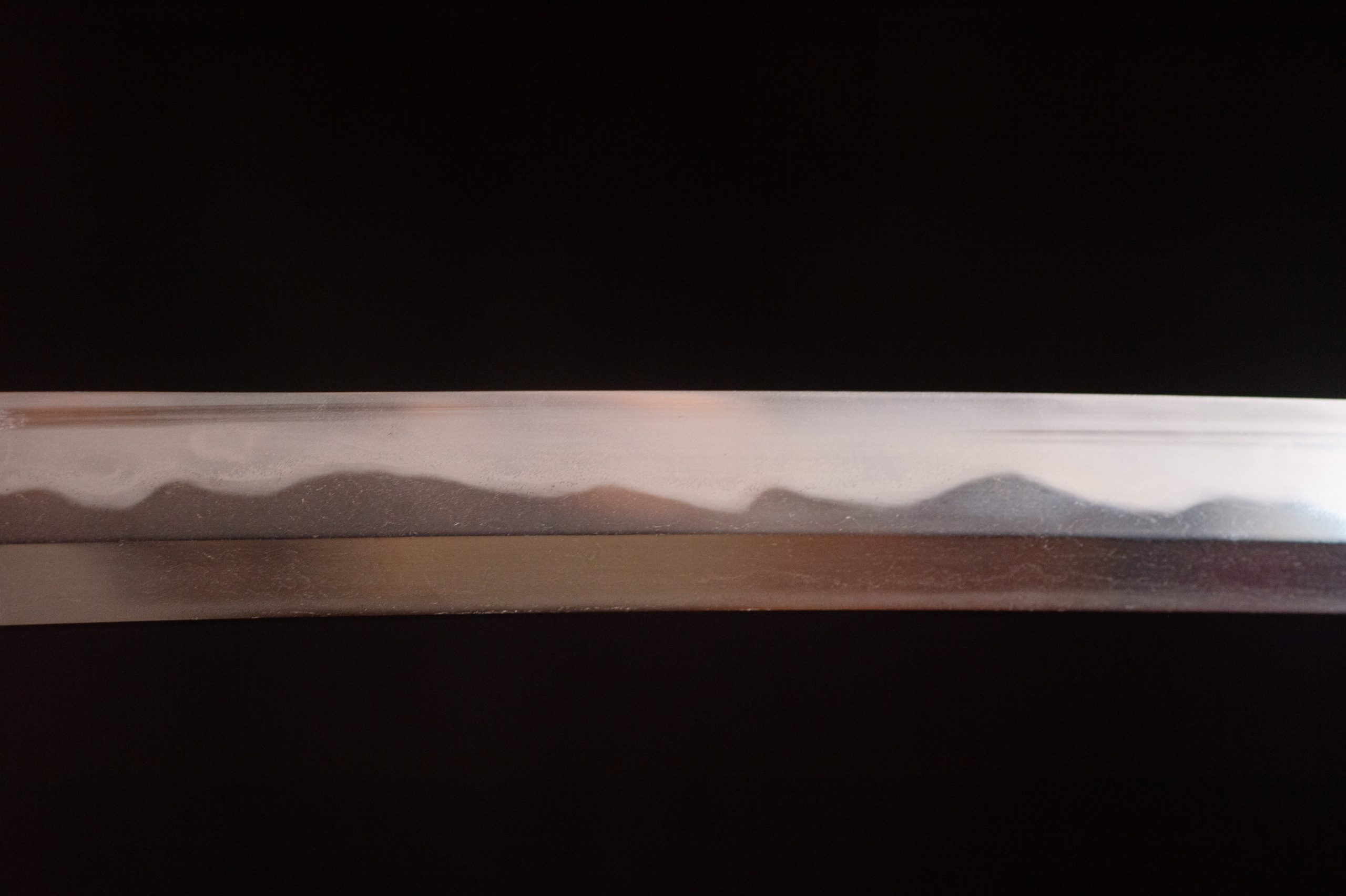
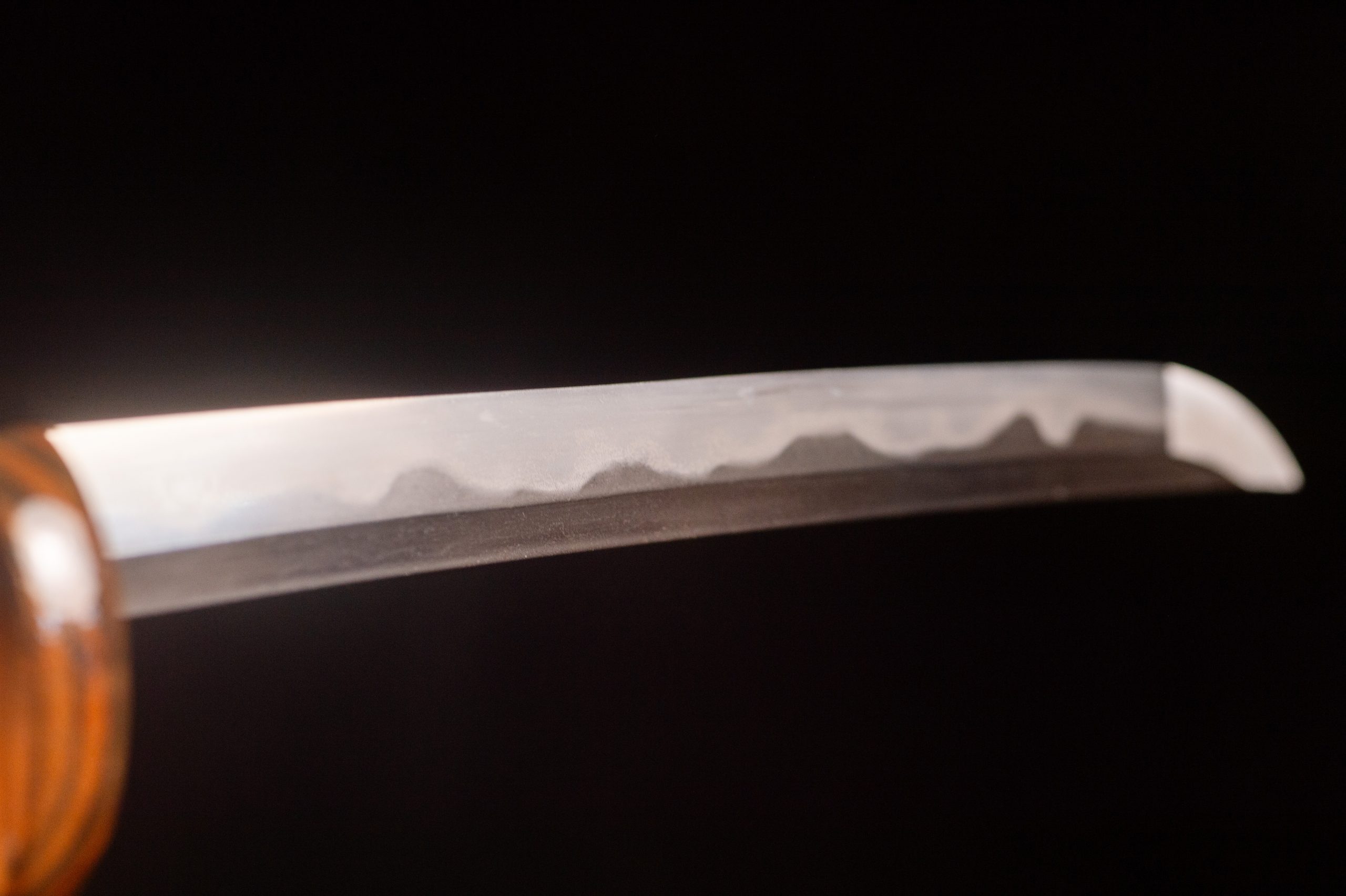
The papers describe shinogi-zukuri construction with iori-mune and an ubu nakago, consistent with the visible sugata. The hamon is given as ō-gunome: broad, rhythmic undulations with a clearly defined nioiguchi in the photographs, and the sheet adds 柾焼あり (presence of masame-yaki). The bōshi is recorded as 直調、丸く返る (a sugu-chō tendency with maru-kaeri), matching the kissaki close-ups.
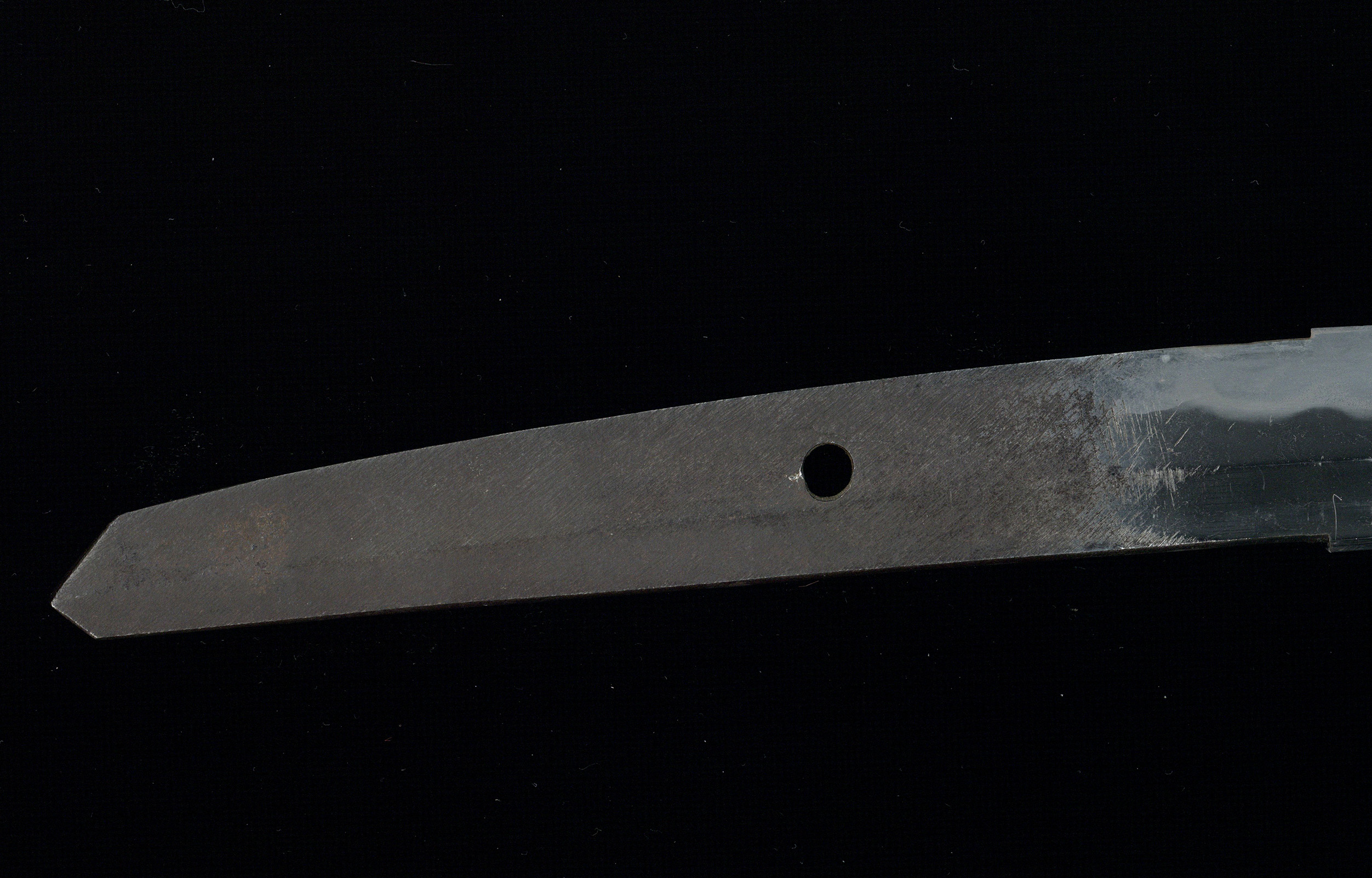
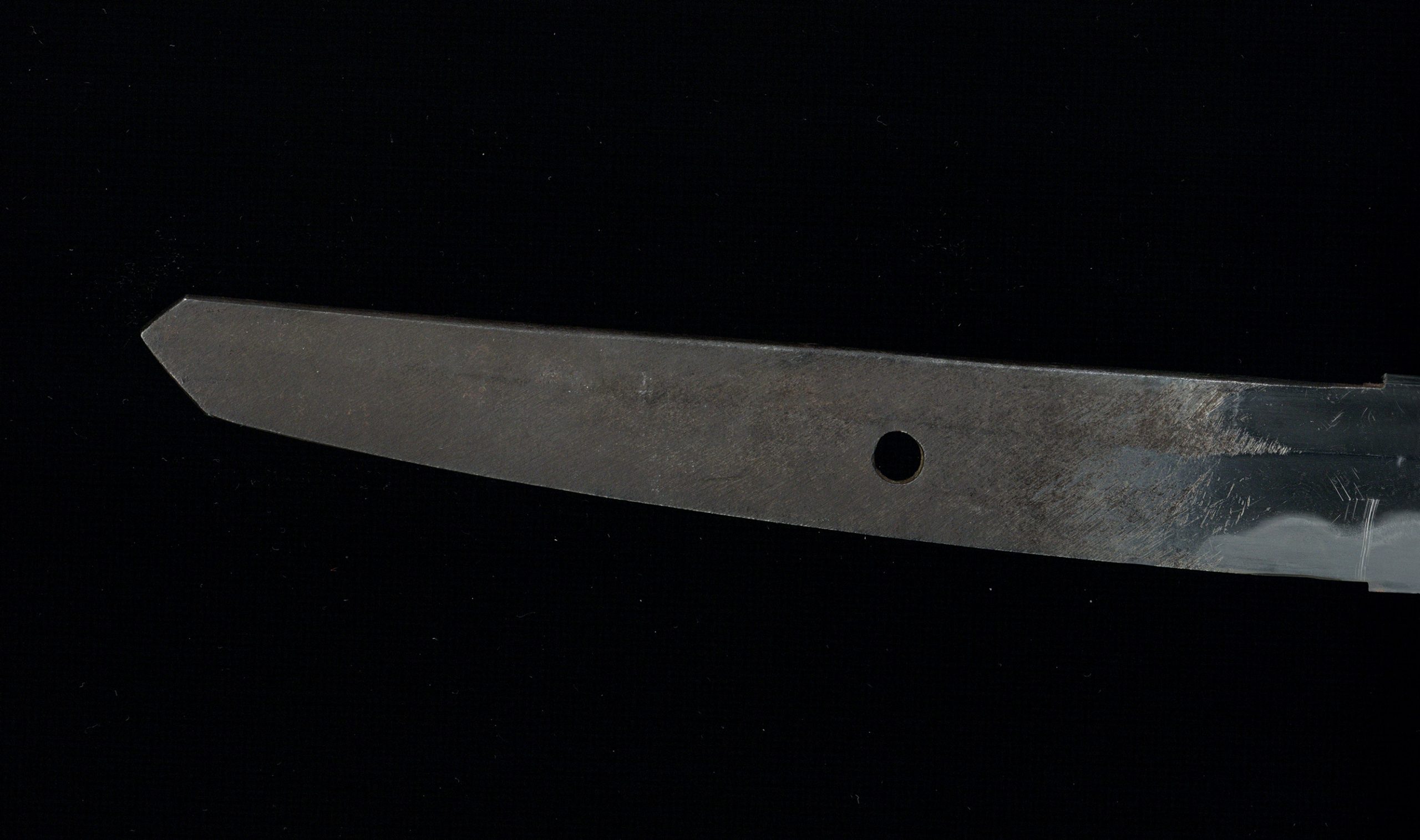
The nakago is confirmed unsigned, with one mekugi-ana, and suji-chigai yasurime (per the specification sheet), showing stable patina and a straight nakago-jiri profile with visible bevels in the photos.
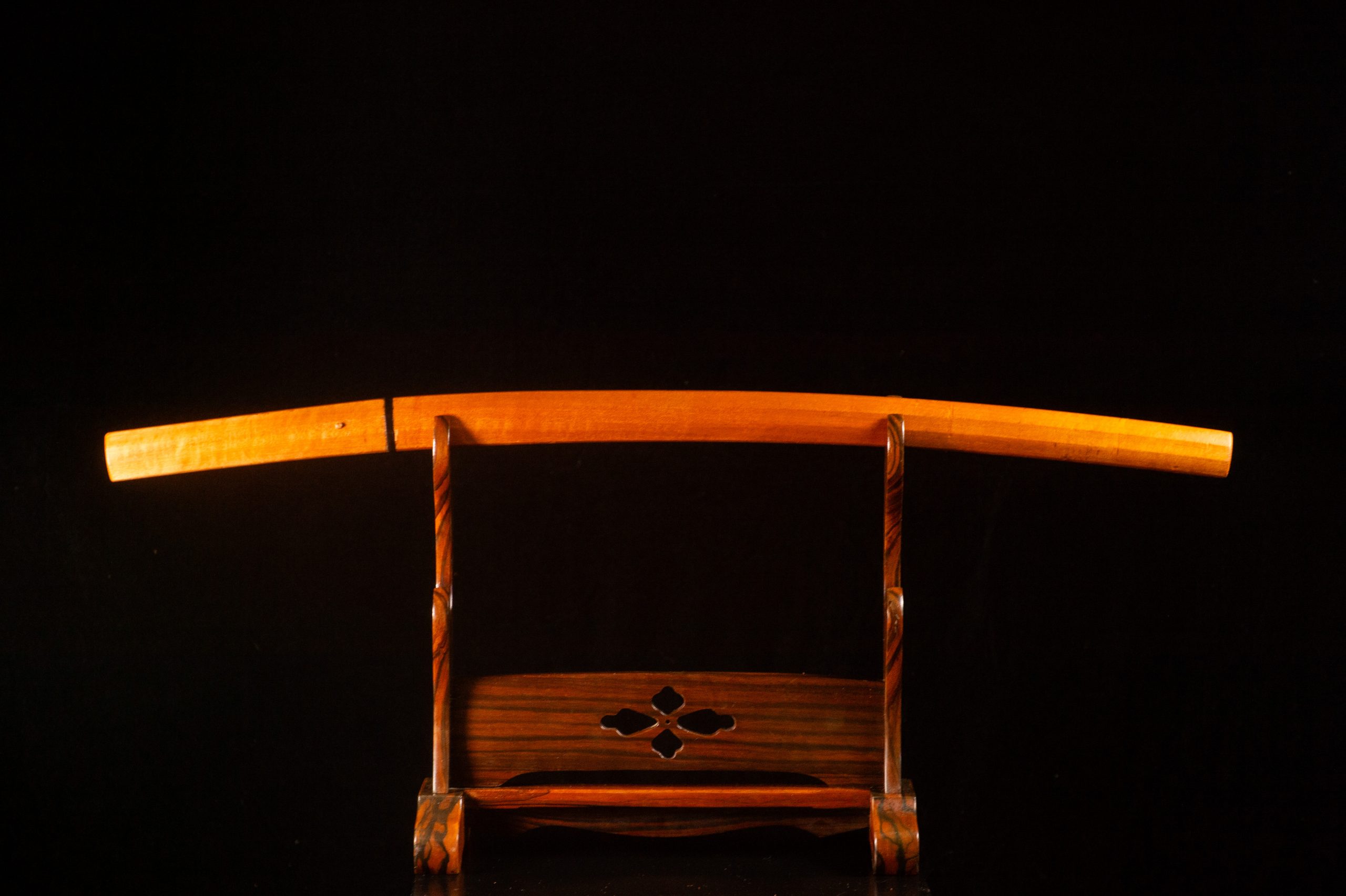
MOUNTING AND SHIRASAYA
The blade is housed in a clean shirasaya of light wood (honoki-style), with sober lines and functional fit, secured by a single mekugi. For preservation and serious trade presentation, this is the preferred format: it protects the blade, reduces unnecessary handling, avoids friction and moisture traps from fittings, and keeps the presentation crisp for inspection and storage.


