Description
About US:
Our photographs are taken without retouching or photoshop to ensure that the customer can judge the reality of the object.
Thanks to a constant work directly with the best collectors, museums and galleries in Japan and friendship with them, along with a profit margin much lower than the European competition we can offer objects so that many people can choose to have authentic pieces with hundreds of years at more than competitive prices. After all, samurai art is our passion and we want to share it with the world.
ITEM DESCRIPTION:
Comes with certificate of supein Nihonto.
Edo period (1615-1868)
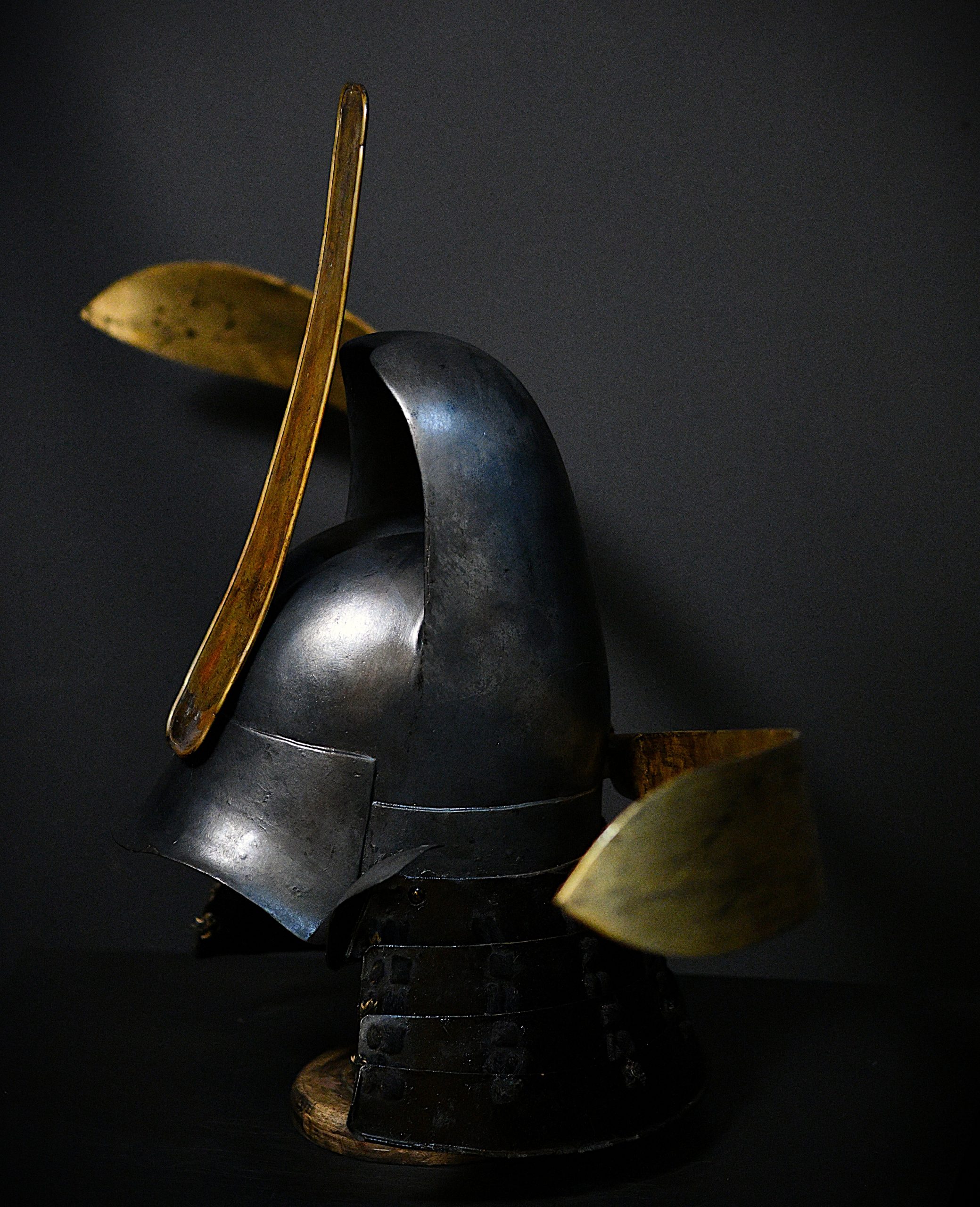
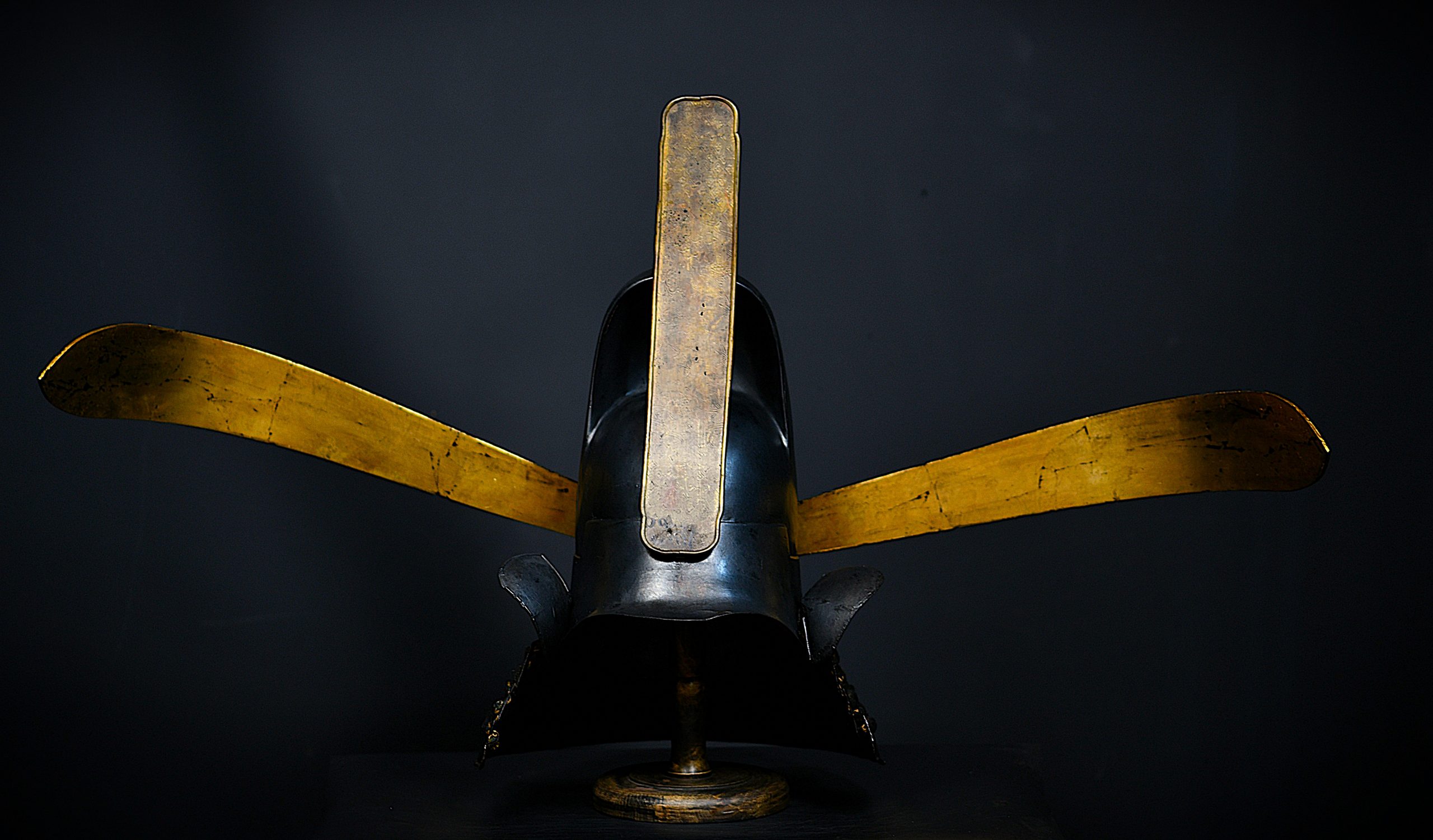
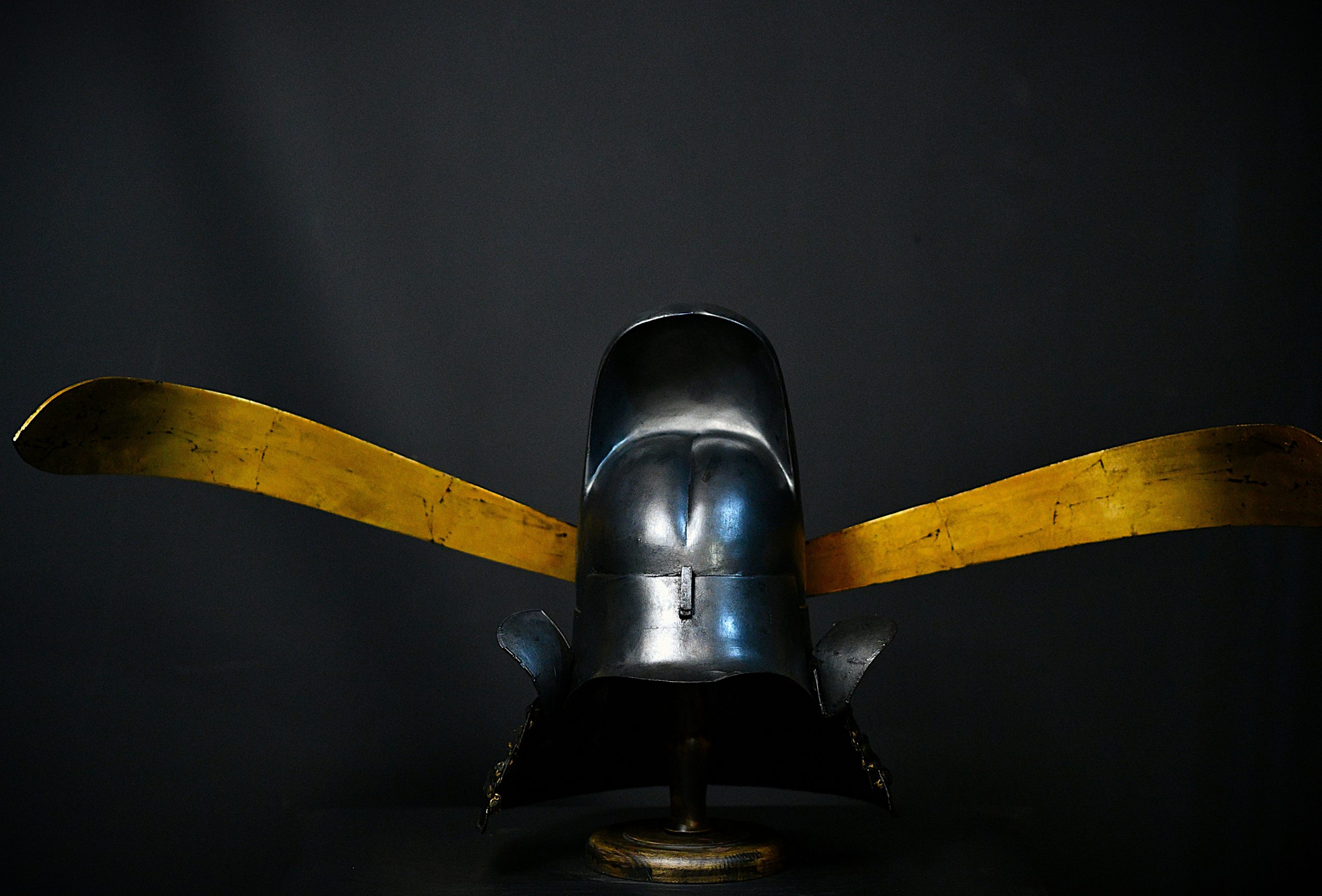
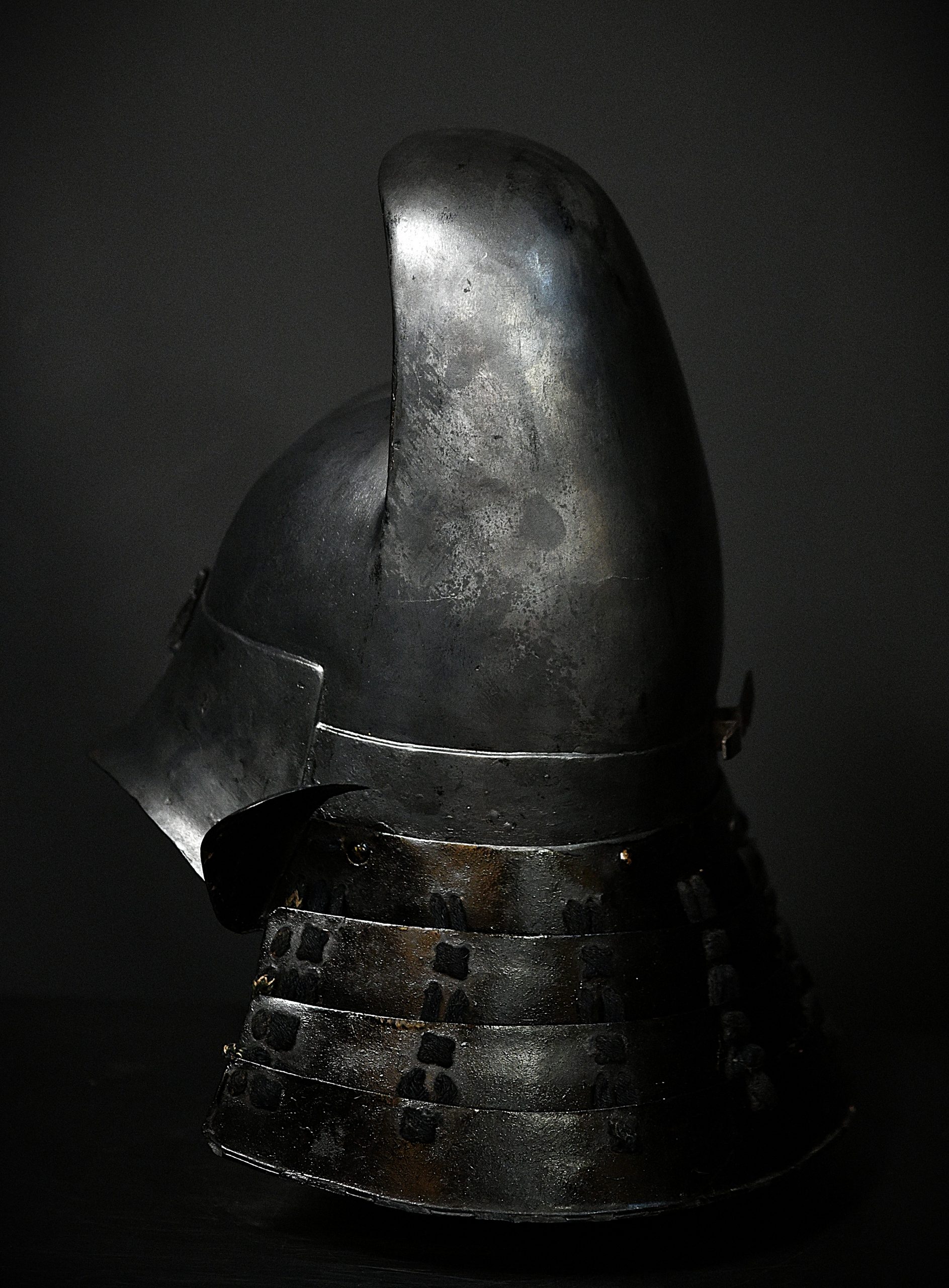
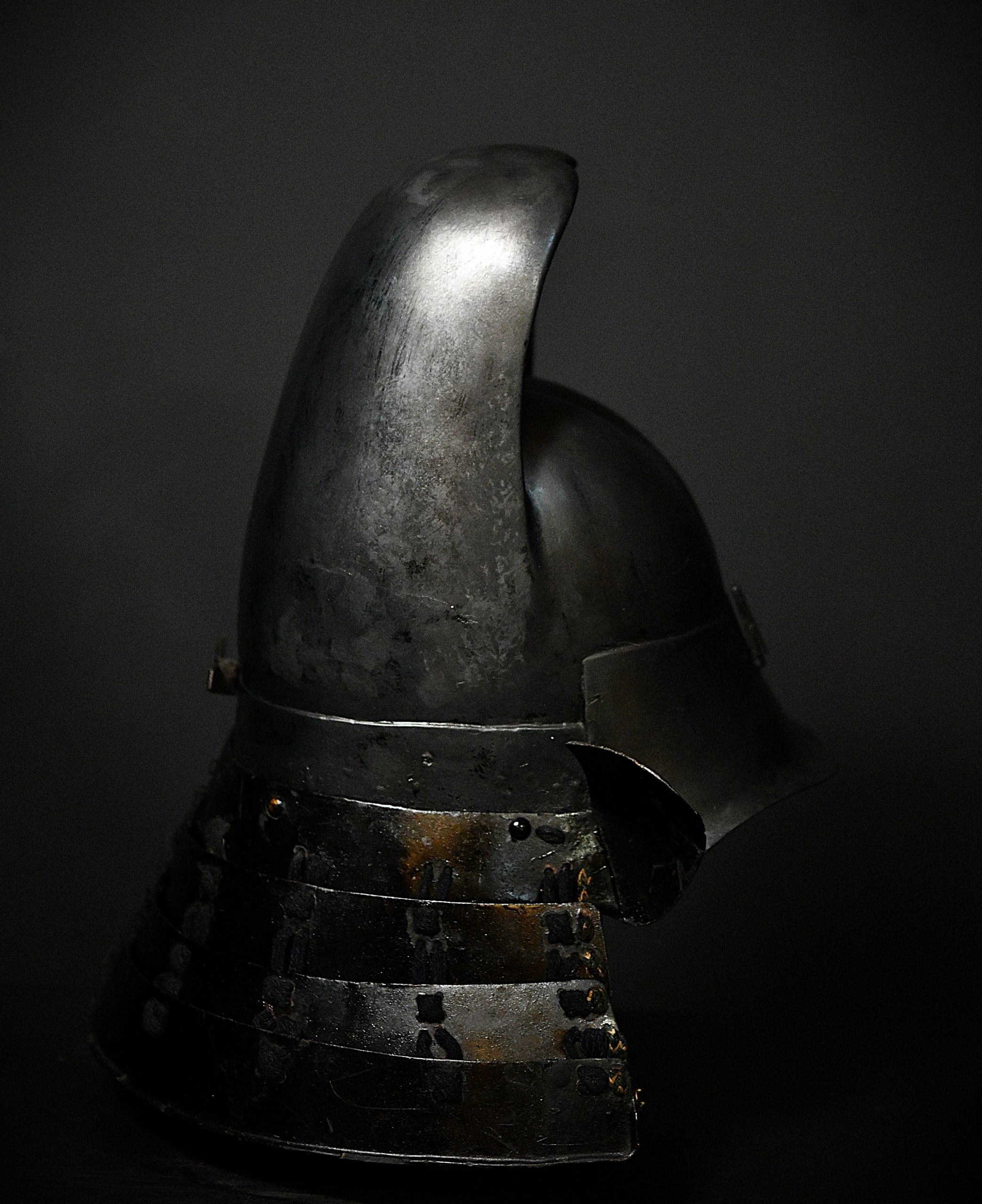
Magnificent kawari kabuto from the Edo period, a sculptural and imposing example designed to display the wearer’s identity and rank during ceremonial or parade use.
General Description
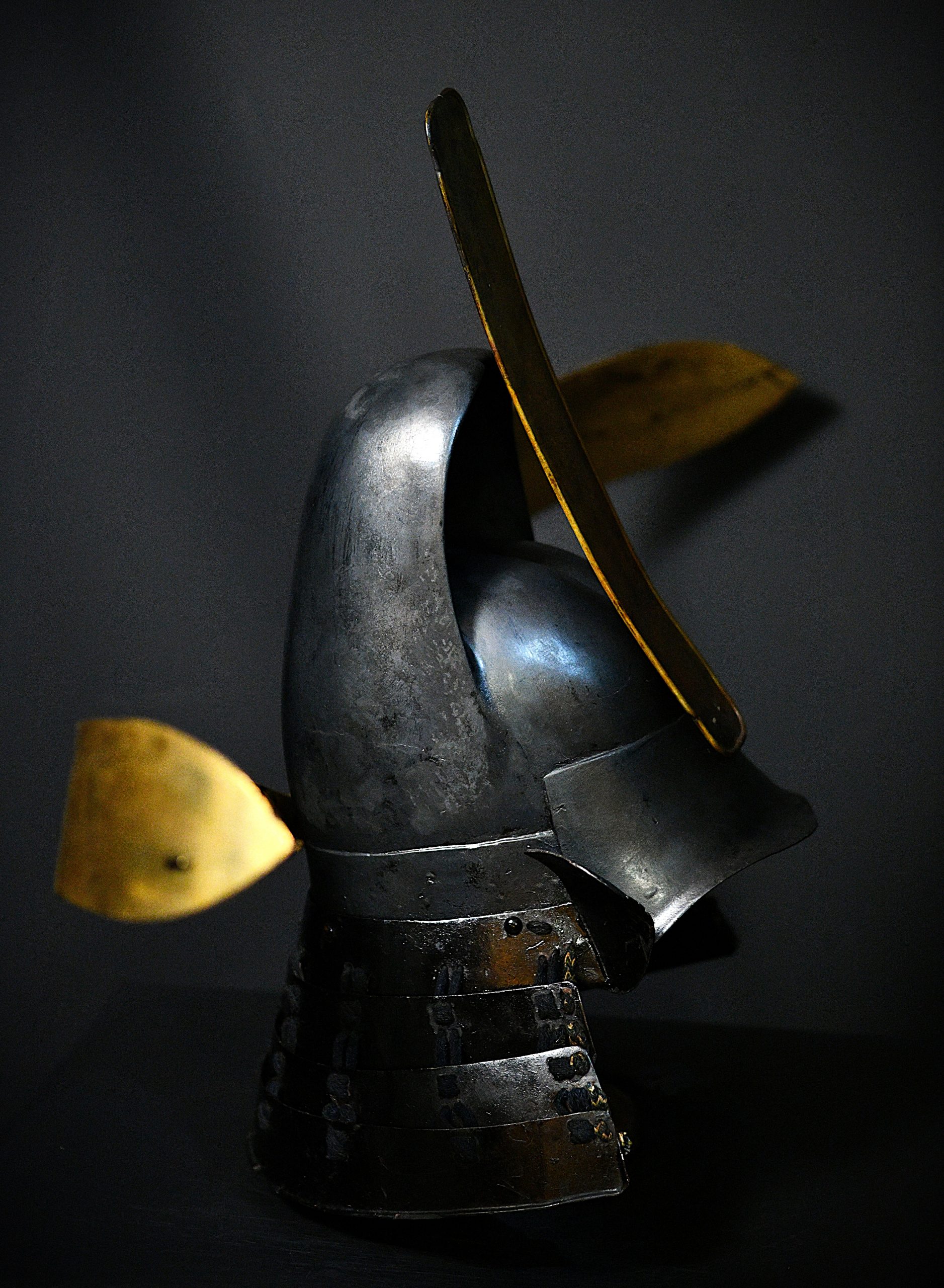
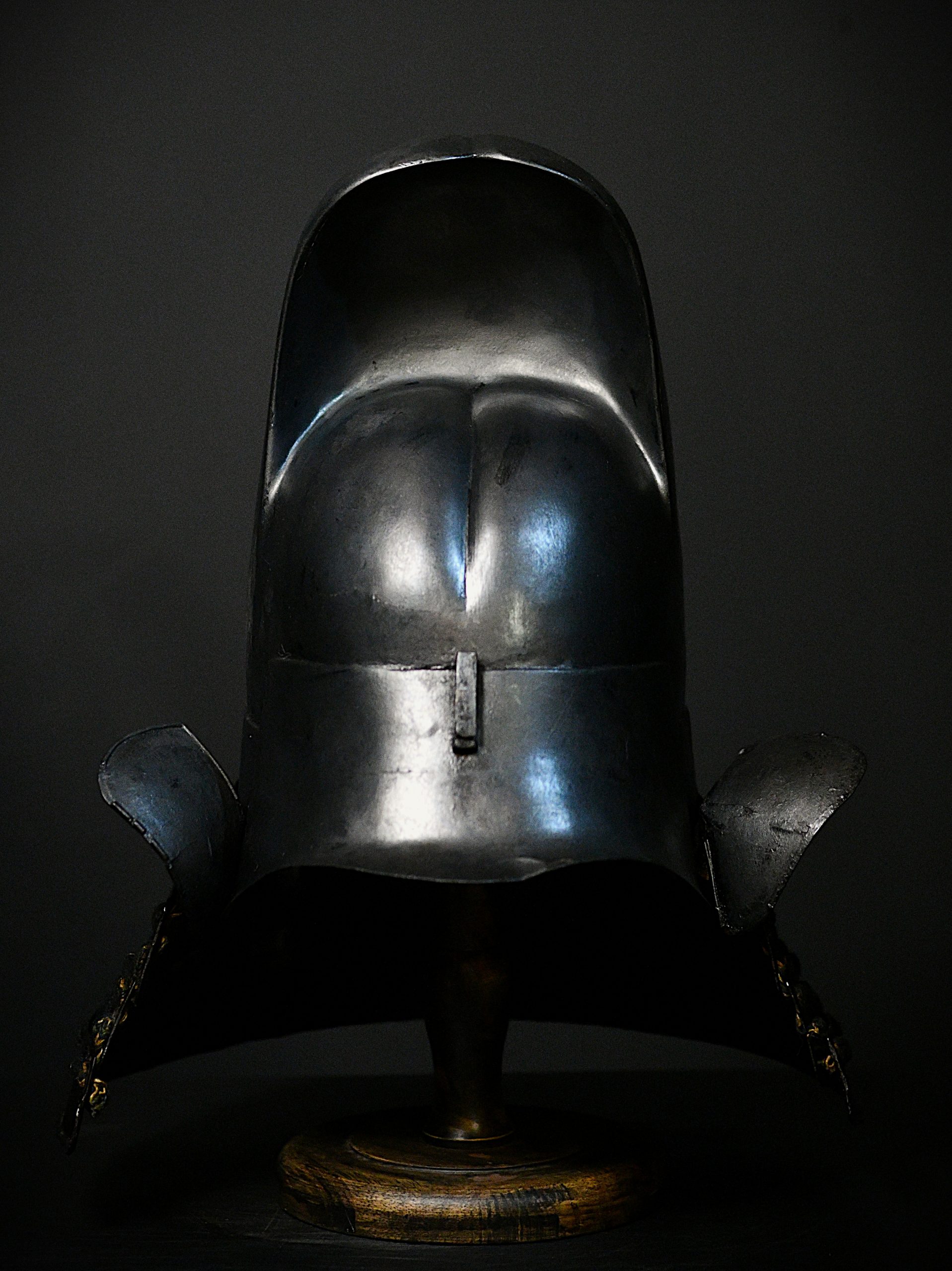
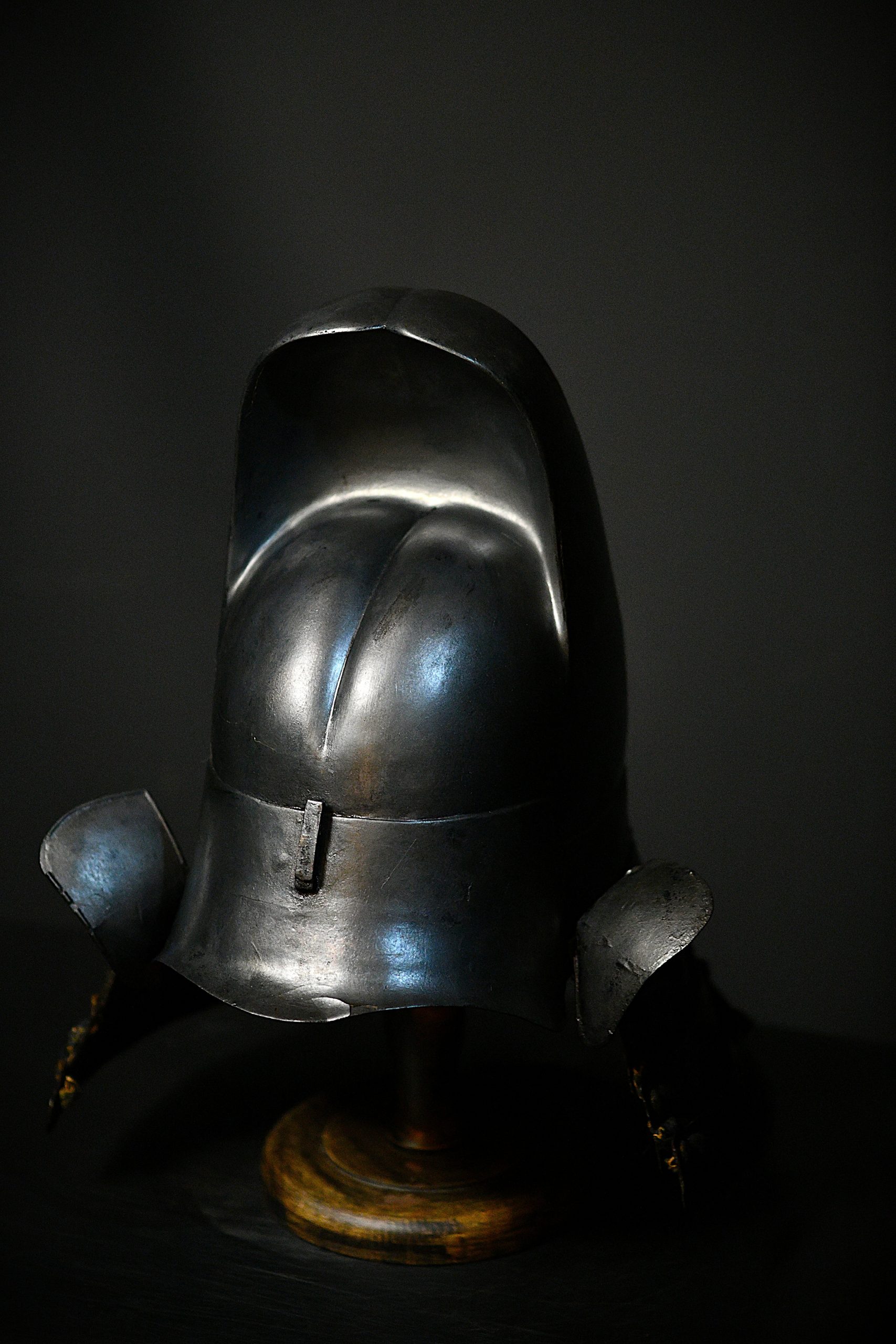
The helmet presents an internal structure of forged iron, reinforced with an outer surface modeled in hardened leather (nerikawa), a material that allowed the armorer to create more expressive yet lightweight shapes.
Its tall, backward-curving silhouette corresponds to the tatemono or eboshi kabuto style, highly popular among daimyō and high-ranking officers.
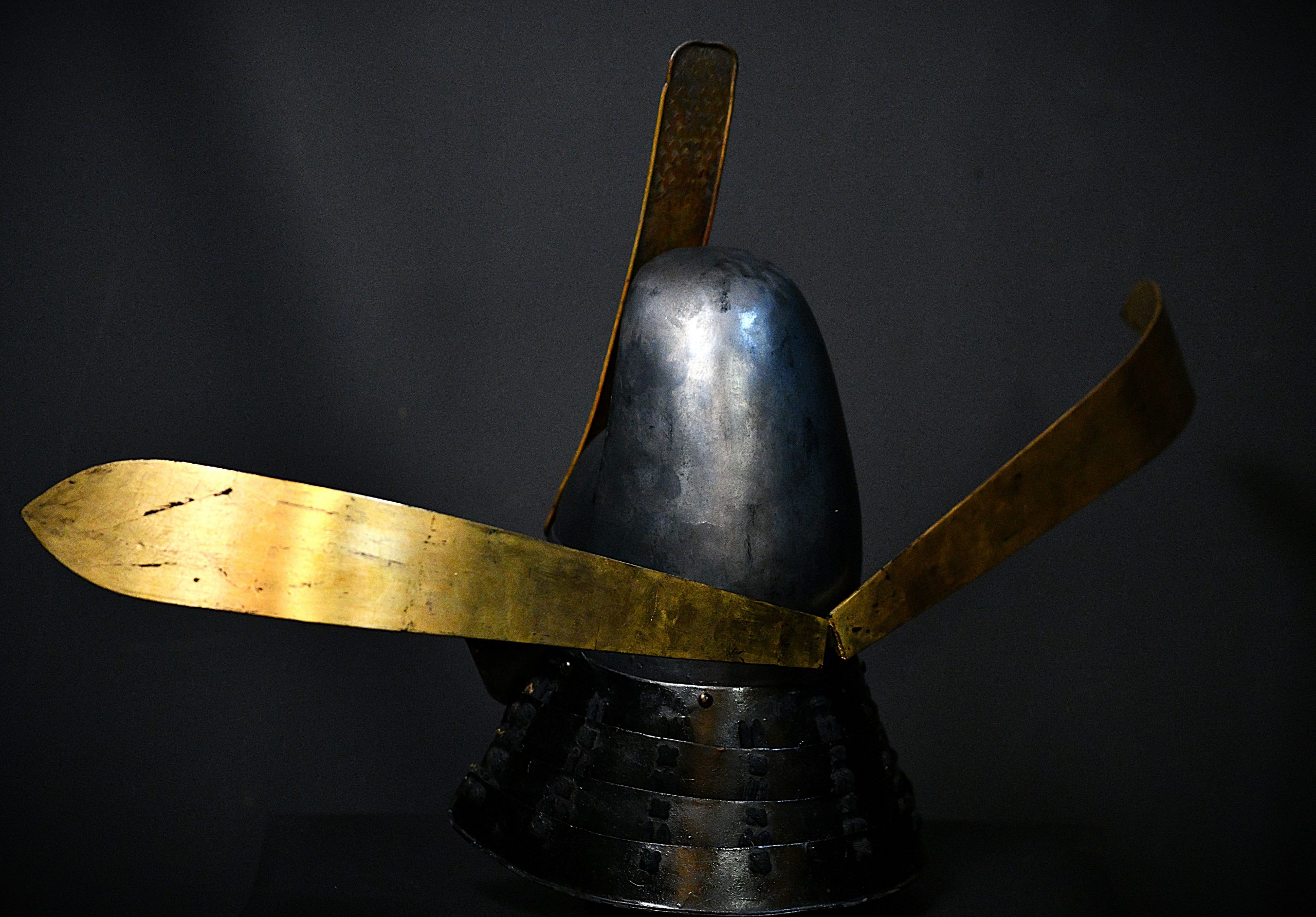
The exterior is finished in black urushi lacquer, retaining a deep gloss that contrasts elegantly with the natural patina of age. The piece combines structural solidity with refined ceremonial aesthetics.
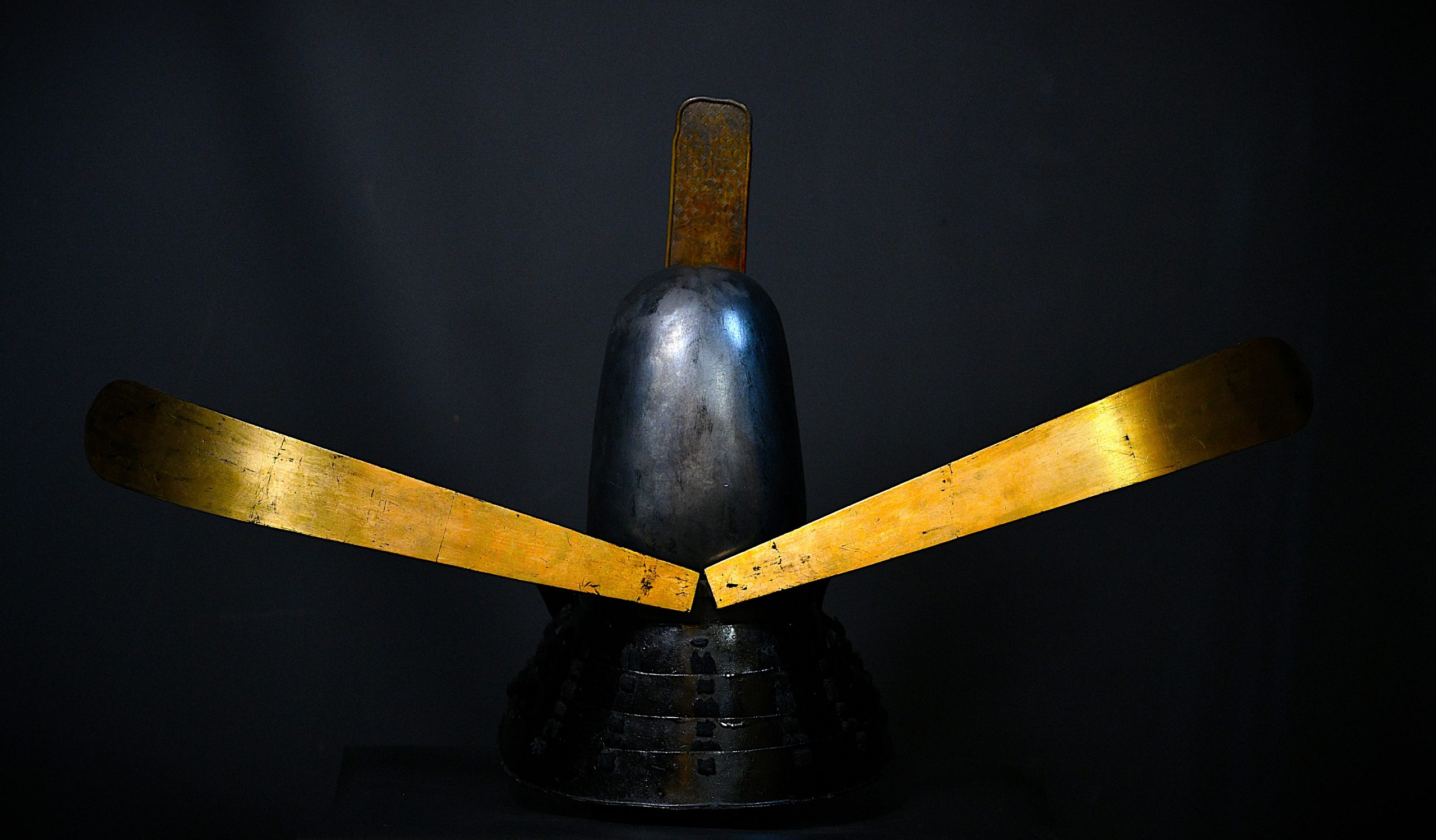
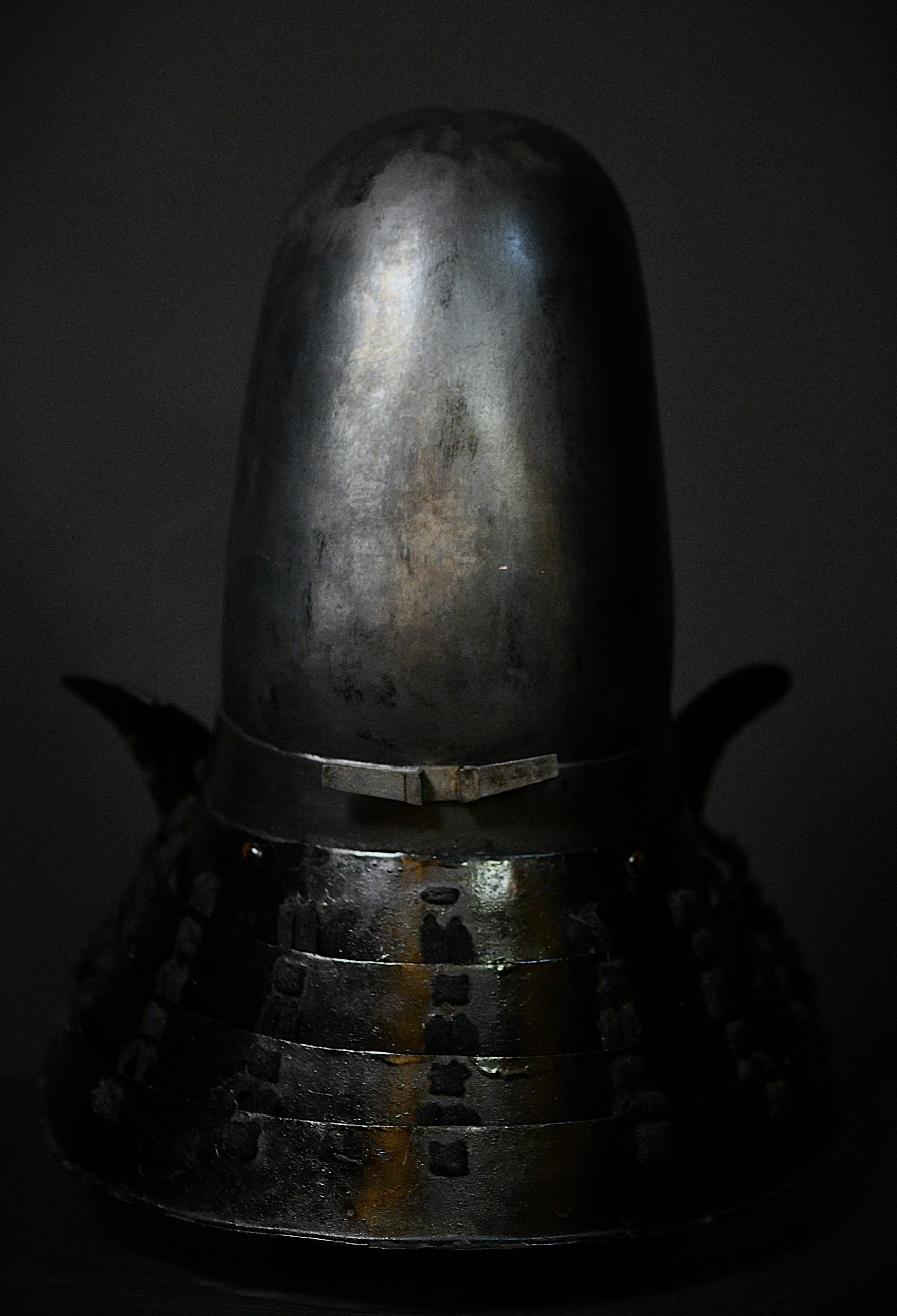
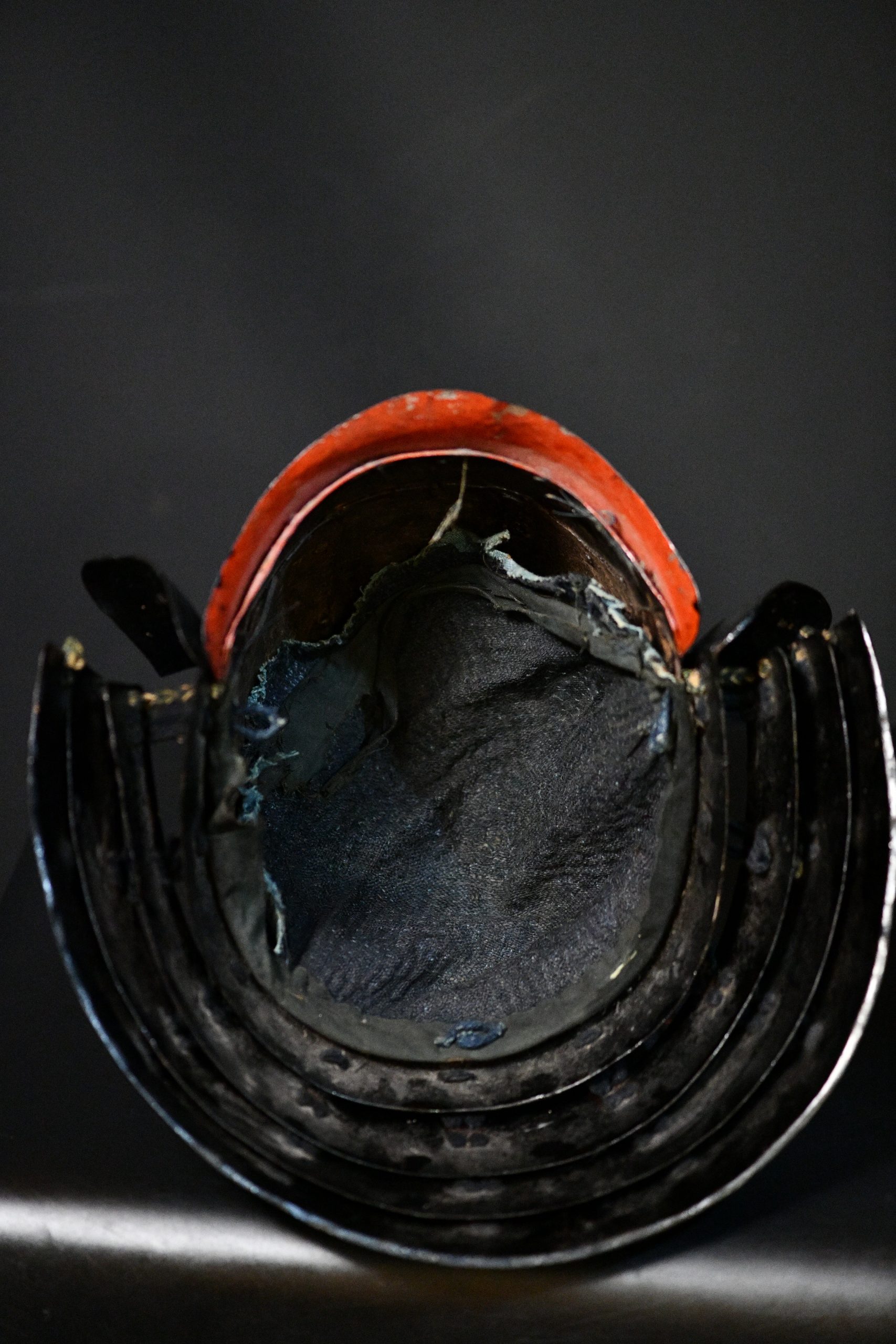
The shikoro (neck guard) is composed of articulated lacquered plates joined with traditional cords. Inside, traces of red urushi lacquer remain—applied both for protection and as a symbolic element associated with vitality and martial energy.
Maedate and Ornamentation
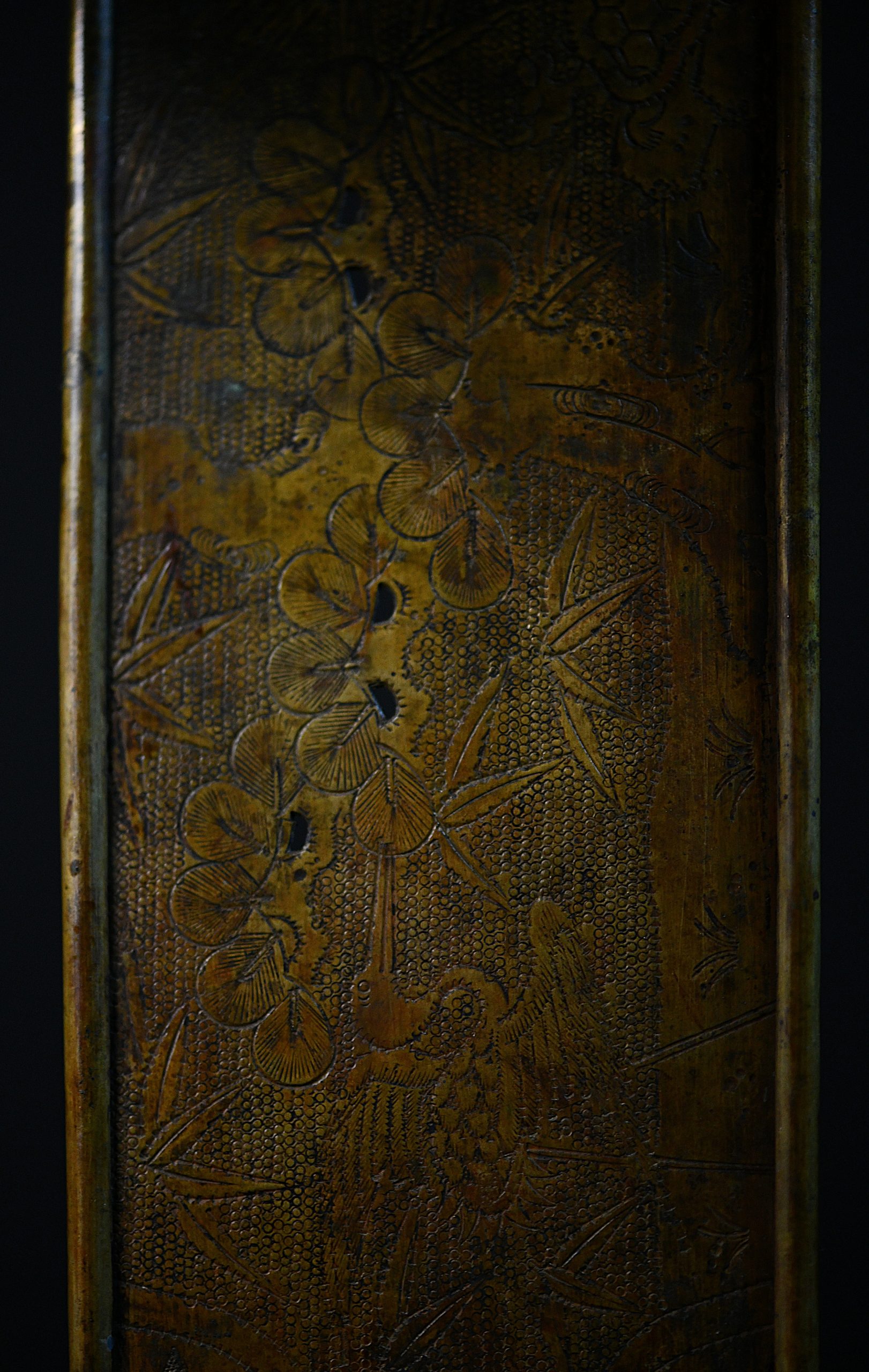
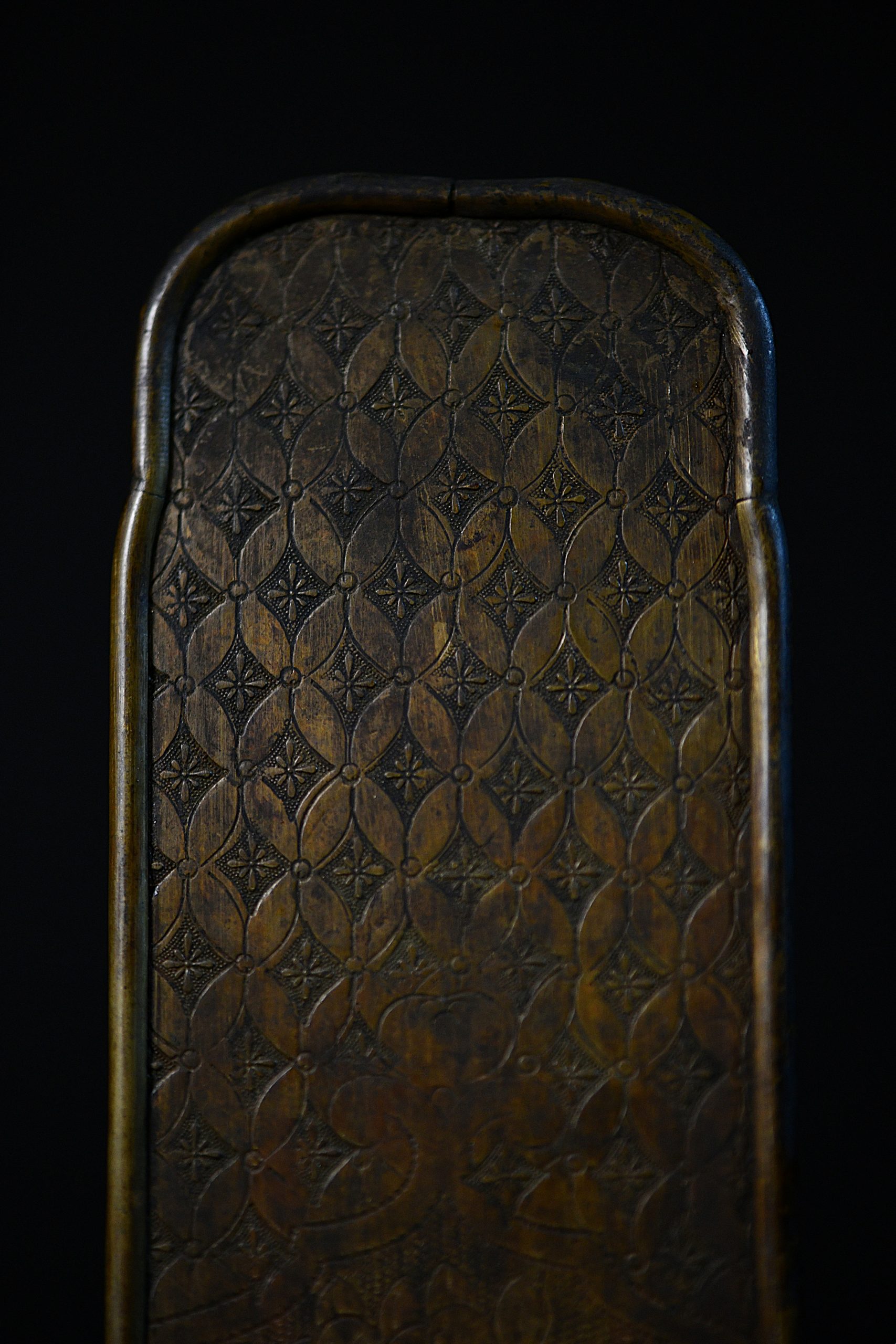
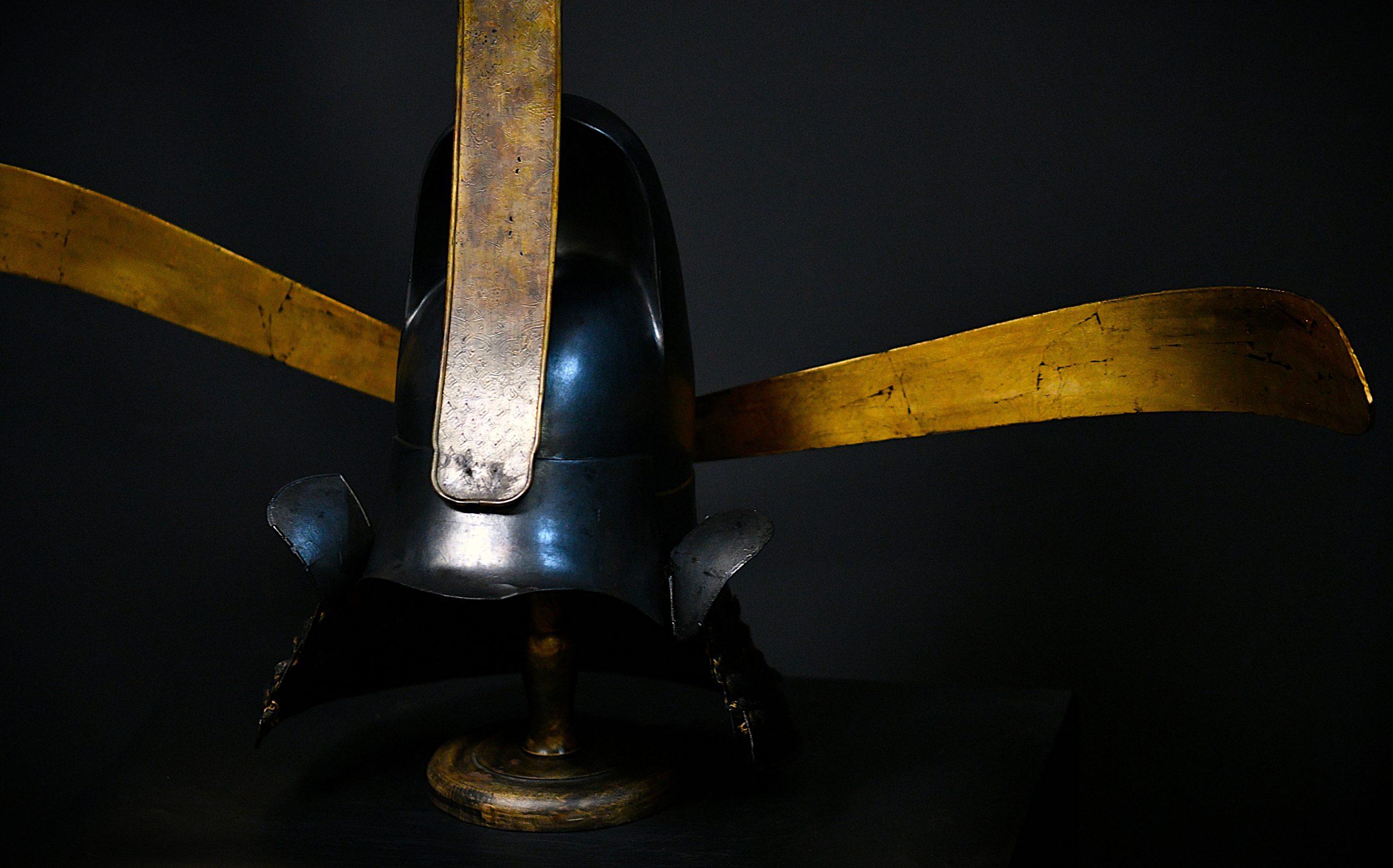
The kabuto features a spectacular triple ornamental assembly: one elongated rectangular front plate and two large golden lateral “wings.” These components are crafted in wood or hardened leather coated with gold leaf, with the front plate finely engraved with kikkō-mon (turtle-shell) geometric motifs—symbols of longevity and resilience.
Together they form a triple maedate, intended to make the wearer instantly recognizable in battle or processions. The lateral golden wings add a dynamic presence and convey strong spiritual symbolism, often associated with divine or legendary beings.
Interior and Condition
The interior preserves original padding remnants and structural integrity. The natural patina and slight oxidation on the iron base confirm its authentic Edo-period origin.
Historical and Aesthetic Analysis
The kawari kabuto of this period illustrate the evolution of samurai helmets from battlefield equipment to works of art representing social status and identity.
This example, combining iron, hardened leather, and gilding, epitomizes the mature aesthetic of mid-Edo craftsmanship.
The engraved geometric motif on the front plate suggests influence from the Kaga or Echizen schools, both renowned for integrating decorative patterns into lacquered surfaces.
The result is a piece that communicates both authority and refinement—an emblem of 18th-century daimyō sophistication and symbolic artistry.
Technical Sheet
Type: Kawari kabuto (Torioi / Tatemono style)
Period: Edo (18th century)
Materials: Forged iron (core), hardened leather (nerikawa), gold leaf, black and red urushi lacquer
Shikoro: Multi-plate, black lacquered
Maedate: Triple (engraved frontal plate and gilded lateral wings)
Decoration: Kikkō-mon geometric pattern


