Descrizione
ITEM DESCRIPTION:
Comes with kimono or cotton bag. Comes with certificate of supein Nihonto. Comes with copy of Tokosusho.
Documentation
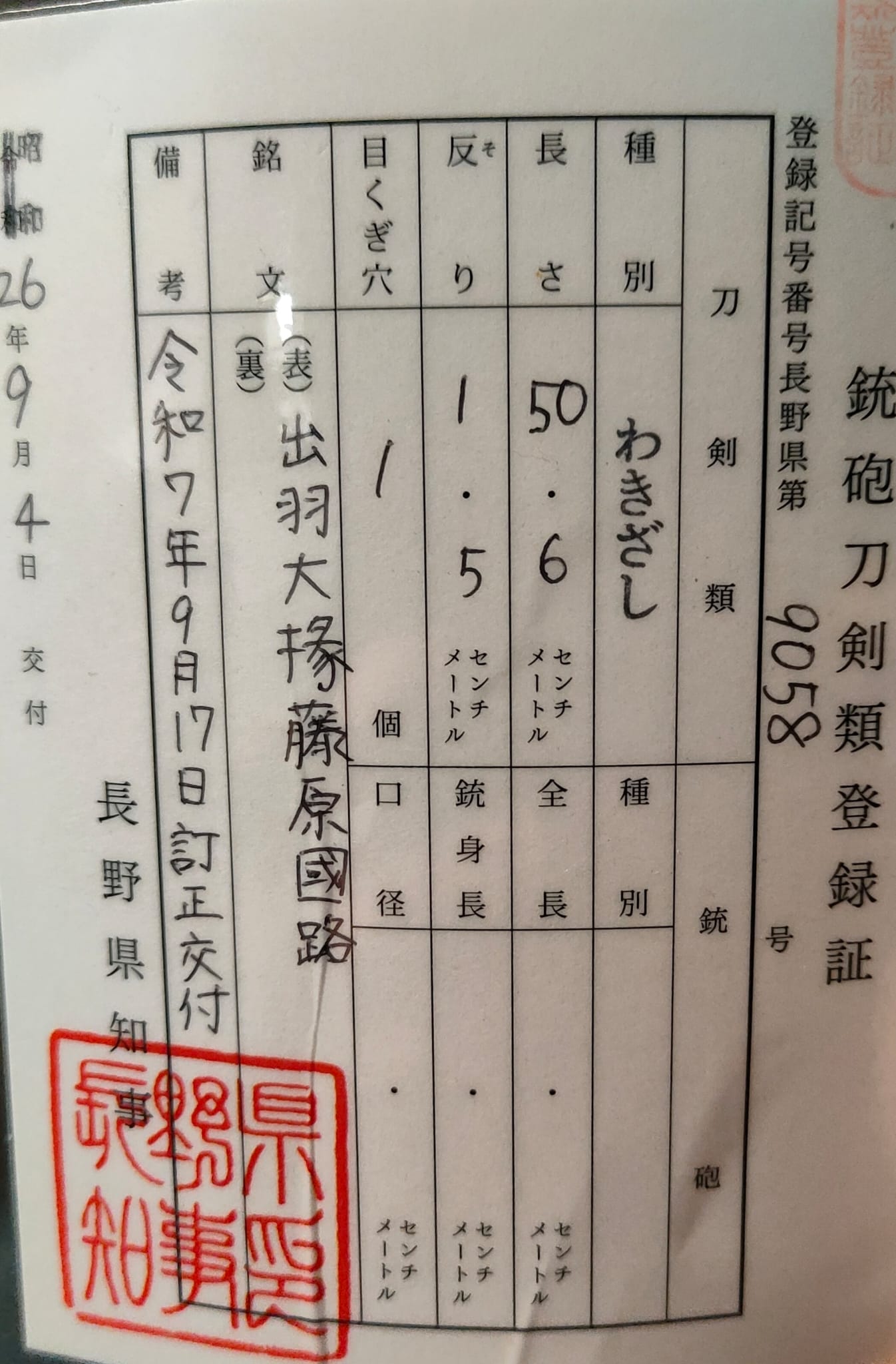
Torokusho (registration)
-
登録記号番号 (Registration No.): 長野県第2058号 (Nagano Prefecture, No. 2058)
-
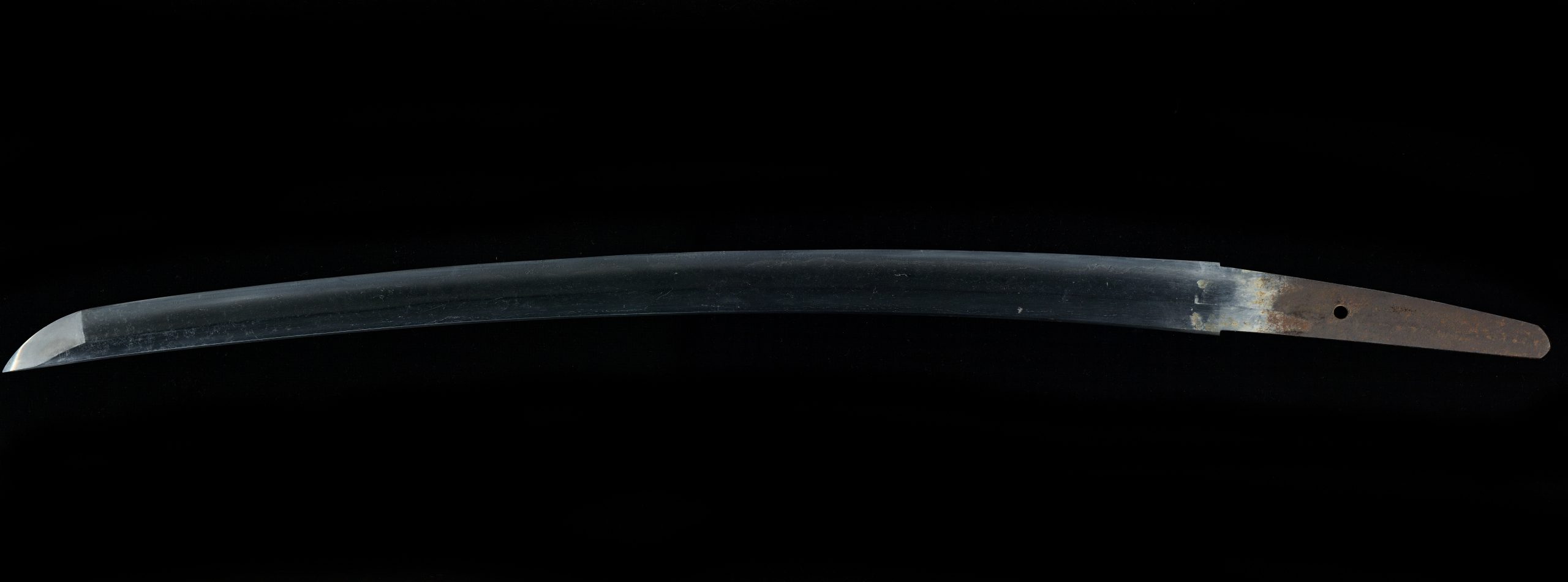
種別 (Type): わきざし (wakizashi)
-
長さ (Blade length / nagasa): 50.6 cm
-
反り (Curvature / sori): 1.5 cm
-
目くぎ穴 (Mekugi-ana): 1個 (1)
-
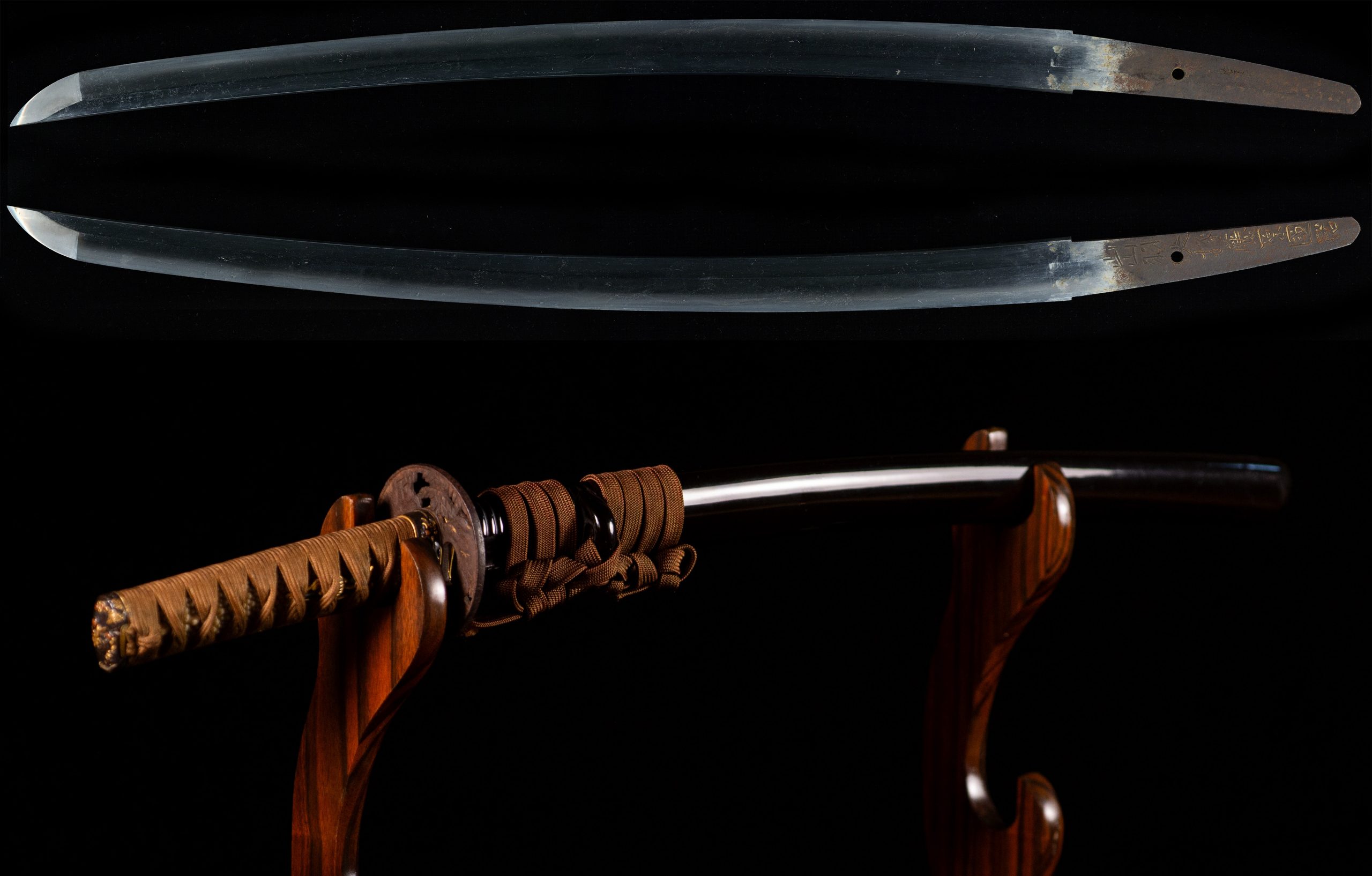
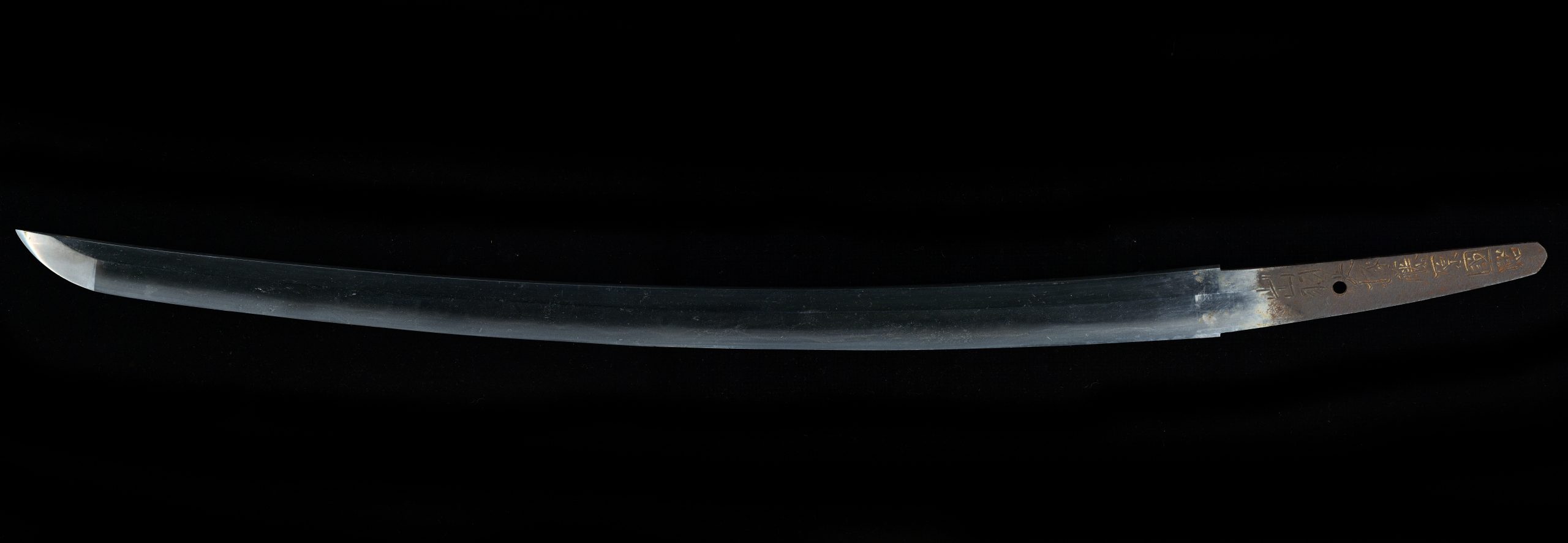
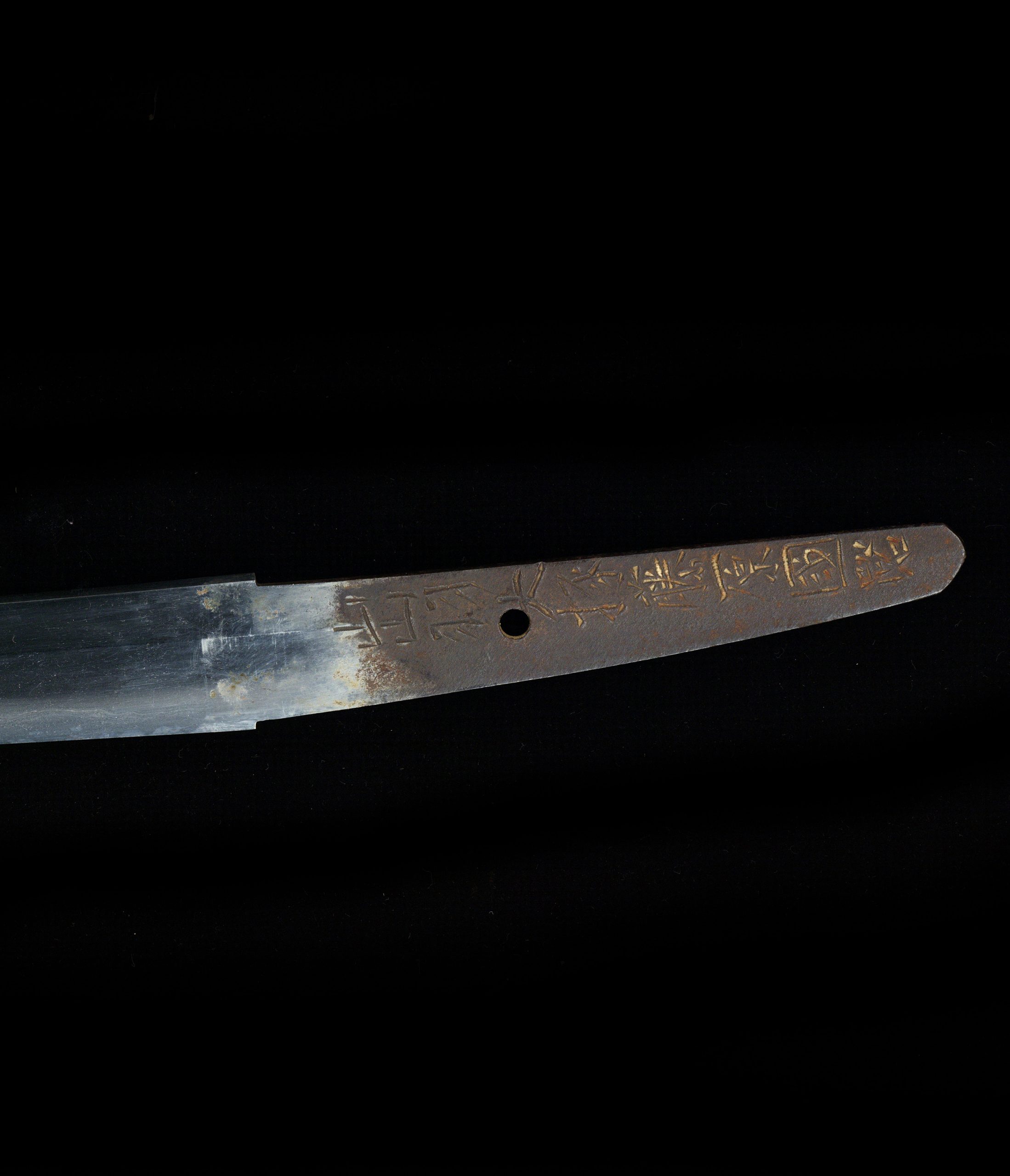
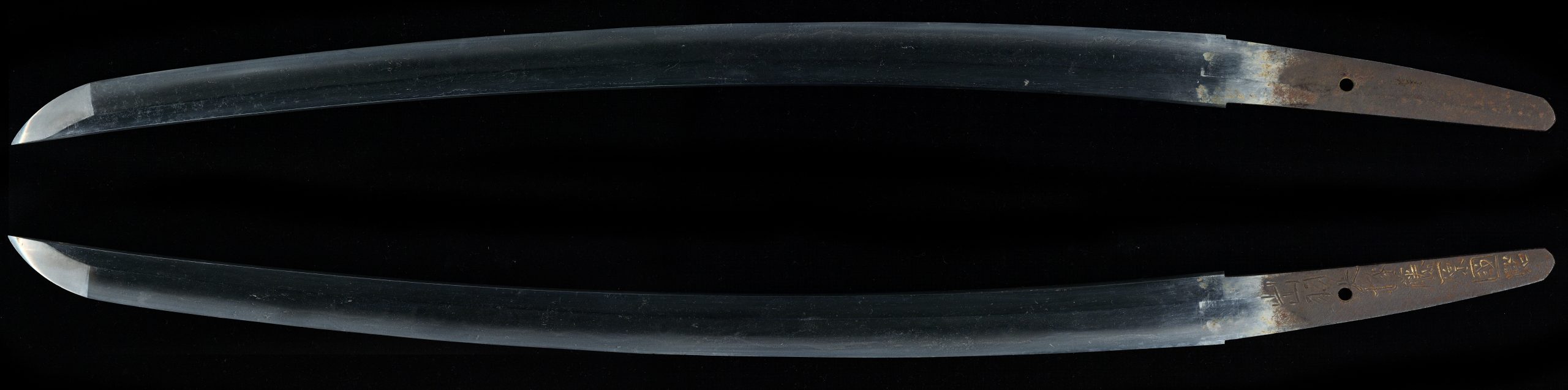
銘文 (Signature / mei, omote): 出羽大掾藤原國路
-
Reading: Dewa Daijō Fujiwara Kunimichi
-
Seal: 長野県教育委員会 (Nagano Prefectural Board/Committee of Education)
Smith, court title, and period
Edo Period (Circa 1700) The tang is signed 出羽大掾藤原國路 (Dewa Daijō Fujiwara Kunimichi). The presence of the Dewa Daijō court honorific title aligns well with very high ranked Edo-period smith and gives the mei a clearly “presentational” character, rather than a simple workshop-style signature.
Dewa Daijō Fujiwara Kunimichi (出羽大掾藤原國路 / Kunimichi) is a well-documented early Shintō smith associated with Kyōto (Yamashiro tradition) and closely linked to the Horikawa line, being recorded as a noted student of Horikawa Kunihiro. His work sits squarely in the formative decades of the Edo period, when court titles and formal signatures became part of the smiths’ public identity.
Chronology (recorded/traditional framework)
-
Traditionally placed from the late 16th century into the mid 17th century.
-
Activity is generally cited from the Keichō era onward (early 1600s).
-
The honorific title “Dewa Daijō” is typically associated with his mature Edo-period career.
-
Works are recorded into the middle of the 1600s, placing his active span broadly within early Edo (c. 1600–1650s).
Technical description of the blade
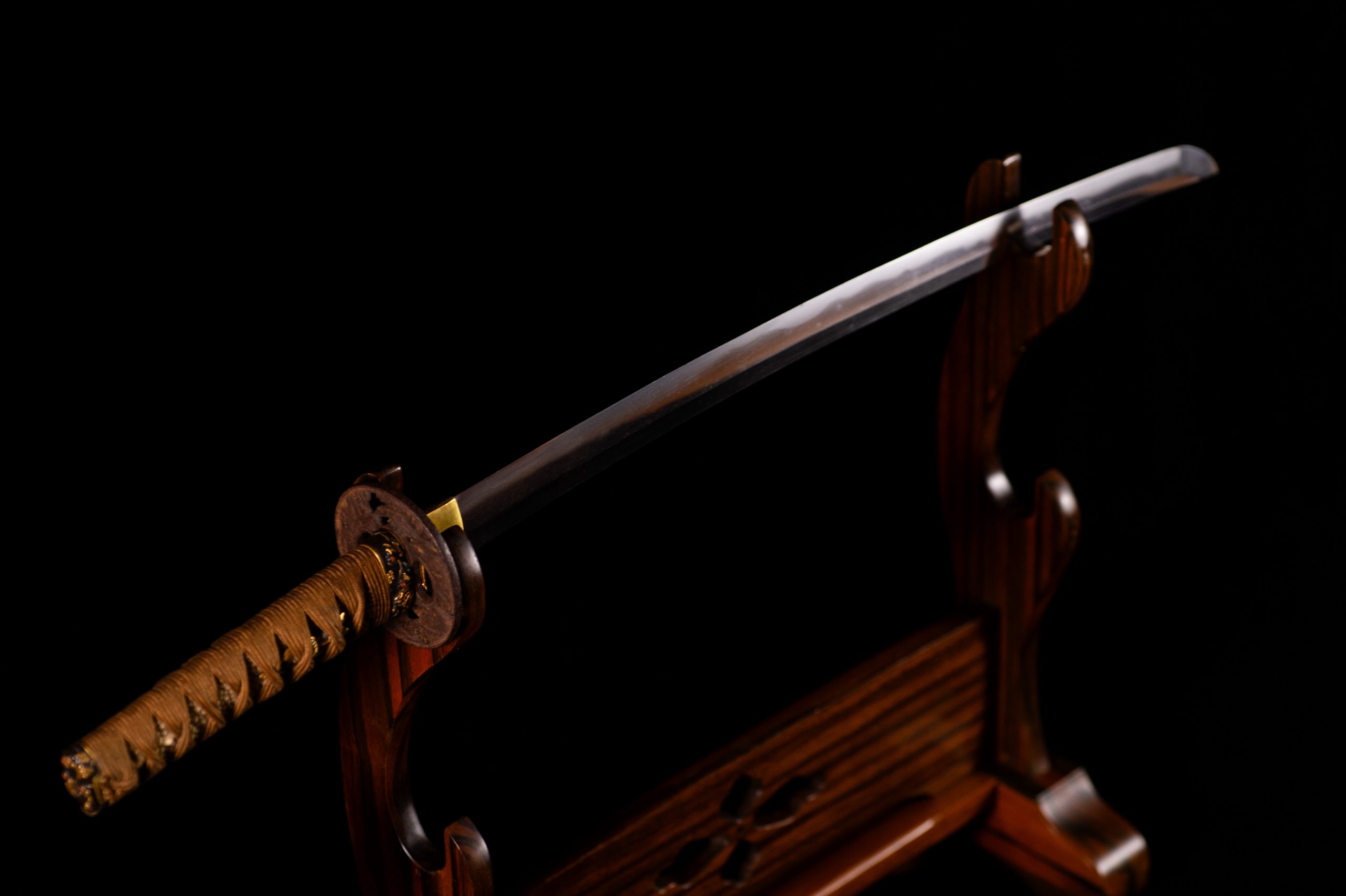
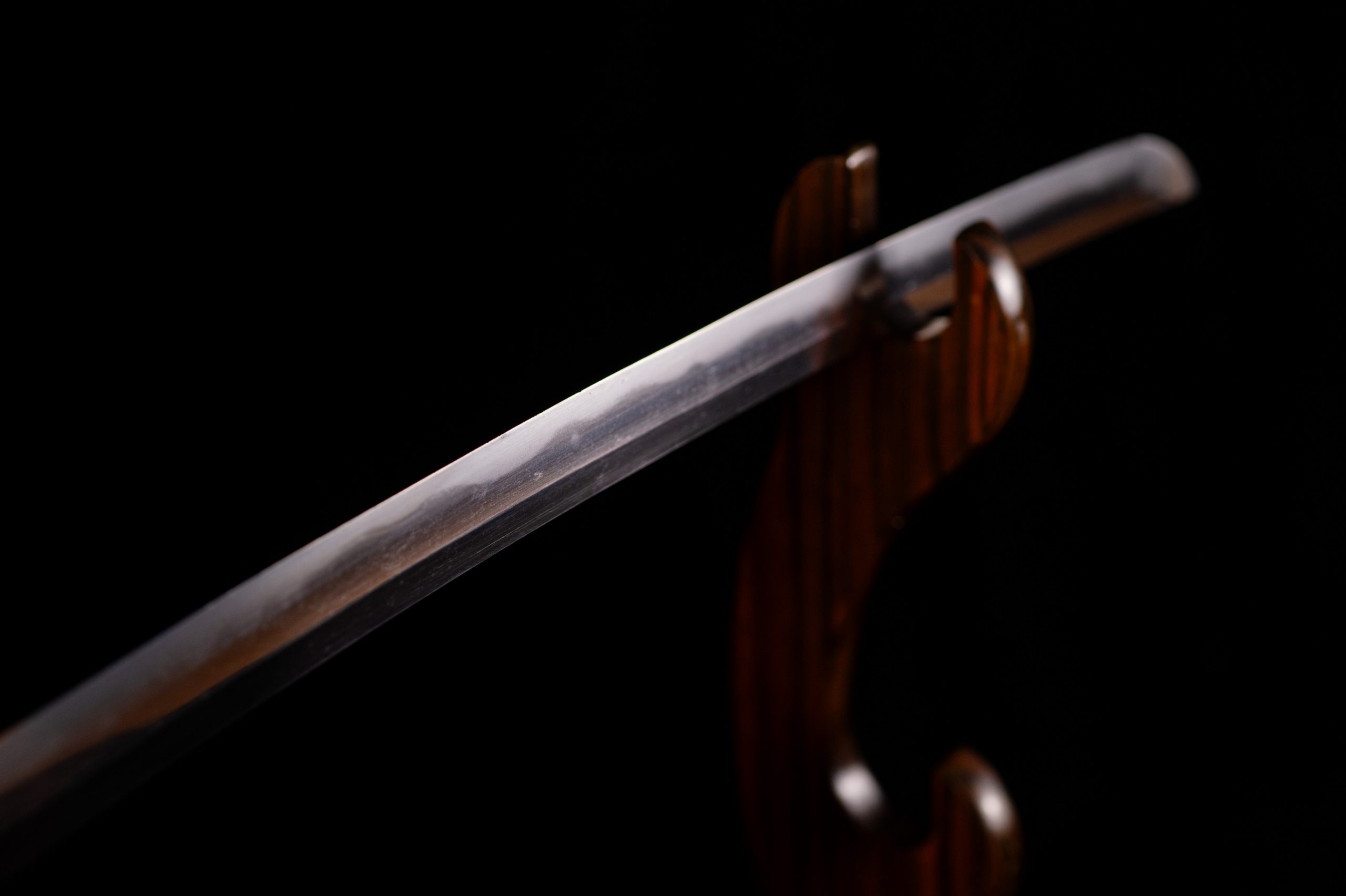
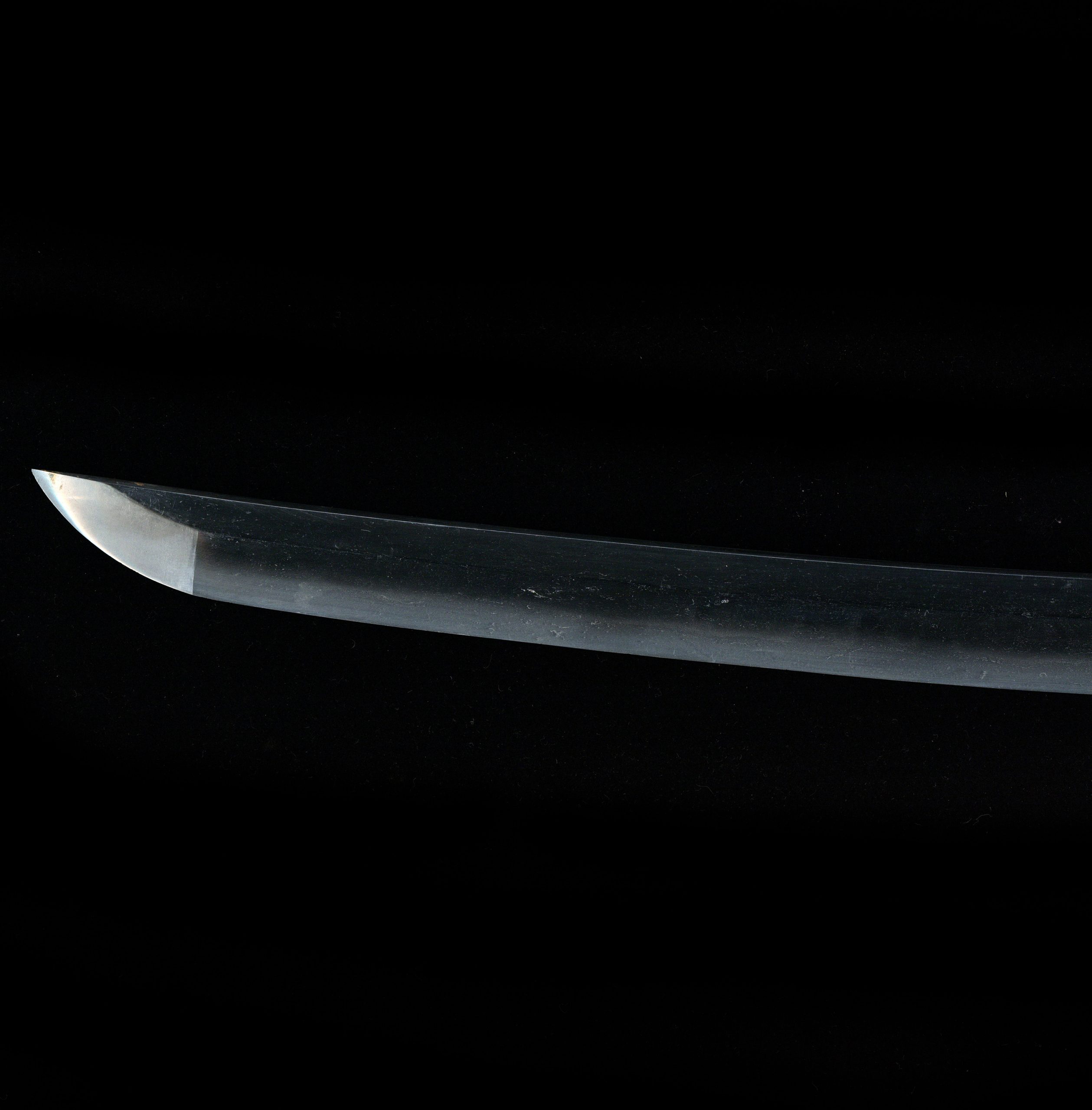
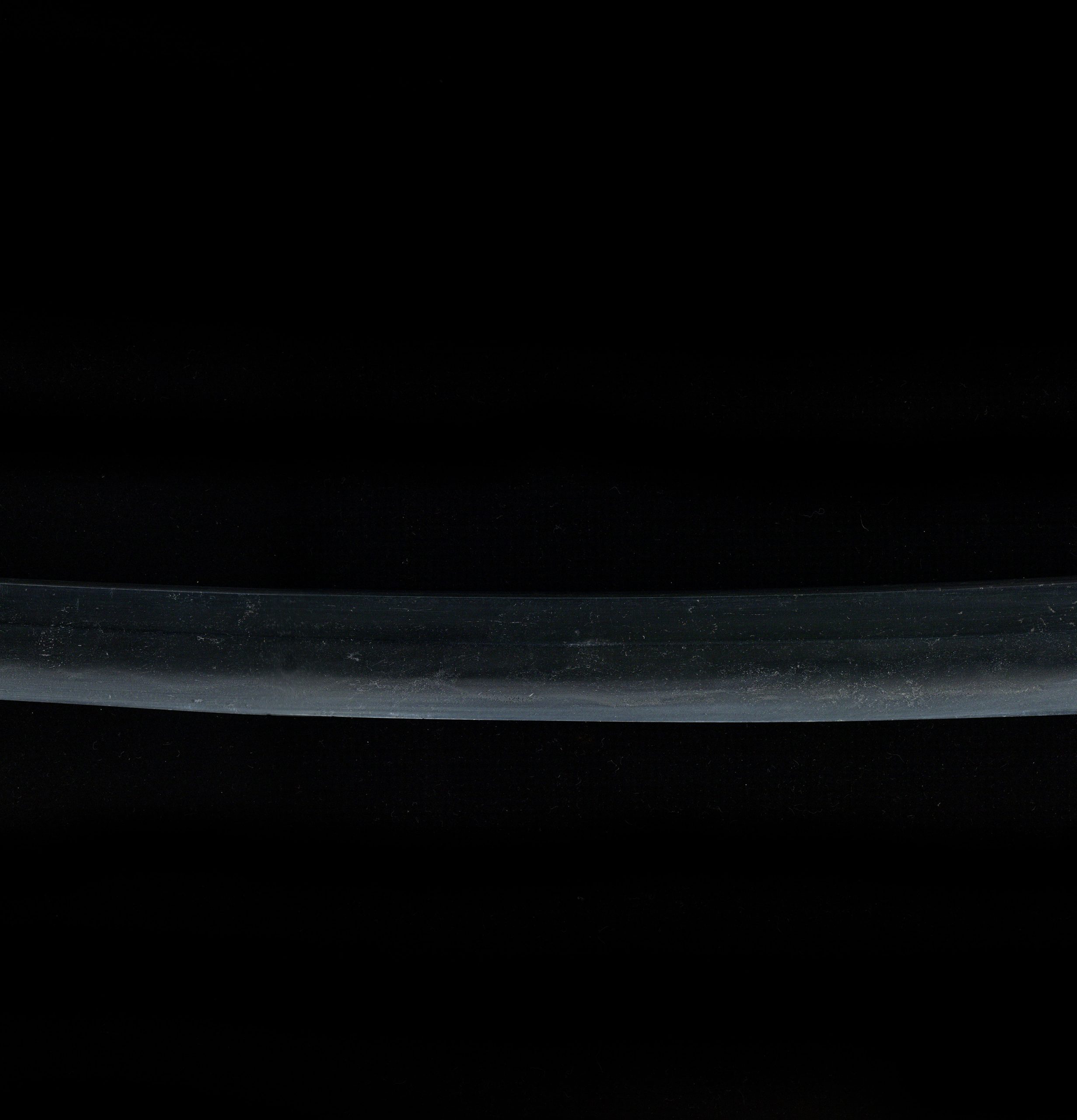
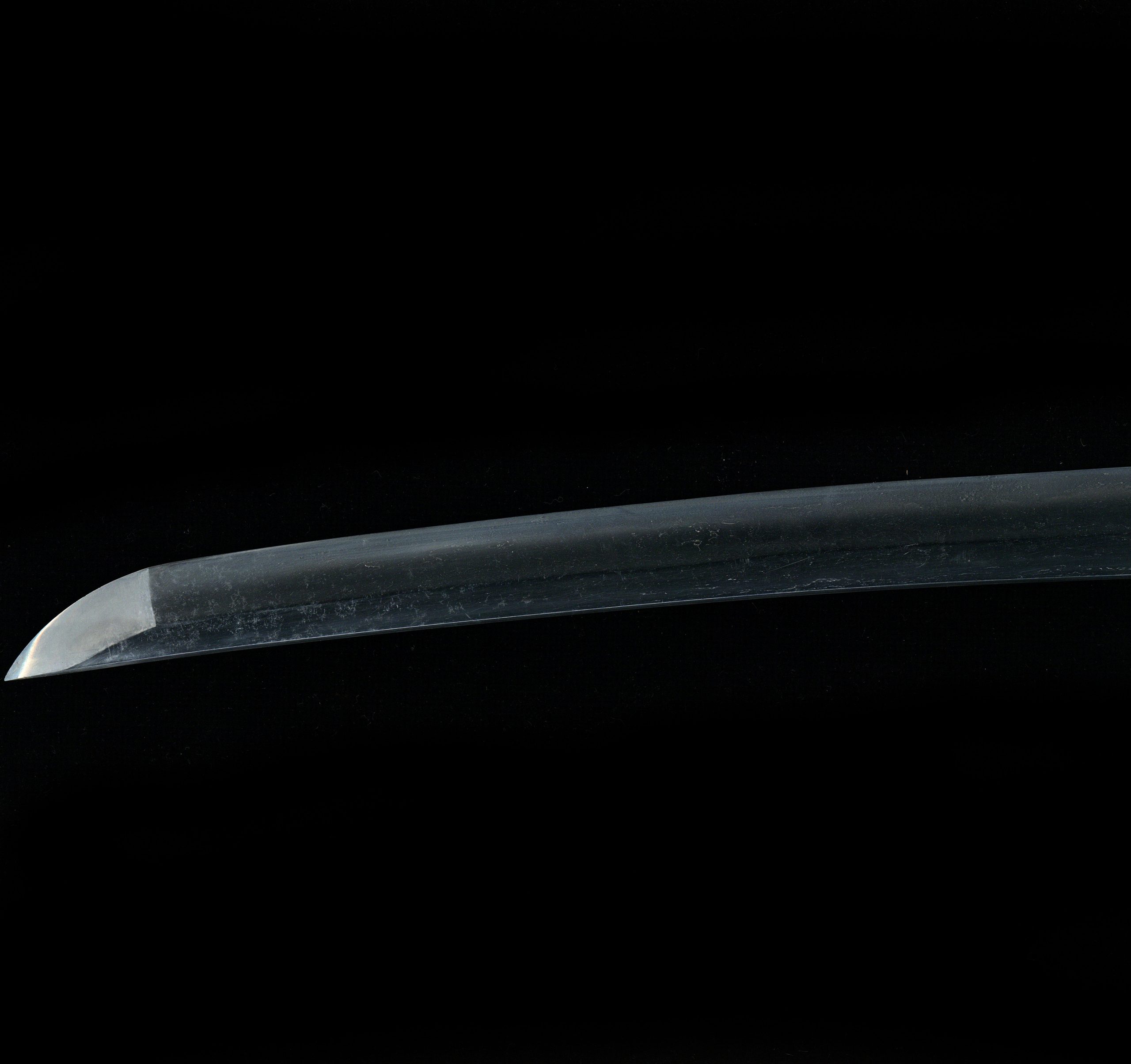
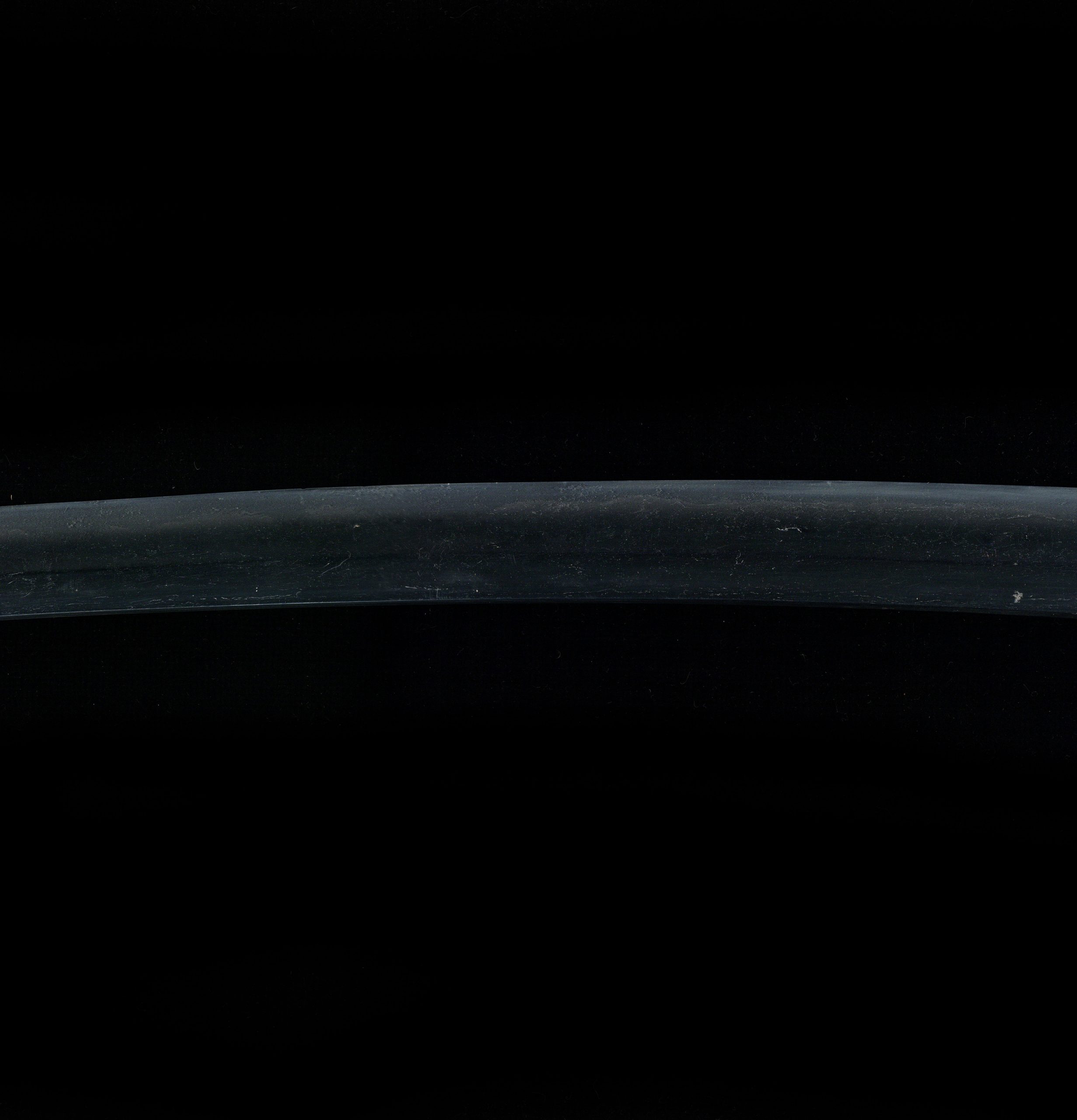
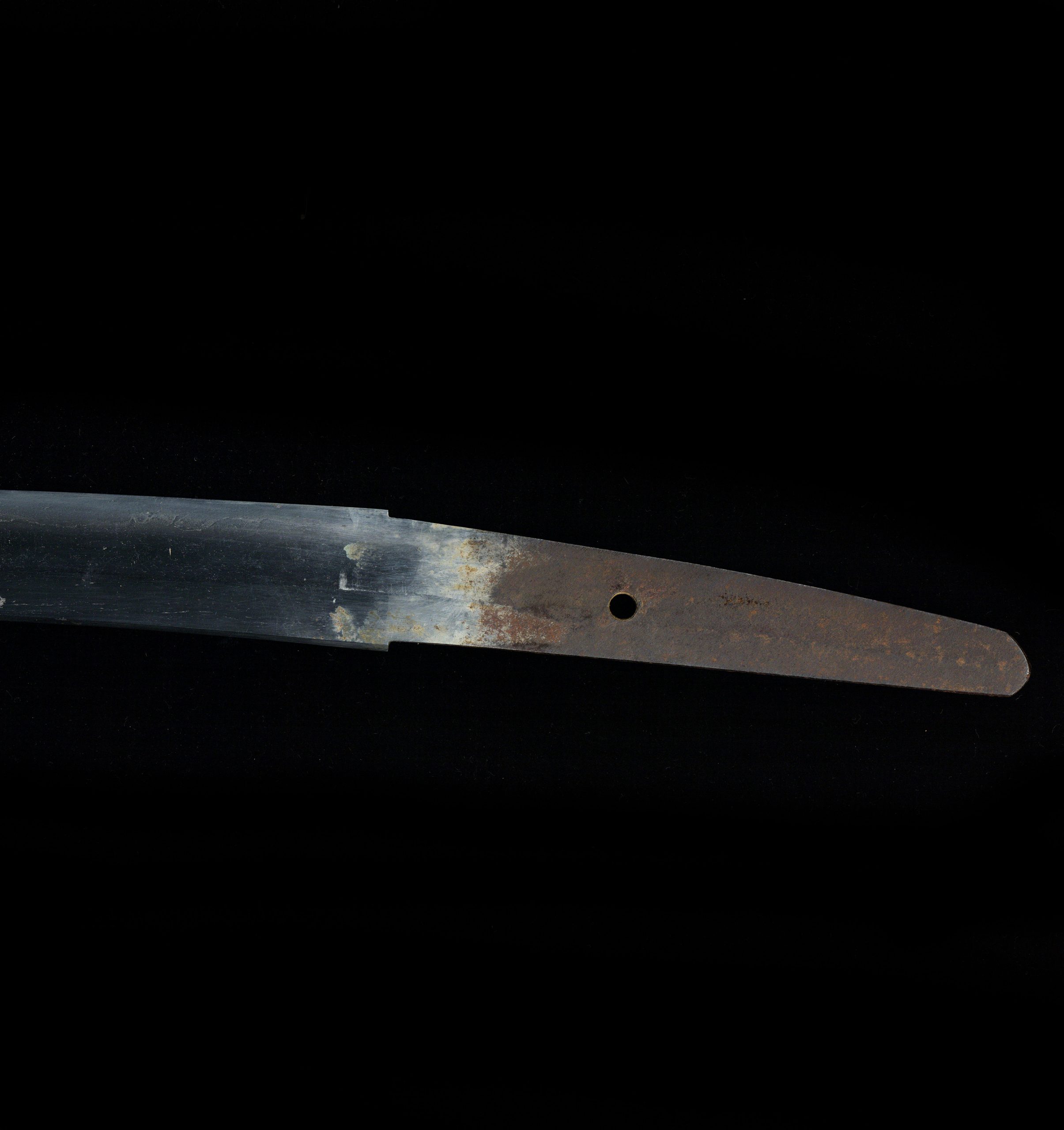
A shinogi-zukuri wakizashi with a clearly defined yokote and a medium-proportioned kissaki. The temper line reads as a restrained, continuous suguha-chō hamon, cleanly legible and consistent with an elegant, formal piece.
The nakago shows stable patination, with one mekugi-ana (matching the torokusho) and a well-balanced mei layout.
Koshirae (mounting)
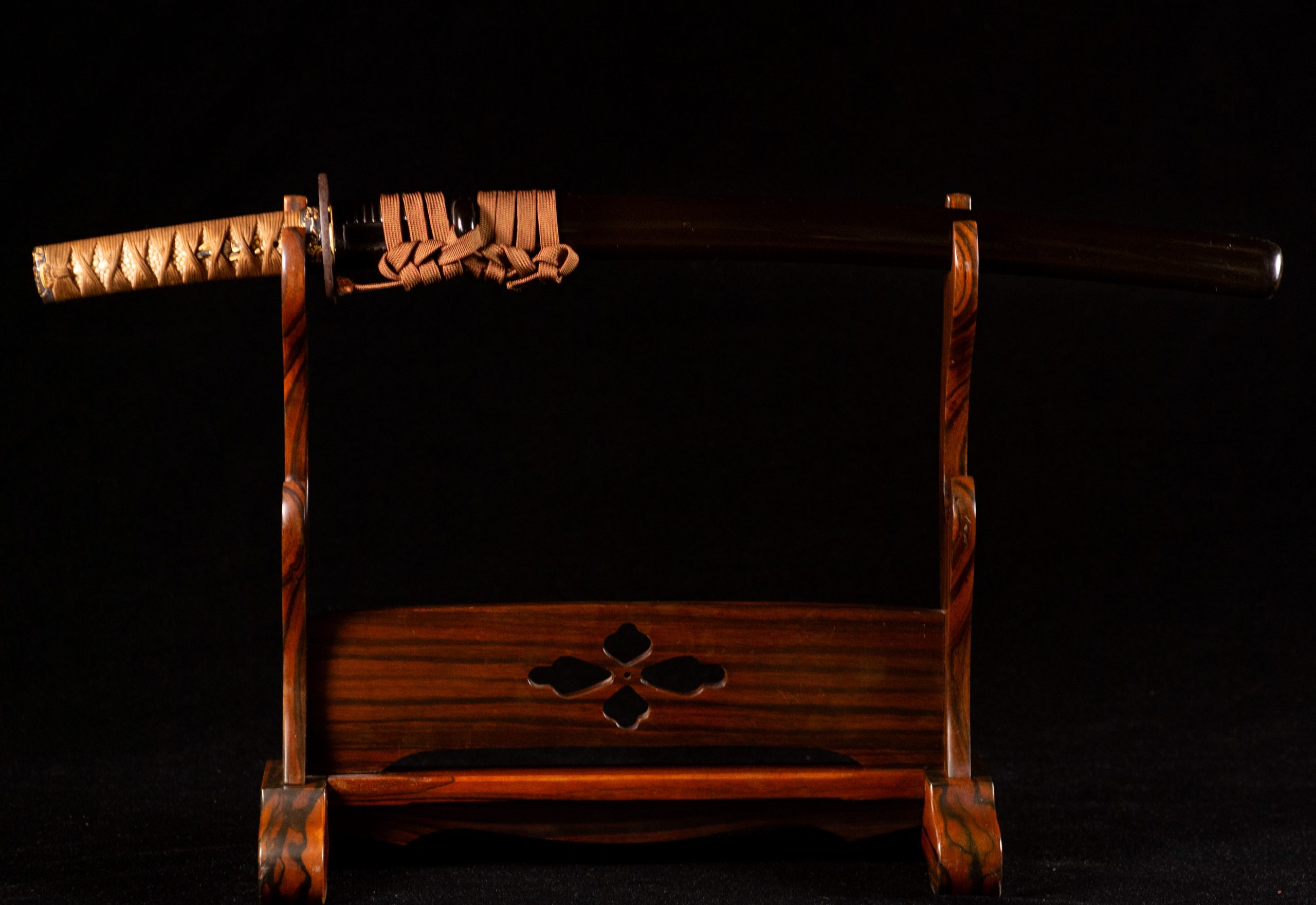
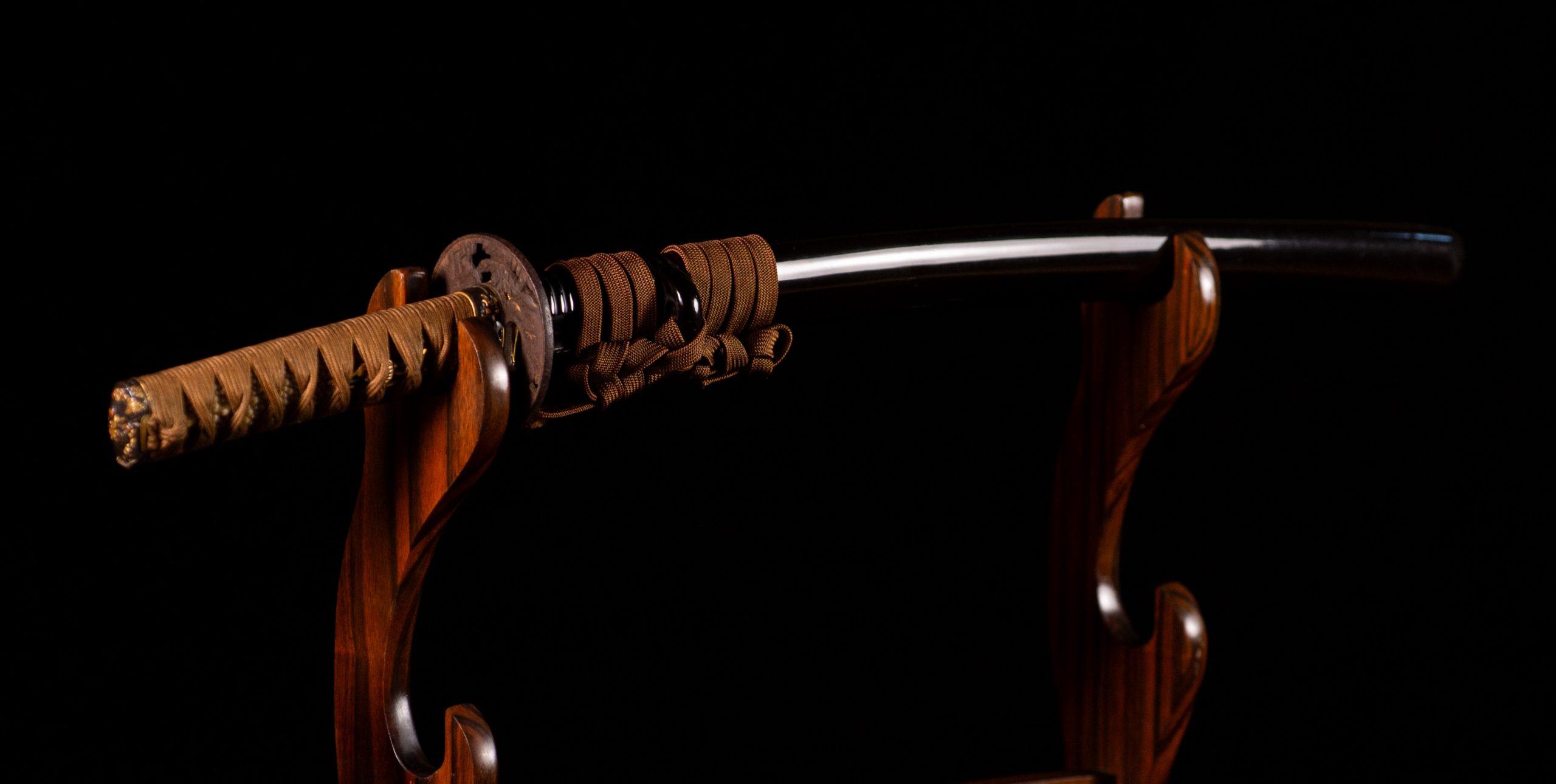
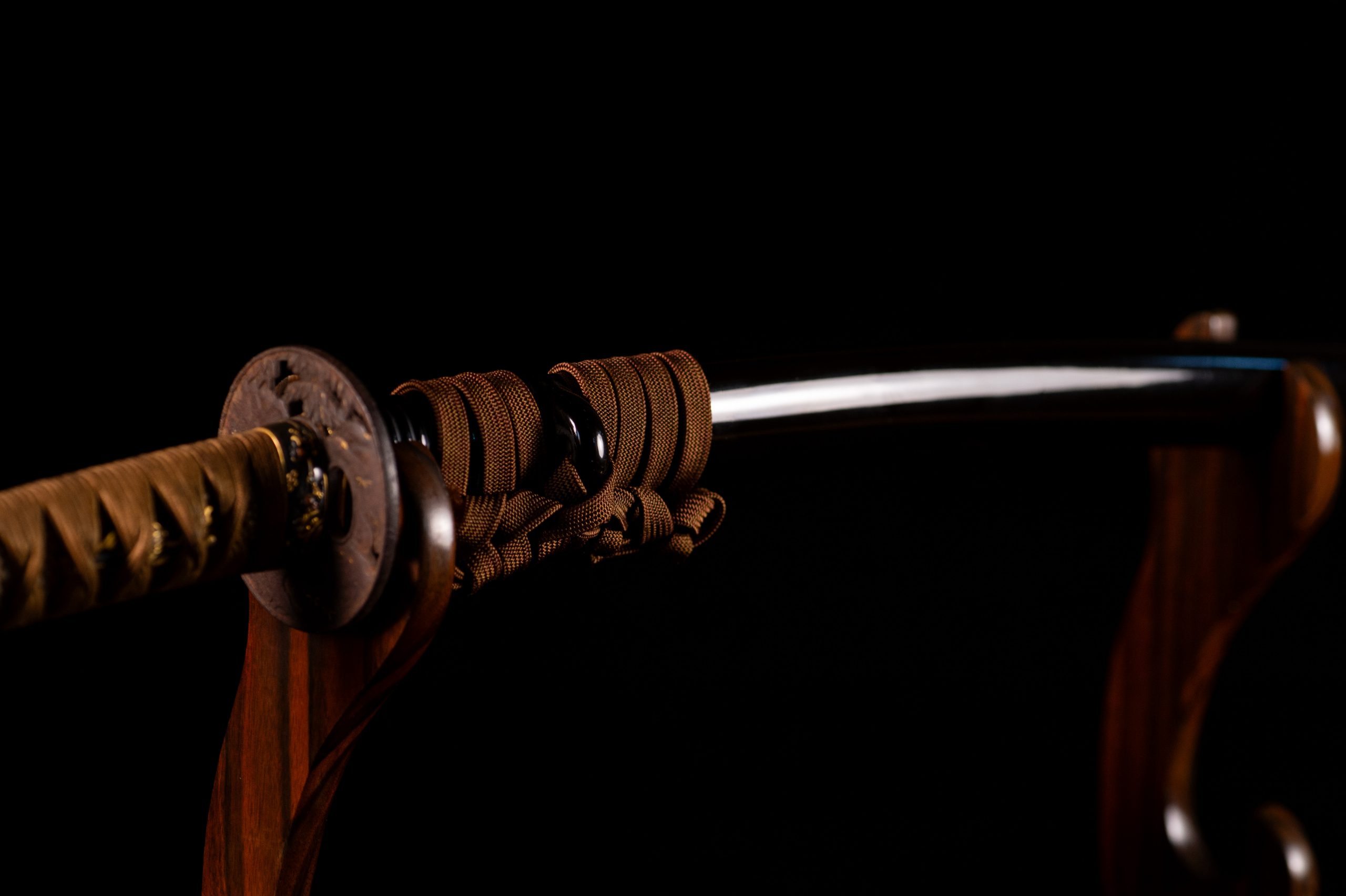
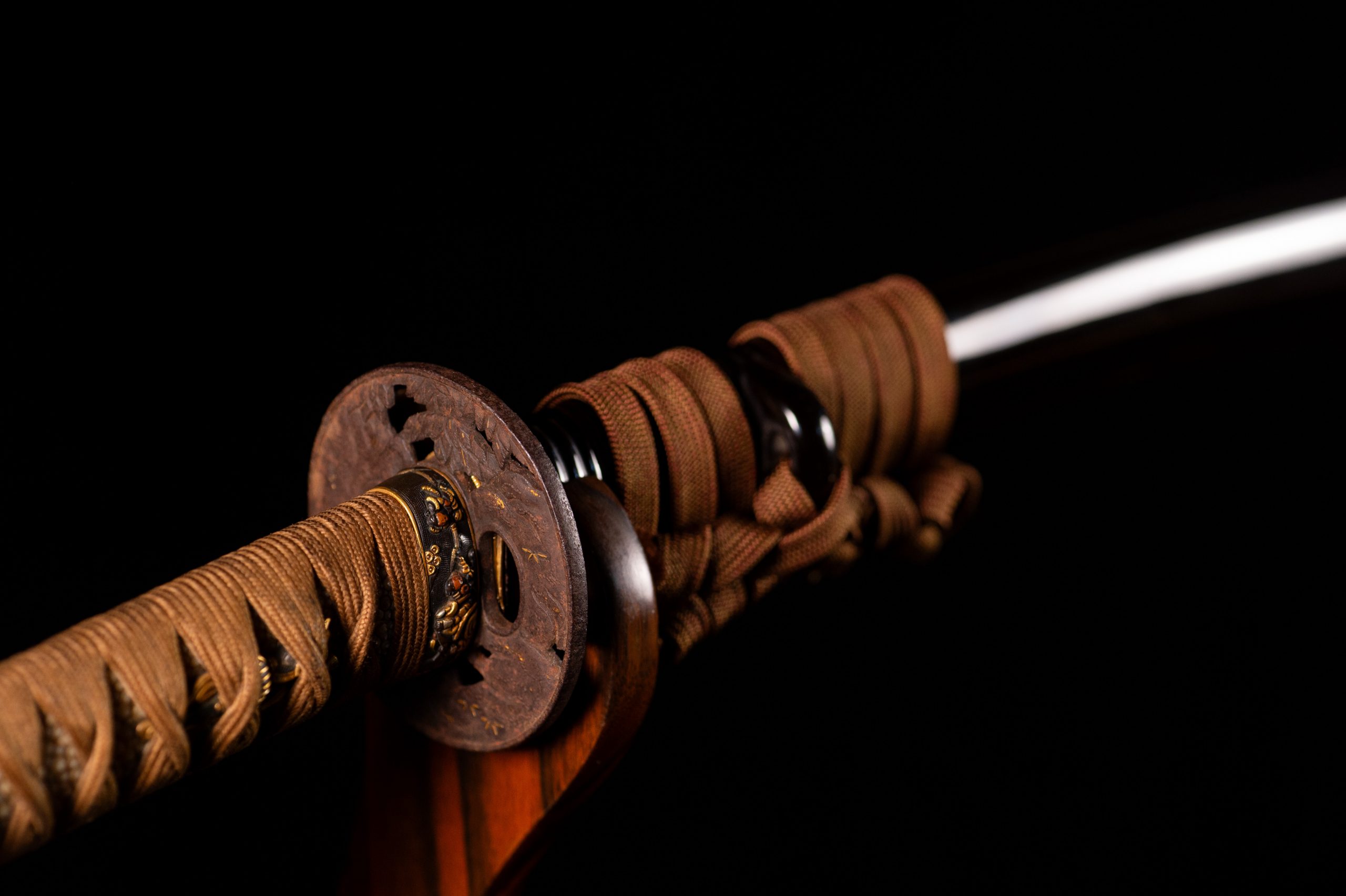
A complete mounting with elegant warm tones and strong appeal.
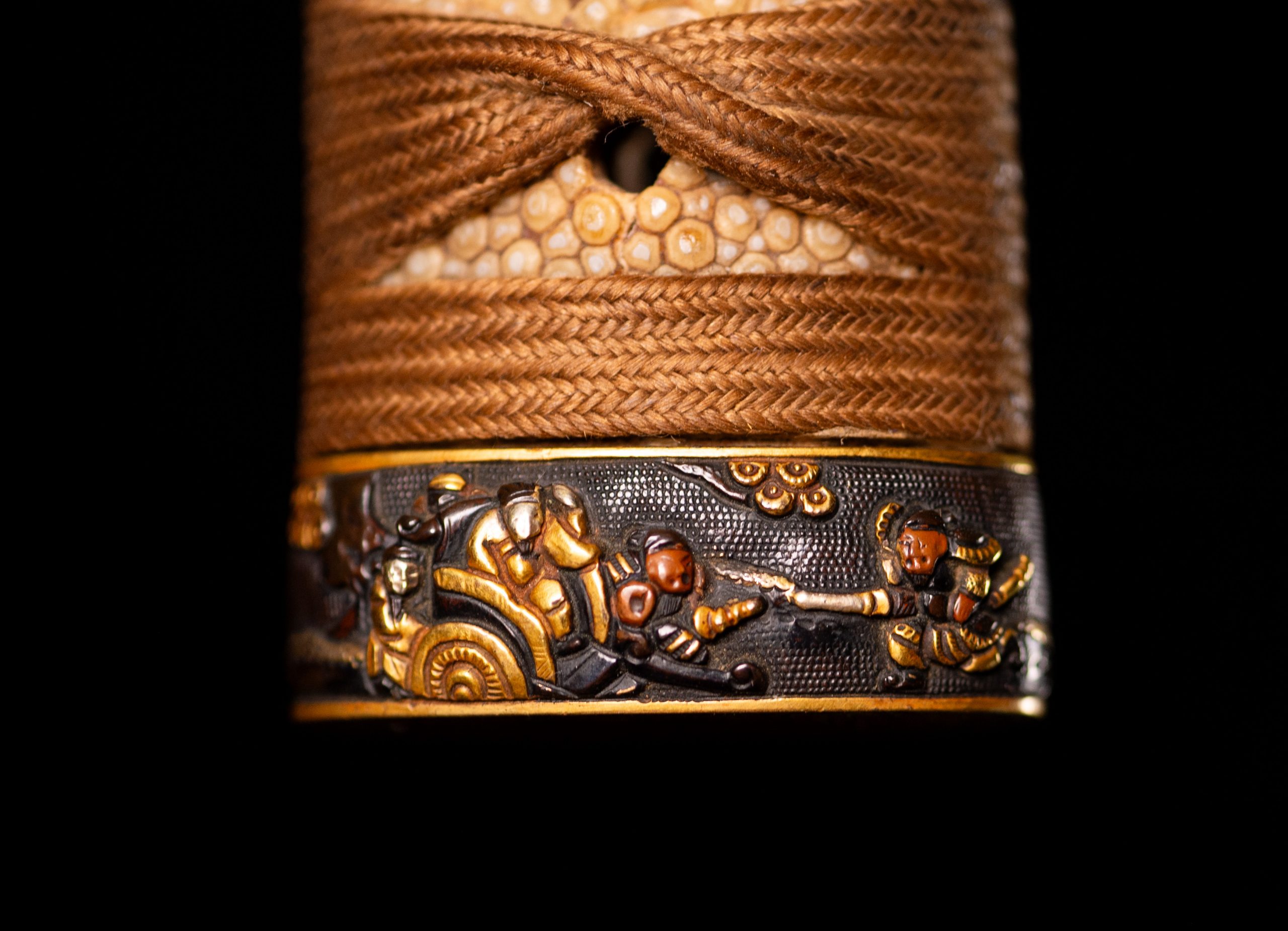
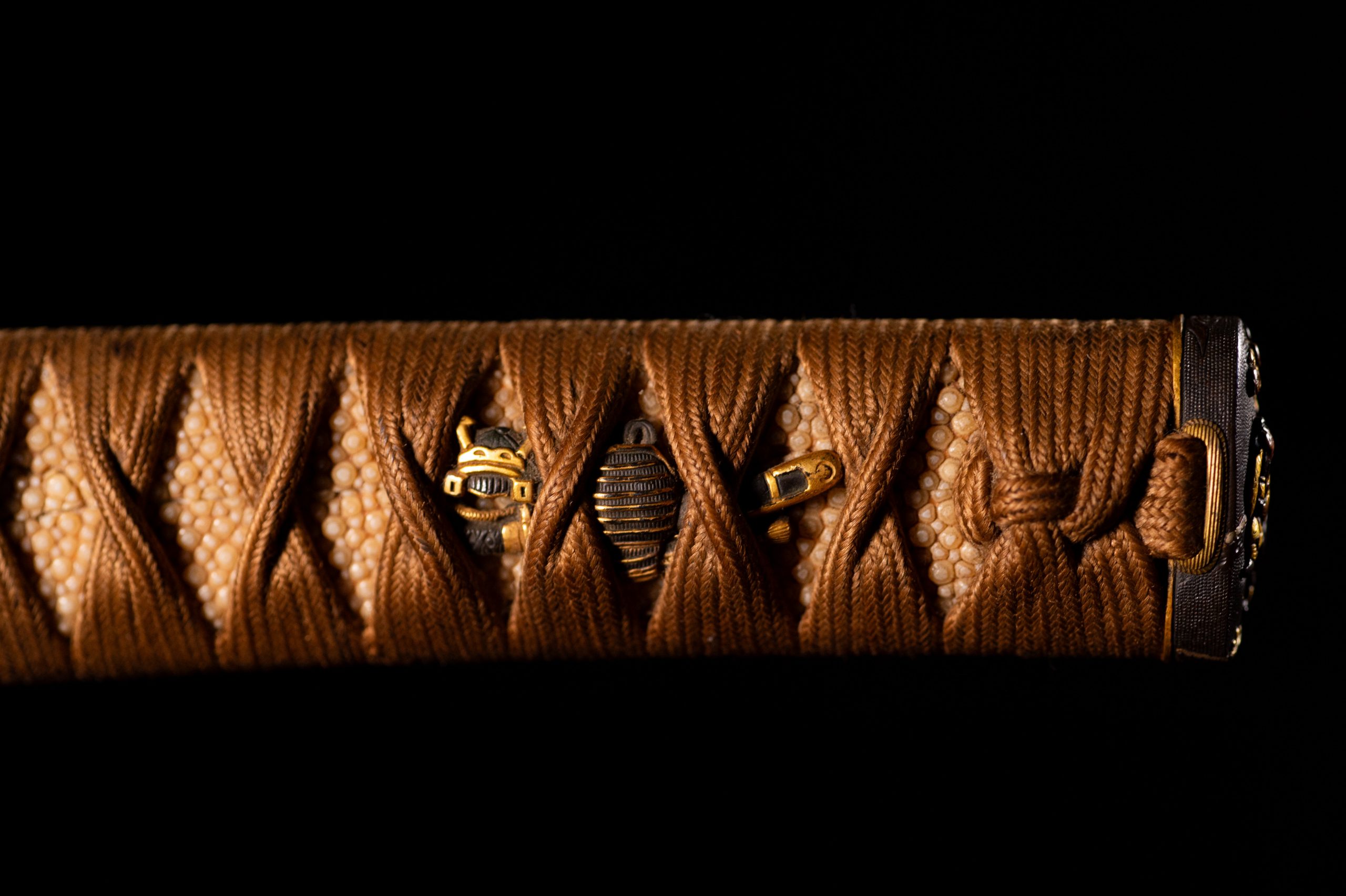
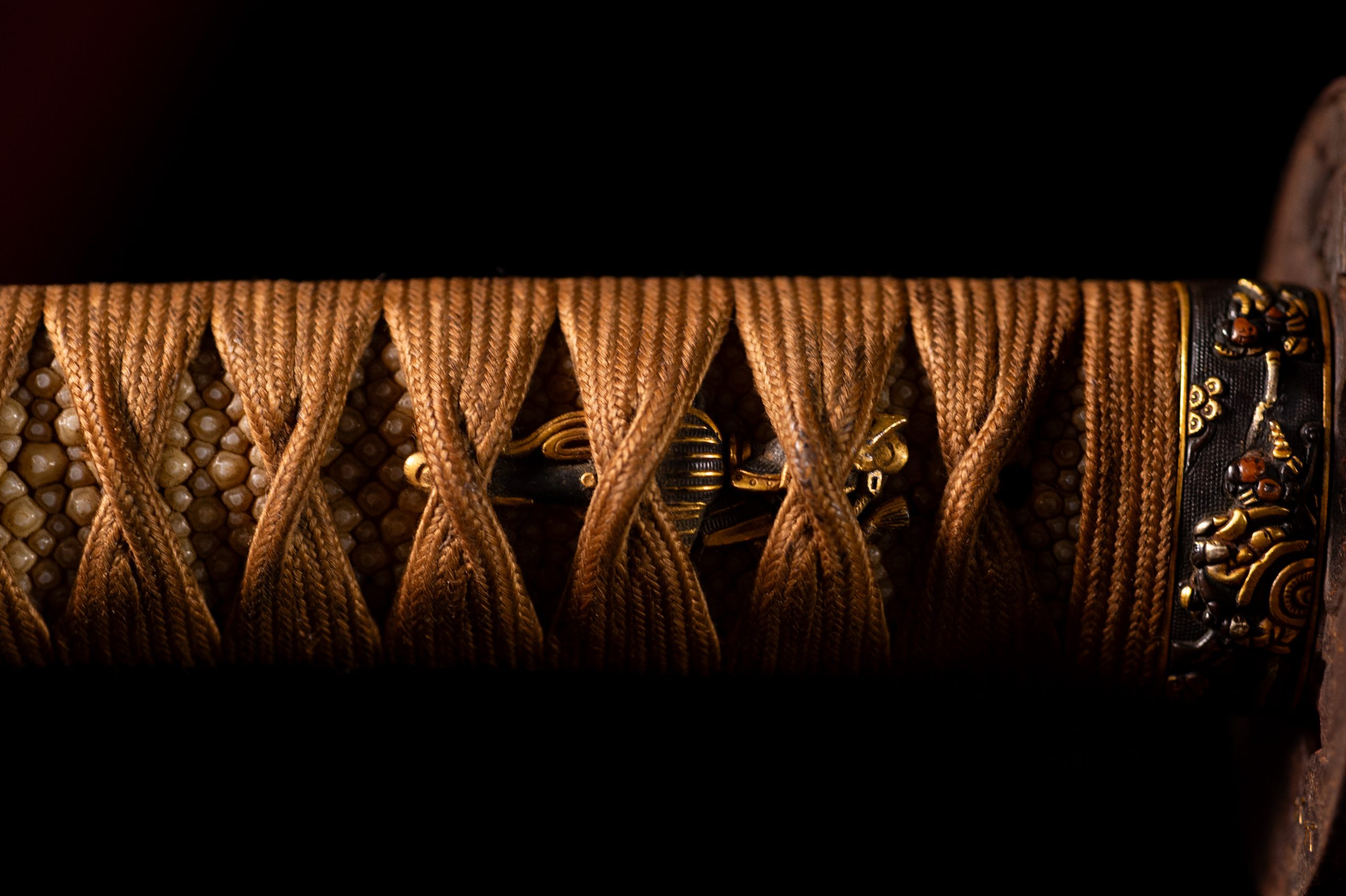
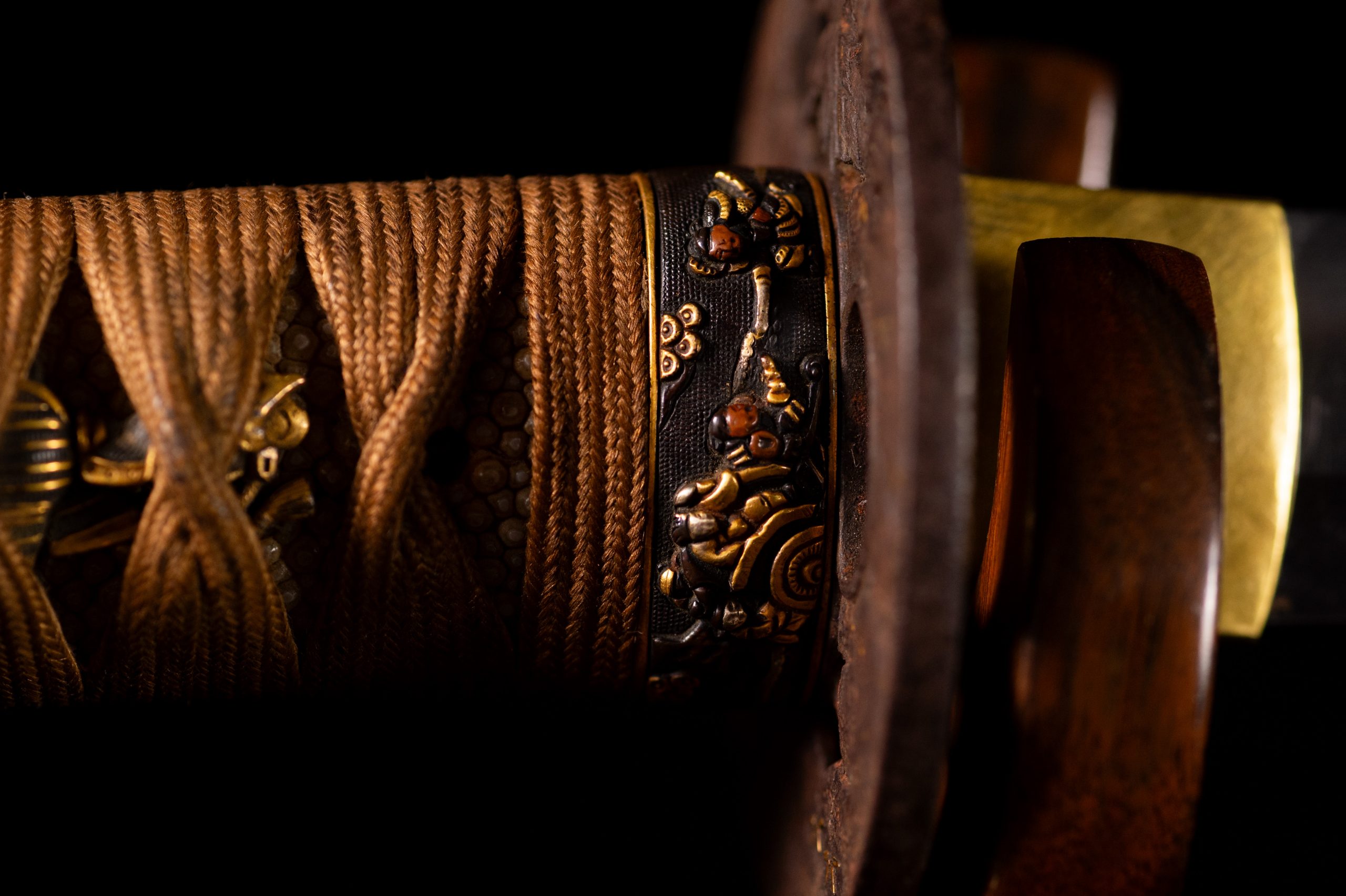
The tsuka combines light samegawa with brown tsuka-ito in traditional wrap. The menuki depict kabuto, executed in shakudō with gold details.
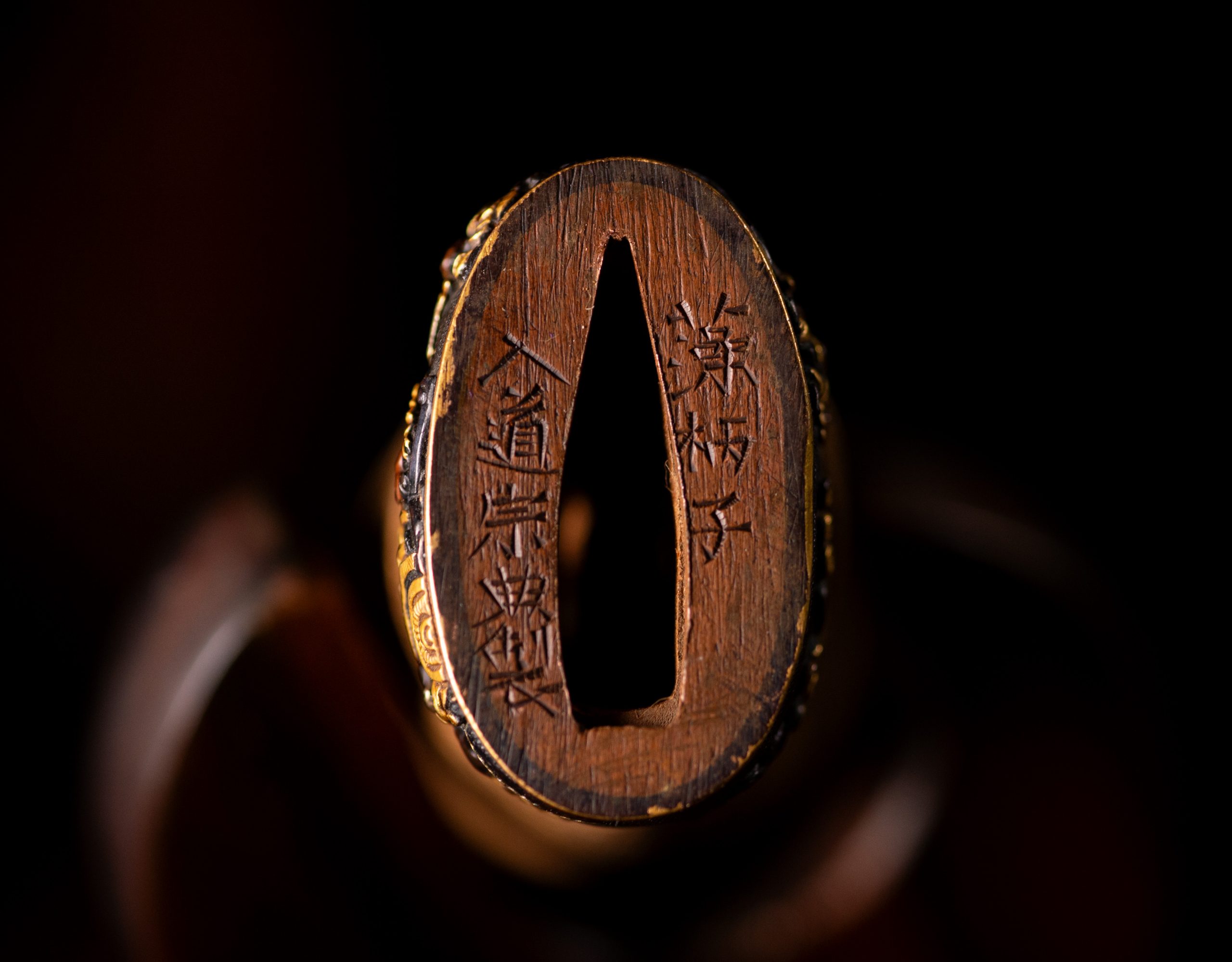
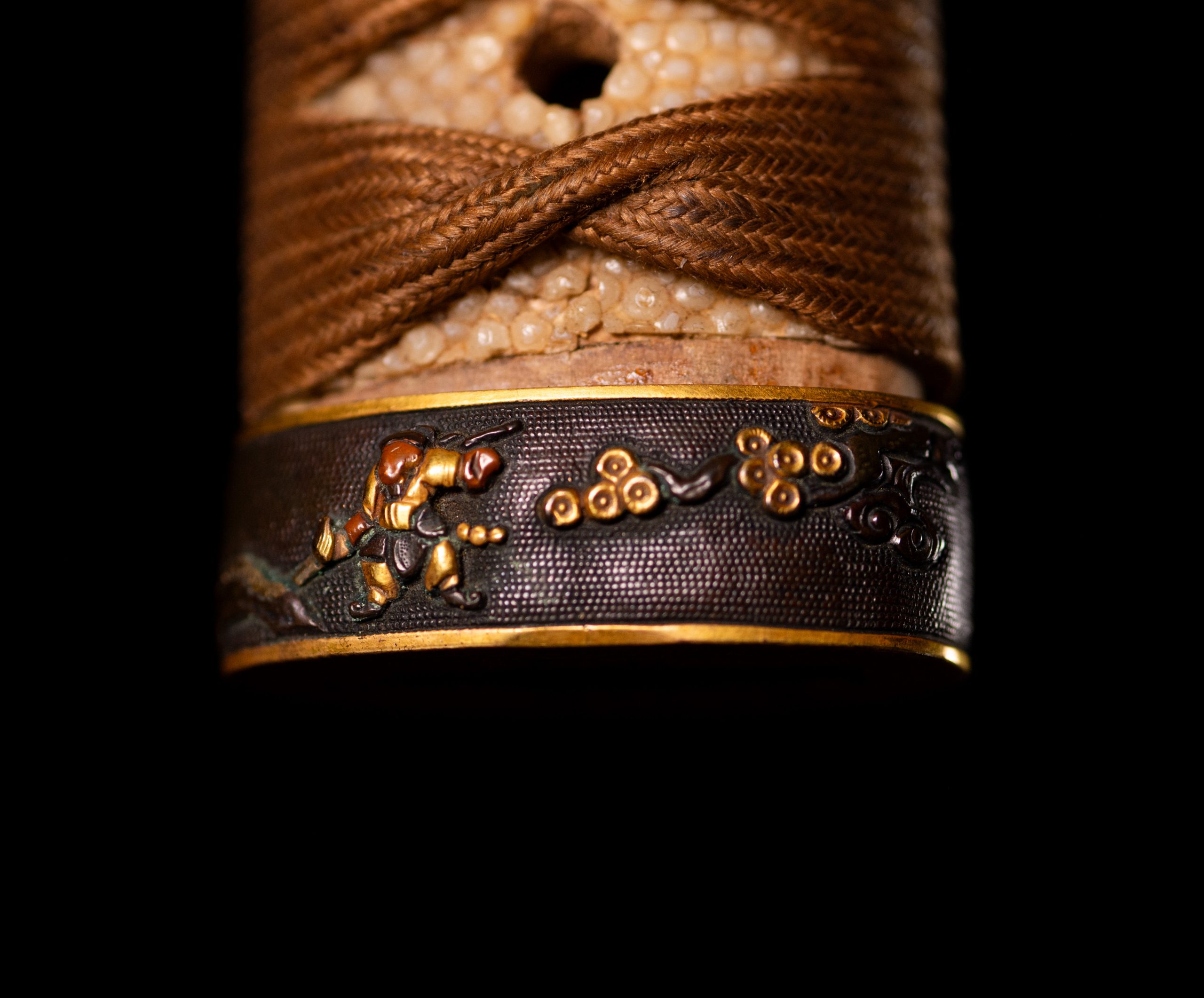
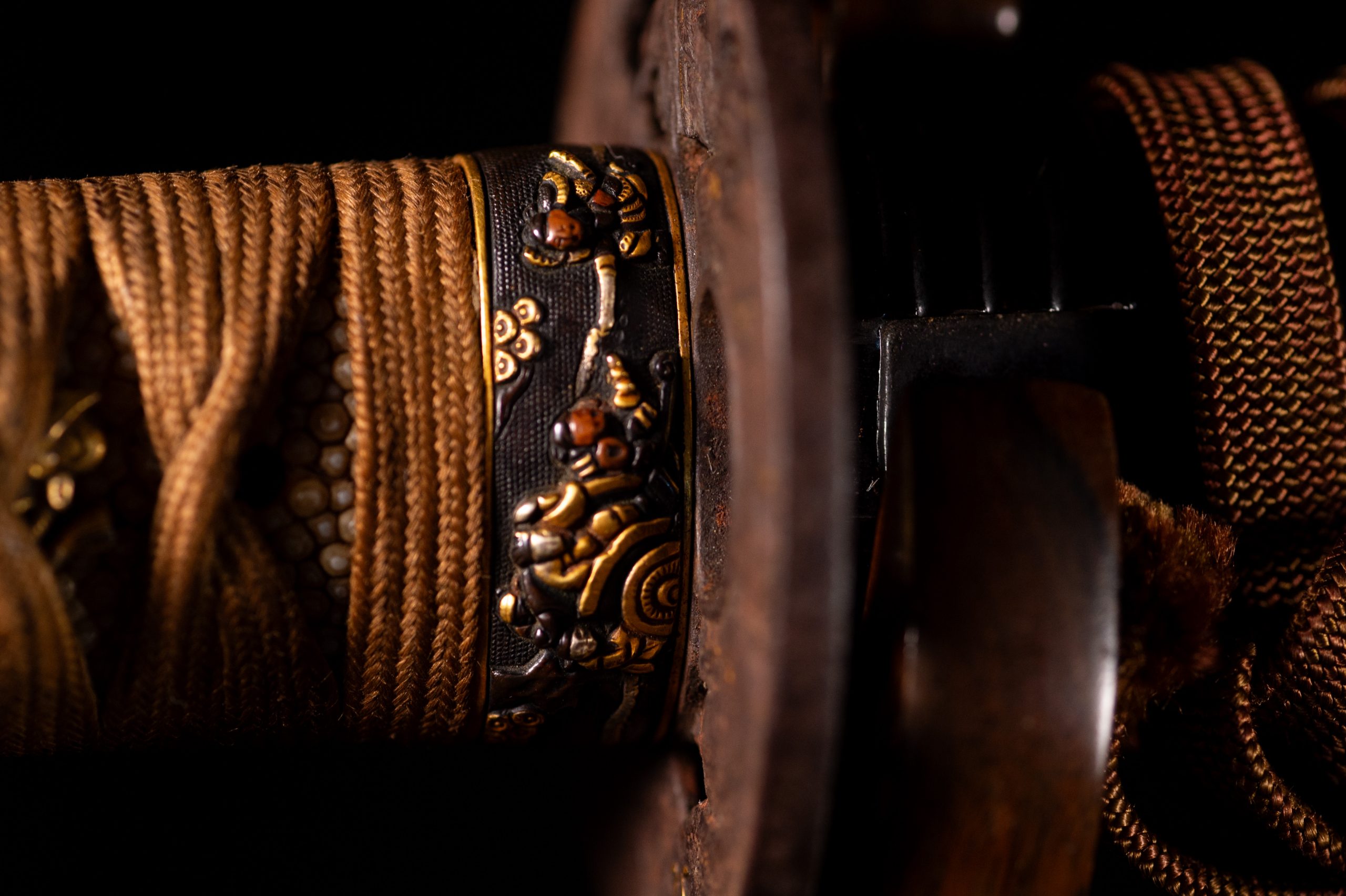
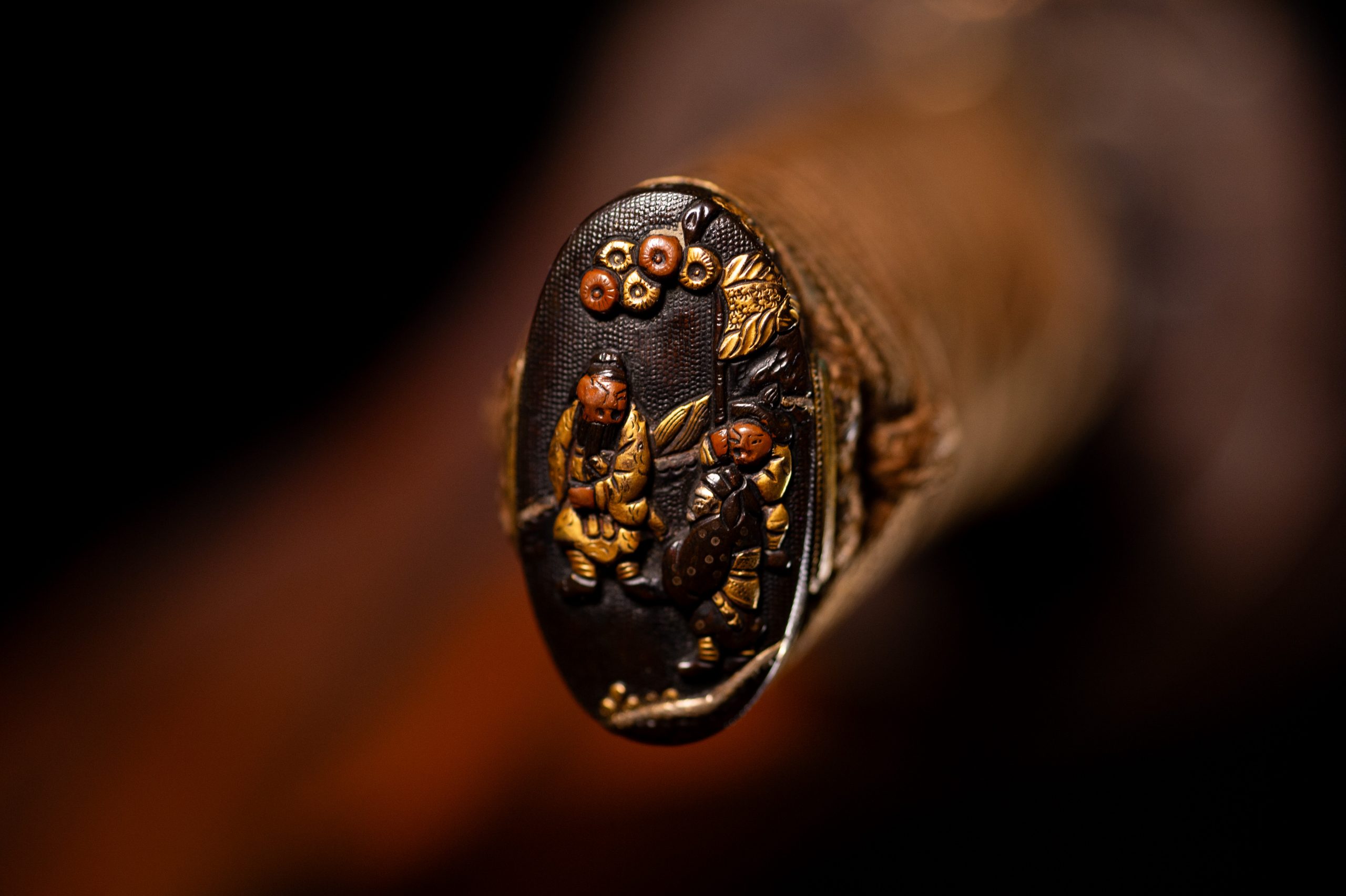
The fuchi–kashira set is richly carved in high relief with a figural narrative scene and coloured-metal details (iroe/zōgan), a decorative language that fits well with the taste often associated with Sōten-type work.
The fuchi is signed/inscribed.
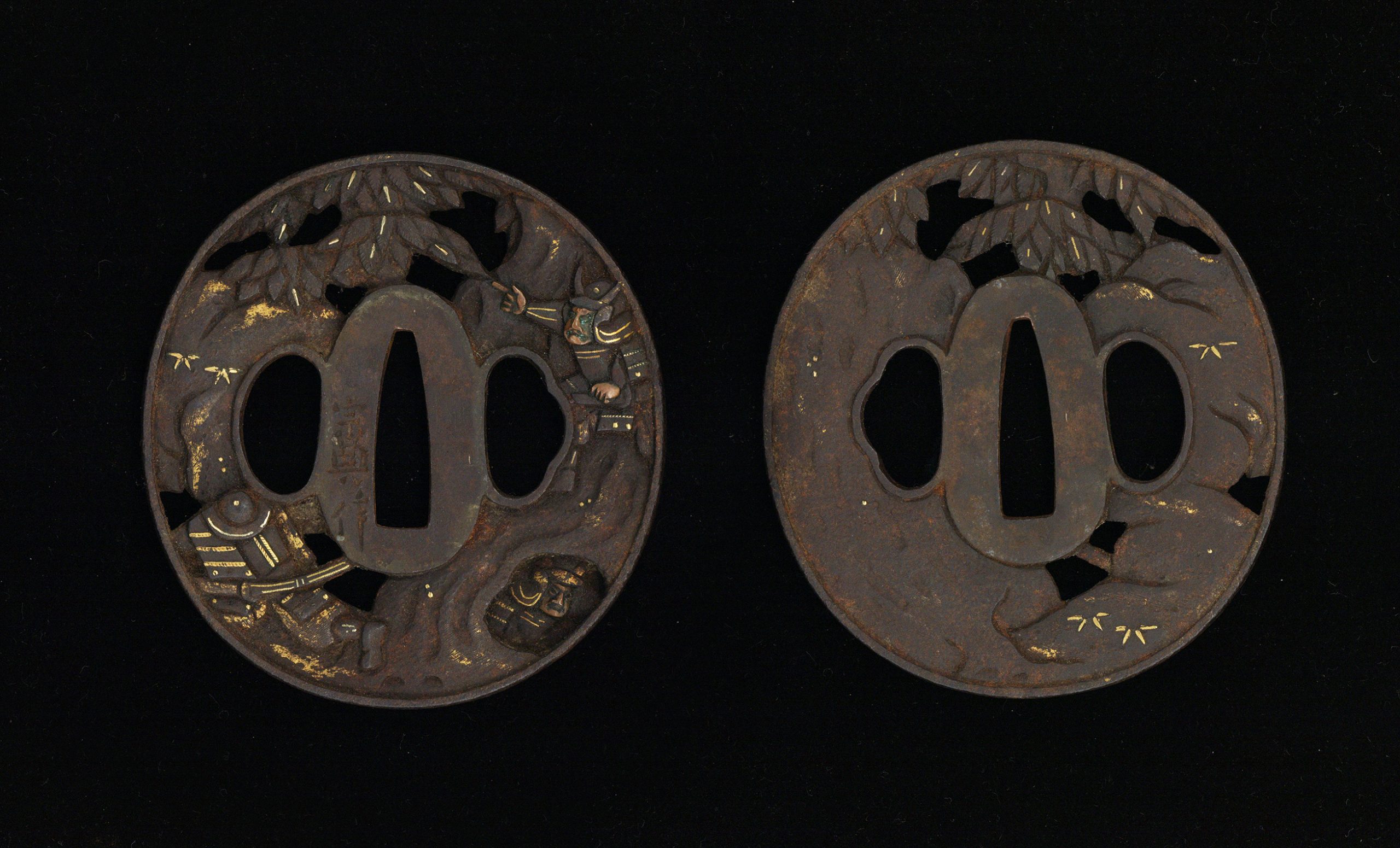
The tsuba is an iron maru-gata guard with openwork and relief carving, enhanced by applied metal accents for contrast soten school too.
Specification sheet
| Field | Detail |
|---|---|
| Type | Wakizashi |
| Period | Edo |
| Torokusho | 長野県第2058号 |
| Mei | 出羽大掾藤原國路 (Dewa Daijō Fujiwara Kunimichi) |
| Nagasa | 50.6 cm |
| Sori | 1.5 cm |
| Mekugi-ana | 1 |
| Sugata | Shinogi-zukuri, defined yokote |
| Hamon | Suguha-chō (as visible in photos) |
| Koshirae | Complete; kabuto menuki (shakudō & gold); Sōten-type figural fuchi-kashira; iron maru-gata tsuba |


