



Description
ITEM DESCRIPTION:
Comes with kimono or cotton bag. Comes with certificate of supein Nihonto. Comes with copy of Tokosusho.
Documentation
-
銃砲刀剣類登録証 (Firearms and swords registration certificate)
種別:刀剣類 (Class: Japanese sword)
種別(内訳):刀 (Type: katana)
長さ:六四・六 センチメートル (Length: 64.6 cm)
反り:一・五 センチメートル (Curvature: 1.5 cm)
目くぎ穴:埋一 一個 (Mekugi-ana: one plugged; 1 item)
銘文(表):無銘 (Inscription (omote): mumei / unsigned)
Smith, school and context
A katana registered as mumei, it can be dated to the early Edo period, in the 17th century, due to its characteristics, nakago and shapes. A fully coherent status for blades intended for real use and for successive mountings over time. The piece presents with restrained authority: balanced proportions, moderate curvature, and a complete ensemble conceived to be worn, not merely displayed.
Blade
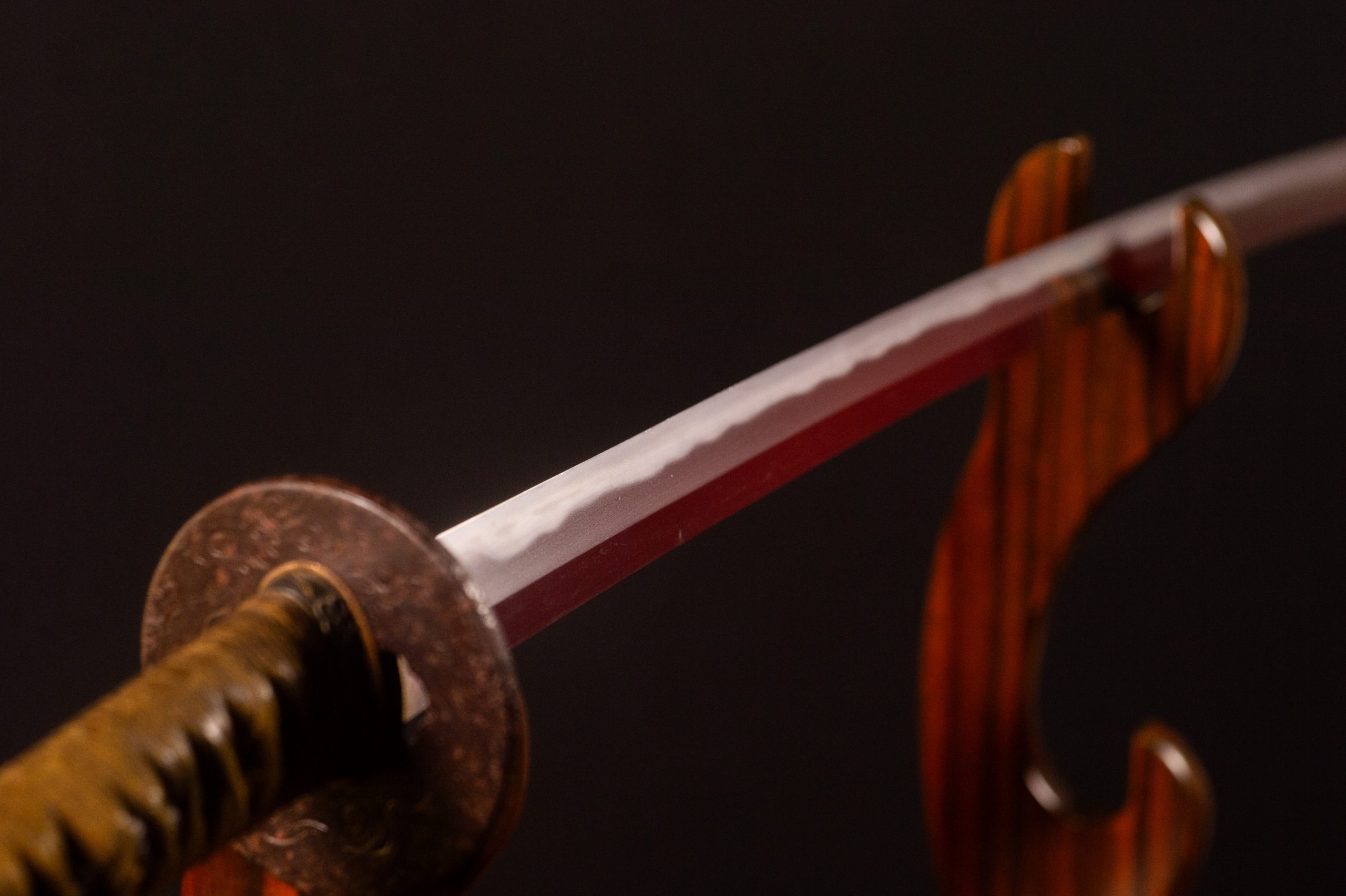
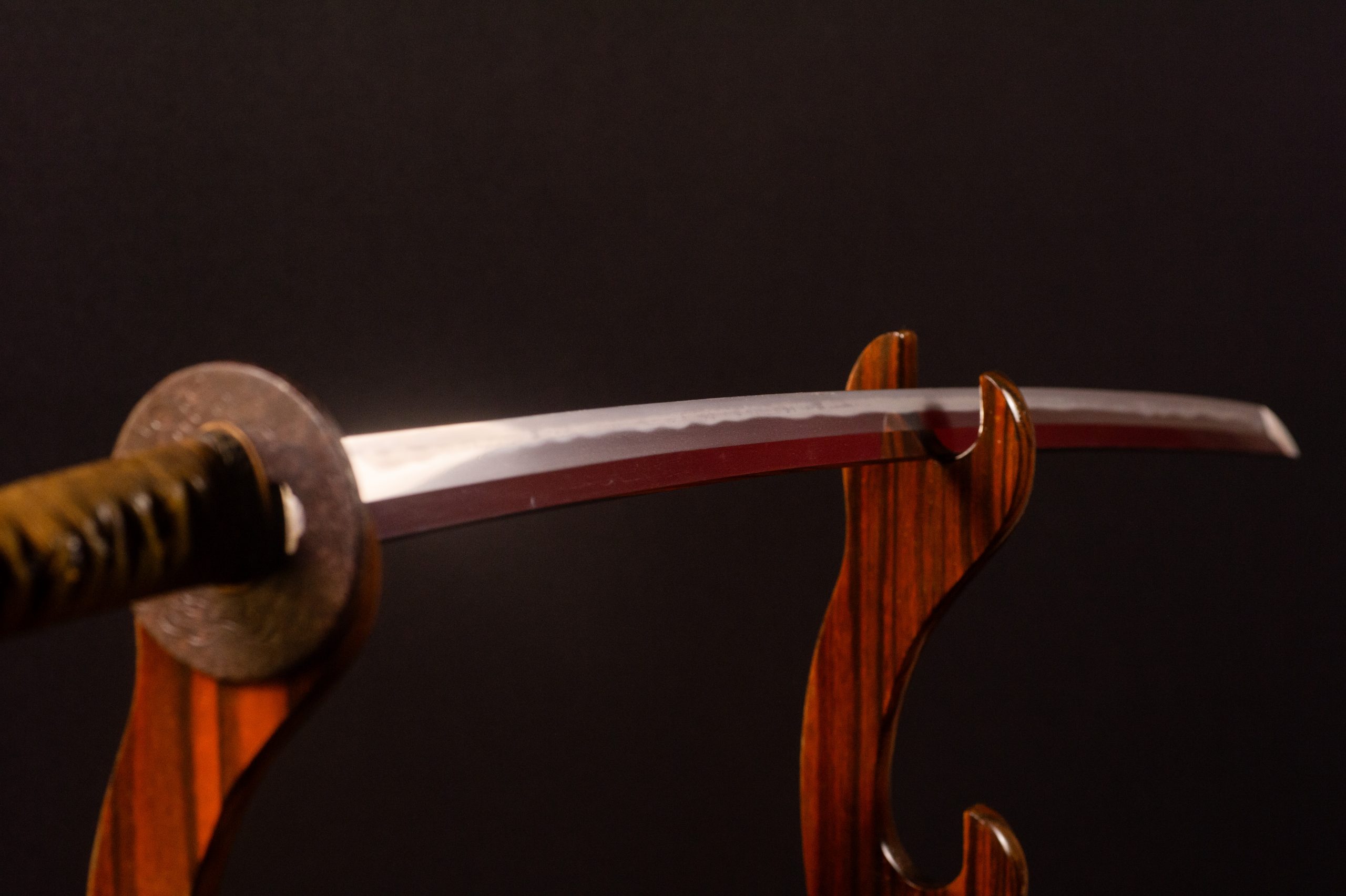
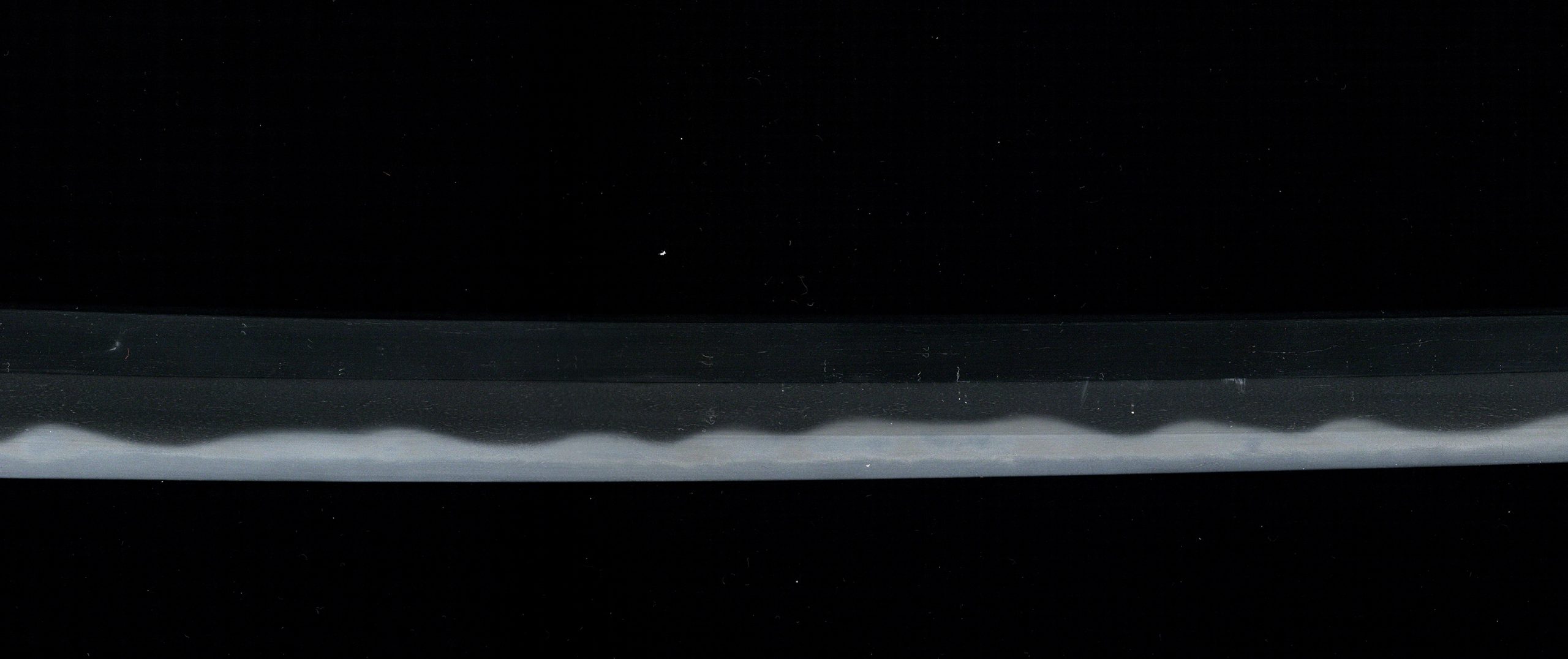
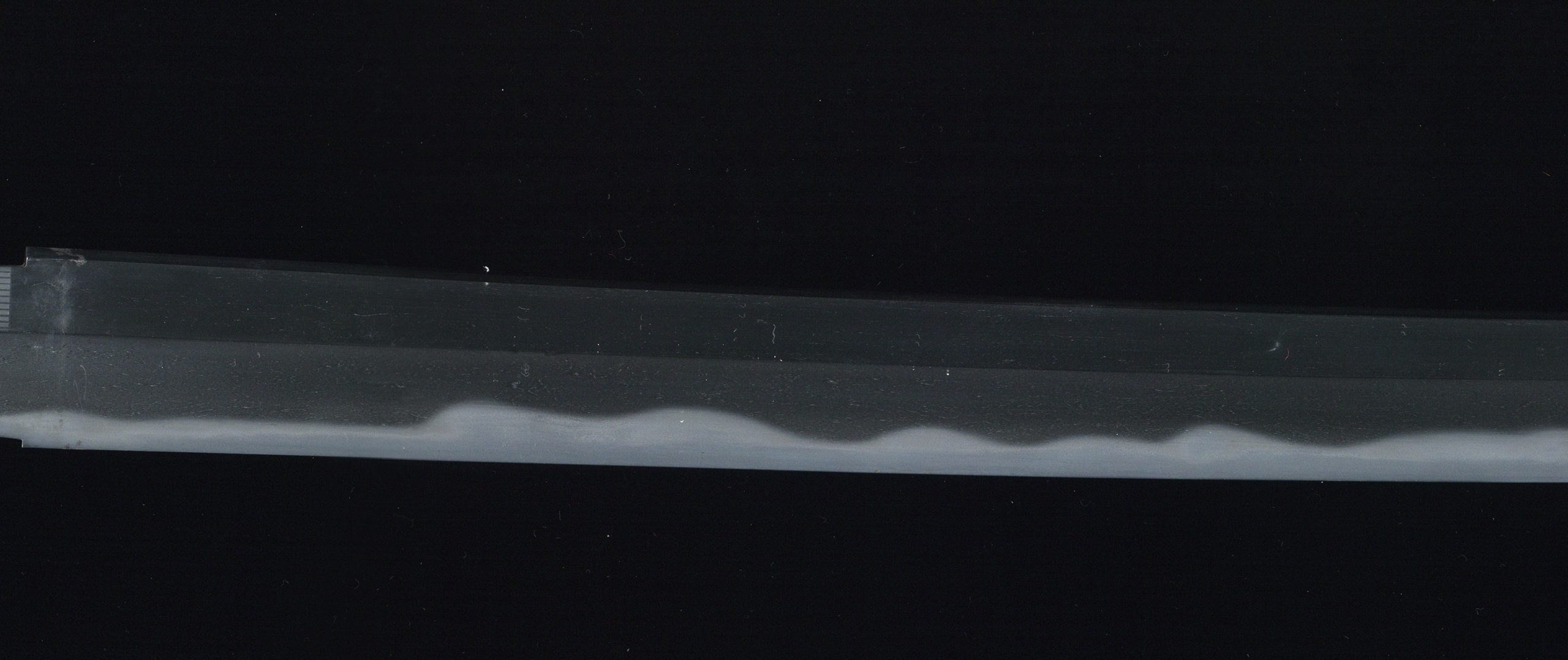
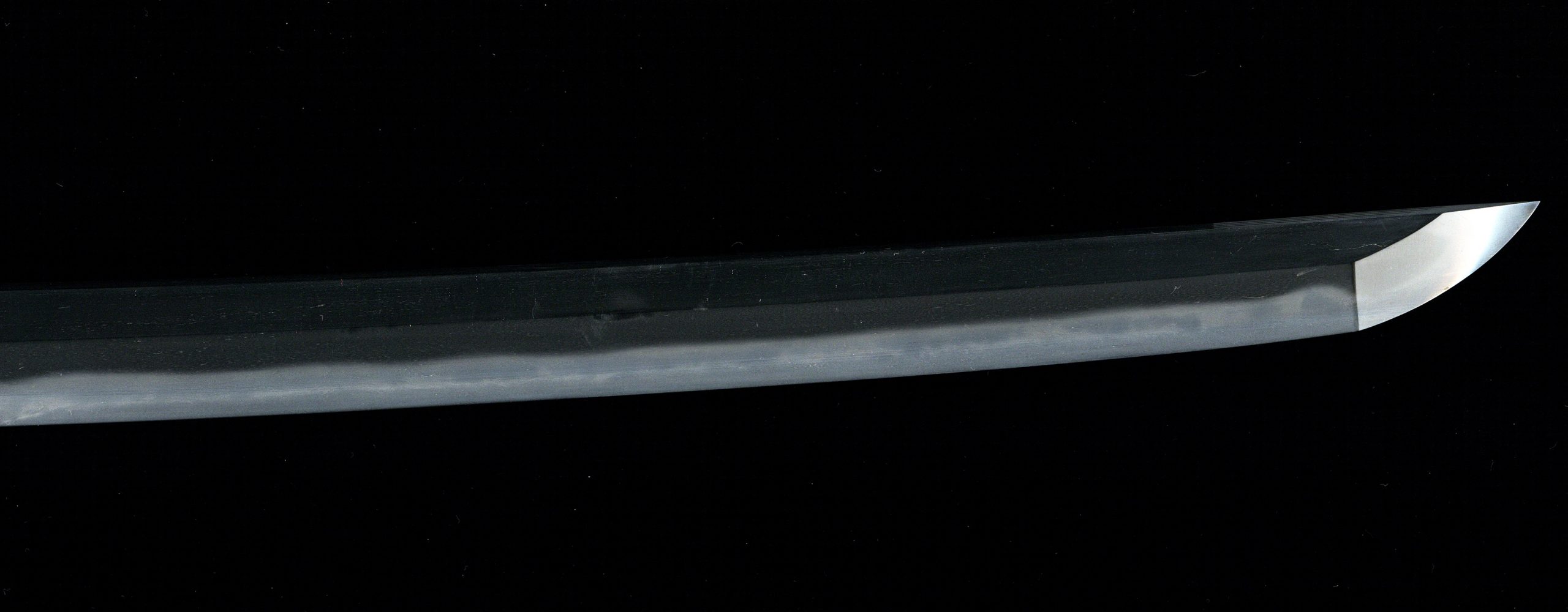
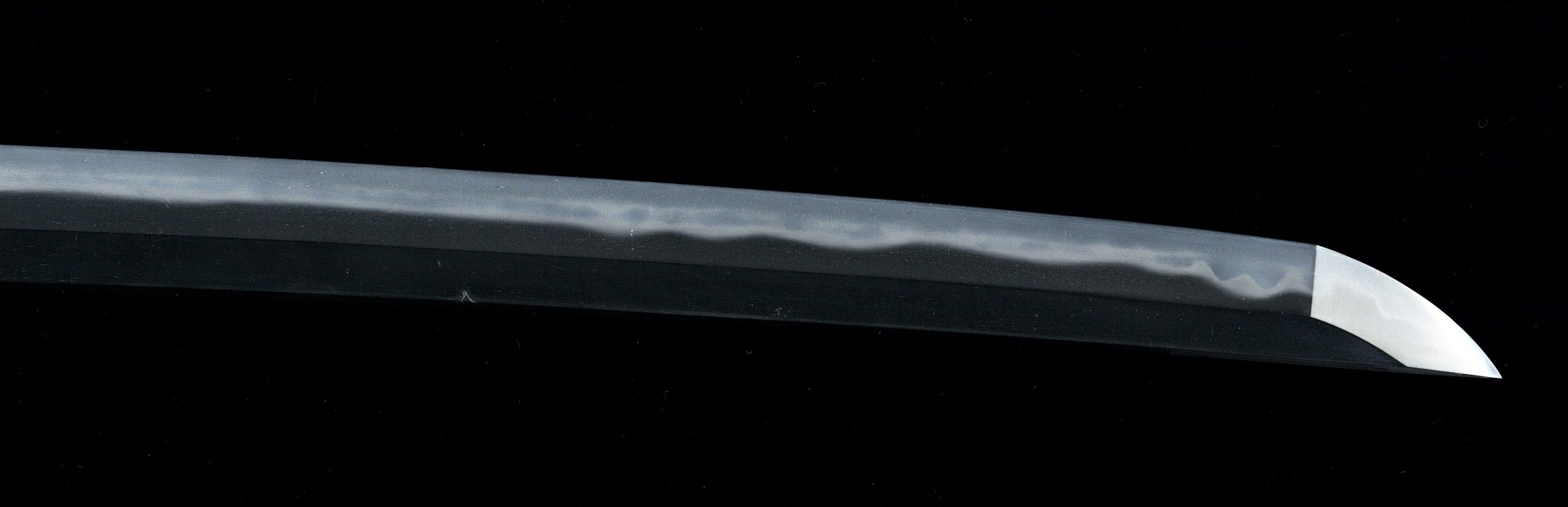
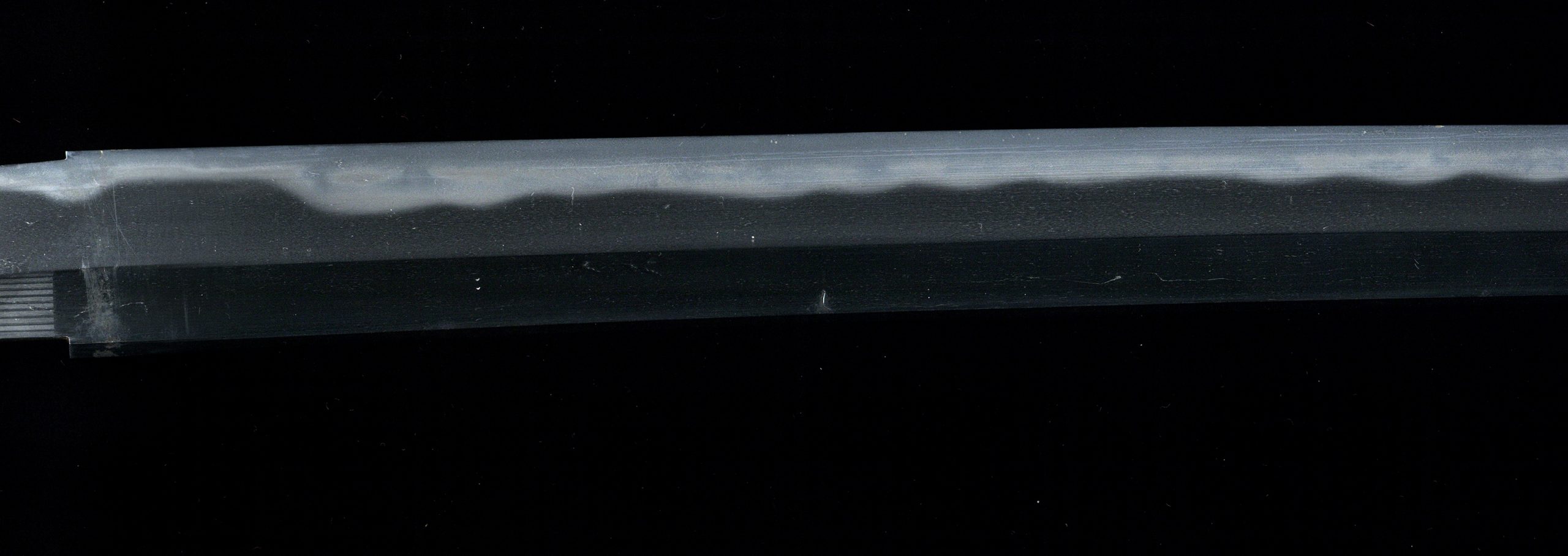
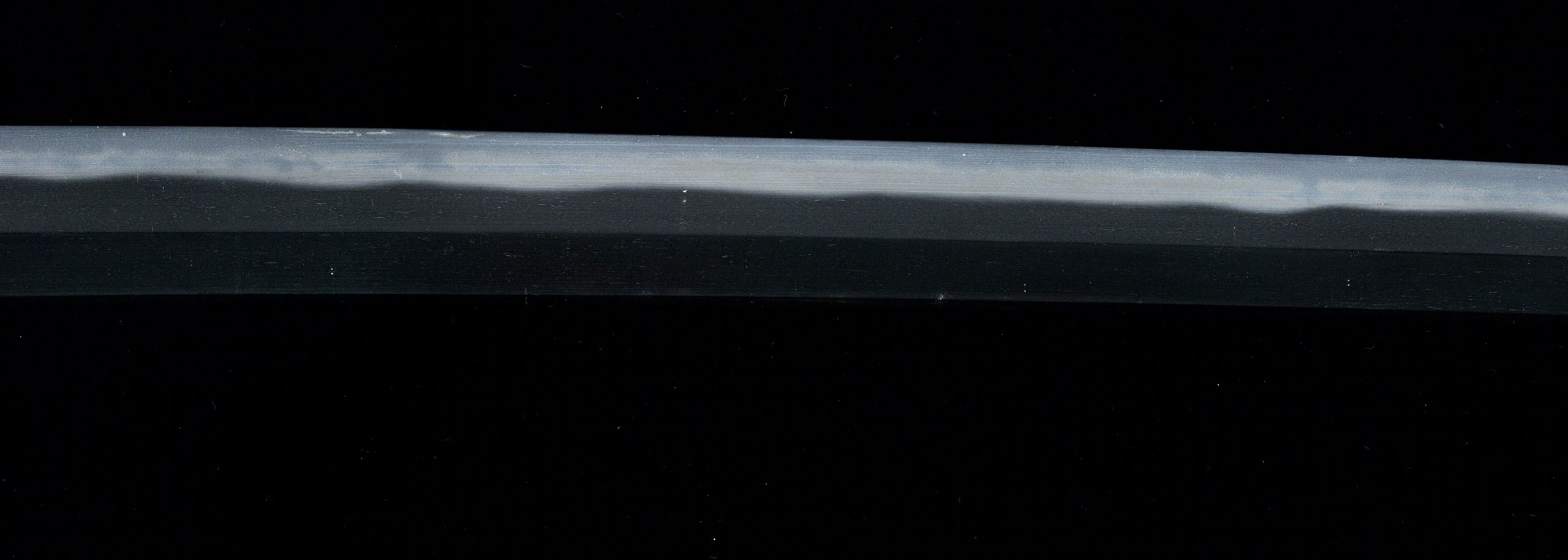
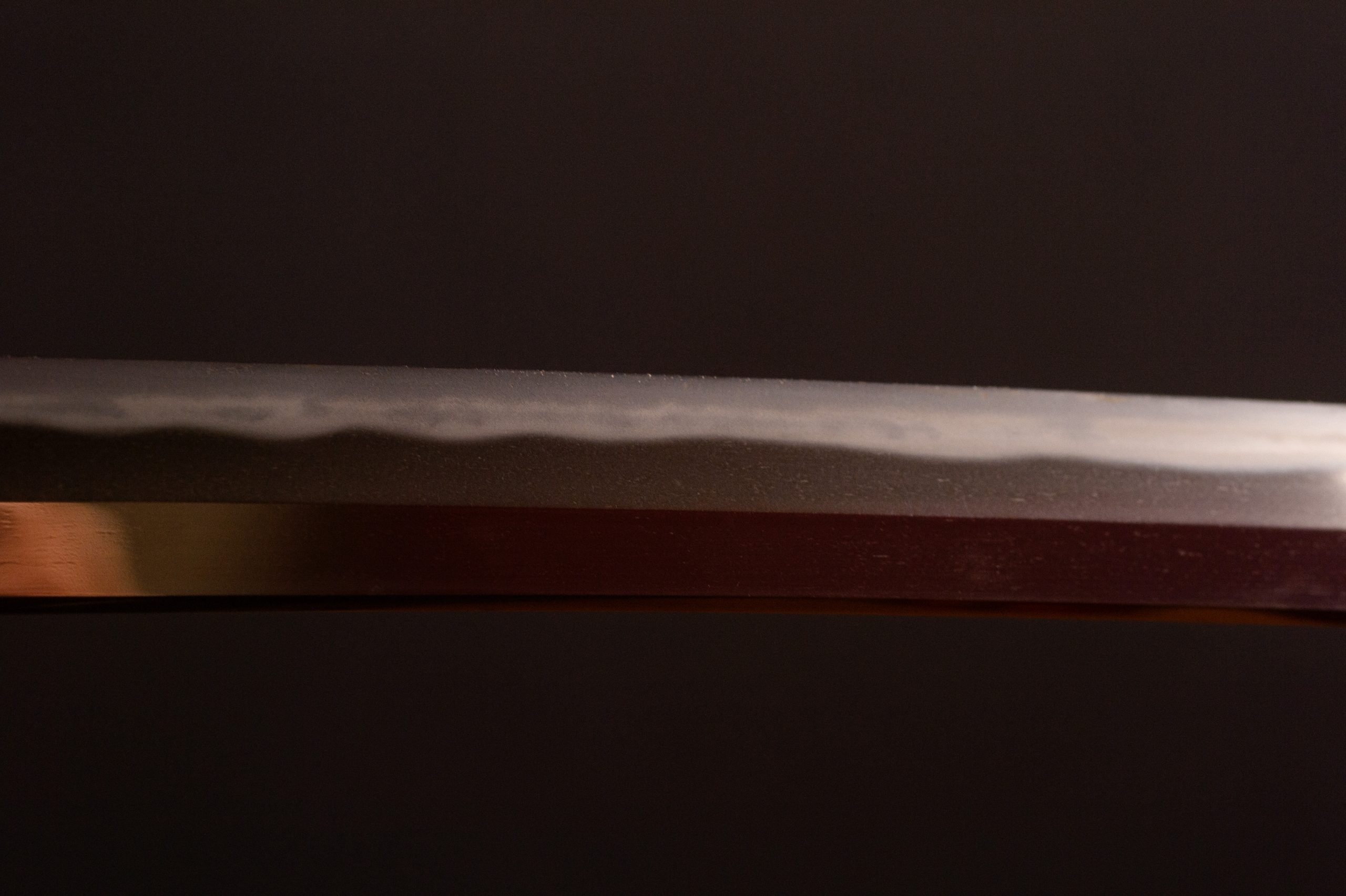
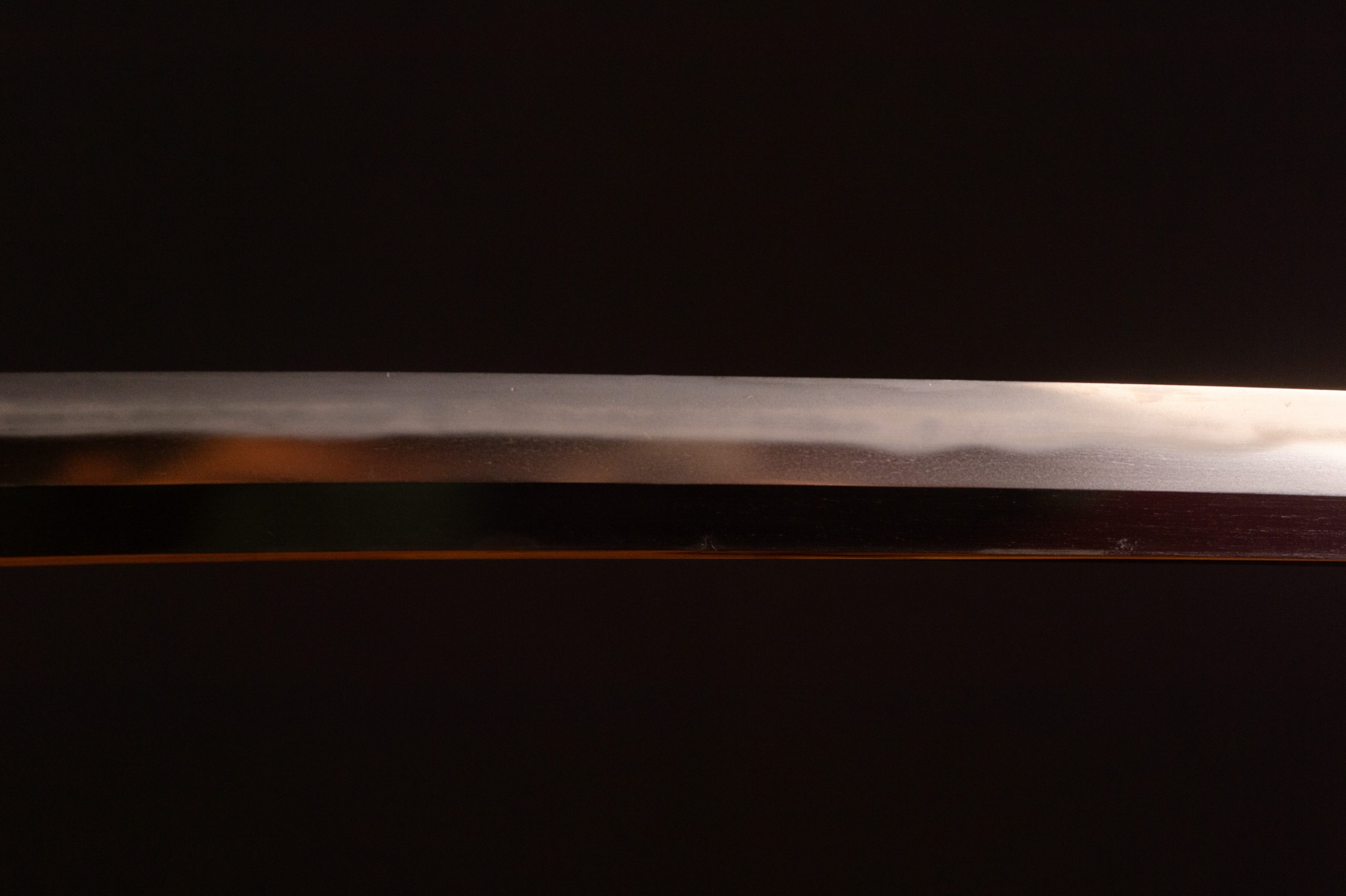
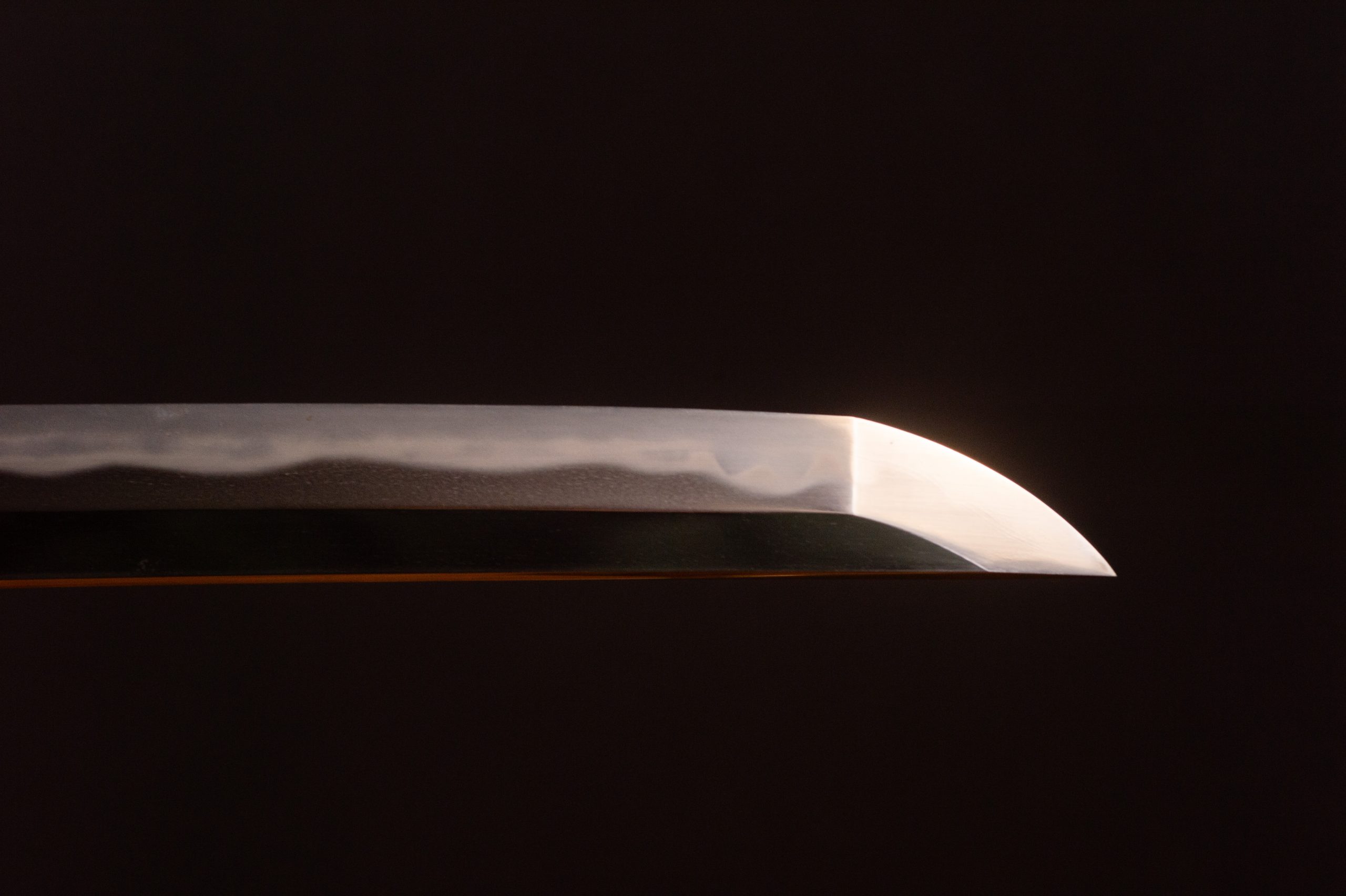
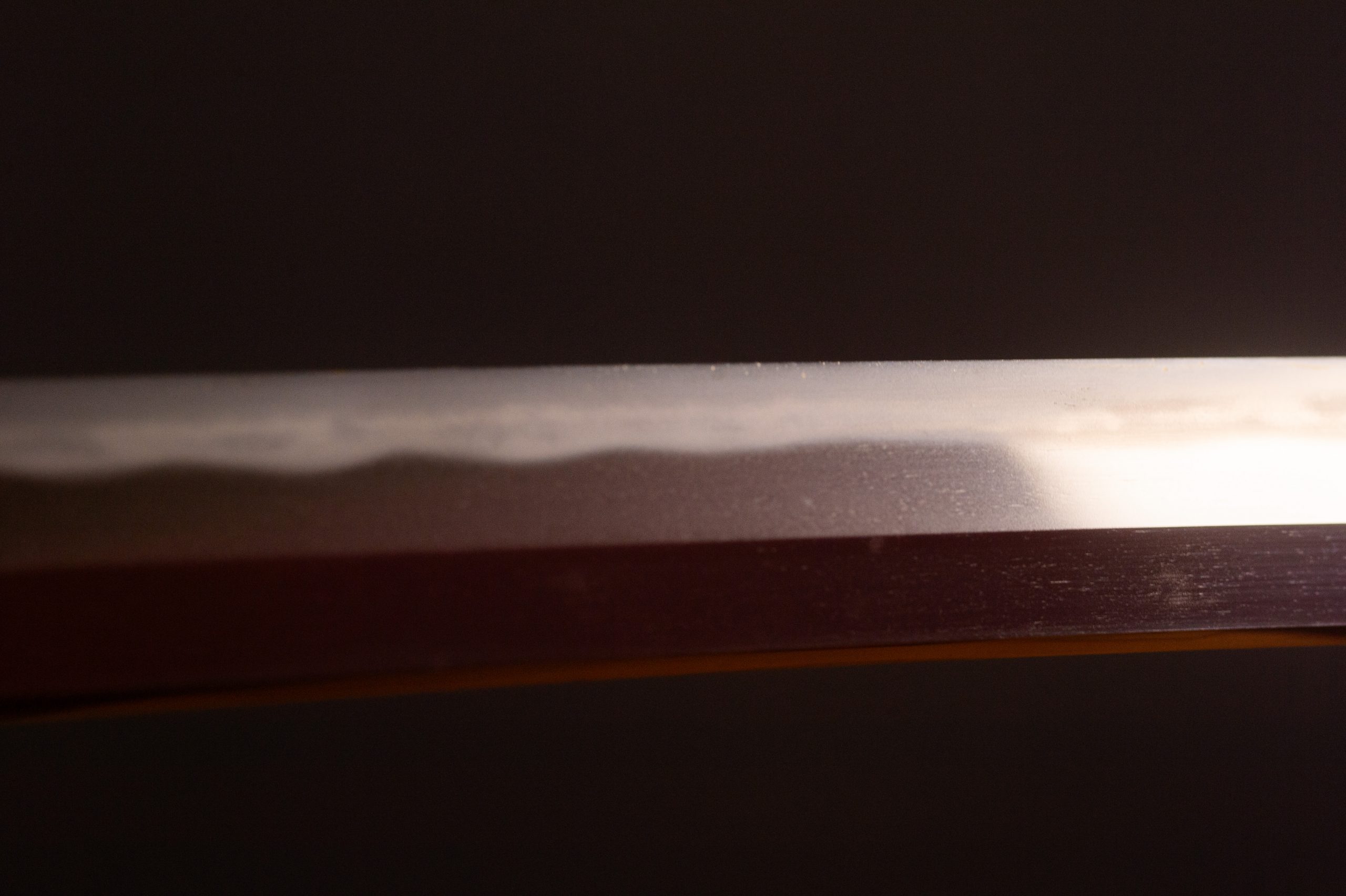
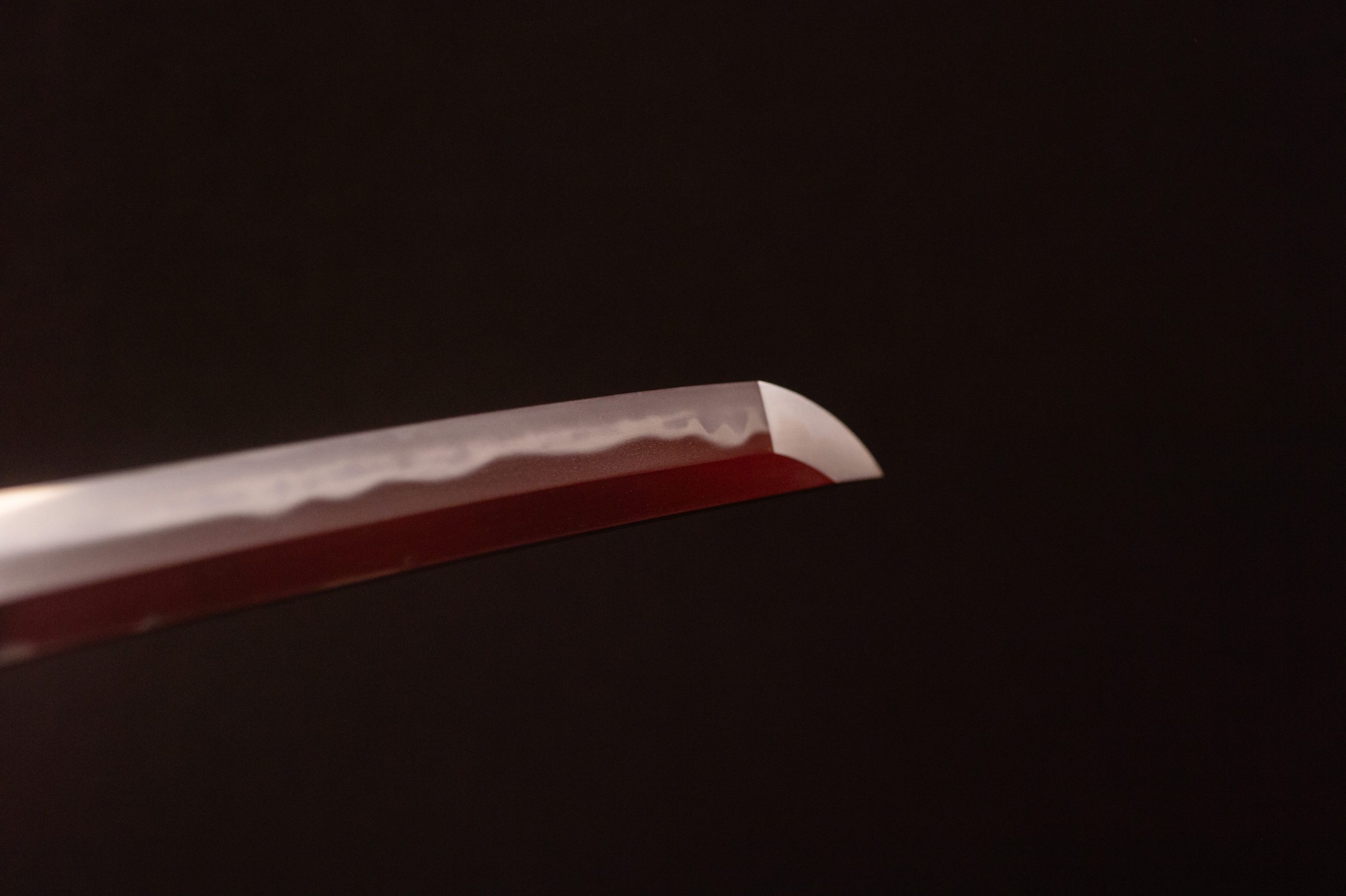
A shinogi-zukuri blade with clean lines and an elegant, muscular profile, featuring a highly legible temper along the edge. The hamon unfolds in a gently undulating notare rhythm with natural variation, showing a continuous, bright nioiguchi that animates the blade even under subdued light. The geometry reads honestly from the machi through to the kissaki, prioritizing visual presence and function.
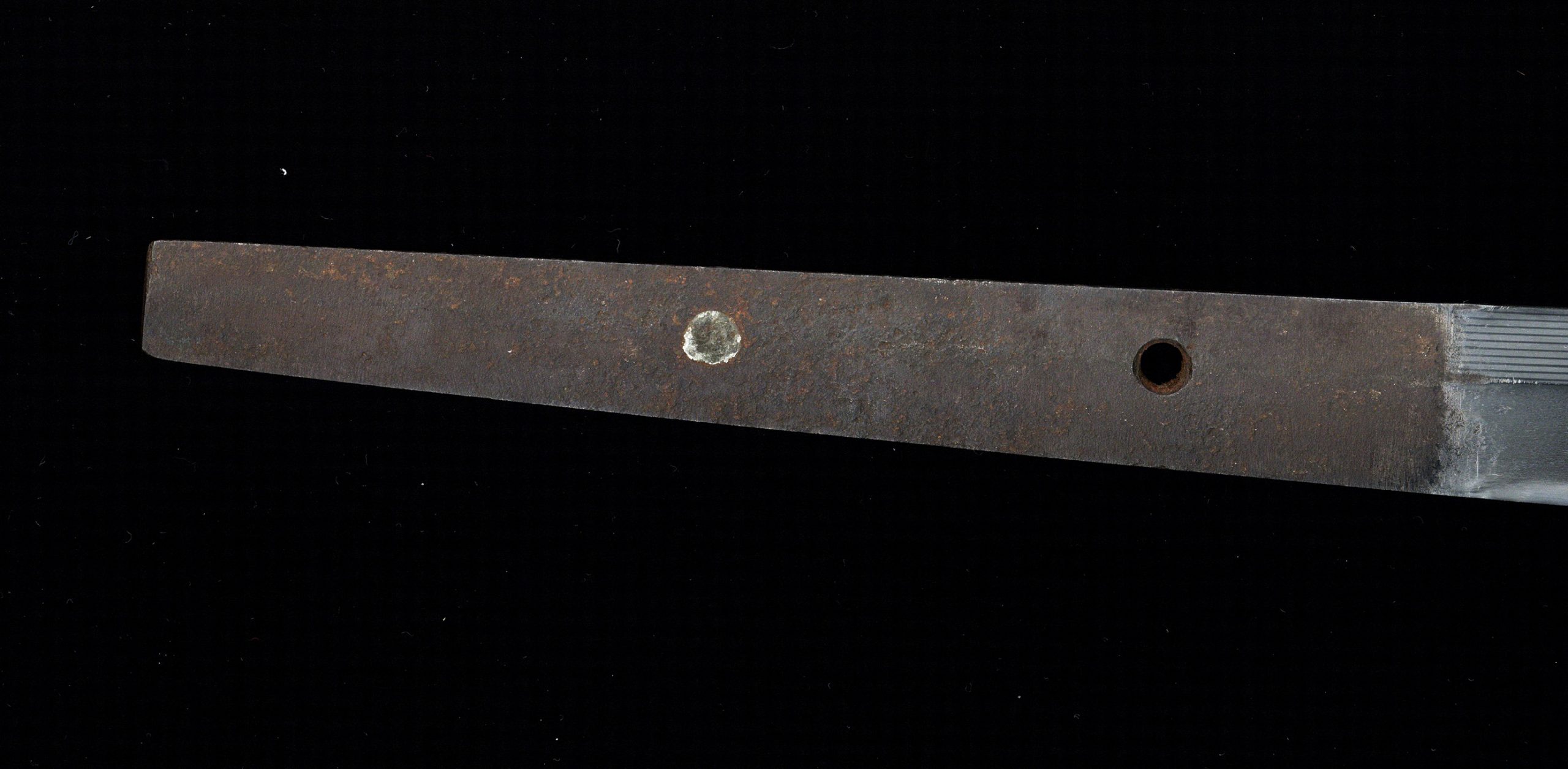
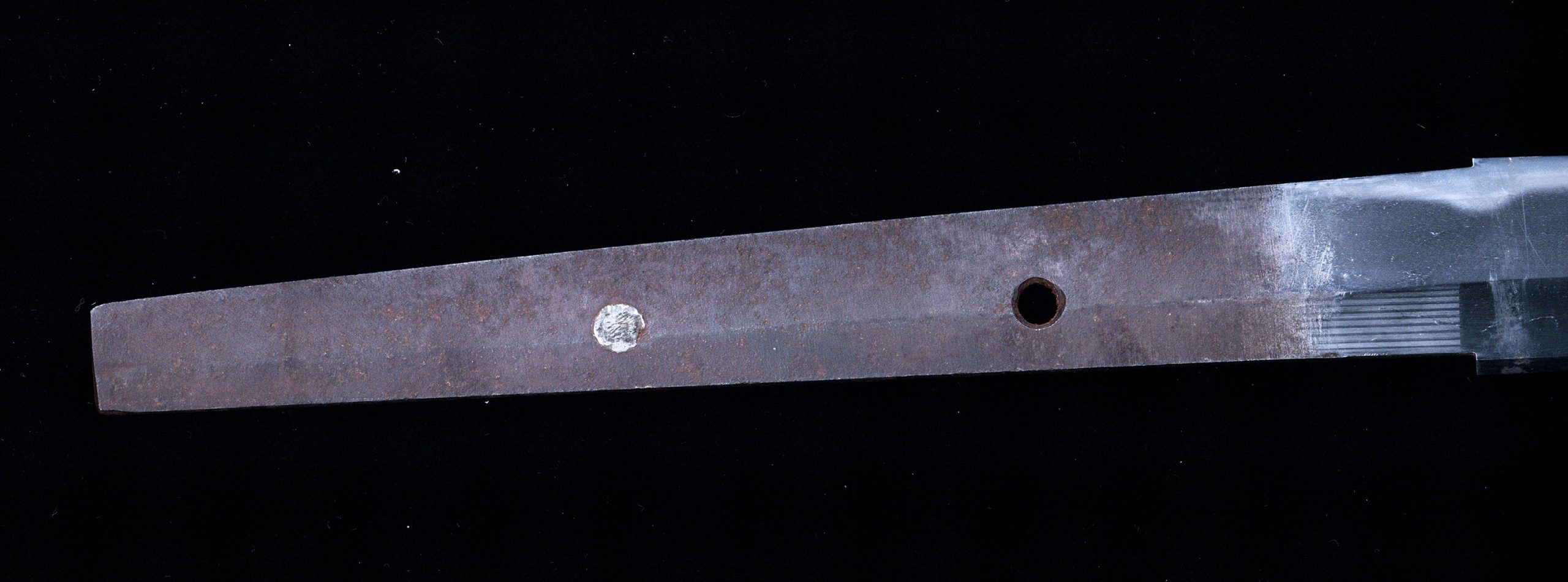
The nakago carries an aged patina and shows two mekugi-ana, one clearly plugged (visible as an insert), a direct record of mounting adjustments within the sword’s working life.
Koshirae (mounts) and aesthetic coherence
A complete mounting of sober, decisive taste, built around a disciplined dialogue of black lacquer and earthy tones.
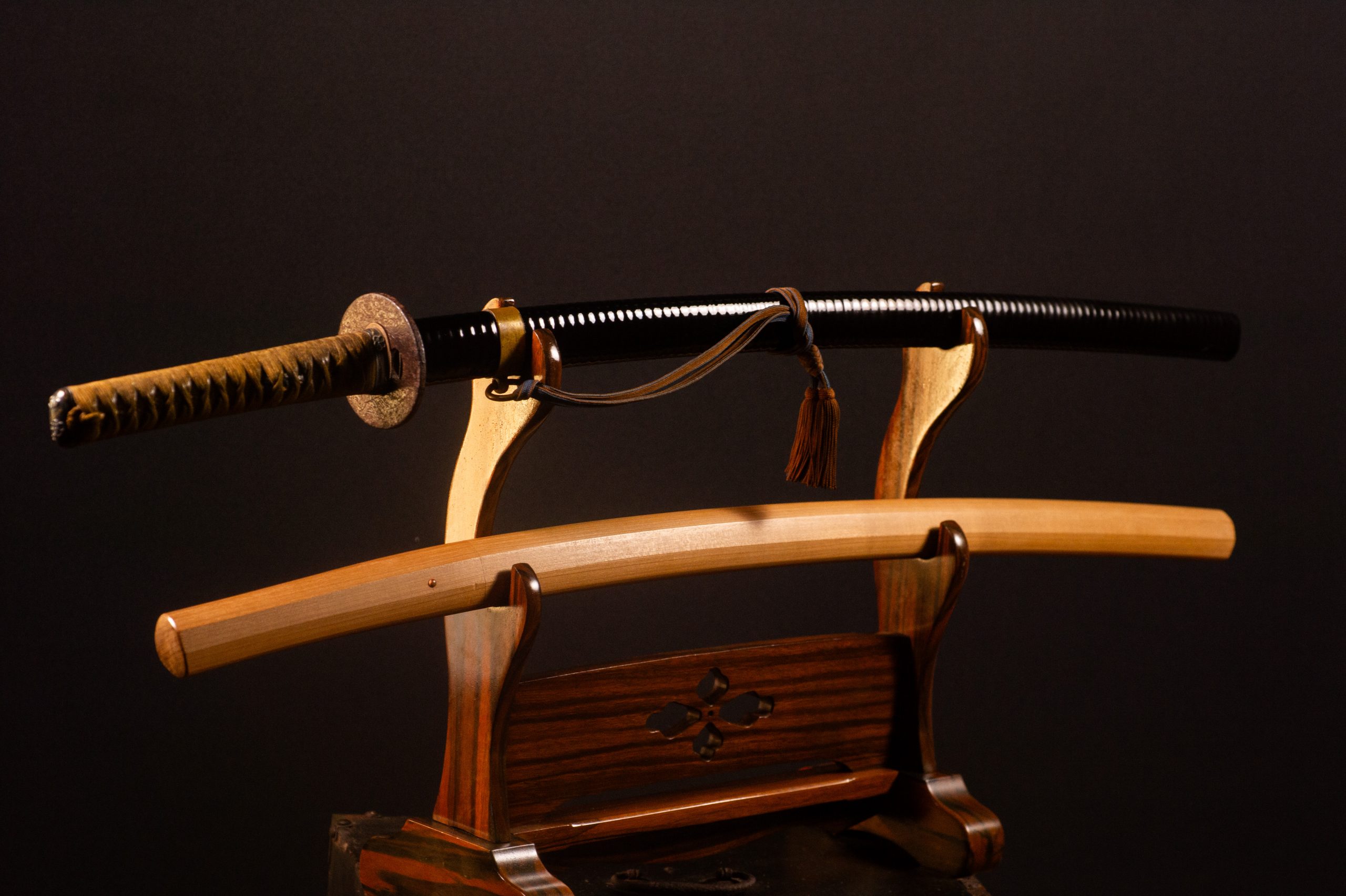
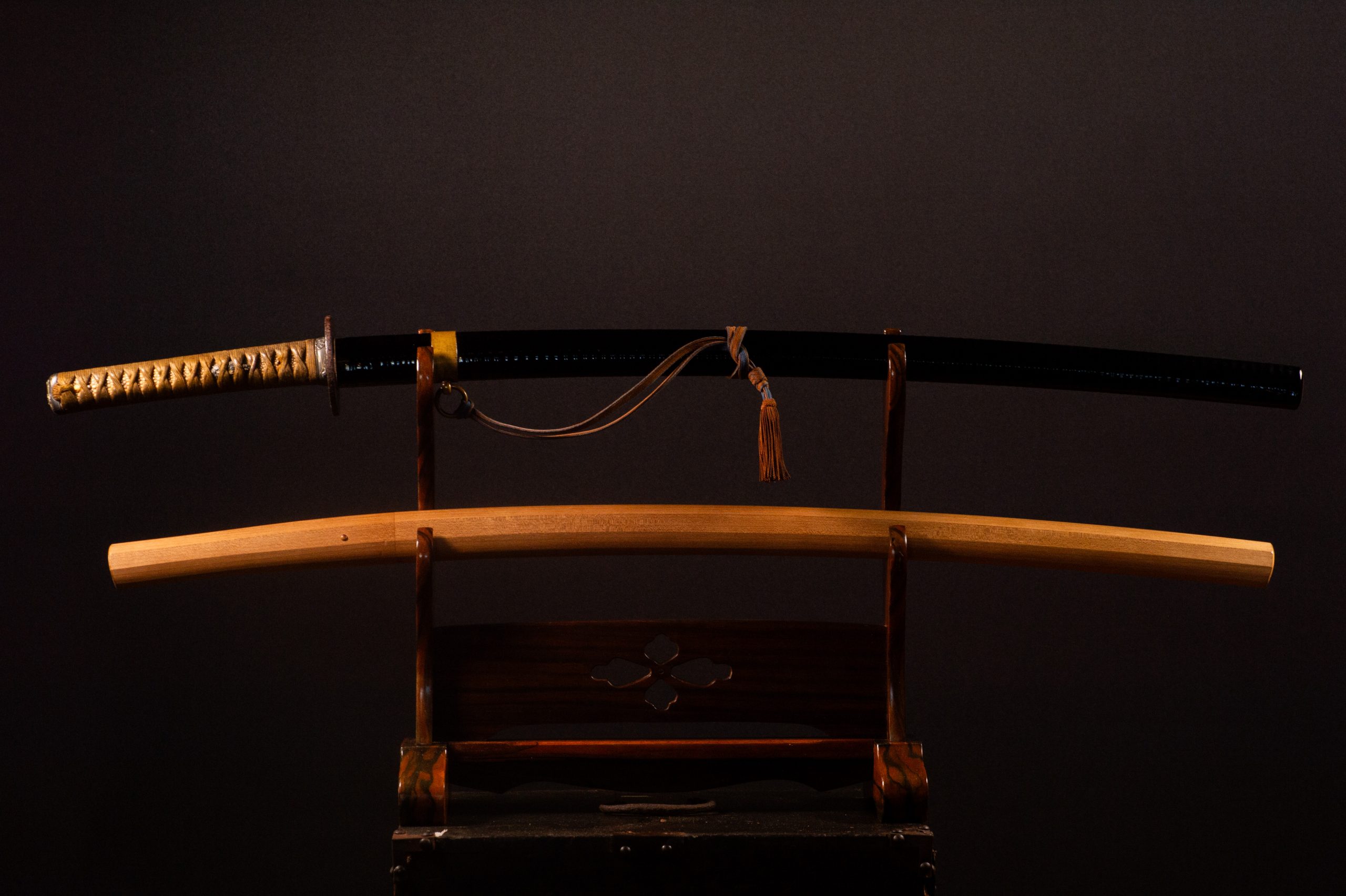
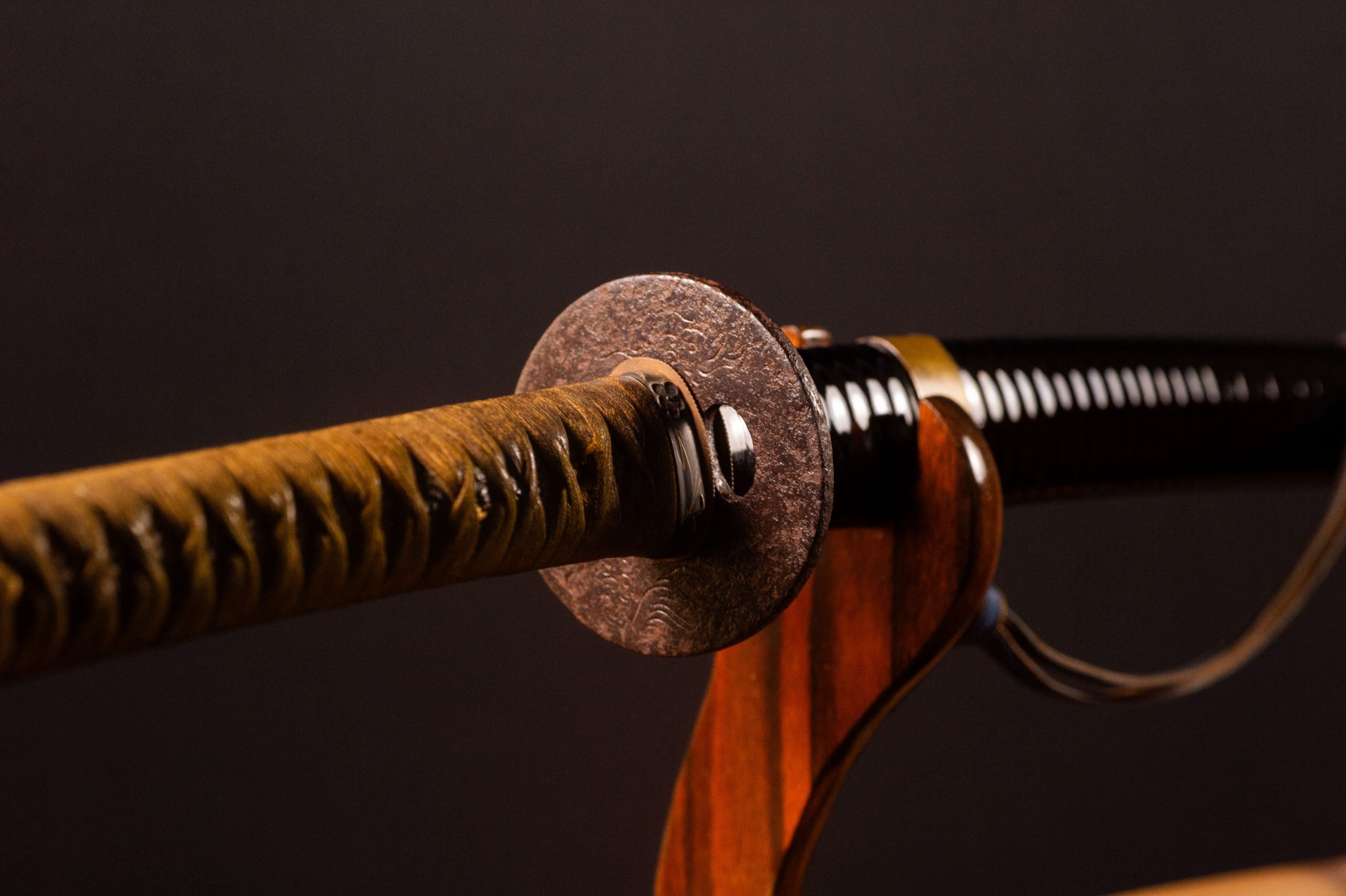
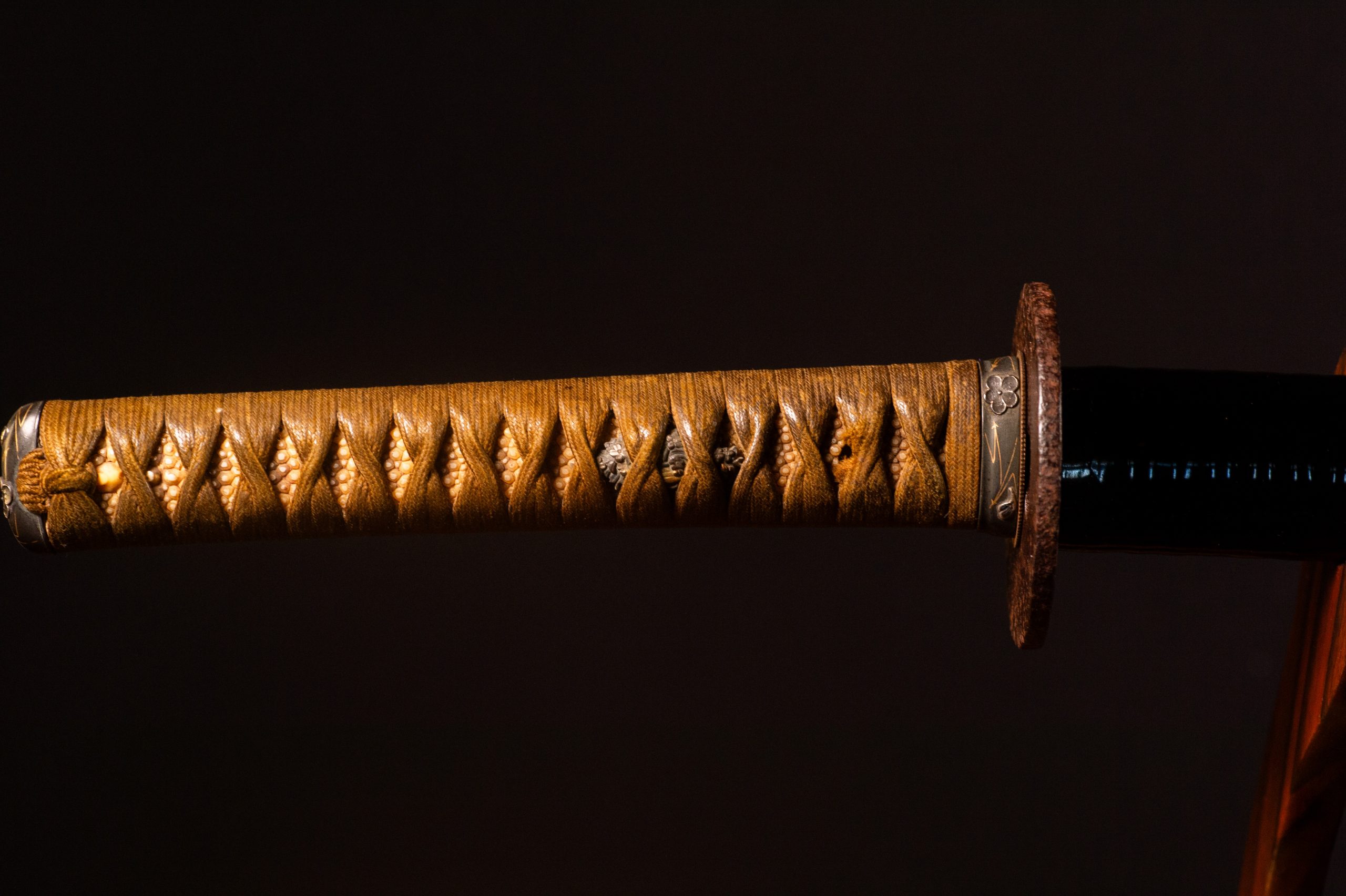
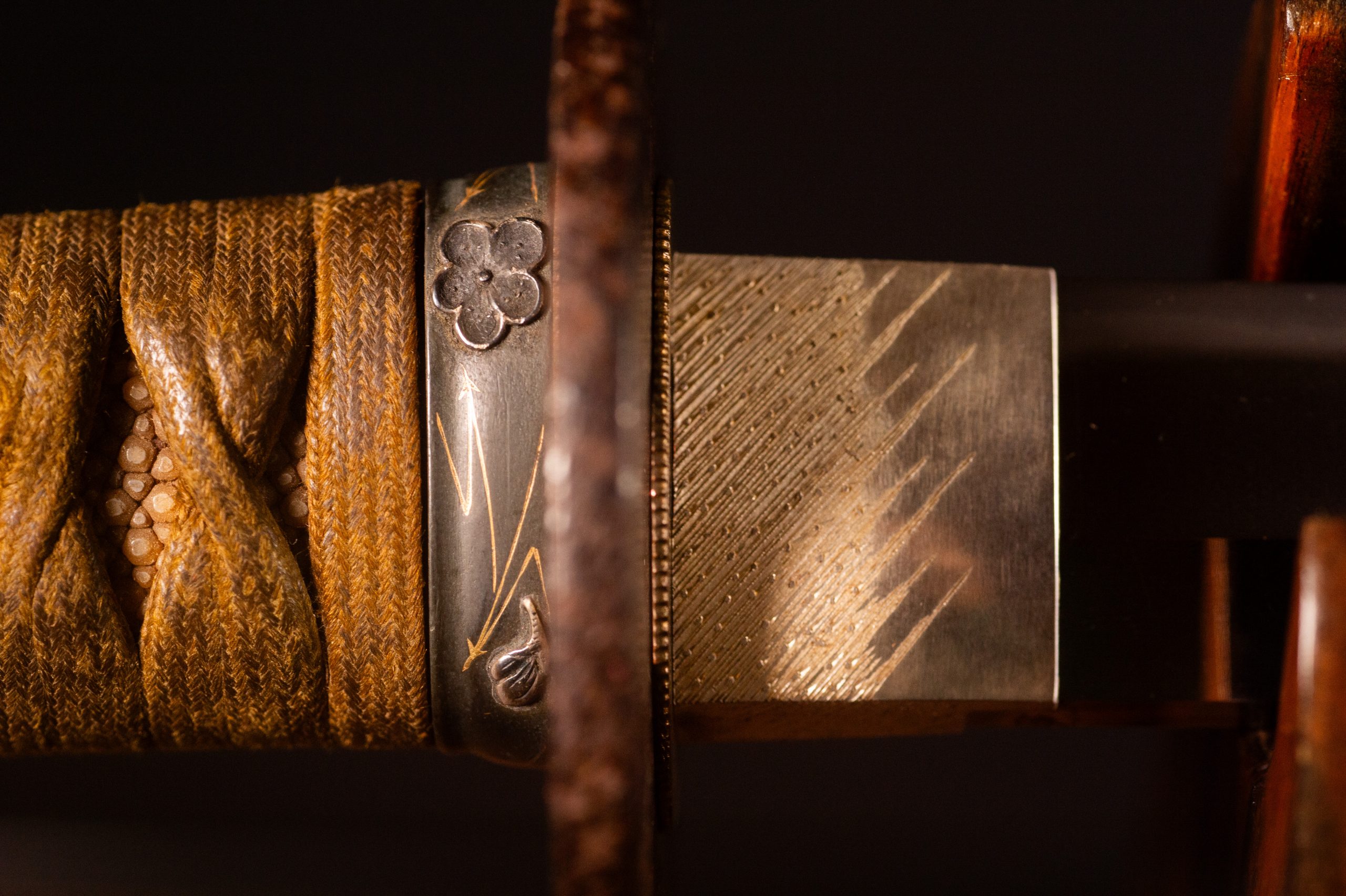
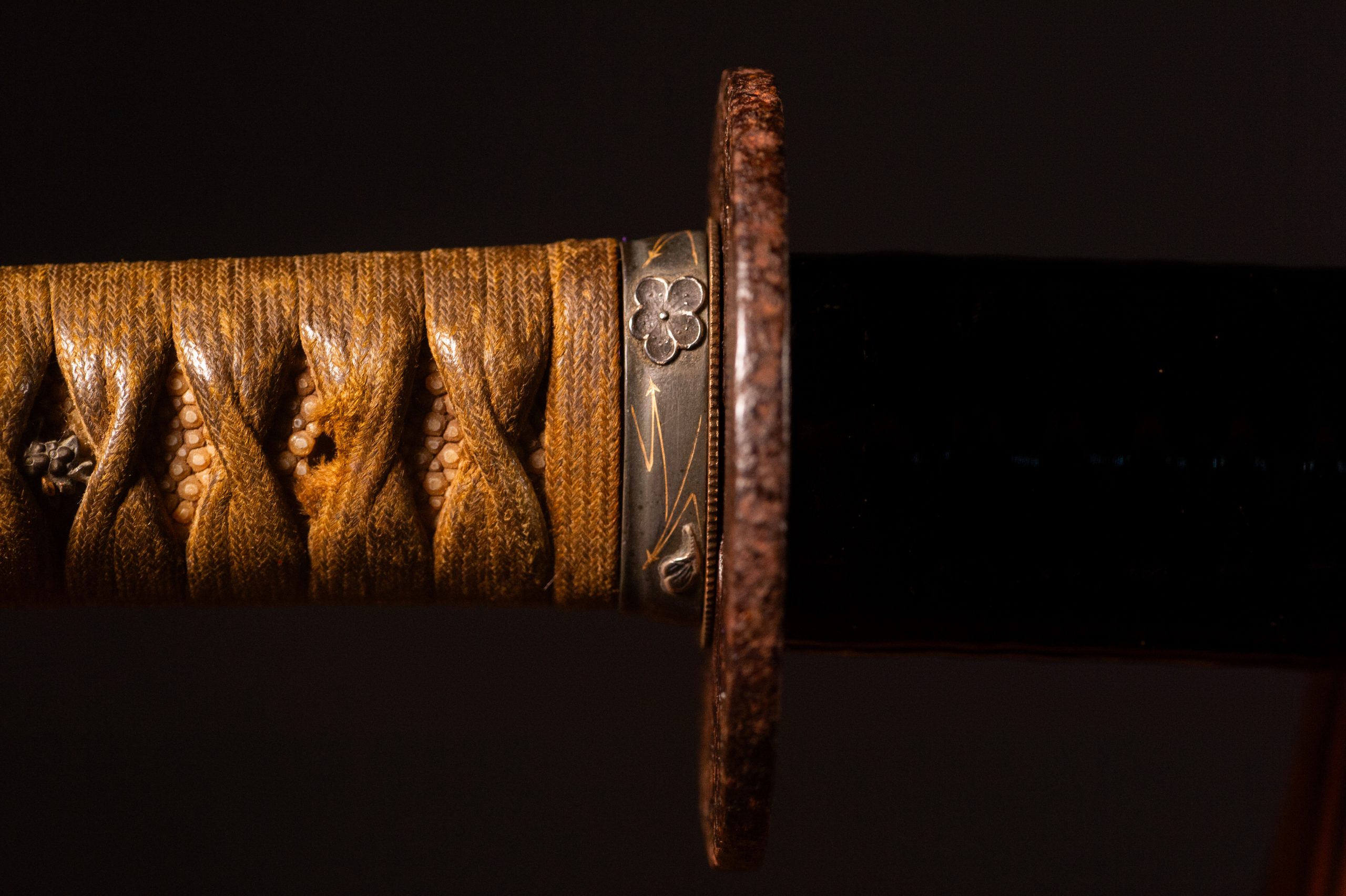
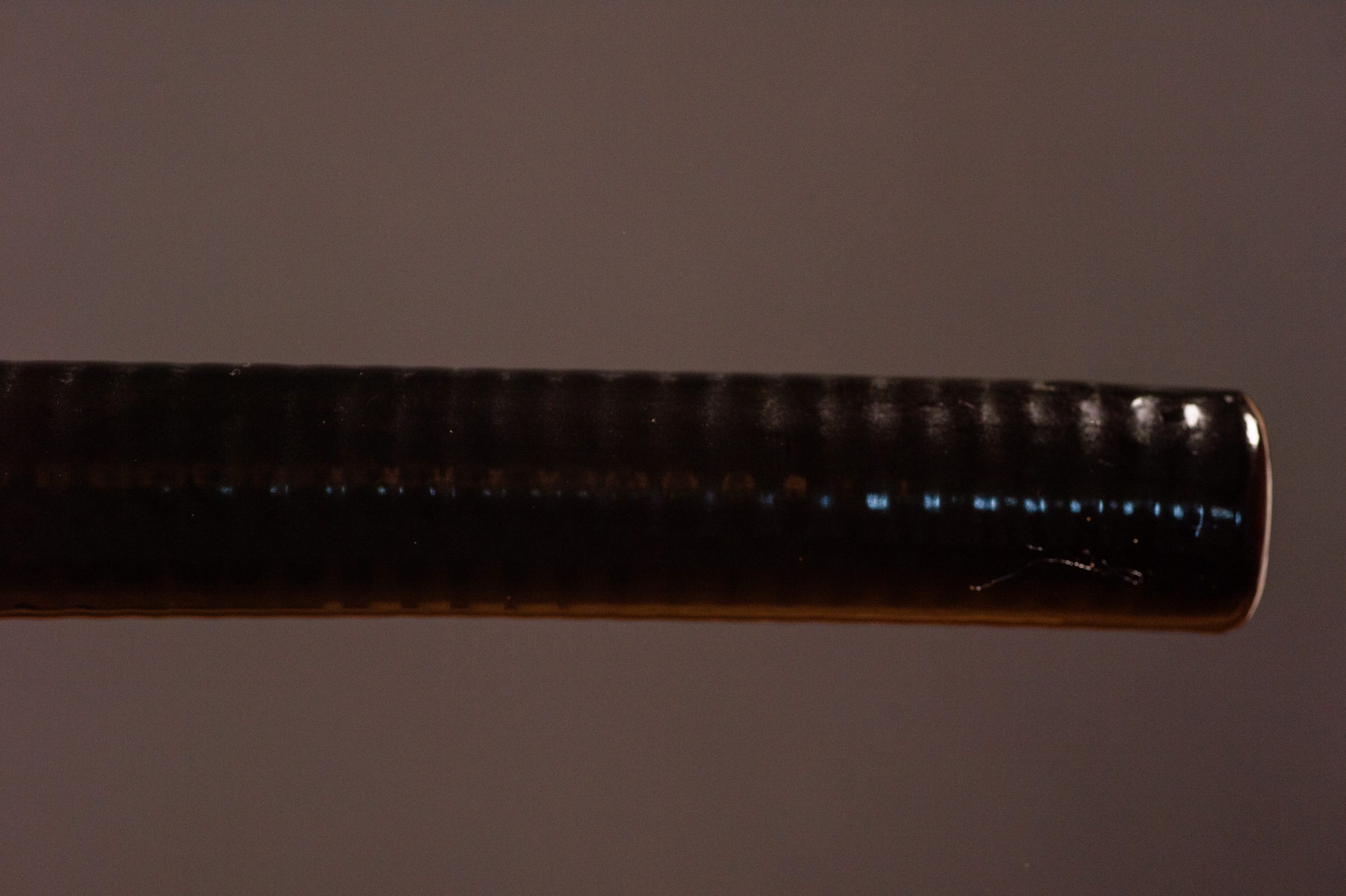
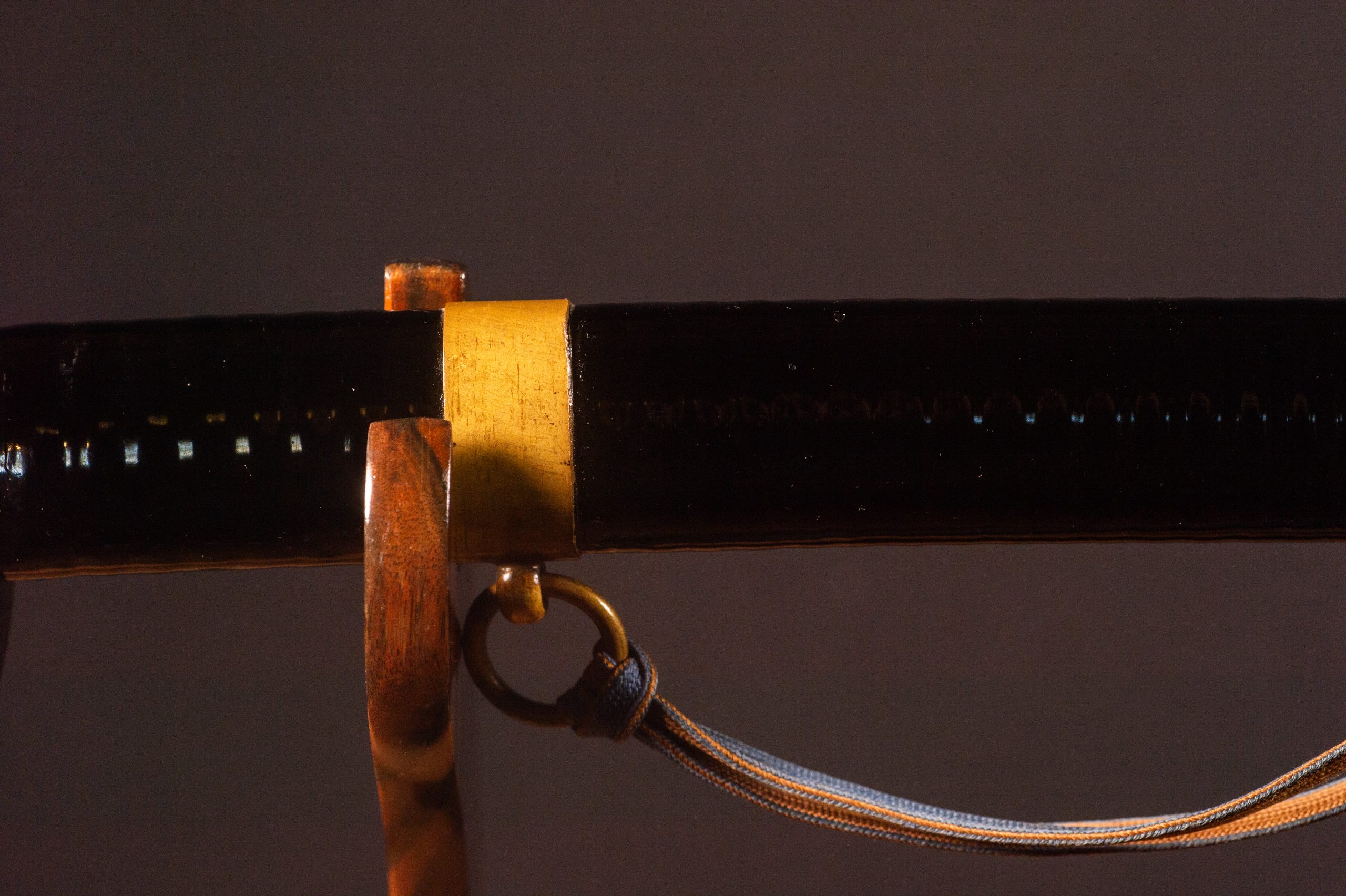
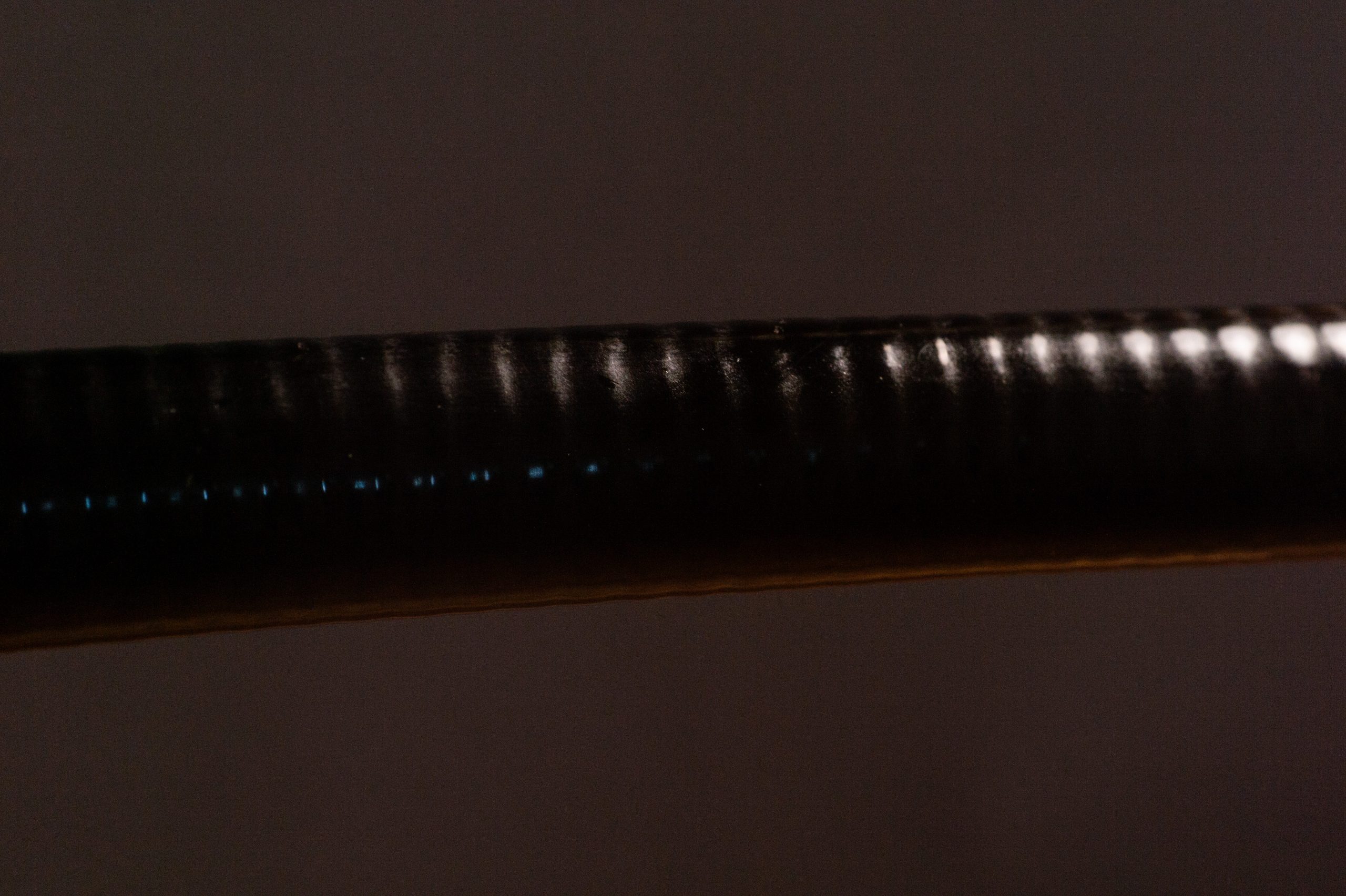
The saya in black lacquer presents a strongly ribbed texture, with a practical carrying setup using a metal ring and a braided sageo in blue and ochre tones, finished with a tassel. The round iron tsuba provides an austere center of gravity, with a worked surface and strong character.
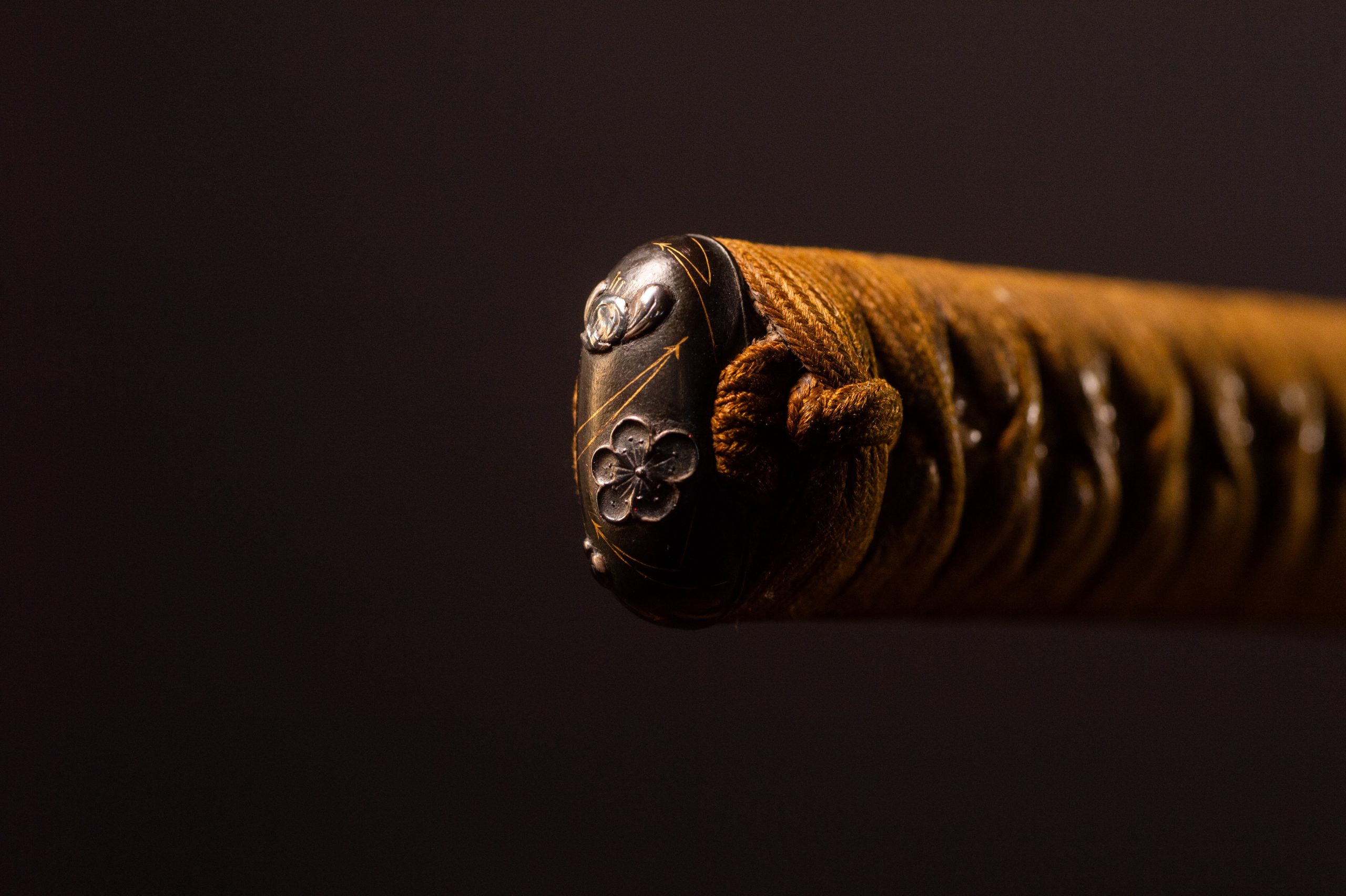
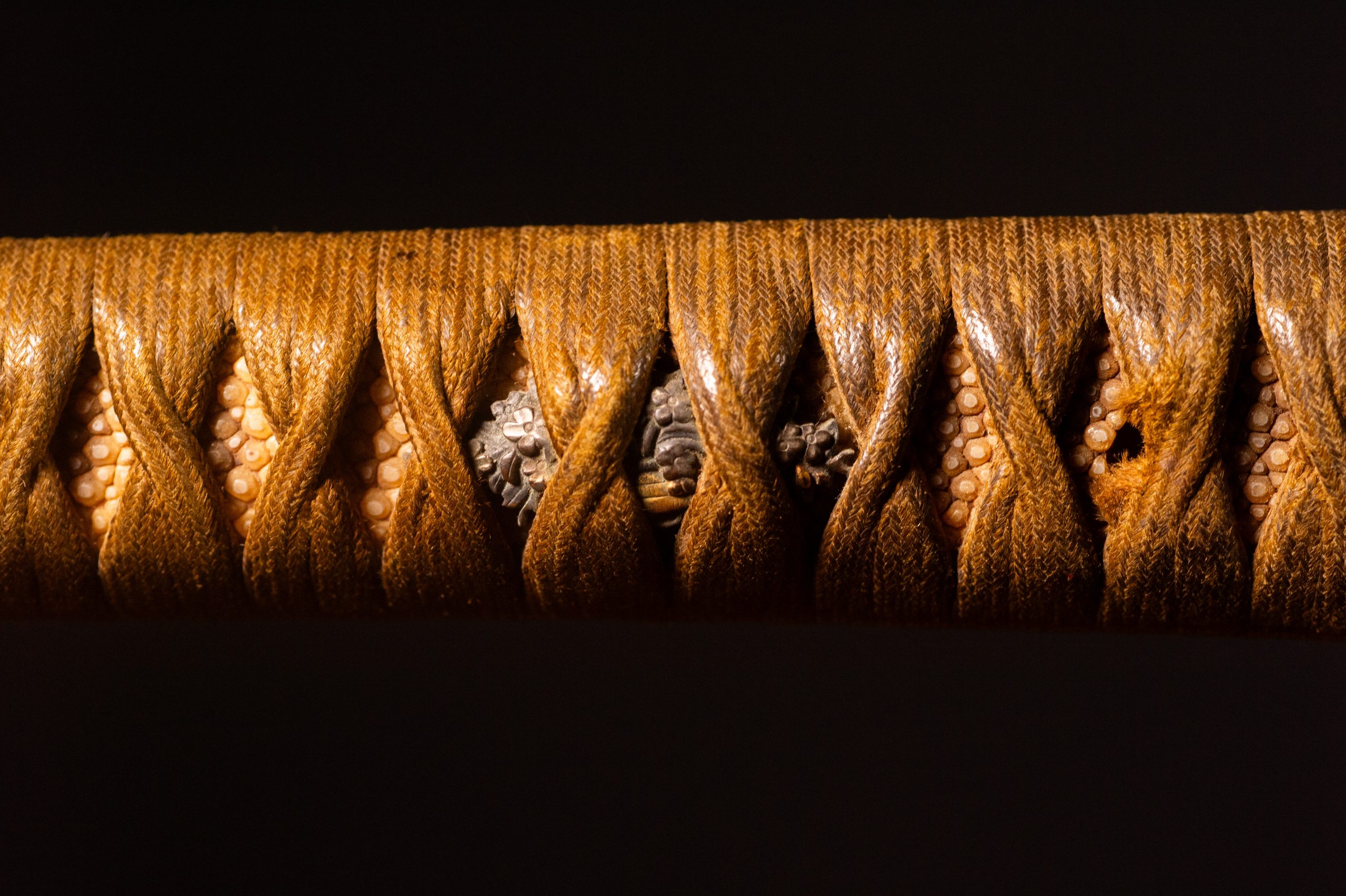
The tsuka combines high-node white samegawa with an ochre tsukamaki (leather-like feel), generous in volume and convincing in hand. The dark-finished fuchi-kashira integrate fine gilt linework and a raised floral emblem, reinforcing a unified visual language. The menuki add controlled figurative contrast—flower and beast (botan and shishi)—bringing depth without breaking the ensemble’s discipline.
Overall, the koshirae elevates the sword: it is not an accessory, but the proper way to experience a katana as a complete object.
Additional pieces
A light-wood shirasaya is included for preservation and storage—an ideal companion when a full koshirae is ready to be enjoyed and a sober resting scabbard is needed for protection.
Technical sheet
-
Type: Katana (刀)
-
Length (nagasa): 64.6 cm
-
Curvature (sori): 1.5 cm
-
Mei: Mumei (無銘)
-
Mekugi-ana: 2 (one visible plug)
-
Mounts: complete koshirae with ribbed black lacquer saya, tsuka with white samegawa and ochre wrap, round iron tsuba, floral-motif fuchi-kashira with gilt lines, botan/shishi menuki, braided sageo with tassel
-


