
Description
ITEM DESCRIPTION:
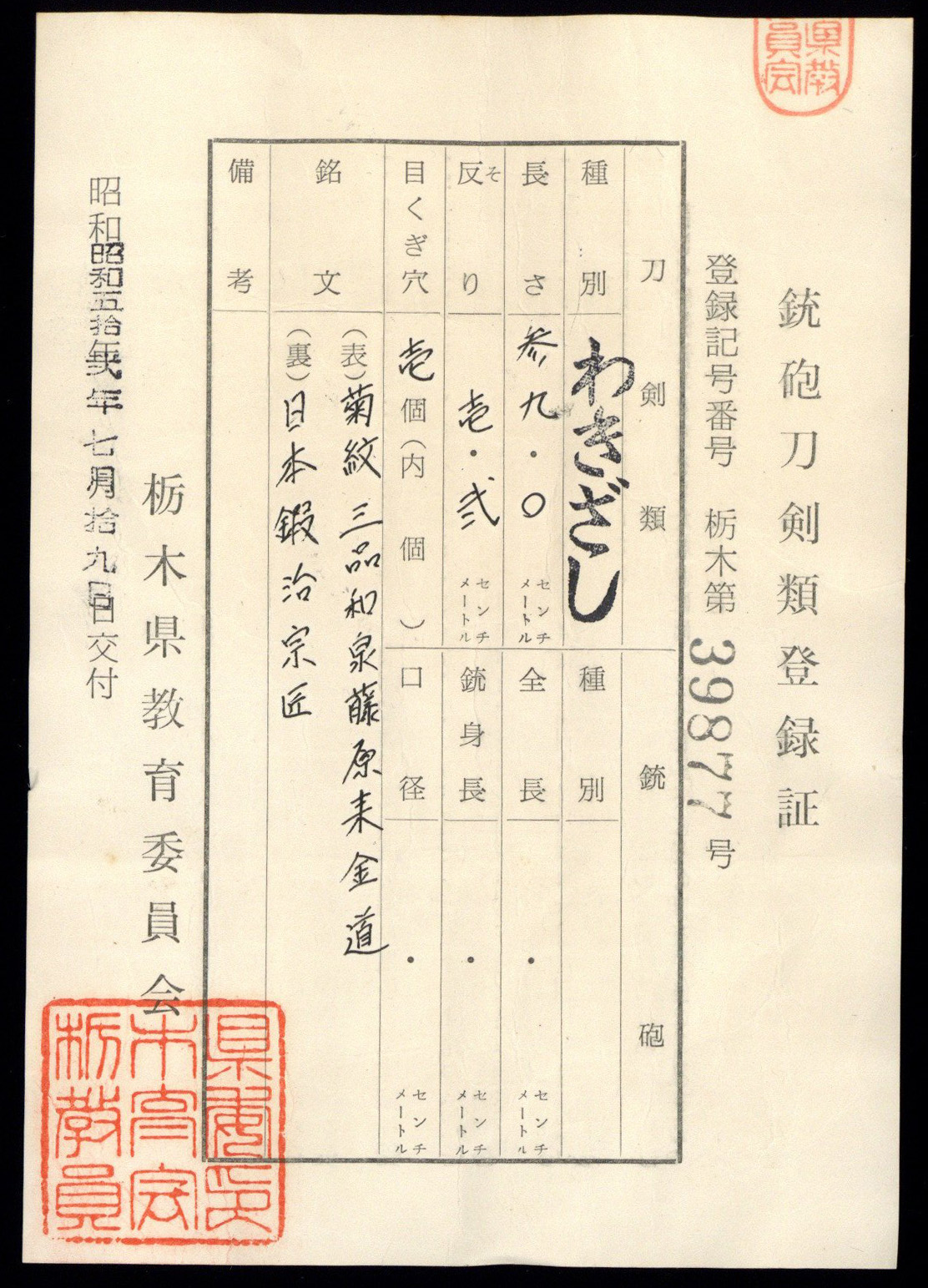
Comes with kimono or cotton bag. Comes with certificate of supein Nihonto. Comes with copy of Tokosusho.
WAKIZASHI – Mishina Izumi no Kami Fujiwara Kanamichi
Kiku-mon · Aristocratic Lineage · Edo Period · 49.0 cm Blade · Complete Mounting
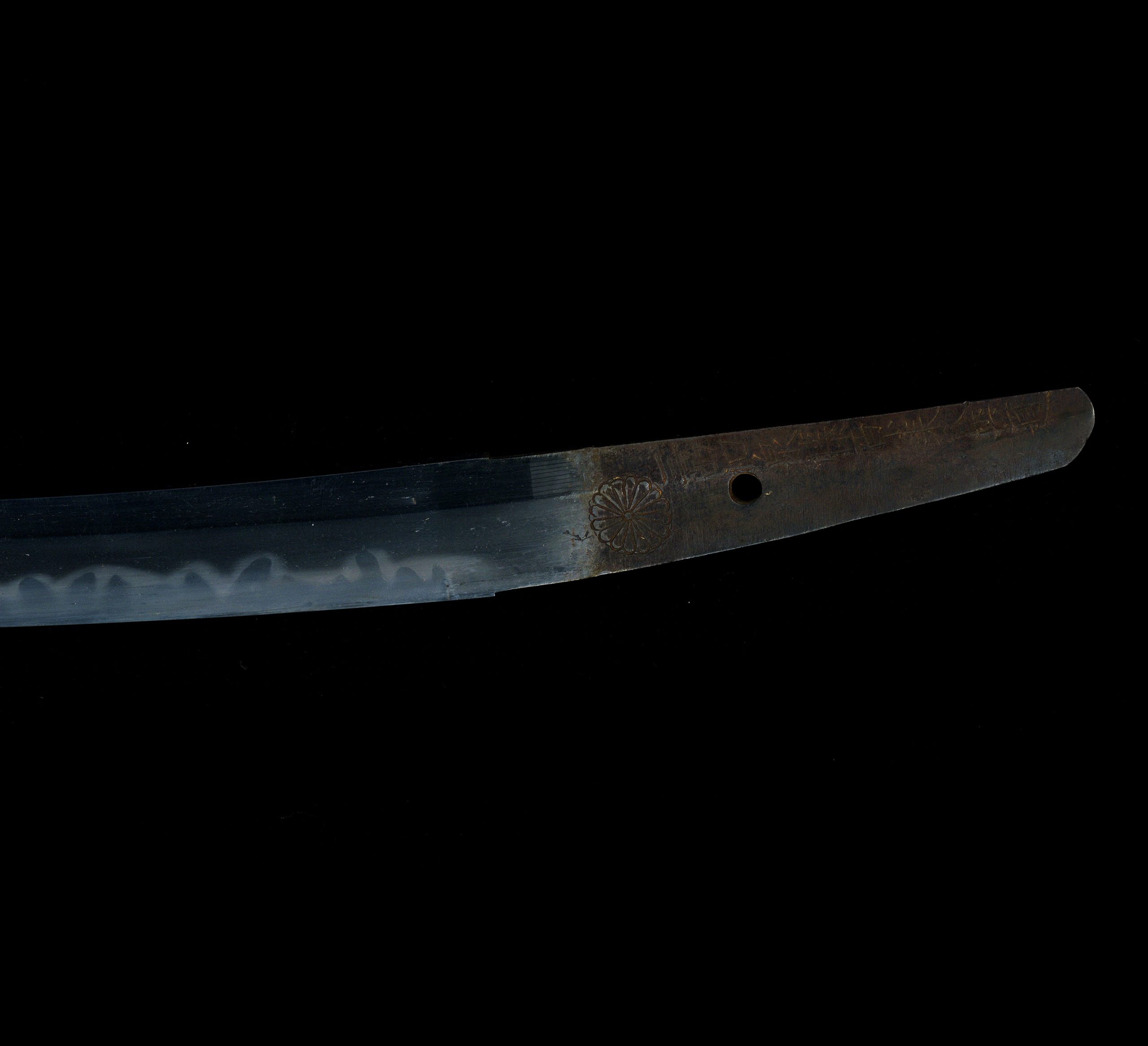
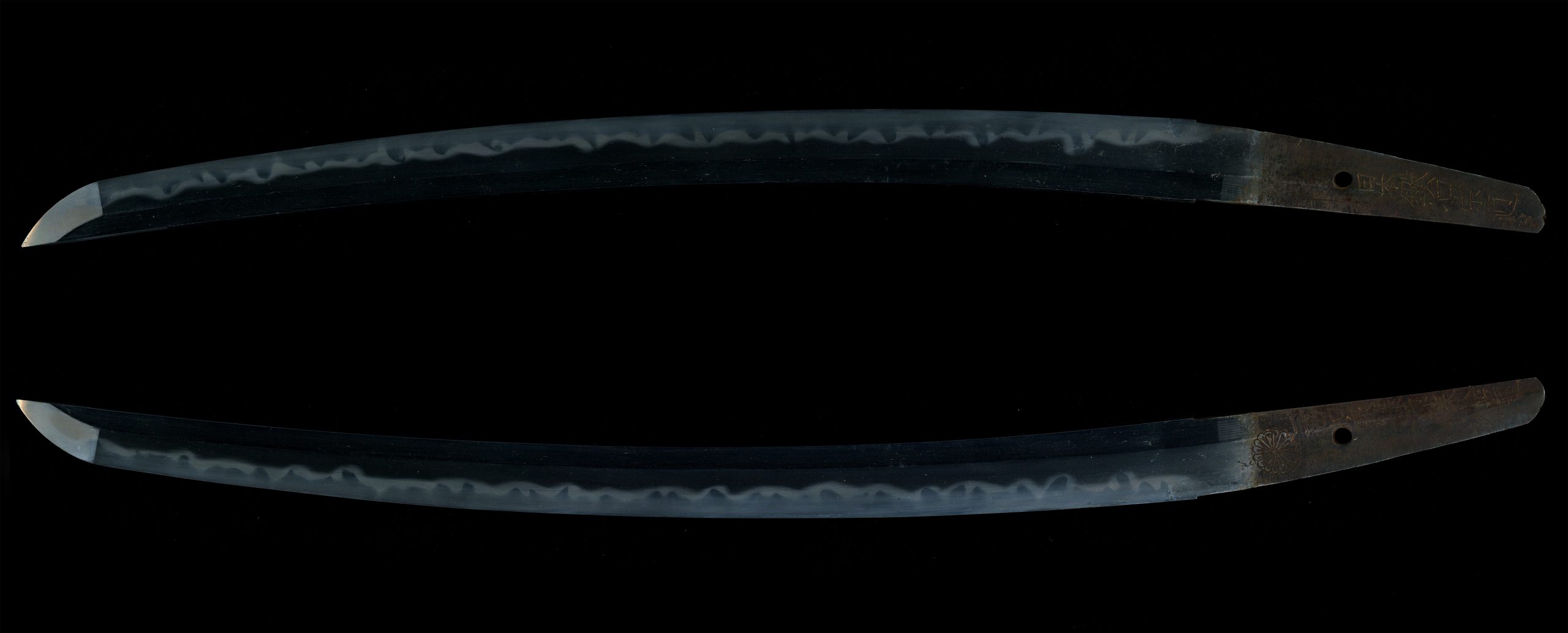
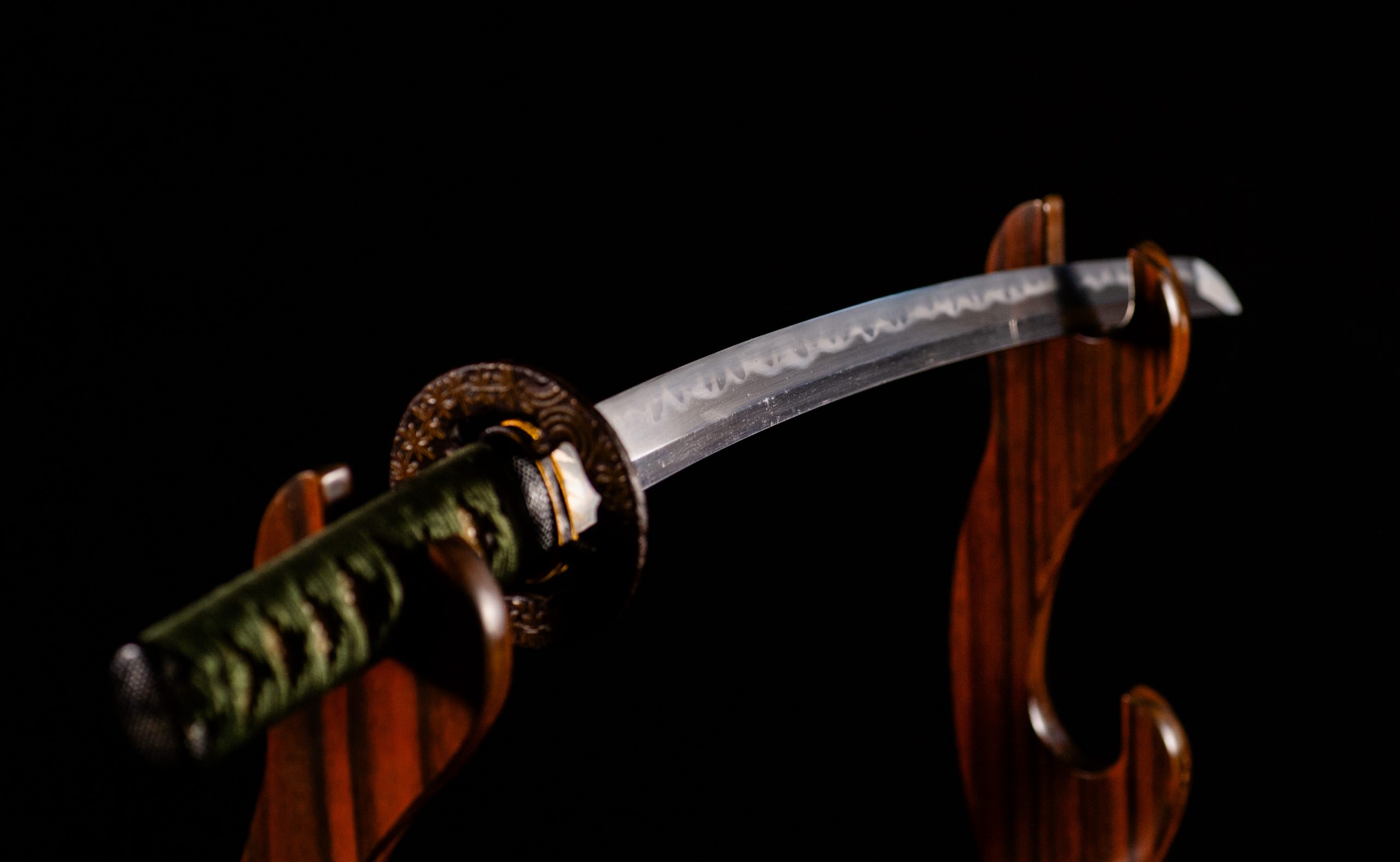
This wakizashi brings together every element expected from a prestigious piece: a blade attributed to Mishina Izumi no Kami Fujiwara Kanamichi, a kiku-mon engraved on the nakago indicating elevated status, a refined mounting, and a hamon full of activity.
It is a blade originally intended for someone of significance.
1. Meaning of the Kiku-mon
The chrysanthemum is one of Japan’s most powerful symbols.
The 16-petal form is the exclusive emblem of the Imperial Household.
While the Mishina school used an authorized, non-imperial variant, it still represents privilege and elevated status.
Its presence on a nakago signals that this blade was not produced for an ordinary samurai, but for a person with influence, resources, or direct ties to official circles.
2. Honorifics: Fujiwara & Izumi no Kami
Fujiwara
An aristocratic honorific (kabane), not a family name.
Granted only to distinguished artisans, connecting them symbolically to one of Japan’s most powerful ancient clans.
It communicates_rank and prestige_.
Izumi no Kami
A court title meaning “Governor of Izumi,” bestowed on master craftsmen acknowledged by official authority.
It marks the smith as part of the elite of Edo-period artisans.
The combination “Izumi no Kami Fujiwara” is therefore an unmistakable indicator of exceptional status.
3. Historical Interpretation
With:
The kiku-mon,
The Fujiwara honorific,
The Izumi no Kami court title,
The craftsmanship of Kanamichi,
And a refined Edo mounting,
It becomes clear this wakizashi was likely commissioned for a high-ranking samurai or government official, not for general use.
4. Blade (Technical Description)
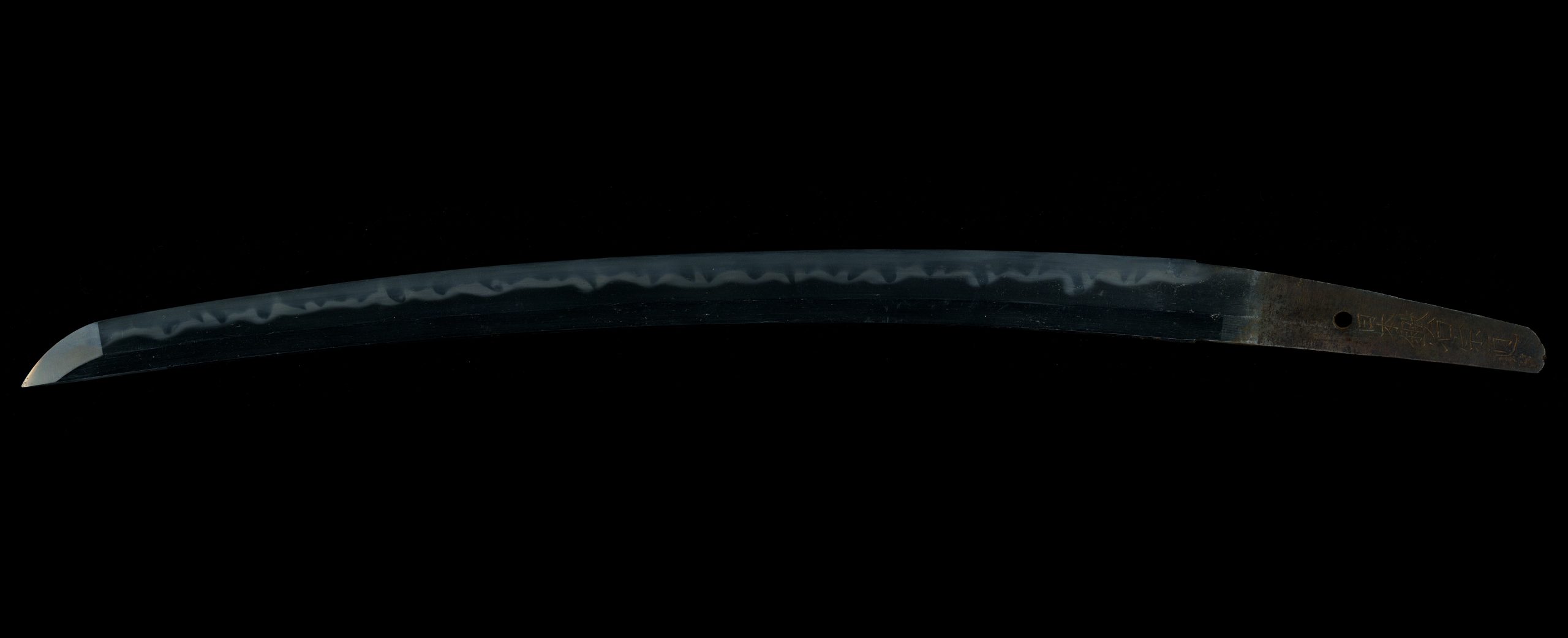
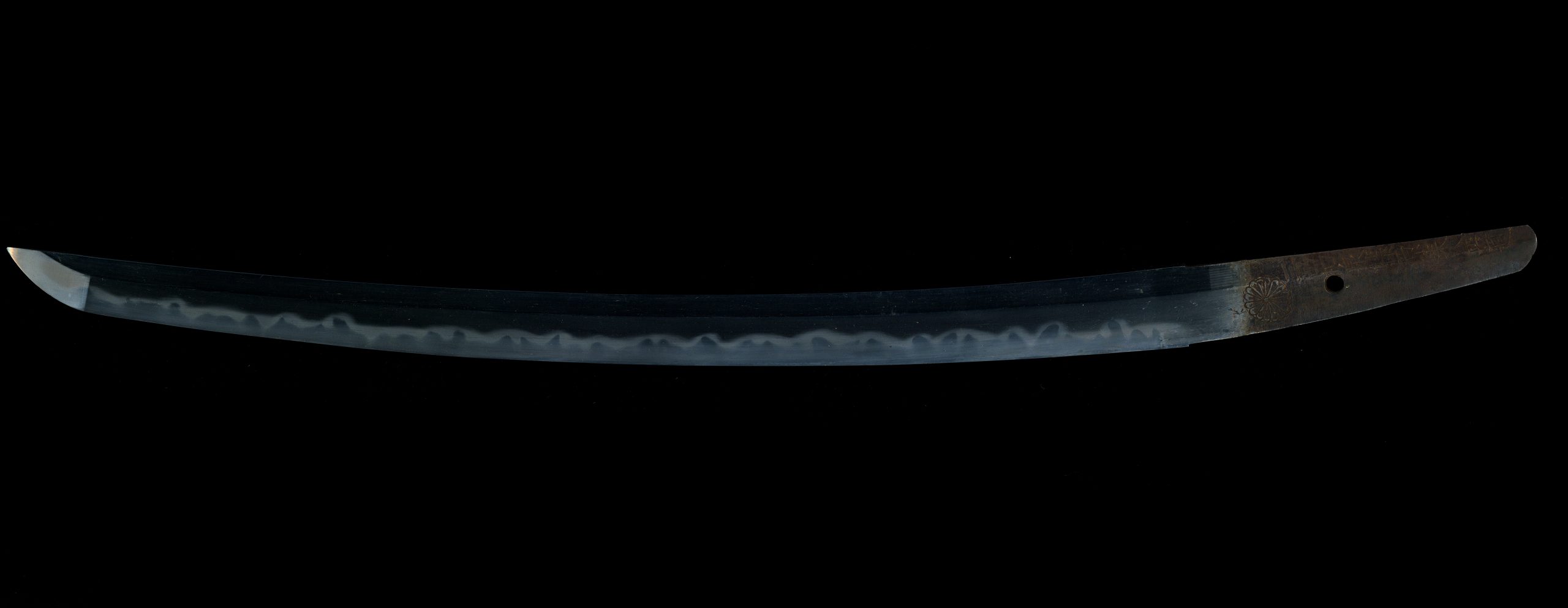
Length: 49.0 cm
Style: Shinogizukuri
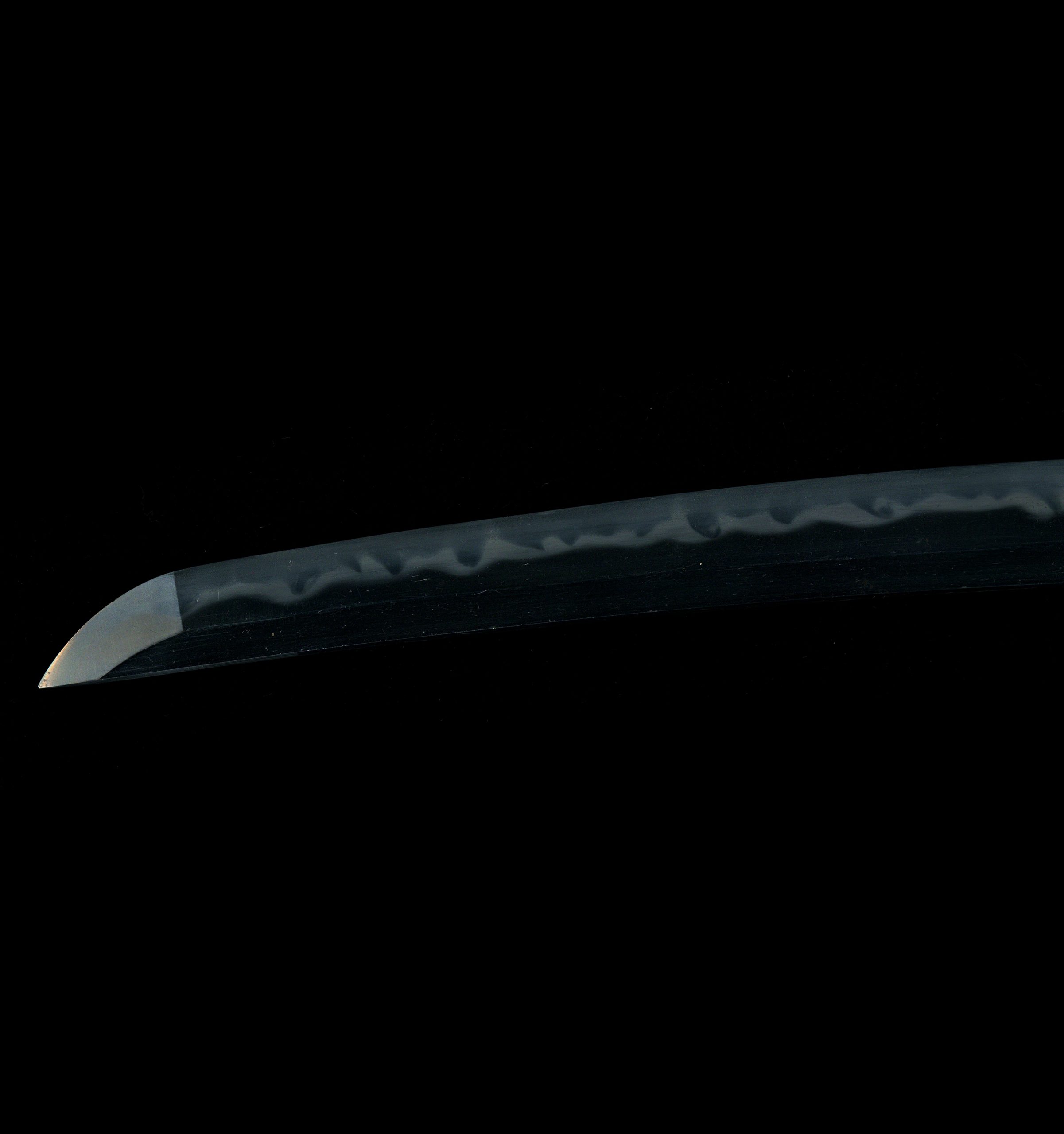
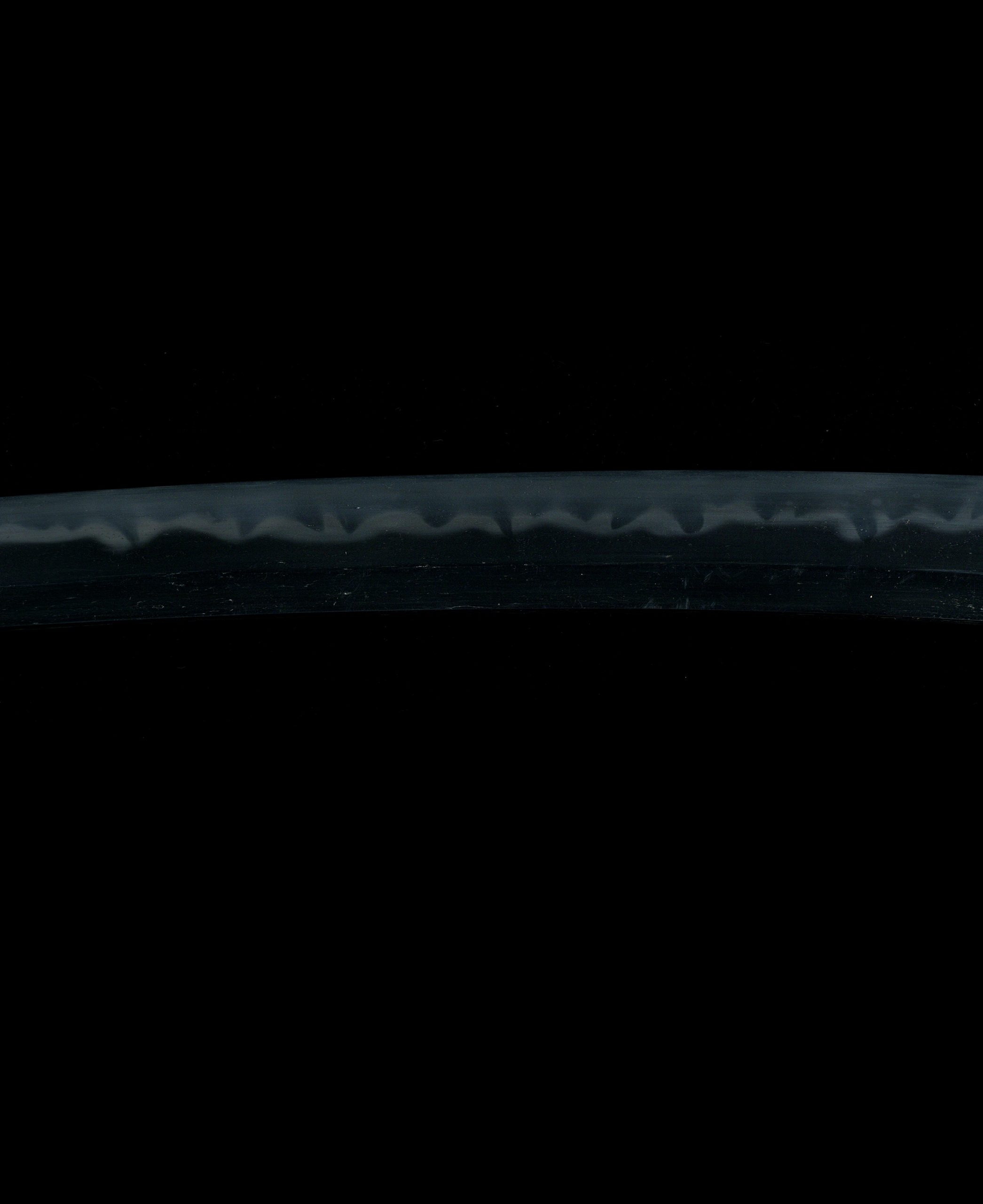
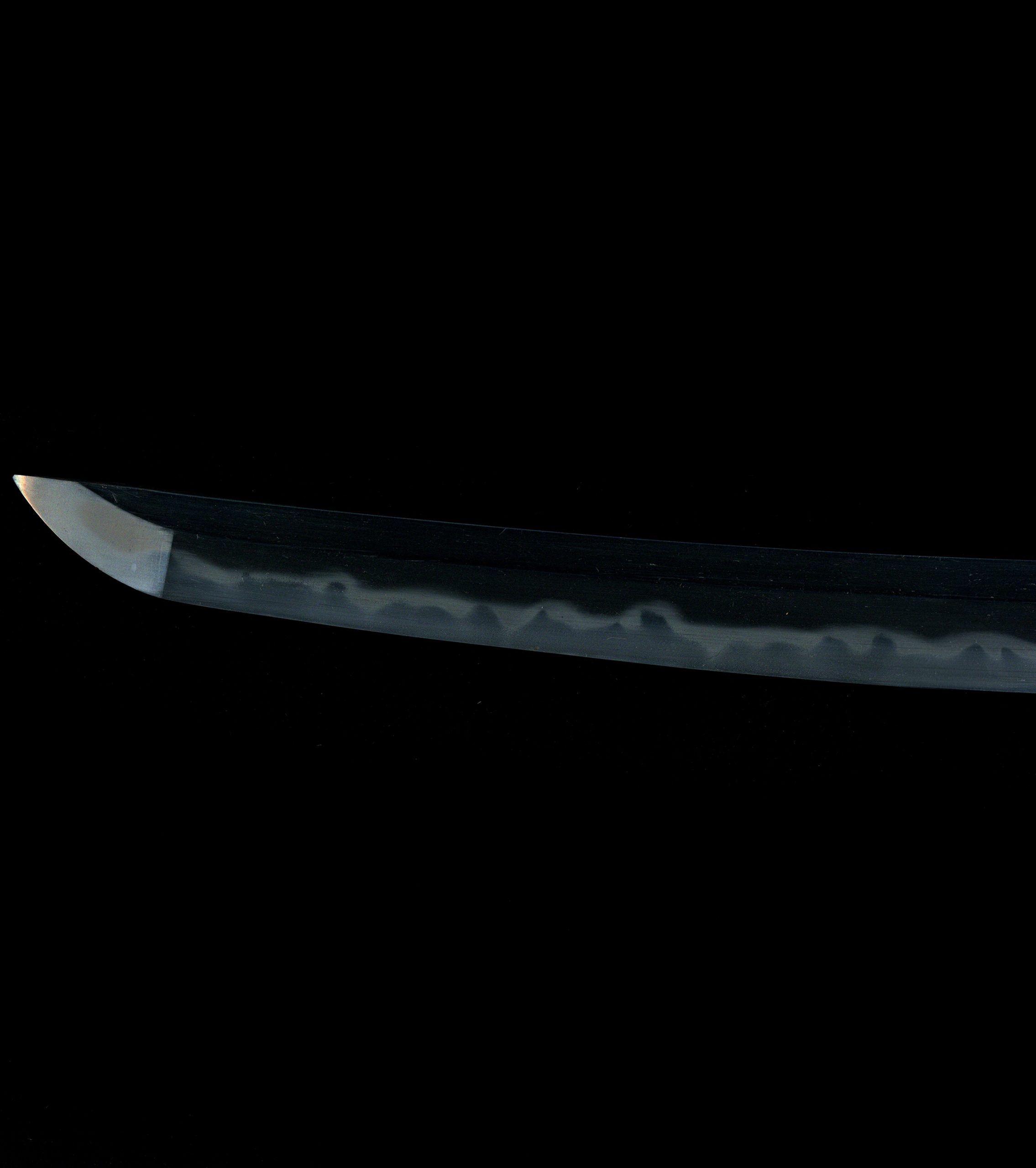
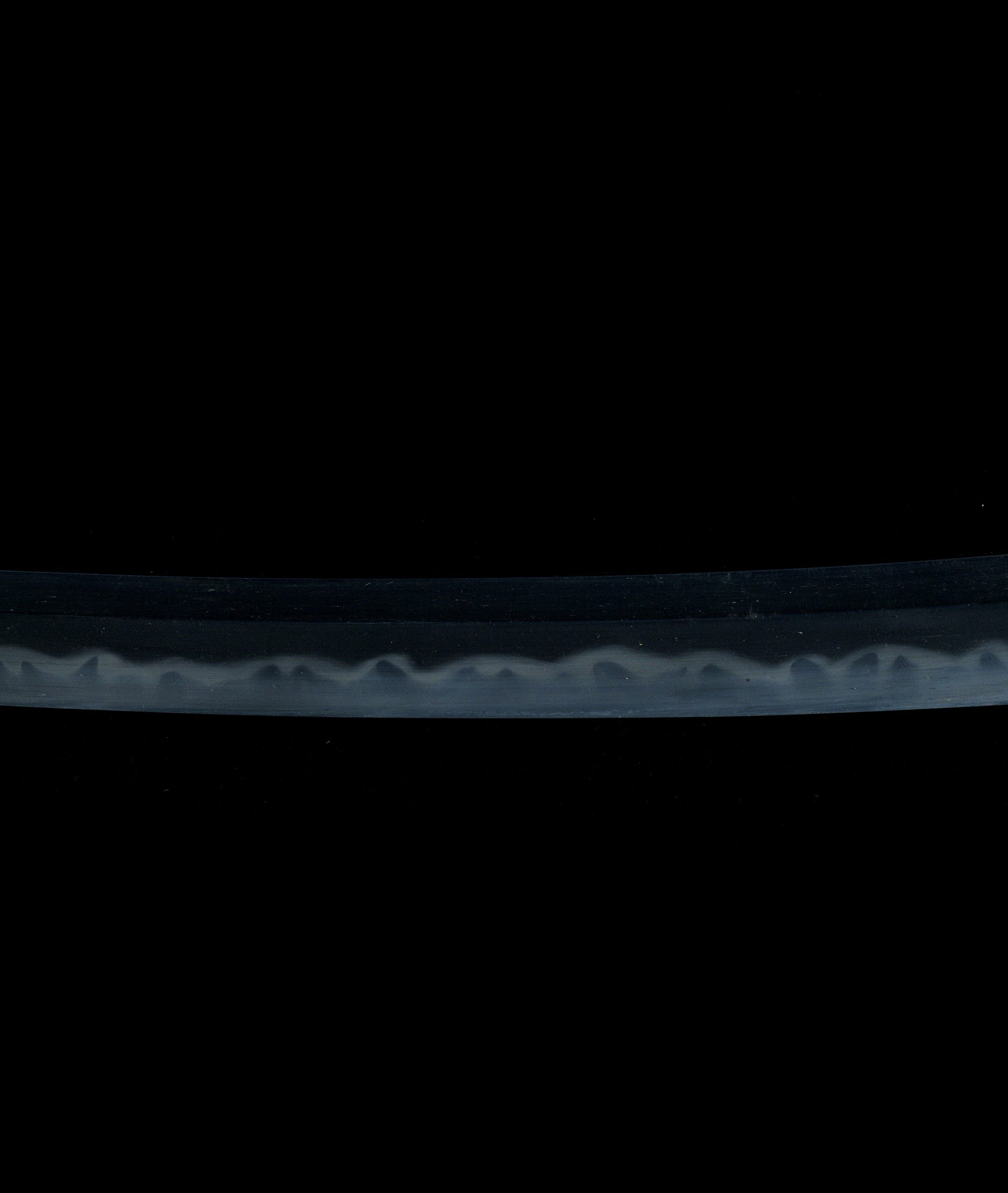
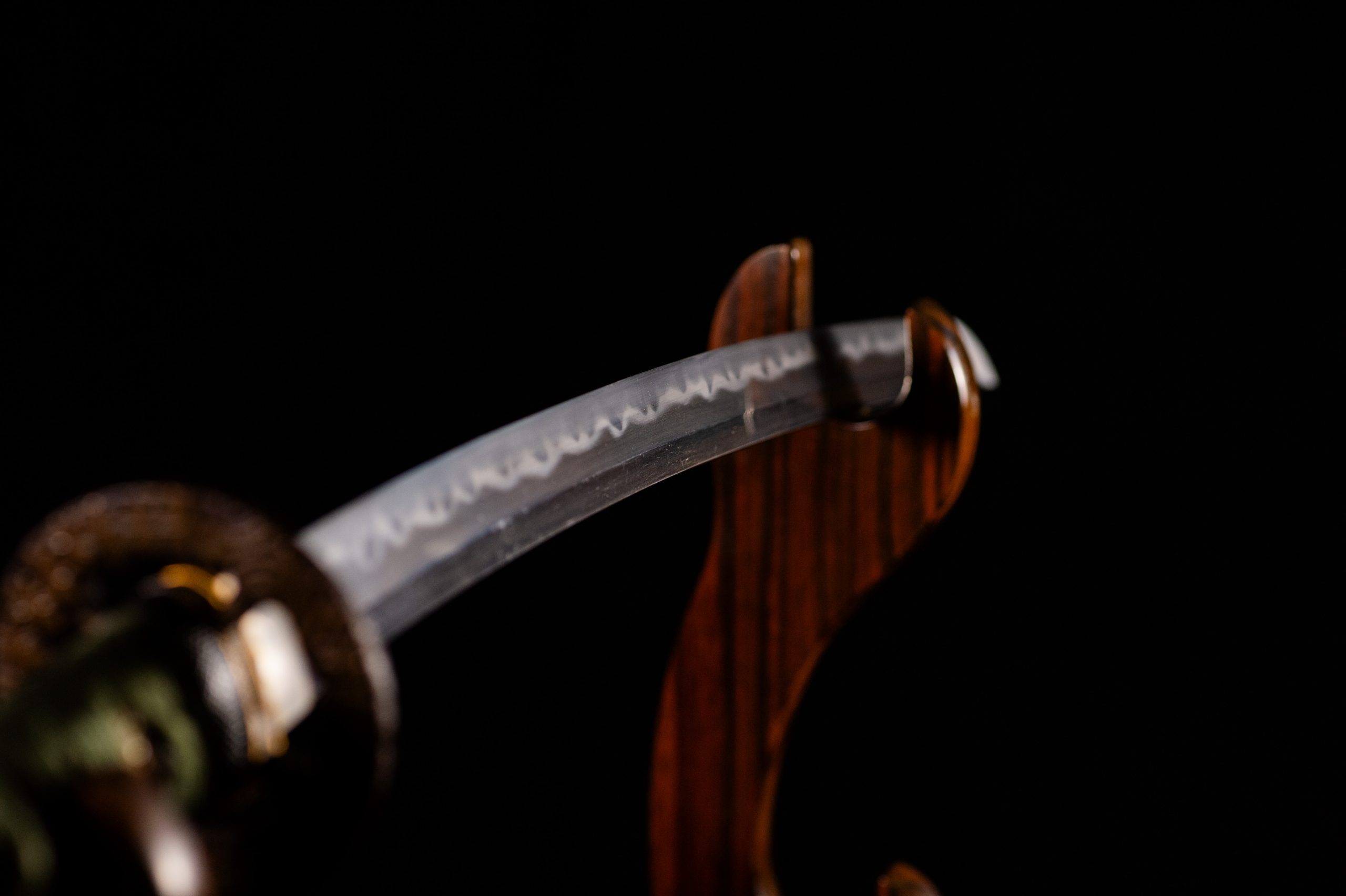
Hamon: Dynamic notare-midare with rich internal activity, typical of the Mishina school.
Hada: Mixed itame and mokume.
Boshi: Soft notare.
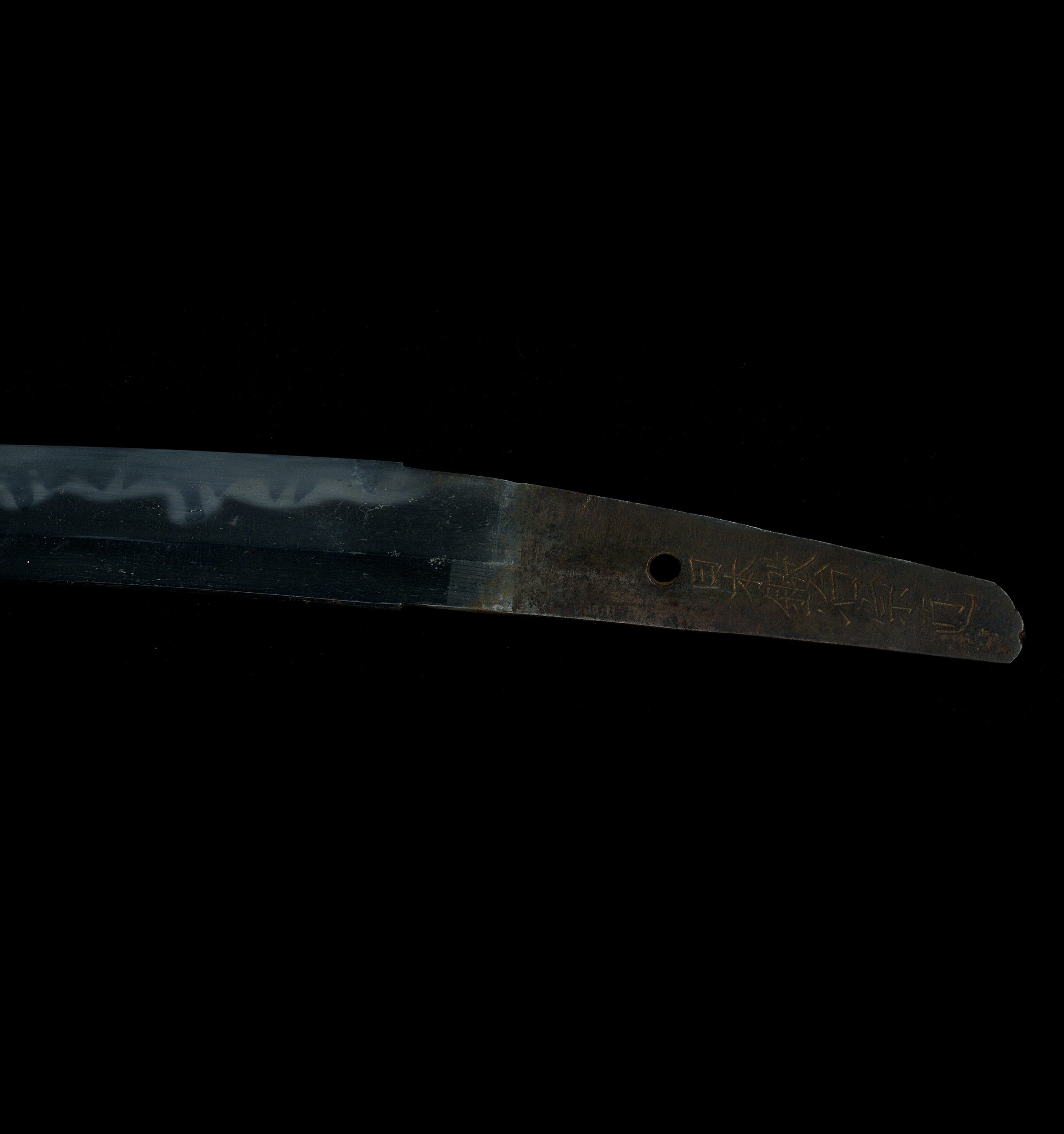
Nakago: Aged patina, one mekugi-ana, engraved Mishina kiku-mon and attribution to Mishina Izumi no Kami Fujiwara Kanamichi.
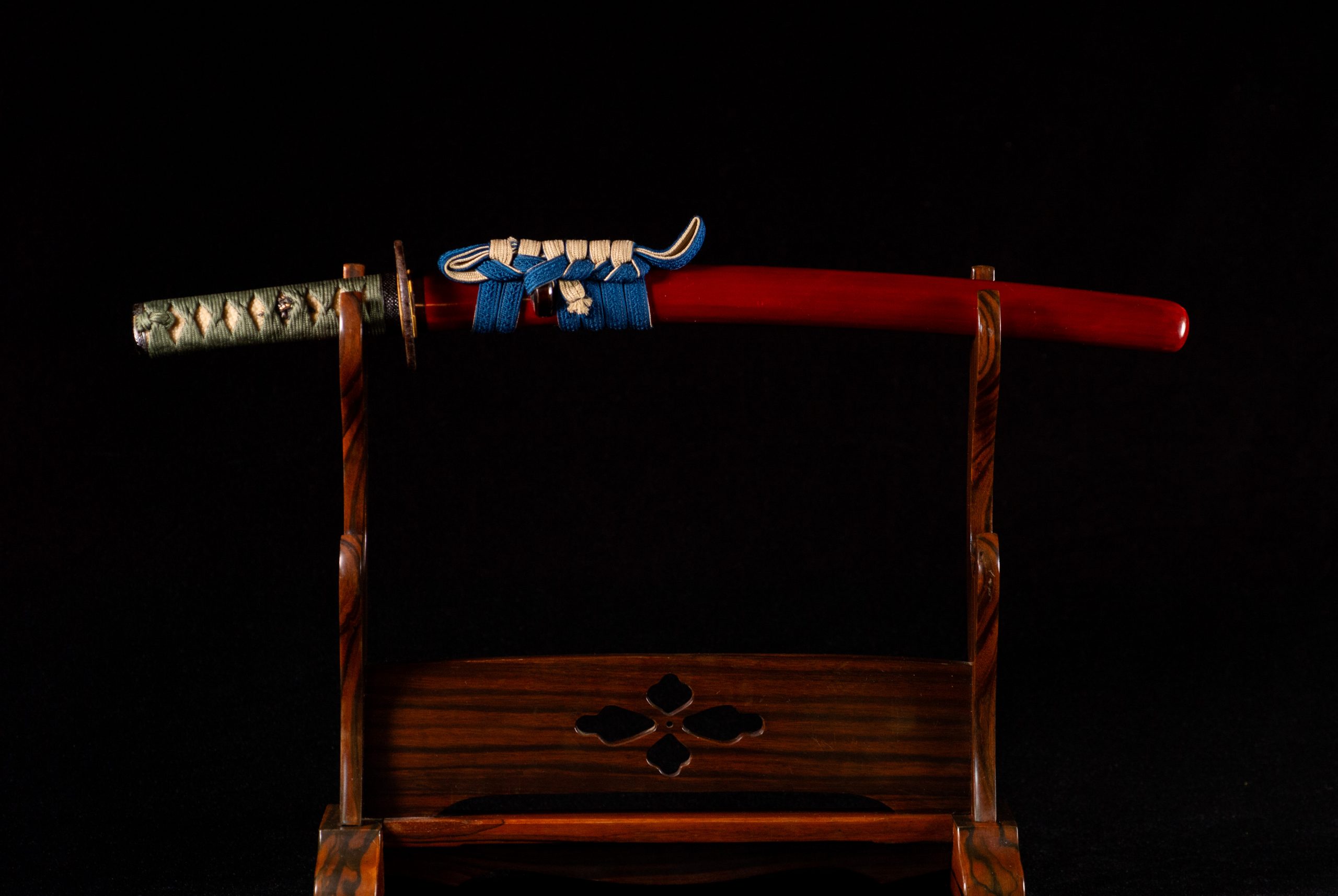
5. Koshirae
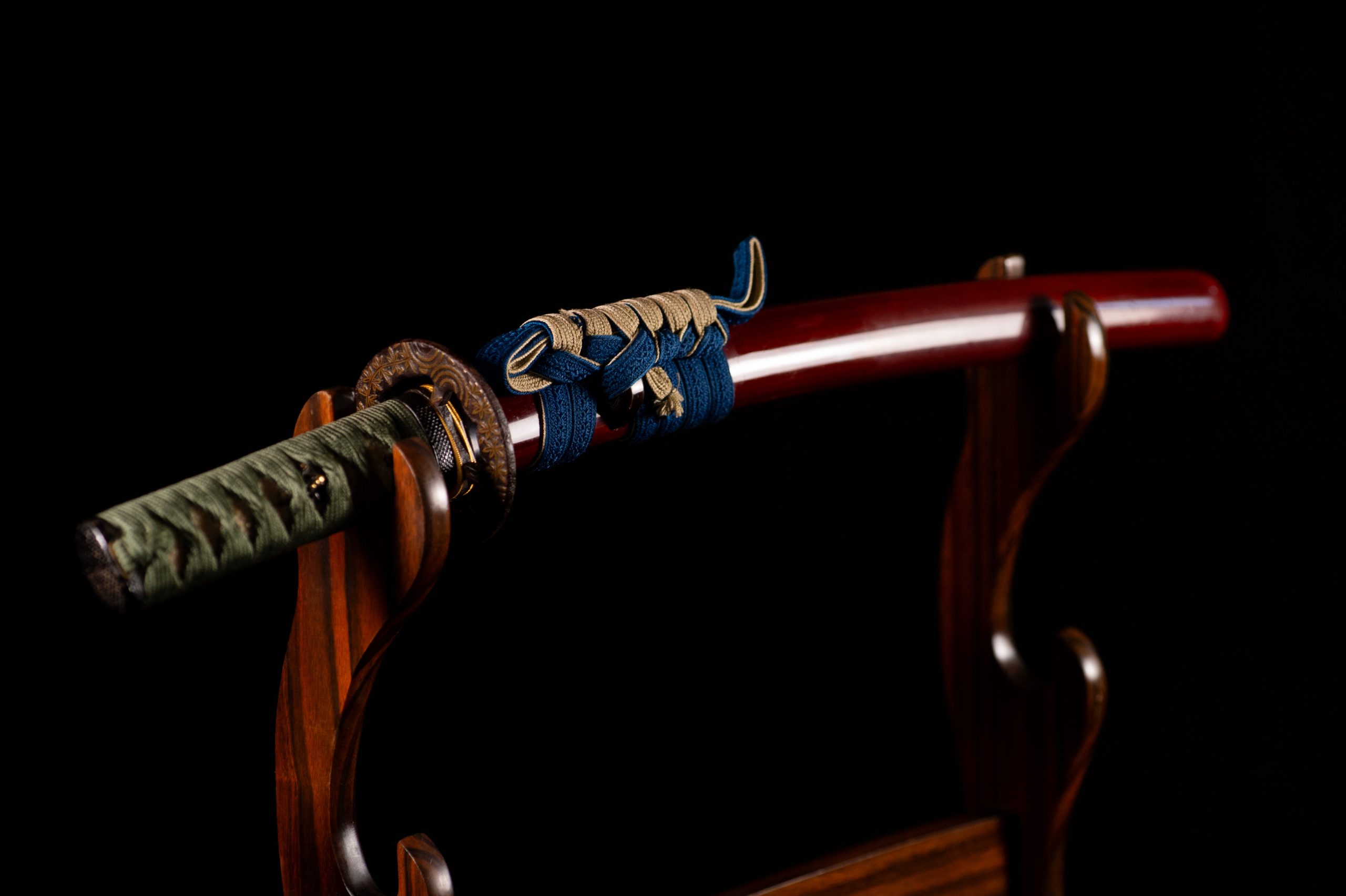
Tsuka
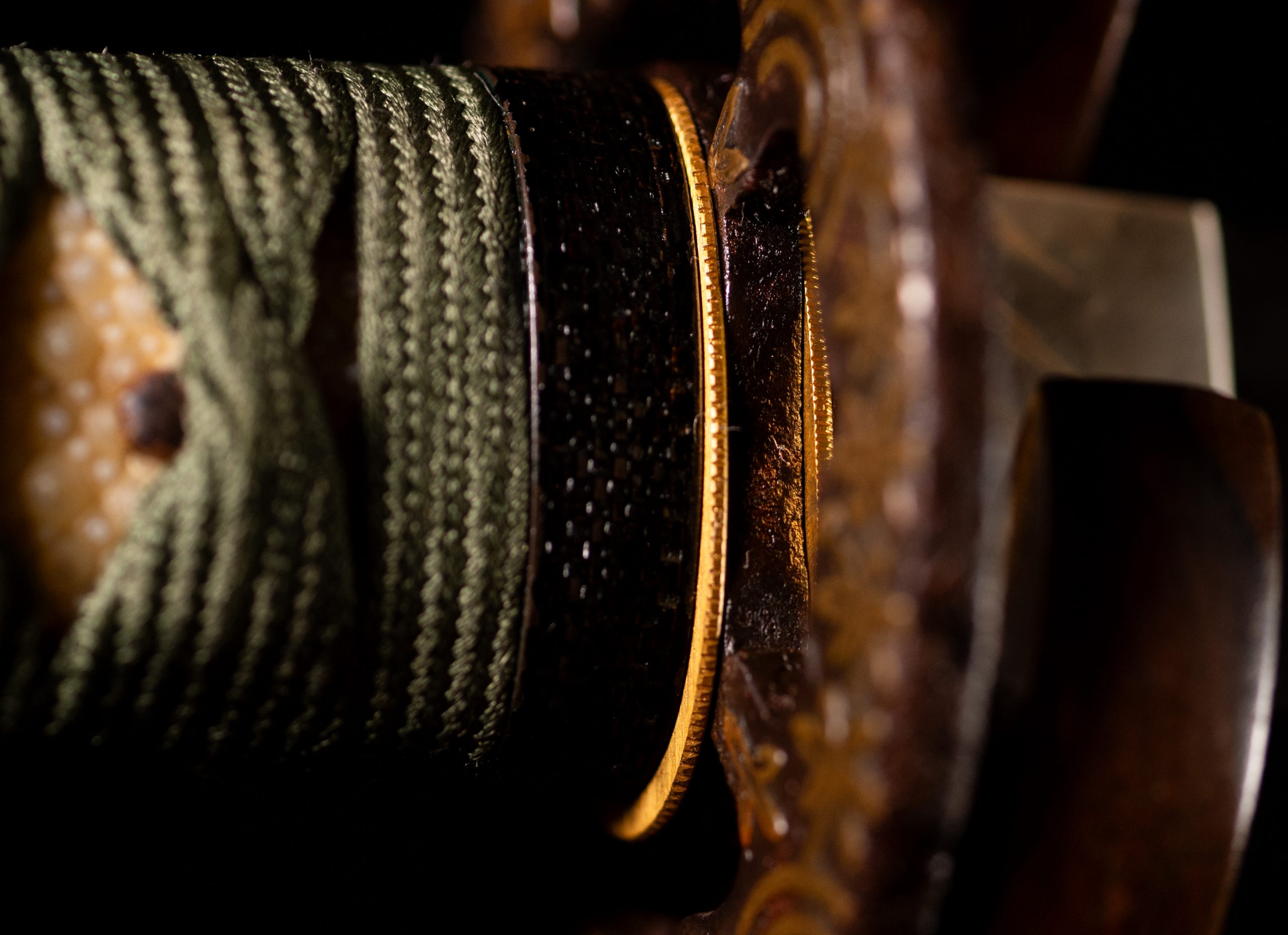
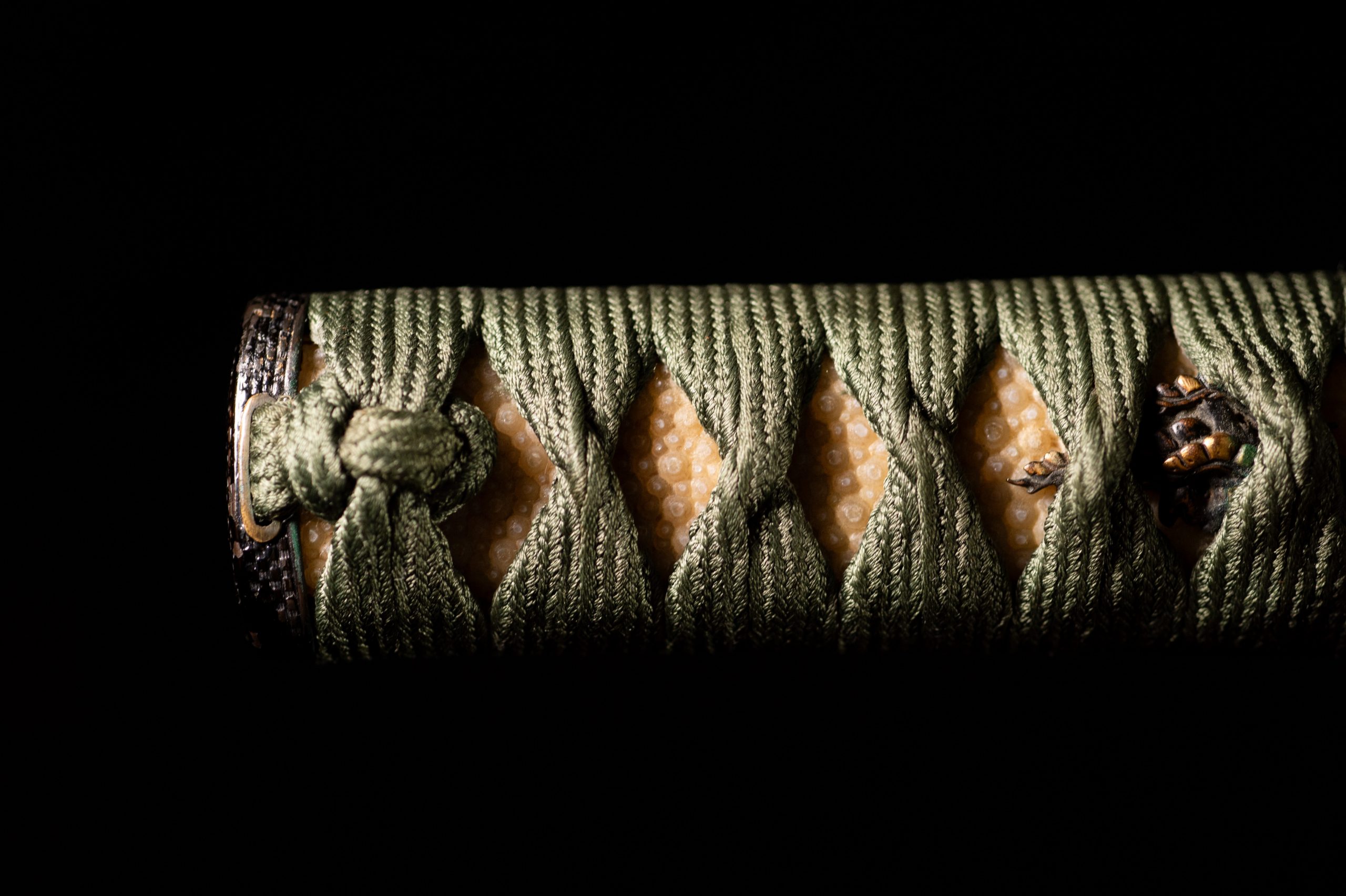
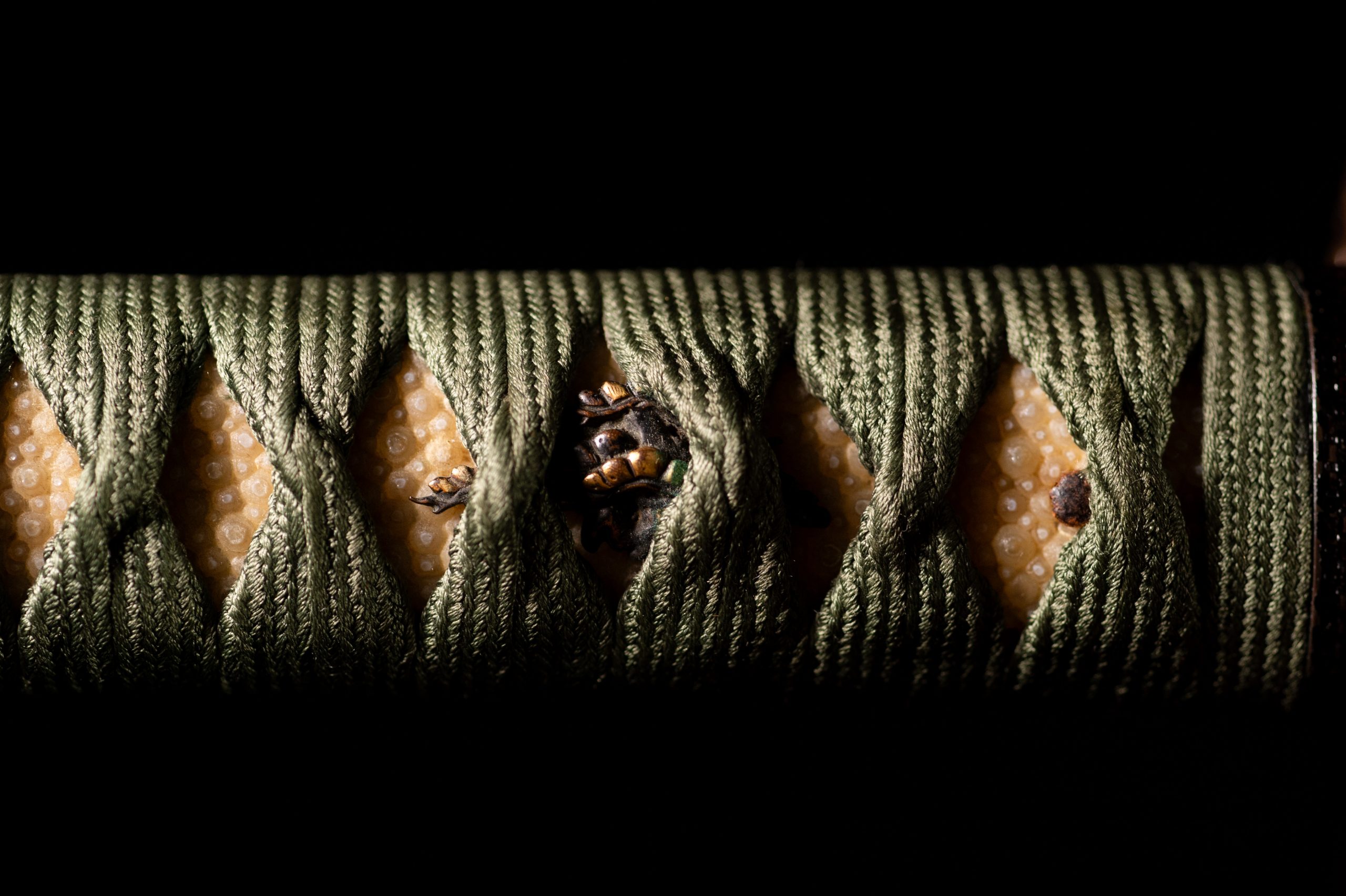
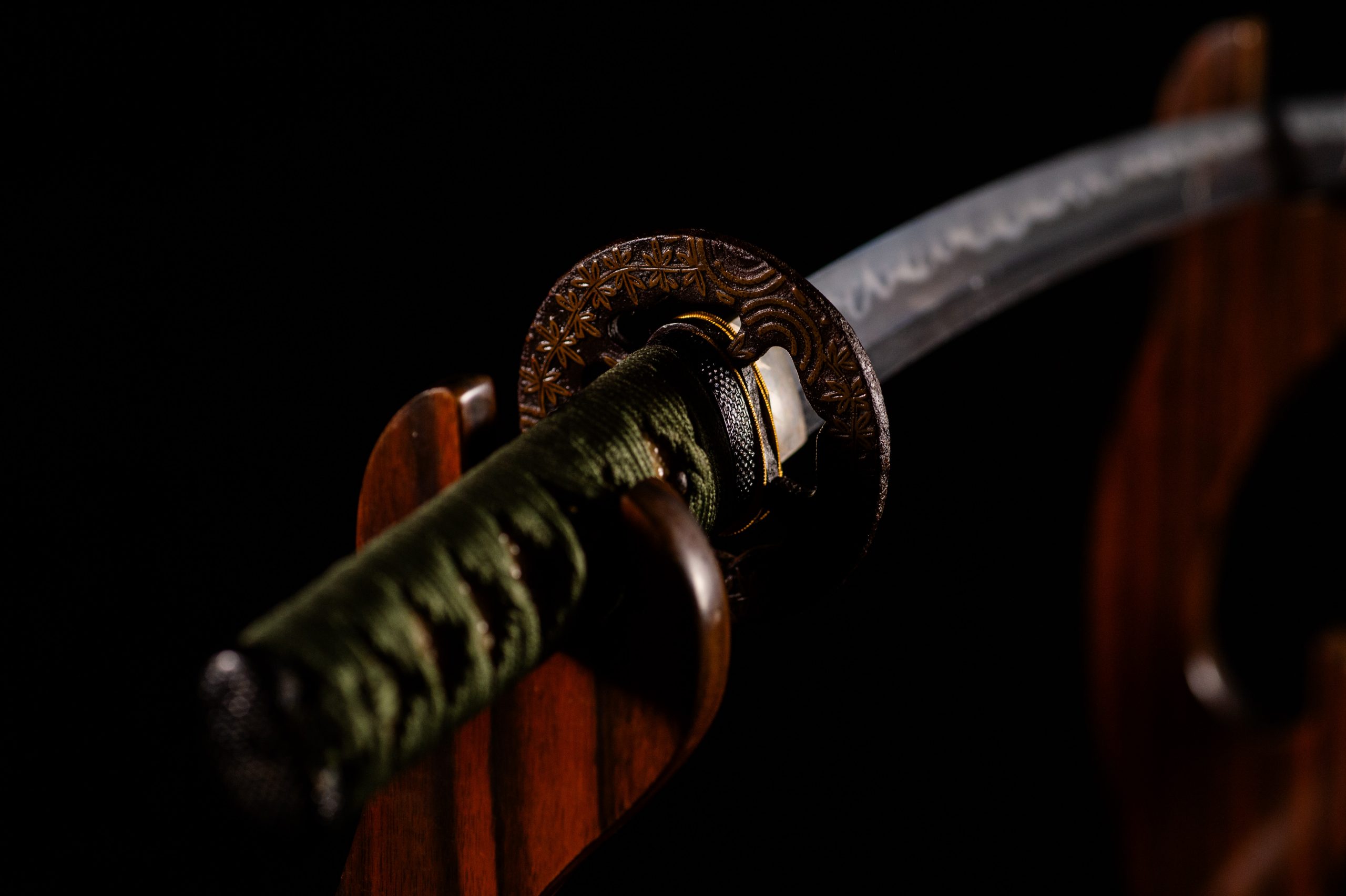
Olive-green tsuka-ito, tightly wrapped.
High-grade samegawa.
Menuki in dark metal with golden accents.
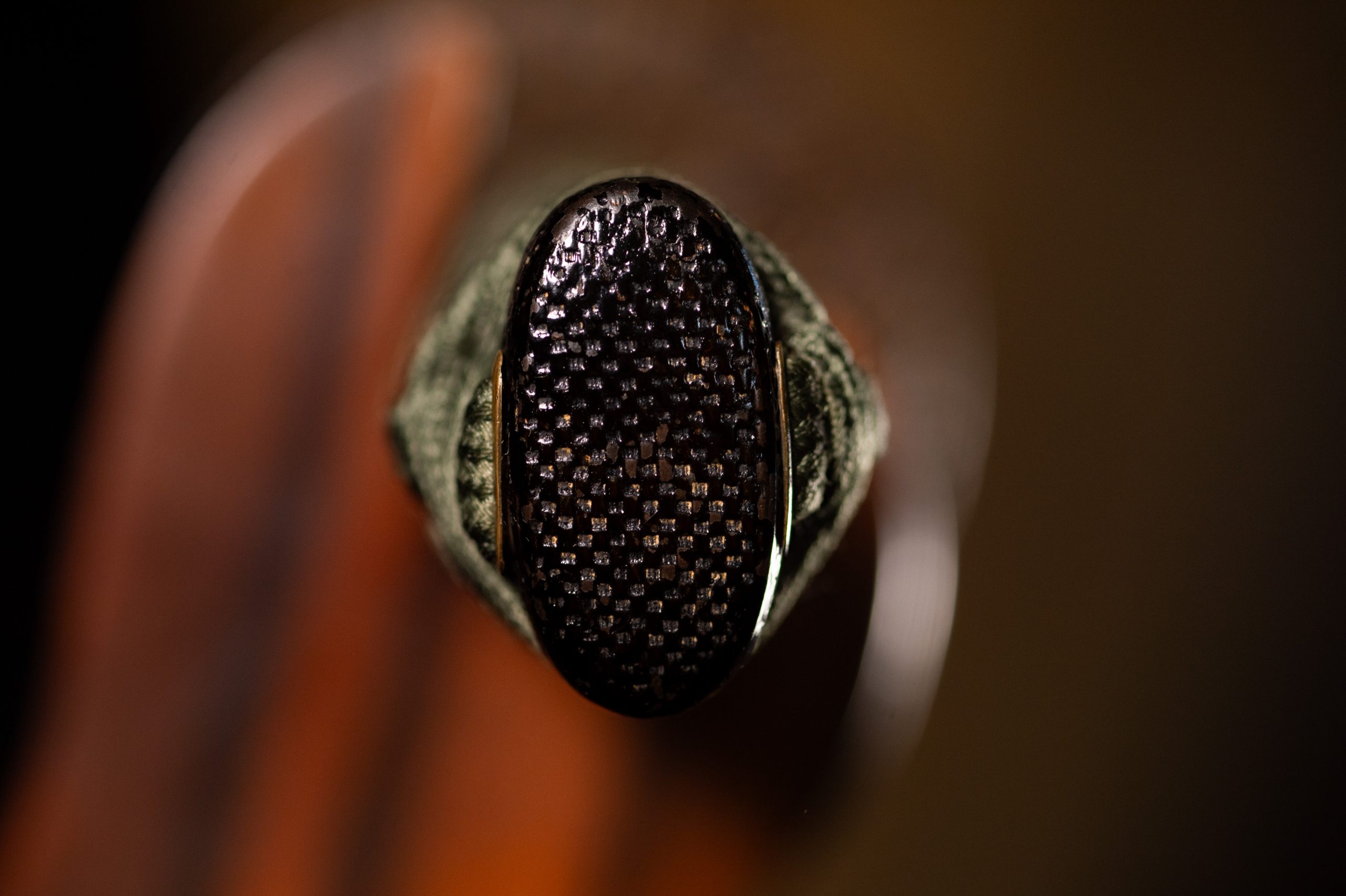
Nanako-textured fuchi/kashira with gold rims.
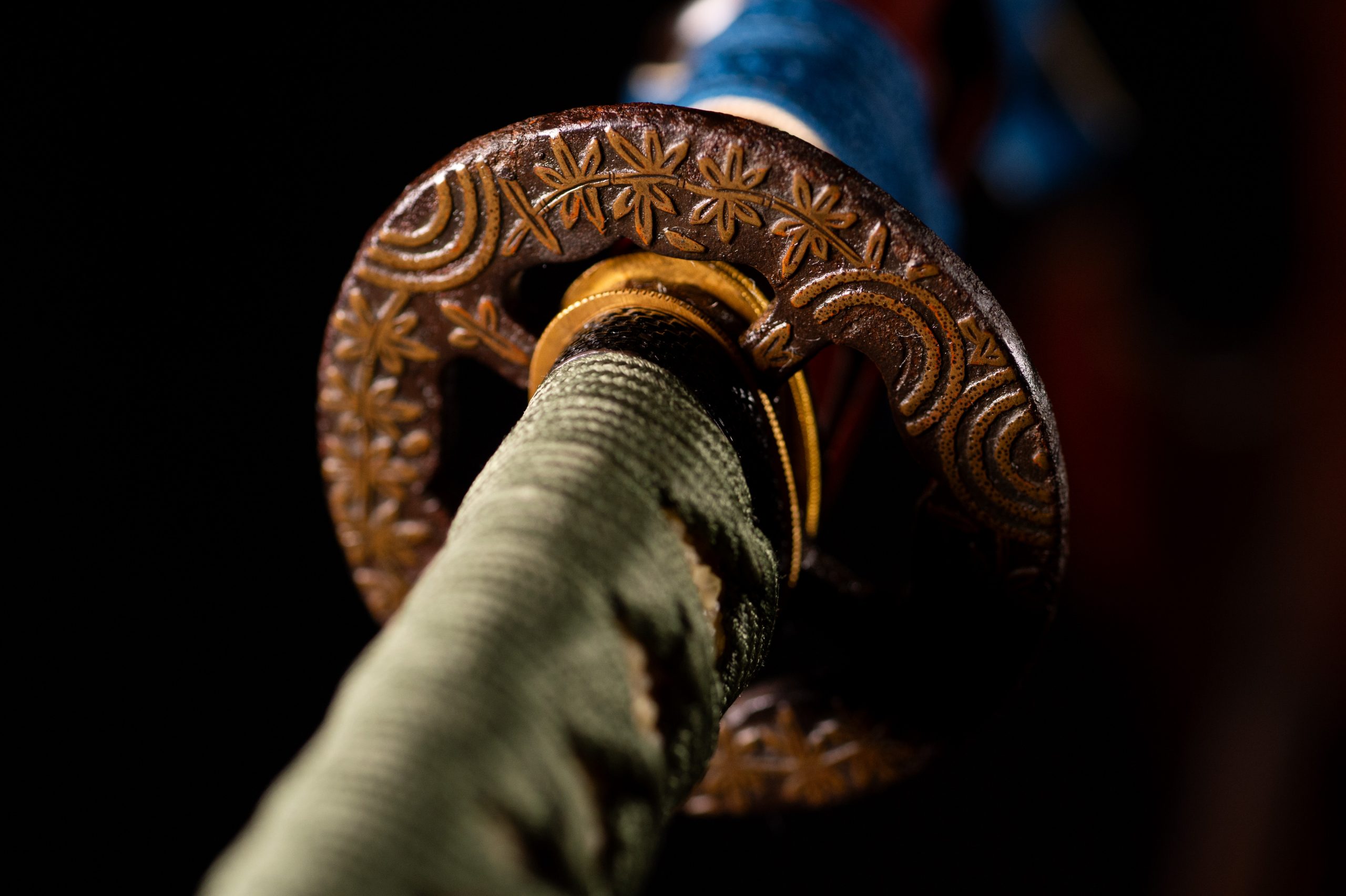
Tsuba
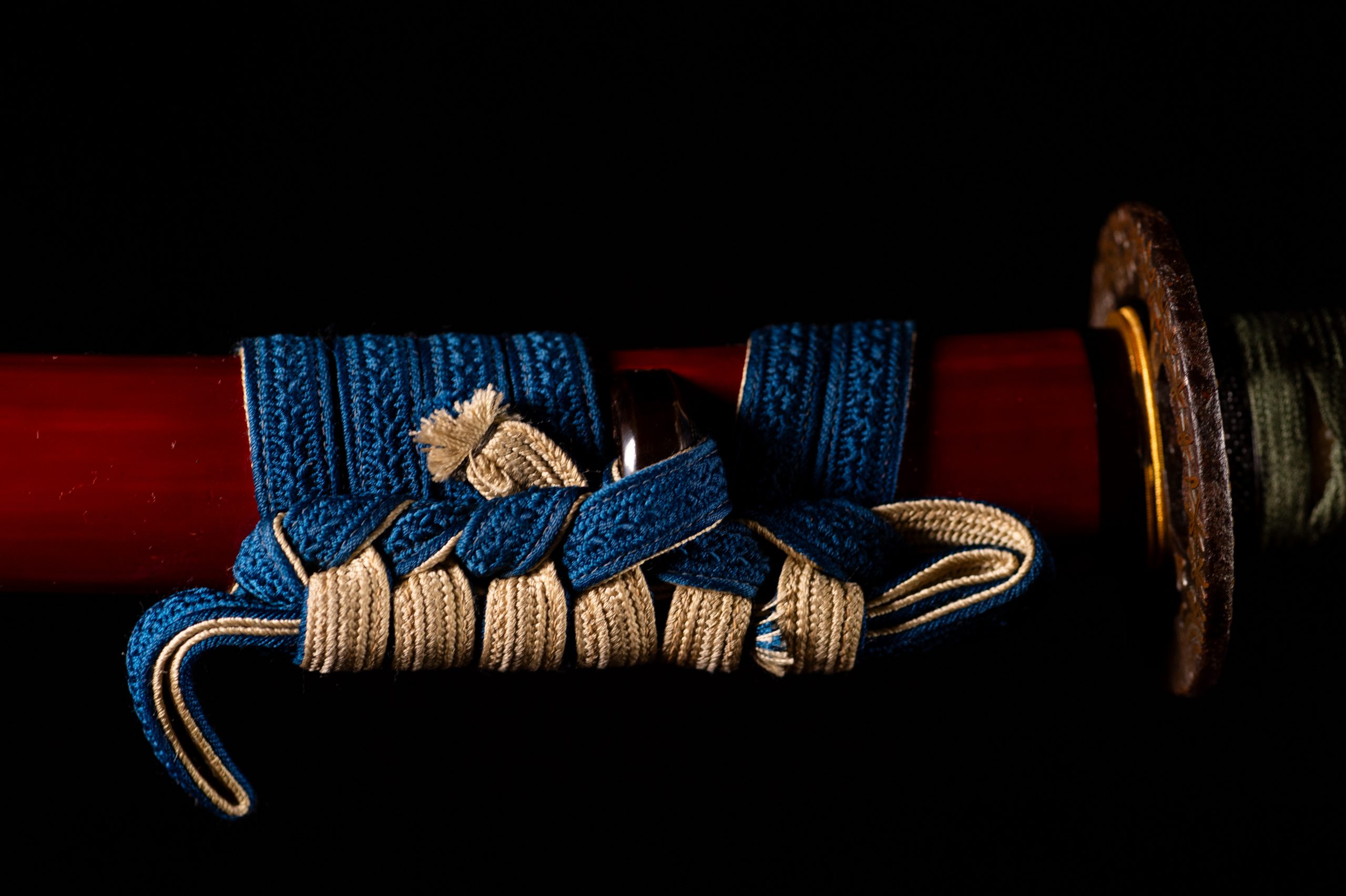
Edo iron tsuba in relief, deep patina, gold-toned seppa.
Saya
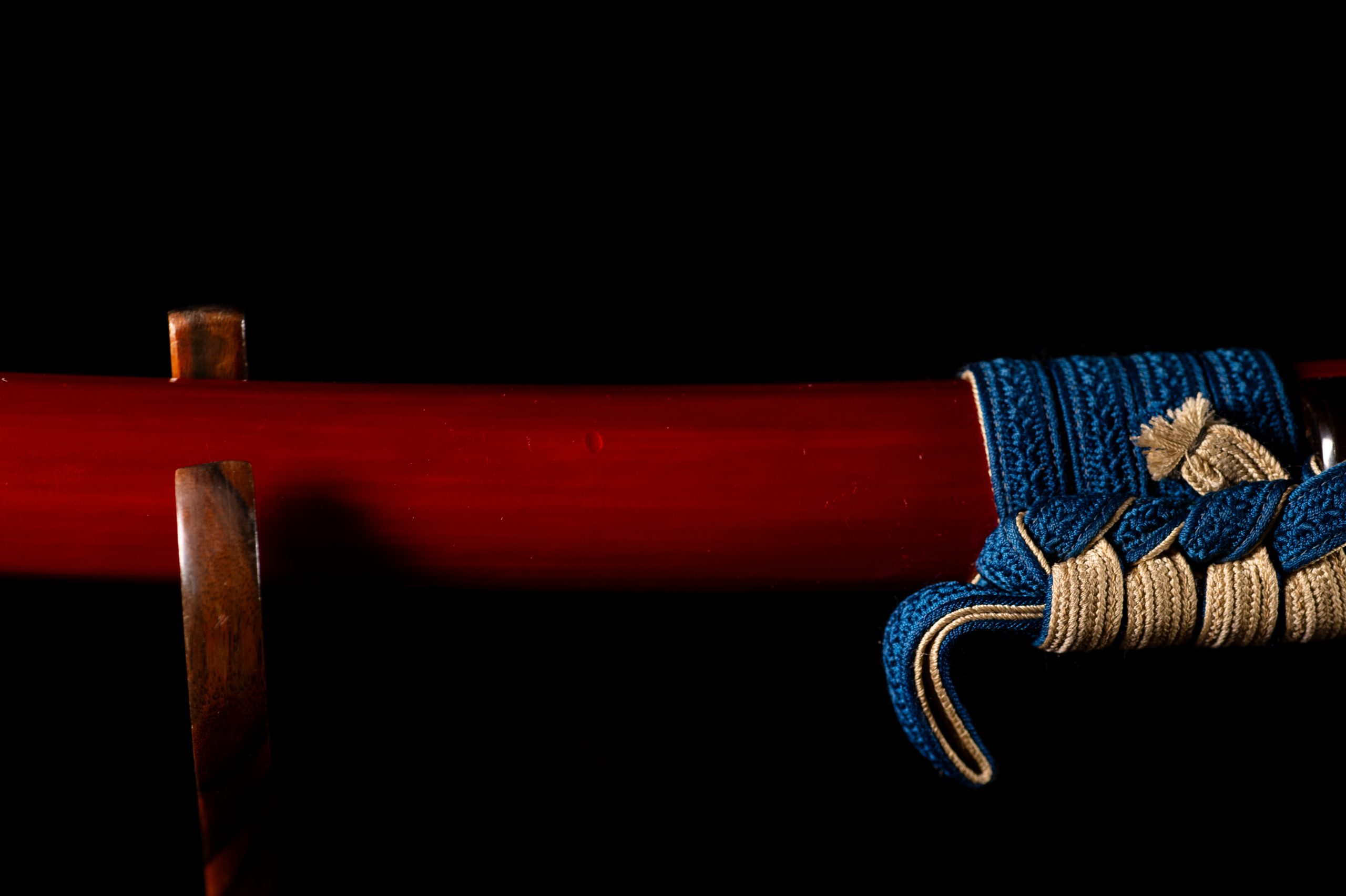
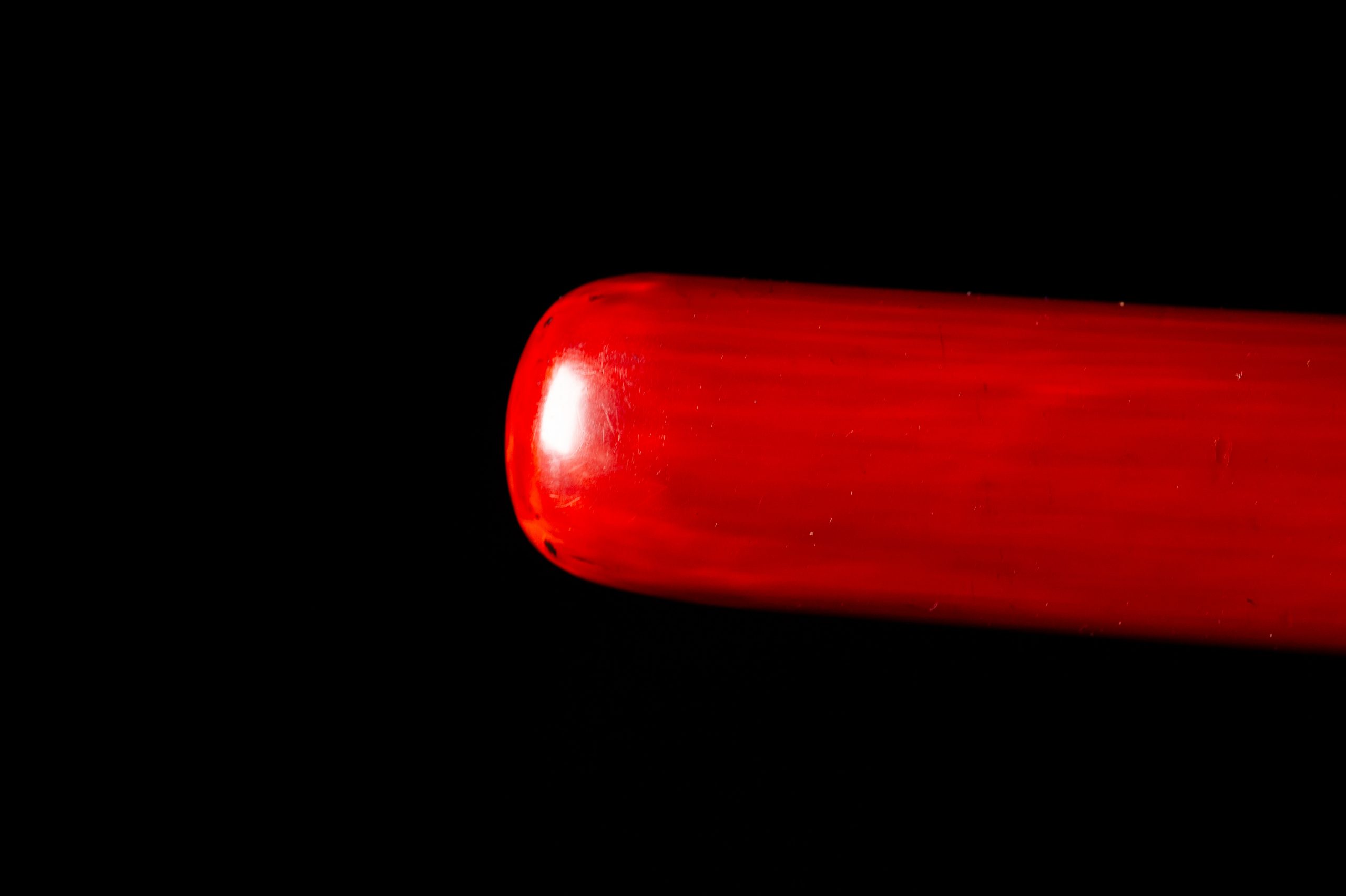
Glossy red lacquer.
Blue and cream sageo.
A visually refined and well-preserved Edo mounting.
6. Technical Summary
Type: Wakizashi
Smith: Mishina Izumi no Kami Fujiwara Kanamichi
School: Mishina
Period: Edo
Blade length: 49.0 cm
Hamon: Notare-midare
Hada: Itame / mokume
Koshirae: Complete
Saya: Red lacquer
Tsuba: Edo iron
Registration: Tochigi No. 39877
The sword maintains its full historical character: the nakago with patina, the blade with an authentic polish, and a coherent complete koshirae. Signs of use reflect its age and authenticity, enhancing its cultural and collectible value.


