

Description
ITEM DESCRIPTION:
Comes with kimono or cotton bag. Comes with certificate of supein Nihonto. Comes with copy of Tokosusho. Comes with NBTHK Hozon Certificate.
Documentation
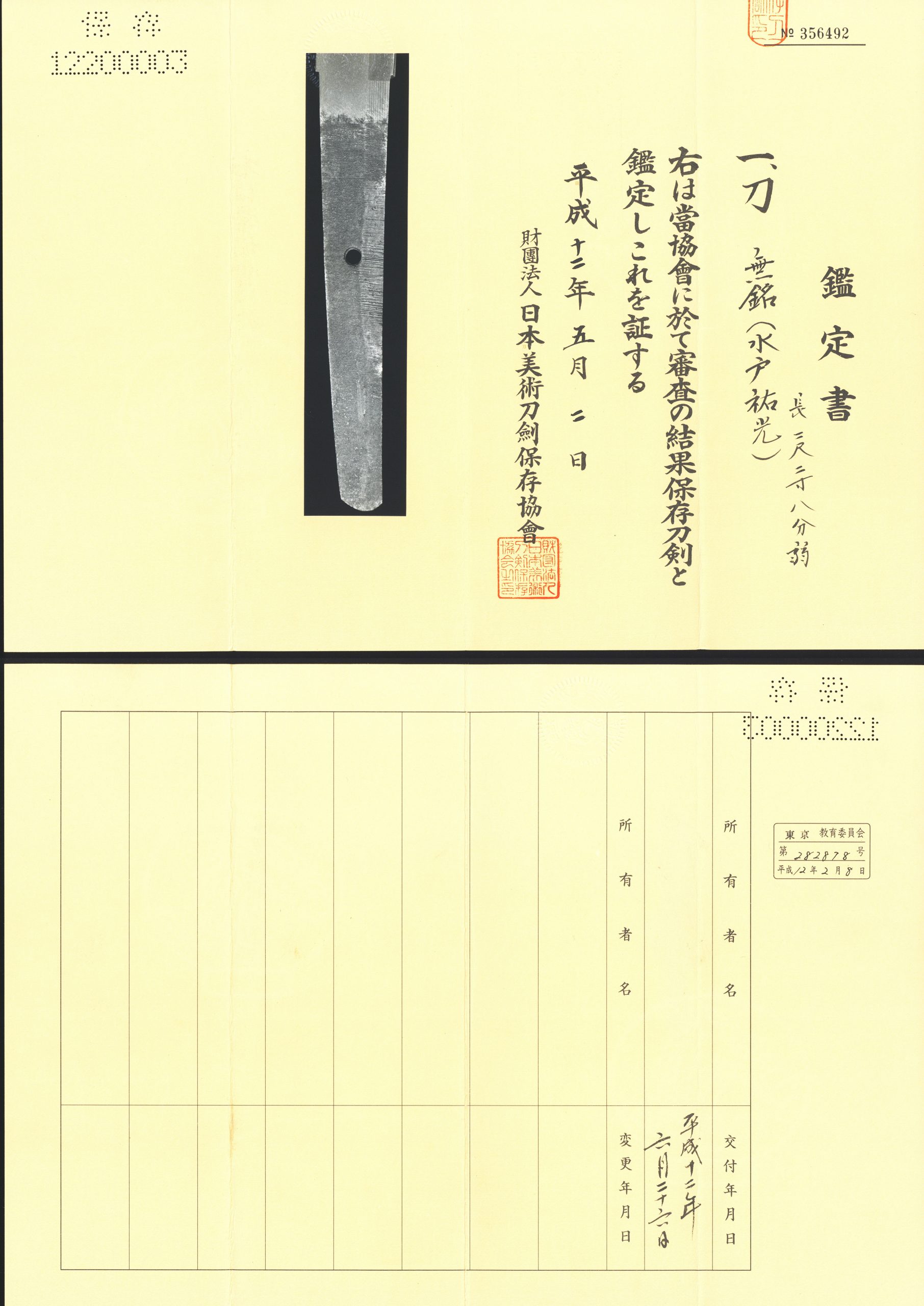
1) Preservation certificate NBTHK Hozon (鑑定書 / Kanteisho)
-
鑑定書 — Appraisal / attribution certificate.
-
一刀 — One sword.
-
無銘(水戸祐光 – Mumei (Mito Sukemitsu).
-
弐尺二寸八分弱 — Length: 2 shaku 2 sun 8 bu, slightly under (approx. 69.1 cm; marginally less).
-
右は当協会に於て審査の結果保存刀剣と鑑定しこれを証する — “The above piece has been examined by this association and, as a result of the appraisal, is judged as Hozon Tōken (worthy of preservation); this is hereby certified.”
-
平成十二年五月二日 — May 2, Heisei 12 (2000).
-
財団法人日本美術刀剣保存協会 — Foundation: Society for the Preservation of the Japanese Art Sword.
-
No. 356492 — Certificate number.
2) Registration (Torokusho)
-
東京教育委員会 — Tokyo Board/Committee of Education.
-
第282878号 — No. 282878.
-
平成2年2月8日 — February 8, Heisei 2 (1990).
Attribution and context
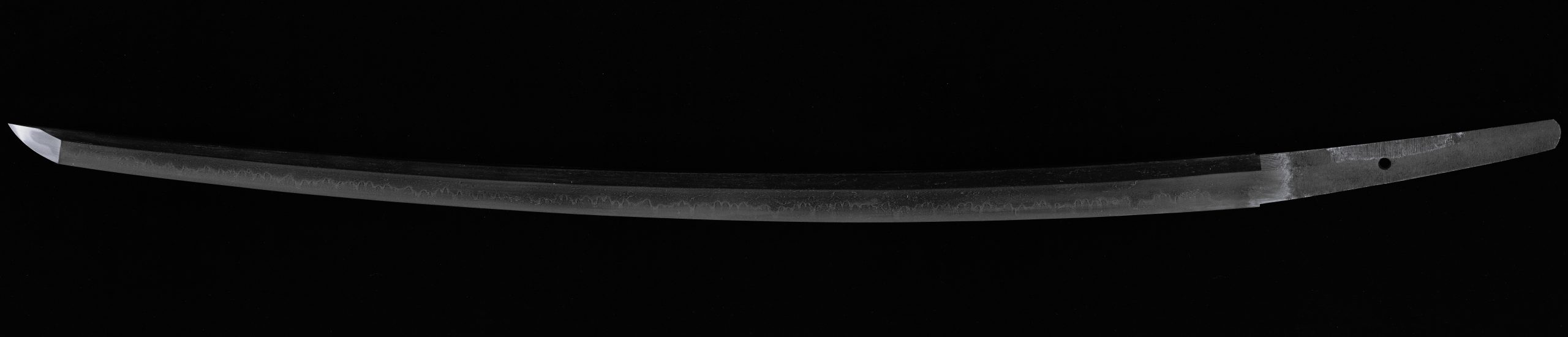
An mumei (unsigned) blade with documented attribution to Mito Sukemitsu (水戸祐光) on the certificate. The designation Hozon Tōken confirms that, following examination, the sword was recognized as suitable for preservation.
Technical description of the blade
Hamon
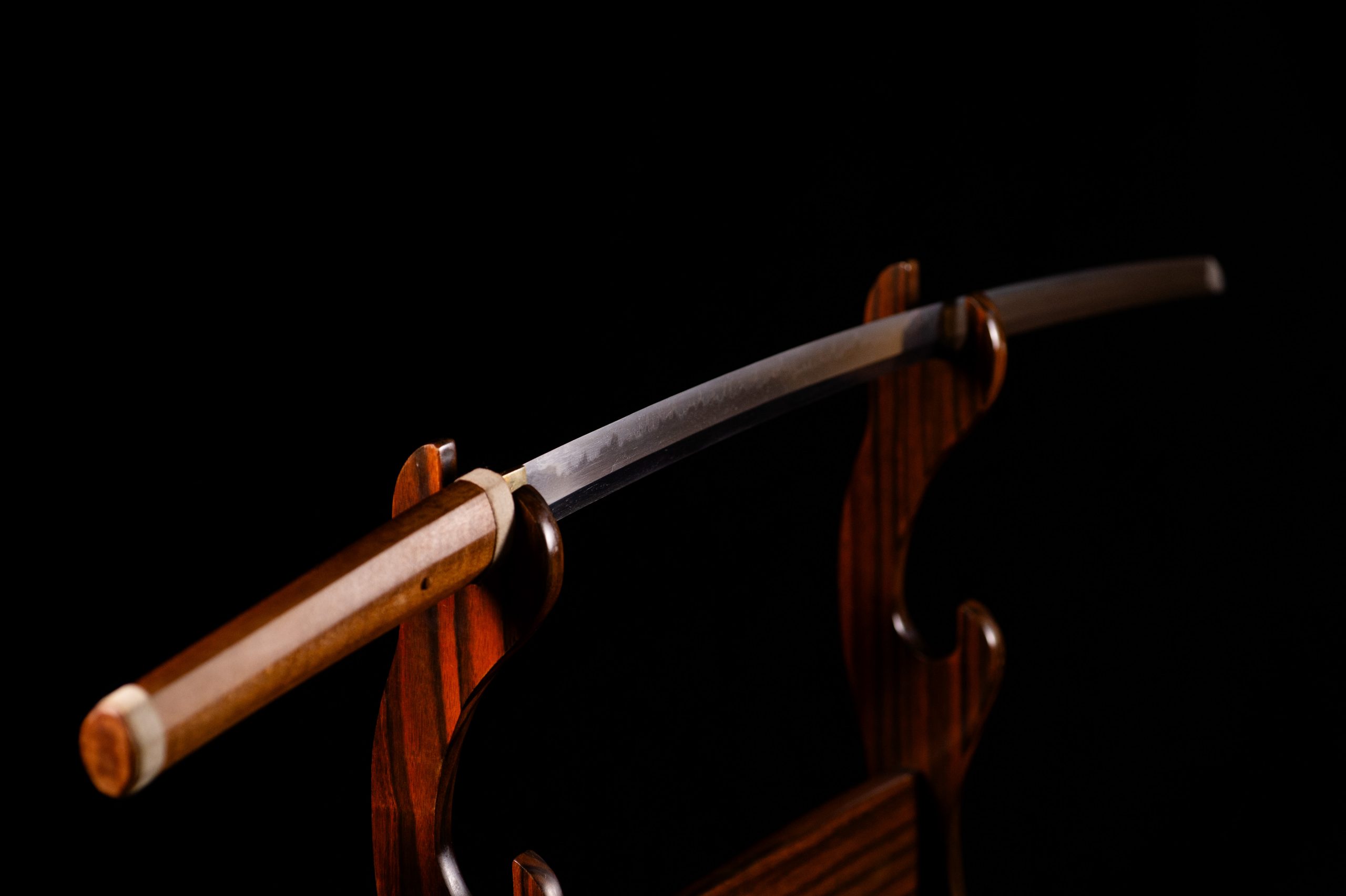
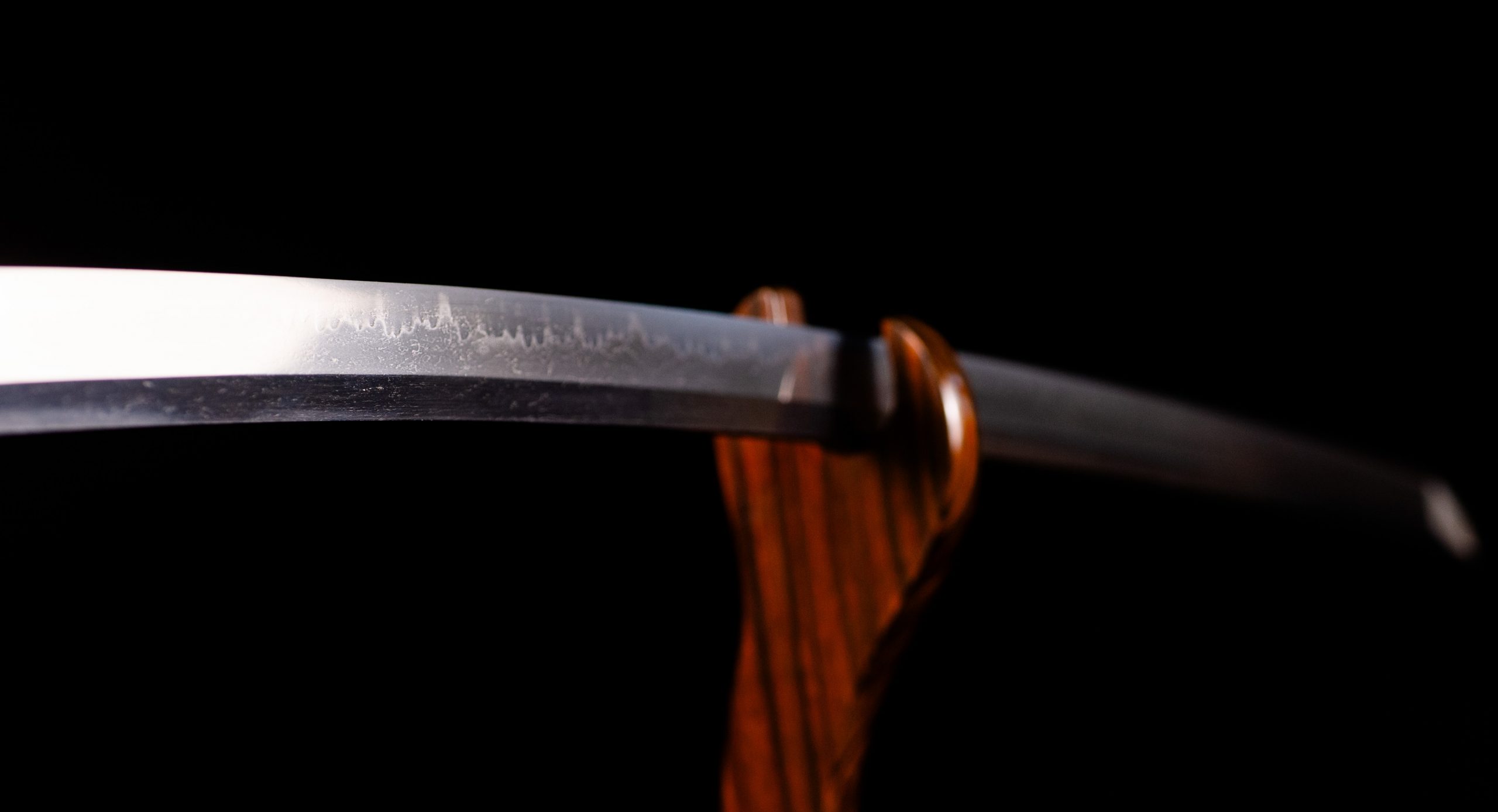
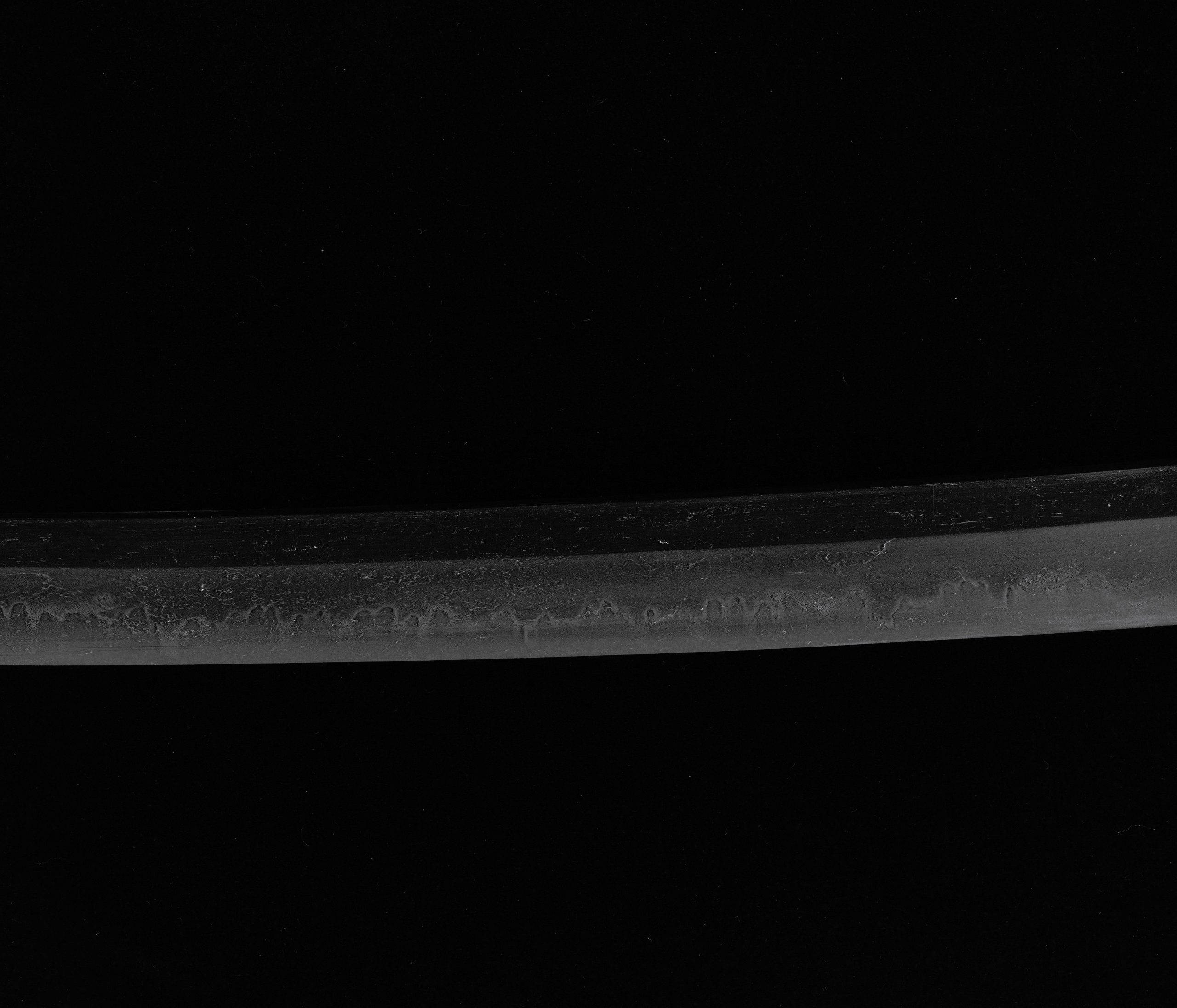
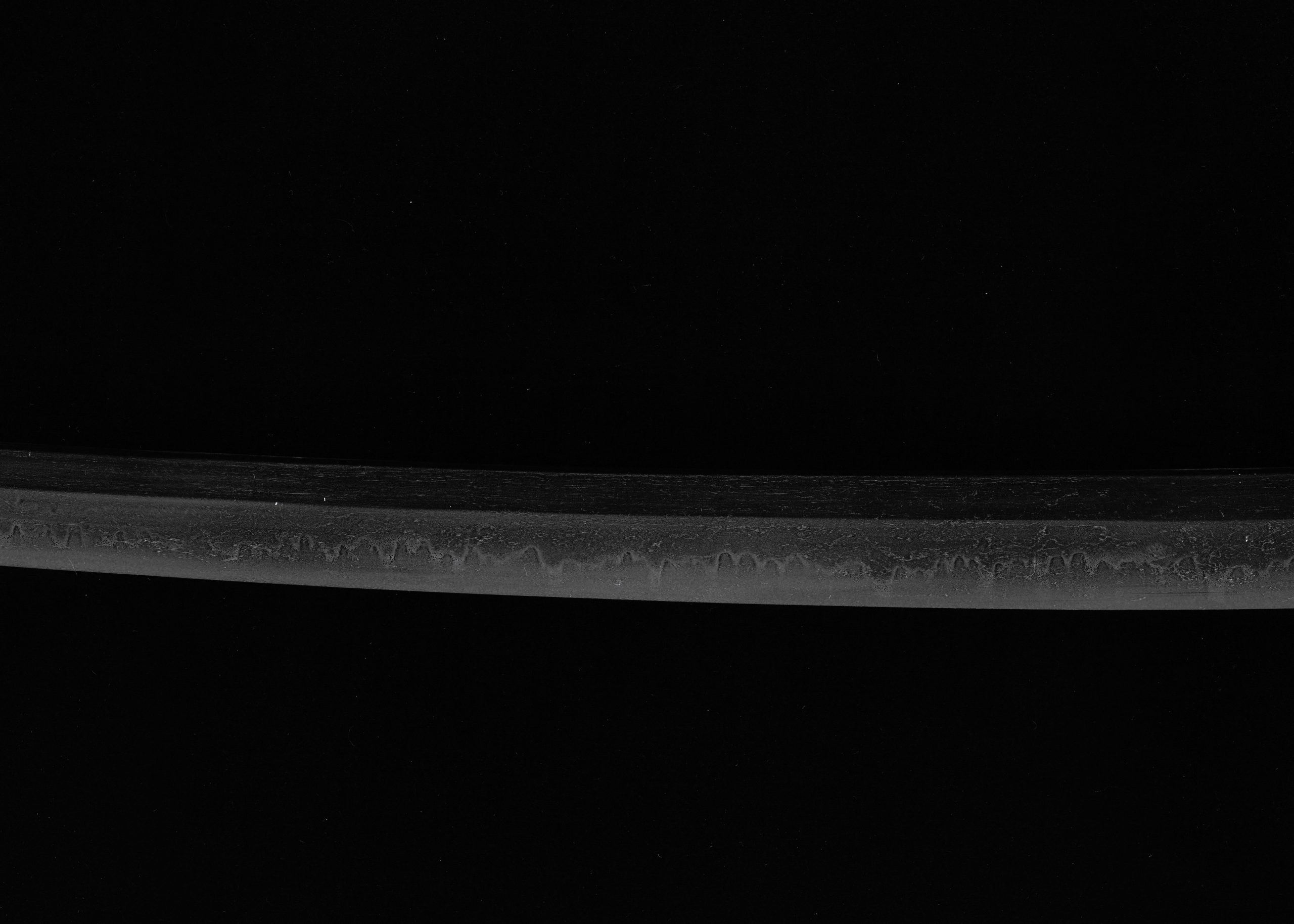
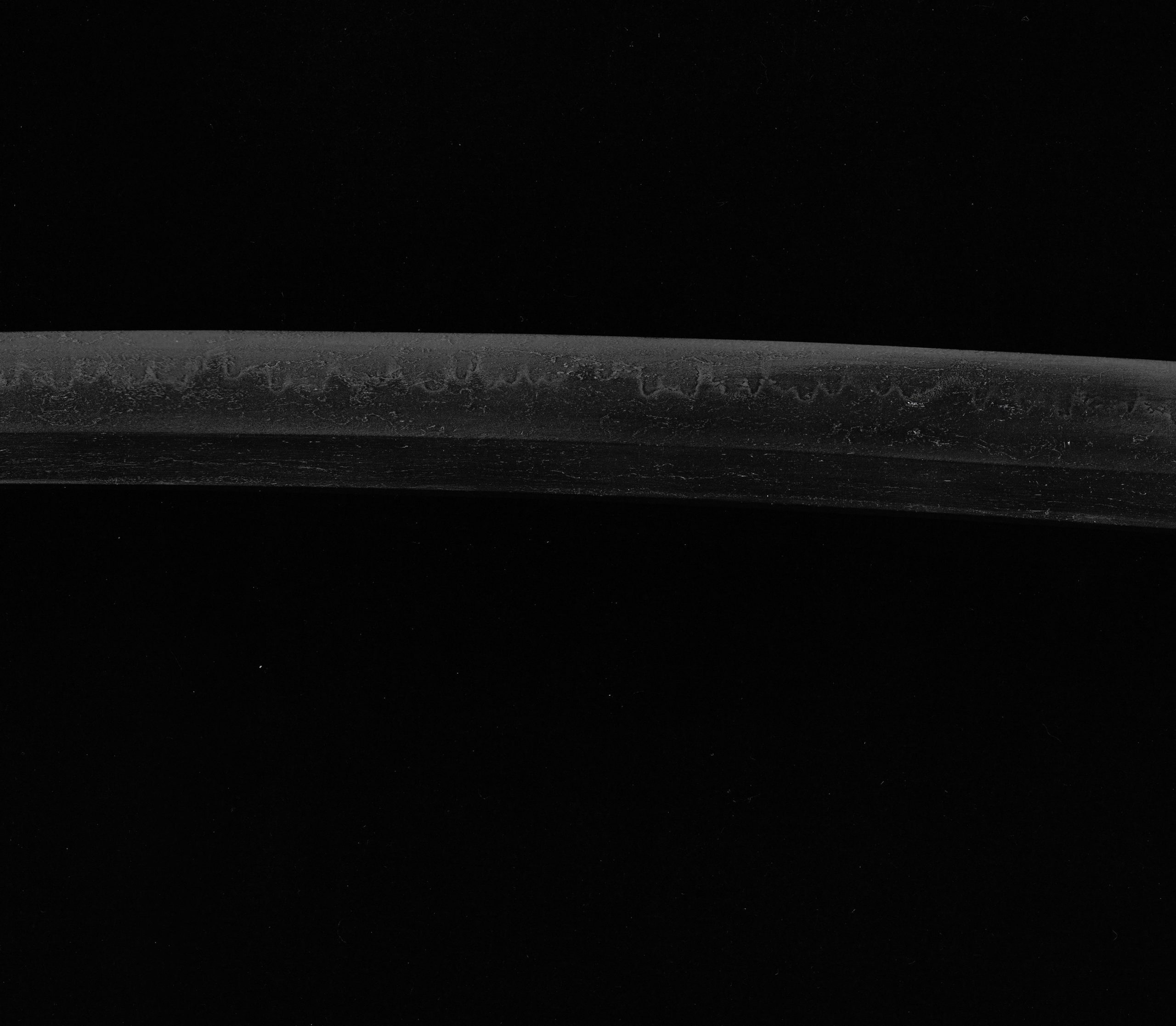
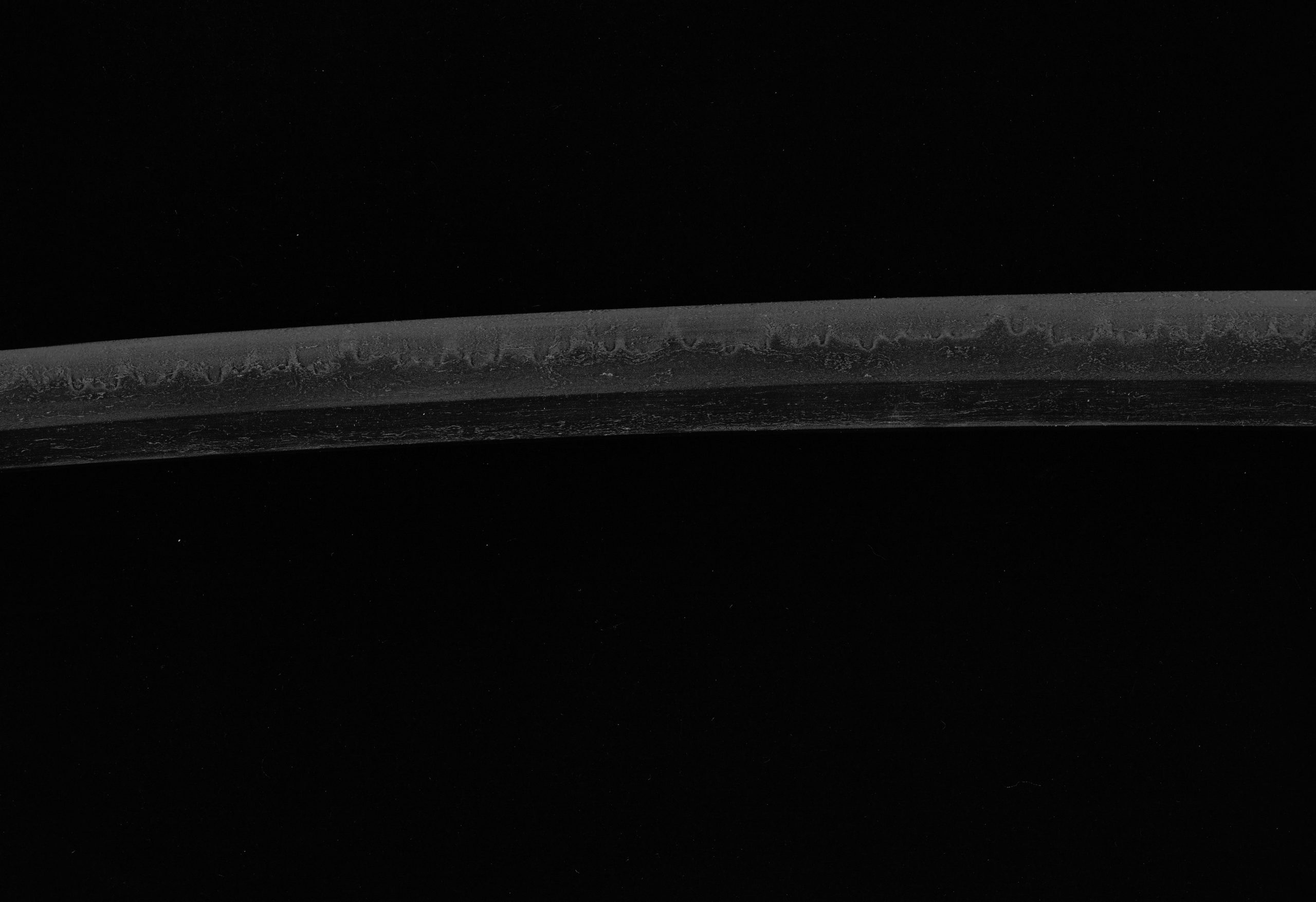
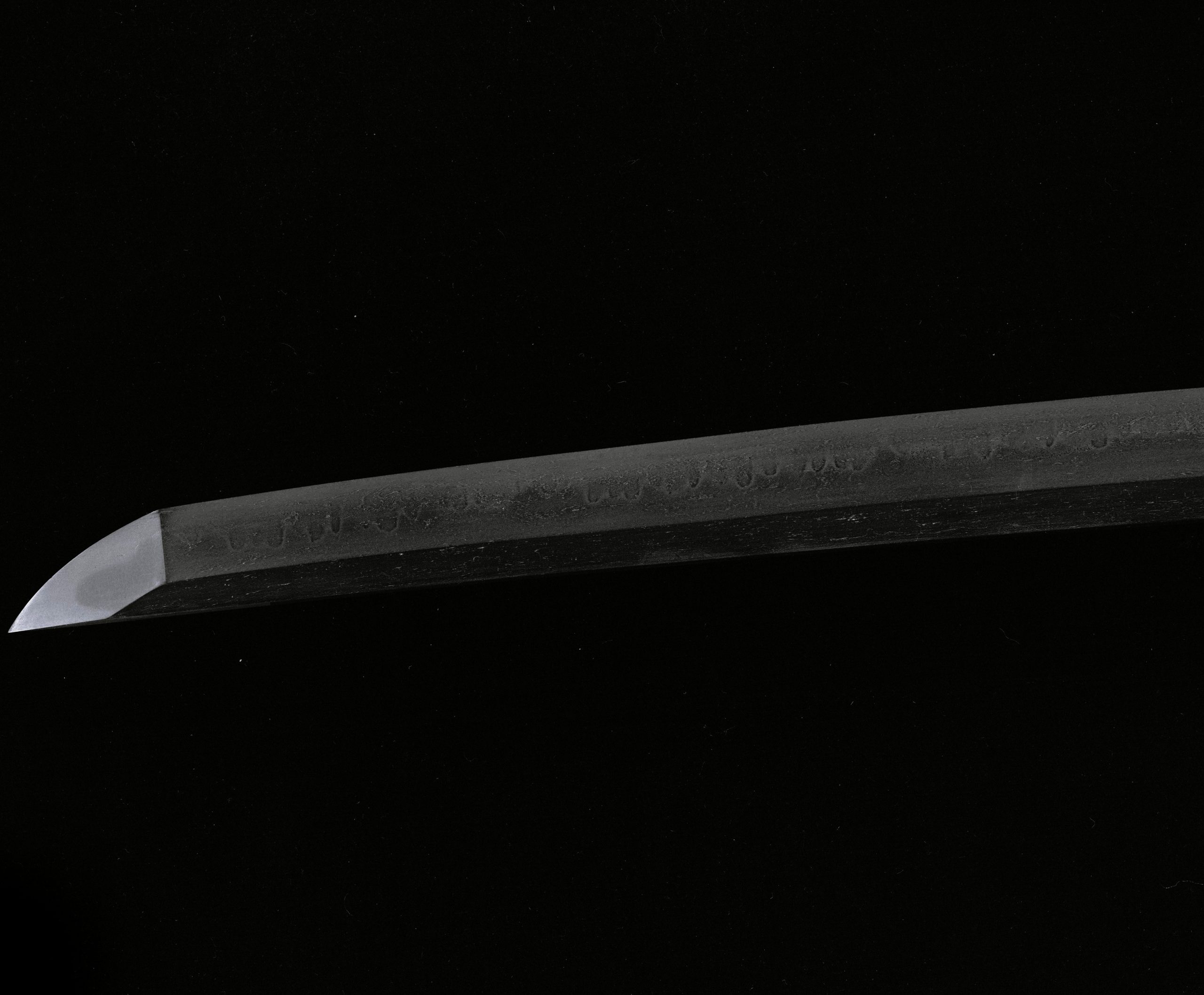
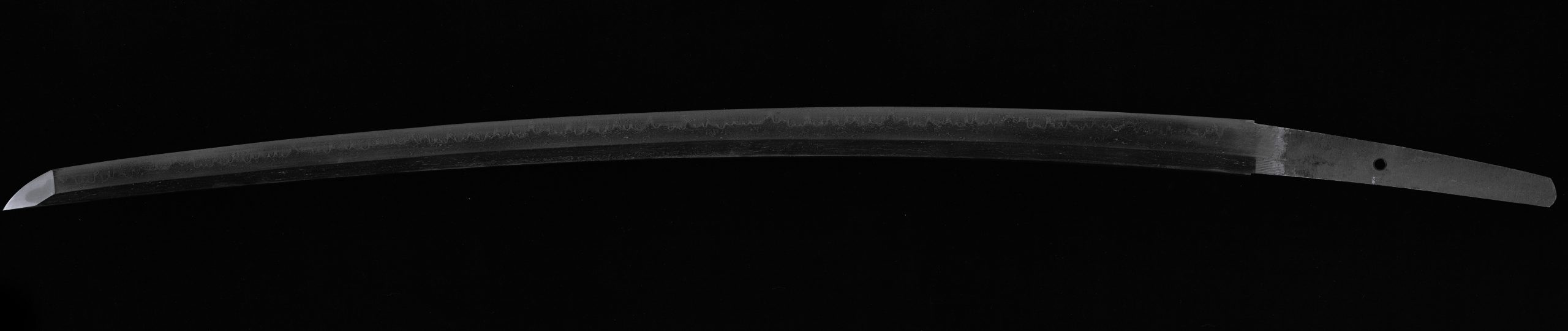
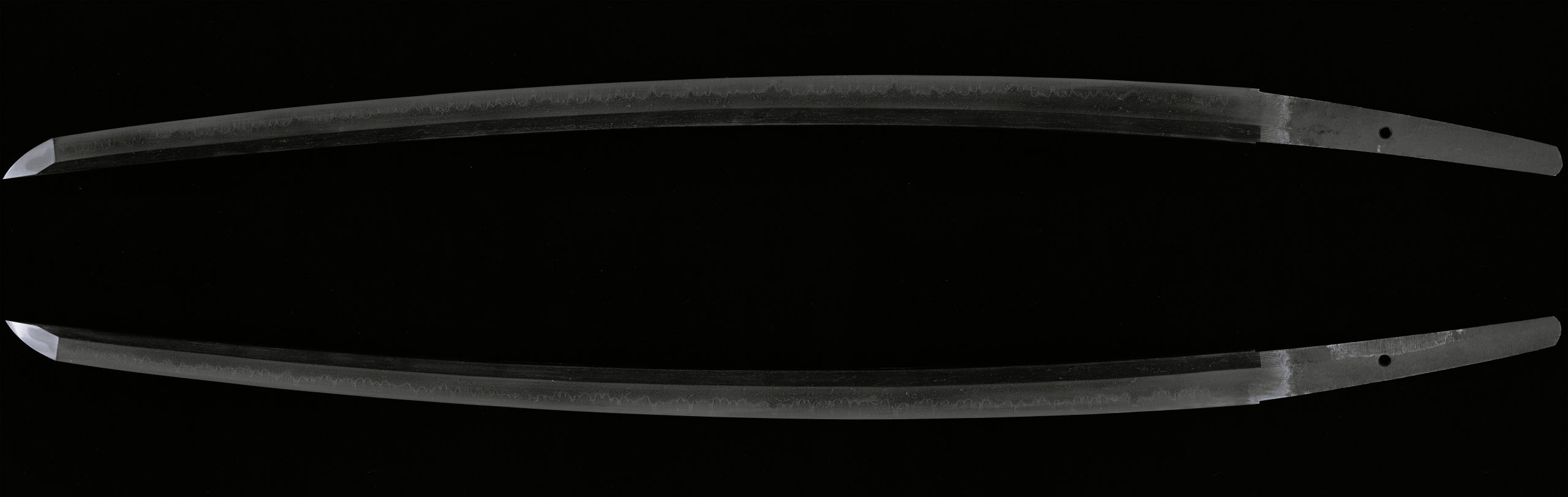
A clearly readable temperline, narrow in width and formed as a fine, irregular undulation, alternating small peaks and troughs along the ha; the monouchi shows a continuous, delicate activity that strengthens the overall character of the hardened edge.
Jihada
The ji presents an even polish, with a fine steel texture whose overall pattern reads subtly in the available images.
Nakago
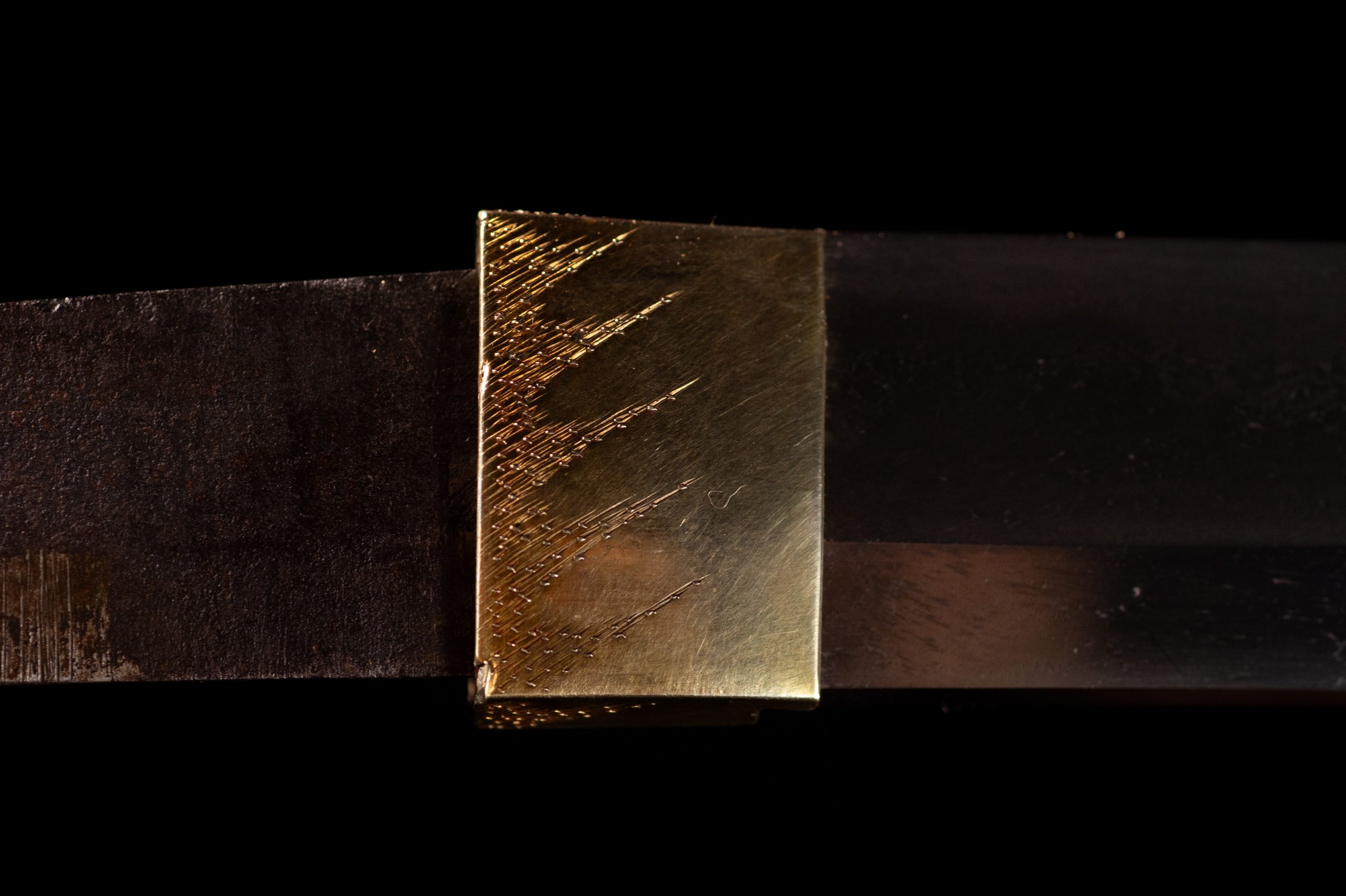
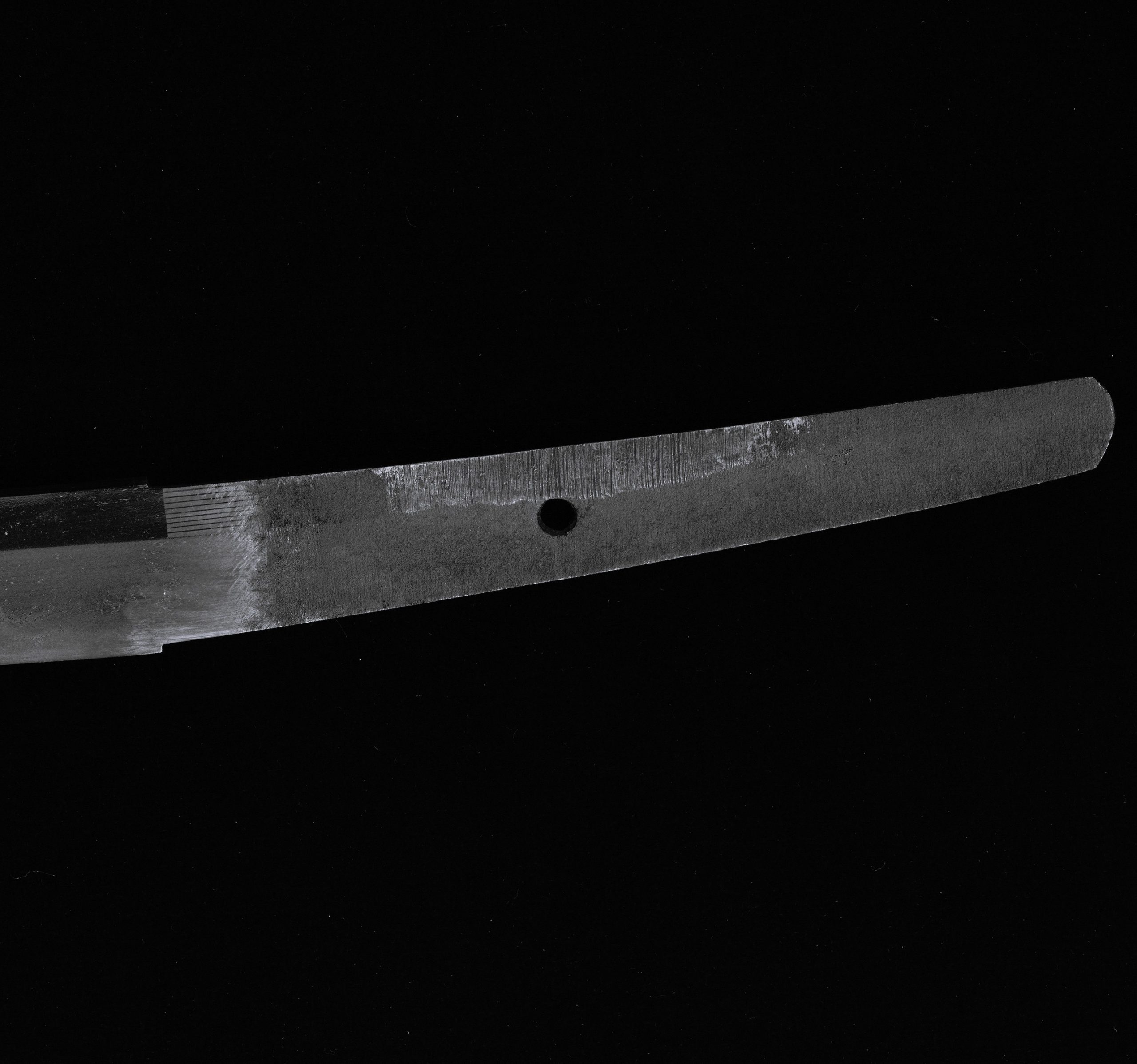
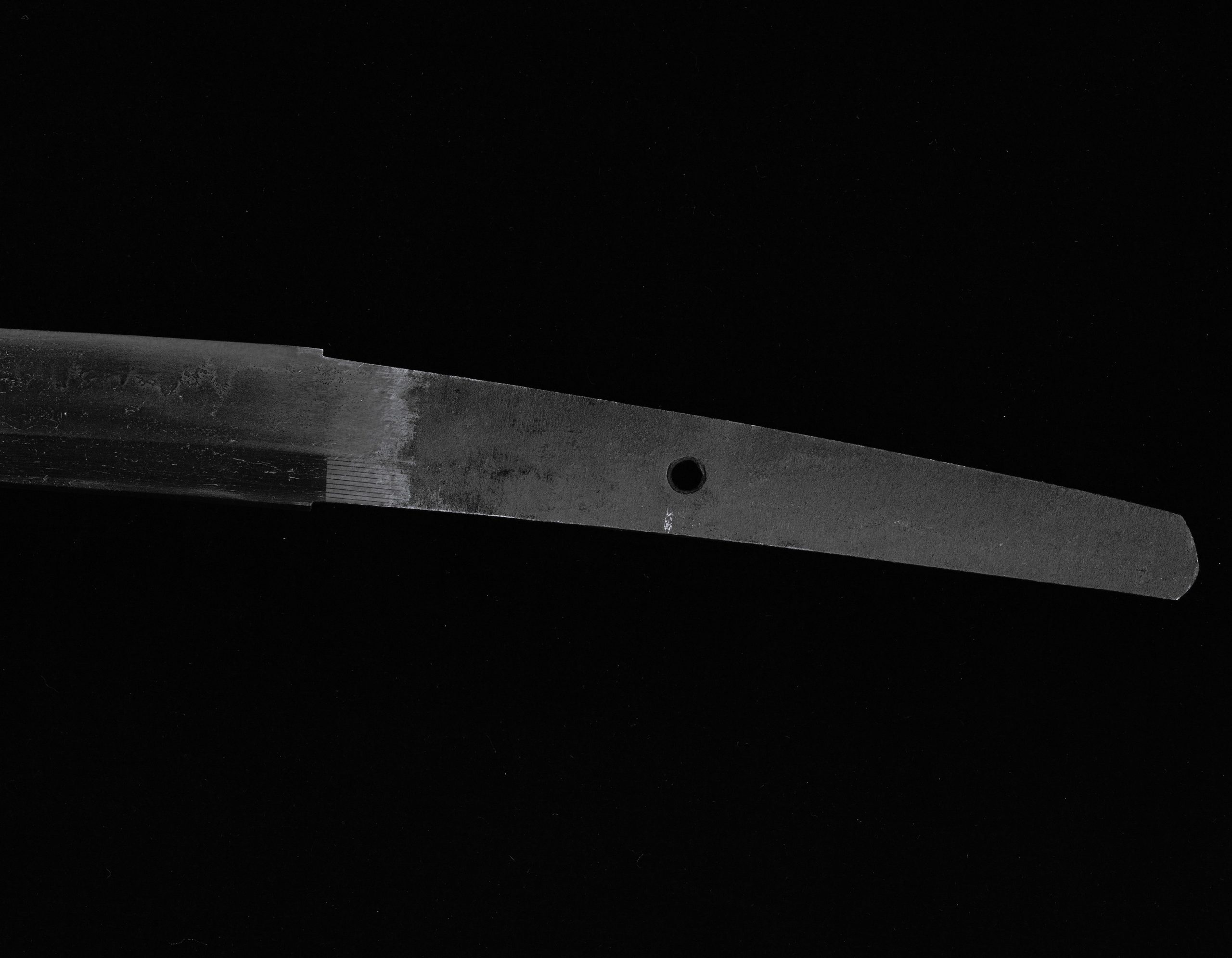
Nakago with one mekugi-ana, a stable dark patina and visible yasurime; mumei as per the documentation. The machi area reads clean and consistent with the piece.
Geometry and overall condition
Shinogi-zukuri construction with a defined yokote and a well-balanced kissaki. The photographic presentation offers strong legibility of the hamon and overall sugata.
Mounting (koshirae)
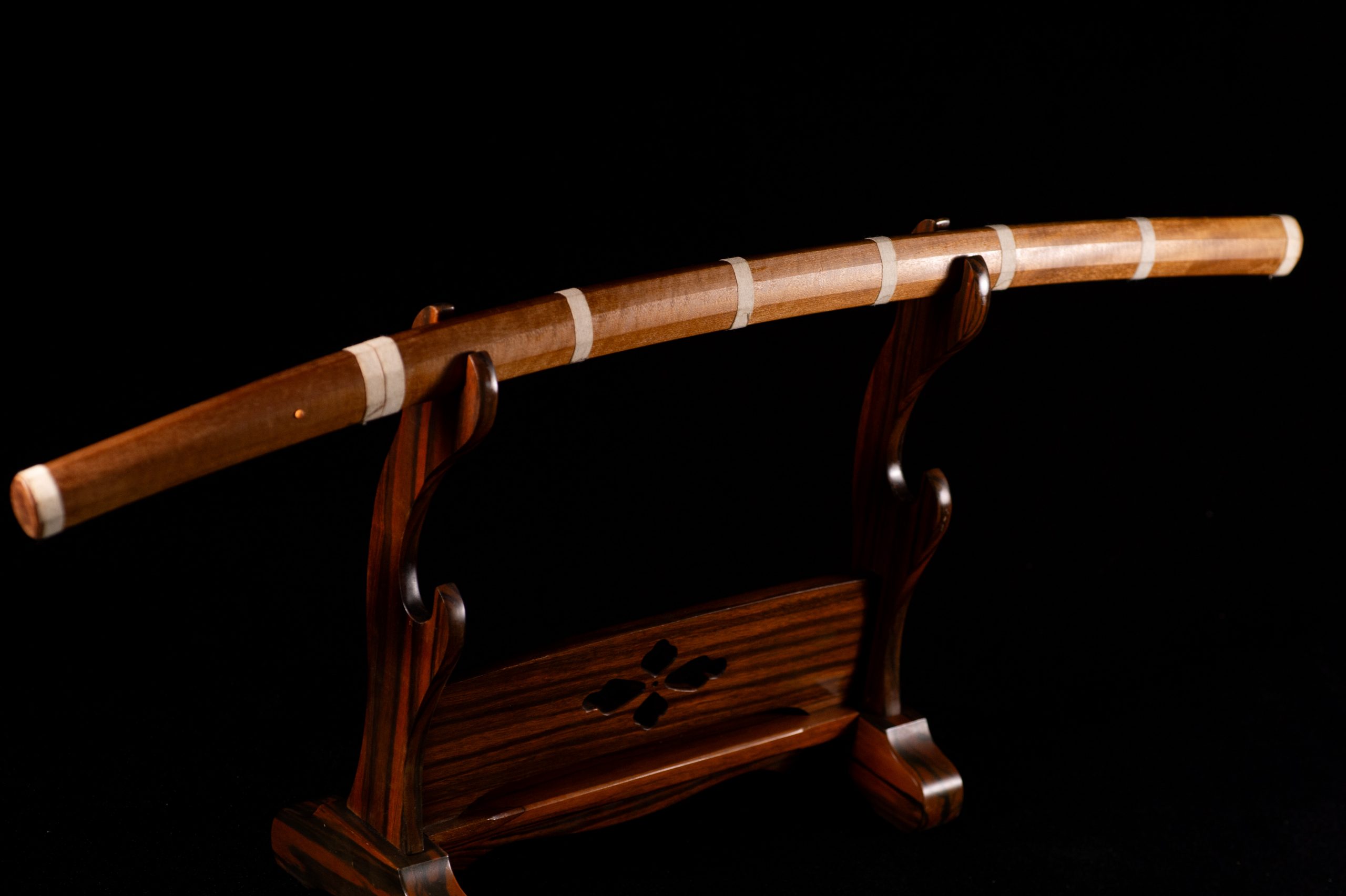
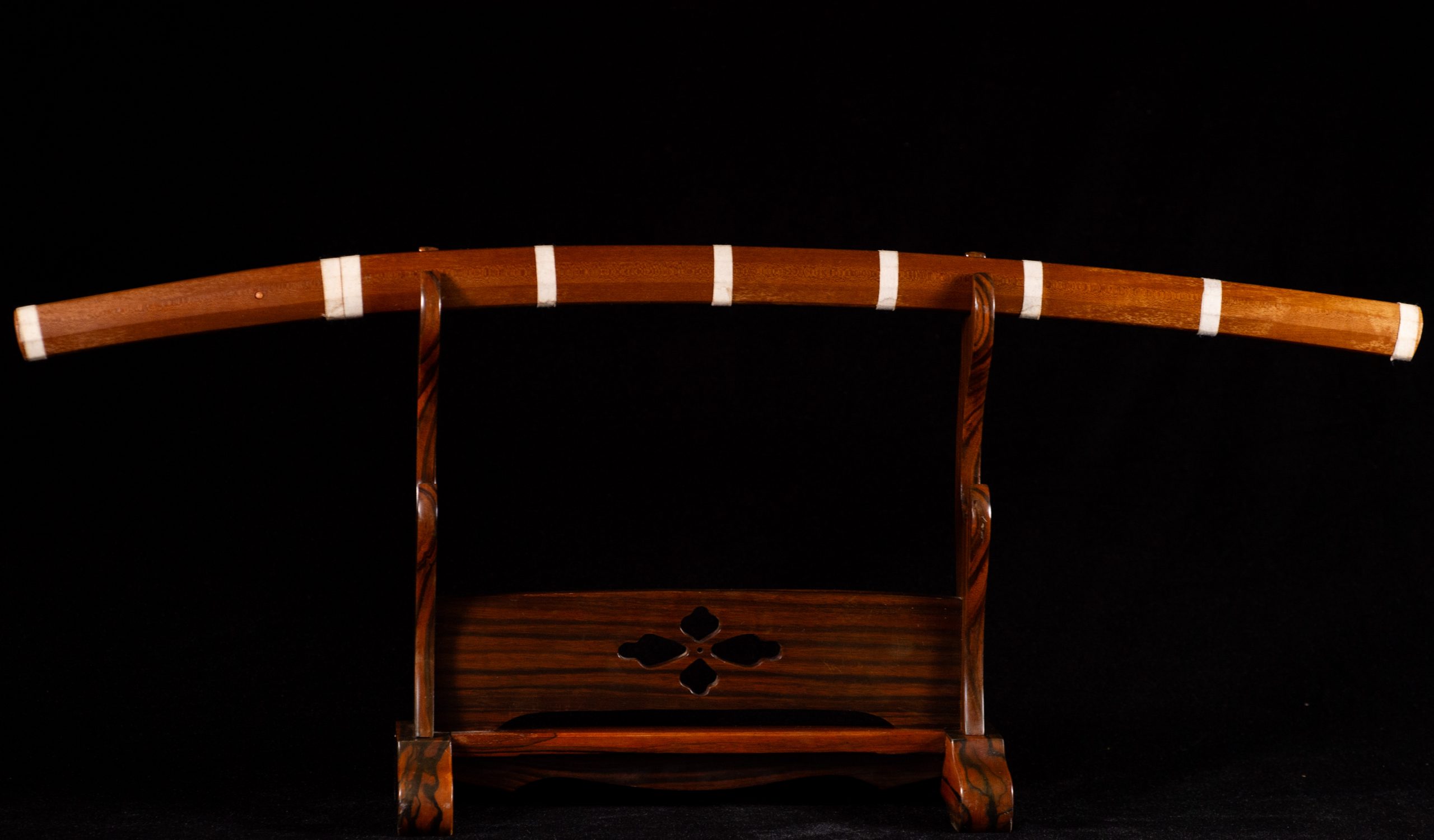
Presented in a wooden shirasaya, a restrained storage mounting intended for long-term conservation, protecting the blade from humidity, friction, and light while supporting stability over time.
Context, era, and historical profile of Mito Sukemitsu (水戸祐光)
The certificate attribution to “Mito Sukemitsu (水戸祐光)” corresponds to the swordsmith known as Yokoyama Sukemitsu (横山祐光), a representative figure of the Mito-domain forging tradition (Hitachi Province) during the closing decades of the Edo period.
Born in Bunsei 3 (1820) in Edo (Aoyama), he is recorded as having entered the Osafune Yokoyama line in Bizen, where he refined his technical training and adopted the art name Sukemitsu, sharing the “祐” (suke) character with other prominent members of that same lineage.
His career is closely tied to the Mito han in the Bakumatsu context. During his travels he became connected with the domain’s leading smiths—particularly Katsumura Tokukatsu (勝村徳勝)—and his work was regarded highly enough that he entered service under domain patronage. Municipal documentation further notes his appearance in official domain rosters around Man’en 1 (1860), where he is listed as an artisan integrated into the han system.
This historical framework matters: the Mito domain actively promoted arms production and gathered skilled craftsmen, especially under Tokugawa Nariaki, who advanced workshops and manufacturing capacity in Mito during the 1850s, strengthening a production culture oriented toward function and quality. Within that environment, Sukemitsu is consistently presented as one of the names associated with the period of greatest vitality in Mito forging at the end of the shogunate.
He died in Meiji 6 (1873) according to the cited municipal source, placing his working life chronologically between the late Edo period and the early Meiji era, with peak activity across Kaei–Ansei–Bakumatsu.
Specification sheet
-
Type: Nihontō (katana)
-
Signature: Mumei (unsigned)
-
Documented attribution: Mito Sukemitsu (水戸祐光)
-
Length stated on certificate: 2 shaku 2 sun 8 bu slightly under (approx. 69.1 cm; marginally less)
-
Mounting: Shirasaya


